Hayashi Castle (Matsumoto City, Nagano Prefecture) Complete Guide | The Ogasawara Clan’s Mountain Castle and the History of Takeda Shingen’s Invasion
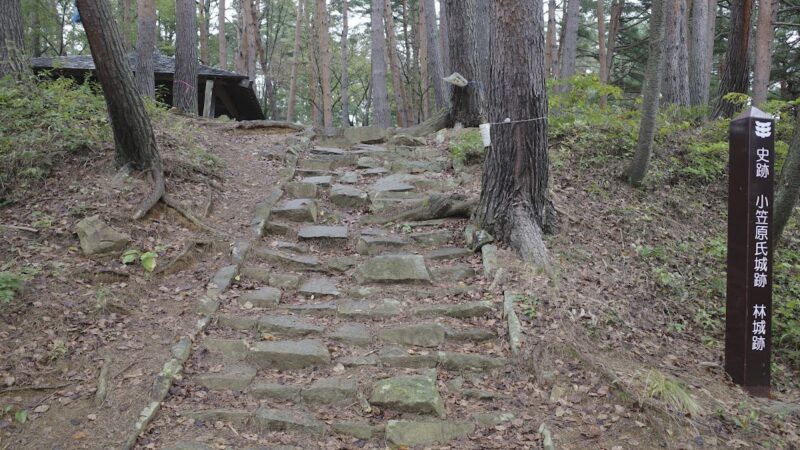
Located in the Satoyamabe district of Matsumoto City, Nagano Prefecture, Hayashi Castle is a mountain castle known as the residence of the Ogasawara clan, who served as the governor of Shinano Province during the Sengoku period. Along with Igawa Castle, it is designated as a national historic site as part of the “Ogasawara Clan Castle Ruins,” and is highly regarded by history buffs and castle enthusiasts as a valuable historical site that conveys the typical appearance of a Sengoku period mountain castle.
This article comprehensively explains everything you need to know before visiting Hayashi Castle, from its historical background to its structure, highlights, and access methods.
What is Hayashi Castle? | The Headquarters of the Ogasawara Clan, Governors of Shinano Province
Hayashi Castle is a multi-bailey mountain castle built on the ridge of the Chikuma Mountains, at the eastern edge of the Matsumoto Plain. Its most striking feature is its magnificent scale, consisting of two baileys, Oshiro and Koshiro, facing each other across the Otsuki settlement.
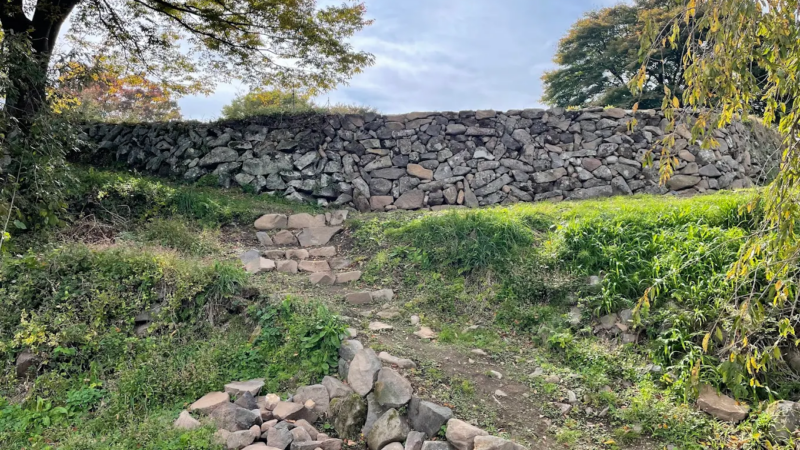
Built on a mountaintop approximately 800 meters above sea level, this castle boasts an excellent location overlooking the Matsumoto Plain and served as the base of the Ogasawara clan, who wielded great power as the shugo daimyo (provincial governor) of Shinano Province. Even today, the remains of baileys, moats, and earthworks are well-preserved, making it an important historical site for studying the structure of mountain castles from the Sengoku period (Warring States period).
Designation as a National Historic Site as an Ogasawara Clan Castle Site
Hayashi Castle, along with Ikawa Castle (Ikawa-kan), which was located on the plains of the Matsumoto Plain, is designated as a National Historic Site as the “Ogasawara Clan Castle Site.” It is valued as a valuable example of how shugo daimyo utilized their castles during that period: conducting administrative affairs at Ikawa Castle during peacetime and taking refuge in the mountain castle of Hayashi Castle during wartime.
History of Hayashi Castle | From Construction to Fall
Construction History and the Ogasawara Clan
There are various theories regarding the construction date of Hayashi Castle, but the most widely accepted theory is that it was built in 1459 by Ogasawara Kiyomune. The Ogasawara clan was a prestigious family that had served as the governor of Shinano Province for generations since the Kamakura period, and reigned as the ruler of Shinano Province during the Muromachi period.
Initially, the Ogasawara clan used Igawa Castle, located on the plains of the Matsumoto Plain, as their residence. However, as the turmoil of the Sengoku period intensified, the importance of Hayashi Castle, a mountain castle with superior defenses, increased. Hayashi Castle is thought to have functioned as a military base for the Ogasawara clan and as a refuge in times of emergency.
Invasion and Fall of Hayashi Castle in 1550 by Takeda Shingen
The most important event in the history of Hayashi Castle is the invasion by Takeda Shingen in 1550. Takeda Shingen, a powerful daimyo of Kai Province during the Sengoku period, was advancing his invasion of Shinano Province, and in this year, he finally approached Hayashi Castle, the stronghold of the Ogasawara clan.
The castle’s lord at the time was Ogasawara Nagatoki, but he was unable to resist the overwhelming military power of the Takeda army. He fled with his soldiers, and Hayashi Castle fell. This defeat caused the Ogasawara clan to lose their real power as the governors of Shinano Province, leading to a temporary decline.
This fall of the castle was a crucial turning point in Takeda Shingen’s conquest of Shinano and had a significant impact on the subsequent history of Shinano.
Hayashi Castle After its Fall
Details of Hayashi Castle after it came under Takeda control are unclear, but it is believed to have been abandoned after the Takeda clan’s downfall. By the Edo period, it was no longer in use, and its remains lay dormant in the forest.
Structure of Hayashi Castle | A Dual Structure of Large and Small Castles
The most distinctive feature of Hayashi Castle is that it consists of two castle complexes, the large castle (Ōjiro) and the small castle (Kojiro), located east and west of the Ōsakazaki settlement.
Structure of the Large Castle (Hayashi Ōjiro)
The large castle (Ōjiro) is located across Hashikura in the Iriyamabe district and Hayashi in the Satoyamabe district, and constitutes the main enclosure of Hayashi Castle. The main enclosure is situated on a mountaintop at an altitude of approximately 800 meters, and the layout is a series of interconnected enclosures along the ridge.
Main Remains of Oshiro Castle:
- Main Enclosure: The central part of the castle, built at the highest elevation.
- Moat: A defensive structure that cuts across the ridge, clearly remaining in multiple locations.
- Earthwork: Earthen defensive walls surrounding the enclosures are well-preserved.
- Enclosure Group: Multiple flat areas continuous with the main enclosure can be seen.
- Vertical Moat: Defensive structures cutting vertically down the slope can also be observed.
Oshiro Castle’s structure emphasizes defense, and various measures to prevent enemy intrusion are evident throughout.
Structure of Koshiro Castle (Hayashi Koshiro Castle)
Koshiro Castle is located on the ridge opposite Oshiro Castle, across from the Osakazaki settlement. Although smaller in scale than Oshiro Castle, it is believed to have functioned as an independent castle.
Main Remains of Kojō Castle:
- Kuruwa (Enclosures): Multiple flat areas are arranged in a stepped pattern.
- Moat: Defensive structures blocking the ridge can be observed.
- Earthworks: Traces of earthworks remain in some areas.
It has been suggested that Kojō Castle may have functioned as a subsidiary castle or a fortified outpost of Ōjō Castle. It is believed that a stronger defensive system was constructed by linking the two castles.
Characteristics of a Concentric Mountain Castle
Hayashi Castle employs a concentric layout, where enclosures are arranged in a series along the ridge. This is a typical mountain castle structure, utilizing the ridge terrain to construct defensive lines in stages.
The attacking side would need to ascend along the ridge, and would be blocked by defensive structures such as moats and earthworks along the way. This structure allows for effective defense even with a small force.
Highlights of Hayashi Castle | Remains Observable on-site
Here are some highlights to note when visiting Hayashi Castle.
Clearly Remaining Moats
The most impressive remains at Hayashi Castle are the moats. Especially at the main castle, multiple moats remain in excellent condition, some reaching several meters in depth. The existence of moats that completely sever the ridge speaks to the advanced castle-building techniques of the time.
Moats were defensive structures designed to prevent enemies from invading along the ridge, and were crucial to Hayashi Castle’s defense. Experiencing the depth and scale of the moats firsthand allows one to understand the defensive philosophy of mountain castles during the Sengoku period.
Earthworks and Enclosure Arrangement
Earthworks were built around each enclosure, and some of them can still be seen today. These earthworks functioned as defensive walls to protect against enemy arrows and firearms.
The enclosures are arranged in a stepped pattern, each designed to function as an independent defensive base. Descending from the main enclosure provides a good understanding of the relationship between the enclosure arrangement and the terrain.
Vertical Moats and Steep Slopes
Vertical moats, known as tatebori, are dug into the slope. This was a design intended to restrict the movement of enemies climbing the slope and make lateral movement difficult.
Furthermore, artificial steep slopes called kirigishi are formed along the edges of the enclosures, making it difficult for enemies to climb.
Stunning Views
From the main enclosure of Hayashi Castle, a magnificent view of the Matsumoto Plain unfolds. On clear days, the mountains of the Northern Alps can also be seen, demonstrating the strategic advantage of this location.
It is believed that the castle lord surveyed the entire territory from this location and monitored enemy movements.
Access and Visiting Guide to Hayashi Castle
Location and Basic Information
Location: Satoyamabe/Iriyamabe area, Matsumoto City, Nagano Prefecture
Designation: National Historic Site (Ogasawara Clan Castle Ruins)
Castle Structure: Renka-shiki Yamajo (mountain castle with multiple enclosures)
Year of Construction: Around 1459 (Choroku 3)
Builder: Ogasawara Kiyomune
Main Lords: Ogasawara Clan
Access Methods
Access by Car:
- Approximately 20 minutes from Matsumoto IC
- Parking: Several parking spaces available near the Hayashi Castle Ruins trailhead
Access by Public Transportation:
- Take a bus from JR Matsumoto Station towards “Satoyamabe”
- Approximately 30 minutes on foot from the nearest bus stop
Climbing Route:
- Approximately 40-50 minutes on foot from the trailhead to the main enclosure. Comfortable clothing and shoes are essential as you will be climbing a mountain path.
Points to Note When Visiting
- Mountaineering Equipment: As this is a mountain castle, please wear comfortable walking shoes such as trekking shoes.
- Estimated Time Required: Visiting only the main castle takes approximately 1 hour and 30 minutes round trip. If visiting both the main and small castles, please allow approximately 3 hours.
- Season: Spring to autumn is the best time to visit. In winter, snowfall may make it difficult to climb the castle.
- Beware of Bears: As it is a mountainous area, carrying a bear bell or similar device is recommended.
- Trail Maintenance: The hiking trail is well-maintained, but there are steep slopes, so please proceed with caution.
Best Season for Visiting
Spring (April-May): The fresh greenery is beautiful, the weather is mild, and it is ideal for climbing the castle.
Autumn (October-November): The autumn foliage is magnificent, and the views are excellent.
Summer (June-September): The greenery is lush and it is cool, but insect repellent is necessary.
Winter (December-March): Snowfall may make it difficult to climb the castle.
Nearby Tourist Attractions
Igawa Castle (Igawa-kan)
Igawa Castle, designated as a National Historic Site together with Hayashi Castle, was the residence of the Ogasawara clan located on a plain near Matsumoto city. It is currently maintained as Igawa Castle Ruins Park, with explanatory signs and other facilities. Visiting both Hayashi Castle and Matsumoto Castle will provide a deeper understanding of how the Ogasawara clan utilized their castles.
Matsumoto Castle
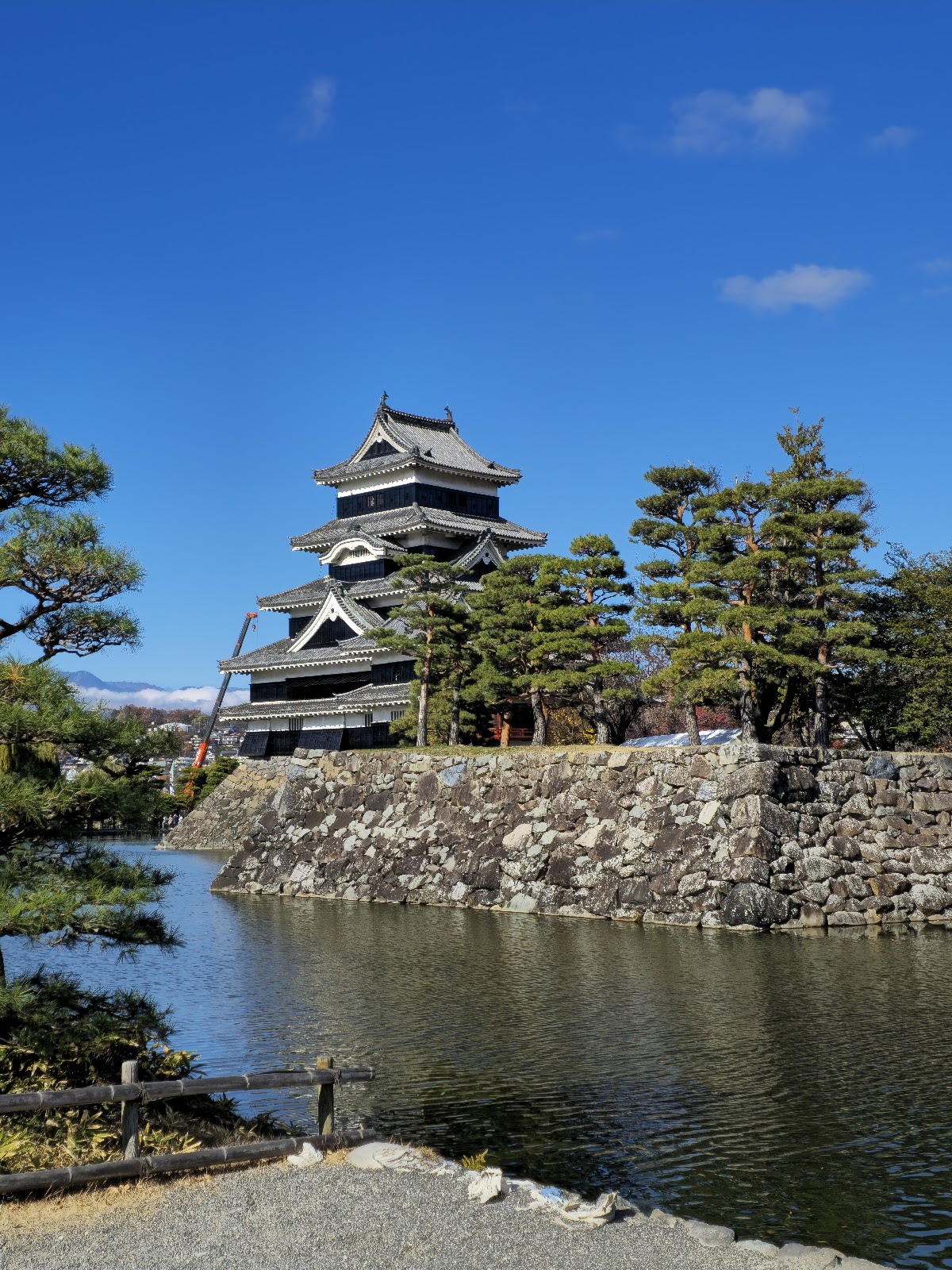
Matsumoto Castle, a designated National Treasure, is approximately a 20-minute drive from Hayashi Castle. A renowned castle with an existing keep, it is known as “Crow Castle” for its beautiful black and white contrast. Comparing Hayashi Castle, a mountain castle from the Sengoku period, with Matsumoto Castle, a modern castle from the Edo period, allows you to experience the history of castle development.
Utsukushigahara Plateau
The Utsukushigahara Plateau, located east of Hayashi Castle, is a plateau area at an altitude of approximately 2,000 meters, offering magnificent natural scenery. Enjoying the nature of Shinshu in conjunction with a visit to Hayashi Castle is highly recommended.
Historical Significance and Evaluation of Hayashi Castle
Value in the Study of Sengoku Period Mountain Castles
Hayashi Castle occupies an important position in castle research as a typical mountain castle from the Sengoku period. The castle’s defensive structures, such as moats, earthworks, and vertical trenches, are remarkably well-preserved, making it a valuable resource for studying the castle-building techniques and defensive philosophies of the time.
In particular, its dual structure of a large castle and a small castle is noteworthy as an example of a defensive system that coordinated multiple castles.
Importance in the History of the Ogasawara Clan
Hayashi Castle, as the base of the Ogasawara clan, the shugo (military governor) of Shinano Province, is an indispensable historical site when discussing the history of the Ogasawara clan. The Ogasawara clan later regained power and continued as lords of the Kokura Domain during the Edo period, but the fall of Hayashi Castle marked a turning point in their history.
Position in Takeda Shingen’s Invasion of Shinano
The capture of Hayashi Castle held significant importance in Takeda Shingen’s invasion of Shinano Province. By seizing the base of the Shinano shugo, the Takeda clan’s control over Shinano became firm, leading to their subsequent expansion of power.
Points to Note When Visiting Hayashi Castle
Preparations
- Weather Check: As it is a mountain castle, avoid visiting on days with bad weather.
- Physical Fitness Check: The round trip involves a 2-3 hour mountain hike, so please do not overexert yourself if you are not confident in your physical fitness.
- Materials Preparation: Obtaining a map of the castle layout beforehand will deepen your understanding on site.
Photo Opportunities
- Cross-section of the moat: Clearly shows the scale of the defensive facilities.
- View from the main enclosure: A spectacular view of the Matsumoto Plain and the Northern Alps.
- Remaining Earthworks: The original structure is well preserved.
- Terrace Differences in the Enclosures: You can truly appreciate the multi-enclosure structure.
Advice for Castle Enthusiasts
Hayashi Castle is a full-fledged mountain castle with well-preserved remains, making it a highly satisfying historical site for castle enthusiasts. The scale of the moat, in particular, is impressive, allowing you to experience firsthand the defensive capabilities of a Sengoku period mountain castle.
If you have the time, we recommend visiting both the large and small castles. Understanding the relative locations and connections between the two castles will give you a clearer overall picture of Hayashi Castle.
Summary | Hayashi Castle: A Valuable Historical Site Where You Can Experience a Sengoku Period Mountain Castle
Hayashi Castle, located in Matsumoto City, Nagano Prefecture, is a mountain castle that flourished as the residence of the Ogasawara clan, the shugo (military governor) of Shinano Province, and later fell to an invasion by Takeda Shingen. It is a national historical site with many attractions, including its magnificent scale consisting of a large and small castle, clearly preserved remains such as moats and earthworks, and panoramic views of the Matsumoto Plain.
Hayashi Castle, which conveys the typical appearance of a Sengoku period mountain castle, is a historical site recommended not only for castle enthusiasts but also for anyone interested in history. When you visit Matsumoto, be sure to take the time to visit Hayashi Castle and feel the spirit of the Sengoku period.
By visiting Hayashi Castle along with Igawa Castle and Matsumoto Castle, you can experience the history of Japanese castle development all at once, from peacetime residences to wartime mountain castles and early modern fortresses. Why not plan a visit to Hayashi Castle as part of a trip to enjoy the history and nature of Shinshu?