Genba-o Castle (Shiga Prefecture) Complete Guide | The Charm and Highlights of a Mountain Castle Built by Shibata Katsuie During the Battle of Shizugatake
What is Genba-o Castle? | A Historic Mountain Castle Spanning Shiga and Fukui Prefectures
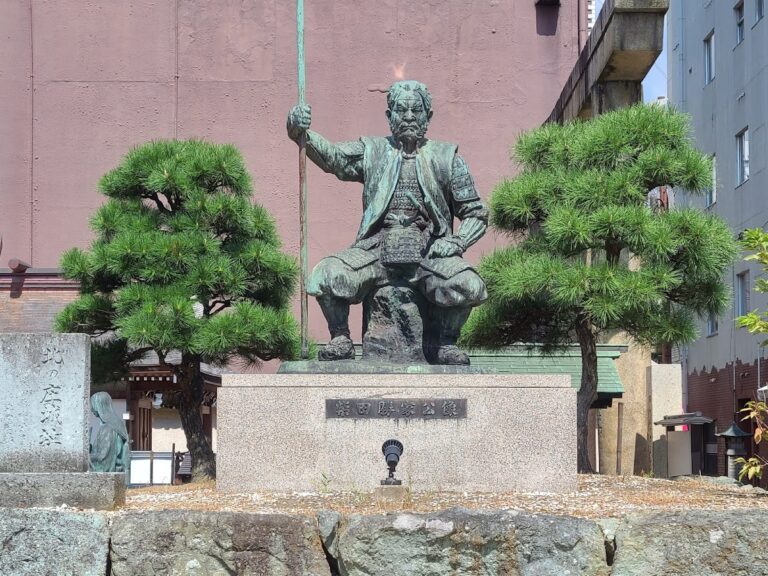
Genba-o Castle is a mountain castle built on the summit of Uchinakao-yama (also known as Yanagase-yama, elevation approximately 450-460m), which straddles the border between Yanagase, Yogo-cho, Nagahama City, Shiga Prefecture, and Tone, Tsuruga City, Fukui Prefecture. Also known as Uchinakao-yama Castle, it is widely known for being used as Shibata Katsuie’s headquarters during the Battle of Shizugatake in 1583.
On July 13, 1999, the site was designated a National Historic Site as “Genba-o Castle (Uchinakao-yama Castle) Ruins,” and on April 6, 2017, it was selected as one of the “Continued Top 100 Japanese Castles” (No. 140). Despite its layout primarily consisting of earthworks and dry moats, without the use of stone walls, it is highly regarded by castle researchers as a masterpiece showcasing the pinnacle of castle construction techniques from the Oda-Toyotomi period.
The castle ruins boast a vast scale, approximately 300m from north to south and 150m from east to west, with six baileys skillfully arranged around the main enclosure. Many remains, including a masugata koguchi (square-shaped gate), umadashi (outwork), yagura base (watchtower base), and a raised area believed to be the base of the keep, remain in remarkably good condition, making it a valuable historical site where the structure of an Oda-Toyotomi style mountain castle can be observed in its complete form.
History of Genba-o Castle | Construction Period and the Battle of Shizugatake
Various Theories Regarding the Construction Period
There are several theories regarding the construction period of Genba-o Castle. The most widely accepted theory is that it was built by Shibata Katsuie between 1582 and 1583. It is believed that after the death of Oda Nobunaga, amidst the conflict over his succession, Shibata Katsuie, who controlled the Hokuriku region, built the castle in preparation for a decisive battle against Hashiba Hideyoshi (later Toyotomi Hideyoshi).
On the other hand, there is also a theory that a fortress built by the Asakura clan existed there before. This region was a strategic point on the Hokkoku Kaido road connecting Echizen and Omi provinces, and was a militarily important base. The view that some kind of military facility existed during the Asakura period and that Shibata Katsuie extensively renovated and expanded it is also supported by researchers.
The Battle of Shizugatake and Shibata Katsuie’s Headquarters
In April 1583 (Tensho 11), the succession struggle following Oda Nobunaga’s death culminated in the Battle of Shizugatake. Shibata Katsuie established his headquarters at Genba-o Castle, overlooking the Hokkoku Kaido road and continuing his confrontation with Hashiba Hideyoshi’s forces.
Genba-o Castle’s location was militarily advantageous. Its elevated position, approximately 450 meters above sea level, offered a panoramic view of the surrounding area, making it ideal for monitoring enemy movements. Furthermore, its layout, designed to function not only as a defensive base but also as a sally point, demonstrates Katsuie’s keen strategic vision.
However, the battle ended in defeat for Katsuie’s forces due to Hideyoshi’s skillful tactics. Katsuie retreated to Kita-no-sho Castle (present-day Fukui City) and ultimately committed suicide. Genba-o Castle was abandoned after this battle and disappeared from the historical stage thereafter.
Genba-o Castle After the War
After the Battle of Shizugatake, Genba-o Castle ceased its military role and was left abandoned. However, this proved fortunate, as it remained largely intact, preserving its original form almost perfectly. Its remote mountain location also contributed to its protection from development, leading to the preservation of this valuable historical site.
Structure and Layout of Genba-o Castle | A Masterpiece of Oda-Toyotomi Period Mountain Castles
Arrangement of Enclosures Centered on the Main Enclosure
The most distinctive feature of Genba-o Castle is the six enclosures cleverly connected along a north-south ridge, centered on the main enclosure. Each enclosure is functionally differentiated, functioning as an independent defensive stronghold while maintaining an organic, interconnected design as a whole.
The main enclosure is located in the center of the castle, built on the highest point. From here, one can overlook the surrounding enclosures, suggesting it served as a command post. A 2-3 meter high earthen embankment surrounds the main enclosure, enhancing its defensive capabilities. ### Development of Earthworks and Dry Moats
Genba-o Castle does not utilize stone walls; instead, a defensive system primarily consisting of earthworks and dry moats was constructed. This is characteristic of mountain castles from the Azuchi-Toyotomi period, reflecting its nature as a fortified camp that needed to be built in a short period of time.
The earthworks were built surrounding each enclosure, reaching heights of 2 to 4 meters in some places. Thanks to their excellent state of preservation, their clear outlines can still be seen today. The dry moats were positioned to separate the enclosures, with depths of approximately 3 to 5 meters. They functioned as barriers to prevent enemy intrusion.
Masugata Koguchi and Umadashi
One of the highlights of Genba-o Castle is the highly developed structure of its entrances (koguchi). A masugata koguchi is a system that uses double gates to create a winding path for enemy intrusion. Multiple masugata koguchi can be found at Genba-o Castle, demonstrating the high level of castle construction technology during the Azuchi-Toyotomi period. Furthermore, the high level of perfection of the umadashi (outwork) is noteworthy. The umadashi is a small enclosure located in front of the main gate, functioning as a gathering place during sorties and a defensive base. The umadashi of Genba-o Castle is considered to be of the highest standard among existing Oda-Toyotomi period mountain castles, due to its extremely calculated shape and placement.
Elevation believed to be the base of the keep
At the northeast corner of the main enclosure, a raised area believed to be the base of the keep can be seen. This structure is thought to have been used as a watchtower or command post. While it is unknown whether an actual keep existed, it is an unusual structure for a fortified camp of this period, and it is possible that Katsuie created it to demonstrate the imposing presence of his main camp.
Functional differentiation between enclosures
A notable feature of Genba-o Castle’s layout is the clear functional differentiation of each enclosure. It is presumed that the main enclosure served as a command post, the second enclosure as living quarters, and the other enclosures as troop garrisons and storage areas for supplies. This functional differentiation indicates that it was not merely a defensive structure, but a full-fledged military base designed for long-term warfare. The design, which focused primarily on defensive purposes while also functioning as a sallying point, is a testament to Shibata Katsuie’s military strategy and the advanced castle-building technology of the time.
Highlights of Genba-o Castle | Remains Visible on-site
Earthworks and Entrance of the Main Enclosure
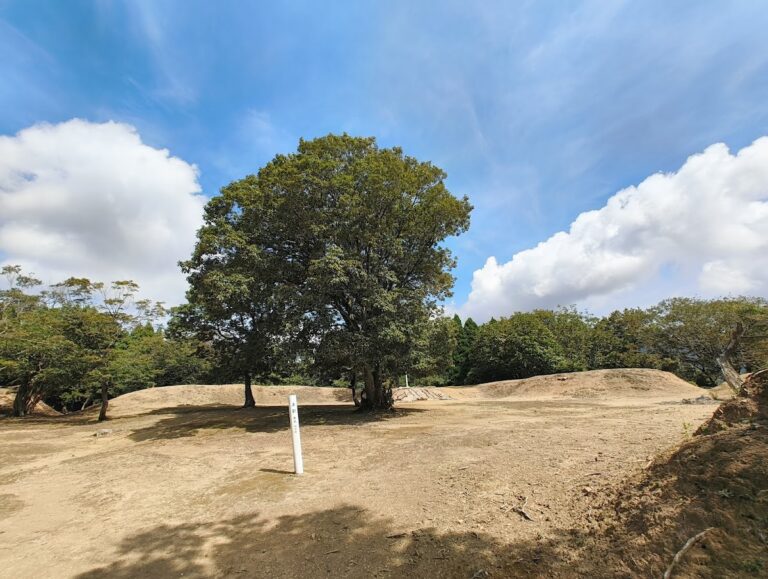
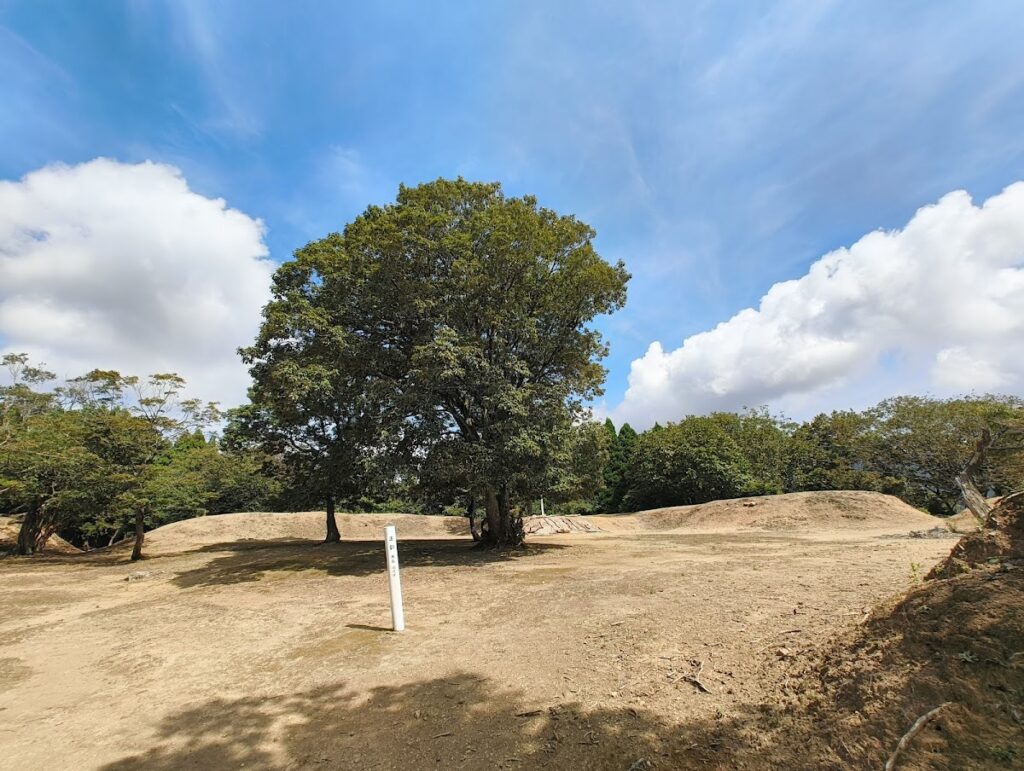
The first thing you see upon visiting the castle ruins is the magnificent earthworks surrounding the main enclosure. The earthworks, 2-3 meters high, remain in excellent condition, evoking the castle’s original appearance. The entrance to the main enclosure, the koguchi (gate), has a masugata (square-shaped) structure, allowing for close observation of the defensive ingenuity.
The interior of the main enclosure is relatively flat, allowing one to imagine Shibata Katsuie establishing his headquarters here. Thanks to regular grass cutting by local residents, the outlines of the remains are clearly preserved.
Set of Barbican and Dry Moat
On the south side of the main enclosure, a highly refined barbican remains. A deep dry moat is dug in front of the barbican, forming a double defensive line. This set of barbican and dry moat is highly valued by castle researchers as a precious relic demonstrating the pinnacle of castle construction technology during the Azuchi-Toyotomi period.
Descending to the bottom of the dry moat reveals its surprising depth and steep slope. You can truly appreciate how difficult it must have been for enemy soldiers to cross this moat.
Consecutive Enclosures
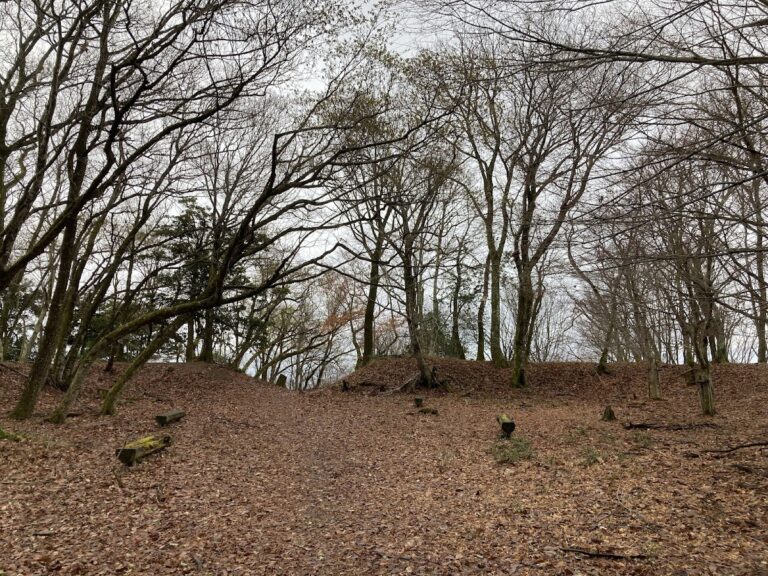
On the ridge extending north and south from the main enclosure, multiple enclosures are arranged in a series. Earthen ramparts and dry moats are provided between each enclosure, indicating that they functioned as independent defensive units.
By visiting the enclosures in order, you can gain a three-dimensional understanding of the castle’s overall structure. The views from each enclosure are different, and imagining Shibata Katsuie monitoring the surroundings from these locations is one of the pleasures of exploring.
Watchtower and Keep Base
Elevated structures, believed to be watchtower bases, can be seen at key points in each enclosure. These are thought to have been used as observation towers or armories. The elevated structure at the northeast corner of the main enclosure, believed to be the keep base, is the highest point within the castle grounds, offering exceptional views.
On a clear day, you can enjoy panoramic views of Lake Biwa and the Hokuriku region, truly appreciating its strategic military location.
Excellent Preservation
The greatest appeal of Genba-o Castle is undoubtedly its excellent state of preservation. Despite being over 440 years old, the outlines of the earthworks and dry moats remain remarkably clear.
This is thanks to its deep mountain location and the continuous preservation efforts of local residents. Regular grass cutting makes it easy to observe the remains and understand the castle’s structure. As a mountain castle that completely preserves the layout of the Oda-Toyotomi period, it is an extremely valuable example nationwide.
Access | How to Get to Genba-o Castle and the Climbing Route
Access by Car
The most convenient way to access Genba-o Castle is by car. Approaching from Shiga Prefecture, take the Hokuriku Expressway to the Kinomoto Interchange (IC), then use National Route 365 and Prefectural Route 140 (via the Yanagase Tunnel). It takes approximately 30 minutes from the Kinomoto IC.
From Fukui Prefecture, take the Hokuriku Expressway to the Tsuruga Interchange (IC), then use National Route 8 and Prefectural Route 140. It takes approximately 40 minutes from the Tsuruga IC.
Parking is available in two locations: near the Shiga Prefecture exit and near the Fukui Prefecture exit of the Yanagase Tunnel. The climbing route from the Shiga Prefecture parking lot is the most common and relatively well-maintained. Signposts and information boards for “Genba-o Castle” are installed in the parking lot, so you shouldn’t get lost.
Access Route
The hike from the parking lot to the castle ruins takes approximately 30-40 minutes. There are two hiking routes, but the route from the Shiga Prefecture side is well-maintained and recommended for beginners.
The hiking trail has the undulations typical of mountain paths, and there are sections where you climb over uneven terrain similar to ski mogul slopes. The elevation difference is approximately 100-150m, but because there are unstable sections, we recommend wearing sturdy shoes such as trekking boots.
Guide signs are placed at key points along the trail, so you are unlikely to get lost. However, in winter, there is a possibility of snow, so it is important to check the weather and trail conditions beforehand.
Access by Public Transportation
Access by public transportation is difficult. The nearest stations are JR Hokuriku Main Line’s “Yogo Station” or “Tsuruga Station,” but the distance from the stations to the castle ruins is considerable, and there are no bus services. We recommend using a taxi or renting a car.
Important Notes for Visitors
Genba-o Castle is a mountain castle, and the visit involves a proper mountain climb. Please keep the following points in mind when visiting:
- Clothing and Equipment: Bring comfortable clothing, trekking shoes, drinking water, and a towel.
- Season: Spring to autumn is the best time to visit. Insect repellent is recommended in summer.
- Estimated Time: Allow approximately 2-3 hours for the round trip from the parking lot and the castle ruins visit.
- Weather: Avoid visiting in rainy weather, as the ground can be slippery.
- Cell Phone: Cell phone reception can be poor in some areas of the mountain.
Genba-o Castle Tourist Information and Nearby Attractions
Basic Information
- Location: Yanagase, Yogocho, Nagahama City, Shiga Prefecture / Tone, Tsuruga City, Fukui Prefecture
- Designation: National Historic Site, Continued Top 100 Japanese Castles (No. 140)
- Admission Fee: Free
- Visiting Hours: No restrictions (however, visiting during daylight hours is recommended)
- Parking: Available (Free)
- Inquiries: Nagahama City Board of Education Cultural Properties Protection Center, Tsuruga City Board of Education Cultural Promotion Division
Continued Top 100 Japanese Castles Stamp
Genba-o Castle is selected as one of the Continued Top 100 Japanese Castles (No. 140). The stamp can be obtained at the following locations.
- Shiga Prefecture side: Yogo Lake Tourist Information Center (Kawanami, Yogo-cho, Nagahama City, Shiga Prefecture)
- Fukui Prefecture side: Tsuruga City Museum (Aioi-cho, Tsuruga City, Fukui Prefecture)
Since these are not located at the castle ruins, you will need to visit them before or after your visit. Please check the opening hours and closing days before visiting.
Nearby Tourist Spots
Shizugatake Battlefield
Shizugatake, located about 20 minutes by car from Genba-o Castle, is the site of a battle between Shibata Katsuie and Hashiba Hideyoshi. A monument commemorating the Shizugatake Battlefield stands at the summit, and you can also reach it by lift. It is also a scenic spot with a panoramic view of Lake Biwa.
Lake Yogo
A beautiful lake also known as “Mirror Lake,” located north of Lake Biwa. A promenade is maintained along the lakeshore, allowing you to enjoy the scenery of each season. You can learn about the local history and culture at the Yogo Lake Tourist Information Center. Tsuruga City Museum This museum showcases the history and culture of Tsuruga and includes exhibits related to Genba-o Castle. A stamp for the Continued Top 100 Japanese Castles is also available, making it a recommended stop in conjunction with a visit to the castle ruins.
Nagahama Castle History Museum This museum stands on the site of Nagahama Castle, built by Hashiba Hideyoshi, and features detailed exhibits on the Battle of Shizugatake. Visiting it in conjunction with Genba-o Castle will provide a deeper understanding of the battle’s overall picture.
Kinomoto Jizo-in Temple This ancient temple, located in the heart of Kinomoto, a post town that flourished on the Hokuriku Road, enshrines a Jizo Bodhisattva considered one of Japan’s three greatest Jizo statues. Enjoy a stroll through the historic townscape.
The Value of Visiting Genba-o Castle | Reasons Why Castle Fans Should See It
A Textbook Example of Oda-Toyotomi Period Mountain Castles
Genba-o Castle is considered a “textbook” in the study of mountain castles from the Oda-Toyotomi period. Earthen ramparts, dry moats, barbicans, and square-shaped gates—all the elements of castle construction from this era are present and preserved in remarkably good condition.
For anyone interested in castle architecture or Sengoku period history, Genba-o Castle is a must-see historical site. Walking around the site allows you to experience the intricate three-dimensional layout in a way that textbooks and diagrams alone cannot fully convey.
A Place to Feel the Drama of History
Genba-o Castle was the stage for a crucial battle in the struggle for control of Japan after the death of Oda Nobunaga. Standing on the castle ruins, you can imagine the historical moment when Shibata Katsuie established his headquarters here and faced off against Hashiba Hideyoshi.
Standing in the main enclosure and gazing at the view Katsuie must have seen, the tense situation of 440 years ago comes vividly to mind. The emotion of actually standing in the place that marked a turning point in history is priceless.
A Fusion of Nature and History
Genba-o Castle is nestled deep in the mountains, allowing visitors to enjoy the changing seasons during their ascent. Spring brings fresh greenery, summer offers deep lush foliage, autumn brings vibrant autumn leaves, and winter presents a snowy landscape—each season offers a different face.
The opportunity to enjoy both historical exploration and hiking simultaneously is a major attraction of Genba-o Castle. The moderate exercise of the climb is also ideal for refreshing both mind and body.
A Miracle of Preservation
It is rare nationwide to find castle ruins from over 440 years ago preserved in such a complete state. The excellent state of preservation at Genba-o Castle is truly worthy of being called a “miracle.”
Thanks to the continuous preservation efforts of local residents, this precious heritage is being passed down to future generations. As a visitor, it is important to appreciate this historical site with care and with an awareness of preserving it for future generations.
Summary | Genba-o Castle: A Masterpiece of Oda-Toyotomi Period Mountain Castles
Genba-o Castle is a nationally designated historical site located on the border of Shiga and Fukui prefectures. It is a historical site where Shibata Katsuie established his headquarters during the Battle of Shizugatake. Selected as one of the Continued Top 100 Japanese Castles, it is highly regarded as a masterpiece showcasing the pinnacle of castle construction techniques from the Oda-Toyotomi period.
With its six cleverly arranged baileys centered around the main enclosure, highly developed earthworks and dry moats, and a perfectly constructed masugata koguchi (square-shaped gate) and umadashi (outwork), there are plenty of points of interest. Above all, the fact that these remains are preserved in such excellent condition is arguably Genba-o Castle’s greatest value.
Access is convenient by car, followed by a 30-40 minute hike from the parking lot. With a moderate amount of exercise, it’s a recommended spot not only for castle enthusiasts but also for hiking lovers. Nearby attractions such as the Shizugatake battlefield and Lake Yogo are also worth visiting.
Genba-o Castle is considered one of the finest mountain castles of the Azuchi-Momoyama period. Experience its historical value and remarkable state of preservation firsthand. Standing on the ruins of this castle, where Shibata Katsuie entrusted his dream of conquering Japan, you will surely feel the spirit of the Sengoku period.