Fukuoka Castle Complete Guide: History and Highlights of Kyushu’s Largest Castle Built by Kuroda Nagamasa
Fukuoka Castle is a national historical site located in Chuo-ku, Fukuoka City, Fukuoka Prefecture. Built in the early Edo period by Kuroda Nagamasa, it is one of Kyushu’s largest castles. Currently, it is a popular park for citizens, known as Maizuru Park, and many important cultural properties such as the Tamon-yagura (multi-story turret) and historical remains such as the Korokan (guest house) ruins remain. This article comprehensively introduces information you should know before visiting Fukuoka Castle, from its history and structure to its highlights and access information.
History of Fukuoka Castle: From Construction by the Kuroda Clan to the Present
Background of Construction and Kuroda Nagamasa
The history of Fukuoka Castle dates back to the Battle of Sekigahara in 1600. Kuroda Nagamasa, who sided with the Eastern Army led by Tokugawa Ieyasu and distinguished himself in battle, was granted 520,000 koku in Chikuzen Province and transferred from Nakatsu in Buzen Province. Together with his father, Kuroda Yoshitaka (Kanbei), Nagamasa began construction of a new castle on a hill in Fukuzaki, Keigo Village, Naka District (present-day Chuo Ward, Fukuoka City), a project that took seven years, starting in 1601.
Kuroda Kanbei was a renowned general known as Toyotomi Hideyoshi’s strategist, and his strategic brilliance and castle-building skills were highly regarded. Nagamasa himself was a warrior who greatly contributed to the Eastern Army’s victory at the Battle of Sekigahara, and Fukuoka Castle became a fortress that combined the wisdom and experience of this father and son.
Construction History and Scale
Construction of Fukuoka Castle began in 1601 and is believed to have been completed around 1607. It is said that Kuroda Kanbei was in charge of the castle’s layout, and its scale was described as the largest castle in Kyushu. Kato Kiyomasa, known as a master castle builder, also visited this castle and is recorded as having highly praised its strength and ingenious design.
The castle covered a total area of approximately 250,000 square meters and was a large-scale flatland castle composed of baileys such as the main keep, second bailey, third bailey, and east second bailey. The castle tower base was approximately 17 meters high, and while there are various theories as to whether a castle tower was actually built on it, it is certain that at least a massive castle tower base was constructed.
The Center of the Fukuoka Domain Throughout the Edo Period
Fukuoka Castle functioned as the residence of the Kuroda clan of the Fukuoka Domain throughout the Edo period and became the center of domain administration. The Kuroda clan ruled this area for approximately 270 years, from the first lord Nagamasa to the twelfth lord Nagatomo, until the Meiji Restoration. The castle was not merely a military facility, but played an important role as a base for governing the territory, a political center, and the residence of the feudal lord.
Throughout the Edo period, Fukuoka Castle underwent several renovations and expansions, but it enjoyed a relatively peaceful period without being struck by major warfare. However, due to the castle demolition decree after the Meiji Restoration, many buildings were demolished.
Changes since the Meiji Era and the Present
In the Meiji era, Fukuoka Castle was used as military land, and then in the Taisho era, it was developed into Maizuru Park. Many buildings were lost, but important structures such as the Tamon-yagura, Kinen-yagura, Shimonohashi-gomon, and (alleged) Shiomi-yagura still exist.
In 1957 (Showa 32), it was designated a national historic site, and since the Heisei era, preservation and development of the historic site have been progressing. Even in the Reiwa era, continuous research, study, and development of the Fukuoka Castle/Korokan area are underway, leading to a re-evaluation of its historical value and its utilization as a tourist resource.
Structure of Fukuoka Castle: One of Kyushu’s Largest Castle Architectures
Layout and Arrangement of Enclosures
Fukuoka Castle was designed as a flatland castle utilizing the hilly terrain of Fukuzaki, Keigo Village. The castle’s structure is complex, with the main keep (Honmaru) at its center, surrounded by smaller enclosures such as the second bailey (Ninokuruwa), third bailey (Sanokuruwa), and east second bailey (Higashi-Ninokuruwa), each separated by stone walls and moats.
The Honmaru is located in the center of the castle, built on the highest elevation. It has a keep base, surrounded by various watchtowers and multi-story turrets. The second bailey surrounds the north and west sides of the Honmaru, housing important facilities such as the lord’s residence. The third bailey forms the outer perimeter of the castle, serving as a connection point to the castle town and housing the residences of retainers.
Characteristics of the Stone Walls
The stone walls of Fukuoka Castle are valuable relics demonstrating the castle-building techniques of the Keicho era (1596-1615). Various construction methods, including rough-hewn stonework, fitted stonework, and cut stonework, can be seen, indicating that different techniques were used depending on the time and location of construction. The stone walls, particularly around the main keep, are characterized by their skillful use of large, natural stones in a rough-hewn stone masonry technique, offering insights into the evolution of castle construction techniques from the Sengoku period to the early Edo period.
The height of the stone walls varies depending on the location, but the highest points reach over 10 meters. A technique called “san-gi-zumi” (a type of stone masonry) is used at the corners of the walls to enhance structural strength.
The Mystery of the Keep Base and the Keep
The keep base of Fukuoka Castle boasts one of the largest scales among existing castle structures. Measuring approximately 30 meters east-west, 28 meters north-south, and 17 meters high, it is a massive base, but there is historical debate as to whether a keep was actually built there.
One theory suggests that a keep was not built out of deference to the Tokugawa shogunate, while another suggests that one was initially built but later demolished. Recent research suggests the possibility of some kind of structure existing there, based on the structure of the keep base and the arrangement of the foundation stones, but no conclusive evidence has been found.
Arrangement of Turrets and Gates
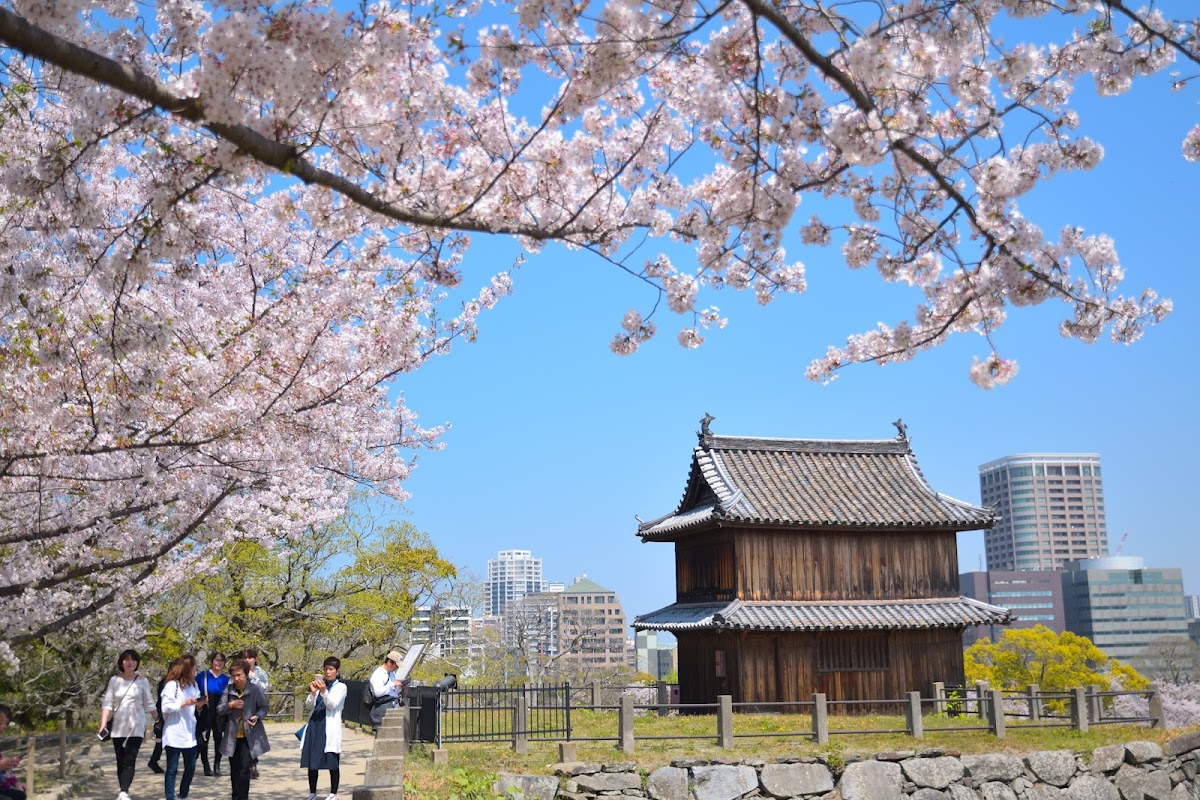
Records indicate that Fukuoka Castle once had as many as 47 turrets. Only the Tamon Turret (a nationally designated Important Cultural Property) remains today, but the Kinen Turret, the (alleged) Shiomi Turret, and the Shimonohashi Gate have been restored or relocated, allowing us to understand the castle’s architecture at the time.
The Tamon Turret is a long, barrack-style turret located in the southwest corner of the main enclosure, built on a stone wall. Its interior is divided into multiple rooms, serving both defensive and warehouse functions. It is currently designated a nationally important cultural property, and its interior can be viewed during special spring and autumn openings.
Moats and Water System
Fukuoka Castle was defended by an inner and outer moat. Parts of the moat still remain today, forming part of the landscape of Maizuru Park. The moat’s water was supplied using surrounding rivers and springs, and it also functioned as the castle’s water system.
The large moat on the west side, in particular, served as the castle’s outer moat and played a crucial role in securing water. The current Ohori Park is a remnant of this outer moat and is a popular place of relaxation for the citizens of Fukuoka.
Fukuoka Castle Highlights: Existing Structures and Restored Facilities
Tamon-yagura (National Important Cultural Property)
The Tamon-yagura is the only Edo period structure still standing at Fukuoka Castle and is designated as a National Important Cultural Property. Located in the southwest corner of the main enclosure, it is a long, barrack-style turret built on top of a stone wall. The building is approximately 30 meters long and 6 meters wide, and its interior is divided into multiple rooms.
A special spring opening is planned for 2026. While normally only the exterior can be viewed, during the special opening period, visitors can enter the interior. From the turret, you can enjoy a panoramic view of the castle grounds and experience the defensive system and structure of the castle at that time.
Tenshudai (Castle Tower Base)
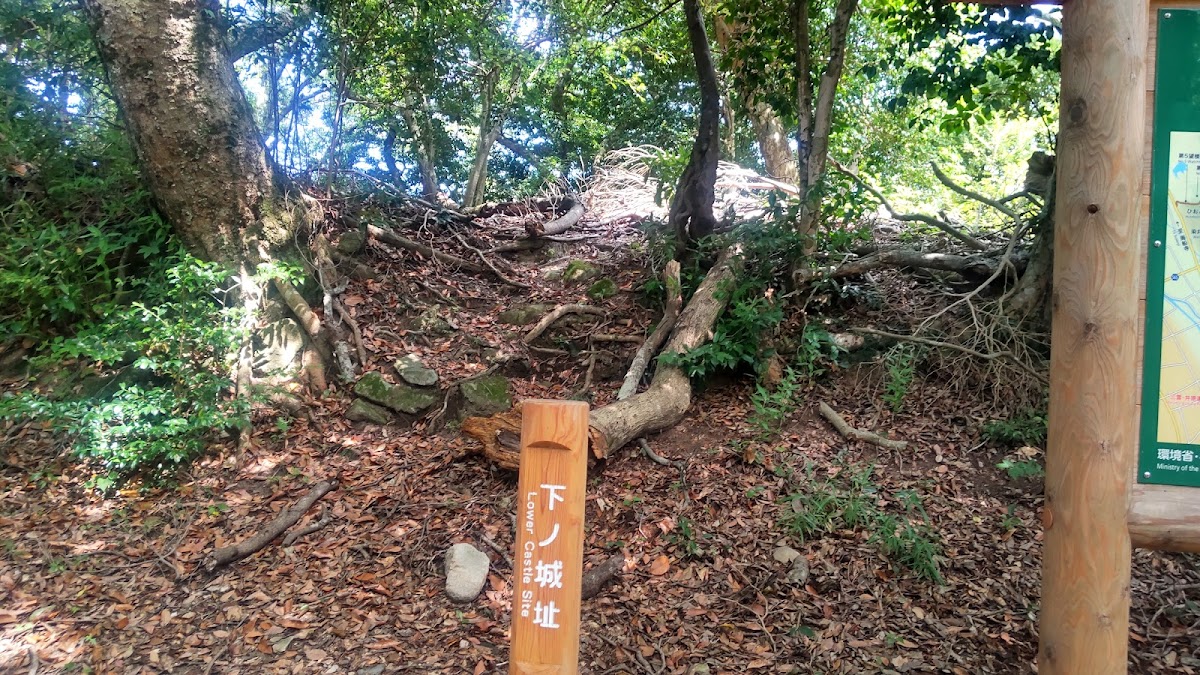
The Fukuoka Castle Tenshudai is located at the highest point within the castle grounds and is currently open to the public as an observation deck. From the castle keep’s base, you can enjoy a 360-degree panoramic view of Fukuoka city, including Hakata Bay, Fukuoka Dome, and Fukuoka Tower. The view is particularly beautiful at sunset and at night, attracting many tourists and locals.
Entry to the castle keep’s base may be restricted depending on the season, so it is recommended to check the official website before visiting. Since you will need to climb stone steps, comfortable shoes are recommended.
Kinen-yagura and Shimonohashi-gomon
The Kinen-yagura is a two-story turret located northwest of the Ninomaru (second enclosure), restored in 1984. While the interior is not open to the public, its exterior offers insight into the architectural style of Edo-period turrets.
The Shimonohashi-gomon is an important gate leading from the San-no-maru (third enclosure) to the Ninomaru (second enclosure), restored in 1991. It is a magnificent turret-style gate, preserving the castle architecture techniques of the time.
(Traditional) Shiomi-yagura (Tide-Viewing Turret)
The Shiomi-yagura is a turret located northeast of the main keep. As its name suggests, it is said to have been used to observe the ebb and flow of the tides in Hakata Bay. The current building is a relocated structure, and while the interior is not open to the public, the exterior allows us to understand the appearance of the turret at that time.
Korokan Ruins Exhibition Hall
Within the grounds of Fukuoka Castle, the remains of the Korokan, an ancient guesthouse, have been discovered. At the Korokan Ruins Exhibition Hall, visitors can view the excavated remains and artifacts, and learn about the history of ancient Japanese diplomacy.
The Korokan was a facility used to welcome envoys from mainland China and the Korean Peninsula from the Nara period to the Heian period. The exhibition hall displays the building’s foundation stones, post holes, and excavated artifacts such as ceramics and roof tiles, allowing visitors to learn about the state of international exchange in ancient times. Admission is free, and visiting it along with Fukuoka Castle allows you to experience the layered history from ancient times to the early modern period.
Fukuoka Castle Historical Museum
The Fukuoka Castle Historical Museum is a facility where you can learn about the history and structure of Fukuoka Castle. Inside, there are restored models of Fukuoka Castle, old maps, and panel displays, allowing you to visually understand the castle’s appearance at the time of its construction and its transformations over time.
There is also an experience corner using VR (virtual reality) technology, where you can virtually experience the lost keep and turrets. It is also a location for collecting castle stamps and stamps for the “100 Famous Castles of Japan,” making it a must-see facility for castle enthusiasts. Admission is free, and visiting before exploring the castle grounds will allow you to understand Fukuoka Castle more deeply.
San-no-maru Square
San-no-maru Square is a new hub facility developed in the Fukuoka Castle/Korokan area. It has rest areas, a cafe, and an information corner, making it a convenient place to rest during your castle exploration.
The facility provides information about the history and highlights of Fukuoka Castle, and also handles reservations for guided tours. Local specialties and souvenirs are also sold, allowing visitors to purchase mementos of their visit.
The Four Seasons of Maizuru Park
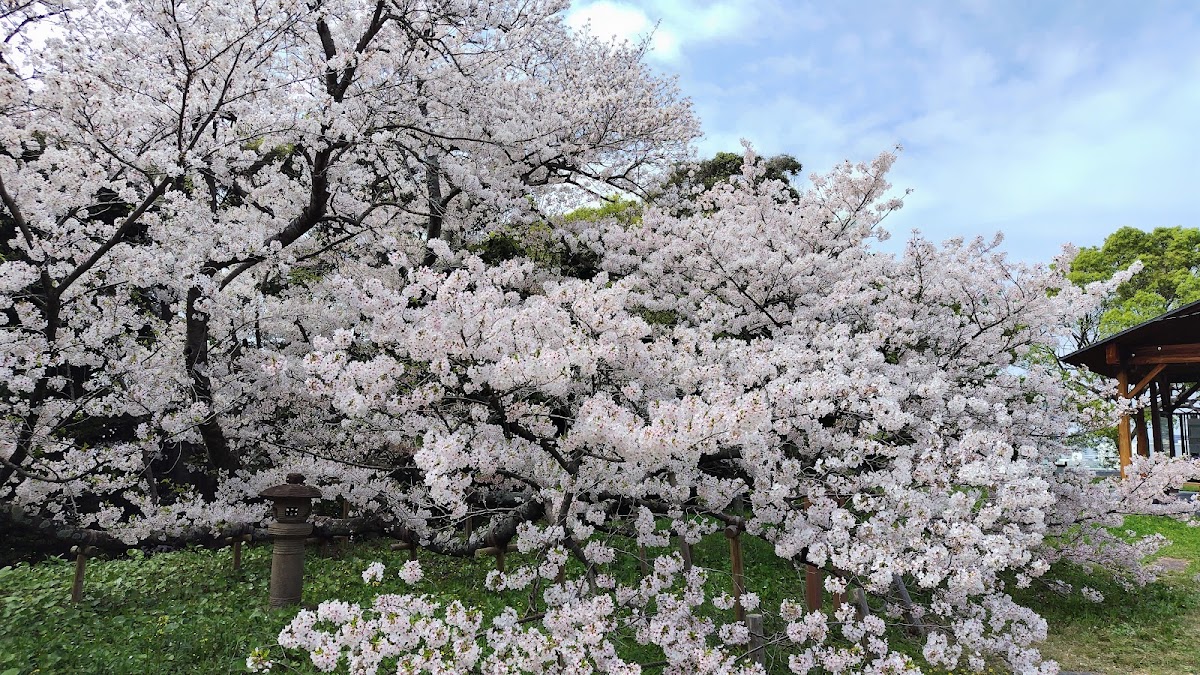
The Fukuoka Castle ruins are now maintained as Maizuru Park, where visitors can enjoy the changing seasons. The cherry blossoms in spring are particularly famous, with approximately 1,000 Somei Yoshino cherry trees in full bloom, culminating in the “Fukuoka Castle Cherry Blossom Festival.” The trees are illuminated at night, allowing visitors to enjoy the magical sight of cherry blossoms after dark.
In summer, the fresh greenery is beautiful, and in autumn, the autumn leaves color the castle ruins. In winter, plum blossoms bloom, showcasing various expressions throughout the year. The ability to enjoy historical exploration and nature walks simultaneously is a major attraction of Fukuoka Castle.
Facility Guide for Fukuoka Castle and Korokan Area
Mayu-no-Yakata
Mayu-no-Yakata is a rest facility located within Fukuoka Castle, and also sells castle stamps. Castle stamps featuring the first lord of the domain, Kuroda Nagamasa, and the founder of the domain, Kuroda Kanbei, are sold and are popular as souvenirs of visiting the castle.
The museum has a rest area where you can take a break during your stroll through the castle grounds. Informational materials and pamphlets about Fukuoka Castle are also available, making it a useful base for gathering information.
Details of the Korokan Site Exhibition Hall
The Korokan Site Exhibition Hall is a facility built on the excavation site of the Korokan, a national historical site. Inside, you can directly view the remains of the excavated buildings and learn about the structure of buildings from the Nara period to the Heian period.
Exhibits include ceramics, trade goods, and documents brought from China and the Korean Peninsula, providing insight into the realities of ancient international exchange. Admission is free, and opening hours are from 9:00 AM to 5:00 PM (last entry at 4:30 PM). It is closed on Mondays (or the following day if Monday is a public holiday) and during the New Year holidays.
How to Obtain Castle Stamps and Japan’s Top 100 Castles Stamps
Fukuoka Castle is one of Japan’s Top 100 Castles, making it an important spot for castle-visiting enthusiasts who collect stamps. Japan’s Top 100 Castles stamps are located at the Fukuoka Castle Historical Museum and the Korokan Ruins Exhibition Hall.
Castle stamps are sold at the Mayu-no-Yakata and the Fukuoka Castle Historical Museum. There are two types: a Kuroda Nagamasa version and a Kuroda Kanbei version, each with a different design. They cost 300 yen each and are popular as souvenirs of visiting the castle.
Access and Tourist Information
Access by Public Transportation
Public transportation is the most convenient way to access Fukuoka Castle. If using the Fukuoka City Subway, the following stations are the closest.
- Ohori Park Station (Airport Line): Approximately 8 minutes on foot from Exit 2
- Akasaka Station (Airport Line): Approximately 8 minutes on foot from Exit 2
- Tojinmachi Station (Airport Line): Approximately 15 minutes on foot
If using the bus, Nishitetsu Bus stops such as “Fukuoka Castle/NHK Broadcasting Center Entrance,” “Ohori Park,” and “Fukuoka City Museum East Entrance” are convenient.
Access by Car and Parking
If visiting by car, the nearest interchanges on the Fukuoka Urban Expressway are “Nishi Park Ramp” or “Momochi Ramp.” There is no dedicated parking lot within the castle grounds, but there are several paid parking lots in the surrounding area.
- Maizuru Park Parking Lot 1: Approximately 68 spaces
- Maizuru Park Parking Lot 2: Approximately 35 spaces
- Ohori Park Parking Lot: Approximately 103 spaces
Parking fees are approximately 200 yen per hour. During peak seasons such as cherry blossom season, these parking lots are often full, so using public transportation is recommended.
Opening Hours and Admission Fees
Fukuoka Castle Ruins (Maizuru Park) is generally open 24 hours a day, and admission is free. However, there may be time restrictions for climbing to the castle keep base depending on the season. Viewing the interiors of structures such as the Tamon-yagura (multi-story turret) is only available during special public viewing periods.
The opening hours for each facility are as follows:
- Fukuoka Castle Historical Museum: 9:00 AM – 5:00 PM (Last entry at 4:30 PM)
- Korokan Ruins Exhibition Hall: 9:00 AM – 5:00 PM (Last entry at 4:30 PM)
- Closed: December 29th – January 3rd (Korokan Ruins Exhibition Hall is also closed on Mondays)
Estimated Visiting Time
The time required for visiting Fukuoka Castle varies depending on the content of your visit.
- Main remains only: Approximately 1 hour
- Thorough exploration of the castle grounds: Approximately 2-3 hours
- Including facility tours: Approximately 3-4 hours
During cherry blossom season and autumn foliage season, we recommend taking your time to enjoy nature while strolling around.
Recommended Visiting Times
Fukuoka Castle can be visited year-round, but the following times are particularly recommended:
Spring (Late March – Early April): It’s cherry blossom season, and the Fukuoka Castle Cherry Blossom Festival is held. Approximately 1,000 cherry trees bloom, and they are illuminated at night. It’s the busiest time, but also the most beautiful.
Autumn (Mid-Late November): The autumn foliage is beautiful, and it’s relatively less crowded, allowing for a leisurely visit. The weather is pleasant, making it an ideal season for a stroll.
Winter (January – February): Plum blossoms bloom, allowing for a quiet historical exploration. There are fewer tourists, making for a peaceful visit.
Nearby Tourist Attractions
Ohori Park
Located just west of Fukuoka Castle, Ohori Park was developed from the former outer moat of Fukuoka Castle. The park has a circumference of approximately 2 kilometers and is popular with citizens enjoying jogging and strolling. It also features a Japanese garden and the Fukuoka Art Museum, making it a great place to visit in conjunction with Fukuoka Castle.
Fukuoka Art Museum
Located within Ohori Park, the Fukuoka Art Museum houses approximately 16,000 works, primarily focusing on modern and contemporary art. It reopened in 2019 after renovations and now includes a cafe and restaurant. Enjoying art after visiting Fukuoka Castle is highly recommended.
Gokoku Shrine
Within Fukuoka Castle is the Fukuoka Prefecture Gokoku Shrine, dedicated to those from Fukuoka Prefecture who died in war. The grounds offer a quiet and peaceful atmosphere, providing a place to rest and pray.
Fukuoka Tower & Seaside Momochi
Located about 15 minutes by car from Fukuoka Castle, Fukuoka Tower is a 234-meter-tall observation tower. From the observation deck on the top floor, you can enjoy a panoramic view of Fukuoka city and Hakata Bay. The surrounding Seaside Momochi area has tourist facilities such as the Fukuoka City Museum and Marizon.
Cultural Property Designation and Preservation Activities of Fukuoka Castle
Designation as a National Historic Site
Fukuoka Castle ruins were designated as a National Historic Site in 1957. This designation recognized the historical value of the castle ruins, its architectural value, and its urban history value. This designation has enabled the systematic planning and maintenance of the ruins.
Preservation of Important Cultural Properties
The Tamon-yagura (a type of turret) is designated as a National Important Cultural Property, and regular repairs and preservation are carried out. Because wooden structures inevitably deteriorate over time, expert surveys and repairs are continuously conducted. Even in the Reiwa era, efforts continue to pass on the value of this cultural property to future generations.
Archaeological Excavations and Research
At Fukuoka Castle, archaeological excavations are continuously being conducted, leading to the discovery of new remains and the elucidation of historical facts. In particular, the discovery of physical evidence regarding the existence of a castle tower is highly anticipated.
Furthermore, research is continuing at the site of the Korokan (a historical guesthouse), contributing to the understanding of ancient international exchange. These research results are made public as they occur and are used for historical research and education.
Development Plan and Future Vision
Fukuoka City has formulated a development plan for the Fukuoka Castle and Korokan area, promoting the preservation and utilization of the historical site. Plans for the restoration of buildings, the development of remains, and the enhancement of information facilities are planned for the Reiwa era and beyond, and the area is expected to develop into an even more attractive historical park.
In 2022, a new logo mark for the Fukuoka Castle and Korokan area was established, strengthening branding and promotion. A balanced approach is being pursued to protect the value of the historical heritage while utilizing it as a tourist resource.
Events and Activities at Fukuoka Castle
Fukuoka Castle Cherry Blossom Festival
Held every spring, the Fukuoka Castle Cherry Blossom Festival is a representative spring event of Fukuoka City. Various events are held amidst the blooming of approximately 1,000 cherry trees. The trees are illuminated at night, allowing visitors to enjoy the magical sight of cherry blossoms after dark.
During the festival, food stalls are set up, and the area is bustling with many people enjoying the cherry blossoms. The view of the cherry blossoms from the castle tower base is exceptional, and the collaboration of Fukuoka city and cherry blossoms is a must-see.
Special Opening of the Tamon-yagura Tower
The Tamon-yagura Tower, a nationally designated important cultural property, is usually only viewable from the outside, but special openings are held in spring and autumn. A special opening is also planned for spring 2026, allowing visitors to see the internal structure of the tower and the architectural techniques of the time up close.
During the special opening period, volunteer guides provide explanations, allowing visitors to learn in detail about the history and architectural features of the Tamon-yagura Tower.
Daily Life at Fukuoka Castle
Fukuoka Castle hosts a variety of events throughout the seasons. Events such as history lectures, guided tours, and workshops are planned to allow visitors to enjoy the charm of Fukuoka Castle from multiple perspectives.
The official website and social media (Instagram: @fukuoka_castle) provide the latest event information and seasonal scenery within the castle grounds. Checking these before your visit will make your experience more fulfilling.
Summary: Experience the Charm of Fukuoka Castle
Fukuoka Castle is one of the largest castles in Kyushu, built by Kuroda Nagamasa, and remains a valuable national historical site with many remnants still standing. It’s a rare place where you can experience the layered history from ancient times to the early modern period, with important cultural properties such as the Tamon-yagura (a type of turret), the magnificent Tenshudai (castle tower base), and the ancient Korokan site.
The castle ruins, now developed as Maizuru Park, are a place of relaxation for citizens where they can enjoy the changing seasons while exploring history. By utilizing facilities such as the Fukuoka Castle Historical Museum and the Korokan Ruins Exhibition Hall, you can gain a deeper understanding of the history and charm of Fukuoka Castle.
When you visit Fukuoka, be sure to visit Fukuoka Castle and experience the magnificent fortress built by the Kuroda clan and the breath of history that has continued since ancient times. Collect castle stamps and stamps from the “100 Famous Castles of Japan” to commemorate your visit and fully experience the charm of Fukuoka Castle.