Yuzeki Castle (Kurayoshi City, Tottori Prefecture) Complete Guide | History, Remains, and Access Information
Located in Kurayoshi City, Tottori Prefecture, Yuzeki Castle is a valuable mountain castle site that still conveys the atmosphere of the Sengoku period. As an important base in the medieval Hoki Province, it is an indispensable part of understanding the region’s history. This article provides a detailed explanation of Yuzeki Castle, from its historical background to existing remains and actual visitor information.
What is Yuzeki Castle?
Yuzeki Castle was a medieval mountain castle located in Sekigane-cho, Kurayoshi City, Tottori Prefecture. Built on a mountaintop approximately 400 meters above sea level, this castle was an important military base in Hoki Province (present-day central-western Tottori Prefecture) during the Sengoku period.
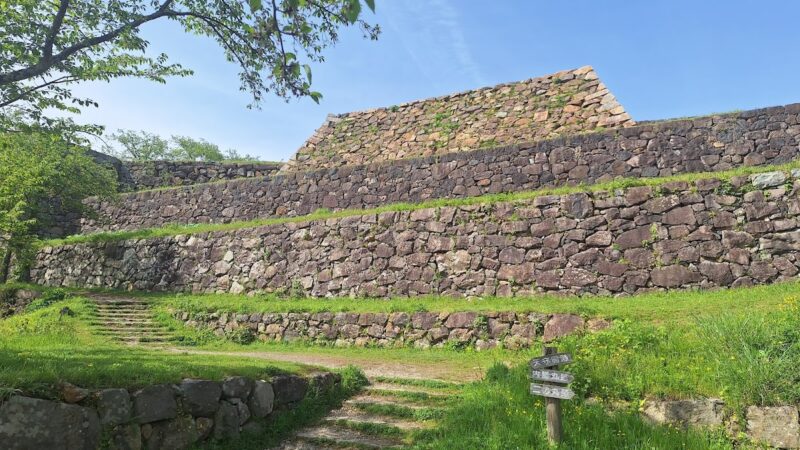
Currently, it remains as a castle site, and remains such as baileys and moats can be seen. The layout, which skillfully utilizes the terrain unique to mountain castles, speaks to the high level of castle-building technology of the time.
History of Yunoseki Castle
Background and Period of Construction
The exact construction date of Yunoseki Castle is unknown, but it is believed to have been built during the mid-to-late Sengoku period. This area is located in the eastern part of Hoki Province, near the border with Inaba Province (eastern Tottori Prefecture), making it a strategically important location.
Changes in Lords and Rulers
Yunoseki Castle was used by several forces that ruled Hoki Province. Especially during the Sengoku period, its rulers changed over time, being incorporated into the spheres of influence of the Amago clan, the Mori clan, and Hashiba (Toyotomi) Hideyoshi.
Connections to the Nanjo clan, a powerful local family, and their retainers have also been noted, suggesting that it functioned as a base for regional control.
Role in the Sengoku Period
Yunoseki Castle served not only as a military base but also as a strategically important transportation hub. The Sekigane region has long been known as a hot spring area, and its location along a major road was important for the distribution of goods and the transmission of information.
During the turbulent Sengoku period, it is believed to have played a role in the regional defense system, working in conjunction with surrounding castles.
Abandonment of the Castle and its Aftermath
In the Edo period, many mountain castles were abandoned due to policies such as the “One Castle Per Province” decree. It is presumed that Yunoseki Castle was similarly abandoned after its military role ended. Since then, while the castle ruins have gradually returned to nature over many years, important remains have survived to this day.
Structure and Remains of Yunoseki Castle
Characteristics of the Castle Layout
Yunoseki Castle has a typical mountain castle structure, skillfully utilizing the mountain ridges and slopes. Multiple baileys are arranged around the main enclosure, and various defensive measures are evident throughout.
Maximizing its location as a mountain castle, the steep terrain serves as a natural defensive wall. To prevent enemy intrusion, artificial defensive structures were constructed at key locations.
Major Remains
Enclosures (Kuruwa)
Several enclosures (kuruma) can be identified, including the main enclosure (shukuruwa), which was the center of the castle. These were flat, leveled areas used for buildings and troop encampments. The main enclosure is located at the highest point and is thought to have housed the command post and the lord’s residence.
Moats
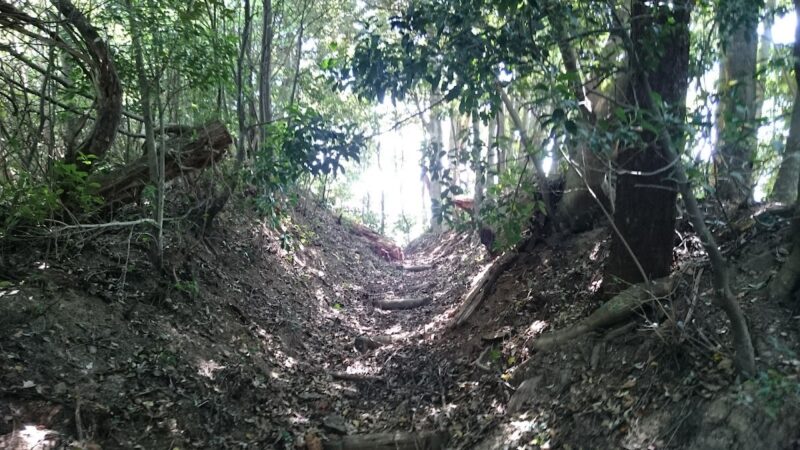
Moats dug to cut across the ridges were important defensive structures to prevent enemy intrusion. Several moats remain at Yunoseki Castle, making them valuable remains for understanding the defensive structure of mountain castles.
Earthworks
Earthworks, built by piling up earth, can also be seen in some areas. These functioned as defensive walls and boundaries between sections.
Vertical Moats
Vertical moats dug vertically along slopes restricted the enemy’s lateral movement and made attacks difficult. Traces of vertical moats can be seen on the slopes at Yunoseki Castle. ### Preservation of the Ruins
While the Yunoseki Castle ruins have been affected by years of weathering and vegetation, the main remains are relatively well-preserved. However, full-scale archaeological excavations have been limited, and there is potential for new discoveries through future investigations.
Highlights of Yunoseki Castle
A Mountain Castle Experience Filled with Historical Romance
The greatest appeal of visiting Yunoseki Castle is the opportunity to experience a mountain castle from the Sengoku period firsthand. This earthen castle, without stone walls, offers a valuable opportunity to directly understand the construction techniques and defensive philosophies of the time.
Views and Natural Environment
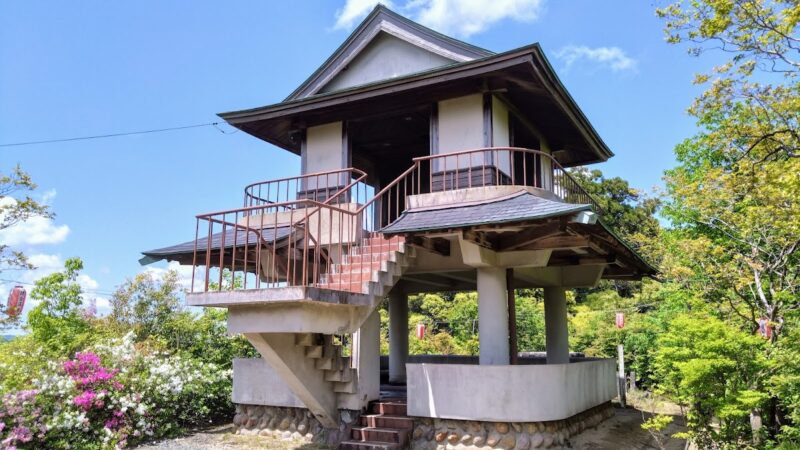
From near the summit, you can overlook the city of Kurayoshi and the surrounding mountains. The castle soldiers of the Sengoku period likely monitored enemy movements while gazing at the same scenery. The beauty of nature throughout the seasons makes it a perfect place to enjoy historical exploration and hiking simultaneously.
Views and Natural Environment
Defensive Systems of Medieval Mountain Castles
By observing the layout of moats and baileys, you can understand the ingenious mechanisms of how medieval castles defended against enemies. It’s a place of great learning for castle enthusiasts and history buffs.
Access to Yuseki Castle
Location
Address: Sekigane-cho, Kurayoshi City, Tottori Prefecture
Access by Car
- From Yuhara IC on the Yonago Expressway: Approximately 30 minutes
- From the center of Kurayoshi City: Approximately 20 minutes via National Route 313
Parking is limited near the trailhead to the castle ruins, so please be careful. If possible, consider using the public parking lot at Sekigane Onsen and accessing the castle on foot from there.
Access by Public Transportation
- From JR Kurayoshi Station: Take the Hinomaru Bus bound for Sekigane Onsen (approximately 30 minutes). After getting off at Sekigane Onsen, walk to the trailhead.
Since bus services are limited, it is recommended to check the timetable in advance.
Castle Ascent Route
From the trailhead to the castle ruins, you will need to walk along a mountain path. The time required will vary depending on your physical fitness and experience, but please allow approximately 30 minutes to 1 hour one way. Since some parts of the path are not well-maintained, the following preparations are necessary.
Important Notes for Visitors
Clothing and Equipment
- Hiking boots or non-slip shoes: Mountain trails can be slippery and include steep slopes.
- Long-sleeved shirt and long pants: To protect yourself from plants and insects.
- Hat: To protect your head from the sun and branches.
- Gloves: You may need to use your hands to support yourself on steep slopes.
- Drinking water: Sufficient hydration is especially necessary in summer.
- Rain gear: To prepare for sudden changes in weather.
Safety Precautions
- Avoid traveling alone: Visit in groups if possible.
- Check the weather: The ground can be slippery and dangerous during and after rain.
- Descend before sunset: It gets dark quickly in the mountains, so allow plenty of time.
- Cell phone signal: Signals may be weak in some areas of the mountains.
- Wildlife: Be aware of wild boars, venomous snakes, etc.
Manners and Consideration
- Protection of the Ruins: Please do not damage the ruins or move any stones.
- Take your trash with you: To protect the natural environment, please be sure to take your trash with you.
- Respect for private property: Please refrain from entering areas other than the designated hiking trails.
Nearby Tourist Attractions
Sekigane Onsen
Sekigane Onsen, located at the foot of Yunoseki Castle, is a famous hot spring with a history of over 1300 years. It has been selected as one of “Japan’s Top 100 Hot Springs” and is characterized by its colorless, transparent radium spring water. It is highly recommended to relax in the hot springs after exploring the castle ruins.
Utsubuki Tamagawa Traditional Buildings Preservation District (Kurayoshi White-Walled Storehouse District)
Located in the heart of Kurayoshi City, the white-walled storehouse district retains the atmosphere of the Edo and Meiji periods, creating a beautiful townscape. Visiting it together with Yunoseki Castle allows you to experience the flow of history from the medieval to the early modern period.
Mitoku-san Sanbutsuji Nageire-do
Nageire-do, designated a National Treasure, is a mystical structure built on a sheer cliff. Located in Misasa Town, next to Kurayoshi City, it’s about a 40-minute drive from Yunoseki Castle.
Kurayoshi Museum & Kurayoshi Historical and Folk Museum
This facility allows you to learn about the history and culture of Kurayoshi City. It also features exhibits on local castles, deepening your understanding of Yunoseki Castle.
Historical Background of Yunoseki Castle and Kurayoshi City
Importance of the Kurayoshi Region in Hoki Province
The eastern part of Hoki Province, including Kurayoshi, has flourished as a transportation hub since ancient times. Located on the route connecting San’in and Sanyo, it saw a bustling flow of goods and people. Therefore, during the Sengoku period (Warring States period), it became a militarily important region, leading to the construction of mountain castles like Yunoseki Castle.
Hoki Province in the Sengoku Period
The 16th century in Hoki Province was a turbulent era, with the Amago clan of Izumo, the Mori clan of Aki, and the local Nanjo clan vying for power. Yunoseki Castle is believed to have played an important role in these power struggles.
The Relationship Between Hot Springs and Castles
Sekigane Onsen has long been known as a therapeutic hot spring resort, and it is presumed that the construction of the castle was also motivated by the intention to bring this hot spring area under control. Hot springs had economic value and were a valuable resource that could also be used to treat wounded soldiers.
Current Status of Research on Yuseki Castle
Previous Research
While comprehensive academic research on Yuseki Castle has been limited, surveys have been conducted by local historians and castle researchers. These surveys have led to the creation of layout maps and the confirmation of remains.
Future Challenges and Possibilities
Future research, such as the discovery of artifacts through archaeological excavations and the clarification of the layout through detailed surveying, may further reveal the full picture of Yuseki Castle. Furthermore, clarifying its relationship with surrounding castles will provide insight into the overall defense system of the region.
The Significance of Visiting Yuseki Castle
Understanding Local History
Visiting Yuseki Castle is a valuable opportunity to gain a deeper understanding of the history of Kurayoshi City and Tottori Prefecture. Even local history not found in textbooks can be vividly experienced by visiting actual historical sites.
Experiencing the Charm of Mountain Castles
Earth castles without stone walls may seem unassuming at first glance. However, their layouts, skillfully utilizing the terrain, and their defensive systems integrated with nature possess a unique beauty and functional elegance.
Connecting with Nature
Exploring mountain castles is an activity that allows you to enjoy history learning and hiking simultaneously. The time spent reflecting on history while enjoying a forest bath will be a refreshing escape from everyday life.
Best Season to Visit Yunoseki Castle
Spring (March-May)
The fresh greenery is beautiful, and the temperature is mild, making it ideal for climbing the castle. However, caution is needed as the ground may be slippery immediately after the snow melts.
Summer (June-August)
The greenery is lush, and you can enjoy forest bathing, but it is a season with high temperatures and many insects. Adequate hydration and insect repellent are necessary.
Autumn (September-November)
This is the most recommended season due to the beautiful autumn foliage and stable weather. Sunny days are frequent, allowing for enjoyable views.
Winter (December-February)
Climbing the castle becomes difficult if there is snow. Even without snow, the early sunsets and low temperatures make this season more suitable for experienced climbers.
Yunoseki Castle and Other Castles in Kurayoshi City
Besides Yunoseki Castle, several other castle ruins exist in Kurayoshi City.
Utsubuki Castle
Built on Utsubuki Mountain, a symbolic landmark of Kurayoshi City, this castle is known as the residence of the Nanjo clan. It was larger in scale than Yunoseki Castle and served as a central castle in the region.
Other Branch Castles
Including Yunoseki Castle, many branch castles were built around Kurayoshi, forming a network. Visiting these together provides a deeper understanding of the regional defense system during the Sengoku period.
Summary
Yuseki Castle is a Sengoku period mountain castle ruin located in Sekigane-cho, Kurayoshi City, Tottori Prefecture. Remains such as baileys and moats are still present, making it a valuable historical site for learning about the structure of medieval mountain castles.
Located near Sekigane Onsen (hot springs), it’s possible to combine historical exploration with a relaxing soak. Reaching the castle requires hiking along mountain paths, so appropriate clothing, equipment, and safety precautions are necessary. However, this offers a truly immersive experience of the Sengoku period.
When visiting Kurayoshi City, why not explore not only famous tourist spots like the White-Walled Storehouse District, but also hidden historical sites like Yuseki Castle? It will be a valuable experience for gaining a deeper understanding of local history and experiencing the charm of a mountain castle.
Yuseki Castle is recommended not only for castle enthusiasts and history buffs, but also for those who enjoy hiking and nature walks. Why not enjoy a trip back in time to the Sengoku period on your next day off?