Tomishige Castle (Yonago City, Tottori Prefecture) Complete Guide | History, Remains, and Access Information
Located in Yonago City, Tottori Prefecture, Tomishige Castle is a historic mountain castle that served as the residence of samurai associated with the Yamana clan during the Sengoku period. This castle, which functioned as a natural stronghold nestled between the Motomiya River and a valley, is now farmland, but it remains a valuable historical site that conveys the region’s history, preserving traces of its former glory. This article provides comprehensive information for castle enthusiasts and history buffs, covering the detailed history of Tomishige Castle, the characteristics of its remains, and access methods.
Basic Information on Tomishige Castle
Tomishige Castle is a medieval mountain castle located in Yonago City, Tottori Prefecture, and was one of the important military bases in the Inaba and Hoki regions during the Sengoku period. The castle’s location took advantage of the terrain, which provided excellent defensive capabilities, with the surrounding rivers and valleys acting as natural moats.
Location: Yonago City, Tottori Prefecture
Castle Type: Mountain Castle
Construction Period: Sengoku Period (Warring States Period)
Main Lords: Members of the Yamana Clan
Current Status: Farmland, some remains remaining
The name of the castle, “Tomihige,” is interesting as it suggests that this region has been a fertile land since ancient times. There are various theories about the origin of the place name, but it is thought that it may be related to the thriving agricultural production or a wish for the prosperity of the lord.
History and Construction Background of Tomishige Castle
Situation in Inaba and Hoki Provinces during the Sengoku Period
During the Sengoku period, when Tomishige Castle was built, Hoki Province in western Tottori Prefecture was within the sphere of influence of the Yamana clan. The Yamana clan was a powerful shugo daimyo (provincial governor) that boasted such influence during the Muromachi period that it was called “one-sixth of the territory,” and they were a prestigious family that played a major role as a key force in the Western Army during the Onin War. However, with the advent of the Sengoku period (Warring States period), the Yamana clan’s power gradually declined due to the rise of new forces such as the Amago and Mori clans.
It is believed that Tomishige Castle functioned as a base for regional control and a key defensive point during this turbulent period. The area around Yonago was a crucial transportation hub connecting the San’in and Sanyo regions, making it militarily and economically important.
Castles Associated with the Yamana Clan
According to historical records, Tomishige Castle was the residence of a person associated with the Yamana clan. It is presumed that the Yamana clan’s retainers and family members built the castle for the purpose of managing their territory and military defense. Mountain castles during the Sengoku period were not merely military facilities; they also functioned as the lord’s residence, serving as a center for governing the territory during peacetime.
Even after the decline of the Yamana clan’s power, the rulers of this region shifted from the Amago clan and Mori clan to the Oda-Toyotomi regime. While there are no clear records of when Tomishige Castle was last used, it is highly likely that, like many medieval mountain castles, it was abandoned in the early Edo period due to the “One Castle Per Province” decree.
Location and Layout of Tomishige Castle
Topography as a Natural Fortress
The greatest feature of Tomishige Castle lies in its excellent location. Built on a hill between the Motomiya River and a valley, the castle was a natural fortress protected on three sides by steep slopes. This type of terrain is known as a “valley castle” or “river castle,” and is a typical location selection for medieval mountain castles.
The Motomiya River played a crucial role as a defensive line for the castle, making it difficult for enemy forces to approach. Furthermore, the river also functioned as a water source for the castle, which is thought to have been important in siege warfare.
Characteristics of the Castle Structure
Currently, the Tomishige Castle site is mainly used as farmland, so many of the original remains have been lost. However, based on observations of the topography and investigations of the surrounding area, the following castle structure has been estimated.
Main Enclosure (Honmaru): Located at the highest point, it is believed to have housed the lord’s residence and command post.
Enclosure Group: Multiple enclosures (flat areas) were arranged around the main enclosure, used as troop garrisons and storage for supplies.
Moats and Earthworks: It is possible that moats cutting across the ridge and earthworks for defense were constructed.
Entrance (Koguchi): It is presumed that complex entrances were constructed to prevent enemy intrusion.
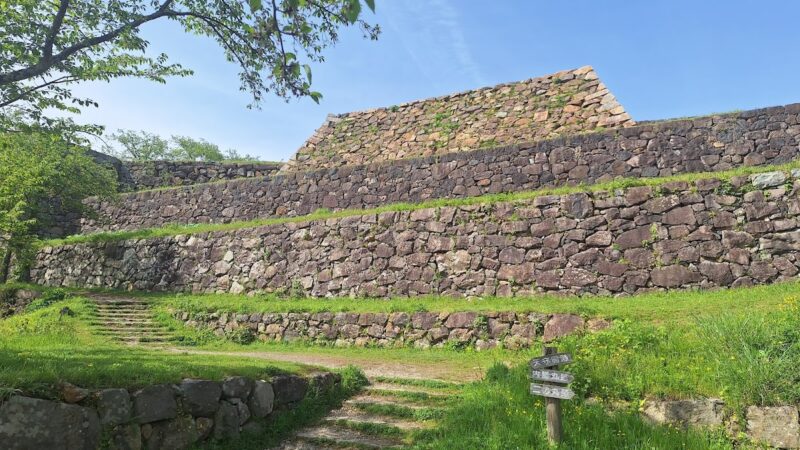
Many medieval mountain castles lacked stone walls, instead constructing defensive lines with earthworks and moats. Tomishige Castle is thought to have had a similar structure, and its layout, which skillfully utilized the terrain, is presumed to have been a distinctive feature.
Current Status and Remains of Tomishige Castle
Current Status of the Castle Site
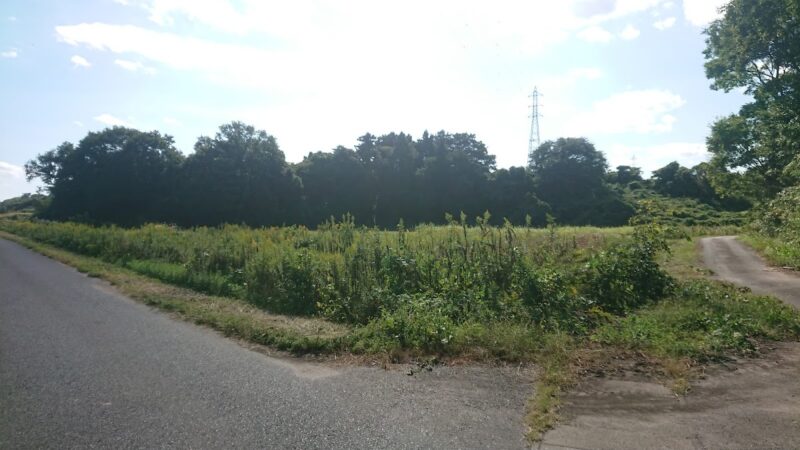
The current Tomishige Castle site is mainly used as farmland. Due to years of agricultural development, many castle remains have been altered, and only a limited number of structures can be clearly identified. However, it is possible to infer the former layout of the baileys from the topography, including the undulations and elevation changes.
While the preservation of the remains is not always good due to conversion to farmland, this is a common challenge faced by many medieval mountain castles throughout Japan. Many castle sites are on private land, making it difficult to balance preservation and utilization.
Characteristics of Remaining Remains
Because detailed excavation surveys have not been conducted, it is difficult to clearly identify the remains, but the following traces can be observed from topographical observation:
- Terrain Structure: The terraces of the fields may be remnants of former baileys.
- Topographical Undulation: Traces of modification of the natural terrain remain in some areas.
- Surrounding Place Names: Place names such as “castle” and “mansion” remain in the surrounding area, suggesting the existence of a castle.
Exploration by castle researchers and local history enthusiasts may uncover new remains.
Relationship with Castles in the Yonago Area
Connection to Yonago Castle
Yonago City is home to Yonago Castle, a modern castle built by Kikkawa Hiroie. Yonago Castle was an important castle that functioned as the administrative center of the Yonago Domain throughout the Edo period and is now designated a national historic site.
Tomihige Castle is an older castle than Yonago Castle and holds an important position in understanding the regional governance system of the Sengoku period. Before the construction of Yonago Castle, medieval mountain castles like Tomishige Castle were scattered throughout this region, each functioning as a regional power base.
Defense Network with Surrounding Castles
Mountain castles of the Sengoku period did not exist in isolation; multiple castles cooperated to form a comprehensive defense network for the region. It is believed that Tomishige Castle, in cooperation with surrounding castles, played a part in the defense system of western Hoki Province.
The network of castles, used for communication via signal fires, monitoring roads, and tracking enemy movements, was extremely important in military strategy during the Sengoku period. The location of Tomishige Castle may have been selected with its role within this defensive network in mind.
Access to Tomishige Castle
Access by Public Transportation
Access to Tomishige Castle ruins by public transportation is somewhat inconvenient. The nearest train station is Yonago Station on the JR San’in Main Line.
From JR Yonago Station:
- Take a bus or taxi from the station
- Walking is not recommended due to the considerable distance
If using local bus routes, it is recommended to check the timetable in advance. There may be limited service.
Access by Car
Access by car is the most convenient.
From the San’in Expressway:
- Exit at Yonago IC and head towards the city center.
- If using a car navigation system, set a nearby address or facility as your destination.
Parking Information:
The castle ruins are currently farmland, and there is no dedicated parking lot. When visiting, please be considerate of local residents and avoid causing any inconvenience. It is important to avoid trespassing on private property and to park in a location that does not obstruct road traffic.
Precautions for Visiting
When visiting Tomishige Castle Ruins, please note the following:
- Respect for Private Property: Much of the castle ruins are on private property. Please do not trespass.
- Respect for Agricultural Work: The area is used as farmland, so please be careful not to interfere with agricultural work.
- Safety: Some areas have uneven ground, so please wear appropriate clothing and shoes.
- Take Your Trash Home: For environmental protection, please be sure to take your trash home with you. 5. Check the Weather: It is recommended to avoid visiting during rainy weather, as the ground becomes slippery.
How to Enjoy Visiting Tomishige Castle
Points for Observing the Topography
The greatest enjoyment of visiting Tomishige Castle ruins is experiencing firsthand how the castle utilized the terrain during the Sengoku period.
- Relative Relationship with Rivers: Observe the relationship between the Motomiya River and the castle ruins, and imagine how it functioned as a defensive line.
- Checking the Visibility: By looking around from the castle ruins and checking which directions are visible, you can understand the surveillance system of the time.
- Observing Terraces: Observe the terraces in the fields, considering the possibility that they may be remnants of former baileys.
Points for Photography
When enjoying photography at Tomishige Castle ruins, the following points are recommended:
- Long-Distance Photography: Photographing the entire castle ruins from the surrounding high ground will clearly show the characteristics of the terrain.
- Composition with the Motomiya River: Photographing the river and castle ruins together effectively captures the castle’s natural fortifications.
- Seasonal Scenery: Photographs combining the seasonal landscapes of farmland with historical context are also captivating.
When taking photographs, please be considerate of private property and agricultural work, and always confirm any necessary permits in advance.
Nearby Tourist Spots
When visiting Tomishige Castle Ruins, we recommend also visiting other historical spots around Yonago City.
Yonago Castle Ruins
Designated as a National Historic Site, Yonago Castle Ruins is a modern castle built later than Tomishige Castle. The stone walls and keep base are well-preserved, making it a must-see spot for castle enthusiasts. From the keep base, you can enjoy a spectacular panoramic view of Yonago city, the Sea of Japan, and Mt. Daisen.
Yonago City San’in History Museum
This facility allows you to learn about the history and culture of Yonago. The museum displays historical materials from the Sengoku period to the modern era, helping to deepen your understanding of Tomishige Castle.
Mt. Daisen
Mt. Daisen, a famous mountain representative of Tottori Prefecture, is close to Yonago City and ideal for enjoying nature. You can enjoy mountain climbing, hiking, and the scenery of the four seasons.
Kaike Onsen
Located along the coast of Yonago City, Kaike Onsen is one of the leading hot spring resorts in the San’in region. It’s perfect for relaxing after exploring the Tomishige Castle ruins.
Historical Value and Future Preservation of Tomishige Castle
Importance in Regional History Research
Tomishige Castle is an important historical site for understanding the realities of regional governance in the Inaba and Hoki regions during the Sengoku period. Although it receives less attention than large-scale early modern castles, medieval mountain castles are valuable resources for understanding the social structure and military technology of the time.
The history revealed through Tomishige Castle is multifaceted, encompassing the castle’s layout within the Yamana clan’s sphere of influence, the activities of local powerful families, and its eventual abandonment with the end of the Sengoku period.
Challenges of Preservation and Utilization
Like many medieval mountain castles across Japan, Tomishige Castle faces challenges in both preservation and utilization.
Main Challenges:
- Preservation activities are difficult due to private ownership.
- The site is used as farmland, leading to alterations of the remains.
- Low awareness makes it difficult to build momentum for preservation.
- Detailed investigations have not been conducted.
Future Possibilities:
- Development of preservation activities by local residents and history enthusiasts.
- Implementation of academic research.
- Examination of methods for utilizing it as a tourist resource.
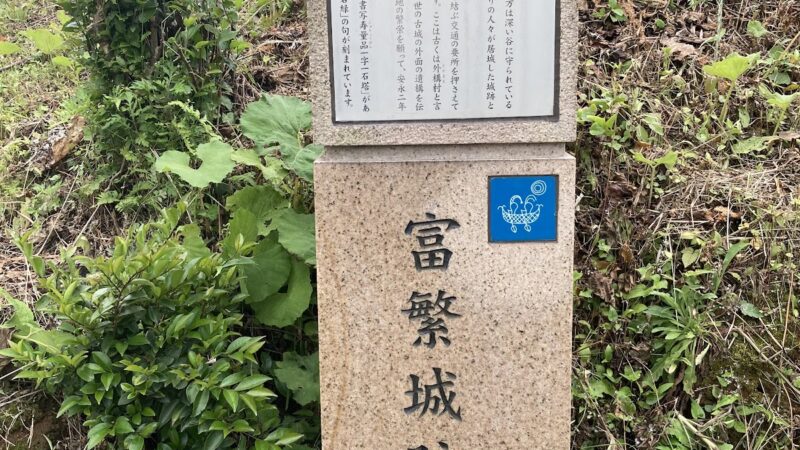
- Improving awareness through the installation of information boards and explanatory signs.
As a regional historical heritage site, it is crucial to pass it on to future generations while striking a balance between appropriate preservation and utilization.
Understanding the Mountain Castle Culture of the Sengoku Period
Characteristics of Medieval Mountain Castles
Medieval mountain castles, such as Tomishige Castle, have characteristics that differ significantly from the stone-walled castles of the early modern period.
Structural Characteristics:
- Defense using earthworks and moats
- Maximizing use of natural terrain
- Simple buildings
- Built on mountaintops and ridges
Functional Characteristics:
- Functioned as the lord’s residence in peacetime
- A place of refuge in times of emergency
- A base for monitoring the territory
- A display of military presence
Life in Mountain Castles
Life in mountain castles during the Sengoku period was far more arduous than modern people can imagine.
Daily Life:
- Securing water was a crucial issue
- Food storage and management
- Living on limited flat land
- Adapting to a harsh natural environment
Military Activities:
- Constant vigilance
- Communication via beacon fires
- Management of weapons and armor
- Training and exercises
The warlords who resided at Tomishige Castle also managed their territories and defended their military bases within this environment.
Summary
Tomishige Castle is a Sengoku period mountain castle located in Yonago City, Tottori Prefecture. It is a historical castle that served as the residence of warlords associated with the Yamana clan. As a natural stronghold nestled between the Motomiya River and a valley, it functioned as a base for regional defense and control.
Currently, the site is farmland, making it difficult to clearly identify any remains. However, by observing the topography, it is possible to imagine the castle’s appearance at the time. Although less well-known than large-scale early modern castles like Yonago Castle, it is an important historical site for understanding the regional history of the Sengoku period.
When visiting the Tomishige Castle ruins, please be mindful of private property and agricultural work, and observe the topography and surrounding environment while feeling the historical romance of the Sengoku period. There are many other attractive tourist spots around Yonago City, such as the Yonago Castle ruins, Mt. Daisen, and Kaike Onsen, so visiting them together will allow you to enjoy a more fulfilling historical exploration.
While the preservation and utilization of medieval mountain castles is a nationwide challenge, we hope that Tomishige Castle will be appropriately preserved as a regional historical heritage site and passed down to future generations. We believe that history enthusiasts and castle fans can contribute to raising awareness and promoting the preservation of such local historical sites by taking an interest in and visiting them.