Complete Guide to the Tachikawa Clan Residence Site | Thorough Explanation from Earthworks and Remains to History [Tachikawa City, Tokyo]
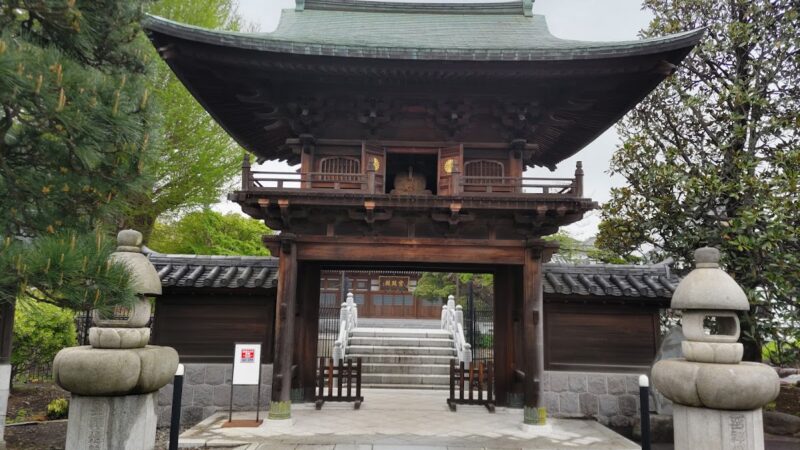
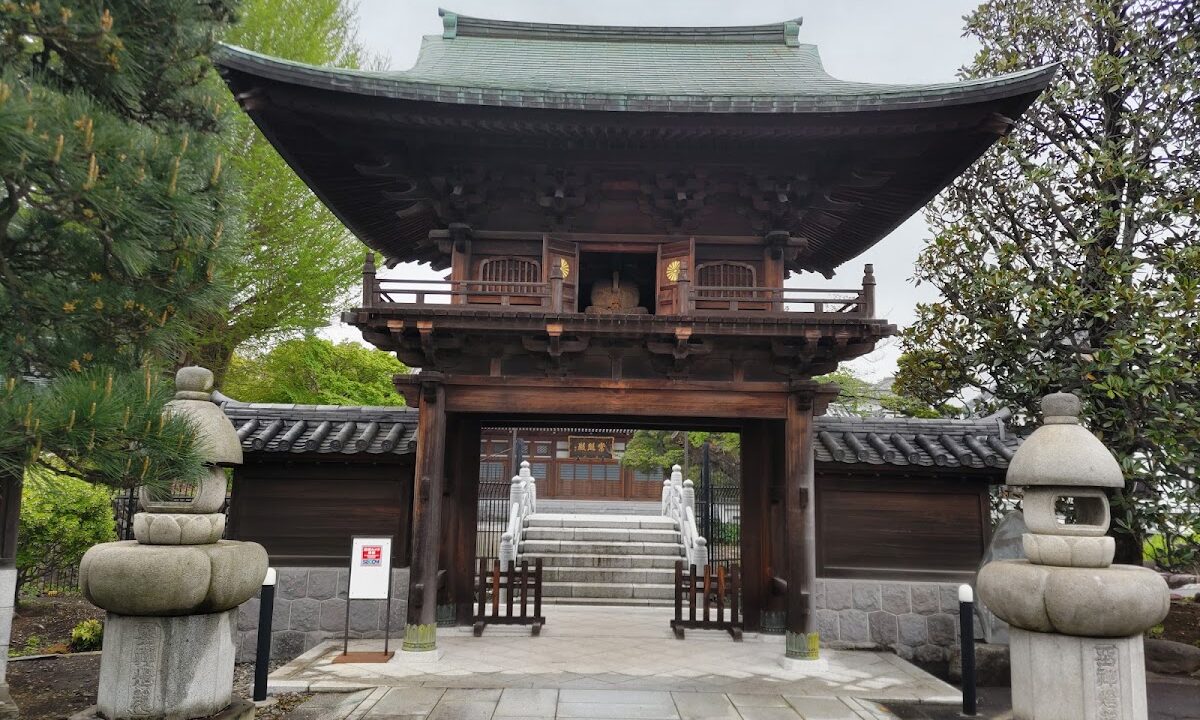
The Tachikawa Clan Residence Site, located in Shibasaki-cho, Tachikawa City, Tokyo, is the site of the residence of the Tachikawa clan, a powerful family in Musashi Province that was active from the Kamakura period to the Nanboku-cho period. Although currently located within the grounds of Fusaiji Temple, it is preserved as a Tokyo Metropolitan Government-designated historical site, and boasts valuable remains of a medieval residence within Tokyo. This article provides a detailed explanation of the history, highlights, and access methods of the Tachikawa Clan Residence Site.
What is the Tachikawa Clan Residence Site? | Basic Information and Overview
Basic Data of the Tachikawa Clan Residence
The Tachikawa Clan Residence Site is a medieval residence site also known as Tachikawa Castle or Tachikawa Clan Residence.
Basic Information
- Location: 4-20-46 Shibasaki-cho, Tachikawa City, Tokyo (within the grounds of Fusaiji Temple)
- Common Name/Alternate Name: Tachikawa Castle, Tachikawa Clan Residence
- Former Province: Tama District, Musashi Province
- Classification/Structure: Flatland Castle, Residence Site
- Keep Structure: None (due to being a medieval residence)
- Builder: Tachikawa Munetsune (Tachikawa Clan)
- Year of Construction: Estimated to be mid-Kamakura period
- Main Lord: Tachikawa Clan
- Cultural Property Designation: Tokyo Metropolitan Government Designated Historic Site (Designated November 11, 1972)
- Period: Mid-Kamakura period to Nanboku-cho period
Characteristics of the Tachikawa Clan Residence
The most striking feature of the Tachikawa Clan Residence site is that, as a medieval residence site remaining on flat land in Tokyo, the remains of earthworks and moats are preserved in relatively good condition. The fact that it was used as a religious facility within the grounds of Fusaiji Temple ultimately contributed to the preservation of these remains.
In front of the main hall, an earthwork approximately 3 meters high and 30 meters long still exists, giving a real sense of the scale of the defensive facilities of a medieval residence. Excavations have also confirmed the remains of a moat outside the earthwork, indicating that it was not merely a residence, but a samurai base equipped with defensive functions.
The History of the Tachikawa Clan and the Musashi Seven Clans (Western Party)
The Musashi Seven Clans and the Nishi Party (Hiho Clan)
To understand the Tachikawa clan, it is necessary to first understand the Musashi Seven Clans. The Musashi Seven Clans are a collective term for seven samurai groups that held power in Musashi Province from the late Heian period to the Kamakura period. The Yokoyama, Inomata, Noyo, Murayama, Kodama, Tan, and Nishi clans fall into this category.
The Tachikawa clan belonged to the Nishi clan, one of these seven Musashi clans. The Nishi clan was a samurai group descended from the Himatsuri clan and built its power primarily in the Tama region. The descendants of the Himatsuri clan spread to various regions, adopting the local names as their surnames, resulting in many branch families such as Tachikawa, Takahata, Yuki, and Yui.
The Establishment and Development of the Tachikawa Clan
The Tachikawa clan is said to have originated when Tachikawa Munetsune, a member of the Nishi clan’s Himatsuri family, established his residence in this area. The place name “Tachikawa” is believed to derive from the residence of this Tachikawa clan, making it a classic example of a clan name becoming a place name.
The Kamakura Shogunate’s historical chronicle, *Azuma Kagami*, records that a man named Tachikawa Jiro participated in a hunting expedition held by Minamoto no Yoritomo at the foot of Mount Fuji in 1193. This is considered the first historical record of the Tachikawa clan, indicating that they were already recognized as a powerful samurai group by the mid-Kamakura period.
The Tachikawa Clan from the Kamakura to the Nanboku-cho Period
Throughout the Kamakura period, the Tachikawa clan operated as local lords in the Tama region. Like many of the Musashi Seven Clans, they likely served the Kamakura Shogunate as retainers and were recognized as having local authority.
During the Nanboku-cho period, there are records of the Tachikawa clan siding with the Southern Court. During this time, in Musashi Province, the family of Nitta Yoshisada and other Southern Court generals fought fiercely against the Northern Court, and the Tachikawa clan was caught up in this conflict. However, it is presumed that the Tachikawa clan’s power declined along with the Southern Court’s weakness.
The Sengoku Period and the Decline of the Tachikawa Clan
With the arrival of the Sengoku period (Warring States period), the Tama region came under the influence of the Later Hojo clan. While the exact date of the Tachikawa clan’s downfall is unclear, it is believed that they ceased to exist as an independent force amidst the chaos of the Sengoku period.
During the Later Hojo era, Takiyama Castle (Hachioji City) became the base of operations in the Tama region, and smaller residences like the Tachikawa clan’s mansion lost their military importance. The site of the mansion later became the grounds of Fusaiji Temple, which has been preserved as a religious facility to this day.
Remains and Highlights of the Tachikawa Clan Mansion Site
Earthen Embankment in Front of the Main Hall | The Main Highlight
When visiting the Tachikawa clan mansion site, the most noteworthy remains are the earthen embankment in front of the main hall. This embankment extends east-west to the south of the Fusaiji Temple’s main hall and remains approximately 3 meters high and 30 meters long.
The scale of the earthen rampart is considerable for a medieval residence, indicating that the Tachikawa clan was a powerful samurai group in this region. Trees grow on top of the rampart, and it has maintained its shape despite years of exposure to the elements.
The earthen rampart was part of the residence’s defensive structure, preventing enemy intrusion and also obscuring the interior from view. Seeing this rampart up close gives a real sense of the defensive structures medieval samurai possessed.
Excavation Results of the Moat Remains
Multiple archaeological excavations have been conducted at Fusaiji Temple, and moat remains have been confirmed on the outside (east side) of the earthen rampart. The moat, along with the earthen rampart, served as a defensive structure for the residence, indicating that the Tachikawa clan residence was not merely a residential facility but also a facility with military functions.
The excavation records, including the width and depth of the moat and the condition of the accumulated soil, provide valuable data for understanding the structure of a medieval residence. Currently, the moat has been filled in and is not visible from the surface, but information boards and other materials provide insight into its appearance at the time.
Size and Structure of the Residence
Based on archaeological excavations and topographical analysis, the Tachikawa clan residence is estimated to have been approximately 100 meters east-west and 80 meters north-south. It is believed that the residence was surrounded by earthen ramparts and a moat, and that buildings such as the main hall and warehouses were located inside.
Medieval samurai residences were multi-purpose facilities that functioned as living spaces in peacetime and defensive strongholds in wartime. The Tachikawa clan residence is presumed to have served as a place of daily life for the Tachikawa family, a base for regional control, and a fortress protecting the surrounding people in emergencies.
Information Boards in the Fusaiji Temple Grounds
Within the grounds of Fusaiji Temple, there are information boards regarding the Tachikawa clan residence site, providing detailed information about the history and remains of the residence. These boards include a Tokyo Metropolitan Government-designated historical site guide and an explanatory board by the Tachikawa City Board of Education, which helps visitors understand the historical background of the residence site.
The explanatory sign, accompanied by illustrations, displays the lineage of the Tachikawa clan, the structure of the residence, and the results of archaeological excavations. It is recommended to read it before viewing the ruins.
History and National Treasures of Fusaiji Temple
Fusaiji Temple, located on the current site of the Tachikawa clan residence, is a Rinzai sect temple of the Kenchoji school, also known as Genbuzan. While the details of its founding are unknown, it is said to have been established as the Tachikawa clan’s family temple.
Fusaiji Temple possesses valuable cultural assets not only as the site of the Tachikawa clan residence but also as a temple itself. Particularly noteworthy are the ancient documents and Buddhist statues housed at Fusaiji Temple, which are invaluable historical materials conveying the history of the Tama region from the medieval to early modern periods.
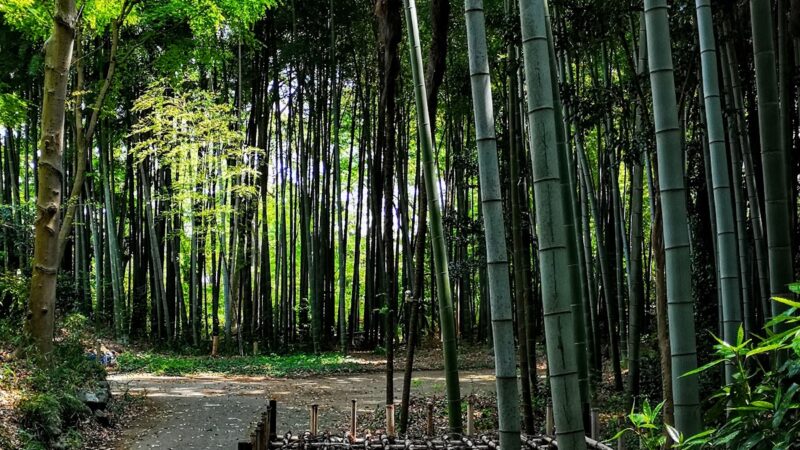
The temple grounds have a quiet and peaceful atmosphere, allowing visitors to appreciate the temple’s history and cultural assets alongside viewing the remains such as earthworks.
Access to the Tachikawa Clan Residence Site
Access by Train
To reach the Tachikawa Clan Residence Site (Fusaiji Temple) using public transportation, the following methods are available:
Using the Tama Urban Monorail
- Get off at “Shibasaki Gymnasium Station” on the Tama Urban Monorail, then walk for about 10 minutes.
- Head west from Shibasaki Gymnasium Station, and after passing through the residential area, you will arrive at Fusaiji Temple.
- The distance from the station is approximately 700 meters.
Walking from JR Tachikawa Station
- Approximately 25 minutes on foot from the South Exit of “Tachikawa Station” on the JR Chuo Line, Nambu Line, and Ome Line.
- Head southwest from the South Exit of Tachikawa Station, passing through Shibasaki-cho to Fusaiji Temple.
- The distance is approximately 2 kilometers.
Using the Bus from JR Tachikawa Station
- Take a bus from the South Exit of Tachikawa Station and get off at the “Shibasaki-cho 4-chome” bus stop, then walk for about 5 minutes.
- Multiple bus routes are available.
Access by Car and Parking
If visiting by car, it is approximately 15 minutes from the “Kunitachi-Fuchu IC” on the Chuo Expressway, or approximately 20 minutes from the “Hachioji IC”. However, since parking space for visitors at Fusaiji Temple is limited, it is recommended to check in advance or use public transportation.
Map and Surrounding Environment
The Tachikawa Clan Residence Site is located in the residential area of Shibasaki-cho, in the southern part of Tachikawa City. The surrounding area is a quiet residential neighborhood, a peaceful environment a short distance from Tachikawa Station. Other historical sites related to Tachikawa City are scattered around Fusaiji Temple, making it an enjoyable historical walking course.
Information on Visiting the Tachikawa Clan Residence Site
Visiting Hours and Required Time
As Fusaiji Temple is a temple, you can visit the grounds during reasonable hours (generally from 9:00 AM to 5:00 PM). However, consideration should be given if religious services or other events are taking place.
The required time for visiting the Tachikawa Clan Residence Site is approximately 20-30 minutes if you only want to look around at the remains such as earthworks and read the explanatory signs. If you plan to take photographs or conduct detailed observations, it is advisable to allow a little more time.
Points to Note When Visiting
- Fusaiji Temple is an active temple, so please observe proper etiquette as a visitor.
- The interior of the main hall is usually closed to the public.
- The earthen ramparts are valuable cultural assets, so please be careful not to climb on them or damage them.
- Photography is permitted, but please be considerate of other visitors.
- Please refrain from eating, drinking, or speaking loudly on the temple grounds.
Best Season for Visiting
Since the Tachikawa Clan Residence Site is an outdoor ruin, it is recommended to visit on a day with good weather. The scenery of the temple grounds is beautiful during the cherry blossom season in spring and the autumn foliage season, making for a more comfortable visit. In summer, there is little shade, so please prepare a hat, parasol, and water.
Related Historical Sites and Spots in the Surrounding Area
Medieval Castles and Residences in the Tama Region
After visiting the Tachikawa Clan Residence Site, visiting other medieval castles and residences in the Tama region will allow you to gain a deeper understanding of the Musashi Seven Clans and the history of Tama during the Sengoku period.
Takiyama Castle Ruins (Hachioji City)
- An important base of the Later Hojo clan during the Sengoku period
- National Historic Site
- A large mountain castle with well-preserved remains such as baileys and moats
- Although from a different period than the Tachikawa clan residence, it is important for understanding the history of castles in the Tama region.
Takahata Castle Ruins (Hino City)
- Castle of the Takahata clan, a member of the Nishito clan of the Musashi Seven Clans
- A member of the same Nishito clan as the Tachikawa clan
- Remains are preserved on the hillside behind Takahata Fudo-son Temple.
Takayasu-ji Castle Ruins (Fuchu City)
- Castle ruins related to a member of the Musashi Seven Clans
- Near Fuchu City Local History Museum
Historical Spots in Tachikawa City
Tachikawa City Historical and Folk Museum
- A facility introducing the history and culture of Tachikawa City
- Also has exhibits related to the Tachikawa clan
- Accessible by bus from Tachikawa Station
Suwa Shrine (Tachikawa City)
- The main guardian shrine of Tachikawa
- A historic shrine dating back to the Middle Ages
- A connection to the Tachikawa clan is also suspected.
Shibasaki Diversion Channel
- A diversion channel of the Tamagawa Aqueduct from the Edo period
- Flows near the site of the Tachikawa clan’s residence
- Preserved as a historical waterway
Sightseeing around Tachikawa Station
When visiting the site of the Tachikawa clan’s residence, there are various tourist and commercial facilities around Tachikawa Station.
- Showa Memorial Park: A vast national park where you can enjoy flowers of all seasons
- IKEA Tachikawa: A large commercial facility
- Tachikawa Takashimaya: A department store
- LaLaport Tachikawa Tachihi: A shopping mall
You can also enjoy meals and shopping at these facilities before or after your historical walk.
Research and Archaeological Excavations of the Tachikawa Clan Residence Site
Past Archaeological Excavations
Multiple archaeological excavations have been conducted at the Tachikawa clan residence site. Of particular importance was the investigation conducted in conjunction with the construction of the Fusaiji Temple building, which scientifically confirmed the structure of the earthworks and the existence of moat remains.
Main Investigation Findings
- Cross-sectional investigation of the earthworks confirmed construction using the rammed earth method.
- Moat remains were detected outside the eastern earthworks.
- Fragments of medieval pottery and earthenware were unearthed from inside the residence.
- Remains believed to be post holes from the building site were confirmed.
These investigation results have been published as the “Tachikawa City Buried Cultural Properties Survey Report,” and are a valuable resource for the study of medieval castles and residences.
Academic Value of the Tachikawa Clan Residence Site
The Tachikawa Clan Residence Site has high academic value in the following respects:
- Rarity of Medieval Residence Sites in Tokyo: Medieval residence sites with remaining earthworks and other structures are rare in Tokyo, making this a valuable example.
- Contribution to Research on the Musashi Seven Clans: A concrete site that reveals the reality of the Nishi clan of the Musashi Seven Clans.
- Origin of the Place Name: Historical evidence showing the origin of the place name “Tachikawa.”
- Regional Rule in the Medieval Period: Clues to understanding the reality of local lords during the Kamakura and Nanboku-cho periods.
Efforts for Preservation and Utilization
Tachikawa City protects the Tachikawa Clan Residence Site as a Tokyo Metropolitan Government-designated historical site and is also working to utilize it for historical education for citizens and as a tourist resource. Activities to convey the history of Tachikawa continue through the installation of explanatory signs, introduction in city newsletters, and the holding of history lectures.
Origin of the Place Name Tachikawa
The prevailing theory is that the place name “Tachikawa” originates from the residence of the Tachikawa clan. Medieval samurai often adopted the place name of their residence as their surname, and conversely, places where powerful samurai lived sometimes came to be known by the samurai’s name.
The fact that the Tachikawa clan was also written as “立川” suggests the possibility that there was originally a “standing river”—a fast-flowing or distinctive river—in this area, which became the place name and later the samurai’s surname. However, it is unclear whether there was a river in the current Tachikawa city area that could be specifically called a “standing river.”
In any case, the Tachikawa clan residence site is an important location that shows the historical origin of the place name “Tachikawa,” and can be considered a historical site related to the identity of Tachikawa City.
Visitor Reviews and Ratings
The following are comments from castle enthusiasts and history lovers who have visited the Tachikawa clan residence site:
Points of High Rating
- “I was surprised by the impressive earthworks in front of the main hall. I didn’t think such ruins remained in Tokyo.”
- “A historical site quietly nestled in a residential area, where you can feel the atmosphere of the Middle Ages.”
- “The explanatory signs were comprehensive, and I learned about the Tachikawa clan and the Musashi Seven Clans.”
- “It’s easily accessible, within walking distance of Tachikawa Station, making it easy to visit.”
Points to Note When Visiting (from Reviews)
- “The ruins mainly consist of earthworks, so it might seem a little underwhelming to castle beginners.”
- “Since Fusaiji Temple is located in a residential area, caution is needed when accessing it by car.”
- “The visiting time is relatively short, so it’s recommended to visit in combination with other historical sites.”
On castle enthusiast websites, the average rating is around 2.5 to 3 out of 5 points. This is because the scale of the ruins is small and the visiting time is short, but its historical value as a valuable medieval site in Tokyo is highly regarded.
Summary | The Charm of the Tachikawa Clan Residence Site
The Tachikawa Clan Residence Site is the remains of a samurai residence from the Kamakura to Nanboku-cho periods, located in Tachikawa City, Tokyo. As the base of the Tachikawa clan, which belonged to the Nishito branch of the Musashi Seven Clans, it is an indispensable historical site for understanding the medieval history of this region.
Highlights of the Tachikawa Clan Residence Site
- A rare example of a medieval residence with surviving earthworks in Tokyo.
- An opportunity to experience the history of the Musashi Seven Clans, a group of Kanto samurai.
- An opportunity to learn about the origin of the place name “Tachikawa.”
- Easily accessible, within walking distance of Tachikawa Station.
- A peaceful site for leisurely contemplation of history.
While not a large-scale castle ruin, it is a valuable historical site that conveys the reality of regional governance in the medieval period, and a place that demonstrates the historical identity of Tachikawa City, making it well worth a visit.
Why not extend your trip a little when shopping or sightseeing around Tachikawa Station and visit the Tachikawa Clan Residence Site to experience the historical roots of modern city Tachikawa? Spending time in the tranquil grounds of Fusaiji Temple, reflecting on the lives of samurai from 800 years ago, will surely be a special experience.