Yaho Castle (Kunitachi City) Complete Guide | History, Highlights, and Access Information [Medieval Castles in Tokyo]
Yaho Castle, located in Yaho, Kunitachi City, Tokyo, is a valuable castle ruin that conveys the history of Musashi Province during the medieval period. Also known as “Yaho Castle Hill,” “Mita Castle,” “Mita Clan Residence,” and “Saburo-dono Residence Site,” this castle site now stands in a quiet residential area, conveying the atmosphere of the past to visitors. This article provides detailed information you should know before visiting, from the historical background of Yaho Castle to the remains visible today, access methods, and surrounding tourist information.
What is Yaho Castle? | A Medieval Castle Remaining in Kunitachi City, Tokyo
Yaho Castle is a medieval flatland castle located near 1700 Yaho, Kunitachi City, Tokyo. Due to its location near the Musashi Provincial Government, it is believed to have been built as the residence of the Mita clan, a powerful samurai group in the region.
The current Yaho Castle site is maintained as Shiroyama Park, with some remains such as earthworks and dry moats still remaining. Located in a convenient location easily accessible from the city center, this site is attracting attention from castle enthusiasts and history buffs as a valuable spot where one can experience the structure of a medieval castle.
Basic Information on Yaho Castle
Location: Around 1700 Yaho, Kunitachi City, Tokyo
Other Names: Yaho Castle Hill, Mita Castle, Mita Clan Residence, Saburo-dono Residence Ruins
Castle Classification: Hilltop Castle
Construction Period: Medieval (details unknown)
Builder: Estimated to be the Mita clan
Main Lord: Mita clan
Current Status: Partially preserved as Shiroyama Park
History of Yaho Castle | The Mita Clan and Medieval Musashi Province
The Mita Clan and the Yaho Area
The Mita clan, who are believed to have built Yaho Castle, were a samurai group that held power in this region as local lords of Musashi Province. While historical records regarding the detailed genealogy of the Mita clan are limited, it has been suggested that they may have belonged to the Nishi clan, one of the seven clans of Musashi Province.
The name Yaho is ancient, dating back to the Nara period. This area, close to the Musashi Provincial Capital (present-day Fuchu City), has held an important position as a transportation hub since ancient times. It is believed that the Mita clan leveraged this strategic location to build their power base in Yaho.
The Role of Yaho Castle in Medieval Musashi Province
Medieval Musashi Province was a region where the activities of Kanto samurai groups intensified with the establishment of the Kamakura Shogunate. Yaho Castle, positioned to monitor the transportation routes connecting the Musashi Provincial Capital and the Tama River basin, is presumed to have functioned as a base for regional control.
During the Sengoku period, this region came under the influence of the Hojo clan, but there are no clear records of what role Yaho Castle played. It is likely that it continued to serve as a local administrative center, perhaps as the residence of a small local lord.
Changes from the Early Modern Period Onward
In the Edo period, Yaho Castle lost its military function, and the surrounding area was developed into an agricultural region. Part of the castle site became part of the grounds of Nanyoji Temple and was also used as privately owned land.
After the Meiji era, the Yaho area gradually urbanized, but part of the castle site remained a familiar landmark to local residents as “Shiroyama” (Castle Mountain), and this has been carried on to the present-day Shiroyama Park.
Structure and Layout of Yaho Castle
Castle Location and Topographical Utilization
Yaho Castle is a flatland castle built on a river terrace of the Tama River. Its elevation is approximately 40 meters, overlooking the surrounding lowlands. The castle’s layout skillfully utilizes this topography, employing natural elevation differences for defense.
The eastern side of the castle is a steep cliff, forming a natural stronghold. The western and northern sides have relatively gentle slopes, and it is presumed that the main defensive structures were located on this side.
Existing Remains
The main remains that can currently be confirmed at the Yaho Castle site are as follows:
Earthworks: Partial traces of earthworks remain within Shiroyama Park. They are approximately 1-2 meters high and indicate a former defensive line.
Moat Remains: Shallow depressions resembling dry moats are visible on the north and west sides of the park. While largely filled in now, the terrain’s undulations allow for inferring the original moat’s location.
Flat Area of the Enclosure: The central part of the park is relatively flat and is believed to be the site of the main enclosure. It is currently used as a plaza.
Cut-Edged Cliff: The eastern cliff face may be an artificially carved cut-edge. This suggests an attempt to enhance defensive capabilities by modifying the natural terrain.
Estimated Castle Area
The exact extent of Yaho Castle’s castle area is uncertain due to limited archaeological excavations. However, it is estimated to have encompassed an area of approximately 100 meters east-west and 150 meters north-south, centered around the current Shiroyama Park.
This castle is of a standard size for a medieval local lord’s residence, and it is possible that the main enclosure was surrounded by a second and third enclosure. It is also thought that the residences of the retainers and temples and shrines were located on the south side of the castle.
Highlights of Yaho Castle | Walking the Castle Ruins
Observing the Remains at Shiroyama Park
The biggest highlight when visiting Yaho Castle is the remains that remain in Shiroyama Park. While you can freely explore the park, paying attention to the following points will allow you to understand the castle ruins more deeply.
Near the Park Entrance: Entering from the west entrance of the park, there is a gentle uphill slope. This is thought to be a remnant of the castle’s entrance (koguchi), a terrain intentionally created for defense.
Observing the Earthworks: Near the base of the trees on the north side of the park, you can see a slightly raised earthwork. Although weathered, careful observation reveals traces of artificially piled earth.
Estimated Site of the Main Enclosure: The plaza in the center of the park is believed to be the site of the former main enclosure. Standing here and looking around, you can see that the view to the east is unobstructed, indicating a location that allowed for monitoring towards the Tama River.
Related Historical Sites in the Surrounding Area
The area surrounding the Yaho Castle ruins is dotted with historical sites that tell the story of the medieval and early modern periods.
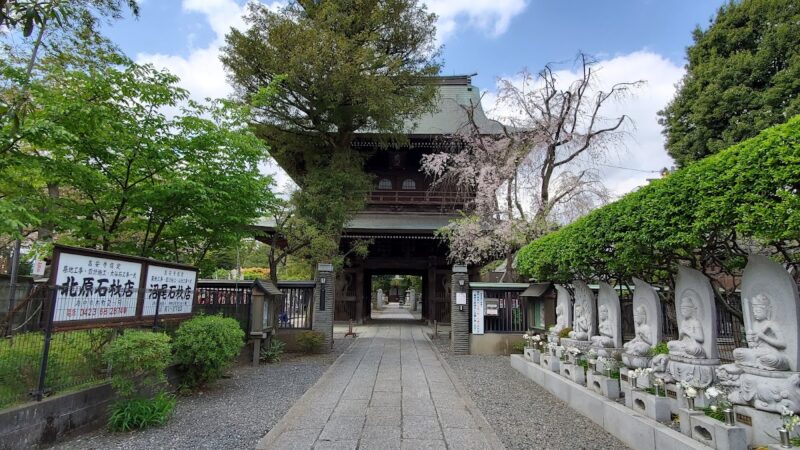
Nanyoji Temple: Located south of the castle ruins, this temple is said to have connections to the Mita clan. The temple grounds contain old stone pagodas and tombstones, preserving the atmosphere of the medieval period.
Yaho Tenmangu Shrine: An ancient shrine located about a 10-minute walk from Yaho Castle, it is counted as one of the three major Tenjin shrines in the Kanto region. It is said to have been founded in 903, and is an indispensable part of Yaho’s history. The grounds contain many ancient trees and stone structures, allowing visitors to experience a historical atmosphere.
Photo Spots
For those who want to enjoy taking photos of the castle ruins, the following spots are recommended.
- Cliff on the east side of the park: Offers a view towards the Tama River, allowing you to appreciate the castle’s excellent location.
- Remaining earthworks: Combining them with trees in your photos creates a medieval atmosphere.
- Panoramic view of the park: Taking a photo of the entire park from a distance gives you a sense of the castle ruins’ scale.
Access Information | How to get to Yaho Castle
Access by train
The nearest station to Yaho Castle Ruins (Shiroyama Park) is Yaho Station on the JR Nambu Line.
Walking from JR Nambu Line Yaho Station: Approximately 15 minutes on foot from the south exit of Yaho Station. Exit the station and head southwest, cross Koshu Kaido (National Route 20), and pass through the residential area to reach Shiroyama Park. The route is relatively easy to follow, and there are signs at key points.
Estimated Travel Time:
- From Shinjuku Station: Approximately 45 minutes (Transfer at Tachikawa Station on the JR Chuo Line, then use the Nambu Line)
- From Tokyo Station: Approximately 60 minutes (Transfer at Tachikawa Station on the JR Chuo Line, then use the Nambu Line)
- From Kawasaki Station: Approximately 40 minutes (Direct service on the Nambu Line)
Access by Car
Using the Chuo Expressway:
Approximately 3 minutes from the Kunitachi-Fuchu Interchange. Exit the interchange and proceed towards Koshu Kaido, then towards Yaho.
Parking Information:
There is a small parking lot (approximately 2 spaces) at Shiroyama Park, but if it is full, please use nearby coin-operated parking lots. There are several parking lots around Yaho Station and along Koshu Kaido.
Access by Bus
There are also bus services from Tachikawa Station South Exit or Fuchu Station, but the number of buses is limited, so using the train is more convenient.
Points to Note and Recommended Time to Visit
Precautions for Visiting
- Shiroyama Park is located in a residential area, and the surrounding environment is quiet. Please be considerate of noise levels during your visit.
- Some parts of the ruins are weathered, so please be careful not to climb on or trample on the earthworks, etc.
- There are no toilets in the park. It is recommended to use the facilities at the station or elsewhere beforehand.
- In summer, there are many insects such as mosquitoes, so it is a good idea to bring insect repellent.
Recommended Time to Visit
Spring (March-May): The weather is mild and ideal for strolling. During cherry blossom season, you can enjoy it in conjunction with the nearby Yaho Tenmangu Shrine.
Autumn (October-November): The autumn leaves are beautiful, making it a good season for photography. The temperature is pleasant, making it comfortable for long visits.
Winter (December-February): As the leaves of the trees fall, the topography such as earthworks becomes easier to observe. Recommended for those who want to carefully observe the castle ruins.
Summer (June-August): The area is lush with greenery and rich in nature, but be prepared for the heat and insects. Visiting in the early morning or evening will be more comfortable.
Tourist Spots Around Yaho
When visiting the Yaho Castle Ruins, exploring the surrounding tourist spots will enhance your historical exploration.
Yaho Tenmangu Shrine
This ancient shrine is counted as one of the three major Tenjin shrines in the Kanto region, and is said to have been founded in 903 by Sugawara no Michitake, the third son of Sugawara no Michizane. Known as the oldest Tenmangu shrine in Eastern Japan, it attracts many worshippers seeking the god of learning.
The shrine grounds are rich in historical sights, including sacred trees hundreds of years old and stone lanterns from the Edo period. The annual festival is held in September, featuring traditional events such as portable shrines and floats parading through the town.
Nanyo-ji Temple
This Shingon Buddhist temple is located south of the Yaho Castle Ruins. This spot is said to have connections to the Mita clan and is a place you’ll want to visit along with exploring the castle ruins. The grounds are quiet, and you can feel the atmosphere of the Middle Ages.
Cultural Facilities in Kunitachi City
If you extend your walk from Yaho Station towards Kunitachi Station, you will arrive at the center of Kunitachi City. There are beautiful tree-lined streets along University Street and cultural facilities such as the Kunitachi Local Culture Museum, where you can learn about the history and culture of Kunitachi City.
Tamagawa Cycling Road
A cycling road is maintained along the Tamagawa River, which flows east of the Yaho Castle ruins. It’s perfect for cycling or walking while enjoying nature, and you can also enjoy outdoor activities combined with a visit to the castle ruins.
History and Culture of Yaho
Origin of the Place Name Yaho
There are several theories about the origin of the place name “Yaho,” but the most likely is that it originates from the topography. This area is located on the river terrace of the Tamagawa River and is characterized by its valley-like terrain. The place name, with “Yaho” (谷) and “Ho” (保), is thought to mean land in a valley.
Known as “Yaho” since ancient times, this is a historical place name that appears in Nara period documents.
Historical Changes of Yaho
Ancient Times: Developed as an agricultural area near the Musashi Provincial Government. Became a center of faith with the founding of Yaho Tenmangu Shrine (903 AD).
Medieval Period: The Mita clan built Yaho Castle, which functioned as a base for samurai groups. It was also a key transportation hub on the Kamakura Road.
Early Modern Period: During the Edo period, it developed as a village centered on agriculture, near a post town on the Koshu Kaido Road. Many pilgrims visited Yaho Tenmangu Shrine.
Modern Era: The opening of Yaho Station on the Nambu Line in 1929 improved transportation access. After the war, development progressed as a residential area, resulting in its current form.
Culture and Annual Events of Yaho
Traditional annual events are passed down in the region, centered around Yaho Tenmangu Shrine. – New Year’s Visit (January): Many worshippers visit Yaho Tenmangu Shrine.
- Annual Grand Festival (September): The largest festival in the region, featuring portable shrines and floats.
- Tori-no-ichi Market (November): A traditional event praying for business prosperity.
These events provide valuable opportunities to convey the history and culture of Yaho to the present day.
Castles of Musashi Province Related to Yaho Castle
After visiting Yaho Castle, exploring other medieval castles in Musashi Province will allow you to gain a deeper understanding of the historical background of this region.
Castles Around Fuchu City
Takayasu-ji Castle (Fuchu City): A medieval castle site located approximately 3 kilometers northeast of Yaho Castle. Its location near the Musashi Provincial Government suggests it, like Yaho Castle, is the site of a local lord’s residence.
Bubaigawara Castle (Fuchu City): The area where the Battle of Bubaigawara took place at the end of the Kamakura period. Although now a residential area, it is a historically significant site.
Medieval Castles in the Tama Region
Takiyama Castle (Hachioji City): A large mountain castle developed as a branch castle of the Hojo clan. While different in scale and character from Yaho Castle, it is interesting to compare them as castles of Musashi Province from the same period.
Ozawa Castle (Akiruno City): The site of the Oishi clan’s residence, which, like Yaho Castle, functioned as a castle for a local lord.
Visiting these castle sites provides a comprehensive understanding of the network of medieval castles in Musashi Province and the realities of regional governance.
Current Status and Challenges of Yaho Castle Research
Status of Academic Research
Regarding Yaho Castle, no full-scale archaeological excavations have been conducted, and archaeological knowledge is limited. Current understanding is mainly based on topographical observations and limited historical documents.
The Kunitachi City Board of Education has conducted a basic survey of the castle site’s boundaries and the distribution of remains, but has not yet created a detailed layout map or determined its age.
Future Preservation and Utilization
The area preserved as Shiroyama Park is a popular recreational spot for local residents, but awareness of its historical value is still insufficient.
Future challenges include:
- Detailed surveying and creation of a layout map
- Clarification of age and structure through archaeological excavations
- Improvement of information boards and explanatory panels
- Increased historical education and preservation awareness among local residents
- Examination of methods for utilizing it as a tourist resource
Yaho Castle is a valuable historical site that preserves the remains of a medieval castle despite its proximity to central Tokyo. Through appropriate preservation and utilization, it is expected to further enhance its value as a local historical resource and a place for historical education.
Summary | The Charm of Yaho Castle and the Significance of Visiting
Yaho Castle is the site of a medieval flatland castle located in Yaho, Kunitachi City, Tokyo. This castle, believed to have been built as the residence of the Mita clan, is now partially preserved as Shiroyama Park, where visitors can observe remains such as earthworks and dry moats.
Despite its easily accessible location from central Tokyo, it’s a valuable spot where you can experience the history of medieval Musashi Province, making it recommended not only for castle enthusiasts but for anyone interested in history.
When visiting Yaho Castle, exploring nearby historical sites such as Yaho Tenmangu Shrine and Nanyoji Temple will deepen your understanding of the region’s history. The natural beauty of the castle ruins, with its cherry blossoms in spring and autumn foliage, is also a major attraction.
Nestled quietly in a peaceful residential area, the ruins of Yaho Castle hold the marks of centuries-old samurai life and the history of the region. Be sure to visit and experience this hidden historical spot in Kunitachi City, Tokyo.