Inazuke Castle (Kita Ward, Tokyo) Complete Guide | A Strategic Base in Musashi Province Built by Ota Dokan
Inazuke Castle, located in Akabane, Kita Ward, Tokyo, is the site of a castle believed to have been built by the renowned general Ota Dokan during the Sengoku period. While now part of the grounds of Seisho-ji Temple, it was once an important military base in Musashi Province. Despite its convenient location just a 3-minute walk from JR Akabane Station, it is a valuable historical site that preserves the atmosphere of the Sengoku period, attracting attention from castle enthusiasts and history buffs.
History and Construction Background of Inazuke Castle
Construction by Ota Dokan
Inazuke Castle is said to have been built by Ota Dokan during the Bunmei era (1469-1487). Ota Dokan was a renowned general who served the Ogigayatsu Uesugi clan and is known for his military expertise, including his construction of Edo Castle. While based at Edo Castle, Dokan built several castles in strategically important locations to solidify his control over southern Musashi Province.
Inazuke Castle held a particularly important position among them. Located at a key point on the Iwatsuki Road (Kamakura Road) connecting Edo Castle and Iwatsuki Castle, it functioned as a relay point between the two castles. This location was extremely important both militarily and for the transportation of supplies, demonstrating Dokan’s keen strategic vision.
Topographical Advantage
Inazuke Castle was built at the point where the cliff line of the Musashino Plateau meets the Arakawa River and bends to the west. It was situated on a plateau approximately 20 meters high, at the tip of the plateau extending north from the Dokanyama and Asukayama areas. It was a natural stronghold surrounded on three sides by hills, with the Iwatsuki Road running through the lowlands to the east.
At the time, there was a marsh called Kamegaike to the northwest, which is also thought to have functioned as a defensive structure. The castle’s construction, which made the most of its topography at the edge of a plateau, speaks to the depth of Ota Dokan’s military knowledge.
Changes in Castle Owners After Ota Dokan’s Death
After Ota Dokan was assassinated by his lord, Uesugi Sadamasa, in 1486, Inazuke Castle is believed to have been inherited by Dokan’s grandson, Ota Suketaka. Subsequently, due to changes in the power balance in Musashi Province, Inazuke Castle came under the control of the Odawara Hojo clan.
During the Hojo era, Inazuke Castle is thought to have functioned as one of the bases for their expansion into northern Kanto. However, with the fall of the Hojo clan in Toyotomi Hideyoshi’s Odawara campaign in 1590, Inazuke Castle also ceased to function. After Tokugawa Ieyasu entered the Kanto region, Inazuke Castle was abandoned, and its function as a castle was lost throughout the Edo period.
Current Status and Highlights of Inazuke Castle Ruins
Jōshōji Temple and Castle Site Monument
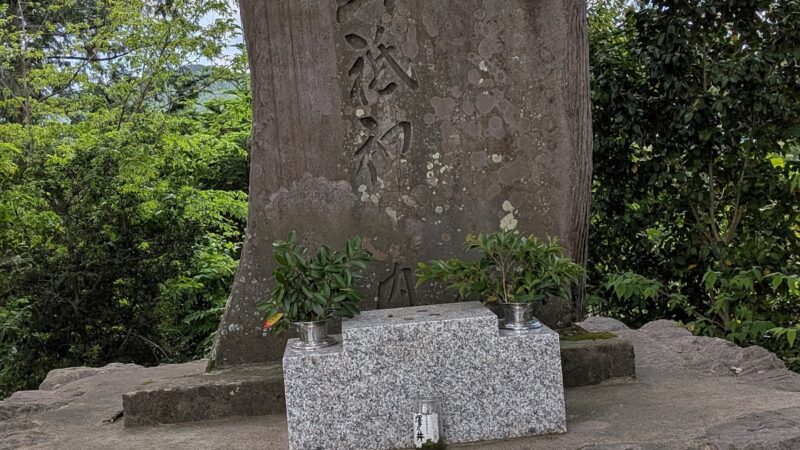
Currently, the Inazuke Castle ruins are within the grounds of Jōshōji Temple. Jōshōji Temple is a Sōtō Zen Buddhist temple known for its connection to Ōta Dōkan. Near the temple entrance, to the right after ascending the south-facing stairs, stands a stone monument inscribed with “Former Tokyo Historic Site: Inazuke Castle Ruins,” indicating that this is a historical castle site.
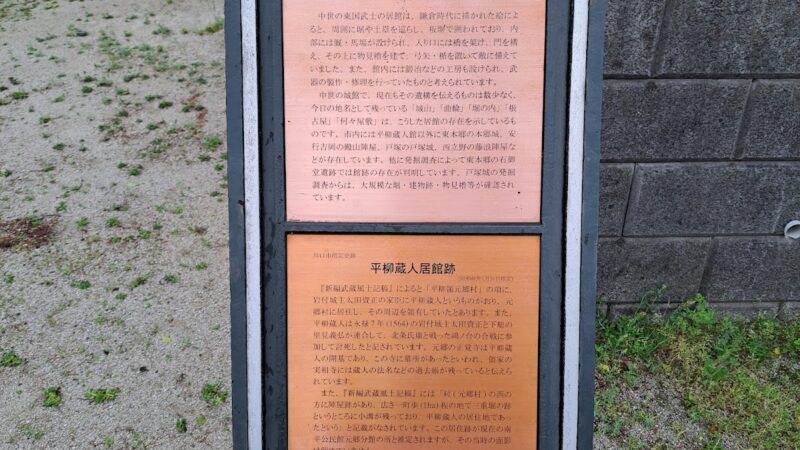
This monument signifies that the site is designated as a Tokyo Metropolitan Historic Site, making it a must-see for castle enthusiasts. An explanatory sign is also installed around the monument, providing a concise explanation of the history of Inazuke Castle.
Wooden Statue of Ōta Dōkan
The main highlight of Jōshōji Temple is the wooden statue of Ōta Dōkan. This statue is open to the public on the 26th of each month, offering a valuable opportunity for Dōkan fans and history enthusiasts. The statue is an important cultural asset that conveys Dōkan’s character to the present day, and many visitors come on the days it is open. The 26th of the month, the day the castle is open to the public, is said to be the anniversary of Dokan’s death. Visiting on this day allows you to reflect on Dokan himself while exploring the castle ruins.
Understanding the Castle’s Structure from the Topography
The current grounds of Seisho-ji Temple are entirely residential, and no clear castle remains are left. However, by carefully observing the topography of the temple grounds, you can sense the remnants of the former castle.
As you climb the stairs to the temple, you can feel the difference in elevation, realizing its location on the edge of a plateau. From the temple grounds, you can overlook the surrounding terrain, allowing you to understand why this location was chosen as a castle and its strategic value. The lowlands to the east are where the Iwatsuki Road once passed, indicating that the castle was positioned to monitor and control the road.
Exploring the Surrounding Topography
To deeply understand the value of Inazuke Castle, we recommend walking around the surrounding terrain. Walking around Akabane Station, you can clearly observe the cliff line of the Musashino Plateau, and experience firsthand how strategically advantageous the location of Inazuke Castle was.
Especially heading towards the Arakawa River, the boundary between the plateau and the lowlands becomes clearly visible, allowing you to appreciate how medieval castles utilized the terrain.
Access and Visiting Guide
Access by Train
Access to Inazuke Castle Ruins (Seishoji Temple) is very convenient.
Nearest Station: JR Keihin-Tohoku Line, Saikyo Line, Shonan-Shinjuku Line, Utsunomiya Line, Takasaki Line “Akabane Station”
Travel Time: Approximately 3-5 minutes on foot from Akabane Station West Exit
Akabane Station is a major station served by multiple lines, making it easily accessible from both central Tokyo and Saitama. Its proximity to the station makes it easy to combine a visit with other Tokyo castle ruins.
Walking Route
Exit Akabane Station West Exit and head west through the shopping street in front of the station. Upon entering the residential area, you’ll immediately see the entrance to Seishoji Temple. The directions are easy to follow, and you’re unlikely to get lost.
Points to Note When Visiting
Since Seishoji Temple is an active temple, please note the following points when visiting:
- Please observe quietly within the temple grounds and avoid disturbing other worshippers.
- Photography is permitted, but please refrain from taking photos inside the main hall or during religious ceremonies.
- If you wish to see the wooden statue of Ota Dokan, please check the public viewing date (the 26th of each month) in advance.
- Parking is limited, so using public transportation is recommended.
Estimated Visiting Time
Visiting the Inazuke Castle ruins itself only takes about 15-30 minutes. However, if you want to explore the surrounding terrain and take a leisurely stroll while experiencing the history of Akabane, it’s best to allow about an hour.
Related Historical Sites in the Area
Hiratsuka Castle Ruins
Approximately 2 kilometers north of Inazuke Castle are the Hiratsuka Castle ruins, also related to Ota Dokan. This is another castle ruin located in Kita Ward. Visiting it along with Inazuke Castle will give you a deeper understanding of Dokan’s castle network.
Asukayama Park
Asukayama Park is located about 2 kilometers southeast of Inazuke Castle. It is believed that a medieval castle called Asukayama Castle once stood here, situated on the same cliff line of the Musashino Plateau. It is also famous for its cherry blossoms, making it especially recommended for a spring visit.
Akabane Nature Observation Park
Northwest of Inazuke Castle is Akabane Nature Observation Park, where you can observe the natural topography of the Musashino Plateau. Visiting it along with the castle ruins will help you imagine the landscape of Musashino in the medieval period.
Historical Significance of Inazuke Castle
Part of the Edo Castle Defense Network
Inazuke Castle should be understood not only as a standalone castle, but also as an important part of the castle network constructed by Ota Dokan. Centered around Edo Castle, it played a role in solidifying control over southern Musashi Province, working in conjunction with castles such as Iwatsuki Castle, Kawagoe Castle, and Kawagoe Castle. The location, particularly along the Iwatsuki Road (Kamakura Road), was extremely important from the perspective of securing military communication routes. This road was a major thoroughfare dating back to the Kamakura period and was one of the main roads in Musashi Province during the medieval period.
Ota Dokan’s Military Strategy
Ota Dokan was not merely a warrior, but a strategist well-versed in military science. The construction of Inazuke Castle is a prime example of his keen strategic vision. Maximizing the use of the terrain, controlling key transportation points, and coordinating multiple castles—this comprehensive military strategy was what made Dokan a great general.
The following strategic considerations can be seen in the selection of the location of Inazuke Castle:
- Midway between Edo Castle and Iwatsuki Castle: To facilitate communication between the two castles
- Monitoring the highway: To control major transportation routes
- Strong position at the tip of a plateau: A terrain suitable for defense
- Preparation for attacks from the Arakawa River: To guard against invasions from the north
Transitional Period from Medieval to Early Modern Period
The history of Inazuke Castle symbolizes the transformation of Musashi Province during the transition from the medieval to the early modern period. During the time of Ota Dokan, the beginnings of territorial control by Sengoku daimyo were seen, and Inazuke Castle was part of their military base.
However, with Toyotomi Hideyoshi’s unification of Japan and Tokugawa Ieyasu’s entry into Edo, the political and military situation in Musashi Province changed dramatically. The abandonment of Inazuke Castle also symbolized the arrival of the peaceful Edo period.
Significance of Visiting Inazuke Castle
Experiencing the Sengoku Period in the Heart of Tokyo
While there are many castle ruins within Tokyo’s 23 wards, most have lost all traces. Inazuke Castle, however, is a valuable historical site designated as a Tokyo Metropolitan Historic Site, complete with a monument and explanatory plaque. Despite its central location in Akabane, it offers a unique opportunity to experience the history of the Sengoku period.
Understanding Ota Dokan
Ota Dokan is known as the builder of Edo Castle and a renowned general skilled in both military and literary arts. Visiting Inazuke Castle allows you to glimpse aspects of Dokan’s military strategy and domain management. Visiting on the 26th of each month, when the wooden statue is displayed, will deepen your understanding of Dokan himself.
Learning Castle History from Topography
The greatest appeal of Inazuke Castle lies in its topography. Even without clear remains, observing the relationship between the plateau and lowlands, the cliffs and plains, allows you to understand why a medieval castle was built in that location. This is a crucial perspective for studying castle history.
Current Status and Challenges of Inazuke Castle Research
Limitations of Historical Sources
Contemporary historical sources concerning Inazuke Castle are limited, and much of the information regarding its construction date and changes in its lords relies on tradition. The tradition that it was built by Ota Dokan lacks definitive historical evidence.
However, considering the topographical conditions and strategic location, it is considered highly probable that some kind of military facility existed during Ota Dokan’s time. Further archaeological investigations and the discovery of new historical sources are expected to reveal a more detailed history.
Challenges in Preserving the Remains
The Inazuke Castle site has been completely developed into residential land, limiting opportunities for archaeological excavations. Many details remain unclear regarding the castle area outside the grounds of Seisho-ji Temple. This also illustrates the difficulty of preserving and investigating medieval castle remains in urbanized Tokyo.
Summary
Inazuke Castle was a strategic stronghold built by the renowned general Ota Dokan, and is an important example of a medieval castle in Musashi Province. While it now quietly preserves its history within the grounds of Seisho-ji Temple, its location and topography offer insights into the military strategies of the Sengoku period.
Its excellent accessibility, just a few minutes’ walk from JR Akabane Station, is also a major draw. It’s a historical site you should definitely visit as part of a tour of Tokyo’s castle ruins, or as part of a trip to places associated with Ota Dokan.
A wooden statue of Ota Dokan is displayed on the 26th of every month, so visiting on this day will provide an even more enriching historical experience. Inazuke Castle ruins, where you can feel the atmosphere of the Sengoku period despite being in the heart of Tokyo, is a must-see for history enthusiasts.
Basic Information
- Location: 1-21-17 Akabane-Nishi, Kita-ku, Tokyo (within Seishōji Temple)
- Access: 3-5 minute walk from the west exit of JR Akabane Station
- Visiting Hours: Free entry to the temple grounds (during temple opening hours)
- Admission Fee: Free
- Ota Dōkan Wooden Statue Public Display: 26th of every month
- Parking: Limited (public transportation recommended)
- Inquiries: Seishōji Temple (Please observe proper temple etiquette)