Yatsuishi Castle (Miyoshi City, Tokushima Prefecture) Complete Guide | History and Highlights of a Mountain Castle from the Nanboku-cho Period
What is Yatsuishi Castle?
Yatsuishi Castle is a medieval mountain castle built on Mt. Yatsuishi (approximately 790m above sea level) in Inai-nishi, Ikawa-cho, Miyoshi City, Tokushima Prefecture. Also known as Yatsuishi Castle or Yatsuishi Castle, it is currently protected as a Miyoshi City designated historical site.
Located in a rugged mountainous area, this castle is a historical site believed to have played an important role during the turbulent Nanboku-cho period. Large rocks are scattered throughout the castle ruins, and evidence of its function as a natural defensive structure can still be seen today. It occupied a strategically important position as a key point protecting the mountainous region of western Awa Province (present-day Tokushima Prefecture).
History of Hachikoku Castle
Construction History and the Nanboku-cho Period
The exact year of Hachikoku Castle’s construction is unknown, but it is believed to have been built during the Nanboku-cho period (1336-1392) by Wakiya Yoshiharu (also known as Nitta Yoshiharu). Wakiya Yoshiharu was a member of the family of Wakiya Yoshisuke, a well-known general of the Southern Court, and is thought to have been involved in the formation of a Southern Court base in this region as a relative of Wakiya Yoshisuke, the younger brother of Nitta Yoshisada.
The Nanboku-cho period was a turbulent era of conflict between the Southern Court, centered on Emperor Go-Daigo, and the Northern Court, supported by Ashikaga Takauji. In Awa Province, the power struggle between the Southern and Northern Courts was intense, and many mountain castles were built in the mountainous areas. It is presumed that Hachikoku Castle also functioned as an important military base for the Southern Court within this historical context.
Castle Lords and Changes
While details about the main lords of Hachikoku Castle are largely unknown due to limited historical records, Wakiya Yoshiharu (Nitta Yoshiharu) is traditionally considered the first lord. Although there are no clear records of subsequent changes in lords or the time of the castle’s abandonment, it is believed to have gradually fallen into disuse after the end of the Nanboku-cho period and through the Sengoku period.
In Awa Province, the Miyoshi clan rose to power during the Sengoku period, bringing this entire region under their control. It is presumed that the area around Hachikoku Castle was also under the influence of the Miyoshi clan, but no specific historical records demonstrating this relationship have been found at present.
Castle Structure and Characteristics
Location and Layout
Hachikoku Castle is a typical mountain castle built near the summit of Mt. Hachikoku, at an altitude of approximately 790m. The relative height difference is approximately 600m, and the castle boasts a highly defensible structure that makes maximum use of the steep terrain. Located in the mountainous region of Nishinoura, Ikawa-cho, Miyoshi City, Tokushima Prefecture, this castle is a strategically important location surrounded by mountains.
The castle’s layout skillfully utilizes the mountainous terrain, with multiple enclosures (kuruma) arranged around the main enclosure (honmaru). Each enclosure is demarcated by earthworks and moats, demonstrating ingenuity in preventing enemy intrusion.
Defensive Structures Utilizing Giant Rocks
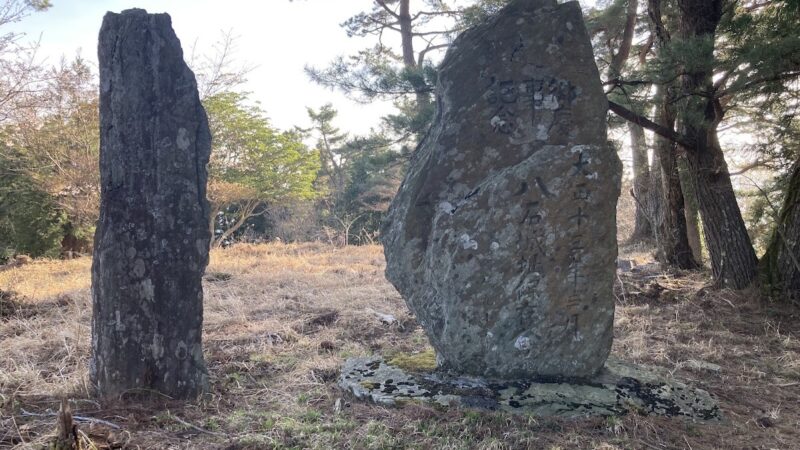
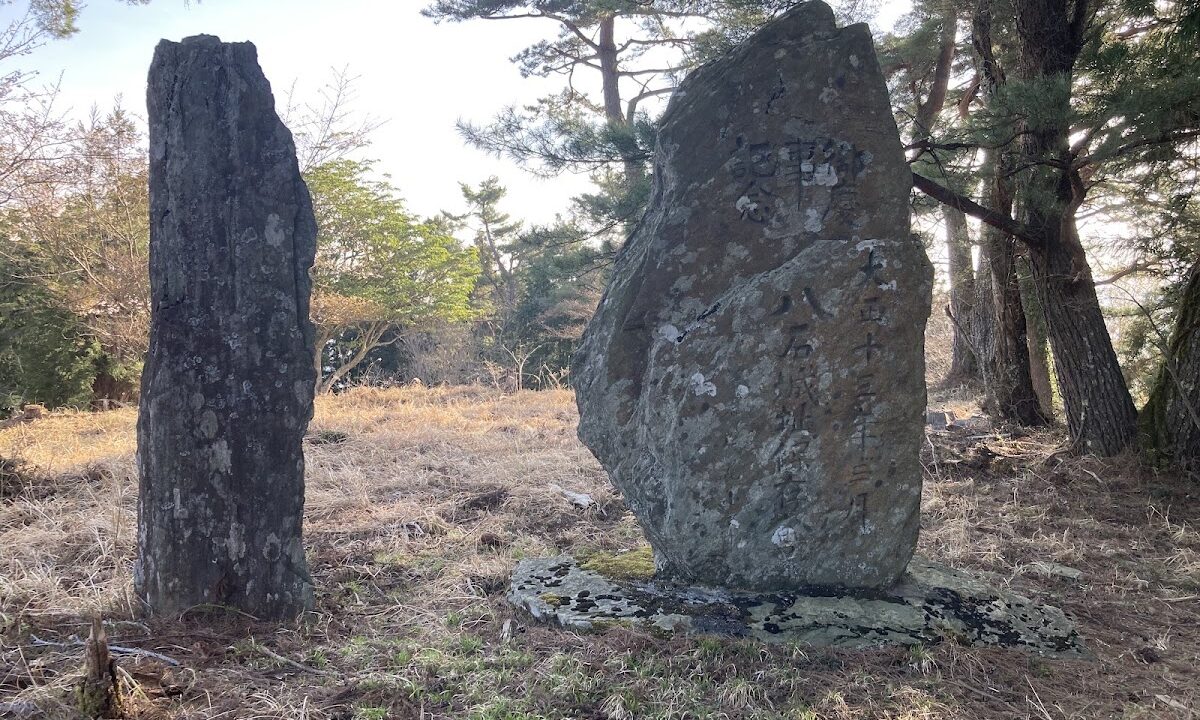
The most distinctive feature of Hachikoku Castle is the group of giant rocks scattered throughout the castle grounds. These rocks functioned as natural defensive structures, reducing the need to construct stone walls and acting as obstacles to restrict enemy advances. The castle’s name, “Hachikoku,” is said to originate from these giant rocks.
In mountain castles, due to the difficulty of transporting stone, it was common to utilize existing bedrock and large rocks. Hachikoku Castle is a prime example, preserving the appearance of a medieval mountain castle that made maximum use of natural terrain and rocks.
Earthworks and Moats
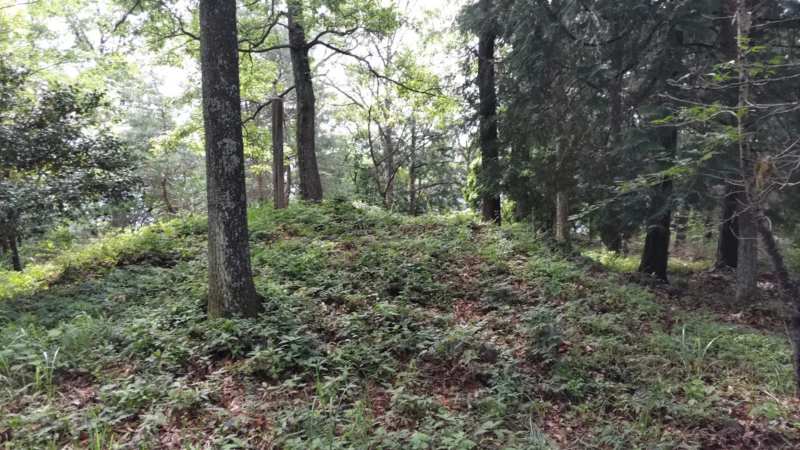
Traces of earthworks can be found in multiple locations within the castle grounds. Earthworks are defensive structures built by piling up earth, serving to prevent enemy intrusion and clearly define the boundaries of the castle’s enclosures. Moats (ditches dug across ridges) have also been identified, serving as an important defensive line to hinder enemy advances.
These remains are valuable historical documents illustrating the castle construction techniques of mountain castles from the Nanboku-cho period to the Sengoku period.
Highlights of Hachikoku Castle
Main Enclosure (Honmaru) Site
The main enclosure (Honmaru), the central part of the castle, is a relatively flat area, believed to have housed the lord’s residence and command post. From here, one could overlook the surrounding mountains, indicating its function as a military observation post.
Stone Structures and Giant Rocks
The giant rocks remaining throughout the castle grounds are the main highlight of a visit to Hachikoku Castle. The unique landscape, a fusion of natural formations and man-made castle structures, is a charm unique to Hachikoku Castle and unlike any other mountain castle. Traces of artificial processing can be seen in some of the rocks, offering a glimpse into the castle-building techniques of the time.
Information Boards and Remains Markers
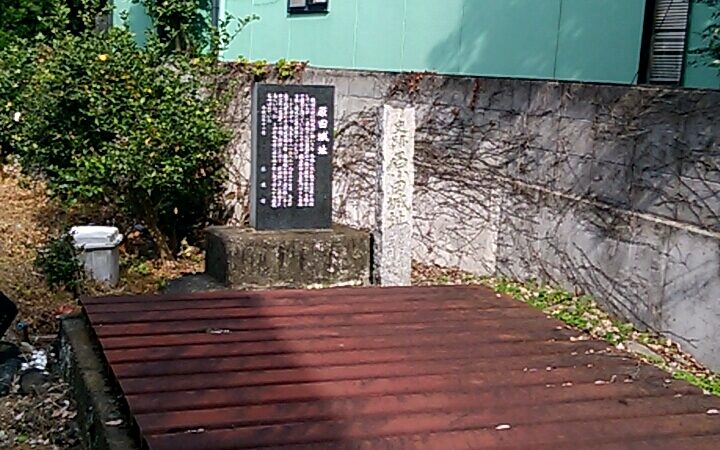
Information boards are installed on-site, allowing visitors to learn about the castle’s history and structure. Explanation boards are also provided at major remains, making it easy for first-time visitors to understand the highlights of the castle ruins.
Access and Castle Visit Information
Location
Address: Nishinoura, Inouchi, Ikawa-cho, Miyoshi City, Tokushima Prefecture
Access Method
Access to Hachikoku Castle is primarily by car. From the center of Miyoshi City, take the national highway towards Ikawa-cho, and then continue along the mountain road. While the trailhead is accessible by private vehicle, caution is advised as some sections of the road are narrow.
If using public transportation, the nearest station is Awa-Ikeda Station on the JR Dosan Line, but further travel by bus or taxi is required, making access not easy.
Points to Note When Climbing the Castle
Yashiki Castle is a full-fledged mountain castle at an altitude of 790m with a relative height difference of 600m, requiring appropriate physical fitness and equipment for the climb. Please note the following:
- Climbing Equipment: Prepare basic climbing equipment such as trekking shoes, drinking water, and rain gear.
- Estimated Time: Expect at least one hour one way from the trailhead to the main keep.
- Season: Snow is possible in winter, and heatstroke prevention is essential in summer.
- Avoid Solo Climbing: Climbing in groups is recommended whenever possible.
- Prior Check: Check the weather and trail conditions in advance.
Nearby Castles and Historical Spots
Other Castle Ruins in Miyoshi City
In addition to Yashiki Castle, many other medieval castles remain in Miyoshi City. In particular, the mountain castles, such as Tenjin-yama Castle, are important historical remains for understanding the history of western Awa Province. Visiting these castles will provide a deeper understanding of the power struggles and defense systems in this region during the Middle Ages.
Miyoshi City Tourism Information
Miyoshi City is located in western Tokushima Prefecture and is the largest municipality in terms of area among the four prefectures of Shikoku. It boasts abundant natural landscapes such as Iya Valley, Oboke and Koboke gorges, and tourist attractions such as the Kazurabashi Bridge. Visiting these tourist spots in conjunction with a visit to Hachikoku Castle is highly recommended.
Cultural Value of Hachikoku Castle
Miyoshi City Designated Historic Site
Hachikoku Castle is designated as a Miyoshi City Historic Site and is positioned as an important cultural property of the region. As a valuable historical remains that conveys the appearance of a mountain castle from the Nanboku-cho period, preservation and utilization efforts are underway.
Academic Value
Hachikoku Castle is important archaeological material that shows the reality of a military base in Awa Province during the Nanboku-cho period. In particular, the castle construction techniques utilizing massive rocks and the ingenious layouts in the steep mountainous terrain provide valuable data for the study of medieval mountain castles.
Further excavations and research are expected to reveal more detailed information about the castle’s structure and history.
Best Season to Visit Hachikoku Castle
The best seasons to visit Hachikoku Castle are spring (April-May) and autumn (October-November). The temperatures are mild during these times, making it suitable for hiking. Autumn, in particular, offers beautiful autumn foliage, allowing visitors to enjoy both castle exploration and nature appreciation.
Summer (June-August) is hot, posing a risk of heatstroke, so early morning visits and adequate hydration are necessary. Winter (December-February) may involve snow and ice, and is not recommended for those without hiking experience.
Photo Spots at Hachikoku Castle
Here are some recommended photo spots when visiting the castle ruins:
- Giant Rocks: Photos with the castle’s distinctive giant rocks in the background will be a unique record of Hachikoku Castle.
- View from the Main Enclosure: On a clear day, a spectacular view of the surrounding mountains unfolds.
- Cross-section of the Earthworks: You can record the structure of the earthworks, which demonstrates medieval castle-building techniques.
- Distant View from the Hiking Trail: Capturing the entire mountain expresses the ruggedness of the castle’s location.
When posting photos, using hashtags such as “#HachikokuCastle”, “#MiyoshiCity”, and “#TokushimaPrefecture” along with location information will allow you to share information with people who share the same interests.
Current Status and Challenges of Hachikoku Castle Research
Historical materials concerning Hachikoku Castle are limited, and many points remain unknown, such as the year of construction, changes in castle lords, and the time of abandonment. Future challenges include:
- Literature Research: Discovery of new historical materials through meticulous examination of ancient documents and military chronicles from the Nanboku-cho period
- Archaeological Research: Excavation and dating of artifacts through archaeological excavations
- Fortress Layout Research: Clarification of the castle structure through detailed surveying
- Comparative Research: Clarification of regional history through comparison with surrounding castles of the same period
It is expected that these studies will lead to a clearer understanding of the historical position of Hachikoku Castle.
Summary
Hachikoku Castle is a valuable mountain castle ruin from the Nanboku-cho period located in Ikawa-cho, Miyoshi City, Tokushima Prefecture. Said to have been built by Wakiya Yoshiharu (Nitta Yoshiharu), the castle is characterized by its unique defensive structures utilizing large rocks and its rugged location at an altitude of 790m.
Protected as a Miyoshi City designated historical site, Hachikoku Castle is an important cultural asset for understanding the medieval history of western Awa Province and is a historical site worth visiting for castle enthusiasts and history lovers. Accessing the castle requires hiking gear and physical fitness, but it’s a fascinating spot where you can experience the magnificent scenery and historical romance unique to a mountain castle.
When visiting Miyoshi City, be sure to explore the surrounding tourist attractions along with Hachikoku Castle and fully enjoy the nature and history of western Tokushima Prefecture.