Higashiyama Castle (Higashi-Miyoshi Town, Miyoshi District, Tokushima Prefecture): Complete Guide to History, Remains, and Access
What is Higashiyama Castle?
Higashiyama Castle is a medieval mountain castle located in Higashiyama, Higashi-Miyoshi Town, Miyoshi District, Tokushima Prefecture. Built on the summit of Shiroyama Mountain at an altitude of 401 meters, it is known as a sturdy mountain castle that takes advantage of the steep terrain with a relative height of approximately 300 meters. It functioned as a branch castle of Shiroji Castle, an important base in western Awa Province, and played an important role as a military and political center in Awa Province during the Sengoku period.
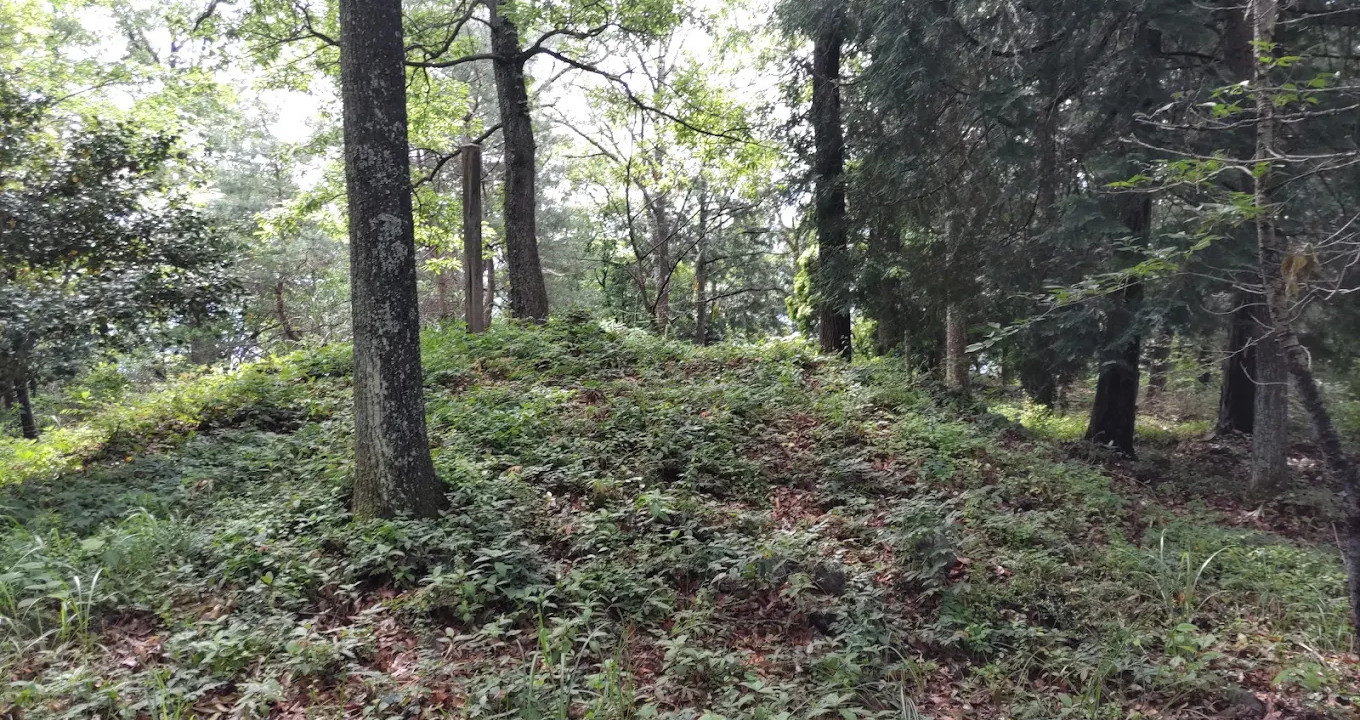
Currently, the castle ruins are designated as a town historical site, and the remains such as stone walls, earthworks, baileys, moats, and vertical trenches remain in good condition. It is one of the best-preserved mountain castles in Shikoku and is a valuable historical site for learning about castle construction techniques of the Sengoku period.
History of Higashiyama Castle
Construction and the Era of the Onishi Clan
Higashiyama Castle is believed to have been built during the Nanboku-cho period to the Sengoku period. The castle lord was Onishi Bichu-no-kami Mototake, the younger brother of Onishi Izumo-no-kami Yoritake, lord of Shiroji Castle. One theory suggests he was the third son. The Onishi clan were powerful local lords who controlled western Awa Province. They established Shiroji Castle as their main castle and strategically placed several branch castles, including Higashiyama Castle, to create a defense network along the Yoshino River basin.
The Onishi clan served as vassals of the Miyoshi clan and contributed to maintaining the Miyoshi clan’s power in Awa Province. Higashiyama Castle is thought to have served as an important branch castle protecting the south of Shiroji Castle, working in conjunction with Tanooka Castle on the opposite bank to monitor and defend the Yoshino River system.
The Fall of Higashiyama Castle in 1577 and Renovations by the Chosokabe Clan
In 1577 (Tensho 5), Chosokabe Motochika, a Sengoku daimyo of Tosa Province, intensified his invasion of Awa Province. Aiming to unify Shikoku, the Chosokabe army successively captured castles in western Awa Province. It is said that Higashiyama Castle also fell after a fierce battle, having been subjected to a relentless attack by the Chosokabe army.
After its fall, Higashiyama Castle came under the control of the Chosokabe clan, and it is believed that renovations were carried out by the Tosa forces. Among the remains that can be confirmed today, there are some that demonstrate the unique castle-building techniques of the Chosokabe clan, allowing us to discern traces of their renovations.
The Early Modern Period and Beyond
After Toyotomi Hideyoshi’s conquest of Shikoku, the Chosokabe clan was granted control of Tosa Province, and Awa Province came under the control of the Hachisuka clan. It is believed that Higashiyama Castle was abandoned during this period. Since the Edo period, the castle ruins have been covered in forest and protected by the local people.
Layout and Structure of Higashiyama Castle
Structure of the Main Enclosure
The main enclosure of Higashiyama Castle is located on the mountaintop and features a stepped layout with multiple enclosures (kuruma). The main keep is situated at the highest point and surrounded by earthen ramparts. From the main keep, one can see the Yoshino River basin and the surrounding mountains, indicating excellent visibility.
The main keep is relatively small, suggesting it served more as a final defensive stronghold during battles than as a living space. The second and third enclosures are located around the main keep, each separated by earthen ramparts and steep slopes.
Defensive Facilities
The most distinctive feature of Higashiyama Castle is its well-developed defensive facilities. Multiple moats surround the main enclosure, preventing enemy incursions from the ridge. Some of the moats reach several meters in depth, demonstrating the advanced civil engineering techniques of the time.
Numerous vertical trenches have been identified, designed to allow for flanking attacks on enemy soldiers climbing the slopes. These trenches are not isolated; in some places, multiple trenches are arranged in a continuous pattern, forming a “ridge-like vertical trench group,” suggesting possible modifications by the Chosokabe clan.
Earthworks surround each enclosure within the main citadel, and some sections are accompanied by stone walls. Stone walls are relatively rare in mountain castles in Awa Province, making the stone walls of Higashiyama Castle a valuable historical feature.
Dry Moats and Enclosure Arrangement
Besides the main citadel, several smaller enclosures are located on the mountainside. These are thought to have functioned as outposts or watchtowers. Dry moats are situated between each enclosure, demonstrating a strategy to create multiple defensive lines.
Some of the dry moats are box-shaped, effectively restricting the movement of enemy soldiers. Furthermore, a square-shaped space is provided in front of the castle gate, making it easier to intercept invading enemies.
Highlights of Higashiyama Castle
Well-Preserved Ruins
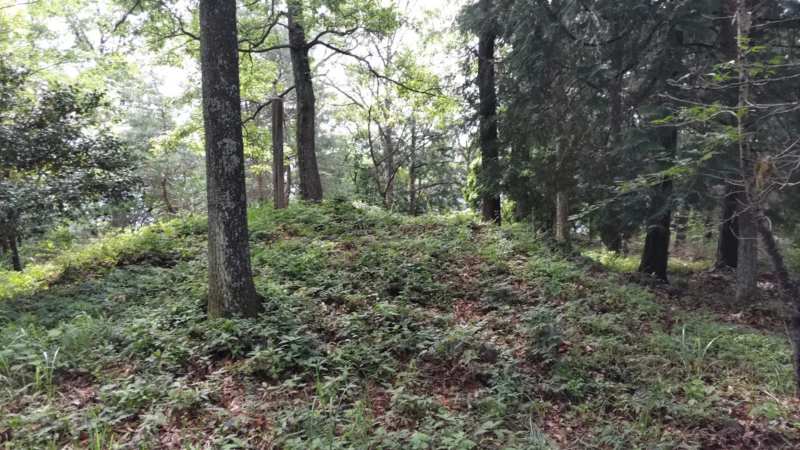
The greatest highlight of Higashiyama Castle is its well-preserved ruins. Thanks to the efforts of local residents and related parties, the castle site has been properly maintained, and earthworks, moats, vertical trenches, and baileys are clearly visible. The earthworks of the main bailey, in particular, retain their height, making it easy to imagine its original appearance.
Moats can be seen in multiple locations, and their depth and scale are overwhelming. The sheer power of the moats that completely cut off the ridge is something that can only be truly appreciated by visiting in person.
Remains of Stone Walls
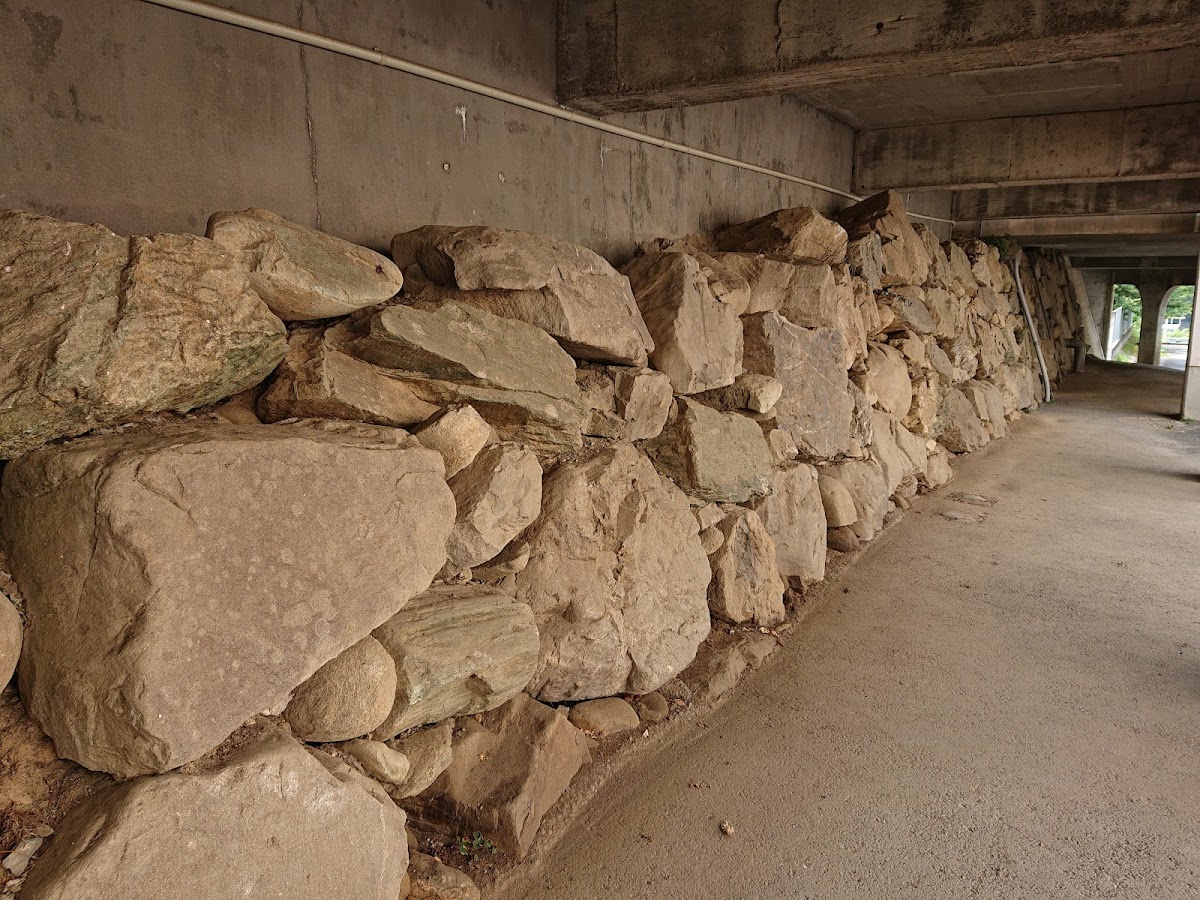
Partial remains of stone walls remain at Higashiyama Castle. Stone walls were rarely used in mountain castles in Awa Province, making the stone walls of Higashiyama Castle valuable historical resources. The stone walls are built using the nozura-zumi method, a simple structure where natural stones are piled up as they are, but they are important remains for understanding the stone-laying techniques of the Sengoku period.
Views
The views from the mountaintop are a major attraction of Higashiyama Castle. On a clear day, you can see the flow of the Yoshino River, the mountains on the opposite bank, and even the Sanuki Mountains in the distance. This view speaks volumes about why Higashiyama Castle was chosen as a military base.
Information Boards and Explanation Boards
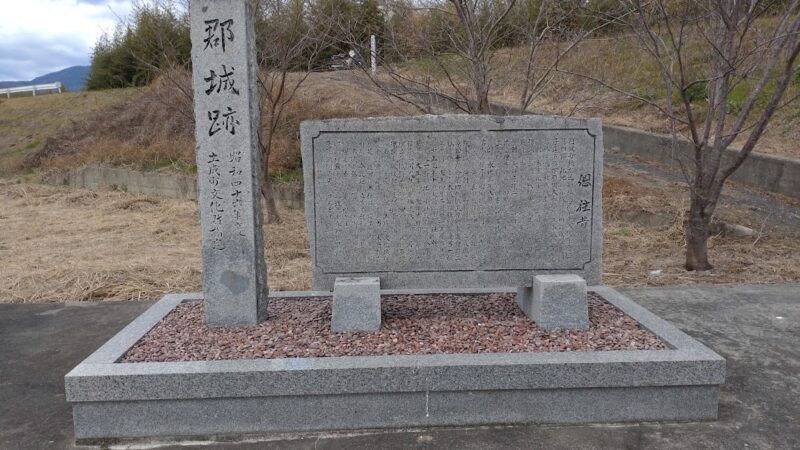
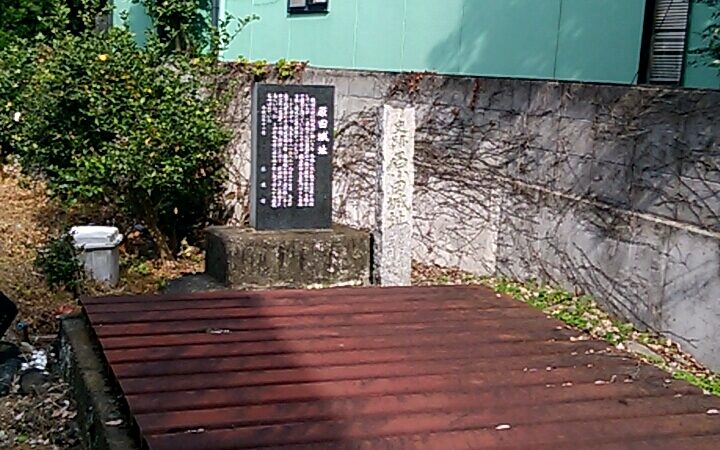
Information boards and explanation boards are installed at the castle ruins, allowing you to learn about the history and remains of Higashiyama Castle. Signposts are also placed at key points along the path to the castle, making it relatively easy for first-time visitors to explore.
Access Methods
Access by Public Transportation
Using the JR Dosan Line:
- Get off at Hashikura Station on the JR Dosan Line
- Approximately 15 minutes on foot from the station to the trailhead
- Approximately 40-50 minutes on foot from the trailhead to the main keep (may vary depending on trail conditions)
- Approximately 60-70 minutes on foot in total from the station to the main keep
Hashikura Station is an unmanned station, but there is a path leading to Hashikura Temple nearby, allowing you to visit in conjunction with a historical walk in the area.
Access by Car
From Tokushima City:
- Approximately 20 minutes from the Ikawa-Ikeda Interchange on the Tokushima Expressway
- Proceed along National Route 32 towards Kochi, then turn onto Prefectural Route 12
- There are signs for Higashiyama Castle along Prefectural Route 12
From Kochi City:
- Head north on National Route 32 towards Tokushima
- Turn east at the intersection with Prefectural Route 12
Parking Information
There are several parking spaces near the trailhead. However, some areas are unpaved, so caution is needed regarding weather and road conditions. Parking spaces are limited during peak tourist season and holidays, so early arrival is recommended.
Precautions for Climbing
Clothing and Equipment
Higashiyama Castle is a full-fledged mountain castle, and appropriate preparation is necessary for climbing it.
Recommended Clothing and Equipment:
- Hiking boots or trekking shoes (with non-slip soles)
- Long-sleeved shirt and long pants (for protection against vegetation and insect bites)
- Hat (for sun and branch protection)
- Gloves (useful for gripping rocks and branches)
- Drinking water (500ml or more recommended)
- Towel
- Insect repellent spray (spring to autumn)
- Rain gear (in case of unstable weather)
Difficulty of Climbing the Castle
While some parts of the climbing route are well-maintained, there are also steep slopes and areas with poor footing. You will need to climb approximately 300 meters in elevation, requiring physical stamina. Allow 2-3 hours for the round trip.
Beginners are advised to visit with an experienced climber or after thorough research.
Safety Precautions
- Avoid climbing alone; visits with multiple people are recommended.
- Refrain from climbing on days with bad weather or when worsening weather is expected.
- Plan your trip with ample time to descend before sunset.
- Check cell phone signal strength in advance (there may be no signal in the mountains).
- Be aware of wild animals such as bears and snakes.
- Be careful not to damage the ruins.
Nearby Tourist Attractions
Shiroji Castle Ruins
Shiroji Castle Ruins, the main castle of Higashiyama Castle, is located in Shiroji, Higashimiyoshi Town. As the base of the Onishi clan, larger-scale ruins remain. Visiting it together with Higashiyama Castle will help you understand the Onishi clan’s castle network.
Tanooka Castle Ruins
Tanooka Castle Ruins, considered to be the opposing castle to Higashiyama Castle, is located on the opposite bank of the Yoshino River. It played a role in monitoring the Yoshino River basin in cooperation with Higashiyama Castle.
Hashikura-ji Temple
Hashikura-ji Temple, an ancient Shingon Buddhist temple, is a renowned temple located on the slopes of Mount Hashikura. Many historical buildings remain, including the main hall, which is designated as a National Important Cultural Property. It’s a popular tourist spot, often visited in conjunction with a visit to Higashiyama Castle.
Yoshino River
The Yoshino River, one of Japan’s three most turbulent rivers, is a representative river of Tokushima Prefecture. A promenade is maintained along the river, allowing visitors to enjoy the scenery of each season.
Higashiyama Castle and the Castle Culture of Awa Province
Characteristics of Mountain Castles in Awa Province
Numerous mountain castles were built in Awa Province (present-day Tokushima Prefecture). Taking advantage of the terrain, which is characterized by many steep mountains, mountain castles developed that utilized natural fortifications. Higashiyama Castle is a typical example, with its location at a relative height of 300 meters providing its greatest defense.
Most mountain castles in Awa consist mainly of defensive structures such as earthworks and moats, with the use of stone walls being limited. This is thought to reflect the difficulty of obtaining and transporting stone materials, as well as the regional characteristics of civil engineering techniques.
The Miyoshi Clan and Awa Province
As its name suggests, Miyoshi County is the birthplace of the Miyoshi clan, who were active in the Kinai region during the Sengoku period. The Miyoshi clan expanded their power based in Awa Province, and at one point wielded enough power to influence the political situation in the Kinai region.
The Onishi clan, vassals of the Miyoshi clan, also contributed to maintaining the Miyoshi clan’s power through their control of western Awa Province. Higashiyama Castle is a valuable historical site that conveys the political and military situation of Awa Province during the Sengoku period.
The Chosokabe Clan’s Campaign to Unify Shikoku
The campaign to unify Shikoku by Chosokabe Motochika was the greatest event in the history of Shikoku during the Sengoku period. Having unified Tosa Province, the Chosokabe clan invaded Awa, Sanuki, and Iyo Provinces, and at one point almost completely controlled the entire Shikoku region.
The fall of Higashiyama Castle is also positioned as part of this campaign to unify Shikoku. With the invasion of the Chōsokabe clan, castles in western Awa Province fell one after another, and the power of the Miyoshi and Ōnishi clans declined.
Investigation and Research of Higashiyama Castle
Higashiyama Castle has been investigated by local researchers and castle experts. Through the creation of layout maps and on-site measurements of remains, the castle’s structure is gradually becoming clear.
In particular, in recent years, research on traces of renovations by the Chōsokabe clan has progressed, and remains such as the ridged vertical moat system are attracting attention as evidence of the Chōsokabe clan’s castle-building techniques.
It is hoped that continued investigation and preservation activities will further reveal the historical value of Higashiyama Castle.
Significance of Visiting Higashiyama Castle
Higashiyama Castle is a valuable historical site where you can feel the history of Awa Province during the Sengoku period firsthand. Climbing the steep mountain path and standing on the summit, you can imagine what the castle soldiers of that time saw and what they were trying to protect in this place.
The well-preserved remains of Higashiyama Castle are an excellent resource for learning about the structure of medieval mountain castles. It’s a recommended spot not only for castle enthusiasts, but also for history buffs and mountain climbers.
When visiting Miyoshi District in Tokushima Prefecture, be sure to visit Higashiyama Castle. You’ll be able to experience the charm of Shikoku’s mountain castles and the spirit of the Sengoku period.
Summary
Higashiyama Castle is a Sengoku period mountain castle located in Higashi-Miyoshi Town, Miyoshi District, Tokushima Prefecture. It served as a branch castle of Shiroji Castle, with Onishi Bichu-no-kami Mototake as its lord. It fell to Chosokabe Motochika in 1577 and was subsequently renovated by the Chosokabe clan.
The castle ruins, built on a mountaintop at an altitude of 401 meters, retain well-preserved remains such as stone walls, earthworks, baileys, moats, and vertical trenches, and are designated as a town historical site. It is accessible on foot from Hashikura Station on the JR Dosan Line, but proper mountain climbing equipment is necessary.
As a valuable historical site that conveys the history of the Sengoku period in Awa Province, it is attracting attention from history buffs and castle enthusiasts. There are also other tourist spots nearby, such as the ruins of Shiroji Castle and Hashikura-ji Temple, making it a worthwhile place to visit as a base for exploring the history of western Tokushima Prefecture.