Complete Guide to Akana Setoyama Castle | A Thorough Explanation of the Amago Ten Flags in Iinan-cho, Iishi-gun, Shimane Prefecture
What is Akana Setoyama Castle?
Akana Setoyama Castle is a medieval mountain castle located in Shimoakana, Iinan-cho, Iishi-gun, Shimane Prefecture. It is also known as Akana Castle, Setoyama Castle, Kinukake Castle, and Fujitsuru Castle, and was built on the summit of Kinukakeyama Mountain, at an altitude of 683 meters (some sources say 631 meters).
During the Sengoku period, it was considered important as one of the Amago Ten Flags, and functioned as a base protecting a strategic transportation hub located at the border of Bingo, Iwami, and Izumo provinces. It was the residence of the Akana clan, who held power as the jitō (land steward) of Akana Manor, and played an important role in the Izumo region during the Sengoku period, despite being repeatedly caught in the flames of war.
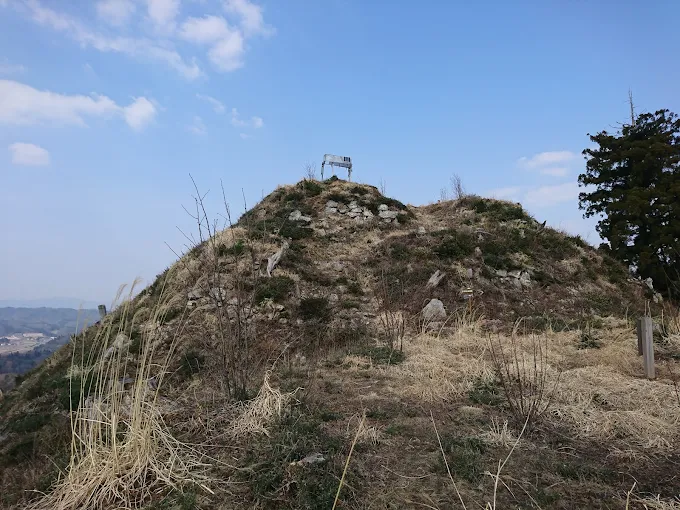
Even today, the mountaintop retains well-preserved earthworks, stone walls, and remains of baileys, and the hiking trails are well-maintained, making it a popular spot for history buffs and castle enthusiasts.
History of Akana Setoyama Castle
Construction and the Rise of the Akana Clan
Akana Setoyama Castle is believed to have been built in the late 14th century. Originally, this area was called Akana-sho, and a branch of the Sawa clan, a powerful local lord of Iwami Province, advanced into the area. In 1377 (Eiwa 3), Tsunetsura of the Sawa clan was appointed as the jitō (land steward) of Akana-sho, and upon gaining control of the area, the clan changed its name from Sawa to Akana.
The Akana clan used Setoyama Castle as their base and expanded their power, leveraging its geographical importance as the border of Bingo, Iwami, and Izumo provinces. The Akana clan used this castle as their residence for generations, growing into a powerful local lord.
Role as one of the Amago Ten Castles
At the start of the Sengoku period, the Amago clan, who ruled the Izumo region, rose to power. The Akana clan became subordinate to the Amago clan and came to be counted as one of the Amago Ten Castles. The Amago Ten Castles refer to a group of important branch castles that protected the Amago clan’s sphere of influence, and Akana Setoyama Castle was particularly important as a strategic point protecting the border of the three provinces.
In Tenbun 9 (1540), when Amago Haruhisa attacked Koriyama Castle, the residence of Mori Motonari in Aki Province, Akana Mitsukiyo also participated in the campaign. At this time, the Akana clan was active as an important vassal of the Amago clan.
Invasion and Defense by the Ouchi Clan
On June 7, Tenbun 11 (1542), Ouchi Yoshitaka, a powerful daimyo of Suo Province, invaded Izumo Province with Mori Motonari and Sue Harukata (Sue Takafusa) in tow. At this time, Akana Setoyama Castle was also targeted. Kumagai Naotsugu of the Ouchi clan commanded the attack on Setoyama Castle.
According to legend, the castle lord, Akana Mitsukiyo, employed a bold tactic: damming the Kambe River that flowed through the castle town, turning the area into a lake, to prevent enemy invasion. This defense allowed Akana Setoyama Castle to withstand the fierce attack of the Ouchi army.
This battle was part of the power struggle between the Amago and Ouchi clans and demonstrated the strategic importance of Akana Setoyama Castle.
Mori Clan Attack and Fall
After the decline of the Ouchi clan, Mori Motonari of Aki rapidly expanded his power. The Mori clan continued their conflict with the Amago clan, and in Eiroku 5 (1562), Mori Motonari himself attacked Akana Setoyama Castle.
While the details of this battle are unclear, it is believed that Akana Setoyama Castle suffered a major blow in the face of the Mori clan’s overwhelming military strength. As the Amago clan’s power declined, the Akana clan gradually came under the influence of the Mori clan.
Edo Period and Abandoned Castle
After the Battle of Sekigahara, Izumo Province became the territory of Horio Yoshiharu. It is possible that some renovations were carried out on Akana Setoyama Castle during the Horio clan’s rule, but the details are unknown.
In 1615 (Genna 1), the Edo Shogunate issued the One Castle Per Province decree, which mandated that each domain abolish castles other than its own. This decree officially led to the abandonment of Akana Setoyama Castle, and the area subsequently reverted to forest.
However, the castle’s remains are well-preserved and are now preserved as a valuable example of a Sengoku period mountain castle.
Structure of Akana Setoyama Castle
Overall Layout and Location
Akana Setoyama Castle is a typical medieval mountain castle built on the summit of Mt. Kinukake, at an altitude of 683 meters. Located on a high vantage point overlooking the town of Akana, this castle boasts an excellent location overlooking the three border regions of Bingo, Iwami, and Izumo.
The castle has a multi-bailey structure, with the main enclosure at the mountaintop at the center, and multiple baileys arranged along the branching ridges. The ridges extending in all directions from the mountaintop form defensive lines, designed to prevent enemy incursions at multiple stages.
Main Enclosure and Central Area
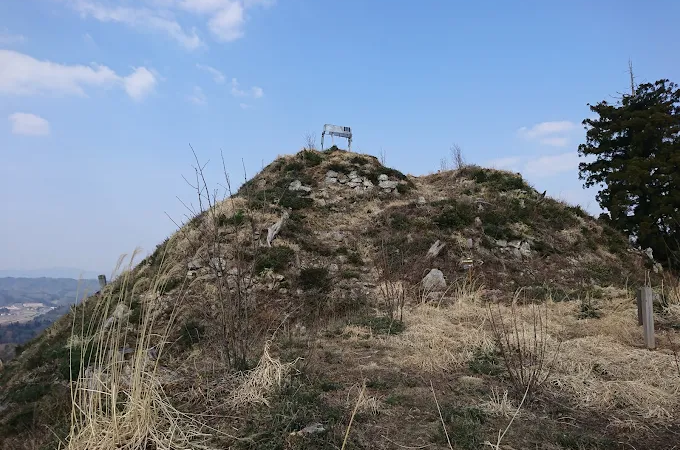
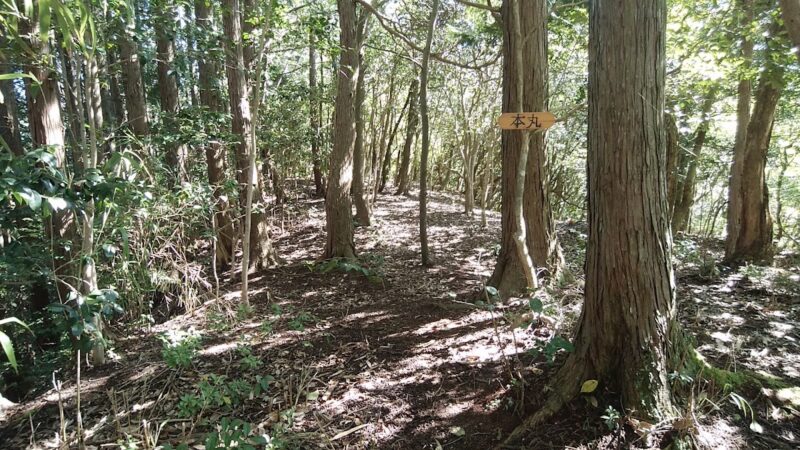
The main enclosure, located at the mountaintop, forms the core of the castle, and it is believed that the lord’s residence and command post were located here. Earthen ramparts surround the main enclosure, enhancing its defensive capabilities.
The gate (entrance) leading to the main enclosure has a complex structure, showing ingenuity to make enemy incursions difficult. Traces of stonework can be seen, particularly near the main gate, suggesting that stone walls may have been added during later renovations.
Arrangement of Baileys
Multiple baileys are arranged in a stepped pattern along the ridges branching off from the main enclosure. These enclosures likely served not only as defensive positions but also as troop encampments and storage areas for supplies.
Moats and vertical moats were constructed between each enclosure, designed to block enemy attacks along the ridges. Clear moats remain, particularly along the northern and southern ridges, providing a glimpse into the defensive system of the time.
Stone Walls and Earthworks
Unusually for a medieval mountain castle, Akana Setoyama Castle retains some traces of stone walls. These stone walls were constructed using the nozurazumi technique and are presumed to have been added during renovations from the late Sengoku period to the early Edo period.
Earthworks surround the main enclosure and major baileys, with remaining sections approximately 1-2 meters high. It is believed that fences or walls were built on top of these earthworks, significantly enhancing defensive capabilities.
Water Supply and Living Spaces
The greatest weakness of mountain castles is securing water, but it is believed that Akana Setoyama Castle had a water source within the mountains. Furthermore, as mentioned earlier, there is a legend that during the siege of 1542 (Tenbun 11), the Kambe River was dammed, creating a lake, suggesting a high level of knowledge regarding water utilization.
The castle has several flat enclosures, which are thought to have been used as living spaces and warehouses for soldiers. While archaeological excavations have been limited, artifacts such as pottery fragments and iron products have been unearthed, indicating that the castle was equipped to withstand a long siege.
Highlights of Akana Setoyama Castle
View from the Main Enclosure
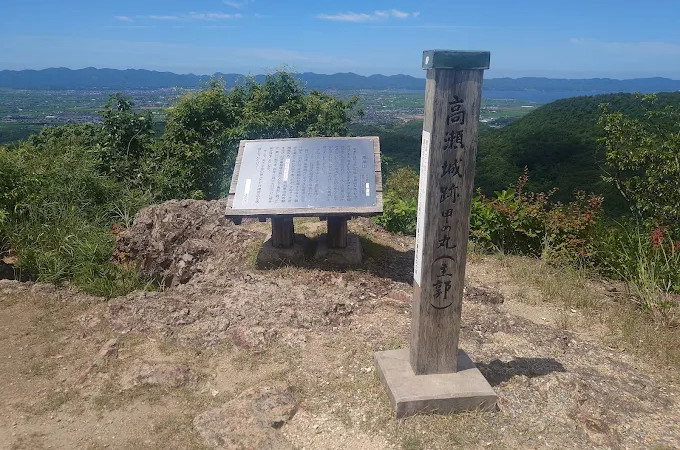
The greatest attraction of Akana Setoyama Castle is the magnificent view from the main enclosure. From the mountaintop at an altitude of 683 meters, you can look down on the town of Akana in Iinan, and on a clear day, you can enjoy a panoramic view of the vast landscape spanning the three provinces of Bingo, Iwami, and Izumo.
This view makes you realize the important role the castle lord played in monitoring developments at the border of the three provinces. It’s also enjoyable to imagine what the warlords of the Sengoku period saw from this spot.
Well-preserved remains
Akana Setoyama Castle was preserved as a forest without undergoing large-scale development after its abandonment, resulting in remarkably well-preserved remains.
The following remains are particularly impressive:
- Earthworks: The earthworks surrounding the main enclosure and major baileys maintain their height, clearly demonstrating the defensive structure of the time.
- Moat: The moat cutting across the ridge is deep, clearly showing its role as a key defensive feature.
- Baileys: The stepped arrangement of baileys exhibits a typical structure of a medieval mountain castle.
- Gate: The winding gate structure shows ingenious methods to prevent enemy intrusion.
- Stone Walls: The partially remaining stone walls are valuable as traces of later renovations.
Well-maintained Hiking Trails and Information Boards
In recent years, Iinan Town has made improvements to the hiking trails, making them easy to walk. Information boards are installed at key points, allowing you to learn about the castle’s history and structure while you explore.
The hiking trail starts from the Akagi Kogen Roadside Station and can be reached in about 30 minutes to 1 hour. There are several rest stops along the way, making it relatively safe even for beginners to climb the castle.
Related Historical Sites in the Surrounding Area
Around Akana Setoyama Castle, there are several historical sites related to the Akana clan and the Sengoku period:
- Takena-ga-hira Castle: A mountain castle that functioned as a subsidiary castle of Akana Setoyama Castle
- Akana Clan Burial Grounds: A group of ancient tombs where successive heads of the Akana clan are buried
- Remains of the Dam on the Kobe River: A site believed to have been used during the siege of 1542
- Around Akana Elementary School: An area where remnants of the castle town may remain
Visiting these historical sites together will allow you to gain a deeper understanding of the history of Akana Setoyama Castle and the Akana clan.
Access and Visit Information
Location
Address: Shimoakana, Iinan-cho, Iishi-gun, Shimane Prefecture
Access by Car
- From Matsue City: Approximately 1 hour 30 minutes via National Route 54
- From Hiroshima City: Approximately 1 hour via National Route 54 from Miyoshi IC on the Chugoku Expressway
- Parking: Parking is available at Akagi Kogen Roadside Station (free of charge)
Starting from Akagi Kogen Roadside Station is the most convenient. The roadside station also has a tourist information center where you can obtain information about visiting the castle.
Access by Public Transportation
Public transportation access is limited. You can take a bus from Izumo-Mitsunari Station on the JR Kisuki Line to Akana, but since the number of buses is limited, it is recommended to check the timetable in advance.
Points to Note When Visiting the Castle
- Estimated Time Required: 30 minutes to 1 hour one way from the trailhead to the main enclosure; allow 2 to 3 hours including sightseeing.
- Attire: As it is a mountain castle, comfortable walking shoes and clothing are essential.
- Items to Bring: Please bring drinking water, a towel, and insect repellent (in summer).
- Season: Spring to autumn is suitable for visiting the castle, but be aware of the heat in summer and snow in winter.
- Bear Warning: As it is a mountainous area, carrying a bear bell is recommended.
Visiting Hours and Fees
- Visiting Hours: 24 hours (however, visiting during daylight hours is recommended).
- Admission Fee: Free
- Closed Days: None (as it is a nature park).
Akana Setoyama Castle and the Ten Flags of the Amago Clan
The Amago Ten Castles
The Amago Ten Castles refer to the ten branch castles that the Amago clan, who wielded power primarily in Izumo Province during the Sengoku period, considered important for governing their territory. These castles functioned as an outer defensive line protecting the Amago clan’s main castle, Gassan-Toda Castle.
There are various theories regarding the Ten Amago Castles, but generally, the following castles are considered to be included:
- Akana Setoyama Castle (border of Izumo, Iwami, and Bingo provinces)
- Mitoya Castle (Mitoya clan)
- Misawa Castle (Misawa clan)
- Takao Castle (Uyama clan)
- Mayama Castle (Mayama clan)
- Kanzai Castle (Kanzai clan)
- Shiraka Castle (Taga clan)
- Sase Castle (Sase clan)
- Ushio Castle (Ushio clan)
- Takayagura Castle (Takayagura clan)
Strategic Importance of Akana Setoyama Castle
Among the Ten Amago Castles, Akana Setoyama Castle held a particularly important position. The reasons are as follows:
- Strategic Point at the Border of Three Provinces: Located at the point where the three provinces of Bingo, Iwami, and Izumo meet, it could monitor and defend against invasions from all directions.
- Monitoring of Roads: Located in a position to control an important road connecting Bingo and Izumo, it was important for both logistics and military purposes.
- Base for Southern Defense: A frontline defensive base against threats from the south, such as the Mori and Ouchi clans.
- Center of Regional Governance: As the base of the Akana clan, who controlled Akana Manor, it was the political and economic center of the region.
Role of the Akana Clan
As a senior retainer of the Amago clan, the Akana clan, based at Akana Setoyama Castle, fulfilled the following roles:
- Border Guard: Monitoring and defending the border of the three provinces.
- Military Mobilization: Participation in the Amago clan’s military actions and provision of troops.
- Regional Governance: Governing Akana Manor and collecting land tax.
- Information Gathering: Understanding the movements of surrounding provinces and reporting to the Amago clan.
Successive lords of the Akana clan, including Akana Mitsukiyo, faithfully carried out these duties, contributing to the maintenance of the Amago clan’s power.
Cultural Value of Akana Setoyama Castle
A Typical Example of a Medieval Mountain Castle
Akana Setoyama Castle is a valuable historical site that preserves the structure of a medieval mountain castle in excellent condition. Its layout, centered around the main enclosure, the arrangement of enclosures utilizing the ridgeline, and the formation of defensive lines using moats make it an important example for learning about castle construction techniques of the Sengoku period.
In particular, the defensive system that skillfully utilizes the terrain demonstrates the high level of castle construction technology of the time and has attracted attention from castle researchers.
A Witness to Local History
Akana Setoyama Castle is an indispensable historical site when discussing the medieval history of Iinan Town and the Izumo region. The castle tells the story of approximately 250 years of history, from the rise and fall of the Akana clan, to the conflicts between the Amago clan and the Ouchi and Mori clans, and finally to its abandonment due to the “One Castle Per Province” decree.
For the local people, Akana Setoyama Castle is a beloved symbol of local history and a core element of regional identity.
Preservation and Utilization
Iinan Town is actively working on the preservation and utilization of Akana Setoyama Castle. Efforts are underway to create an environment where visitors can learn about history while enjoying the site, including the maintenance of hiking trails, the installation of information boards, and the creation of brochures.
It is hoped that the castle will continue to be utilized as a tourist resource while maintaining its value as a cultural property.
Nearby Tourist Spots
Michi-no-Eki Akagi Kogen (Roadside Station Akagi Plateau)
This roadside station serves as a base for climbing to Akana Setoyama Castle. Local specialty products and agricultural produce are sold, meals are available at the restaurant, and tourist information can be obtained. It is an ideal facility for resting before or after climbing the castle.
Nature of Iinan Town
Iinan Town is a charming “satoyama” (traditional rural landscape) area where you can enjoy beautiful natural scenery. With its seasonal landscapes, clear streams, and forests, it’s an attractive area for nature lovers.
Nearby Castle Ruins
When visiting Akana Setoyama Castle, visiting other nearby mountain castle ruins will give you a deeper understanding of the Sengoku period history of this region. Branch castle ruins such as Takenagahira Castle are also within walking distance.
Summary
Akana Setoyama Castle is a Sengoku period mountain castle located in Iinan Town, Iishi District, Shimane Prefecture. It played an important role as one of the Ten Castles of the Amago clan. Built on a mountaintop at an altitude of 683 meters, this castle was a strategic point protecting the borders of Bingo, Iwami, and Izumo provinces, and was defended for generations by the Akana clan.
Despite being repeatedly ravaged by war, including the invasion by Ouchi Yoshitaka in 1542 and the attack by Mori Motonari in 1562, Akana Setoyama Castle remained an important defensive stronghold in the Izumo region during the Sengoku period.
Even today, the remains of the castle, such as the main enclosure, earthworks, moats, and baileys, are well-preserved, and the hiking trails are well-maintained, making it a popular spot not only for history buffs but also for hikers. The view from the main enclosure is magnificent, allowing visitors to relive the scenery seen by the warlords of the Sengoku period.
Its accessibility is also appealing, as it can be reached in about 30 minutes to an hour one way from the Akagi Kogen Roadside Station. When visiting Iinan Town, be sure to climb Akana Setoyama Castle and enjoy the historical romance of the Sengoku period and the beautiful natural scenery.