Takase Castle (Izumo City, Shimane Prefecture) Complete Guide | A Thorough Explanation of the Key Mountain Castle of the Yonehara Clan, One of the Amago Ten Flagships
What is Takase Castle?
Takase Castle is a Sengoku period mountain castle located in Kamba, Hikawa-cho, Izumo City, Shimane Prefecture (formerly Hikawa-cho, Hikawa District). Built on a highly isolated hill on the southern shore of Lake Shinji, it played an important role in the Amago clan’s sphere of influence as a strategically important location overlooking the Izumo Plain and Lake Shinji.
Built on a steep mountain with an elevation of 304m (some sources say 329m) and a relative height of approximately 200m, this castle is counted as one of the “Amago Ten Flagships,” and the Yonehara clan, a senior retainer of the Amago clan, served as its lords for generations. Even today, the remains of the main keep, the second keep, and wells remain well-preserved on the mountaintop, conveying the appearance of a Sengoku period mountain castle.
History and Background of Takase Castle
Construction and the Yonehara Clan
The exact date of Takase Castle’s construction is uncertain, but it is believed to have been built by the Yonehara clan during the Sengoku period (Warring States period). The Yonehara clan was a branch of the Sasaki Rokkaku clan of Omi Province (present-day Shiga Prefecture), and they adopted the name Yonehara after ruling over the Yonehara estate in Omi Province.
As vassals of the Amago clan, who became the deputy governor of Izumo Province, the Yonehara clan moved to Izumo and were entrusted with the strategically important area of the southern shore of Lake Shinji, making Takase Castle their residence. This castle overlooked the Izumo Plain and functioned as an important base supporting the Amago clan’s power in Izumo.
Battles in the Sengoku Period
During the Sengoku period, Takase Castle became the stage for conflicts between the Amago clan and the Mori clan. From the Eiroku era (1558-1570) to the Genki era (1570-1573), fierce battles were fought in the Izumo region.
Initially, the castle lord, Yonehara Tsunahiro, pledged allegiance to the Amago clan, but surrendered to the Mori clan when the Amago’s power declined. However, in 1569, when Amago Katsuhisa, along with Yamanaka Shikanosuke and others, raised an army to restore the Amago clan, Yonehara Tsunahiro switched sides again, making Takase Castle a crucial base for the Amago restoration army.
The Fall of the Castle and its Aftermath
In 1571, a large Mori army attacked Takase Castle. Despite its rugged terrain and strong defensive structures, Takase Castle fell to the overwhelming numerical superiority, marking the end of the Yonehara clan’s rule.
After its fall, Takase Castle became a castle of the Mori clan, but was eventually abandoned. From the Edo period onward, it lost its function as a castle, and only its remains remained in the mountains. Currently, it is preserved as a historical site by Izumo City and is cherished as a regional historical heritage.
Structure and Remains of Takase Castle
Three-Tiered Layout
Takase Castle is a mountain castle with a three-tiered structure extending from the mountaintop to the foot of the mountain. This structure is composed as follows:
O-Takase (Main Enclosure)
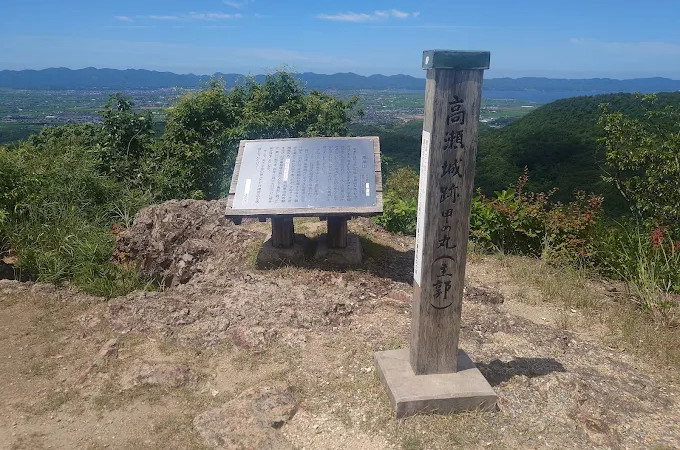
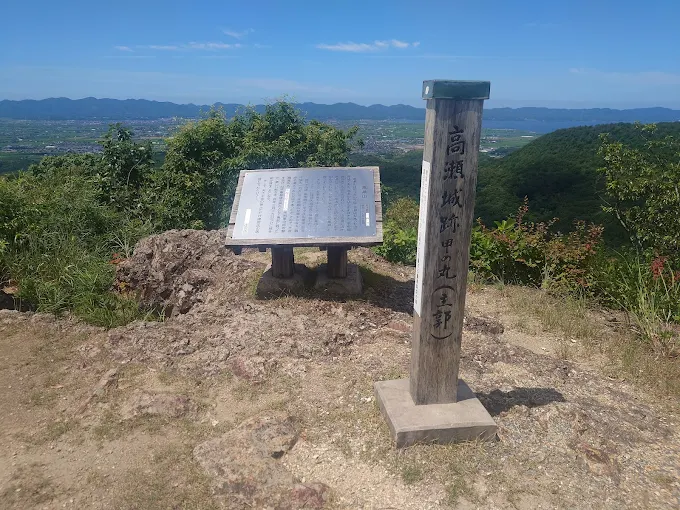
This is the main enclosure, centered around the main keep located at the mountaintop, and forms the core of the castle. The main keep remains at the 304m-high mountaintop, with the second enclosure and well remains arranged around it. From the main enclosure, one could see Lake Shinji, the Izumo Plain, and even the Sea of Japan, making it a key point for surveillance and defense.
Ko-Takase (Mid-Mountain)
This is a group of enclosures located on the mid-mountain, one level below the main enclosure. This area functioned as a defensive line supporting Otakase, playing a role in preventing enemy incursions. Multiple baileys were arranged in a stepped pattern in this section, creating an effective defensive system.
Teppo-date (Mountain Foothills)
This was a frontline defensive facility located near the base of the mountain. The name “Teppo-date” (meaning “gun stand”) suggests that firearms were used for defense. Firearms were incorporated into tactics during the late Sengoku period, indicating that Takase Castle also employed the latest tactics.
Major Remains
Honmaru (Main Enclosure) Site
The Honmaru site, remaining on the mountaintop, was the location of the lord’s residence and command post. The flat terrain remains today, allowing us to imagine the layout of the former buildings. Traces of earthworks can also be seen around the area, indicating the presence of defensive facilities.
Ninokuruwa (Second Enclosure) Site
The Ninokuruwa site, adjacent to the Honmaru, is also well-preserved. As an important bailey supporting the Honmaru, it is thought to have been used for stationing soldiers and storing supplies.
Well Remains
Securing a water source was a matter of life and death for mountain castles. The remains of a well are found on the mountaintop of Takase Castle, indicating that a system for securing water even during sieges was in place. This well can still be seen today, demonstrating the high level of technology at the time.
Storage Area
The remains of a facility for storing supplies and weapons have also been confirmed. The storage area was a place for temporarily storing warhorses and supplies, and was an important facility that played a vital role in the castle’s logistics.
Enclosures and Earthworks
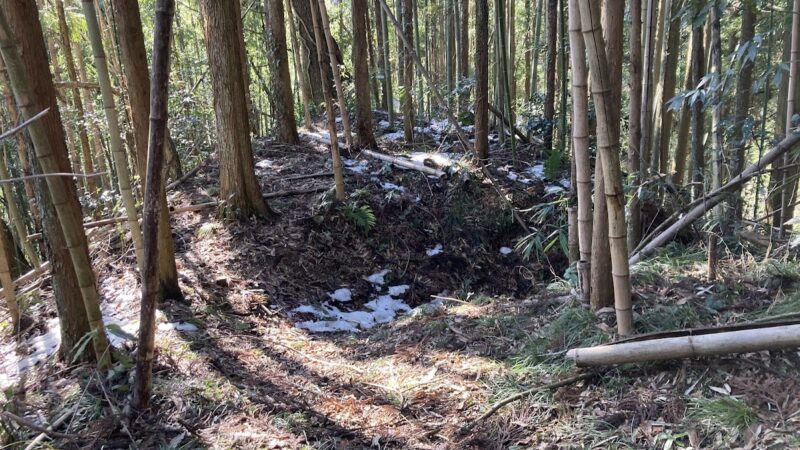
Multiple enclosures (flat areas) are arranged in a stepped pattern on the mountainside, each demarcated by earthworks and trenches. These defensive structures were designed to delay enemy incursions and enable battles advantageous to the defenders.
The Position of Takase Castle in the Amago Ten Flags
The “Amago Ten Flags” refers to ten important castles that supported the power of the Amago clan, a Sengoku period daimyo of Izumo. Takase Castle is one of them, playing a central role in the defense of the southern Izumo Plain. The Amago clan’s ten castles included Takase Castle, as well as Shiraga Castle, Mikasa Castle, and Misawa Castle. These castles worked together to ensure the Amago clan’s control over their territory. Takase Castle, in particular, was geographically important, located on the southern shore of Lake Shinji, and functioned as the front line against invasions into the Izumo Plain.
The Yonehara clan, as senior retainers of the Amago clan, were entrusted with this crucial stronghold, highlighting its immense military and political importance. Even when the Amago clan was at a disadvantage in their conflict with the Mori clan, Takase Castle was one of the castles that continued to resist until the end, demonstrating their strong loyalty to the Amago clan.
Strategic Importance of Takase Castle
Geographical Advantage
The greatest characteristic of Takase Castle lies in its geographical location. Built on an isolated hill on the southern shore of Lake Shinji, this castle possessed the following strategic advantages:
- Monitoring the Izumo Plain: From the mountaintop, the vast Izumo Plain could be viewed, allowing for early detection of enemy movements.
- Control of Lake Shinji: Lake Shinji was a vital waterway, and controlling its southern shore allowed for control of logistics and military movements.
- Isolated Hill: As a mountain isolated from its surroundings, approaching enemies could be easily detected, providing a defensive advantage.
- Nexus Point between Izumo and Iwami: Located near the transportation route connecting Izumo and Iwami provinces, it allowed for monitoring of inter-regional communication.
Enhanced Defensive Facilities
Takase Castle skillfully utilized the natural terrain while also incorporating numerous artificial defensive facilities. The rugged terrain, with a relative elevation of 200m, itself acted as a defensive wall, making enemy attacks difficult.
Furthermore, the three-tiered layout created a multi-layered defensive system, ensuring that even if one defensive line was breached, the next line could stop the enemy. As the name “Teppo-tate” (meaning “gun stand”) suggests, firearms, a new weapon of the late Sengoku period, were also used for defense, resulting in a state-of-the-art defensive system for the time.
Access to Takase Castle and Climbing Route
Basic Information
- Location: Kamba (Gakuto), Hikawa-cho, Izumo City, Shimane Prefecture
- Access: Approximately 15 minutes by car from JR San’in Main Line “Shohara Station,” or approximately 15 minutes by car from Ichibata Electric Railway “Shohara Station”
- Parking: Parking available near the trailhead
- Climbing Time: Approximately 40-60 minutes from the trailhead to the summit
Climbing Route
There are three trailheads to Takase Castle. The most common route is from Uya-dani-guchi, located along the Hikawa Minami Wide Area Agricultural Road, which runs east-west south of the Kojin-dani Ruins.
Uya-guchi Route
Along the Hikawa South Wide-Area Agricultural Road, there is a sign for “Takase Castle Ruins,” and the hiking trail begins from there. A pamphlet for “Takase Castle Ruins” is available for free at the entrance of a house along the way. This pamphlet contains information about the castle’s history and a map of the ruins, so it is recommended to obtain one before climbing.
The hiking trail is well-maintained, but since it involves climbing a mountain with an elevation difference of 200m, appropriate clothing and shoes for hiking are necessary. Particular caution is needed during rainy weather and in winter, as the ground can be slippery.
Precautions for Climbing the Castle
- Clothing: Wear comfortable clothing and hiking boots suitable for climbing a mountain castle.
- Hydration: Bring plenty of water, especially in summer.
- Time Allocation: Allow approximately 2-3 hours for the round trip.
- Weather Check: Avoid climbing the castle in bad weather.
- Protection of Historical Remains: Please be careful not to damage the historical remains.
Nearby Attractions
Kojindani Ruins
North of Takase Castle lies the Kojindani Ruins, where 358 bronze swords designated as National Treasures were unearthed. This important Yayoi period site is essential for understanding the ancient history of the Izumo region. Visiting it along with Takase Castle allows you to experience the history of Izumo from ancient times to the Sengoku period.
Lake Shinji
The view of Lake Shinji from Takase Castle is breathtaking. The experience of viewing Lake Shinji, especially its beautiful sunsets, from the mountaintop is a unique and precious one. Thinking that the warlords of the Sengoku period also gazed upon the same scenery evokes a sense of historical romance.
Izumo Taisha Shrine
If you visit Izumo City, Izumo Taisha Shrine, one of Japan’s oldest shrines, is a must-see. Located approximately 30 minutes by car from Takase Castle, this site offers a glimpse into the history and culture of Izumo, a region that has existed since mythological times.
Cultural Value of Takase Castle
Takase Castle ruins are considered one of the best-preserved mountain castle remains in Shimane Prefecture. It is an important historical site for understanding the structure of mountain castles during the Sengoku period and possesses the following academic value:
Archaeological Value
Excavations have yielded artifacts such as Sengoku period pottery and weapon fragments, providing clues to the lifestyle and battles of the time. It also offers valuable materials for studying the castle’s structure and construction techniques.
Historical Value
Takase Castle, the stage for important historical events in Izumo during the Sengoku period, including the conflict between the Amago and Mori clans and the activities of the Amago restoration army, is an indispensable historical site for regional history research. It also provides important historical materials for understanding the activities of the local lord, the Yonehara clan.
Scenic Value
Built on a distinctive, isolated hill on the southern shore of Lake Shinji, Takase Castle possesses exceptional scenic value. The view from the summit offers a panoramic vista of the Izumo Plain and Lake Shinji, creating a beautiful landscape where the nature and history of the Izumo region harmonize.
Takase Castle and the Footprints of the Yonehara Clan
The Yonehara clan, a family that migrated from Omi Province to Izumo, is deeply etched in Izumo’s history. Despite their noble origins as a branch of the Sasaki Rokkaku clan, they established themselves in Izumo as vassals of the Amago clan and contributed to the region’s development.
In particular, Yonehara Tsunahiro, the castle lord at the end of the Sengoku period, wavered between the Mori and Amago clans, but ultimately joined the Amago restoration army, demonstrating unwavering loyalty to his lord. This stance symbolizes the way of life of samurai at that time, adding a human drama to the history of Takase Castle.
While much remains unknown about the fate of the Yonehara clan after their deaths, the ruins of Takase Castle serve as a testament to their history.
The Significance of Visiting Takase Castle
Visiting Takase Castle offers more than just sightseeing. By actually climbing this Sengoku period mountain castle, you can experience firsthand the environment in which the samurai fought and lived. Climbing the steep mountain path, with a relative elevation of 200 meters, allows you to understand the castle’s formidable defenses.
Furthermore, the view of the Izumo Plain and Lake Shinji from the mountaintop immediately reveals why the castle was built in this location. Visually confirming its geographical importance and strategic value is an invaluable experience for learning history.
Takase Castle is not a famous castle, but that is precisely why it is a place where you can quietly contemplate history. While enjoying the atmosphere of this unspoiled mountain castle, you can reflect on Izumo during the Sengoku period.
Summary
Takase Castle, located in Hikawa-cho, Izumo City, Shimane Prefecture, is a mountain castle from the Sengoku period (Warring States period) and played an important role as one of the ten castles of the Amago clan. Built by the Yonehara clan, this castle functioned as a strategic point controlling the southern shore of Lake Shinji and the Izumo Plain, and was the stage for conflicts between the Amago and Mori clans.
Built on a steep mountaintop at an altitude of 304m and a relative height of 200m, its three-tiered layout represents the pinnacle of Sengoku period castle construction technology, and the remains of the main keep, second keep, and well are still well-preserved. The view from the summit is magnificent, offering a panoramic view of the Izumo Plain and Lake Shinji.
Access is via a hiking trail from Uya-daniguchi along the Hikawa South Wide Area Agricultural Road, taking approximately 40-60 minutes to reach the castle. Nearby attractions include the Kojindani Ruins and Izumo Taisha Shrine, allowing visitors to comprehensively learn about the history and culture of Izumo.
Takase Castle is preserved as a valuable historical heritage site for the region, offering a rare opportunity to experience a mountain castle from the Sengoku period. It is a place well worth visiting not only for history enthusiasts and castle fans, but also for anyone interested in the history of Izumo.