Nukuyu Castle (Ochi District, Shimane Prefecture) | A Complete Overview of the Mountain Castle that Flourished as the Residence of the Iwami Ogasawara Clan
Nukuyu Castle is a mountain castle located in Kawamoto-cho, Ochi District, Shimane Prefecture, known as the residence of the Iwami Ogasawara clan. Built on a steep mountaintop at an altitude of approximately 219 meters, overlooking the Aiga River, a tributary of the Gonokawa River, this castle functioned as an important base in Iwami Province from the Nanboku-cho period to the Sengoku period. This article provides a detailed explanation of this mountain castle, including its historical background, the characteristics of its layout, existing remains, and access methods.
Basic Information on Nukuyu Castle
Nukuyu Castle is also known as “Nukui Castle,” “Nukui Fortress,” and “Kawamoto Castle,” and was located in Ochi District, Iwami Province (present-day Kawamoto, Kawamoto-cho, Ochi District, Shimane Prefecture).
- Castle Name: Nukuyu Castle
- Other Names: Nukui Castle, Nukui Fortress, Kawamoto Castle
- Location: Kawamoto, Kawamoto-cho, Ochi-gun, Shimane Prefecture
- Elevation: 219 meters
- Relative Height: Approximately 180 meters
- Year of Construction: Nanboku-cho period (mid-14th century)
- Lord: Iwami Ogasawara clan (Ogasawara Nagauji, Ogasawara Nagayoshi, etc.)
- Castle Structure: Mountain castle
- Year of Abandonment: Eiroku era (1558-1570)
Nukuyu Castle was built southeast of the town of Kawamoto along the Gonokawa River, overlooking the Aiga River, and functioned as the base of the Iwami Ogasawara clan, who ruled the Kawamoto area.
The History of Ontou Castle and the Iwami Ogasawara Clan
The Establishment of the Iwami Ogasawara Clan and the Construction of Ontou Castle
The Iwami Ogasawara clan originated when a branch of the Ogasawara clan, a prominent family from Shinano Province, moved to Iwami Province. Initially, the Iwami Ogasawara clan used Akagi as their base, but it is said that during the time of the fourth generation, Ogasawara Nagauji, or the fifth generation, Ogasawara Nagayoshi, Ontou Castle was built and became their main castle.
During the Nanboku-cho period (Northern and Southern Courts period), Iwami Province was a region where the forces of the Southern and Northern Courts fiercely clashed. The Ogasawara clan belonged to the Northern Court and developed Ontou Castle as an important military base in the region. Akagi came to function as an outpost of Ontou Castle, and the Iwami Ogasawara clan’s system of rule was established.
The Turmoil of the Sengoku Period and the Relationship with the Amago Clan
At the start of the Sengoku period, Iwami Province was situated between two major powers: the Amago clan of Izumo Province and the Mori clan of Aki Province. The Iwami Ogasawara clan initially served the Amago clan of Izumo, maintaining their power under their control.
During the Amago clan’s heyday, the Iwami Ogasawara clan played a crucial role in the Amago clan’s rule of Iwami Province, establishing control over the region centered around Kawamoto-go. They also wielded influence over the Iwami Silver Mine, and are believed to have held an economically important position.
The Mori Clan’s Invasion and the Fall of Yunoyu Castle
In 1558 (Eiroku 1), Mori Motonari of Aki Province launched a full-scale invasion of Iwami Province. The vanguard of the Mori army was led by Motonari’s second son, Kikkawa Motoharu. The Mori army, led by Kikkawa Motoharu, successively captured the castles of Iwami that were under the Amago clan’s control.
Yunoyu Castle was also besieged by the Mori army, and a fierce battle ensued. However, faced with an overwhelming difference in troop numbers and the Mori clan’s skillful siege tactics, the Iwami Ogasawara clan, the lords of Yunoyu Castle, were forced to surrender.
After the surrender, it is said that the Ogasawara clan was moved to a location on the north bank of the Gono River. Yunoyu Castle was abandoned around this time and disappeared from the stage of history without ever being used again.
Layout and Structure of Yunoyu Castle
Group of Enclosures Centered Around the Main Enclosure
Yunoyu Castle has the typical structure of a medieval mountain castle, with multiple enclosures arranged around the main enclosure (Enclosure 1), which occupies a peak at an altitude of approximately 210 meters. The main enclosure is located at the highest point of the castle and is thought to have functioned as the lord’s residence and command post.
The main enclosure is relatively large, and traces of defensive structures such as watchtowers and earthworks can be seen. From the main enclosure, one can overlook the surrounding terrain, making it a suitable location for monitoring enemy movements.
Enclosures on the Northeast Ridge
A distinctive feature of Ontou Castle is the group of enclosures occupying the tip of a large ridge extending to the northeast. Multiple enclosures are arranged in a stepped fashion along this ridge, forming a defensive line to prevent intrusion into the main enclosure.
At the eastern end of the ridge is a raised area, likely a watchtower base, designed to intercept enemies advancing along the ridge. A trench designed to block the ridge has also been identified, demonstrating various defensive measures.
Enclosure Arrangement and Place Names
The enclosures of Ontou Castle retain place names that indicate their function. Place names such as “Terayashiki,” “Kurayashiki,” and “Basenba” are thought to indicate the site of a temple, a warehouse, and a horse training ground, respectively.
These place names suggest that Ontou Castle was not merely a military facility, but a comprehensive castle with diverse functions, including the lord’s residence, vassal residences, religious facilities, and storage facilities for supplies. ### Remains of Stone Walls and Earthworks
A notable feature of the remains of Ontou Castle is the partially preserved stone walls. While the use of stone walls was limited in medieval mountain castles, it has been confirmed that stone walls were used in some of the main enclosures of Ontou Castle.
These stone walls were constructed using a technique called “nozurazumi,” a simple structure using natural stones piled up as they were. However, they are valuable remains for understanding the castle-building techniques of the time. Earthworks were also positioned around each enclosure, playing a role in enhancing defensive capabilities.
Northern Defensive Structures
To the north of Ontou Castle, the Aigawa River valley functioned as a natural moat. The steep slopes and the river formed a defensive line, making invasion from the north extremely difficult.
On the northern slope of the castle, cut slopes (artificially carved steep slopes) were constructed to prevent enemy ascent. A defensive system combining natural terrain and artificial modifications was established.
Current Status of the Remains of Ontou Castle
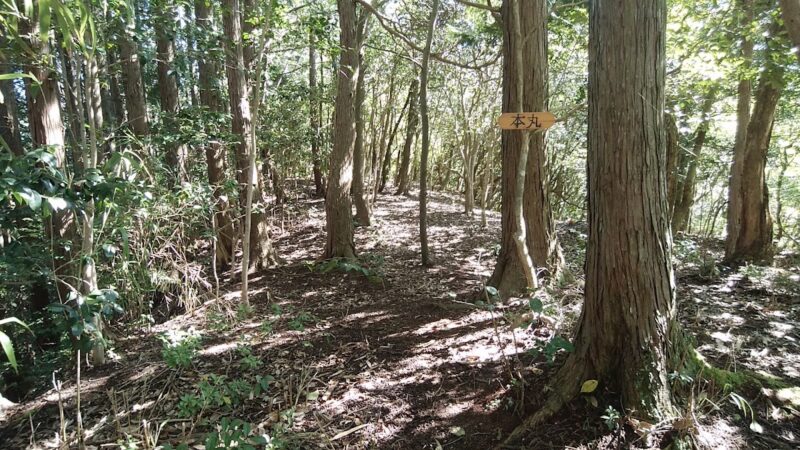
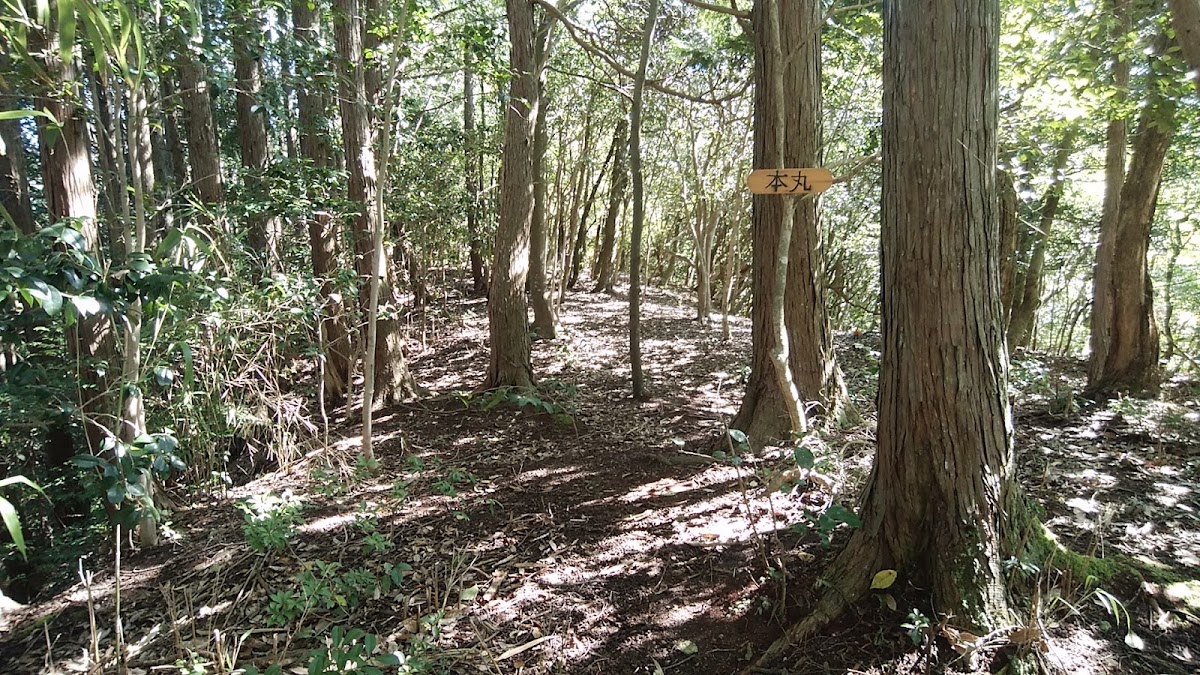
Condition of the Main Enclosure (Honmaru)
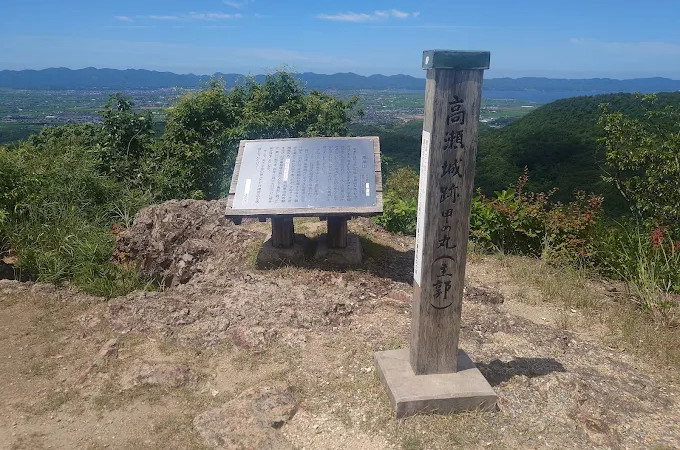
At the current Ontou Castle site, the flat surface of the main enclosure is well-preserved. At the eastern end of the main enclosure is a raised area believed to be a watchtower base, from which one can overlook the town of Kawamoto and the flow of the Gonokawa River.
Traces of earthworks remain around the main enclosure, allowing for inferences about the layout of former defensive structures. However, due to years of weathering and overgrown vegetation, it is difficult to accurately determine the original structure in some areas.
Preservation Status of the Enclosure Groups
The enclosure groups surrounding the main enclosure can still be seen as part of the topographical undulations. In particular, the enclosures arranged along the ridgeline remain clearly visible as terraced terrain.
The moats and cliffs separating each enclosure also partially remain, making them valuable research subjects for castle researchers. However, some enclosures are covered with planted or natural forests, making detailed observation difficult in some cases.
Status of the Stone Walls
The stone walls of Yunoyu Castle remain partially intact, mainly around the main enclosure. These walls are built using the “nozurazumi” method, a simple structure utilizing natural stones, but they hold high academic value as examples of stone wall construction in medieval mountain castles.
While many sections of the walls have collapsed or been buried, leaving no trace of their original form, some sections allow observation of the original construction methods. The stones used are locally sourced, reflecting the geological characteristics of the region.
Access to the Castle and Ruins
The path to Yunoyu Castle is a mountain trail maintained by local residents. The path is steep in places, and requires climbing approximately 180 meters in elevation, so appropriate physical fitness and equipment are necessary.
When climbing, it is recommended to prepare non-slip shoes, drinking water, and a map. Also, since vegetation is abundant in the summer, wearing long sleeves and long pants is advisable.
Historical Environment of Ontou Castle and its Surroundings
Positional Relationship with Akagi Castle
Akagi Castle, the predecessor of Ontou Castle, is located north of Ontou Castle. Even after the Ogasawara clan moved their base to Ontou Castle, Akagi Castle continued to function as an outpost.
The relative positions of the two castles reflect the territorial control strategy of the Iwami Ogasawara clan, strategically positioned to control key points in the Gonokawa River basin. The line connecting Akagi Castle and Ontou Castle is thought to have functioned as a defensive line for Kawamoto-go.
Connection with Iwami Silver Mine
The Iwami Ogasawara clan is also believed to have had influence over the Iwami Silver Mine. The Iwami Silver Mine was an important economic resource during the Sengoku period, and many daimyo fought over its control.
The Ogasawara clan’s involvement with the Iwami Silver Mine, based at Ontou Castle, demonstrates the economic base and political importance of this family. It is believed that the Mori clan’s aggressive invasion of Iwami Province was driven by the objective of securing the Iwami Silver Mine.
Gonokawa River Water Transport and Ontou Castle
The Gonokawa River was an important transportation route in Iwami Province, used for transporting goods and people. Ontou Castle was located overlooking the Gonokawa River and its tributary, the Aiga River, making it a strategic location for monitoring and controlling water transport.
For the Iwami Ogasawara clan, who ruled Kawamoto-go, controlling the Gonokawa River’s water transport was of significant economic and military importance. It is presumed that the strategic selection of Ontou Castle’s location reflected this control of transportation routes.
Access to Ontou Castle
Access by Public Transportation
To access Ontou Castle ruins by public transportation, you will need to use the replacement bus service for the JR San’e Line (now defunct). Kawamoto Bus Center is the nearest bus stop.
It takes about 15 minutes to walk from the bus center to the entrance to the Onto Castle ruins. However, since the number of buses is limited, it is recommended to check the timetable in advance.
Access by Car
If accessing by car, take the Hamada Expressway to the Mizuho Interchange, then take National Route 261 towards Kawamoto Town. It takes about 30 minutes from the interchange to the area around the Onto Castle ruins.
Parking space is limited in Kawamoto Town, so please be careful not to park on the street. Please park in a manner that does not inconvenience local residents.
Precautions for Climbing the Castle
Climbing to the Onto Castle ruins requires ascending a mountain path, so please pay attention to the following points:
- Clothing and Equipment: Wear appropriate clothing and shoes for hiking, and carry drinking water, a map, and a flashlight.
- Check the Weather: The ground can be slippery during rainy weather or immediately after rain, so avoid climbing or exercise extreme caution. 3. Time Allocation: Allow approximately 2-3 hours from ascent to descent.
- Avoid Solo Activities: If possible, we recommend climbing with multiple people.
- Caution Regarding Wild Animals: There is a possibility of encountering wild animals such as wild boars and venomous snakes in the mountains.
Highlights of Ontou Castle Ruins
View from the Main Enclosure
From the main enclosure of Ontou Castle, you can enjoy a panoramic view of the Gonokawa River and the surrounding terrain. On clear days, you can even see the mountains of Iwami in the distance, allowing you to experience the scenery that the castle lords of the Sengoku period must have seen.
This view makes you realize that Ontou Castle was located in an excellent position for surveillance and defense. From this view, you can understand why they were able to detect enemy movements early and take appropriate defensive measures.
Layout Structure
The layout of Ontou Castle exhibits a typical structure of a medieval mountain castle and contains many interesting elements from the perspective of castle research. You can learn about the castle construction techniques of the Sengoku period, such as the centralized layout of the baileys centered around the main enclosure, the defensive lines utilizing the ridges, and the blocking of ridges by trenches.
As you tour each bailey, imagining how the castle’s soldiers were positioned and what defensive tactics they employed will be a historically romantic experience.
Remains of Stone Walls and Earthworks
The stone walls remaining at Onto Castle are valuable examples of stonework use in medieval mountain castles. While the technique is simple (rough-stone masonry), the selection of stones and stacking methods show the ingenuity of the engineers of the time.
Remains of earthworks also exist in various places, providing clues to the arrangement of defensive structures. By observing these remains, you can understand the development process of castle architecture.
Preservation and Utilization of Onto Castle Ruins
Value as a Cultural Property
Onto Castle Ruins possesses important cultural property value as the residence of the Iwami Ogasawara clan and as a historical site that conveys the history of Iwami Province during the Sengoku period. Shimane Prefecture and Kawamoto Town are undertaking efforts to pass on this valuable cultural heritage to future generations.
Academic research, including surveying the castle ruins and creating layout maps, is progressing, making the historical value of Yunoyu Castle clearer.
Utilization as a Regional Historical Resource
The Yunoyu Castle ruins are an important resource that demonstrates the historical identity of Kawamoto Town. It is expected to be utilized for local history education and as a tourist resource, and preservation activities are being carried out by local residents.
Visiting the castle ruins offers a valuable opportunity to experience the Sengoku period of Iwami Province, allowing visitors to connect with the region’s history and culture.
Future Challenges and Prospects
Several challenges remain in the preservation and utilization of the Yunoyu Castle ruins. These include the weathering of the remains, reduced visibility due to overgrown vegetation, maintenance of the access routes, and safety measures.
Addressing these challenges, appropriately preserving the Yunoyu Castle ruins, and conveying its historical value to many people will be crucial efforts going forward.
Summary
Onyu Castle, located in Kawamoto-cho, Ochi-gun, Shimane Prefecture, was a mountain castle that played an important role from the Nanboku-cho period to the Sengoku period as the residence of the Iwami Ogasawara clan. Built on a steep slope at an altitude of 219 meters and a relative height of approximately 180 meters, the castle was strategically located overlooking the Gonokawa River and its tributary, the Aigakawa River.
The Iwami Ogasawara clan initially used Akagi Castle as their residence, but during the time of the fourth or fifth lord, they built Onyu Castle and moved their base there. During the Sengoku period, they were subordinate to the Amago clan, but in 1558, they surrendered after being attacked by the Mori army led by Kikkawa Motoharu, and the castle was abandoned.
The current Onyu Castle ruins retain remains such as a group of baileys centered around the main enclosure, stone walls, earthworks, and moats, making it a valuable historical site for understanding the structure of medieval mountain castles. Climbing to the castle requires considerable physical strength and equipment, but the views from the main enclosure and the layout of the castle grounds are well worth the visit.
The Onto Castle ruins are an important cultural heritage site that tells the history of the Sengoku period in Iwami Province, and it is hoped that they will continue to be appropriately preserved and utilized. For history enthusiasts and castle fans, this mountain castle is a valuable place where one can trace the footsteps of the Iwami Ogasawara clan and feel the spirit of the Sengoku period.