Complete Guide to Okawara Castle (Hannō City, Saitama Prefecture) | History, Remains, and Access Information
What is Okawara Castle?
Ogawara Castle is a medieval mountain castle located in Okawara, Hannō City, Saitama Prefecture. Also known as “Ryūgaisan Castle,” it was built on Ryūgaisan Mountain, approximately 240 meters above sea level, on the south bank of the Iruma River. It is known as the residence of the Okawara clan, who belonged to the Tan clan (Tanji clan), one of the seven clans of Musashi Province. Even today, remains such as a large moat reaching 8 meters in depth and vertical trenches remain in excellent condition.
The castle site is now developed as a hiking course, making it a popular spot for both castle enthusiasts and mountain climbing lovers, allowing them to enjoy hiking while appreciating the castle remains.
History of Okawara Castle
The Okawara Clan and the Seven Clans of Musashi Province
The Okawara clan, who built Okawara Castle, is believed to have belonged to the Tan clan (Tanji clan), one of the seven clans of Musashi Province. The Musashi Seven Clans are a collective term for samurai groups that held power in Musashi Province (present-day Saitama and Tokyo prefectures) from the late Heian period to the Kamakura period. The Tan clan was a branch of this group that held power in the Chichibu and Iruma regions.
The Tan clan adopted the surname Tanji, and as they dispersed and settled in various locations, they began to use place names as their surnames. The Okawara clan is thought to be a descendant of this family, and it is presumed that they established their power base in the Okawara area.
Construction Period and Role of the Castle
While the construction period of Okawara Castle is thought to be the Muromachi period, detailed dates and the circumstances of its construction are unclear due to a lack of historical records. At that time, western Musashi Province was a complex area with intertwined spheres of influence between the Kanto Kanrei Uesugi clan and the Later Hojo clan. Local lords needed to build highly fortified mountain castles to protect their territories.
Okawara Castle is thought to have functioned as a base for monitoring water transport on the Iruma River and controlling the surrounding area. Located on a mountaintop at an altitude of 240 meters, with a relative height difference of approximately 120 meters, it appears to have been a strategically advantageous location for defense.
Origin of the Name “Ryugai”
The alternative name for Okawara Castle, “Ryugai,” is said to be a corruption of “Yōgai,” meaning “fortified location.” Many mountain names in this region include “Ryūgai,” “Ryūya,” and “Ryūgai,” all of which are variations of words meaning “fortified location,” or a rugged terrain suitable for defense.
This name suggests that the people of that time recognized this area as an important military base, or “fortified location.”
Changes After the Sengoku Period
Unfortunately, detailed records of Okawara Castle’s activities during the Sengoku period (Warring States period) are not available. It is believed that this region came under the control of the Later Hōjō clan in the late Sengoku period, and it is presumed that the castle was abandoned after Toyotomi Hideyoshi’s siege of Odawara in 1590, following Tokugawa Ieyasu’s entry into the Kanto region. Although it lost its function as a castle after the Edo period, the place name “Donoyashiki” (Lord’s Residence), believed to be the site of the Okawara clan’s residence, remains at the foot of the mountain, preserving the memory of the former lord.
Layout and Remains of Okawara Castle
Overall Structure
Okawara Castle is a typical mountain castle built around the summit of Ryugaiyama Mountain. Multiple enclosures are arranged around the main enclosure, and trenches and vertical moats are provided along the ridges and valleys. It possesses the basic defensive structures of a mountain castle and is a valuable remains for understanding the castle-building techniques of the time.
Currently, the area is maintained as a hiking trail, making it relatively easy to explore the castle grounds. However, there are steep slopes and rugged areas, so appropriate equipment is necessary when visiting.
Main Enclosure (Honmaru)
The main enclosure, located at the summit, is the central enclosure of the castle. From here, one can see the surrounding mountains and the flow of the Iruma River, clearly indicating its function as a military observation post. The main enclosure isn’t particularly large, but its layout makes the most of its mountaintop location.
On clear days, you can see distant mountain ranges, and the excellent views remain a major attraction for visitors today.
Large Moat
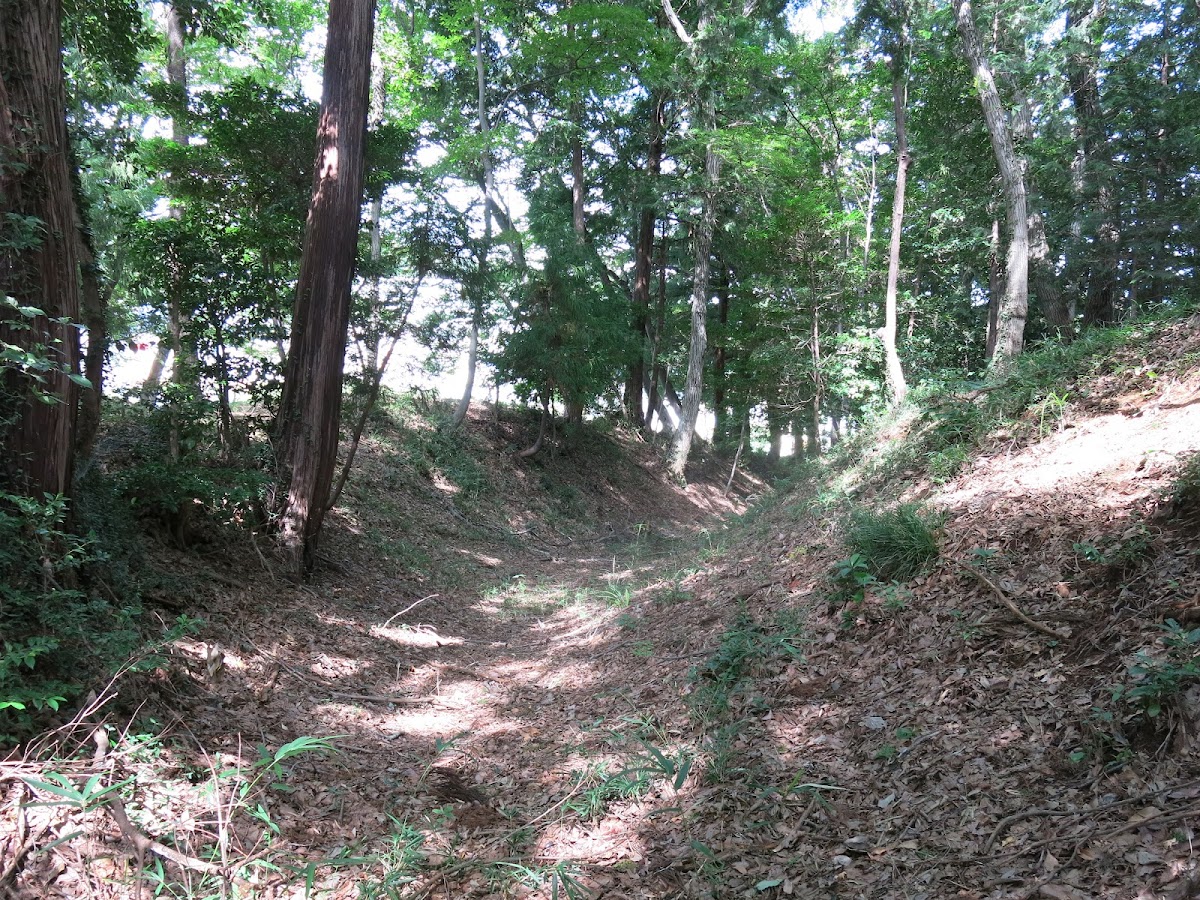
The most striking feature of Okawara Castle is the large moat, reaching a depth of approximately 8 meters. This moat was constructed to cut across the ridge and served as a crucial defensive structure to prevent enemy intrusion. Its scale is still impressive today, demonstrating the high level of defensive technology used in medieval mountain castles.
The steep cliffs on both sides of the moat are astonishing, highlighting the impressive scale of the civil engineering work accomplished with the technology of the time.
Vertical Moats
Several vertical moats can be found within the castle grounds. These moats, dug vertically along the slopes, served to prevent lateral movement of enemies and limit their attack routes. The vertical moats of Ogawara Castle are skillfully positioned, utilizing the natural terrain, demonstrating the high level of skill of the castle’s builders.
Some of the vertical moats are still clearly visible today, enhancing the castle’s value as a mountain castle ruin.
Enclosures
Several enclosures are arranged around the main enclosure. These are thought to have served not only as defensive structures for the main enclosure but also as garrisons for soldiers and storage areas for supplies. Each enclosure is positioned according to the terrain, demonstrating effective use of the limited space on the mountaintop.
Cut Slopes
Cut slopes, or “kirigi,” are artificially carved steep slopes surrounding the enclosures. These cut slopes made enemy intrusion difficult and also served to secure the area of the enclosures. The cut slopes of Ogawara Castle remain clearly visible today, demonstrating the high level of civil engineering technology of the time.
Related Remains at the Foot of the Mountain
Gundari Shrine
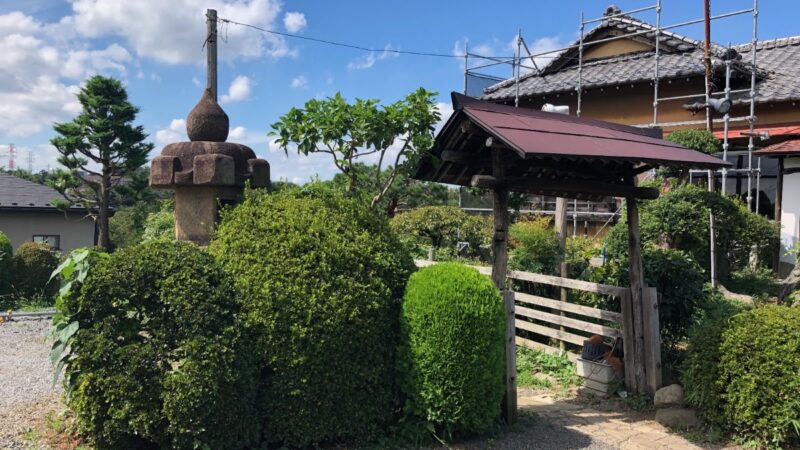
Gundari Shrine is located near the entrance to Ogawara Castle. This shrine has long been revered as the guardian shrine of Ogawara. It is believed that the Ogawara clan, the lords of the castle, also held this shrine in high esteem.
The mountain towering to the south of the shrine is Ryugaiyama, and climbing to Ogawara Castle typically begins at this shrine. The shrine has a parking lot, making it easily accessible by car.
Tonoyashiki (Residence Site)
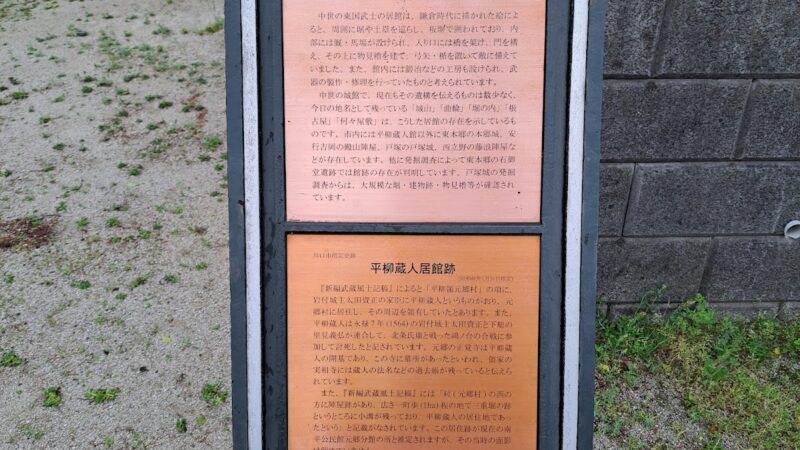
The place name “Tonoyashiki” remains at the foot of the mountain, and it is presumed that this was the location of the Ogawara clan’s residence during peacetime. Medieval mountain castles were typically used in different ways: residents lived in residences at the foot of the mountain during normal times, and only retreated to the castle on the mountaintop during wartime.
Although the area around Tonoyashiki is now undergoing residential development, the place name retains the memory of that time. Detailed investigations of the residence site have not been conducted, but it is a site where further research is anticipated.
Hachijido
Near the castle ruins is a historical site called Hachijido. This site has functioned as a place of worship for the local community, and its possible connection to Okawara Castle has been suggested. It is an important point for understanding the region’s history.
Highlights of Okawara Castle
Preservation of the Remains
The greatest appeal of Okawara Castle is the well-preserved remains of this medieval mountain castle. In particular, the large moat remains at a depth of 8 meters, giving a glimpse into its appearance at the time of its construction. The vertical moats and steep slopes are also clearly visible, making it an excellent field for studying castle ruins.
The mountain castle, untouched by development and quietly nestled in nature, evokes a sense of historical romance.
Stunning Views
The views from the main enclosure are one of Okawara Castle’s greatest attractions. From the mountaintop at an altitude of 240 meters, you can enjoy a panoramic view of the Iruma River and the surrounding mountains, and on clear days, you can even see distant mountain ranges.
Imagining the castle lord at the time gazing upon this view while watching over the safety of his territory deepens one’s appreciation for history.
Attractions as a Hiking Course
Ogawara Castle has well-maintained hiking trails, making it an enjoyable hiking destination. The climb, with an elevation difference of approximately 120 meters, provides moderate exercise and is ideal for improving health.
However, due to steep slopes and rocky areas, appropriate equipment such as hiking boots is necessary. Particular caution is needed during and after rain, as the trails become slippery. Some steep slopes have ropes installed.
Learning about the History of the Musashi Seven Clans
Visiting Ogawara Castle also provides an opportunity to learn about the history of the Musashi Seven Clans, a group of medieval samurai. The Tan clan held considerable power from the Chichibu region to the Iruma region, and produced many branch families. The Ogawara clan was one of them, offering insight into a samurai group rooted in the local community.
Other castle ruins related to the Tan clan are scattered throughout the surrounding area; visiting them together will allow for a deeper understanding of history.
Access Information
Location
357-0212 Ōgawara, Hannō City, Saitama Prefecture
Access by Public Transportation
By Train and Bus:
- Get off at Hannō Station on the Seibu Ikebukuro Line
- Take a Kokusai Kogyo bus bound for “Naguri Depot,” “Nagō,” or “Yunosawa” from the north exit of Hannō Station
- Get off at the “Ōgawara” bus stop and walk approximately 15 minutes to Guntari Shrine (castle entrance)
Since the number of buses is limited, it is recommended to check the timetable in advance. Especially on holidays, the number of buses is limited, so careful planning is necessary.
Access by Car
By Car:
- Approximately 30 minutes from Sayama-Hidaka IC on the Ken-Ō Expressway via National Route 299
- Approximately 40 minutes from Ōme IC on the Ken-Ō Expressway
- Parking is available at Guntari Shrine (free)
The parking lot at Guntari Shrine has space for several cars, but it can get crowded on holidays. Let’s share the space considerately.
Ascent Route
Starting from Guntari Shrine, use the well-maintained hiking trail. The distance from the trailhead to the main enclosure is approximately 600 meters, and the estimated time is about 30-40 minutes on foot.
While the trail is relatively well-maintained, there are steep slopes and rocky areas, so the following equipment is recommended:
- Hiking boots or trekking shoes
- Comfortable clothing
- Drinking water
- Towel
- Insect repellent (spring to autumn)
- Rain gear (in case of unstable weather)
Ropes are installed on some steep slopes, but please use them at your own risk and ensure your safety.
Points to Note When Visiting
Preparation for Hiking
Ogawara Castle is a mountain castle, so preparation for hiking is necessary for a visit. Although the elevation is not high, there are steep slopes and rocky areas, so please be sure to wear appropriate equipment. Please pay particular attention to the following points:
- Shoes: Wear non-slip hiking boots or trekking shoes.
- Clothing: Wear comfortable clothing appropriate for the season.
- Hydration: Carry plenty of drinking water, especially in summer.
- Time: Plan with ample time to descend before sunset.
Seasonal Differences
Spring (March-May):
The fresh greenery is beautiful, and the weather is mild, making it the perfect season for climbing the castle. However, those with hay fever should take precautions.
Summer (June-August):
The greenery is lush, and many people visit seeking coolness, but insect repellent is essential due to the abundance of insects. Also, be careful of heatstroke and ensure adequate hydration.
Autumn (September-November):
The autumn foliage is beautiful, making it the perfect season for climbing. The temperature is comfortable, and the views are often excellent, making it the most recommended time.
Winter (December-February):
The air is clear and the views are excellent during this season, but the daylight hours are short, so early action is necessary. Also, be careful of snow and ice.
Manners and Rules
- Please be careful not to damage the ruins.
- Always take your trash with you.
- The use of fire is strictly prohibited.
- Please refrain from collecting plants and animals.
- Remember to be considerate of other hikers.
Nearby Attractions
Nearby Castle Sites
There are several other medieval castle sites scattered around Okawara Castle:
Kosedo Castle:
A mountain castle located north of Okawara Castle, also associated with the Tan clan.
Tsumazawa Ryugai Castle:
A castle site with the name “Ryugai,” which, like Okawara Castle, is a corrupted form of “Yogai” (fortified position).
Naguri Negoya Castle:
This castle site remains in the Naguri region and is an important historical site for understanding the region’s history.
Visiting these castle sites together will allow you to gain a deeper understanding of the medieval history of this region.
Hannō City Tourist Spots
Tenranzan Mountain:
A symbolic mountain of Hannō City, this low mountain (197 meters above sea level) offers magnificent views and is an easily accessible hiking spot.
Hannō Riverbed:
A riverbed along the Iruma River, bustling with people enjoying barbecues and playing in the river during the summer.
Tove Jansson Akebono Children’s Forest Park:
A park recreating the world of Moomin, it is a popular spot for families.
Hot Springs and Accommodations
If you want to relax after visiting the castle, nearby hot spring facilities are recommended:
Sawarabi no Yu:
A day-trip hot spring facility located in the Naguri region, approximately 15 minutes by car from Ōgawara Castle.
Miyazawa Lake Onsen Kirari Bettei:
This is a day-trip hot spring facility located in Hannō City, renowned for its magnificent views from the open-air bath.
For overnight stays, you can use business hotels around Hannō Station or guesthouses in Okumusashi.
How to Enjoy Ōgawara Castle
For Castle Enthusiasts
For castle enthusiasts, Ōgawara Castle is an excellent field for learning about the basic structure of medieval mountain castles. Paying attention to the following points will enhance your enjoyment:
- Scale and Structure of the Moat: The 8-meter-deep moat is truly impressive. Descend to the bottom of the moat to experience its scale.
- Arrangement of Vertical Moats: Observe how the multiple vertical moats are arranged to form a defensive line.
- Arrangement of Enclosures: Try to decipher the overall structure of the castle from the arrangement of enclosures centered around the main enclosure.
- Embankment Construction Techniques: Experience the civil engineering techniques of the time through the artificially carved embankments.
For Hiking Enthusiasts
Ogawara Castle offers a moderate workout, allowing you to enjoy nature and connect with history:
- The round trip takes approximately 1.5 to 2 hours.
- The elevation difference of approximately 120 meters makes it manageable even for beginners.
- The well-maintained hiking trail ensures high safety.
- The view from the summit is magnificent.
Even those without much physical stamina can climb at a leisurely pace.
Photography Tips
Ogawara Castle is a great spot for photography:
- Large Moat: Shooting from an angle that emphasizes its depth creates a powerful image.
- View from the Main Enclosure: The distant view on a sunny day is an excellent subject.
- Vertical Moat: The vertical moat bathed in dappled sunlight creates a fantastic atmosphere.
- Guntari Shrine: Photographing the atmosphere of the shrine’s forest before or after visiting the castle is also recommended.
Historical Value of Ogawara Castle
Medieval History of Western Musashi Province
Ogawara Castle is an important historical site for understanding the realities of regional governance in western Musashi Province during the medieval period. It is a valuable historical document that tells the story of how the Musashi Seven Clans, local samurai groups, built their power and controlled their territories.
The Tan clan was widely distributed from the Chichibu region to the Iruma region, and many branches built castles in various locations. Ogawara Castle is one of them, preserving the history of the region to this day.
Materials for Mountain Castle Research
The remains of Okawara Castle are valuable resources for studying the structure of medieval mountain castles. Basic defensive structures such as moats, vertical trenches, cliffs, and baileys are well-preserved, providing clues to the development of castle-building techniques.
In particular, the change in place name from “Yōgai” (fortified position) to “Ryūgai” (dragon cliff) is a linguistically interesting case and valuable as a resource for place-name research.
Local Cultural Property
Okawara Castle is one of Hannō City’s important cultural properties and is used in local history education. Local elementary and junior high schools sometimes visit the castle site as part of their local history studies, playing a role in shaping the region’s identity.
Further research is expected to shed more light on the Okawara clan and the Tan clan, further enhancing its historical value.
Summary
Okawara Castle (Ryūgaiyama Castle) is a fine example of a medieval mountain castle remaining in Hannō City, Saitama Prefecture. As the residence of the Okawara clan, who belonged to the Tan clan of the Musashi Seven Clans, this is a valuable historical site that conveys the region’s history to the present day.
The remains, including the large moat 8 meters deep, are well-preserved, making it a must-see spot for castle enthusiasts. Furthermore, well-maintained hiking trails allow for easy enjoyment as a hiker.
The view from the main enclosure is magnificent, allowing you to relive the scenery seen by the castle lord at the time. The climbing route starting from Guntari Shrine is an attractive course that allows you to enjoy history and nature simultaneously.
When visiting Hannō City, be sure to visit Okawara Castle and experience the history of a medieval samurai group and the charm of a mountain castle. Enjoy your historical exploration safely with appropriate equipment and planning.
There are other castle ruins and tourist spots scattered around the area, so we recommend spending a full day thoroughly enjoying the history and nature of Hannō.