Takino Castle (Saitama Prefecture) Complete Guide: A Hilltop Castle in Tokorozawa with Remains from the Sengoku Period
Takino Castle, built on a plateau overlooking the Yanase River at the eastern edge of Tokorozawa City, Saitama Prefecture, is a valuable historical site that strongly retains the appearance of a castle from the Sengoku period. Currently developed as Takino Castle Ruins Park, it is a popular historical walking spot with good access from the Tokyo metropolitan area. This article will introduce the charm of this hilltop castle in its entirety, from its history, structure, highlights, to visiting information.
Overview and Historical Background of Takino Castle
Basic Information and Location
Takino Castle (Takino-jo) is a Japanese castle located in Tokorozawa City, Saitama Prefecture, also known as “Hongo Castle.” It is a hilltop castle that utilizes a steep cliff on a corner of the Sayama Hills that slopes down to lowlands, with the Yanase River flowing to the southeast serving as a natural defensive line. The site covers approximately 66,000 square meters, and the remains, centered around the main keep, are still well-preserved.
Designated as a Saitama Prefecture Historic Site in 1925 (Taisho 14), the site of the main keep now houses the Shiroyama Shrine, and the area south of it has been developed as Takinojo Castle Ruins Park. Its proximity to the prefectural border with Kiyose City in Tokyo makes it easily accessible from the greater Tokyo area, which is another attractive feature.
Origin of the Name and Construction Period
There are several theories regarding the origin of the name Takinojo Castle, but the most likely explanation is that it derives from the rapid currents of the Yanase River and the surrounding topography. There are no clear records regarding the construction period, but it is considered highly probable that it was built in the late 15th century, although the castle lord at that time has not been identified.
Archaeological excavations have revealed that the castle underwent large-scale renovations during the Sengoku period (Warring States period), and it exhibits typical architectural styles of Sengoku period castles in the Kanto region.
Changes During the Sengoku Period
The history of Takino Castle becomes clear during the Sengoku period (Warring States period). Initially, it is believed to have been built and used as a residence by the Oishi clan, vassals of the Yamanouchi Uesugi clan, the Kanto Kanrei (governor of the Kanto region). The Oishi clan was a powerful local lord in Musashi Province, and their base was Takiyama Castle (present-day Hachioji City, Tokyo).
Later, with the expansion of the Later Hojo clan’s power in the Kanto region, Takino Castle came under Hojo control. In particular, when Hojo Ujiteru made Takiyama Castle, and later Hachioji Castle, his base, Takino Castle functioned as an important subsidiary castle. It is believed that Hojo Ujiteru or his vassals resided there and carried out large-scale renovations to the castle.
The Siege of Odawara and the Fall of Takino Castle
The fate of Takino Castle was sealed by Toyotomi Hideyoshi’s Siege of Odawara in 1590 (Tensho 18). During this battle, Takino Castle was attacked by Toyotomi forces led by Asano Nagamasa.
Takino Castle, attacked from the north side near the main gate, fell along with Hachioji Castle. Hachioji Castle is believed to have fallen on June 23, 1590, and Takino Castle is thought to have fallen around the same time. Following this fall, Takino Castle was abandoned, ending its role as a Sengoku period castle.
Structure and Layout of Takino Castle
Characteristics as a Hilltop Castle
Takino Castle is a hilltop castle built on a plateau located on the north bank of the Yanase River. It cleverly utilizes the topography at the confluence of the Higashikawa and Yanasegawa rivers, using the rivers as natural moats. The edge of the plateau is a steep cliff, making it an impregnable fortress for attackers.
The castle’s structure consists of an inner enclosure comprising the main enclosure (honmaru), second enclosure, and third enclosure, surrounded by outer enclosures and outworks. This multi-layered structure is typical of Sengoku period castles, allowing for layered defense.
Triple Moat Defense System
The most distinctive feature of Takino Castle is its triple moat system, consisting of an outer moat, a middle moat, and an inner moat. This is a quintessential example of a “castle built for war” during the Sengoku period, with dry moats dividing each enclosure.
The dry moats remain clearly visible even today, and their depth and scale reveal the high level of civil engineering technology of the time. These dry moats not only prevented enemy intrusion but also served to make each section of the castle function as an independent defensive base.
Earthworks and Enclosure Arrangement
Earthworks surround the castle, clearly separating each enclosure. These earthworks not only protected against enemy arrows and firearms but also secured a defensive advantage by obstructing visibility within the castle.
The layout, with the main enclosure (Honmaru) at the highest point and the second and third enclosures progressing in stages, forces attackers to break through multiple layers of defense before reaching the main enclosure. Deep dry moats were constructed between each enclosure, making movement difficult.
Layout of the Main and Rear Entrances
The main entrance (Ote) of the castle was located on the north side. During the 1590 Siege of Odawara, the Toyotomi army led by Asano Nagamasa attacked from this direction. The rear entrance (Karamete) was located on the south side and is thought to have functioned as an escape route in emergencies.
Especially strong defensive structures were positioned around the main entrance, and it is possible that sophisticated structures such as masugata koguchi (square-shaped gate) were employed. Some of these defensive structures have been confirmed through archaeological excavations.
Archaeological Excavations and Archaeological Materials
Results of Major Archaeological Excavations
Multiple archaeological excavations have been conducted at Takino Castle, uncovering valuable archaeological materials that tell the story of castle life during the Sengoku period. These investigations have revealed not only the structure of the castle, but also the lives of the people and the nature of battles at that time.
The excavation unearthed ceramics, iron artifacts, and stone artifacts. The discovery of high-quality ceramics, particularly celadon and white porcelain from China, is noteworthy as it indicates the castle lord’s economic power and trading network. The discovery of weapons such as iron arrowheads and sword fittings further supports the idea that it was a practical, warlike castle.
Dating the Castle Based on Excavated Artifacts
Chronological research of the excavated ceramics has provided a clearer picture of the period of use of Takino Castle. Many artifacts dating from the late 15th to the end of the 16th century have been found, confirming that the castle was actively used during this time.
Some burnt soil layers and carbonized materials, thought to be related to the castle’s fall in 1590, have also been discovered, believed to be traces of a fire caused by an attack by the Toyotomi army. This archaeological evidence, when compared with historical documents, allows for a more comprehensive understanding of Takino Castle’s history.
Unraveling the Castle Structure
Excavation surveys have revealed the cross-sectional structure of the dry moats and the construction methods of the earthworks. Many of the dry moats have a V-shaped cross-section called a “yagenbori,” a characteristic form of castles from the Sengoku period in the Kanto region.
Furthermore, it has been confirmed that the rammed earth technique was used in the construction of the earthworks, creating a strong defensive wall by compacting layers of soil. These techniques are important as they demonstrate the characteristics of the Hojo clan’s castle construction techniques.
Current Status of Takino Castle Ruins Park
Park Development Status
The current Takino Castle ruins have been developed as Takino Castle Ruins Park, a comprehensive park where visitors can enjoy both historical walks and recreation. Walking paths have been constructed with care to avoid damaging the castle remains, allowing anyone to easily experience a Sengoku period castle.
The park also includes sports facilities such as a baseball field and tennis courts, making it a popular place for local residents to relax. However, the historical site area and the sports facility area are clearly separated, and the protection of the remains takes priority.
Shiroyama Shrine and the Honmaru Site
The Shiroyama Shrine is enshrined at the Honmaru site and is revered by the local community as the castle’s guardian deity. This shrine was built after the Edo period, demonstrating that the castle ruins were carefully preserved by the local people even after the castle was abandoned.
The Honmaru is located at the highest point of the castle, and from here, one can imagine the view seen by the former lord of the castle. You can see the flow of the Yanase River and the opposite bank, making it an excellent spot to understand why the castle was built in this location.
The Legend of the Blood-Stained Pine
In the northwestern part of the castle is a place called the “Blood-Stained Pine,” where a legend remains that tells of the tragedy of the castle’s fall. According to this legend, the blood of the samurai who died in battle during the castle’s fall seeped into the pine tree, and blood continued to ooze from the tree for many years afterward.
Although the pine tree no longer exists, this legend is passed down in the region as a valuable oral tradition that conveys the fierce battles and tragic fall of Takino Castle. Such legends illustrate the multifaceted history of the castle, which cannot be fully conveyed by mere ruins alone.
Highlights of the Ruins
At Takino Castle Ruins Park, you can actually see the following ruins:
Moat Remains: The remains of the triple-layered moat are clearly visible, and the moat around the main keep is particularly impressive in both depth and scale. Walking along the bottom of the moat allows you to experience the ingenuity of the defensive system of the time.
Earthworks: The earthworks separating each enclosure are well-preserved, and their height and width demonstrate the advanced civil engineering technology of the time. There are places where you can walk on top of the earthworks, experiencing a panoramic view of the castle.
Arrangement of Enclosures: The arrangement of enclosures such as the main keep, second enclosure, and third enclosure is clearly preserved as a topographical feature, allowing you to understand the overall structure of the castle. Signposts are installed, making it easy to understand even for first-time visitors.
Transportation Access and Visiting Information
Access by Public Transportation
By Train:
- Approximately 25 minutes on foot from JR Musashino Line “Higashi-Tokorozawa Station”
- Take a bus from the east exit of Seibu Ikebukuro Line “Tokorozawa Station,” get off at the “Shiro” bus stop, and walk for approximately 10 minutes.
The castle ruins are within walking distance from Higashi-Tokorozawa Station, and there are signs from the station to the castle ruins, so you can arrive without getting lost. If you take a bus from Tokorozawa Station, use Seibu Bus’s “Kiyose Station North Exit” route, etc.
Access by Car
By Car:
- Approximately 15 minutes from Kan-Etsu Expressway “Tokorozawa IC”
- Parking: Free parking is available at Takinojo Castle Ruins Park (spaces are limited, so it may be crowded on holidays).
The parking lot is located near the park entrance and has space for approximately 30 regular cars. However, since the parking lot is shared with sports facility users, it may become full during events.
Notes for Visitors
- Visiting Hours: The park is open at all times, but it gets dark after sunset, so daytime visits are recommended.
- Admission Fee: Free
- Estimated Time Required: If you want to thoroughly explore the ruins, allow 1-2 hours.
- Attire: The walking paths are well-maintained, but some areas are uneven, so comfortable walking shoes are recommended.
- Toilets and Rest Facilities: Toilets and rest areas are available within the park.
Nearby Tourist Attractions
When visiting Takino Castle, we recommend also visiting nearby historical sites:
- Walking Path along the Yanase River: A walking path is maintained along the Yanase River, which flows south of the castle, allowing you to enjoy a stroll while appreciating nature.
- Cultural Facilities in Tokorozawa City: Tokorozawa City also boasts other tourist attractions such as the Aviation Park and the Tokorozawa Aviation Museum.
- Historical Sites in Kiyose City: There are also historical sites on the Tokyo side of the prefectural border in Kiyose City, Tokyo.
Takino Castle and the Kanto Castle Network
Positioning within Hojo Ujiteru’s Castle Network
Takino Castle played a crucial role in the castle network constructed by Hojo Ujiteru. Initially, Ujiteru’s base was Takiyama Castle, but he later built Hachioji Castle and moved his base there. During this process, Takino Castle functioned as an important subsidiary castle on the communication line connecting the two castles.
Takino Castle is approximately 15 kilometers from Takiyama Castle and approximately 20 kilometers from Hachioji Castle. It is believed that they communicated using signal fires and other means. It also played a role in monitoring and defending the roads around Tokorozawa.
Comparison with Sengoku Period Castles in the Kanto Region
The structure of Takino Castle exhibits typical characteristics of Sengoku period castles in the Kanto region. In particular:
- Earth Castle: The structure, primarily using earthworks and dry moats without stone walls, is characteristic of castles in the Kanto region.
- Complex Layout: The structure, with multiple baileys arranged and separated by dry moats, demonstrates the characteristics of the Hojo clan’s castle-building techniques.
- Utilization of Topography: The location, which makes maximum use of the natural topography of rivers and plateaus, is faithful to the basic principles of Sengoku period castles.
These characteristics are common to other Kanto castles of the same period, such as Hachigata Castle (Yorii-machi, Saitama Prefecture) and Sugiyama Castle (Ranzan-machi, Saitama Prefecture), indicating the spread of regional castle-building techniques.
Historical Significance of Taki Castle
Key to Understanding Kanto in the Sengoku Period
The history of Taki Castle provides important clues to understanding the political situation in the Kanto region during the Sengoku period. The change of rulers from the Yamanouchi Uesugi clan to the Later Hojo clan reflects the changes in the power balance throughout the Kanto region.
In particular, the fact that this castle was under the control of Hojo Ujiteru, a key figure in the Hojo clan, indicates that it was not merely a small provincial castle, but held a crucial position in the Hojo clan’s strategy for controlling the Kanto region.
Role in the Siege of Odawara
The Siege of Odawara in 1590 symbolized the end of the Sengoku period. The fall of Takino Castle is one episode in this historical turning point, but it is also important as a concrete example illustrating the process of the Toyotomi regime’s conquest of Kanto.
Its fall, along with Hachioji Castle, indicates that the Hojo clan’s network of branch castles was systematically conquered, illustrating the strategic actions of the Toyotomi army.
Value in Castle History
Takino Castle holds value in the history of castles in the following ways:
- Preservation of Remains: Examples of well-preserved earthen castles from the Sengoku period are limited, making Takino Castle a valuable example.
- Results of Archaeological Excavations: Archaeological investigations have revealed the actual state of the castle, which cannot be understood from documents alone.
- Easy Access: Its location, easily accessible from the Tokyo metropolitan area, is of great value in terms of historical education and tourism.
Significance of Visiting Takino Castle
Experiencing the Sengoku Period
By visiting Takino Castle Ruins Park, you can directly experience a castle from the Sengoku period. While it lacks the flashy elements of stone walls and keeps, the clear preservation of basic defensive structures such as earthworks and dry moats allows you to understand the essence of a “practical castle” from the Sengoku period.
By actually walking around and observing the depth of the dry moats, the height of the earthworks, and the arrangement of the baileys, you can appreciate the high level of castle-building technology at the time and the difficulty of attacking the castle. ### Encountering Local History
Learning the history of Takino Castle leads to an understanding of the history of Tokorozawa City and western Saitama Prefecture. The castle ruins provide concrete evidence of the role this region played during the Sengoku period and the people who lived here.
Learning local history deepens our understanding of the modern community. The history of how Takino Castle Ruins Park has been cherished and carefully preserved by local residents will also be an interesting discovery for visitors.
Harmony of Nature and History
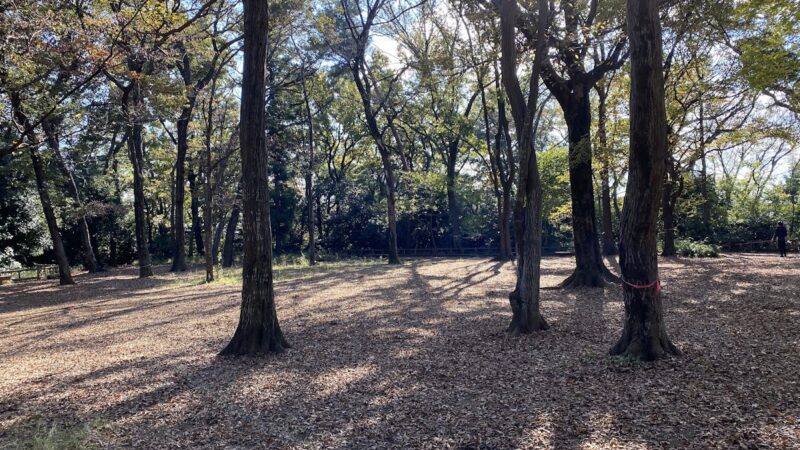
Takino Castle Ruins Park is located in a natural environment covered with lush greenery. While strolling through the castle ruins, you can enjoy the changing seasons. The castle ruins, showing different faces in each season—the fresh green of spring, the deep green of summer, the autumn leaves, and the tranquility of winter—offer new discoveries with every visit.
Spending time in a space where nature and history harmonize will be a valuable experience away from the hustle and bustle of everyday life.
Summary: Rediscovering the Charm of Takino Castle
Takino Castle, located in Tokorozawa City, Saitama Prefecture, is a valuable historical site that preserves the appearance of an earthen castle from the Sengoku period. It functioned as a branch castle of Hojo Ujiteru and played an important role in the history of the Sengoku period in the Kanto region until its fall during the Siege of Odawara in 1590.
The remains, including the triple moat, earthworks, and baileys, are well-preserved, making it a valuable place to experience the structure of a Sengoku period castle firsthand. Currently developed as Takino Castle Ruins Park, it is easily accessible from the Tokyo metropolitan area and is popular not only with history enthusiasts but also with families and hiking lovers.
Archaeological materials revealed through excavation surveys reveal the true nature of the castle that cannot be understood from written historical records alone. The castle ruins are imbued with layers of history, such as the Shiroyama Shrine enshrined on the site of the main keep and the legend of the bleeding pine tree.
Takino Castle is an important historical site for understanding the Kanto region during the Sengoku period and holds high academic value in the history of castles. I highly recommend visiting in person to experience its charm firsthand. You’ll be able to feel the simple strength of the earthen castle and the spirit of the people who lived through the turbulent Sengoku period.