Ashikaga Masauji Residence Site (Kuki City, Saitama Prefecture) | The Retirement Residence of the Koga Shogun and the History of Kantoin Temple
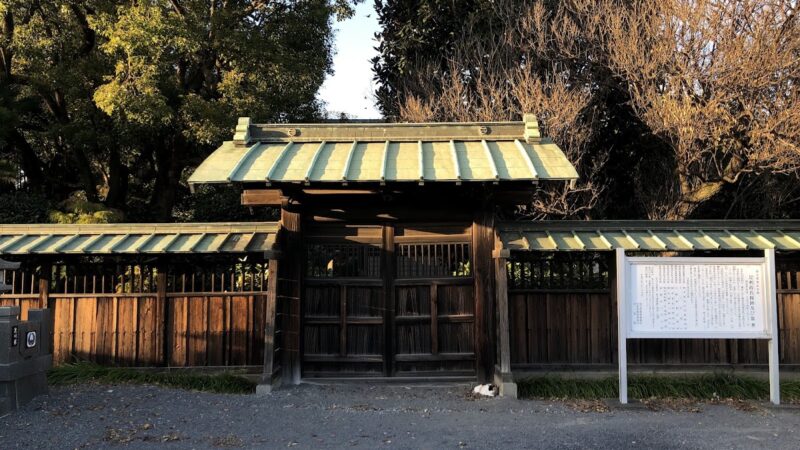
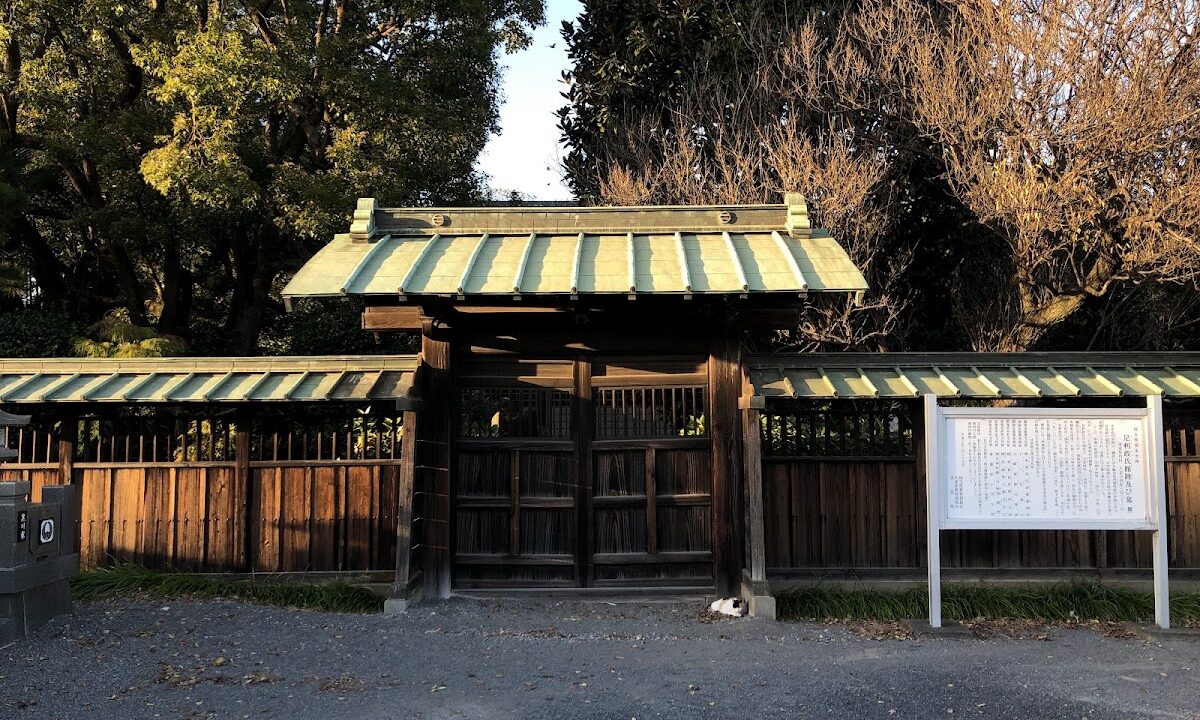
Located in Honcho, Kuki City, Saitama Prefecture, the Ashikaga Masauji Residence Site is a historical relic symbolizing the political turmoil in the Kanto region during the late Muromachi period. It is the site of the residence where Ashikaga Masauji, the second Koga Shogun, moved after being forced into retirement following his defeat in a conflict with his eldest son, Takamoto. Currently, it is designated as a historical site and is home to the temple “Kantoin.”
Basic Information on the Ashikaga Masauji Residence Site
Location and Access
Location: 7-2-18 Honcho, Kuki City, Saitama Prefecture, and other locations
Access: Approximately 15-17 minutes on foot from the west exit of Kuki Station on the JR Utsunomiya Line and Tobu Isesaki Line
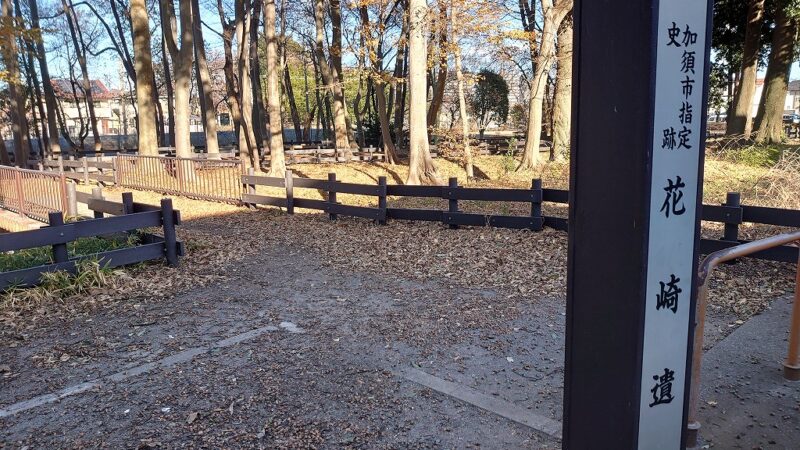
Designated Cultural Property: Saitama Prefecture Designated Historic Site “Ashikaga Masauji Residence Site and Grave”
The designated area of the residence extends approximately 140 meters east-west and 250 meters north-south. Dry moats remain on the north, west, and south sides, strongly retaining the appearance of a medieval castle.
Builder and Year of Construction
Builder: Ashikaga Shigeuji (First Koga Shogun)
Year of Construction: Bun’an 4 (1447) – Eisho era
Residence Use: Ashikaga Masauji (Second Koga Shogun)
Year of Modification: Eisho 16 (1519), Templeization in the same year or the following year
Common Names/Alternate Names
- Kuki Gosho
- Kantoin-kan
- Masauji-kan
Classification and Structure
Classification: Flatland castle, Residence site
Structure: Square-shaped castle, Medieval castle with earthworks and dry moats
Remains: Enclosures, earthworks, dry moats, five-ring pagoda (burial site)
Historical Background of the Koga Shogun and Ashikaga Masauji
The Establishment of the Koga Kubo
To understand the Ashikaga Masauji Residence Site, it’s necessary to first understand the establishment of the Koga Kubo (Koga Shogunate). During the mid-Muromachi period, conflict between the Kamakura Kubo, who governed the Kanto region, and the shogunate intensified. Following the Eikyo Rebellion (1438-1439) and the Yuki War (1440-1441), the Kamakura Kubo was temporarily destroyed.
Later, in 1447, Ashikaga Shigeuji was restored as the Kamakura Kubo. However, due to conflict with the Uesugi clan, the Kanto Kanrei (deputy shogun of the Kanto region), he was driven out of Kamakura in 1455 and moved his base to Koga (present-day Koga City, Ibaraki Prefecture). This marked the beginning of the Koga Kubo.
The Life of Ashikaga Masauji
Ashikaga Masauji was born the eldest son of Ashikaga Shigeuji, the first Koga Shogun, and succeeded to the position of the second Koga Shogun in 1491. However, Masauji’s reign was fraught with internal conflict.
Masauji had a legitimate son, Takamoto, but a serious conflict arose between father and son. This internal conflict, known as the Eisho Rebellion, escalated into a large-scale conflict involving various forces in the Kanto region. Masauji received support from the Utsunomiya and Oyama clans, but ultimately Takamoto’s side prevailed.
Around 1518, Masauji found himself at a disadvantage and fled from place to place, moving between Oyama Castle (Oyama City, Tochigi Prefecture) and Iwatsuki Castle (Saitama City, Saitama Prefecture), before finally settling in Kuki in 1519 and being forced into retirement. At this time, Masauji resided at the site of the present-day Ashikaga Masauji Residence.
Founding and Temple Establishment of Kantoin Temple
Establishment of Eianzan Kantoin Temple
Ashikaga Masauji moved to his residence in Kuki and simultaneously developed it into a temple. In Eisho 16 (1519) or the following year, he named it “Eianzan Kantoin Temple” and made it his family temple.
The name “Kantou” originates from a Chinese legend. It tells of Duke Shao of Zhou, who governed under a Kantou (Kaido) tree and was beloved by the people; therefore, it was used as a symbol of good governance. It is believed that Masauji’s naming of his retirement site with this name reflected his aspirations for his own rule.
Founding and Sect
Regarding the founding of Kantoin Temple, it is said that a monk of the Rinzai sect was invited, but detailed records are limited. The current Kantoin Temple belongs to the Soto Zen sect, and it is presumed that there were changes in its religious affiliation after the Edo period.
Masashige died at this residence in 1523 (Daiei 3) and was buried on the temple grounds. A five-tiered pagoda, believed to be Masashige’s tomb, still remains at Kantoin Temple and is protected as part of the Saitama Prefecture designated historical site, “Ashikaga Masashige Residence Site and Tomb.”
Remains and Highlights of the Ashikaga Masashige Residence
Remains of the Dry Moat (Horizontal Moat)
The greatest highlight of the Ashikaga Masashige Residence site is the dry moat that still remains today. The dry moat, surrounding the north, west, and south sides, is approximately 5-8 meters wide and 2-3 meters deep, and functioned as a defensive structure for the medieval castle.
The dry moats on the north and west sides are particularly well-preserved, and walking along the bottom of the moat allows visitors to experience its original scale. To the east flows the Aogebori River, a natural river, which is believed to have served as a natural moat.
Remaining Earthworks
Earthworks were constructed inside the dry moat, and parts of them still remain today. In particular, earthworks approximately 1-2 meters high can be seen in the northwest and southwest, clearly indicating the outline of the fort.
Although trees currently grow densely on the earthworks, these were planted in later periods, and it is presumed that they formed a well-visible defensive line at the time of construction.
Layout of Enclosures
The interior of the fort is thought to be roughly square in shape, with a simple structure centered around the main enclosure (shukaku). While archaeological excavations have been limited, the remains of buildings and wells, among other living structures, have been confirmed, supporting the fact that Masauji actually resided there.
The area where the current main hall and living quarters of Kantoin Temple stand is estimated to have been the main residential area in the past.
Five-Ring Pagoda and Burial Site
Within the grounds of Kantoin Temple, there is a five-ring pagoda believed to be the burial site of Ashikaga Masauji. This pagoda exhibits the style of the late Muromachi period and is thought to have been erected shortly after Masauji’s death.
The five-ring pagoda is composed of five parts: earth, water, fire, wind, and void, each representing a Buddhist worldview. Masauji’s burial site, along with the remains of his residence, is protected as a Saitama Prefecture designated historical site, and is a valuable relic that conveys the history of the Koga Shogunate.
Historic Site Designation and Cultural Property Value
Saitama Prefecture Designated Historic Site
The remains of Ashikaga Masauji’s residence and burial site are legally protected as a Saitama Prefecture designated historical site. The reasons for this designation are as follows:
- Historical Importance: This is the site of the Koga Kubo, who played a crucial role in the political history of the Kanto region during the late Muromachi period.
- Preservation of Remains: Remains of a medieval castle, such as dry moats and earthworks, are well-preserved.
- Integrated Historic Site: The residence site and burial grounds are preserved as a single entity, making it easy to understand the historical context.
Expectations for National Historic Site Designation
Currently a prefecturally designated historic site, its historical importance as a Koga Kubo and the state of preservation of the remains suggest that it may be upgraded to a national historic site in the future. To achieve this, more detailed archaeological excavations and the accumulation of academic research are necessary.
Historical Significance of the Ashikaga Masauji Residence Site
Position in Kanto Political History
The Ashikaga Masauji Residence Site is not merely the site of a single warrior’s residence, but an extremely important site for understanding the political history of the Kanto region during the late Muromachi period.
The Koga Kubo, while a branch of the Ashikaga clan, the shogunate family of the Muromachi shogunate, formed a semi-independent government in the Kanto region. The conflict between Masauji and Takamoto, father and son, was not merely a dispute over the family headship, but a catalyst for the reorganization of various forces in the Kanto region, accelerating the transition to the Sengoku period (Warring States period).
Importance in Kuki’s Local History
For Kuki City, the Ashikaga Masauji Residence Site is one of the most important historical sites. Masauji’s relocation to Kuki temporarily made this area one of the political centers of the Kanto region.
The current Honmachi district of Kuki City has a history of development centered around this residence, playing a crucial role in the formation of the region’s identity.
Related Historical Sites in the Surrounding Area
Historical Sites Related to the Koga Kubo
When visiting the Ashikaga Masauji Residence Site, a deeper understanding can be gained by also visiting the following historical sites related to the Koga Kubo.
Koga Kubo Residence Site (Koga City, Ibaraki Prefecture): The site of the residence that served as the base of Ashikaga Shigeuji, the first Koga Kubo. It is currently maintained as the Koga Castle site.
Kamakura Shogunate Residence Site (Kamakura City, Kanagawa Prefecture): The site of the residence of the Kamakura Shogunate, the predecessor of the Koga Shogunate.
Iwatsuki Castle Site (Saitama City, Saitama Prefecture): The castle where Masauji temporarily stayed before moving to Kuki. Also known as the residence of the Ota clan.
Other Historical Sites in Kuki City
Lantern Festival Related Historical Sites: The Kuki Lantern Festival is one of the three major lantern festivals in the Kanto region, and there are related historical sites throughout the city.
Aogehori River: A river flowing east of Masauji’s residence, it was an important point for water transport from the medieval to the early modern period.
Points to Note and Manners When Visiting
Manners for Visiting the Temple
The Ashikaga Masauji Residence Site is still an active temple called Kantoin. Please observe the following manners when visiting.
- The interiors of buildings such as the main hall and the priest’s quarters are generally not open to the public.
- Please enter the burial grounds carefully and quietly.
- Photography is permitted, but please be considerate of other visitors.
- Please take all your trash with you.
Points to Note When Visiting
When viewing the remains such as dry moats and earthworks, please pay attention to the following points:
- The bottom of the moat can be slippery after rain, so please watch your step.
- In summer, vegetation can grow thickly, making the remains difficult to see. Spring and autumn are the best times to visit.
- To prevent damage to the remains, please avoid climbing on the slopes of the earthworks and moats.
Future Challenges and Prospects for the Ashikaga Masauji Residence Site
Balancing Preservation and Utilization
The preservation of historical sites and their utilization as tourist resources are often conflicting challenges. At the Ashikaga Masauji Residence Site, the challenge is how to proceed with public access and educational use while prioritizing the protection of the remains.
In Kuki City, efforts are being made to deepen visitors’ understanding through the installation of explanatory signs and the improvement of viewing paths, but further enhancements are expected.
Deepening Academic Research
Many aspects of the Ashikaga Masauji Residence Site remain unexplained. In particular, the following points are expected to receive further research:
- Detailed structure and transformation process of the residence
- Masauji’s daily life in Kuki
- Specific process of temple conversion
- Relationship with the surrounding area
It is believed that further research in these areas will clarify the value of the historical site and pave the way for its designation as a national historic site.
Collaboration with the Community
The Ashikaga Masauji Residence Site is an important cultural resource of Kuki City. Multifaceted efforts are underway, including preservation and utilization through collaboration with local residents, use in school education, and promotion as a tourist resource.
In particular, collaboration with local history enthusiasts and local history researchers is crucial to rediscover the value of the historical site and pass it on to future generations.
Summary
The Ashikaga Masauji Residence Site is a valuable historical site that conveys the political history of the Kanto region during the late Muromachi period. It was the residence where Ashikaga Masauji, the second Koga Shogun, retired after losing a conflict with his eldest son, Takamoto. In 1519 (Eisho 16), it was converted into a temple, Kantoin.
Even today, dry moats remain on the north, west, and south sides, and the remains of earthworks and baileys are well-preserved. Along with the five-tiered pagoda believed to be Masauji’s tomb, it is legally protected as a Saitama Prefecture designated historical site and possesses high historical value as a typical example of a medieval castle.
Its convenient location within walking distance of Kuki Station makes it a must-see historical site for anyone interested in the medieval history of the Kanto region. Please visit the Ashikaga Masauji Residence Site, which maintains a tranquil atmosphere as an active temple while conveying 500 years of history.