Complete Guide to Takasaka-yakata Ruins (Saitama Prefecture): Thorough Explanation of History, Remains, and Access Information
Located in Higashimatsuyama City, Saitama Prefecture, the Takasaka-yakata Ruins are the remains of a castle that functioned as an important base in Musashi Province from the Nanboku-cho period to the early Edo period. Currently, it is the grounds of Kosai-ji Temple, and the remains of the earthworks and dry moats are well-preserved. Designated as a Saitama Prefecture Important Historical Site, this historical site is attracting attention from history enthusiasts and castle fans as a valuable resource for understanding medieval castles in the Kanto region.
This article provides a thorough explanation of this historical spot, including its detailed history, the characteristics of its notable remains, and actual visitor information.
Historical Background of Takasaka-yakata Ruins
Construction of the Castle and the Takasaka Clan during the Nanboku-cho Period
The construction of Takasaka-yakata dates back to the 14th century Nanboku-cho period. The castle’s builder is believed to be Takasaka Gyobu-no-Taiyu, and it was constructed as the residence of the Takasaka clan, who ruled this region. The Takasaka clan were powerful local lords of Musashi Province, responsible for governing this area.
The name Takasaka has long been known as a strategically important transportation hub, a crucial point through which the Kamakura Kaido (Upper Road) passed. This geographical condition is thought to be one of the reasons why the castle was chosen as the site. The scale of the remaining ruins suggests that it functioned as a defensive stronghold during the turbulent Nanboku-cho period.
Sengoku Period: The Battle of Matsuyama Castle and the Hojo Clan’s Camp
Takasaka Castle first appears on the historical stage during the Battle of Matsuyama Castle in 1562 (Eiroku 5). This battle occurred as part of the conflict between the Hojo and Uesugi clans for supremacy in the Kanto region.
It is believed that the Hojo army, led by Hojo Ujimasa, established a camp in the Kosaka area when they attacked Matsuyama Castle (present-day Yoshimi-cho, Hiki-gun, Saitama Prefecture). At this time, it is thought that they expanded and renovated the existing Kosaka residence and used it as a military base. Currently, many of the earthworks and dry moats remaining around the grounds of Kosaiji Temple are believed to have been constructed by the Hojo clan during this period.
The reason the Hojo clan established their camp in Kosaka was its strategic location for besieging Matsuyama Castle. Kosaka is approximately 5 kilometers from Matsuyama Castle, making it an ideal location for a supply base and rear support base.
Edo Period: Residence of Kaga Tsume Masanao
After the end of the Sengoku period, when Tokugawa Ieyasu entered the Kanto region in 1590 (Tensho 18), the history of Kosaka Residence took a new turn. Kagatsume Masanao, a retainer of Tokugawa Ieyasu, was granted 3,000 koku of land around Takasaka and used Takasaka Castle as his residence.
Kagatsume Masanao was a highly trusted retainer of Tokugawa Ieyasu and played a crucial role in the management of his territory after Ieyasu’s arrival in the Kanto region. Using Takasaka Castle as his base, Masanao promoted the governance and development of the area. During the peaceful early Edo period, Takasaka Castle transformed from a military facility to an administrative and residential facility.
Under the rule of the Kagatsume clan, Takasaka-juku was developed as a side route of the Nakasendo highway and flourished as a post town. It is believed that Takasaka Castle functioned as a central administrative center during this period.
Transition to Takasaiji Temple
At some point during the Edo period, Takasaiji Temple was built on the site of Takasaka Castle. While historical records are limited regarding the exact date of its construction, it is presumed to have been during the time of the Kagatsume clan or later.
Although its function as a castle was lost due to its conversion to a temple, many of the remains were preserved without being destroyed. Even today, within the grounds of Kosaiji Temple, earthworks and dry moats characteristic of medieval castles remain in good condition, providing valuable historical research material.
Structure and Remains of Kosaka Castle Site
Castle Classification and Structure
Kosaka Castle is classified as a hirajiro (flatland castle). A flatland castle is a castle built on flat land, and unlike mountain castles or hill castles, it relies more on artificial civil engineering structures for defense than on natural terrain.
The layout of Kosaka Castle (the castle’s design plan) is typical of a medieval flatland castle, with kuruwa (enclosures: sections within the castle) at the center, surrounded by earthworks and moats. The area centered around the current Kosaiji Temple grounds is thought to have been the main enclosure (equivalent to the main keep).
Characteristics of Earthworks
One of the most impressive remains at the Kosaka Castle site is the earthworks. Clear earthen ramparts remain around the grounds of Kōsaiji Temple.
Earthen ramparts are defensive structures built by piling up earth. They served to prevent enemy intrusion and enhanced defensive capabilities by allowing fences or walls to be built on top. The earthen ramparts of Kōsaka Castle are approximately 2-3 meters high and 5-7 meters wide at the base, a standard size for a castle from the Sengoku period.
Observing the cross-section of the ramparts reveals that they were constructed using a technique called rammed earth (hanchiku). This technique involves layering and compacting soil, resulting in a structure with excellent strength and durability. This technique was widely used in the construction of castles during the Sengoku period.
Structure of Dry Moats (Horizontal Moats)
Another important defensive structure alongside the earthen ramparts is the dry moat (karabori). Kōsaka Castle retains dry moats, specifically a type called a horizontal moat, which do not hold water.
A yokobori (horizontal moat) is a moat that runs horizontally around a bailey, hindering the enemy’s lateral movement and making it easier for the defenders to attack enemies at the bottom of the moat. The yokobori at Kosaka Castle is approximately 3-4 meters deep and 5-8 meters wide, and parts of it are still clearly visible today.
While moat cross-sections vary, including V-shapes and U-shapes, the moat at Kosaka Castle exhibits characteristics of a yagenbori (V-shaped moat), which has a relatively gentle slope. This type of moat was commonly used from the mid to late Sengoku period.
Bailey Arrangement
The arrangement of the baileys at Kosaka Castle is estimated from the results of archaeological excavations and topographical observations. It is believed that multiple baileys were arranged around a central main enclosure, but due to temple buildings and later alterations, it is difficult to grasp the overall layout.
However, a detailed observation of the topography within the grounds of Kosaka Temple allows us to estimate the boundaries of the former baileys from slight differences in elevation and flat areas. Investigations by castle researchers suggest the possibility of at least two to three baileys existing at the site.
Traces of the Koguchi (Entrance)
Partial traces of the koguchi (entrance) of the castle have also been confirmed. The koguchi was the most important part of a castle’s defense, and ingenious measures were taken to make it difficult for enemies to enter by skillfully arranging earthworks and moats.
At Kosaka Castle, the location of the koguchi has been estimated from the breaks in the earthworks and the arrangement of the moats. In particular, there are places where traces of a technique called kuichigai koguchi (staggered koguchi), where earthworks and moats are arranged in a staggered pattern to enhance defensive capabilities, can be seen, demonstrating the high level of castle-building technology during the Sengoku period.
Value as a Saitama Prefecture Designated Important Historical Site
Significance of Cultural Property Designation
The Kosaka Castle site has been designated as a Saitama Prefecture Designated Important Historical Site. The Saitama Prefectural Designated Important Historic Site is a cultural property protection system unique to Saitama Prefecture, aiming to protect and preserve important historical sites within the prefecture.
While not as nationally recognized as National Historic Sites, these sites are important for understanding local history, and the Takasaka-kan Site is one such example. Within Higashimatsuyama City, in addition to the Takasaka-kan Site, the Suwayama Tumulus Cluster, the Former Shōhōji Temple Site, the Odai Clan Residence Site, the Nomoto Clan Residence Site, the Iwahana Site, the Koto Site, and the Gyōninzuka Tumulus Cluster are also designated as Prefectural Designated Important Historic Sites, indicating the historical importance of this region.
Importance in Medieval Castle Research
The Takasaka-kan Site occupies an important position in research on medieval castles in the Kanto region. The reasons are as follows:
- Excellent Preservation of Remains: Because it was used as a temple, it avoided large-scale development, and the earthworks and dry moats are well-preserved.
- Tracing the Construction Period: The site allows us to trace the long-term changes from its construction during the Nanboku-cho period to its renovations during the Sengoku period and its use during the Edo period.
- Demonstrating the Hojo Clan’s Construction Techniques: Traces of renovations by the Hojo clan during the Eiroku period provide valuable information for studying the Hojo clan’s construction techniques and strategies.
- Contributing to Understanding Local History: It provides important information for understanding the medieval history of Hiki District in Musashi Province, particularly the activities of local lords and the placement of strategic bases during the Sengoku period.
Results of Archaeological Excavations
Multiple archaeological excavations have been conducted at the Kosaka Manor site. The Higashimatsuyama City Archaeological Survey conducted detailed measurements of the remains and analysis of excavated artifacts.
The results of the excavations include ceramic fragments, iron products, and roof tiles from the medieval to early modern periods, providing clues to the period of the manor’s existence and the lifestyle of its inhabitants. In particular, the discovery of artifacts from both the Sengoku period and the early Edo period confirms that the mansion was continuously used during the time of the Kaga-tsume clan.
These research findings have been compiled into a report, “Report on the Excavation of Buried Cultural Properties in Higashimatsuyama City, Saitama Prefecture,” making it a valuable resource for researchers and history enthusiasts.
Highlights and Ways to Enjoy the Kosaka Mansion Site
Exploring the Earthen Embankments within the Temple Grounds
The biggest highlight when visiting the Kosaka Mansion Site is the earthen embankment remaining within the grounds of Kosaiji Temple. Walking around the temple, you can clearly see the rise of the earthen embankment.
Standing on top of the embankment, you can truly appreciate the scale of the castle and its defensive mechanisms. Furthermore, by observing the shape and arrangement of the embankment, you can imagine how enemy incursions were prevented. In particular, defensive measures can sometimes be seen at the corners of the embankment, making careful observation worthwhile.
Searching for Traces of the Dry Moat
Traces of a dry moat remain around the outer perimeter of the temple grounds. While much of it is now filled in, the moat’s location can be estimated from depressions and elevation changes in the terrain.
In particular, relatively clear traces of the moat can be seen on the north and east sides of the temple. Visiting after rain, when the terrain’s contours are more visible, will make it easier to understand the moat’s shape.
Surrounding Historical Landscape
The area around the Kosaka Manor ruins retains the atmosphere of the medieval period in terms of terrain and roads. In particular, the estimated route of the Kamakura Kaido (Upper Road) passes near Kosaka, allowing visitors to experience the feel of an ancient road.
Furthermore, the name Kosaka itself has a long history, and exploring the surrounding area allows you to feel the structure of the settlement that has continued since the medieval period and the historical changes of the region.
Photography Tips
The Kosaka Manor ruins are also an attractive spot for castle photography enthusiasts. The following are some recommended photography points:
- Earthwork Ridge: Photographing from an angle that emphasizes the rise of the earthwork can convey the presence of the ruins.
- Cross-section of the Dry Moat: Photographing from an angle that shows the depth and shape of the moat can visualize its function as a defensive structure.
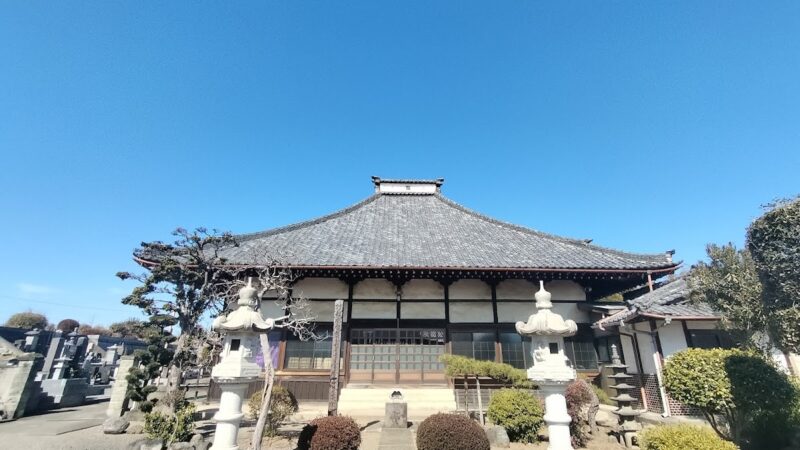
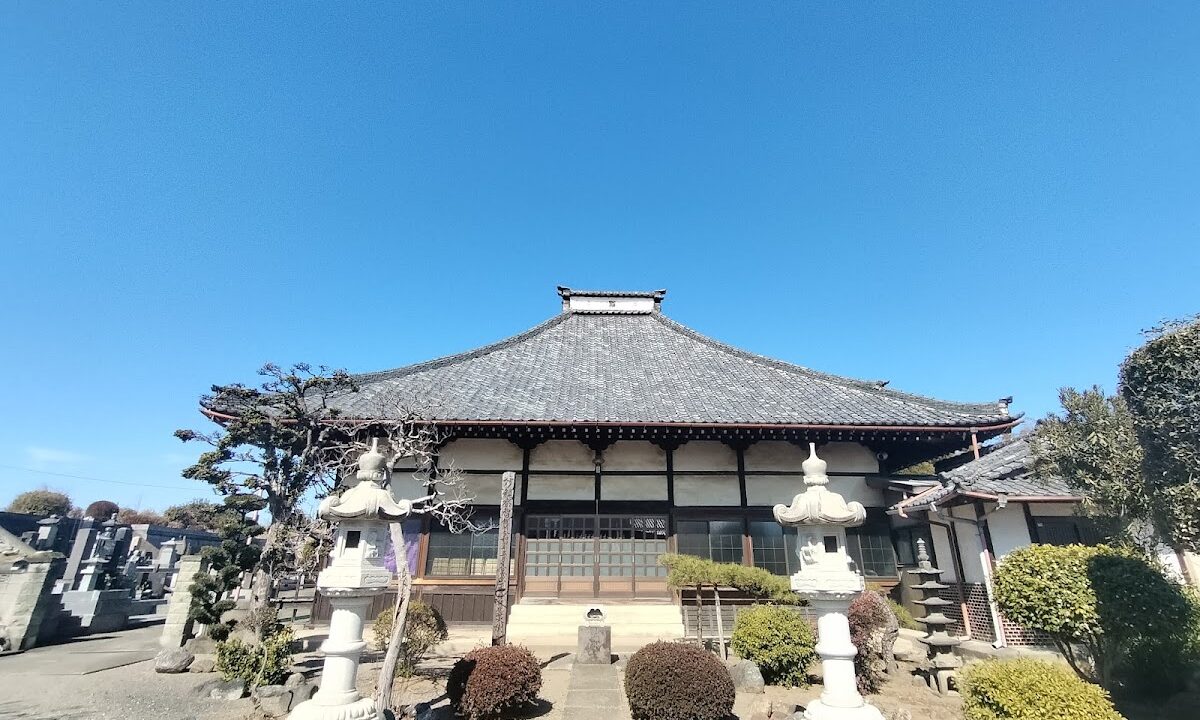
- Panoramic View of the Temple Grounds: A composition combining the main hall of Kosaiji Temple and the earthwork can express the layered nature of history.
When taking photographs, please be considerate of the temple’s religious facilities and take care not to disturb visitors.
Access Information
Basic Information
Location: 834 Kosaiji Temple, Higashimatsuyama City, Saitama Prefecture 355-0047
Designation: Saitama Prefecture Selected Important Historical Site
Other Names: Kosaiji Castle, Kosaiji Manor, Kosaiji Gyobu Manor
Access by Train
The nearest station to the Kosaiji Manor Ruins is Kosaiji Station on the Tobu Tojo Line.
- Walking from Takasaka Station: Approximately 15-20 minutes (approximately 1.2 kilometers)
- Bus from Takasaka Station: Take the Kawagoe Kanko Bus bound for “Hatoyama New Town,” get off at the “Takasaka-ji Entrance” bus stop, and walk for approximately 3 minutes.
Takasaka Station is located approximately 60 minutes from Ikebukuro Station and approximately 25 minutes from Kawagoe Station on the Tobu Tojo Line, making it easily accessible from various parts of the Kanto region.
If walking from the station, exit the west exit of Takasaka Station, head north on National Route 407, turn west at the Takasaka intersection onto Prefectural Route 173. Follow the signs, and you will arrive at Takasaka-ji Temple. Since the route passes through a residential area, we recommend using a map app or navigation system.
Access by Car
Approximately 10 minutes (about 5 kilometers) from the Higashimatsuyama IC on the Kan-Etsu Expressway.
After exiting the Higashimatsuyama IC, proceed along National Route 254 (Kawagoe Kaido) towards Kawagoe. Turn north at the Takasaka intersection onto Prefectural Road 173. Then, follow the signs towards Kosaiji Temple.
Parking: Kosaiji Temple has parking spaces for visitors, but the size is limited. Parking may be unavailable during temple events and ceremonies, so please consider using public transportation.
Notes for Visitors
Since the Kosaka Manor Ruins are located within the Kosaji Temple grounds, please note the following:
- Consideration for Religious Facilities: The temple is an active religious facility. Please visit quietly so as not to disturb visitors or ceremonies.
- Visiting Hours: There are no designated visiting hours, but it is recommended to avoid early morning and late-night visits and to visit during reasonable hours (around 9:00 AM to 4:00 PM).
- Protection of Historical Structures: Climbing or digging on the earthworks and moat remains is strictly prohibited. Please cooperate in protecting these valuable cultural assets for future generations.
- Prior Confirmation: Access may be restricted due to temple events or ceremonies. If you wish to visit without restrictions, it is recommended to contact the Higashimatsuyama City Board of Education Cultural Properties Division or Kosaiji Temple in advance.
Contact Information
Higashimatsuyama City Board of Education Cultural Properties Division
- Phone: 0493-23-2221 (Main)
For detailed information and the latest visiting status, please contact the above.
Nearby Historical Spots
When visiting the Kosaka Manor Ruins, visiting nearby historical spots will allow you to gain a deeper understanding of the region’s history.
Matsuyama Castle Ruins (Yoshimi Town)
Located approximately 5 kilometers north of Kosaka-kan, the Matsuyama Castle Ruins are a castle deeply connected to Kosaka-kan. It was captured by the Hojo clan in the Battle of Matsuyama Castle in 1562 (Eiroku 5) and is designated a National Historic Site.
Matsuyama Castle is a flatland castle built on the tip of the Hiki Hills, characterized by its complex layout and large dry moats. Its structure is a stark contrast to that of Kosaka-kan, and visiting both allows for an understanding of the diversity of medieval castles.
Nomoto Clan Residence Ruins (Higashimatsuyama City)
The Nomoto Clan Residence Ruins, located in Higashimatsuyama City, are also a medieval residence site designated as a Prefectural Important Historic Site. It was the residence of a local lord from the same period as Kosaka-kan, and remains of earthworks and moats still exist.
Comparing it with Kosaka-kan allows for the identification of commonalities and differences between residences of the same period, deepening one’s understanding of medieval samurai residences.
Odai Clan Residence Site (Higashimatsuyama City)
The Odai Clan Residence Site is a prefecturally designated important historical site located within Higashimatsuyama City. The Odai clan were powerful local lords in the Hiki region, and their residence site, like the Kosaka Residence, is an important historical heritage site.
By visiting these residence sites, you can gain a real understanding of the distribution and power dynamics of the lord class in the Hiki region during the medieval period.
Higashimatsuyama City Buried Cultural Properties Center
This facility exhibits and preserves buried cultural properties within Higashimatsuyama City. Artifacts and research results from sites within the city, including the Kosaka Residence Site, are on display, allowing you to obtain more detailed information.
Visiting before your visit will allow you to prepare by learning about the historical background of the Kosaka Residence Site and the results of the excavation, deepening your understanding at the site.
Significance of Visiting the Kosaka Residence Site
As a Place for Historical Learning
The Kosaka Residence Site is an excellent learning resource for studying Japanese medieval history, particularly castles and the lives of samurai during the Sengoku period. Experiencing history learned from textbooks through actual historical remains leads to a deeper understanding and a more memorable learning experience.
As a place for school education, lifelong learning, and a destination for family historical explorations, the Kosaka Castle Ruins are a valuable choice.
Learning about Local History
Visiting the Kosaka Castle Ruins is also an opportunity to learn about the local history of Saitama Prefecture and Higashimatsuyama City. While not a nationally famous castle, it is a site deeply intertwined with the lives and history of the local people.
Learning about local history deepens one’s attachment to the land and increases interest in cultural property preservation.
A Destination for Castle Enthusiasts
For castle enthusiasts who travel around the country visiting castles, the Kosaka Castle Ruins can be considered one of the “hidden gems.” Because it hasn’t been heavily commercialized for tourism, there’s the pleasure of quietly observing the remains and imagining its former glory.
It’s featured on castle information websites such as Kojodan, making it a noteworthy spot for castle fans nationwide. Keeping a record of your visit and sharing information with other enthusiasts is one of the joys of castle touring.
Summary: The Charm of the Kosaka Castle Ruins
The Kosaka Castle Ruins (Higashimatsuyama City, Saitama Prefecture) are a castle site with a long history dating from the Nanboku-cho period to the early Edo period. It underwent several transformations, from being built by the Kosaka clan, to being used militarily by the Hojo clan, to being used as a residence by the Kaga-tsume clan, and finally converted into Kosai-ji Temple, leading to its current state.
The remains, such as earthworks and dry moats, are well-preserved, and it is designated as an important historical site by Saitama Prefecture, making it a significant cultural asset of the region. It is a valuable resource for understanding medieval castles in the Kanto region and occupies an important position in historical research.
Its easy accessibility, approximately 15-20 minutes on foot from Kosaka Station on the Tobu Tojo Line, is also a major attraction, making it easily accessible from all over Kanto. There are many related historical spots in the surrounding area, such as the Matsuyama Castle Ruins and other medieval castle ruins, making it an ideal area for a day of historical exploration.
Visiting the Kosaka Castle Ruins allows you to experience living history that you can’t learn from textbooks, gaining insight into the lives of medieval samurai, the strategies of the Sengoku period, and the historical changes of the region. As a hidden historical spot in Saitama Prefecture, it’s definitely worth a visit.
The earthen ramparts and dry moats remaining within the quiet temple grounds tell the story of over 500 years ago. Touching these remains will allow you to feel the romance of history transcending time.