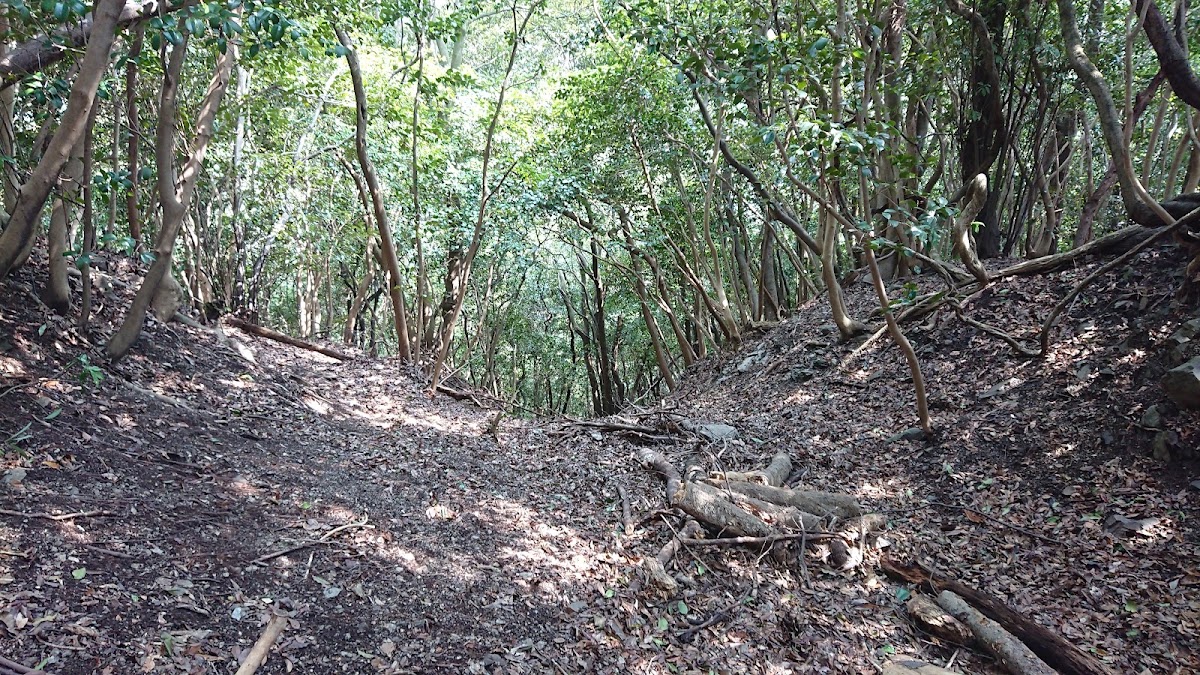
Iozan Castle (Tsuyama City, Okayama Prefecture) Complete Guide | History, Remains, and Access Explained in Detail
Iozan Castle, located in Yoshimi, Tsuyama City, Okayama Prefecture, is a medieval mountain castle built on a mountaintop 340 meters above sea level. Situated at a strategic point on an important road connecting Inaba Province (present-day Tottori Prefecture) and Mimasaka Province (present-day northern Okayama Prefecture), it is known as a historically valuable mountain castle where numerous fierce battles took place from the Nanboku-cho period to the Sengoku period.
This article provides comprehensive information on Iozan Castle, from its history and detailed remains to climbing routes and highlights, satisfying both castle enthusiasts and first-time visitors.
Basic Information on Iōzan Castle
Location: Yoshimi, Tsuyama City, Okayama Prefecture
Former Province: Mimasaka Province
Common Name/Alternate Name: Iwaiyama Castle, Iwaoyama Castle
Castle Type: Mountain Castle
Elevation: 340 meters (Relative height approximately 190 meters)
Construction Period: Before the Nanboku-chō period
Builder: Kandō Koretsugu
Main Lords: Kandō clan, Miyoshi clan, Mori clan retainers (including Yuhara Harutsuna)
Remains: Stone walls, earthworks, baileys, moats, ridged vertical moats, gate
Designated Cultural Property: Tsuyama City Designated Historic Site
Parking: Iwao-ji Temple parking lot available
Climbing Hours: Approximately 25 minutes from the trailhead to the main enclosure.
Iōzan Castle is a natural stronghold, with the Kamo River flowing to the east and a deep valley to the west. The northern peak and southern end are separated by a moat, and the castle’s defensive design cleverly utilizes the natural terrain.
History of Iōzan Castle
Construction during the Nanboku-chō period
Iōzan Castle is believed to have been built by Kamimichi Koretsugu before the Nanboku-chō period. The Kamimichi clan were powerful local lords in Mimasaka Province, and they built the castle in this strategic location, consciously controlling the route from Inaba to the Tsuyama Basin.
During the turbulent Nanboku-chō period, it became a battleground for the power struggle between Ashikaga Takauji’s side (Northern Court) and Emperor Go-Daigo’s side (Southern Court), and fierce battles were fought within Mimasaka Province. Due to its strategic value, Iōzan Castle frequently changed hands and became a site of intense battles.
Battles in the Sengoku Period
During the Sengoku period (Warring States period), Iōzan Castle became a crucial strategic point in the struggle for supremacy in the Chūgoku region. The Miyoshi clan is recorded as the castle’s lord during this period.
In the mid-16th century, the Amago clan, a powerful daimyo of Izumo Province, expanded their influence and extended to Mimasaka Province. However, in 1566 (Eiroku 9), when Mōri Motonari destroyed the Amago clan, Iōzan Castle also came under the control of the Mōri clan. The Mōri clan stationed powerful retainers, including Yuhara Harutsuna, at the castle as a defense against attacks from the Inaba region.
The Conquest by Ukita Naoie
A noteworthy event in the history of Iōzan Castle is the attack by Ukita Naoie in 1579 (Tenshō 7).
Ukita Naoie, based in Bizen Province (present-day southeastern Okayama Prefecture), was initially under the control of the Mori clan. However, as Oda Nobunaga’s influence extended westward, Naoie sided with Nobunaga and became an enemy of the Mori clan. Naoie, along with Hashiba Hideyoshi (later Toyotomi Hideyoshi), invaded Mimasaka Province and attacked Iōzan Castle.
The details of this battle are unclear, but Iōzan Castle eventually fell, and the Mori clan’s influence retreated from Mimasaka Province. It is believed that Iōzan Castle was abandoned after this battle.
Edo Period and Beyond
During the Edo period, Tsuyama Castle (Tsuruyama Castle) was built by the Mori clan, the lords of Tsuyama Domain, and the political center shifted to Tsuyama Castle on the plains. Iōzan Castle was buried in the forest and largely forgotten for a long time. However, recent advances in castle research and the efforts of local preservation societies have led to a re-evaluation of its historical value.
Layout and Remains of Iōzan Castle
Overall Layout Structure
Iōzan Castle is a mountain castle with a layout that utilizes the mountaintop at an altitude of 340 meters as the main enclosure (honmaru), with multiple enclosures (kuruma) arranged along the ridge. It takes advantage of the elevation difference of approximately 190 meters to ensure an absolute advantage against attackers.
The castle grounds extend approximately 400 meters north-south and 200 meters east-west, and the following are the main defensive structures:
- Main Enclosure (Honmaru): The highest enclosure, the center of the castle
- Second and Third Enclosures: Auxiliary enclosures surrounding the main enclosure
- Moat: A defensive structure cutting across the ridge
- Ridge-shaped Vertical Moat: A series of vertical moats carved into the slope
- Earthwork: Earthen defensive walls surrounding the enclosures
- Stone Wall: Stone walls placed at the entrances and edges of the enclosures
Characteristics of the Main Enclosure (Honmaru)
The main enclosure is the most important section of Iōzan Castle, measuring approximately 40 meters east-west and 30 meters north-south. This area is relatively large for a mountain castle, and it is presumed that the lord’s residence and other important buildings were located here.
The main highlight of the main enclosure is the stonework extending on both sides of the entrance (koguchi). This stonework was constructed using the nozura-zumi technique (a method of stacking natural stones as they are), making it a valuable historical relic that conveys the castle-building techniques of the Sengoku period. The stonework remains up to approximately 2 meters high, allowing us to imagine its original appearance.
The main enclosure is surrounded by earthen ramparts, which are particularly clearly visible on the south and west sides. The ramparts are approximately 1 to 1.5 meters high, serving to obstruct the view from within the enclosure while enhancing defensive capabilities.
Moats and Ridge-Shaped Vertical Moats
A particularly noteworthy aspect of the defensive system at Iōzan Castle is the combination of moats and ridge-shaped vertical moats.
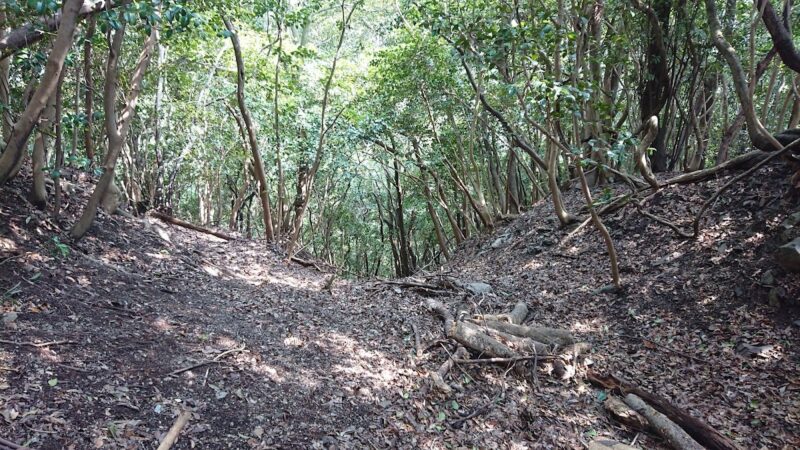
Moats are defensive structures dug vertically into the ridge, and at Iōzan Castle, large moats are located on the south and north sides of the main enclosure. The southern moat is approximately 5 meters deep and 10 meters wide, forming a strong barrier to prevent enemy intrusion. The northern moat is of a similar size, preparing for attacks from the north.
Ridge-shaped vertical moats are defensive structures consisting of multiple parallel vertical moats dug lengthwise into a slope. At Iōzan Castle, they are particularly evident on the southern slope of the main enclosure, with 5 to 7 vertical moats visible. These are designed to restrict the movement of enemy soldiers climbing the slope, giving the defenders an advantage. Ridge-shaped vertical moats are characteristic of castle construction techniques from the late Sengoku period and are considered evidence that Iōzan Castle underwent renovations.
Second and Third Enclosures
Several enclosures are arranged around the main enclosure. The second enclosure, located east of the main enclosure, is the second largest, measuring approximately 30 meters east-west and 20 meters north-south. This enclosure served as the final line of defense to the main enclosure and was fortified by earthworks and steep slopes (artificially constructed ramparts).
The third enclosure is located northwest of the main enclosure and, though somewhat smaller, is presumed to have been used as a lookout post and armory. Each enclosure is connected by narrow passages and stepped terrain, creating a complex network of movement that made enemy intrusion difficult.
Structure of the Gate
The gate (koguchi) of Iōzan Castle is a crucial defensive point as an entrance to the main enclosure. The main enclosure’s gate is a staggered gate, preventing direct entry. Stone walls are placed on both sides of the gate, and traces of foundation stones supporting the gateposts can also be seen.
This gate structure is designed to lure enemy soldiers into a narrow space and allow for attacks from the flanks, strongly reflecting the defensive philosophy of medieval castles.
Well Remains and Living Structures
A depression, presumed to be the remains of a well, remains in the northeast corner of the main enclosure. Securing a water source was a matter of life and death for mountain castles, and this well was a vital lifeline during sieges. Furthermore, small depressions, believed to be post holes, are scattered throughout the castle grounds, suggesting the presence of buildings.
Route to Iōzan Castle
Access Method
Access by Car: Approximately 15 minutes from the Tsuyama Interchange on the Chugoku Expressway. Head north on Prefectural Road 6 and follow the signs for “Iōzan Castle” to reach Iwaoji Temple. Signposts are placed at key points, making it a relatively easy route.
Public Transportation: Take a bus or taxi from JR Tsuyama Station. However, since bus services are limited, it is recommended to check the timetable in advance.
Parking and Trailhead
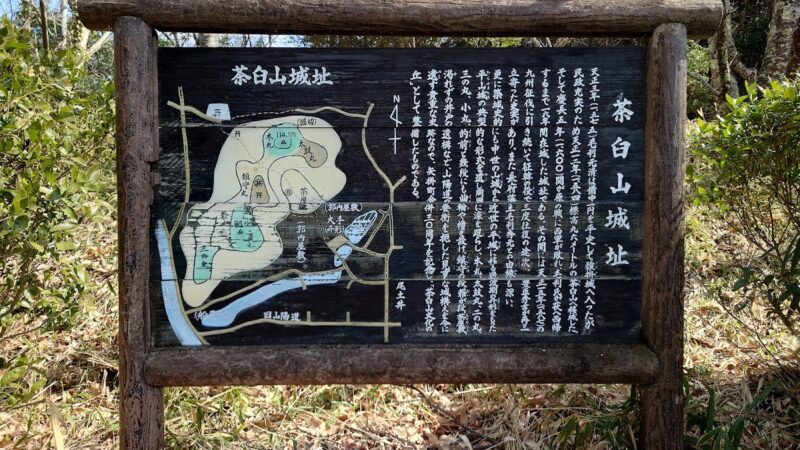
The trailhead for Iōzan Castle is located at Iwaoji Temple on the eastern slope. Iwaoji Temple has a free parking lot with space for about 10 cars. The trailhead is next to the parking lot, and an information board with a castle layout map is installed.
At the trailhead, hiking sticks provided by the Iozan Castle Ruins Preservation Society are available for your free use. These sticks are extremely helpful for climbing steep slopes, so please feel free to use them.
Detailed Hiking Route
A well-maintained hiking trail continues from the trailhead to the main enclosure. The estimated time is approximately 25-30 minutes.
Trail Characteristics:
- The first half is a relatively gentle, winding climb.
- The slope becomes steeper from the middle section, and rocky areas appear.
- The second half leads to the ridge, with a series of remains such as trenches and earthworks.
- The area near the entrance directly below the main enclosure is the steepest.
The hiking trail is diligently maintained by members of the Iozan Castle Ruins Preservation Society, a member of the Medieval Mountain Castle Liaison Council, and signposts and explanatory signs are placed at key points. However, it can become slippery in rainy weather and winter, so appropriate equipment (hiking boots, anti-slip devices, etc.) is necessary.
Precautions When Visiting the Castle
- Clothing: Long-sleeved shirt and long pants, hiking boots or trekking shoes are recommended.
- Items to Bring: Drinking water, towel, insect repellent (summer)
- Time: Allow 1.5 to 2 hours round trip.
- Season: Spring and autumn are best. Be careful of the heat and insects in summer, and snow and ice in winter.
- Solo Travel: It is safer to visit the castle with multiple people if possible.
Highlights of Iozan Castle
Stone Walls of the Main Enclosure
The greatest highlight of Iozan Castle is the stone walls remaining on both sides of the main enclosure’s entrance. The technique of skillfully combining natural stones in the Nozurazumi style is a valuable relic that allows you to experience the stone wall technology of the Sengoku period. The shadows cast by the stone walls are particularly beautiful when the morning or evening sun shines on them, making it ideal for photography.
Large-Scale Moat
The moat on the south side of the main enclosure is overwhelming in its scale and excellent state of preservation. Standing at the bottom of the moat, approximately 5 meters deep, you can truly appreciate the castle’s defensive capabilities. Earthen ramparts are built on both sides of the moat, demonstrating the advanced castle-building techniques of the time.
Ridge-shaped Vertical Moats
The ridge-shaped vertical moats on the southern slope of the main enclosure are clearly visible in their continuity when observed across the slope. This remains are nationally rare and a must-see for castle enthusiasts.
View from the Main Enclosure
From the main enclosure, you can enjoy a panoramic view of the Tsuyama Basin. On a clear day, you can even see the mountains towards Inaba, giving you a real sense of the castle’s role as a road watchtower. The autumn foliage season, in particular, offers a spectacular view of the colorful mountains below.
Activities of the Iozan Castle Ruins Preservation Society
The current excellent state of preservation of Iozan Castle is due to the dedicated efforts of the Iozan Castle Ruins Preservation Society. The preservation society is a member of the Medieval Mountain Castle Liaison Council and carries out the following activities:
- Maintenance and grass cutting of hiking trails
- Installation and maintenance of information boards and explanatory signs
- Provision of hiking sticks
- Holding tours and explanatory meetings
- Cooperation with castle surveys
Thanks to the activities of the preservation society, Iōzan Castle has become a mountain castle that castle enthusiasts from all over Japan can visit with peace of mind.
Nearby Spot Information
Iwaoji Temple
Iwaoji Temple, where the trailhead to Iōzan Castle is located, is an ancient Shingon Buddhist temple. The temple grounds contain historical Buddhist statues and stone structures, making it worthwhile to visit in conjunction with worship.
Tsuyama Castle (Tsuruyama Castle)
Tsuyama Castle, located in the city of Tsuyama, is a flatland castle built by Mori Tadamasa during the Edo period. Known as a famous cherry blossom viewing spot, it is bustling with tourists in spring. It offers a contrasting view of a modern castle compared to Iōzan Castle.
Location: 135 Yamashita, Tsuyama City, Okayama Prefecture
Access: Approximately 20 minutes by car from Iozen Castle
Highlights: Restored Bitchu Turret, stone walls, cherry blossoms (spring)
Joto Townscape Preservation District
The Joto district, located east of Tsuyama Castle, is an important traditional building preservation district where Edo-period townhouses remain. You can stroll through the charming townscape with its rows of white-walled townhouses and lattice windows.
Access: Approximately 10 minutes on foot from Tsuyama Castle
Highlights: Townhouses, Danjiri Exhibition Hall, Sakushu Folk Art Museum
Kojinyama Castle
Like Iozen Castle, this is a medieval mountain castle located within Tsuyama City. Built on a mountaintop at an altitude of 298 meters (relative height approximately 150 meters), the remains such as stone walls, earthworks, and moats are well preserved. Visiting it together with Iozen Castle will give you a deeper understanding of the mountain castle culture of Mimasaka Province.
Location: Kojinyama, Tsuyama City, Okayama Prefecture
Access: Approximately 15 minutes by car from Iozan Castle
Kagurao Castle
Another medieval mountain castle in Tsuyama City, located at an altitude of 308 meters (relative height approximately 170 meters). It retains remains such as earthworks, baileys, moats, and wells, and together with Iozan Castle and Kojinyama Castle, is popular among castle enthusiasts as one of the “Three Great Mountain Castles of Tsuyama.”
Location: Tsuyama City, Okayama Prefecture
Access: Approximately 20 minutes by car from Iozan Castle
Model Course for Visiting Iozan Castle
Half-Day Course (Castle Only)
9:00 Arrive at Iwaoji Temple Parking Lot
9:15 Begin Hiking
9:40 Arrive at Main Enclosure, View Ruins
10:30 Begin Descent
11:00 Return to Parking Lot
Full-Day Course (Including Surrounding Spots)
9:00 Arrive at Iwaoji Temple Parking Lot
9:15 Climb Iozan Castle
11:00 Descent, Visit Iwaoji Temple
12:00 Lunch in Tsuyama City
13:30 Visit Tsuyama Castle
15:00 Stroll through Joto Town
16:30 End
Historical Significance of Iōzan Castle
Iōzan Castle is a historically significant fortress for the following reasons:
- Strategic Transportation Hub: As a monitoring base on the road connecting Inaba and Mimasaka provinces, it maintained strategic value throughout the medieval period.
- Treasure Trove of Castle Construction Techniques: Remains showcasing the evolution of castle construction techniques from the Nanboku-chō period to the Sengoku period.
- Site of Fierce Battles: The frequent changes in castle lords indicate that this area was a battleground.
- Witness to Local History: It is an important historical site for understanding the medieval history of Mimasaka province, particularly the power struggles between the Amago, Mōri, and Ukita clans.
The Charm of Iōzan Castle
The charm of Iōzan Castle goes beyond mere historical value:
Excellent Preservation: Thanks to the efforts of the preservation society, the remains are well-preserved, and the environment is easily accessible for visitors.
Moderate Climbing Difficulty: This hiking route is enjoyable for everyone from beginners to experienced hikers.
Stunning Views: The view of the Tsuyama Basin from the main enclosure is breathtaking.
Tranquil Environment: Because it’s not a tourist destination, you can quietly reflect on history.
Seasonal Changes: It displays different expressions with each season: the fresh green of spring, the deep green of summer, the autumn foliage, and the snowy landscape of winter.
Summary
Iozan Castle is a masterpiece of medieval mountain castles, a source of pride for Tsuyama City, Okayama Prefecture. Built by Kamimichi Koretsugu during the Nanboku-cho period, it was the stage for a fierce battle for control during the Sengoku period between the Amago clan, the Mori clan, and Ukita Naoie.
The remains of the main enclosure’s stone walls, large-scale moats, and ridged vertical moats, located on the 340-meter-high mountaintop, convey the high level of castle-building technology of the time. Thanks to the dedicated efforts of the Iozan Castle Ruins Preservation Society, hiking trails and signposts have been improved, creating an environment where even first-time visitors can safely climb the castle.
From the main enclosure, which can be reached in about 25 minutes on foot from Iwaoji Temple, you can enjoy a panoramic view of the Tsuyama Basin, giving you a real sense of the castle’s strategic location on the road connecting Inaba and Mimasaka provinces. There are many other points of interest in the surrounding area, such as Tsuyama Castle, Kojinyama Castle, and Kagurao Castle, so we recommend spending a full day exploring the area thoroughly.
Iozan Castle is a fascinating historical site that can be enjoyed by a wide range of people, including castle enthusiasts, history buffs, hiking lovers, and photography enthusiasts. Please come and experience the charm of this medieval mountain castle for yourself.