Complete Guide to the History and Highlights of Yakage Chausuyama Castle | A Thorough Explanation of Sengoku Period Historical Sites in Oda District, Okayama Prefecture
What is Yakage Chausuyama Castle?
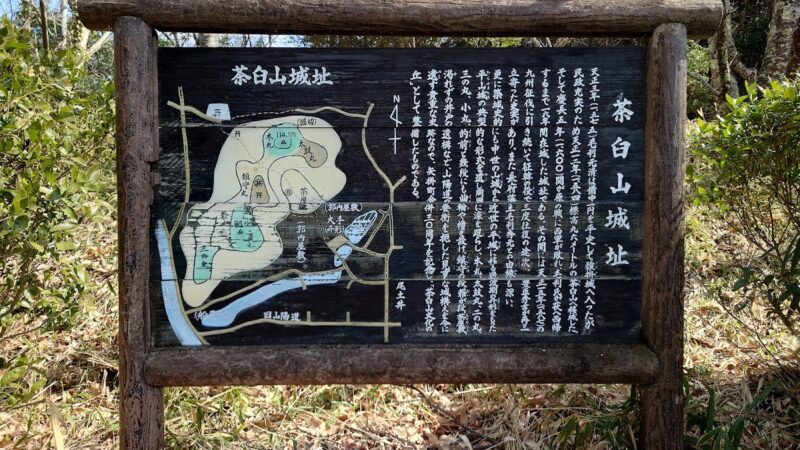
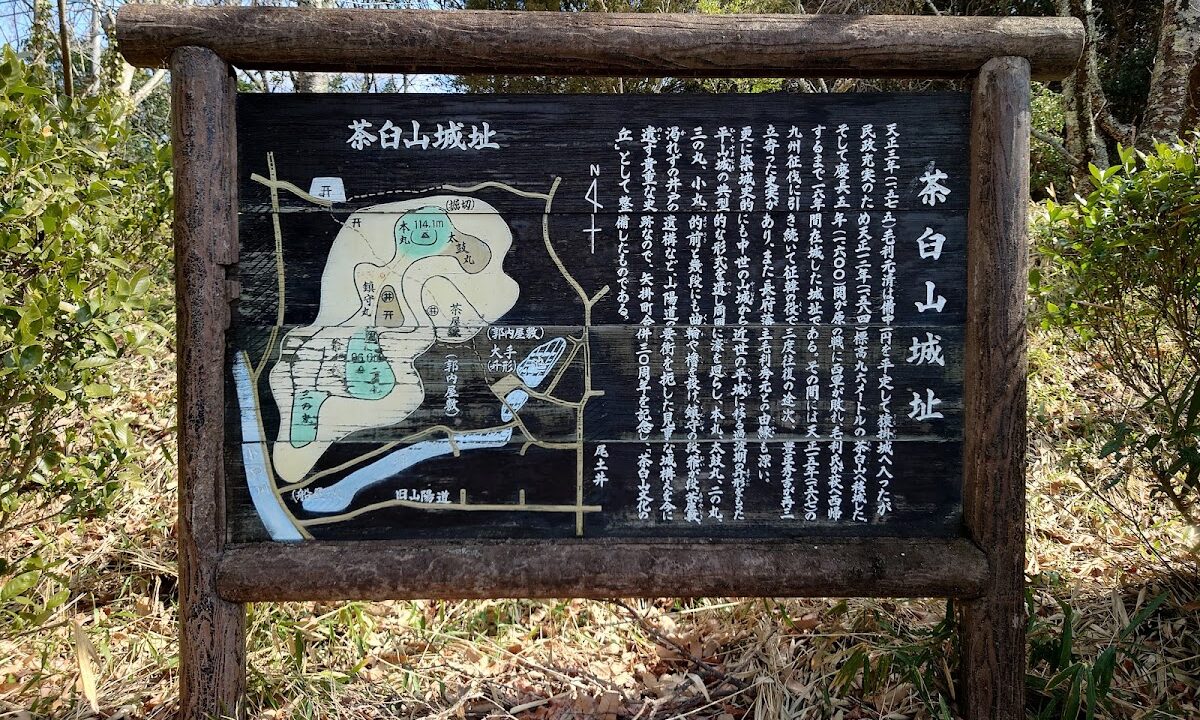
Yakage Chausuyama Castle is a flatland castle built on Mt. Chausuyama, 114m above sea level, located between Higashi-Mitsunari and Yakage in Yakage Town, Oda District, Okayama Prefecture. Also known as Nakayama Castle, it is an important castle built by the Mori clan at the end of the Sengoku period as a base for their control of Bitchu Province.
Even today, the remains of the main keep, including stone walls, wells, baileys, and moats, are well-preserved, making it a valuable historical site for understanding the structure of castles during the Sengoku period. Located overlooking the townscape of Yakage, which flourished as a post town on the Sanyo Road, it conveys the strategic importance of controlling a key transportation hub at the time.
History of Yakage Chausuyama Castle
Background of Construction and Mori Motonari’s Strategy
Understanding the history of Yakage Chausuyama Castle is crucial to understanding the strategy of Mori Motonari, a Sengoku-period daimyo, for unifying the Chugoku region. In establishing his hegemony over the Chugoku region, Mori Motonari prioritized control of Bitchu Province. As a base for this, he stationed his fourth son, Mori Motokiyo (also known as Hoida Motokiyo), in Bitchu.
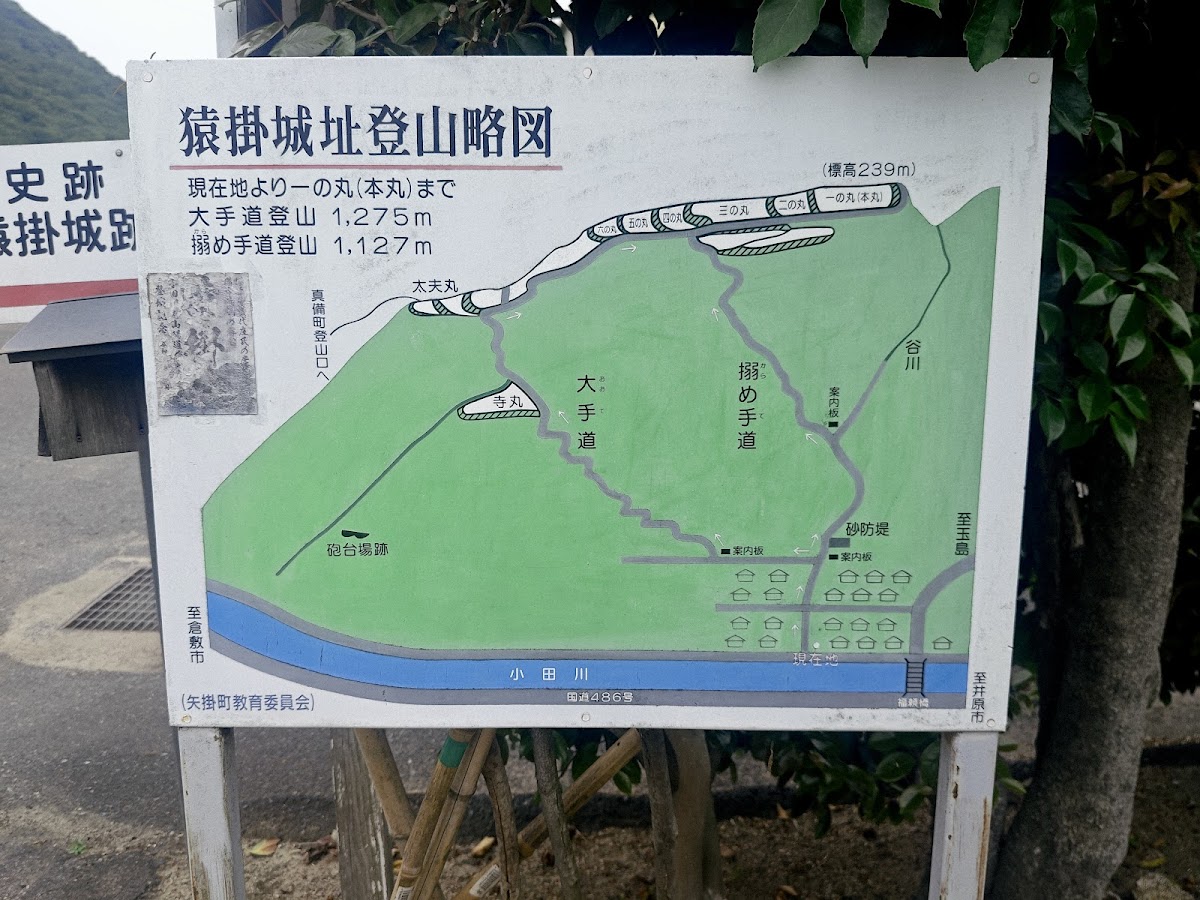
Initially, Motokiyo resided at Sarukake Castle, but the changing circumstances following the siege of Bitchu Takamatsu Castle in 1582 created a need for a new castle. With the peace agreement between Hashiba Hideyoshi (later Toyotomi Hideyoshi) and the Mori clan, and the establishment of a sphere of influence with the Takahashi River as the boundary, it became necessary to construct a castle in a more defensible location.
Construction and Relocation during the Tensho Period
Around 1583 (Tensho 11), Mori Motokiyo began construction of a new castle on Chausuyama. The relocation of his residence from Sarukake Castle to Chausuyama Castle was not merely a rebuilding of a castle, but a symbolic event representing the reorganization of the Mori clan’s control over Bitchu Province.
Although Chausuyama is not particularly high at an elevation of 114m, its location adjacent to the Oda River and overlooking the Sanyo Road provided an excellent strategic position. With a relative height of approximately 47m from the plains, it was designed as a flatland castle combining both defense and convenience.
The castle’s layout featured the main keep at the summit of Chausuyama, surrounded by multiple baileys. A moat connected the eastern foot of the mountain to the Oda River. This moat is believed to have served not only a defensive function but also as a waterway for transporting goods.
The Reign of Lord Mori Motokiyo
While some sources suggest Mori Motokiyo was the sixth son of Mori Motonari, he is generally considered the fourth son. Motokiyo inherited the Hoida clan and was therefore also known as Hoida Motokiyo. He was an important figure entrusted with the governance of Bitchu Province.
During Motokiyo’s rule, based at Chausuyama Castle, the area around Yakage experienced a relatively stable period. It is believed that the foundation of Yakage, which developed as a post town on the Sanyo Road, was formed during this time. Motokiyo also focused on developing the castle town and encouraged commercial activity to promote economic development within his territory.
Abandonment of the Castle After the Battle of Sekigahara
In the Battle of Sekigahara in 1600, the Mori clan sided with the Western Army and suffered defeat. As a result, the Mori clan’s territory was drastically reduced to just two provinces: Suo and Nagato. This defeat forced Mori Motokiyo to withdraw from Bitchu Province, and Chausuyama Castle was abandoned.
After the Battle of Sekigahara, Bitchu Province came under the control of the Tokugawa forces, and the military role of Chausuyama Castle came to an end. Although its history was short, lasting less than 20 years, it remains etched in history as an important castle symbolizing the Mori clan’s rule over Bitchu Province at the end of the Sengoku period.
Castle Structure and Layout
Arrangement of the Main Enclosure and Major Enclosures
The main enclosure (honmaru), the heart of Yakage Chausuyama Castle, is located at the summit of Mount Chausu. The main enclosure measures approximately 40 meters east-west and 30 meters north-south, and was surrounded by earthen ramparts. Even today, a stone wall approximately 1 meter high remains on the southwest side of the main enclosure, allowing us to confirm the original stone wall structure.
Several enclosures are arranged in a stepped pattern around the main enclosure, designed to enhance its defensive capabilities. In particular, the enclosure known as Chinjumaru functioned as an important defensive structure protecting the main enclosure. These enclosures were cleverly positioned utilizing the terrain, and various ingenious measures can be seen to make enemy intrusion difficult.
Stone Walls and Defensive Structures
The stone walls of Chausuyama Castle are valuable relics that demonstrate the castle-building techniques of the Tensho period. The stonework remaining on the southwest side of the main enclosure was constructed using the nozurazumi technique, which involves stacking natural stones, providing insight into the level of stonework technology at the time.
The stone walls are currently about 1 meter high, but it is possible that they were higher when the castle was built. Furthermore, some stonework has been confirmed in areas other than the main enclosure, suggesting that stone walls were distributed throughout the entire castle.
As for defensive structures, a moat has also been confirmed. A moat is a dry moat constructed to cut across the ridge, playing an important role in preventing enemy advances. The moat at Chausuyama Castle is positioned to take advantage of the terrain, showing ingenuity in achieving maximum defensive effect with minimal effort.
Water Moat and Well Arrangement
A water moat surrounded the eastern foot of the castle and connected to the Oda River. This water moat is estimated to have been over 10 meters wide and formed an important defensive line for the castle. The moat is believed to have functioned not only as a defensive structure but also as a transportation route for goods utilizing the Oda River’s waterway.
Several wells were constructed within the castle grounds. The remains of these wells can still be seen today, demonstrating the importance of securing a water source in preparation for a siege. The fact that a stable water source was secured despite being a mountain castle speaks to the favorable location of Chausuyama Castle.
The depth and structure of the wells reveal the advanced civil engineering techniques of the time. The wells, reinforced with stonework, were robustly constructed to withstand long-term use and were essential facilities for maintaining the castle’s functionality.
Positional Relationship with the Sanyo Road
The most distinctive feature of Chausuyama Castle is its location overlooking the Sanyo Road, a major highway. The Sanyo Road was an important main road connecting Kyoto and Kyushu, with a bustling flow of people and goods. Yakage developed as a post town on the Sanyo Road, and Chausuyama Castle played a role in militarily controlling this crucial transportation hub.
The castle allowed for monitoring the movement of people traveling along the Sanyo Road and the ability to block the road if necessary. This location held crucial strategic value for the Mori clan in maintaining their control over Bitchu Province.
Current Status of Yakage Chausuyama Castle
Park Development Status
Currently, the Yakage Chausuyama Castle ruins are being developed as a park surrounding the Chausuyama Cultural Center. Even after the merger of Yakage Town, its value as a historical site has been recognized, and appropriate preservation and utilization are being pursued.
With the development of the park, it is now possible to drive to near the summit from the east and north sides. Parking is also available, making it easy for visitors to access the castle ruins. Walking paths have been established, allowing visitors to understand the castle’s structure while touring the main keep and various enclosures.
During development, efforts have been made to improve visitor convenience while considering the preservation of the remains. Information boards have also been installed, allowing visitors to learn about the castle’s history and structure.
Highlights of the Remaining Structures
The greatest highlight of Yakage Chausuyama Castle is the stone wall remaining on the southwest side of the main enclosure. This is a valuable relic where you can directly observe the stonework techniques of the Tensho period, allowing you to see up close the skillful combination of natural stones in the nozurazumi (rough stone masonry) construction.
The remains of the baileys are also well-preserved, allowing you to understand the layout of the castle centered around the main enclosure. In particular, the topography around the Chinju-maru (guardian enclosure) is well-preserved, allowing you to appreciate the ingenuity of castle design during the Sengoku period.
The remains of a well are also open to visitors, highlighting the importance of the water source facilities that supported life within the castle. Traces of moats and earthworks remain in various places, making it an unmissable point for those interested in castle archaeology.
Although the remains of the water moat are now buried, the original layout can be inferred from the topography. By examining its position relative to the Oda River, you can understand the castle’s function in utilizing water transport.
Access and Visiting Information
The nearest access point to Yakage Chausuyama Castle is the Tamashima Interchange on the Sanyo Expressway. From the interchange, head north on Prefectural Road 54 (Kurashiki-Minamigawa Line), cross the Oda River, and then head west on National Route 486. After entering Yakage Town, you will see Chausuyama Mountain approximately 3 kilometers to the north.
The address is Higashi-Mitsunari, Yakage-cho, Oda-gun, Okayama Prefecture. When searching with a car navigation system, it is convenient to aim for “Chausuyama Cultural Center.” Parking is free and there is ample space for regular cars.
Visiting is generally free, and there is no entrance fee. However, please respect the park’s operating hours and be careful not to damage the remains. Particular caution is needed around the stone walls, as there is a risk of collapse; do not get too close.
At an elevation of 114 meters and a relative height of 47 meters, it is an easily accessible climb, making it a convenient visit even for those without much physical stamina. However, since some areas outside the walking paths have uneven ground, we recommend wearing comfortable shoes.
Historical Background of Yakage Town and Surrounding Areas
Yakage as a Post Town on the Sanyo Road
Yakage Town flourished during the Edo period as a post town on the Sanyo Road. Even after the abandonment of Chausuyama Castle, its importance as a transportation hub remained unchanged, and many travelers passed through.
In the current center of Yakage Town, the Edo-period main inn and secondary inn are preserved, conveying the atmosphere of the post town of yesteryear. Visiting these historical buildings together with the ruins of Chausuyama Castle will allow you to gain a deeper understanding of Yakage’s history.
Yakage Town is located in the southwestern part of Okayama Prefecture and belongs to Oda District. It has the largest population of any town or village in the prefecture and is known as a region where historical townscape preservation and modern life are harmoniously integrated.
Castles in the Oda River Basin
Several castles existed in the Oda River basin where Yakage Chausuyama Castle is located. These played a crucial role in the conflicts between warring daimyo over control of Bitchu Province.
The Oda River is a river in the Takahashi River system flowing through western Okayama Prefecture, and has long been used for water transport and agricultural irrigation. The plains along the river were fertile farmland, making it a region of high economic value. Therefore, controlling this region was a crucial challenge for warring daimyo.
Chausuyama Castle was located adjacent to the Oda River, possessing advantageous geographical conditions that allowed for monitoring and utilizing water transport. This geographical advantage is thought to be one of the reasons why Mori Motokiyo moved his residence from Sarukake Castle to Chausuyama Castle.
The Relationship Between the Mori Clan and Bitchu Province
Mori Motonari’s Unification of the Chugoku Region
Mori Motonari is known as a leading strategist of the Sengoku period, and he brought almost the entire Chugoku region under his control. While Motonari is famous for the anecdote of the “Three Arrows,” in his actual rule, he placed his sons in various locations, establishing a family-led system of control.
Mori Motokiyo, entrusted with the rule of Bitchu Province, played a crucial role in Motonari’s strategy. Bitchu was a vital transportation hub along the Sanyo Road and an economically prosperous region near the Seto Inland Sea.
To solidify his control over Bitchu, Motonari granted Motokiyo Sarukake Castle and authorized the construction of Chausuyama Castle. This was not merely the development of defensive strongholds, but part of the Mori clan’s long-term strategy for controlling the Chugoku region.
Relations with and Peace Agreement with Toyotomi Hideyoshi
In 1582, Hashiba Hideyoshi’s siege of Takamatsu Castle in Bitchu Province significantly altered the relationship between the Mori clan and the Oda/Toyotomi forces. Following the fall of Oda Nobunaga in the Honnoji Incident, a peace agreement was reached between Hideyoshi and the Mori clan.
This agreement established a clear division of spheres of influence, with the Takahashi River as the boundary, with the east side under Toyotomi control and the west side under Mori control. Chausuyama Castle was located west of this new border, within the Mori territory, increasing its importance as a frontline base for the Mori clan’s control of Bitchu Province.
Mori Motokiyo decided to relocate from Sarukake Castle to Chausuyama Castle to adapt to the new system after the peace treaty. Although Chausuyama Castle is far from the Takahashi River, its strategic location overlooking the Sanyo Road and its placement reflects an awareness of the border with the Toyotomi forces.
The Fate of the Mori Clan After Sekigahara
In the Battle of Sekigahara in 1600, the Mori clan participated as a major force in the Western Army, but ultimately suffered defeat. Mori Terumoto entered the Nishinomaru of Osaka Castle and held a position equivalent to the commander-in-chief of the Western Army, but after the war, he was severely punished by Tokugawa Ieyasu.
The Mori clan’s territory was drastically reduced from over 1.2 million koku to approximately 370,000 koku in the two provinces of Suo and Nagato. This reduction in territory resulted in the loss of a vast area of territory in the Chugoku region, including Bitchu, and Mori Motokiyo also withdrew from Bitchu.
Chausuyama Castle was abandoned shortly after the Battle of Sekigahara and lost its military function. However, despite being in use for less than 20 years, its historical value as a castle symbolizing the Mori clan’s rule over Bitchu remains highly regarded.
The Value of Yakage Chausuyama Castle in Castle Research
A Typical Example of a Tensho Period Castle
Yakage Chausuyama Castle occupies an important position in castle research as a typical example of a castle built during the Tensho period (1573-1593). This period was a transitional period from the end of the Sengoku period to the Azuchi-Momoyama period, and was a time of great development in castle construction technology.
The stone wall technology seen at Chausuyama Castle is still in the rough-hewn stage, but it represents the technology of the period when stone walls began to be seriously adopted as defensive structures. This site is of high academic value because it allows us to observe the transitional period leading to the advanced stonework techniques such as kirikomi-tsugi and uchikomi-tsugi that would develop later in the Edo period.
Characteristics of Mori Clan Castles
The castles built by the Mori clan share several common characteristics. Chausuyama Castle is no exception, exhibiting a layout that skillfully utilizes the terrain, a practical arrangement of baileys, and consideration for securing water sources.
Particularly noteworthy is the Mori clan’s strategy of positioning castles to control transportation routes. The fact that Chausuyama Castle overlooks the Sanyo Road is not mere coincidence, but is considered a reflection of the Mori clan’s territorial management strategy.
Mori clan castles are characterized more by their role as centers of regional control than purely military bases. Chausuyama Castle’s layout was also designed with the formation of a castle town in mind, and it was designed as a base for governing the region from both military and political/economic perspectives.
Excellent State of Preservation
Despite being abandoned more than 400 years ago, Yakage Chausuyama Castle’s remains are remarkably well-preserved. This is fortunate because the castle was abandoned early and subsequently avoided large-scale development.
Major remains such as the stone walls of the main keep, well remains, and the topography of the baileys still exist, allowing for a certain degree of understanding of the castle’s structure without waiting for archaeological excavations. This excellent state of preservation makes it a valuable learning site not only for castle researchers but also for history enthusiasts.
In recent park development, the preservation of remains has been prioritized, and excessive alterations have been avoided. This approach is highly commendable from the perspective of cultural property protection, and a proper balance between preservation and utilization is expected in the future.
Summary
Yakage Chausuyama Castle is a flatland castle located in Yakage-cho, Oda-gun, Okayama Prefecture, at an altitude of 114m. It was built around 1583 by Mori Motokiyo, the fourth son of Mori Motonari. In response to the changing circumstances following the siege of Bitchu Takamatsu Castle, Motokiyo moved his residence from Sarukake Castle and built a new castle on Chausuyama overlooking the Sanyo Road, establishing it as a base for his control of Bitchu Province.
The castle’s structure consisted of multiple enclosures centered around the main keep, and it was equipped with defensive facilities such as stone walls, wells, and moats. The stone wall remaining on the southwest side of the main keep is particularly highly valued as a precious example of Tensho-era stonework techniques. Its location adjacent to the Oda River provided excellent conditions for both water transport and defense.
After the Battle of Sekigahara, the castle was abandoned around 1600 due to the reduction of the Mori clan’s territory. Despite being in use for less than 20 years, it remains in history as an important castle symbolizing the Mori clan’s rule over Bitchu Province.
Currently, the area around the Chausuyama Cultural Center has been developed into a park, where visitors can see the remains of the main keep, stone walls, wells, and other structures. Located approximately 20 minutes by car from the Tamashima Interchange on the Sanyo Expressway, it boasts excellent accessibility and is a popular recreational spot not only for history enthusiasts but also for local residents.
Visiting it in conjunction with exploring the townscape of Yakage’s post town will allow for a deeper understanding of Yakage’s history from the Sengoku period to the Edo period. Yakage Chausuyama Castle, which still preserves the characteristics of a castle from the Tensho period, is a valuable historical heritage site of Okayama Prefecture, and its appropriate preservation and utilization are expected to continue in the future.