Kaneishi Castle (Tsushima City, Nagasaki Prefecture) Complete Guide | History, Highlights, and Access Information
What is Kaneishi Castle? – The Residence of the So Clan, Lords of Tsushima Domain
Kaneishi Castle is a Japanese castle ruin located in Izuhara-cho, Tsushima City, Nagasaki Prefecture. It was a flatland castle that flourished as the residence of the So clan, the lords of Tsushima Domain. Originating from the Kaneishi Yakata built in 1528 by So Masamori, it played an important role as the administrative center of Tsushima for approximately 150 years.
Together with the neighboring Sanbara Castle to the northeast across the city, it is also known as Izuhara Castle and is currently designated as a national historic site. While it lacked a main keep, it is a castle with a distinctive structure where a turret gate functioned as a substitute for a keep.
History of Kanaishi Castle
The Establishment of Kanaishi-yakata and Munemasa Mori
Munemasa Mori, the 15th lord of Tsushima Island, built Ikenoyakata in 1526 (Daiei 6) and used it as his residence. However, in 1528 (Kyoroku 1), a family of the lord of Tsutsu County rebelled, and Ikenoyakata was destroyed by fire. After this rebellion, Morimasa built Kanaishi-yakata, the predecessor of Kanaishi Castle.
Kanaishi-yakata was located at the innermost part of a valley along the Kanaishi River. The slope of Banshoin Temple, the burial ground of the Mune family, loomed from the west, and the mountainous area leading to the Shimizu-yama Castle ruins loomed to the north, making it a strategically advantageous location for defense.
Reconstruction into a Modern Castle and the Korean Envoys
Initially, Kanaishi-yakata had the characteristics of a medieval mansion, but in the Edo period, it was reconstructed into a modern castle to welcome the Korean envoys. Tsushima has historically held an important position as a gateway for exchange with the Korean Peninsula, and Kaneshi Castle functioned not merely as a military facility but also as a stage for diplomacy.
In 1669, the 21st lord, So Yoshimasa, built a watchtower, and the castle officially came to be called “Kaneshi Castle.” This watchtower served as a substitute for the main keep and became a symbolic structure of the castle, a building that characterized the landscape of the castle town of Izuhara.
Relocation to Sanbara and Changes in the Role of Kaneshi Castle
In 1678, a new residence was completed in Sanbara, and the So family’s residence was moved to Sanbara Castle. This ended Kaneshi Castle’s role as the lord’s residence, but its historical value is extremely high, having functioned as the administrative center of Tsushima and an important base for diplomacy with Korea for approximately 150 years.
Even after its relocation to Sanbara, the Kaneshi Castle ruins were maintained as an important historical site that tells the story of the Tsushima Domain, and to this day, they are carefully preserved as a symbol of Tsushima’s history and culture.
Structure and Characteristics of Kaneshi Castle
Location as a Flatland Castle
Kaneshi Castle is a typical flatland castle, cleverly utilizing the natural terrain with a mountain behind it and the Kaneshi River, which served as a moat, flowing to the south. Despite being a castle built on flat land, its design, which enhanced its defensive capabilities with the mountains behind and the river in front, demonstrates the wisdom of castle architecture unique to the island region of Tsushima.
The castle grounds were developed as facilities for conducting the administration of the Tsushima Domain, and included the lord’s residence, a group of buildings with administrative functions, and gardens, which will be described later. Instead of a main keep, the turret gate served as the castle’s landmark, giving it a prominent presence visible from the castle town.
Reconstruction of the Turret Gate
Currently, a turret gate has been reconstructed at the site of Kaneshi Castle, allowing visitors to imagine its former appearance. Based on archaeological excavations and historical research conducted from 1990 to 1994, and restored after historical verification, this turret gate is a symbolic structure of Tsushima City and welcomes many tourists.
The turret gate has a two-story structure, with white walls and a black tiled roof creating a beautiful contrast. From this turret gate, which functioned as a substitute for the castle keep, one can enjoy a panoramic view of the castle town of Izuhara, and it is likely that the former feudal lords also surveyed their territories from this spot.
Former Kaneshi Castle Garden – Nationally Designated Place of Scenic Beauty
History and Design of the Garden
The former Kaneshi Castle Garden, adjacent to the Kaneshi Castle site, is a valuable cultural property designated as a national place of scenic beauty. The Sō family’s official documents, “Mainichi-ki,” contain entries indicating that garden construction took place at the “castle” (Kanaiwa Castle) between 1690 and 1693, suggesting that the foundation of the current garden was laid during this period.
This garden, developed in the latter half of the 17th century, was an important element in enhancing the prestige of Kanaiwa Castle, the administrative base of the Sō family, the lords of the Tsushima domain. Archaeological excavations have uncovered garden remains, confirming their overall good state of preservation.
The Beauty of the Heart-Shaped Pond and Borrowed Scenery
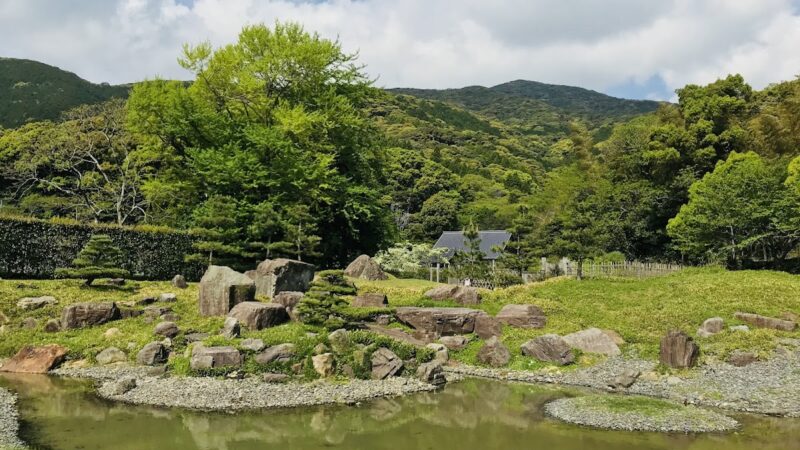
At the center of the garden is the Heart-Shaped Pond, shaped like the Japanese character for “heart.” This pond-centered strolling garden is said to have been constructed using the scenery of the Tsushima coast as a motif, showcasing an original garden design philosophy that incorporated Tsushima’s geographical characteristics as an island.
Notably, the garden utilizes the Sō family’s burial ground, Banshōin Temple, and the surrounding mountains as borrowed scenery. This borrowed scenery technique creates a sense of spatial expanse within the garden, allowing visitors to enjoy a magnificent view despite the limited grounds. Since its designation as a National Place of Scenic Beauty in 1997, the garden has undergone extensive maintenance and has now regained its former beauty.
Garden Highlights
At the former Kaneshi Castle Garden, visitors can enjoy the beauty of nature throughout the seasons. In spring, the fresh greenery is beautiful, and in autumn, the reflection of the autumn leaves on the pond captivates visitors. The stone arrangements and plantings are valuable historical artifacts that convey the garden design techniques of the Edo period, making it an important place for learning about the history of Japanese gardens.
Stepping stones and stone bridges are strategically placed within the garden, allowing visitors to enjoy the scenery from various angles while strolling around. The stone lanterns and landscape stones surrounding the pond exude a sense of history and tranquility.
Highlights of Kaneshi Castle
Reconstructed Turret Gate
The greatest highlight of Kaneshi Castle is the turret gate, which was reconstructed in the Heisei era. This structure, with its beautiful contrast of white walls and black tiles, is a beloved landmark of Tsushima City. The interior of the turret gate houses an exhibition space where visitors can see valuable materials related to the history of Kaneshi Castle, the Tsushima Domain, and the So clan.
The view from the turret gate is also magnificent, offering a panoramic view of the town of Izuhara and the Kaneshi River. The view at sunset is particularly spectacular, allowing visitors to imagine the castle’s lords gazing upon this same scenery.
Stone Walls and Remains
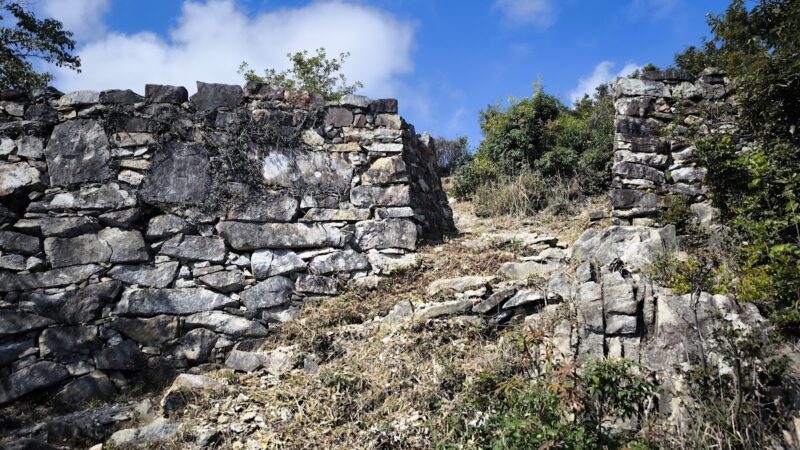
Parts of the original stone walls remain at the castle site, allowing visitors to imagine the castle’s appearance as a modern fortress. Building foundations and moat remains, revealed through archaeological excavations, have been preserved and are available for viewing along with explanatory panels.
The stone walls were constructed using stone materials unique to Tsushima, making them valuable remains that reflect the region’s history and culture. The stacking techniques and processing methods reveal the level of stonemasonry at the time, making it an important resource for studying the history of castle architecture.
Integrated Landscape with Banshoin Temple
Immediately adjacent to the Kaneshi Castle ruins is Banshoin Temple, the ancestral burial ground of the So family. Climbing the 132 stone steps known as Hyakuganki, one finds the tombstones of successive lords of the So family neatly arranged, a magnificent sight that is truly breathtaking.
Kaneshi Castle and Banshoin Temple form an integrated historical and cultural space, and visiting both allows for a deeper understanding of the history of the Tsushima Domain and the So family. The grounds of Banshoin Temple are home to many ancient trees hundreds of years old, creating a solemn atmosphere where one can feel the weight of history.
Development and Preservation of Kaneshi Castle Ruins
National Historic Site Designation and Preservation Activities
The Kaneshi Castle ruins are designated as a national historic site, officially recognizing their value as a cultural property. Tsushima City and Nagasaki Prefecture are working together to preserve and utilize the historical site, continuously conducting archaeological excavations, restoration projects, and educational outreach activities.
The archaeological excavations, which began in 1990, have uncovered many important remains, including garden structures, revealing the true nature of Kaneshi Castle. These findings are reflected in the restoration plan, and restoration and development based on historical facts are progressing.
Modern Use
Kaneshi Castle ruins are utilized in a multifaceted way, not only as a historical site, but also as a place of relaxation for Tsushima citizens, a tourist resource, and a site for historical education. The turret gate and gardens are open to the public, and anyone can freely visit them.
Regular history lectures and guided tours are also held, providing opportunities to learn about the history of Kaneshi Castle while listening to explanations from experts. Furthermore, many citizens and tourists visit during cherry blossom season and autumn foliage season to enjoy the historical scenery and natural beauty.
Tsushima and Korean Diplomacy
Korean Envoys and Kaneseki Fortress
One of the most important roles played by Kaneseki Fortress was its function as a reception base for Korean envoys. During the Edo period, Korean envoys visited Japan on occasions such as the succession of a shogun, and Tsushima was their first port of call.
Kaneseki Fortress was developed as a facility to welcome the Korean envoys and became a stage for diplomatic ceremonies. The So clan, as the lords of Tsushima Domain, held a unique position responsible for diplomatic relations with Korea, and Kaneseki Fortress was the center of their diplomatic activities. Historical materials and remains related to the Korean envoys are invaluable resources for studying the history of Japan-Korea relations.
Tsushima’s Historical Positioning
Tsushima has functioned as a bridge connecting the Korean Peninsula and the Japanese archipelago since ancient times. Geographically close to the Korean Peninsula, it is within sight of Busan on clear days. Due to this geographical characteristic, Tsushima has been the front line of cultural exchange, trade, and at times, military tension.
Kaneshi Castle is a historical site that symbolizes Tsushima’s historical role and is an important cultural asset that conveys the complex history of relations between Japan and the Korean Peninsula. The history of the So clan’s skillful diplomacy in maintaining peaceful relations between the two countries offers valuable insights for considering modern international relations.
Access Information
How to get to Izuhara-cho, Tsushima City
Izuhara-cho, Tsushima City, where Kaneshi Castle is located, can be accessed by plane or ferry.
By Plane:
- Approximately 35 minutes from Nagasaki Airport to Tsushima Airport
- Approximately 30 minutes from Fukuoka Airport to Tsushima Airport
- Approximately 20 minutes by car or 30 minutes by bus from Tsushima Airport to Izuhara town center
By Ferry:
- Approximately 2 hours and 10 minutes by high-speed boat or 4 hours and 30 minutes by ferry from Hakata Port to Izuhara Port
- Approximately 10 minutes on foot from Izuhara Port to Kaneshi Castle Ruins
Access to Kaneshi Castle Ruins
Kaneshi Castle Ruins are located in the center of Izuhara town center and are within walking distance from Izuhara Port.
Address: Imayashiki, Izuhara-cho, Tsushima City, Nagasaki Prefecture
Transportation Access:
- Approximately 10 minutes on foot from Izuhara Port
- Approximately 20 minutes by car from Tsushima Airport
- Approximately 5 minutes on foot from Izuhara Bus Terminal
Parking is available, making it convenient to access by car. There is also a tourist information center nearby where you can obtain maps and brochures.
Opening Hours and Admission Fees
Opening Hours: 9:00 AM – 5:00 PM (Exhibition inside the turret gate)
Closed: New Year’s Holidays
Admission Fee: Free (Garden and exterior of the turret gate are always open for viewing)
The exhibits inside the turret gate may change depending on the season, so we recommend checking the latest information on the Tsushima City Tourism Information website before visiting.
Nearby Tourist Attractions
Banshoin Temple
Located about a 5-minute walk from the Kaneshi Castle ruins, Banshoin Temple is known as the burial ground for successive generations of the So family. Climbing the stone steps known as Hyakugangi reveals a magnificent view of the tombstones of successive feudal lords neatly lined up. Surrounded by centuries-old giant trees, the temple grounds are enveloped in a solemn atmosphere, a place where you can truly feel the history of Tsushima.
Shimizu-yama Castle Ruins
Located on a mountaintop behind Kanaishi Castle, Shimizu-yama Castle is a mountain castle built during Toyotomi Hideyoshi’s invasion of Korea (the Bunroku-Keicho War). The stone walls are well-preserved, and from the summit, you can enjoy a panoramic view of the town of Izuhara and the Tsushima Strait. Visiting both Kanaishi Castle and Shimizu-yama Castle will give you a deeper understanding of Tsushima’s castle history.
Tsushima Museum
Opened in 2022, the Tsushima Museum comprehensively introduces Tsushima’s nature, history, and culture. It features extensive exhibits on Kanaishi Castle and the So clan, and visiting before or after your visit will allow you to learn more about the historical background of Kanaishi Castle.
Izuhara Townscape
The townscape of Izuhara, surrounding the Kanaishi Castle ruins, retains the remains of samurai residences and old merchant buildings, giving you a sense of the castle town’s atmosphere. Strolling through the town and imagining what the former center of the Tsushima domain was like is one of the pleasures of visiting.
Points to Note and Recommendations for Visitors
Clothing and Items to Bring
Since the Kaneshi Castle Ruins and Old Kaneshi Castle Garden are outdoor facilities, appropriate clothing for the weather is necessary. In summer, the sun is strong, so prepare a hat, sunscreen, and water. In winter, warm clothing is recommended. The ground in the garden may be wet, so comfortable walking shoes are advisable.
If climbing the Hyakugangi at Banshoin Temple, you will be climbing 132 stone steps, so comfortable clothing and shoes are essential.
Photography Tips
The most popular photography spot at Kaneshi Castle is the reconstructed turret gate. In addition to a frontal shot, photographing it across the Kaneshi River captures a beautiful reflection of the gate on the water.
At the Old Kaneshi Castle Garden, a composition centered on the Shinji Pond is recommended. The reflection in the pond is particularly stunning during the autumn foliage season and the fresh green season. The lighting in the early morning and at dusk is also beautiful, so it’s worth visiting at different times of the day.
Estimated Time to Visit
If you plan to thoroughly explore the Kaneshi Castle ruins and the former Kaneshi Castle garden, allow approximately 1 to 1.5 hours. Including a visit to Banshoin Temple, allow about 2 hours. Those interested in history or who wish to enjoy photography should plan for even more time.
Kaneshi Castle and Tsushima’s Cultural Properties
The Value of the So Family Documents
The So Family Documents are essential for understanding the history of Kaneshi Castle. The vast collection of ancient documents passed down through the So family are designated as important national cultural properties, serving as primary historical sources for understanding the politics, diplomacy, economy, and culture of the Tsushima domain.
In particular, the “Mainichi-ki” (Daily Diary) is a diary recording daily events, containing specific descriptions of garden construction and building work at Kaneshi Castle, as well as the reception of Korean envoys. Some of these documents are on display at the Tsushima Museum and other locations, providing clues to a deeper understanding of Kaneshi Castle’s history.
Cultural Heritage of Tsushima
The Kaneshi Castle Ruins and the Former Kaneshi Castle Garden are part of Tsushima’s rich cultural heritage. Tsushima boasts numerous nationally designated historical sites, scenic spots, and important cultural properties, making the entire island a treasure trove of history and culture.
The heritage related to the Korean diplomatic missions is registered as a UNESCO World Memory Heritage site under the name “Records Concerning the Korean Diplomatic Missions,” and Kaneshi Castle is an important element that constitutes its historical background. When visiting Tsushima, exploring not only Kaneshi Castle but also the various cultural properties on the island will allow you to gain a comprehensive understanding of Tsushima’s history.
Summary – Historical Value of Kaneshi Castle
Kaneshi Castle was a flatland castle that functioned for approximately 150 years as the residence of the So clan, the lords of the Tsushima domain. It played a crucial role in Japanese history as the administrative center of Tsushima and an important base for diplomatic relations with Korea. Originating from the Kaneshi Yakata built in 1528, it developed into a modern castle during the Edo period, serving as a facility to welcome the Korean diplomatic missions.
Kaneshi Castle boasts a unique structure, lacking a main keep and instead using a turret gate as a substitute. Its beautiful former Kaneshi Castle Garden and remnants, which tell the story of its diplomatic history with the Korean Peninsula, offer a charm unlike any other castle. Designated a national historic site and place of scenic beauty, these cultural assets are properly preserved and maintained, continuing to convey the spirit of history to many people today.
When visiting Tsushima City in Nagasaki Prefecture, be sure to visit the Kaneshi Castle ruins and former Kaneshi Castle Garden to experience the value of this precious cultural heritage that tells the story of the exchange between Japan and the Korean Peninsula. With its reconstructed turret gate, tranquil garden, and nearby sites such as Banshoin Temple and Shimizuyama Castle ruins, it’s a highlight of Tsushima tourism, offering a comprehensive experience of Tsushima’s history and culture.
-680x450.png)