.png)
Kuhara Castle Ruins (Omura City, Nagasaki Prefecture): The Birthplace of the Omura Clan and the Complete Legend of Fujiwara Sumitomo
Located in Kuhara-cho, Omura City, Nagasaki Prefecture, the Kuhara Castle Ruins are a significant site where the history of the Hizen Omura clan began. In 994, during the late Heian period, Naosumi, believed to be the grandson of Fujiwara Sumitomo, entered this area and adopted the name Omura, making it known as the birthplace of the Omura clan. Although now part of a private residence, its historical value remains undiminished, and it is designated as an important historical site in Omura City.
Historical Background of Kuhara Castle
Fujiwara Sumitomo and the Tenkei Rebellion
Indispensable to understanding the history of Kuhara Castle is the story of Fujiwara Sumitomo and the Tenkei Rebellion. In 941, during the Tenkei Rebellion, which unfolded in the Seto Inland Sea, Fujiwara Sumitomo rebelled against the imperial court. This rebellion, along with the rebellion of Taira no Masakado, is considered a significant event in Japanese history as part of the “Jōhei-Tengyō Rebellion.”
Fujiwara no Sumitomo was an official in Iyo Province (present-day Ehime Prefecture), but he led pirates to control the Seto Inland Sea region and rebelled against the imperial court. However, he was defeated and killed by the imperial army. This historical event is deeply connected to the later establishment of Kuhara Castle and the Ōmura clan.
Naosumi’s Pardon and Descent to Ōmura
According to Ōmura family records, Naosumi, the grandson of Fujiwara no Sumitomo who was killed in the Tengyō Rebellion, was secretly raised in the mountains of Iyo. Naosumi was pursued by the imperial court due to his father’s crimes, but over time, he was pardoned.
The imperial court granted Naosumi the three counties of Sonoki, Takaki, and Fujitsu. These regions comprise a vast area stretching from eastern Nagasaki Prefecture to southern Saga Prefecture. In 994 (Shōryaku 5), Naosumi descended to Ōmura, first landing at Terashima, and then establishing a castle in Kuhara, adopting the name “Ōmura.” This marked the beginning of the Ōmura clan’s 500-year history.
Structure and Size of Kuhara Castle
Castle Location and Topography
Kuhara Castle was built on a plateau to the right at the top of a slope called Rōyazaka (Prison Slope). This location was a strategically advantageous high ground, offering a vantage point for defense and a clear view of the surrounding area.
The name Rōyazaka is said to originate from the fact that a prison once stood on this site, suggesting its function as a base of operations for the Ōmura clan. The plateau at the top of the slope was a natural stronghold, fulfilling the basic requirements of a medieval mountain castle.
Castle Size and Current Status
The site area of Kuhara Castle was approximately 4,960 square meters. This corresponds to the area including the current residential plots. It is a standard size for a samurai residence from the late Heian period to the Kamakura period, and is presumed to have been a structure that combined a lord’s residence with defensive facilities.
Currently, the castle site is occupied by the grounds of private residences, including the Sato family’s house, and very few remains from the past exist. However, the former castle’s extent and structure can be inferred from the topography and surrounding place names. It has been suggested that there may have been earthworks and moats along the edge of the plateau, but this has become difficult to confirm due to years of development.
The Beginning of the 500-Year History of the Omura Clan
The Establishment and Development of the Omura Clan
The Omura clan, beginning with Naosumi who entered Kuhara Castle, grew into a powerful samurai group in Hizen Province. As lords governing the three counties of Sonogi, Takaki, and Fujitsu, they promoted regional development and control.
The Omura clan used Kuhara Castle as their base for generations, establishing their control over eastern Hizen Province for approximately 500 years. From the late Heian period through the Kamakura, Nanboku-cho, and Muromachi periods, the Omura clan expanded its power with the changing times, becoming one of the most powerful daimyo in Hizen Province during the Sengoku period.
From Kuhara Castle to the Next Residence
During the time of Junji, the 15th head of the Omura clan, Kuhara Castle became too small, or perhaps for strategic reasons, the clan moved its residence. Junji moved his residence to either Omura-yakata or Konotake-jo.
This relocation indicates the expansion of the Omura clan’s power and a change in their territorial management. After Kuhara Castle served as the birthplace of the Omura clan for approximately 500 years, it is believed that they moved their base to a larger, more defensible castle to prepare for the turmoil of the Sengoku period.
Subsequent Residences of the Omura Clan
Relocation to Sanjo Castle
A particularly important period in the history of the Omura clan is the era of the 16th head of the family, Omura Sumitada. In 1564 (Eiroku 7), Sumitada made Sanjo Castle the residence of the Omura family.
Omura Sumitada is known as Japan’s first Christian daimyo (feudal lord). He opened Nagasaki as a port for trade with the West and laid the foundation for cultural exchange between Japan and Europe by sending the Tensho Embassy to Rome. Sanjo Castle became the center of power for the Omura clan during Sumitada’s time and was also a place where Christian culture flourished.
Construction of Kushima Castle (Omura Castle)
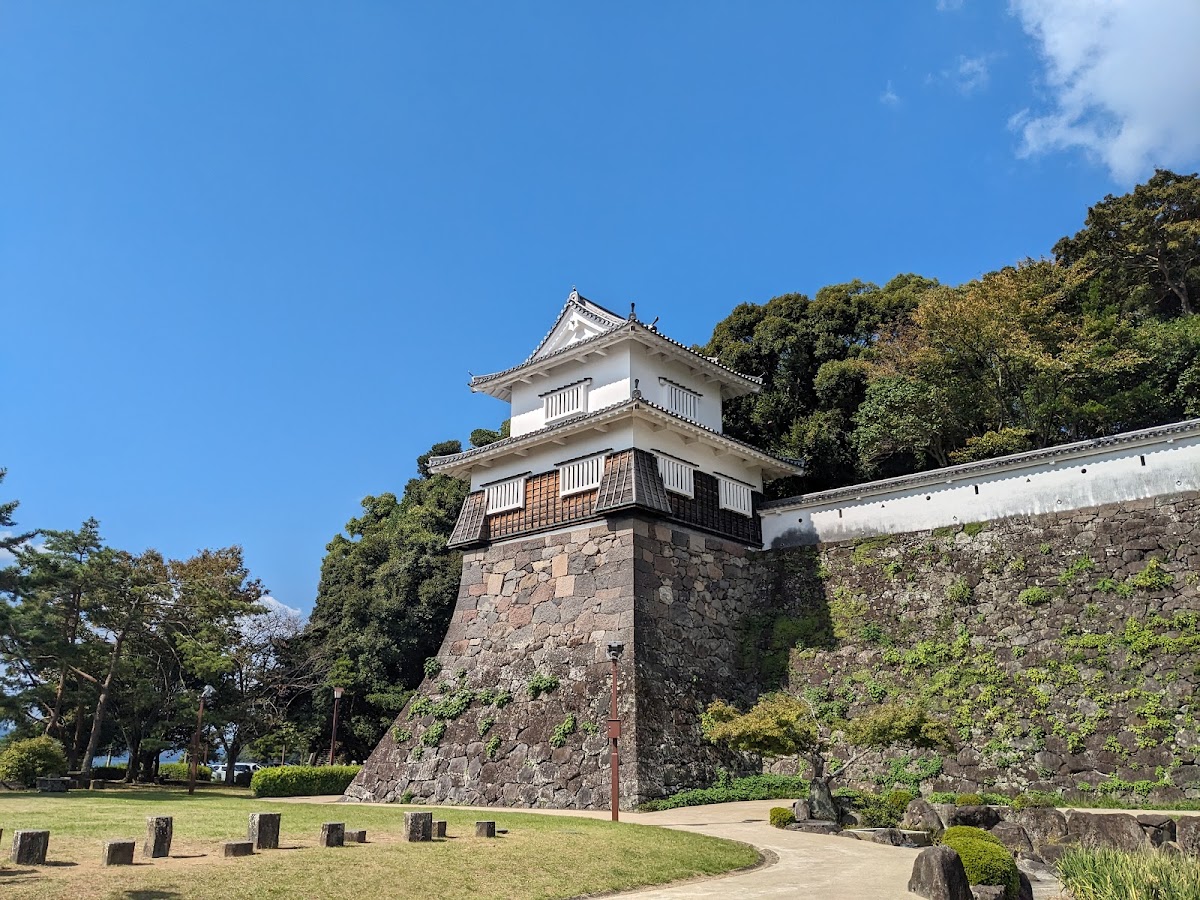
In the Edo period, the Omura clan built Kushima Castle and made it their residence. Kushima Castle, also known as Omura Castle, functioned as the political and economic center of the Omura domain until the Meiji Restoration. Located in the current center of Omura City, the castle ruins have been developed into Omura Park.
Thus, the Omura clan’s castles, which began at Kuhara Castle, were relocated repeatedly over time, developing into fortresses that met the demands of each era.
Current Status of Kuhara Castle Ruins
Preservation Status as a Historic Site
As mentioned above, the current Kuhara Castle ruins are located on private property, and general tourists cannot freely enter. Stone monuments and information boards marking the castle ruins are installed in the surrounding area, indicating its historical significance.
Omura City designates Kuhara Castle Ruins as an important historical site and provides historical information on its official website. However, because very few remains are left, archaeological excavations and restoration work are not currently being carried out.
Regional Positioning
Kuhara Castle Ruins are recognized by local residents as an indispensable place in telling the history of Omura City. Its historical significance as the birthplace of the Omura clan is considerable, and its value as a historical education and tourist resource in Omura City is being re-evaluated.
Along with the ruins of Kushima Castle and Sanjo Castle in Omura Park, it is sometimes visited by history enthusiasts and researchers as part of a historical site tour tracing the history of the Omura clan.
Access to Kuhara Castle Ruins and Surrounding Information
Location and Transportation Access
Location: Kuhara-cho, Omura City, Nagasaki Prefecture
Access by Public Transportation:
- Approximately 15 minutes on foot from JR Omura Line “Omura Station”
- Approximately 20 minutes by car from Nagasaki Airport
- Approximately 10 minutes on foot from Omura city center (Kushima Castle Ruins/Omura Park)
Access by Car:
- Approximately 10 minutes from Nagasaki Expressway “Omura IC”
- Parking: No dedicated parking (use nearby public parking lots)
Precautions When Visiting
Since Kuhara Castle Ruins are located on private property, please observe the following points when visiting:
- Unauthorized entry onto private property is strictly prohibited
- Limit your visit to viewing the exterior from roads or public spaces
- Be considerate of the lives of surrounding residents and visit quietly
- When taking photographs, be careful not to include private houses in the shot
Related Historical Sites in the Surrounding Area
When visiting the Kuhara Castle Ruins, we recommend also visiting the following related historical sites:
Kushima Castle Ruins (Omura Park): The last residence of the Omura clan. Currently developed as a park, it is known as a famous cherry blossom viewing spot in spring. Located in the heart of Omura City, it also houses a museum where you can learn about the history of the Omura clan.
Mishiro Castle Ruins: The castle ruins where Omura Sumitada resided. It was the base of the Omura clan during the Christian daimyo era.
Omura City Historical Museum: Exhibits materials on the history of the Omura clan and the Omura domain. Detailed information about Kuhara Castle can also be obtained.
Historical Significance of Kuhara Castle Ruins
Value as the Birthplace of the Omura Clan
The greatest historical significance of the Kuhara Castle Ruins lies in the fact that it is the birthplace of the Omura clan. The fact that the history of the Omura clan, who exerted influence over eastern Hizen Province for approximately 900 years from the late Heian period to the Meiji Restoration, began on this small plateau is extremely important in regional history research.
The Omura clan continued as a daimyo (feudal lord) of the Omura Domain with a 27,000 koku (unit of rice production) yield during the Edo period, and continued as a noble family after the Meiji Restoration. The fact that their origins lie in this Kuhara Castle is a fascinating case study when considering the history of Japanese samurai.
Connection to the Fujiwara Sumitomo Legend
The legend of Fujiwara Sumitomo’s grandson, Naosumi, who was involved in the establishment of Kuhara Castle, is not historically confirmed. It has been passed down as a family tradition of the Omura clan, and there is debate regarding the actual genealogical relationship.
However, the very existence of such a legend is a valuable example of how medieval samurai groups justified themselves and established their authority. It reveals the Omura clan’s intention to establish legitimacy as a local samurai group by claiming descent from the central noble Fujiwara clan.
Position in Regional Development History
The record of Naosumi receiving the three counties of Sonogi, Takaki, and Fujitsu and moving to Omura is important for understanding the development history of this region. The establishment of Kuhara Castle symbolically illustrates the process by which local samurai groups took on the responsibility of regional development and governance during the late Heian period, when the central government’s influence was diminishing.
The Omura clan’s rule greatly contributed to agricultural development, the improvement of transportation networks, and the development of commerce in this region. Kuhara Castle, as the starting point, can be said to have played a significant role in the history of eastern Nagasaki Prefecture.
Historical Tourism of Omura City
Historical Characteristics of Omura City
Omura City is located almost in the center of Nagasaki Prefecture, on the eastern shore of Omura Bay. It has Nagasaki Airport and functions as the gateway to Nagasaki Prefecture by air. Historically, it developed as a castle town of the Omura clan, and during the Edo period, it was the seat of the Omura Domain.
Of particular note is that this region was a center of Christian culture, as Omura Sumitada became Japan’s first Christian daimyo (feudal lord). It played a significant role in Japan’s history of foreign relations, including the dispatch of the Tensho Embassy to Europe and its involvement in the opening of Nagasaki port.
Model Historical Sightseeing Course
For history enthusiasts visiting Omura City, we recommend the following sightseeing course:
Morning:
- Kuhara Castle Ruins (30 min) – Visit the birthplace of the Omura clan
- Omura Park (Kushima Castle Ruins) (1 hour) – Visit the last residence of the Omura clan
- Omura City Historical Museum (1 hour) – Learn about the history of the Omura clan in detail
Afternoon:
- Sanjo Castle Ruins (1 hour) – A base during the Christian daimyo era
- The site of Omura Sumitada’s death (30 min)
- Honkyo-ji Temple (30 min) – A temple associated with the Omura clan
By following this course, you can systematically understand the approximately 900-year history of the Omura clan, starting from Kuhara Castle.
Current Status and Challenges of Kuhara Castle Ruins Research
The Need for Archaeological Investigation
Currently, there has been very little comprehensive archaeological investigation of the Kuhara Castle Ruins. Due to its location within private property and the scarcity of remaining structures, archaeological excavation is proving difficult.
However, there is a possibility that some structures or artifacts remain underground. Future investigations may reveal the true nature of a samurai residence from the late Heian period to the Kamakura period.
Re-examination of Historical Documents
The descriptions of the establishment of Kuhara Castle in the Omura family’s historical records are family traditions and lack reliable contemporary evidence. Further investigation and examination of historical documents are needed regarding the relationship with Fujiwara no Sumitomo and the record of Naosumi being granted three counties.
Recent advances in medieval history research have accumulated new insights into the formation process of local samurai groups. By re-examining the establishment of Kuhara Castle and the Omura clan based on these research findings, a more accurate historical picture can be constructed.
Balancing Preservation and Utilization
Careful consideration is needed regarding the preservation and utilization of the Kuhara Castle ruins. Given that it is an important historical site but is currently privately owned, implementing public preservation measures is not easy.
On the other hand, disseminating information to widely publicize its historical value as the birthplace of the Omura clan is crucial. It is necessary to consider methods to convey its historical value without significantly altering the site, such as virtual reconstruction using digital technology and improving the surrounding information boards.
Summary
Kuhara Castle Ruins are the site of the castle where the Omura clan originated, located in Kuhara-cho, Omura City, Nagasaki Prefecture. In 994 (Shōryaku 5), Naosumi, believed to be the grandson of Fujiwara no Sumitomo, entered this site and adopted the name Omura, marking the beginning of the Omura clan’s history spanning approximately 500 years.
This castle, covering approximately 4,960 square meters, was built on a plateau at the top of Rōyazaka Hill and functioned as the Omura clan’s base from the late Heian period to the Muromachi period. Until the residence was moved during the time of the 15th head, Junji, Kuhara Castle remained the political and economic center of the Omura clan.
Although the site is now privately owned and few remains of the original structure, its historical significance as the birthplace of the Omura clan remains unchanged. It is cherished by the local people as an essential historical site for understanding the history of Omura City.
Visiting the Kuhara Castle ruins allows you to stand at the starting point of the long history of the Omura clan, which lasted from the late Heian period to the Meiji Restoration. Visiting related historical sites such as the Kushima Castle ruins and the Sanjo Castle ruins will allow you to gain a deeper understanding of the Omura clan’s history.
When visiting Nagasaki Prefecture, why not reflect on the great history etched into this small plateau? The Kuhara Castle ruins offer valuable insights into the history of medieval Japan and the formation of local samurai groups.
-680x450.png)