Waroji Castle Complete Guide | History, Ruins, and Access Information
Table of Contents
- Overview of Waroji Castle
- History and Development of Waroji Castle
- Structure and Ruins of Waroji Castle
- Akechi Mitsuhide’s Conquest of Tanba and Waroji Castle
- Archaeological Excavations and Research Results
- Access and How to Visit the Castle
- Castle Stamp and Surrounding Area Information
Overview of Waroji Castle
Waroji Castle is a medieval mountain castle located in Furogatani, Waroji, Nishibetsuin-cho, Kameoka City, Kyoto Prefecture. Also known as “Matsuo-yama Castle,” “Matsuo Castle,” and “Matsuo-no-shiro,” it was built on the summit of Mount Matsuo, at an altitude of 414 meters. The castle ruins are protected as a Kyoto Prefecture designated historical site and are known as the residence of the Nagasawa clan (Nakazawa clan), lords of Betsuin-sho, Kuwata-gun, Tanba Province.
Warouji Castle was strategically located on the Settan Road (Tanba Road), which connected Tanba and Settsu provinces. It served as a “border castle,” monitoring a vital transportation route from the Kameoka Basin towards Settsu. Even today, the remains of the castle, including stone walls, baileys, turret bases, gates, earthworks, and keep bases, are well-preserved, making it a valuable historical site for understanding the structure of medieval mountain castles.
The place name “Warouji,” which gives the castle its name, is pronounced “Waroji” locally, and this unique place name became established as the castle’s name. While it was often called Matsuo-yama Castle during the early modern period, it is now widely known as Warouji Castle.
History and Background of Emiji Castle
Construction and the Entry of the Nagasawa Clan
Regarding the construction period of Emiji Castle, it is said that it was built during the Eikyo era (1429-1441) by Nagasawa Rokuro Masatsuna, who entered Emiji, west of Mirokuji Betsuin Manor. The Nagasawa clan ruled this region as the lords of Betsuin Manor in Kuwata District, Tanba Province.
The Nagasawa clan ruled this area for generations, maintaining their power with Emiji Castle as their base. With the arrival of the Sengoku period, the Tanba region became a complex political situation with various forces vying for power, and Emiji Castle was also affected.
Akechi Mitsuhide’s Conquest of Tanba and Emiji Castle
The most important event in the history of Emiji Castle is Akechi Mitsuhide’s conquest of Tanba, ordered by Oda Nobunaga. During the Tensho era (1573-1592), Akechi Mitsuhide conquered castles throughout the region with the aim of pacifying Tanba.
According to a will left by Nagasawa Shigetsuna to his son Ietsuna, Emiji Castle resisted Akechi Mitsuhide’s attacks as a “strong fortress.” Emiji Castle, a strategically important point controlling the Settsu-Tanba Road, was a crucial target for Mitsuhide. The castle was attacked repeatedly, but the Nagasawa clan continued to resist stubbornly.
Ultimately, it is said that Nagasawa Shigetsuna and Akechi Mitsuhide met at a place called “Akechi Modori-iwa” at the foot of Hokiyama Castle, and a peace agreement was reached. As a result of this agreement, the Nagasawa clan’s territory was secured, and they subsequently became subordinate to the Akechi clan.
The Battle of Yamazaki and the Abandonment of the Castle
In June of Tensho 10 (1582), Akechi Mitsuhide assassinated Oda Nobunaga in the Honnoji Incident, but just 13 days later, he was defeated by Hashiba Hideyoshi (Toyotomi Hideyoshi) at the Battle of Yamazaki. It is said that Nagasawa Ietsuna participated in the Battle of Yamazaki under his lord, Akechi Mitsuhide, and was killed in action.
With the downfall of Akechi Mitsuhide, the power of the Nagasawa clan declined, and it is believed that Emiji Castle was abandoned shortly thereafter. While there are no clear records of the exact year of its abandonment, it is estimated to have been around 1582 (Tensho 10).
Structure and Remains of Emiji Castle
Castle Location and Layout
Emiji Castle was built on the summit of Mt. Matsuo, a 414-meter-high mountain stretching east-west between Showa Pond and Saratani Pond. The relative height from the Kameoka Basin side is approximately 100 meters, and it is located east of the Settsu-Tanba Highway, providing an excellent position for monitoring people and goods traveling along the road.
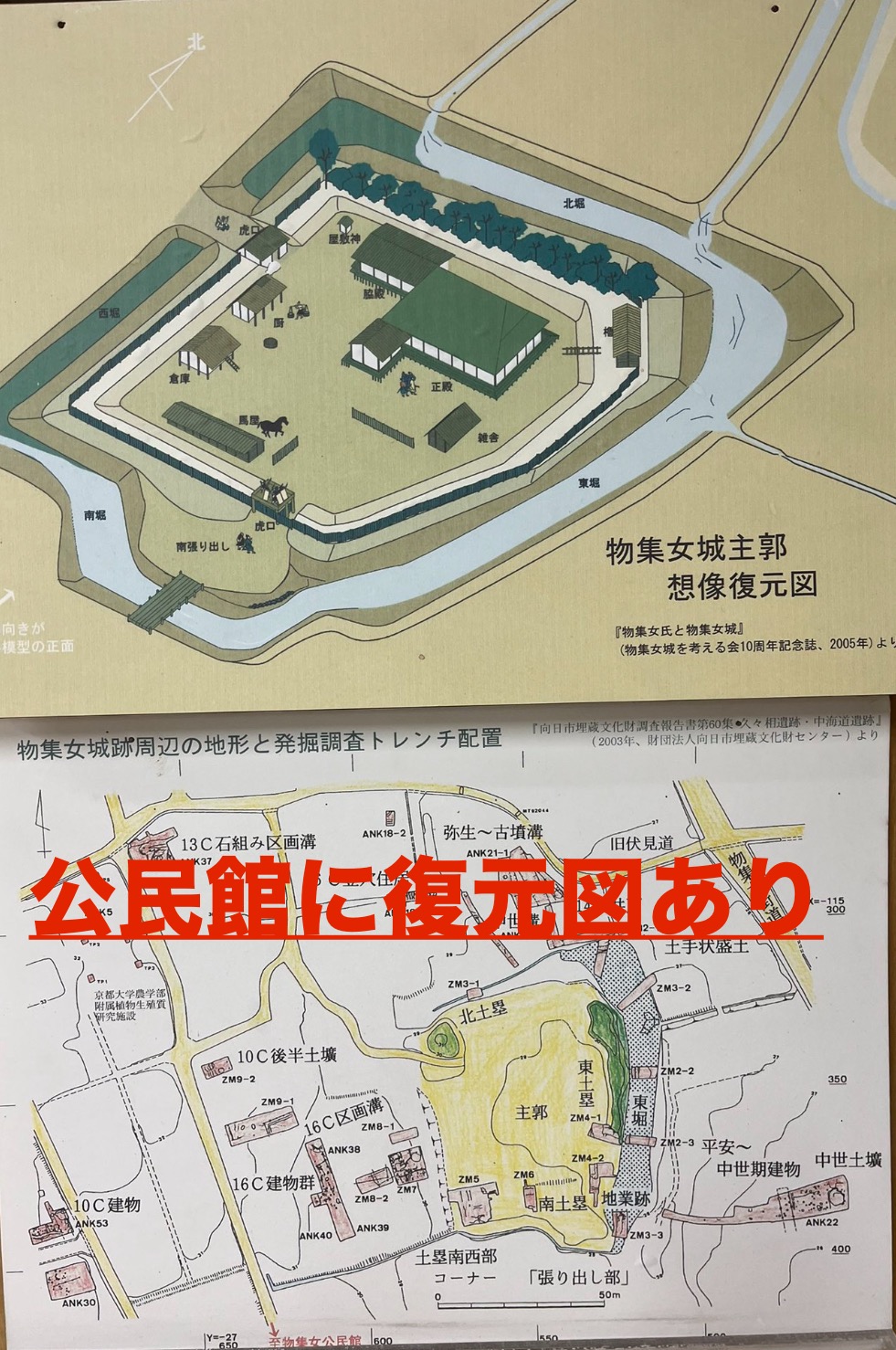
The castle is a multi-bailey mountain castle with multiple baileys arranged around the mountaintop, and its layout cleverly utilizes the terrain. The castle features a central enclosure at the mountaintop, surrounded by terraced baileys, each demarcated by earthworks and stone walls.
Major Remains
Baileys
Multiple baileys have been identified at Emiji Castle. The main enclosure at the mountaintop is the largest flat area, believed to have housed the lord’s residence and important facilities. The second and third baileys surround the main enclosure, creating a terraced, field-like structure. The flat areas of each bailey are relatively well-preserved, allowing for estimation of their original size.
Stone Walls and Stone Masonry
A distinctive feature of Emiji Castle is its stone walls and stone masonry. Relatively robust stonework remains for a medieval mountain castle, particularly noticeable around the entrance and on the terraced sections of the baileys. These stone walls are thought to have been constructed during the castle’s renovation as a Tokugawa-style castle after Akechi Mitsuhide’s conquest of Tanba, making them valuable historical documents for understanding the castle-building techniques of the time.
Castle Tower Base
A raised area believed to be the base of a castle tower has been identified in the main enclosure. In medieval mountain castles, castle tower bases are thought to have functioned as watchtowers or command posts. While relatively small, the castle tower base at Emiji Castle is located in a position that offers a panoramic view, making it suitable for monitoring the Settsu-Tanba Road.
Watchtower Bases
Watchtower bases were constructed at key points in the main enclosure and each of the baileys. These bases played an important role as defensive structures, serving as bases for monitoring enemy movements and launching attacks with bows and arrows or firearms. The watchtower bases at Emiji Castle are constructed with earthen mounds and stonework, providing clues to understanding the defensive system of the time.
Entrance Gate (Koguchi)
The entrance gate (koguchi) to the castle is the most important defensive structure. Multiple entrance gates have been identified at Emiji Castle, and the entrance to the main enclosure, in particular, is designed with a square-shaped bend to make enemy intrusion difficult. Stone walls remain around the entrance gate, allowing us to infer the structure of the castle gate.
Earthworks
Earthworks surround each enclosure. These earthworks served to prevent enemy intrusion and also acted as a screen to conceal the interior of the enclosures. The earthworks of Shoji Castle are relatively well-preserved, and their height and width allow us to estimate their defensive capabilities at the time.
Moats
Moats are constructed along the ridge. Moats are a defensive feature unique to mountain castles, preventing enemy intrusion by cutting off the ridge. Multiple moats have been identified at Shoji Castle, clearly defining the castle grounds.
Akechi Mitsuhide’s Conquest of Tanba and Shoji Castle
Background of the Conquest of Tanba
In 1575 (Tensho 3), Oda Nobunaga ordered Akechi Mitsuhide to conquer Tanba. Tanba Province, while strategically important due to its proximity to Kyoto, was divided amongst highly independent local lords such as Akai Naomasa (Akuemon) and Hatano Hideharu, hindering the advance of Oda forces.
When Akechi Mitsuhide attempted to conquer Tanba, he adopted a strategy of capturing each castle individually. Emiji Castle was a crucial stronghold controlling the Settsu-Tanba Road, and its early capture was essential for Mitsuhide.
Resistance at Emiji Castle
A will written by Nagasawa Shigetsuna to his son Ietsuna describes Emiji Castle as a “strong fortress” that resisted Akechi Mitsuhide’s attacks. Built on a mountaintop 414 meters above sea level, Emiji Castle, in addition to its geographical advantage, was equipped with defensive structures such as stone walls and earthworks, making it a formidable fortress that was difficult to capture.
Mitsuhide repeatedly attacked Emiji Castle, but encountered fierce resistance from the Nagasawa clan, preventing him from capturing it immediately. This resistance is thought to have affected the overall progress of the Tanba campaign. ### Peace Agreement and Confirmation of Territory
Ultimately, Nagasawa Shigetsuna and Akechi Mitsuhide met at a place called “Akechi Modori-iwa” at the foot of Hokiyama Castle, and a peace agreement was reached. As a result of this agreement, the Nagasawa clan’s territory was confirmed, and thereafter they cooperated with the Akechi clan in governing Tanba.
It is believed that Mitsuhide’s strategic judgment played a role in the conclusion of the peace agreement. He likely judged that by bringing the Nagasawa clan to his side, rather than capturing Emiji Castle by force, he could secure control of the Settsu-Tanba Road and smoothly proceed with the conquest of Tanba.
Remodeling into an Oda-Toyotomi Style Castle
After coming under Akechi Mitsuhide’s control, Emiji Castle is believed to have been remodeled into an Oda-Toyotomi style castle. Archaeological excavations have confirmed the presence of Oda-Toyotomi style characteristics in the construction techniques of the stone walls and the arrangement of the baileys. This indicates that Mitsuhide considered Emiji Castle an important base for governing Tanba and strengthened its defensive capabilities.
Excavation and Research Results
1977 Excavation
The first full-scale excavation of Emiji Castle was conducted in 1977 (Showa 52). This investigation was prompted by the construction of a high-voltage power transmission tower by Kansai Electric Power Company on the mountaintop. Prior to the tower’s construction, an emergency excavation was conducted by the Kyoto Prefectural Board of Education, yielding significant insights into the structure and history of Emiji Castle.
What Was Revealed by the Investigation
The excavation revealed the following facts:
- Structure of the Enclosures: It was confirmed that multiple enclosures were arranged in a stepped pattern around the main enclosure. The size and shape of each enclosure were recorded in detail, revealing the overall structure of the castle.
- Construction Techniques of the Stone Walls: It was found that the construction techniques of the stone walls and stonework exhibited characteristics of the Oda-Toyotomi period. This is important evidence supporting the idea that the castle was renovated under the control of Akechi Mitsuhide.
- Excavation of Artifacts: The excavation unearthed artifacts such as roof tile fragments, pottery fragments, and iron products. These artifacts allow us to infer the period of use of the castle and the lifestyle of its inhabitants.
- Layout of Defensive Structures: The layout of defensive structures such as gates, earthworks, and moats was clarified, revealing the defensive system of Emiji Castle.
Designation as a Kyoto Prefecture Historic Site
Based on the results of the excavation, the Emiji Castle site was designated as a Kyoto Prefecture Historic Site. This has led to advancements in the preservation and utilization of the castle site, and it is now recognized as an important historical heritage site of the region.
Progress in Research
Research on Emiji Castle continues even after the excavation. Layout surveys by castle researchers and analysis of historical documents have made the historical significance of Emiji Castle clearer. In particular, the role of Emiji Castle in Akechi Mitsuhide’s conquest of Tanba and the process of its renovation into a castle of the Oda-Toyotomi style are important research themes.
Access and How to Visit the Castle
Location
Address: Furogatani, Waraji, Nishibetsuin-cho, Kameoka City, Kyoto Prefecture
Access by Public Transportation
By JR
- Get off at Kameoka Station on the JR Sanin Main Line.
- Take a Keihan Kyoto Kotsu bus from Kameoka Station.
- Get off at the Waraji bus stop (approximately 30 minutes).
- Approximately 10 minutes on foot from the bus stop to the castle entrance.
- Approximately 30-40 minutes on foot from the castle entrance to the summit.
Bus Route
Take a bus from Kameoka Station towards Nishibetsuin. Since the number of buses is limited, it is recommended to check the timetable on the Keihan Kyoto Kotsu website in advance.
Access by Car
From Osaka
- From the Meishin Expressway “Ibaraki IC,” take National Route 171.
- Head north on National Route 423.
- Arrive near the junction with Prefectural Route 732 (approximately 1 hour).
From Kyoto City
- Head west on National Route 9.
- From Kameoka City, head north on National Route 423.
- Arrive near the junction with Prefectural Route 732 (approximately 40 minutes).
Parking
There is no dedicated parking lot for Shoji Castle, but there is roadside space near the entrance to the castle. However, please park respectfully and avoid inconveniencing local residents.
Ascent Route
Northern Route (Recommended)
The most common ascent route is via the hiking trail along the northern ridge.
- Entrance to the Castle: The hiking trail begins at the foot of the mountain southwest of the junction of National Route 423 and Prefectural Route 732.
- Animal-proof Fence: An animal-proof fence is installed at the entrance to the hiking trail. Please be sure to close it after entering.
- Hiking Trail: The hiking trail follows the mountain ridge. The climb is relatively gentle.
- Estimated Time: Approximately 30-40 minutes on foot from the entrance to the summit.
- Landmark: A Kansai Electric Power Company power transmission tower stands at the summit; this serves as a landmark.
Precautions When Visiting the Castle
- Clothing: As this is a mountain castle, please wear comfortable clothing and non-slip shoes (such as trekking shoes).
- Season: In summer, the vegetation is dense and there are many insects, so long sleeves and long pants are recommended.
- Weather: The ground can become slippery during and after rain, so caution is advised.
- Bear Precautions: Bear sightings have been reported in the Tanba region, so carrying a bear bell is recommended.
- Items to Bring: Please bring drinking water, a towel, a map, a compass, and a mobile phone.
- Time: Allow approximately 2-3 hours round trip, including time for sightseeing at the summit.
Points of Interest
Main Enclosure
The main enclosure at the summit is the largest flat area and the central part of the castle. It is surrounded by earthen ramparts, and there is a raised area believed to be the base of the keep. From here, you can see the Settsu-Tanba Road and the surrounding mountains.
Stone Walls and Stone Masonry
The stone walls remaining on the stepped sections of the enclosures and around the entrance gates are valuable remains that show the characteristics of castles from the Oda-Toyotomi period. Observe the way the stones are stacked and arranged.
Entrance
The entrance to the main enclosure is a square-shaped bend, showcasing ingenious defensive features. Experience firsthand the structure designed to hinder enemy intrusion.
View
From the mountaintop, you can overlook the Kameoka Basin and the Settsu-Tanba Road. This view demonstrates the strategic importance of Emiji Castle as a key location for monitoring transportation hubs.
Castle Stamp and Surrounding Information
Castle Stamp
Emiji Castle’s castle stamp may be available at tourist information centers and related facilities in Kameoka City. It may also be issued as part of the “Forest of Kyoto” castle stamp campaign. For details, please check the Kameoka City Tourism Association or the “Forest of Kyoto” official website.
The castle stamp contains information about the castle’s history and features, making it a popular souvenir of your visit. For castle enthusiasts, it’s a valuable addition to any collection.
Surrounding Castles
Other medieval mountain castles are scattered around the area surrounding Emiji Castle.
Kamioyama Castle
Located near Emiji Castle, this mountain castle is also associated with the Nagasawa clan. Visiting both Emiji Castle and Kamioyama Castle will help you understand the castle network in this region.
Inokura Castle and Inouchi Castle
Other mountain castles within Kameoka City are also important for understanding the medieval history of Tanba. If you have time, a castle tour visiting multiple castles is recommended.
Nearby Tourist Spots
Nishibetsuin Area
The Nishibetsuin area, where Emiji Castle is located, is a region rich in nature and history. Old townscapes and temples and shrines remain, making it a pleasant place to stroll.
Kameoka City
Kameoka City has numerous tourist attractions, including the Hozugawa River boat ride and Yunohana Onsen hot springs. You can enjoy sightseeing in Kameoka in conjunction with your visit to Emiji Castle.
Local History and Culture
Betsuin-sho
Betsuin-sho, where Emiji Castle was located, was an important area as a medieval manor. You can deepen your understanding of the manorial system and medieval regional governance.
The Legacy of the Nagasawa Clan
The Nagasawa clan were local lords who ruled the Betsuin region for generations, and they had a significant impact on the history of this area. Historical sites and legends related to the Nagasawa clan remain in the region.
Considerations for Visitors
- Private Property: There is private property around the castle climbing route. Please observe proper etiquette to avoid disturbing local residents.
- Protection of Remains: Remains such as stone walls and earthworks are valuable cultural assets. Please be careful not to climb on them or damage them.
- Litter: Please take all your trash with you.
- Fire: To prevent forest fires, the use of fire is strictly prohibited.
Summary
Emiji Castle is a medieval mountain castle located in Nishibetsuin-cho, Kameoka City, Kyoto Prefecture, built on the summit of Mt. Matsuo at an altitude of 414 meters. Also known as “Matsuo-yama Castle” or “Matsuo Castle,” it played an important role throughout the Sengoku period as the residence of the Nagasawa clan, lords of Betsuin-sho in Kuwata District, Tanba Province.
Constructed by Nagasawa Rokuro Masatsuna during the Eikyo era (1429-1441), Shoji Castle was located at a strategic point on the Settan Road connecting Tanba and Settsu, functioning as a base for monitoring traffic and governing the region. During Akechi Mitsuhide’s conquest of Tanba in the Tensho era, it offered fierce resistance as a “strong fortress,” but ultimately, a peace agreement was reached, the territory was secured, and it became a vassal of the Akechi clan. Afterward, it was renovated as a castle in the Oda-Toyotomi style, and defensive structures such as stone walls were strengthened.
After Nagasawa Ietsuna was killed fighting alongside Akechi Mitsuhide in the Battle of Yamazaki in 1582, Emiji Castle was abandoned. However, the remains of the castle, including the baileys, stone walls, turret bases, gates, earthworks, and keep base, remain well-preserved and the site is protected as a Kyoto Prefecture designated historical site.
The 1977 archaeological excavation revealed much about the structure and history of Emiji Castle, making it an important resource for the study of medieval mountain castles. In particular, the construction techniques of the stone walls, which show the process of renovation into a castle of the Oda-Toyotomi period, are a valuable example in the study of castle history.
Emiji Castle can be accessed by bus and on foot from JR Kameoka Station, or by car. The climb involves using the northern ridge route and requires approximately 2-3 hours round trip. As it is a mountain castle, please prepare appropriate clothing and equipment and climb with safety in mind.
A castle stamp is also issued, making it a historical site worth visiting for castle enthusiasts. Other mountain castles are scattered throughout the surrounding area, allowing you to enjoy a castle tour of Kameoka City.
Emiji Castle is a castle that played a significant role in the Sengoku period’s important historical event of Akechi Mitsuhide’s conquest of Tanba, and it is also a valuable historical site that marks a turning point in castle history with its renovation into a castle of the Oda-Toyotomi period. Please visit Emiji Castle to experience the structure of a medieval mountain castle and reflect on the history of the Sengoku period.