Complete Guide to Jio Castle (Osaka Prefecture): A Thorough Explanation of the History and Highlights of the Nose Clan’s Fortified Castle
What is Jio Castle?
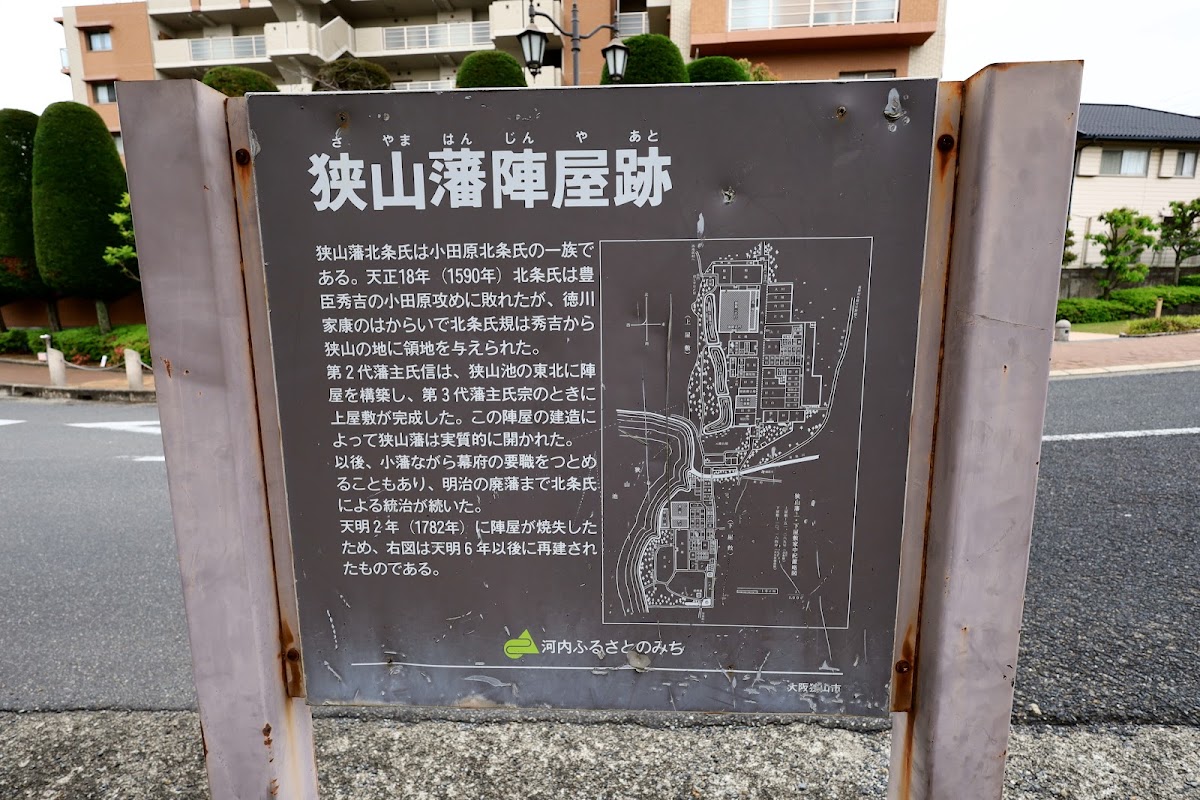
Jio Castle (Jio-jo) is a flatland castle site located in Jio, Nose-cho, Toyono-gun, Osaka Prefecture. Also known as Jio Jinya, Maruyama Shinjo, and Nose Castle, it is known as a modern fortified castle built by the Nose clan in the early Edo period.
Construction of this castle began in 1602 (Keicho 7) by Nose Yoritsugu, who distinguished himself on the Tokugawa side in the Battle of Sekigahara, and completed in the autumn of 1615 (Genna 1), the castle was used as the Nose clan’s residence until the Meiji Restoration. Although no buildings remain today, the remains such as stone walls, moats, and earthworks are well-preserved, making it a valuable fortified castle site in Osaka Prefecture and attracting attention from history enthusiasts.
Part of the castle ruins is now the grounds of Nose Town Higashi Junior High School, but the area around the main gate, the stone walls, and parts of the moat are still open to visitors, allowing them to imagine the scale of the fortified residence at the time.
History and Background of Jiko Castle
Historical Background of the Nose Clan
The Nose clan were local lords based in Nose County, Settsu Province, and held power in the region from the medieval period to the Sengoku period. During the Sengoku period, they resided at Maruyama Castle (also known as Jiko Old Castle), but after the Battle of Yamazaki in 1582, Maruyama Castle fell to an attack by Toyotomi Hideyoshi’s army. Nose Yoritsugu temporarily lost his territory and became a ronin (masterless samurai).
Later, Yoritsugu served as a page to Tokugawa Ieyasu, gaining his trust. This lord-vassal relationship became a crucial turning point that led to the later restoration of the Nose clan.
The Battle of Sekigahara and the Recovery of Territory
In the Battle of Sekigahara in 1600 (Keicho 5), Nose Yoritsugu served on the Eastern Army led by Tokugawa Ieyasu and distinguished himself in battle. As a result of this achievement, Yoritsugu was granted his former territory of Nose and a tract of land comprising dozens of surrounding villages, allowing him to return to Nose.
The combined territory of Nose Yoritsugu and his family amounted to over 7,800 koku, giving him the status of a hatamoto (direct retainer of the shogun) comparable to a daimyo, and giving him control over the entire Nose district. Taking this opportunity of regaining his territory, Yoritsugu planned the construction of Jiko Castle as his new residence.
The Construction Process of Jiko Castle
In 1602 (Keicho 7), Nose Yoritsugu began construction of a new castle in Jiko. The construction took 13 years, and Jiko Castle was completed in the autumn of 1615 (Genna 1). This year also marked the end of the Summer Campaign of Osaka and coincided with the establishment of the Tokugawa Shogunate’s governing system.
Jiō Castle was built as a flatland castle, a fortified residence with a single-enclosure layout. Because it was the residence of a hatamoto (direct retainer of the shogun) rather than a daimyo (feudal lord), it lacked large structures such as a keep, functioning primarily as a practical administrative residence. Nevertheless, it possessed a robust structure with stone walls and moats, serving as a symbolic building demonstrating the authority of the Nose clan.
Jiō Castle in the Edo Period
After the completion of Jiō Castle, the Nose clan used this location as their base for generations, governing Nose County. As hatamoto of the Tokugawa Shogunate, the Nose clan served under the command of the Osaka Castle Warden, playing a role in supporting the Shogunate’s governing system in Settsu Province.
Within the castle grounds, structures such as the main gate, samurai gate, and great hall were arranged, and it has been suggested that corner turrets or towers may have been built at the four corners. The castle served not only as the lord’s residence but also as an administrative center for the district magistrate, functioning as the center of regional governance.
The Nose clan also dedicated themselves to the reconstruction of Noma Shrine (Noma-sha), playing an important role as a center of local faith. They maintained their influence in Nose district through both religious and political means.
Meiji Restoration and Abandonment of the Castle
With the Meiji Restoration, Jiko Castle was abandoned. In the Meiji era, the castle buildings were dismantled, and part of the site was repurposed as the Nose District Office and a council hall. Later, it was used as an educational facility, and is now part of the grounds of Nose Town Higashi Junior High School.
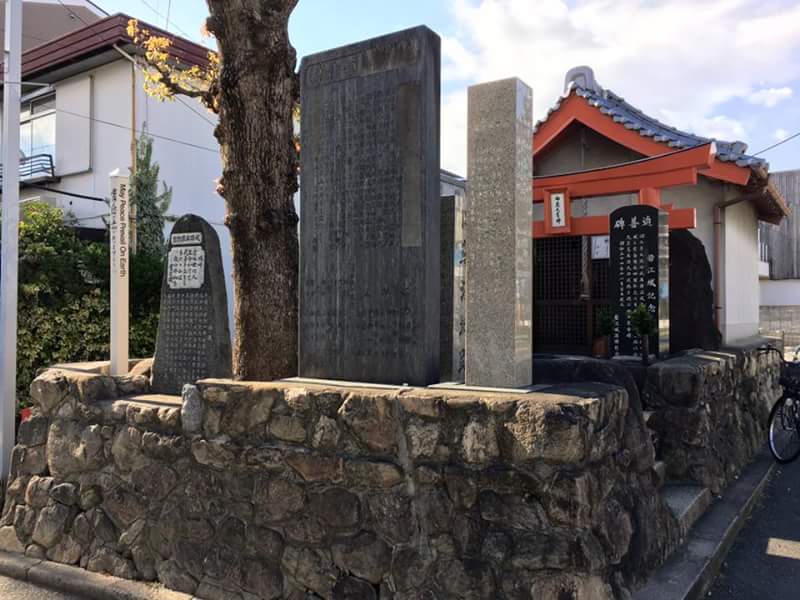
Although the buildings are gone, the remains such as stone walls, moats, and earthworks are relatively well preserved, allowing us to imagine its former appearance. A stone monument has been erected locally as the “Former Nose Clan Castle Site,” preserving it as a historical heritage site.
Structure and Fortifications of Jikou Castle
Layout and Basic Structure
Jikou Castle is a single-enclosure flatland castle, exhibiting characteristics of a modern jinya castle. The castle grounds are roughly rectangular in shape, surrounded by a moat, with the main enclosure located in the center. Unlike mountain castles of the Sengoku period, it was built on flat land, prioritizing habitability and administrative functions over defense.
A water moat surrounded the main enclosure, and parts of it can still be seen as remains. The width of the moat varies depending on the location, but it was of sufficient size to provide adequate defense. Earthen ramparts are also well-preserved, and particularly high ramparts can be seen along the boundary with the junior high school.
Features of the Stone Walls
One of the highlights of Jikou Castle is the stone walls, 4-5 meters high, remaining on the west and south sides. These stone walls were built using early modern techniques, employing the nozurazumi method. The skillfully combined natural stones make these walls a valuable example of the level of stonework technology at the time.
Near the site of the main gate, particularly impressive stone walls remain. A stone monument inscribed with “Former Nose Clan Castle Site” stands atop the stone wall where a torii gate now stands. The stone walls around this monument are the most easily accessible remains for visitors.
The construction method and the types of stones used reveal characteristics of castle building techniques from the Keicho to Genna periods, making it a valuable historical site from the perspective of castle research.
Gates and Entrances
Jiko Castle had two main gates: the main gate (Otemon) and the samurai gate (Bukemon). The main gate served as the castle’s front entrance, and its remains, along with the stone walls, can still be seen today. The area around this gate is a key point of interest for castle visitors.
The samurai gate (Bukemon) was for the entry and exit of retainers and samurai, and was located in a different place from the main gate. The arrangement of these gates reveals a functional differentiation within the castle grounds.
The structure of the entrances (koguchi) also exhibits characteristics of early modern castles, with a strong defensive structure consisting of stone walls and earthworks. ### Layout of Buildings
According to historical records, the castle grounds contained residential buildings, including a large hall. It has been suggested that corner turrets or towers were built at the four corners, indicating that it possessed a relatively large complex of buildings for a fortified residence.
Although no buildings remain today, the layout of the main buildings can be inferred from the topography and the arrangement of the remaining structures. It is believed that the residence was located in the center of the main enclosure, while the residences of retainers and warehouses were located around the periphery.
Moat and Earthworks
Parts of the moat surrounding the castle grounds still remain, and a clear moat trace can be seen, particularly between the castle and the middle school. The moat served both a defensive function and a clear demarcation of the castle grounds.
Earthworks are also well-preserved, mainly on the west and south sides. Their height varies depending on the location, but some sections reach several meters. It is presumed that walls or fences were built on top of the earthworks, forming a defensive line for the castle along with the stone walls.
Current Site and Remains of Jikou Castle
Major Remains
The following remains can be observed at the current Jikou Castle site:
Stone Walls: Stone walls 4-5 meters high remain well-preserved on the west and south sides. The stone basin around the main gate site is particularly well-preserved, allowing observation of early modern stonework techniques.
Moat: A portion of the moat remains, mainly along the boundary with the junior high school. Although not in its complete form, it is a valuable remains that allows us to estimate the scale of the castle in its heyday.
Earthwork: Earthwork remains around the castle grounds, particularly clearly visible on the west and south sides. The height and width of the earthworks provide insight into the defensive structure.
Enclosures: The layout of enclosures centered around the main enclosure can be inferred from the topography. Although currently flat, the layout of the area can be imagined.
Main Gate Site: The location of the main gate has been identified along with the stone walls, and a stone monument inscribed “Former Castle Site of the Nose Clan” has been erected.
Current Situation
The majority of the Jikou Castle ruins are now part of the grounds of Nose Town Higashi Junior High School, with the remains concentrated along the school’s boundary. The junior high school side features a cliff approximately 5 meters high, and a vast open space stretches to the west.
This open space corresponds to the former main enclosure, and parts of it are now used as sports facilities such as tennis courts. The area around the stone monument standing on the stone wall of the torii gate, surrounded by a moat, is arguably the place that best preserves the atmosphere of the past.
Many parts of the remains are not protected by fences, allowing for close observation. However, access to the school grounds is restricted, limiting the area that can be viewed.
Related Historical Sites in the Surrounding Area
Seifuji Temple: A temple located near the Jikou Castle ruins, known for its connection to the Nose clan. The temple gate and main hall are said to have been relocated from Jikou Castle, making it a valuable place to see parts of the castle’s architecture. There is also a theory that the samurai gate was relocated, making it a must-see spot for those interested in castle architecture.
Maruyama Castle Ruins: This mountain castle was the residence of the Nose clan before Jiko Castle, and is located relatively close to Jiko Castle. It is a mountain castle at an altitude of 280 meters, and remains such as earthworks, baileys, and moats still exist. Visiting both Jiko Castle and Maruyama Castle allows for an understanding of the evolution of the Nose clan’s castles.
Noma Shrine: This shrine was rebuilt by Nose Yoritsugu and was the center of the Nose clan’s faith. It is an important historical site for understanding the history of the region.
Access to Jikoujou Castle Ruins
Access by Public Transportation
When visiting Jikoujou Castle Ruins by public transportation, the following routes are available:
Train and Bus Combination:
- Take a Hankyu Bus from Yamashita Station or Myokenguchi Station on the Nose Railway Myoken Line.
- Get off at the “Jikou” bus stop and walk for approximately 10 minutes.
Using JR:
- Take a Hankyu Bus from Ikeda Station on the JR Fukuchiyama Line.
- Get off at the “Jikou” bus stop and walk for approximately 10 minutes.
Since bus services are limited, it is recommended to check the timetable in advance. Especially on holidays, bus services are reduced, so careful planning is necessary.
Access by Car
Access by car is most convenient:
Via National Route 173:
- From National Route 173, turn onto National Route 477.
- Turn south at the “Jiō” intersection and enter the town road.
- Continue south for approximately 700 meters to reach Shinnyoji Temple.
Parking:
You can use the parking lot at Shinnyoji Temple. From the parking lot, walk east up the slope to reach Nose Town Higashi Junior High School, where the castle ruins are located.
Car Navigation Settings:
Searching for “Nose Town Higashi Junior High School” or “Shinnoji Temple (Nose Town)” will guide you to near the castle ruins. The address is “〒563-0121 Jiō, Nose-cho, Toyono-gun, Osaka Prefecture”.
Notes for Visitors
- Entry to the junior high school grounds is prohibited. Particular consideration is needed during class hours.
- As the area around the ruins is not well-maintained, comfortable walking shoes are recommended.
- Please be careful not to climb on the stone walls or earthworks, or damage the remains.
- In summer, vegetation can grow thick, making the remains difficult to see. Visiting in spring or autumn is recommended.
- Facilities such as toilets and vending machines are limited, so advance preparation is advised.
Highlights and ways to enjoy Jikojo Castle
Observing the Stone Walls
The greatest highlight of Jikojo Castle is its well-preserved stone walls. The stone walls remaining on the west and south sides are valuable remains that allow observation of the early modern period’s rough-stone masonry technique.
By carefully observing the stone walls, you can discern the skillful techniques used to combine natural stones, the ingenuity for drainage, and the criteria for selecting the stones. For those interested in castle architecture, it is well worth taking the time to observe them carefully.
The stone walls around the Otemon Gate are particularly impressive and are a popular spot for photography. Taking a photo with the “Nose Clan Former Castle Site” monument will make a memorable souvenir of your visit.
Imagining the Layout
Even areas that are now flat land or school grounds were once lined with buildings of the Jinya (fortified residence). One way to enjoy the site is to imagine the layout of the castle in its heyday, based on the arrangement of the remains and the topography.
By confirming the boundaries of the castle grounds from the locations of the moats and earthworks, and imagining how one entered the castle from the main gate and where the main buildings were located, you can feel the romance of history.
Visiting Seifuji Temple in Combination
Visiting not only the Jikou Castle ruins but also the nearby Seifuji Temple will allow you to understand the history of the Nose clan more deeply. It is said that the temple gate and main hall of Seifuji Temple were relocated from Jikou Castle, and you can see traces of the castle’s architecture.
There is also a theory that the samurai gate was relocated, making it a valuable resource for understanding the architectural style of the Jinya. Visiting the castle ruins and the temple together will allow you to more concretely imagine Jikou Castle as it was when the buildings still existed.
Comparison with Maruyama Castle
If you have time, we recommend visiting the ruins of Maruyama Castle, the former castle of the Nose clan. Comparing Maruyama Castle, a mountain castle, with Jiko Castle, a flatland castle, allows you to appreciate the changes in castle architecture from the Sengoku period to the Edo period.
Maruyama Castle is a mountain castle at an altitude of 280 meters, possessing characteristics of Sengoku period mountain castles such as earthworks, baileys, and moats. On the other hand, Jiko Castle is a modern jinya castle built on flat land, prioritizing habitability and administrative functions over defense. This contrast helps us understand the changing role of castles over time.
Historical Significance of the Nose Clan and Jiko Castle
The Nose Clan as Hatamoto
The Nose clan, as hatamoto with a territory of over 7,800 koku, ruled Nose County throughout the Edo period. Although not a daimyo, they wielded considerable influence in the region and played an important role in supporting the Tokugawa shogunate’s system of control in northern Settsu Province.
As hatamoto (direct retainers of the shogun), the Nose clan served under the command of the Osaka Castle Warden, playing a vital role in the shogunate’s military power in the Kinai region. They also held administrative powers as district magistrates, performing governing functions such as maintaining local order and collecting taxes.
The Battle of Sekigahara and the Recovery of Territory
The Battle of Sekigahara marked a decisive turning point in the history of the Nose clan. The story of Nose Yoritsugu, who lost his territory during the time of Toyotomi Hideyoshi, seeking a comeback by serving Tokugawa Ieyasu and recovering his former lands through military achievements at Sekigahara, is a prime example of how samurai lived during the transition from the Sengoku period to the Edo period.
Early submitting to the victor, Tokugawa Ieyasu, and gaining his trust, led to the Nose clan’s restoration. This choice is historically interesting as a successful example of the crucial decision of “who to serve,” a challenge faced by many Sengoku warlords.
Value as a Modern Jinya Castle
Jikou Castle holds historical value as a typical example of a modern Jinya castle. Unlike large castles with keeps, the residences of hatamoto and minor daimyo during the Edo period often adopted a practical Jinya (fortified residence) style.
The structure of Jikou Castle clearly demonstrates the characteristics of this modern Jinya castle, featuring defensive structures such as stone walls and moats, while prioritizing habitability and administrative functions. It is a valuable historical site that reveals the realities of local governance, distinct from large castles like Osaka Castle and Himeji Castle.
Continued Rule Until the Meiji Restoration
The fact that the Nose clan continued to rule Nose County from Jikou Castle until the Meiji Restoration demonstrates the stable governance system of the Edo period. For approximately 250 years after its construction, the Nose clan consistently ruled this area, deeply rooted in the local community.
This long period of rule suggests that the Nose clan maintained good relations with the local residents and governed effectively. Even today, Nose Town retains many historical sites associated with the Nose clan, occupying an important position in the region’s history.
Preliminary Information for Visiting Jiko Castle
Historical Background of Nose Town
Nose Town is located at the northernmost tip of Osaka Prefecture, a mountainous town bordering Hyogo and Kyoto Prefectures. It developed from ancient times as a key transportation hub connecting Settsu and Tanba Provinces, and during the Sengoku period, the Nose clan ruled the area.
Even today, the town maintains a rich natural environment, and its relatively good access from the Osaka metropolitan area allows visitors to enjoy nature along with historical walks. The area surrounding the Jiko Castle ruins is surrounded by rural landscapes, offering a peaceful atmosphere for visiting the castle site.
Photography Tips
When visiting the Jikou Castle Ruins, the following are some points to consider when taking photographs:
- The stone walls of the main gate and the “Nose Clan’s Former Castle Ruins” monument
- The high stone walls remaining on the west and south sides
- Remains of the moat
- Cross-section of the earthworks
- Views from a vantage point overlooking the entire castle ruins
The stone walls, in particular, are best photographed in the morning when the light hits them. Also, autumn and winter are ideal seasons for photography as the vegetation withers, making the remains easier to see.
Best Seasons for Visiting
The best seasons to visit the Jikou Castle Ruins are spring (March-May) and autumn (October-November). During these times, the weather is mild, and the vegetation is well-maintained, making it easier to observe the remains.
In summer (June-September), the vegetation is overgrown, making the remains difficult to see. Also, there are many insects such as mosquitoes, so insect repellent is necessary.
During winter (December to February), the vegetation withers, making the ruins most easily visible, but cold weather precautions are necessary. Also, sunset is early, so be mindful of your visiting time.
Estimated Time Required
Please allow the following times for visiting the Jikoujo Castle Ruins:
- Visiting only the castle ruins: 30 minutes to 1 hour
- Visiting the castle ruins and Seifuji Temple: 1 hour to 1 hour 30 minutes
- Visiting the castle ruins, Seifuji Temple, and Maruyama Castle: 3 to 4 hours (including travel time)
Photography and detailed observation will require additional time. Also, since Maruyama Castle is a mountain castle, you need to consider the time required for climbing.
Comparison with Other Castle Ruins in Osaka Prefecture
While many castle ruins remain in Osaka Prefecture, Jikoujo Castle is distinctive in the following respects:
Osaka Castle: It differs significantly in scale and character from Osaka Castle, known as a famous castle of Japan. While Osaka Castle was the residence of a powerful ruler, Jikoujo Castle was a samurai residence.
Chihaya Castle: Chihaya Castle, known as the residence of Kusunoki Masashige, is a mountain castle, while Jiko Castle is a flatland castle. The contrast between a mountain castle, which prioritized defense, and a flatland castle, which prioritized habitability, is interesting.
Kishiwada Castle: Kishiwada Castle was the residence of a daimyo and its keep has been reconstructed, but Jiko Castle was a jinya (fortified residence) of a hatamoto (direct retainer of the shogun) and did not have a keep. However, the state of preservation of remains such as stone walls is better at Jiko Castle in some respects.
Jiko Castle is a relatively minor castle site among the castle ruins in Osaka Prefecture, but it is a valuable example of a modern jinya castle and is a castle site worth visiting for history enthusiasts.
Summary
Jiko Castle (Nose-cho, Toyono-gun, Osaka Prefecture) is a modern jinya castle that was started in 1602 (Keicho 7) and completed in 1615 (Genna 1) by Nose Yoritsugu, who distinguished himself in the Battle of Sekigahara. This castle served as the residence of the Nose clan, a hatamoto (direct retainer of the shogun) with a stipend of over 7,800 koku, and was used for approximately 250 years until the Meiji Restoration.
Although no buildings remain today, the remains, including stone walls 4-5 meters high, a portion of the moat, earthworks, and the site of the main gate, are well-preserved, making it a valuable historical site for understanding the structure of early modern jinya castles. The stone walls, in particular, are important remains that allow observation of the early modern nozurazumi (rough-stone masonry) technique.
Access to the castle ruins is convenient by car; take the town road from the “Jiko” intersection on National Route 477 and use the Shinnyo-ji Temple parking lot. For those using public transportation, you will need to take a bus from the Nose Railway or JR line, but the number of services is limited, so advance confirmation is necessary.
Nearby, Seifu-ji Temple has a temple gate and main hall said to have been relocated from Jiko Castle, and the ruins of the former castle, Maruyama Castle, are also located relatively close by. Visiting these sites in combination will allow for a deeper understanding of the history of the Nose clan.
While Jikojo Castle is not as famous as Osaka Castle or Chihaya Castle, it is a valuable historical site that reveals the realities of the shogunate’s rule during the Edo period, making it a must-see for anyone interested in castle history or local history. It is a hidden gem where you can stroll around in a quiet environment and imagine what the castle looked like in its heyday.