Mozume Castle (Kyoto Prefecture): A National Historic Site, a Sengoku period castle, the residence of the Mozume clan, and the history of their downfall at the hands of Hosokawa Fujitaka
What is Mozume Castle?
Mozume Castle is a medieval castle site from the Sengoku period located in Nakajo, Mozume-cho, Mukai City, Kyoto Prefecture. It is known as the residence of the local lord, the Mozume clan, in the Nishinooka region, encompassing Otokuni and Kadono districts, located on the right bank of the Katsura River.
Designated a National Historic Site in 2024, this castle site has a structure centered around a main enclosure approximately 70 meters square, and parts of the moats and earthworks remain well-preserved. It is an extremely important historical site as a castle of a local lord in the Kyoto area during the Sengoku period.
Location and Geographical Characteristics
Mozume Castle was built on a slightly elevated area in Mozume-cho, in the southern part of Mukai City. This area is located on the right bank of the Katsura River, in the southwestern part of the Kyoto Basin. As a castle located in a plain, it is not built on the rugged terrain of a mountain castle, but rather takes the form of a flatland castle (hirajiro) with moats and earthworks surrounding it.
Located approximately 5 kilometers north of Shoryuji Castle, it was a strategically important location as a transportation hub in the Nishioka region. A manor called Mozume-sho spread around the area, and the Mozume clan built their power as the local magistrates of this region.
History of Mozume Castle
Construction and the Rise of the Mozume Clan
The exact construction date of Mozume Castle is uncertain, but it is believed to have been built by the Mozume clan during the Muromachi period. The Mozume clan is considered a branch of the Hata clan and, as descendants of a powerful clan that had existed since ancient times, had established roots in this region.
In the medieval period, the Mozume clan held de facto control as the magistrates of Mozume-sho and played an active role as a leader among the local powerful samurai of the Otokuni region. From the Muromachi period to the Sengoku period, the Mozume clan formed their own spheres of influence as local lords known as “kokushu” or “kokujin.”
The Mozume Clan in the Sengoku Period
At the start of the Sengoku period, the Mozume clan, with Mozume Tadashige as its head, established itself as a powerful local lord in the Nishioka region. Tadashige later became a Buddhist monk, taking the name Sōnyū or Sonyū, and maintained autonomous control of the region.
The Mozume clan possessed historical legitimacy, having ruled this region for generations, and sought to maintain a certain degree of independence from central power. This stance would later lead to a tragic end when Oda Nobunaga marched to Kyoto.
Oda Nobunaga’s March to Kyoto and the Rule of Hosokawa Fujitaka
In 1568 (Eiroku 11), when Oda Nobunaga marched to Kyoto with Ashikaga Yoshiaki, the political situation in the Kinai region changed dramatically. To consolidate his control over the Kyoto area, Nobunaga appointed his senior retainer, Hosokawa Fujitaka (later Hosokawa Yusai), as the lord of Shoryuji Castle and to govern the Nishioka region.
While Hosokawa Fujitaka was known as a cultured man, he also possessed a ruthless side as a Sengoku period warlord. Following Nobunaga’s orders, Fujitaka attempted to bring the local lords of the Nishioka region under the control of the Oda regime.
The Resistance and Assassination of Mozume Tadashige
Hosokawa Fujitaka requested that Mozume Tadashige, who was a Buddhist monk, serve at Shoryuji Castle. However, Tadashige refused, stating that “this has been my territory for generations, and I have no reason to serve.” This refusal was a manifestation of his desire to protect his autonomy and pride as a local lord.
However, this resistance was unacceptable to the Oda regime. In 1575 (Tensho 3), senior retainers of Hosokawa Fujitaka lured Mozume Tadashige to the foot of Shoryuji Castle and murdered him. The Mozume clan, having lost its leader, perished, and Mozume Castle was abandoned.
This incident can be seen as a symbolic event of the wave of centralization during the Sengoku period, which ruthlessly swallowed up the autonomy of local lords.
Structure and Remains of Mozume Castle
Scale and Structure of the Castle
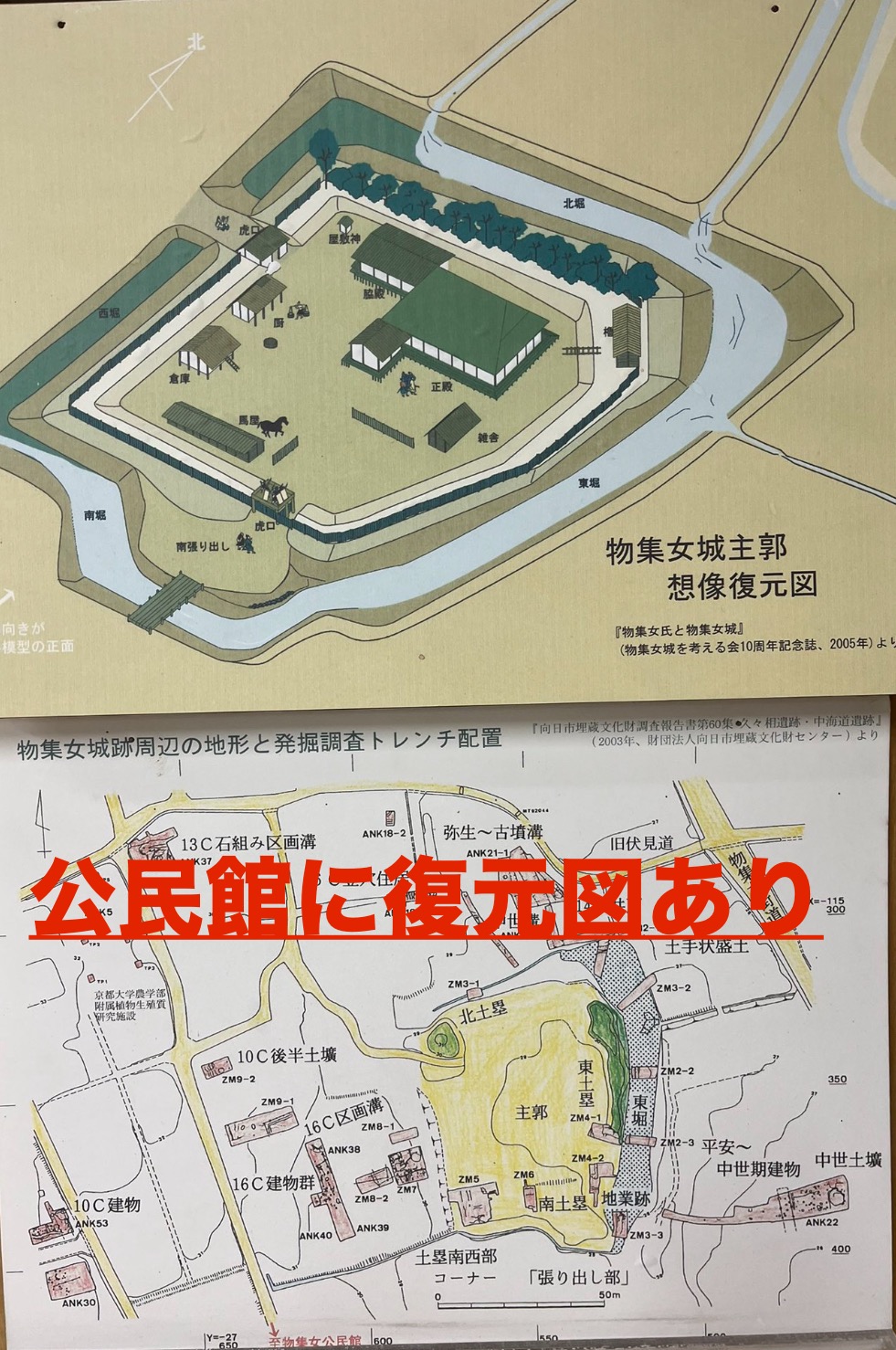
Mozume Castle is a flatland castle centered around a main enclosure (honmaru) approximately 70 meters square. Because it was built on flat land, its defenses mainly consisted of moats and earthen ramparts. A water moat surrounded the main enclosure, and the castle grounds were demarcated by earthen ramparts.
The castle’s structure exhibits the typical form of a medieval local lord’s residence, a facility that combined military and residential functions. Rather than being an impregnable fortress like a mountain castle, it can be described as a practical castle that balanced peaceful residence with defense in times of war.
Existing Remains
Currently, the following remains are preserved at the site of Mozume Castle:
Northern Earthwork: An earthwork, believed to be the remains of a watchtower base, remains in good condition on the north side. This earthwork was crucial to the castle’s defense and is presumed to have functioned as a lookout and attack base.
Eastern Earthwork: Part of an earthwork can also be seen on the east side. This is an important remains that indicates the outline of the main enclosure.
Eastern Moat: Traces of a water moat remain on the east side of the main enclosure. This is a valuable remains that shows that a water-filled moat once protected the castle.
Projecting Section: Traces of projecting sections have also been found in parts of the castle, showing ingenuity to enhance defensive capabilities.
Archaeological Excavation and Excavated Artifacts
Archaeological investigations have been conducted at the Mozume Castle ruins, and many artifacts have been unearthed. The main excavated items include the following:
- Haji ware: Unglazed earthenware used daily
- Wall-type earthenware: A somewhat higher-quality type of pottery, indicating the standard of living within the castle
- Celadon: High-quality ceramics imported from China, illustrating the economic power of the Mozume clan
- Wooden artifacts: Daily life tools and building materials of the time
These artifacts are important resources for understanding the reality of Mozume Castle from the Muromachi period to the Sengoku period.
Significance of National Historic Site Designation
National Historic Site Designation in 2024
The Mozume Castle ruins were officially designated a National Historic Site in 2024. This designation is a result of the high historical and academic value of the site as a castle of a local lord in the Kyoto area during the Sengoku period.
With its designation as a National Historic Site, the Mozume Castle Ruins have been positioned as an important cultural property that should be protected by the nation. This legally guarantees the preservation and utilization of the ruins, establishing a system for passing them on to future generations.
Historical Value
The historical value of the Mozume Castle Ruins lies in the following points:
Research on Local Lords of the Sengoku Period: This is a valuable site that reveals the reality of local lords from the medieval to the Sengoku period. It allows us to understand how local lords like the Mozume clan governed their regions and how they dealt with central power.
Oda Regime’s Control of the Kinai Region: This is a concrete example showing how Oda Nobunaga brought the area around Kyoto under his control. The downfall of the Mozume clan by Hosokawa Fujitaka symbolizes the changes in the power structure during the Sengoku period.
Research on the Structure of a Flatland Castle: In the Kyoto area, where mountain castles are common, this is an important site that allows us to understand the structure of a castle built on flat land. The defensive system of moats and earthworks is well preserved.
History of the Nishioka Region: This archaeological site is essential for understanding the medieval history of the Nishioka region on the right bank of the Katsura River. It holds the key to understanding the political and social structure of this region.
About the Mozume Clan
Relationship with the Hata Clan
The Mozume clan is considered a branch of the Hata clan. The Hata clan is known as an immigrant clan in ancient Japan, a group skilled in sericulture, weaving, and civil engineering. They were a powerful clan based in the Kyoto Basin, particularly around Uzumasa, and were deeply involved in the construction of Heian-kyo (Kyoto).
The Mozume clan, as a branch of the Hata clan, had a long and distinguished history dating back to ancient times. This historical background formed the basis for the Mozume clan’s strong influence in the region.
Deputy Governor of Mozume Manor
Under the medieval manorial system, the Mozume clan served as the deputy governor of Mozume Manor. The deputy governor was an important position, responsible for practical matters such as collecting taxes and maintaining public order as the local administrator of the manor. The Mozume clan established de facto lordship based on their position as local magistrates. During the Muromachi and Sengoku periods, as the manorial system collapsed, the Mozume clan grew from magistrates into independent local lords.
Leaders of the Otokuni Region
The Mozume clan played a leading role among the local powerful families of the Otokuni region, uniting the surrounding local lords. It is believed that during the turbulent Sengoku period, they maintained regional order and fostered unity to resist external forces.
However, this regional leadership was powerless against the overwhelming central power of Oda Nobunaga. The downfall of the Mozume clan marked a turning point where regional autonomous order was replaced by centralized rule.
Mozume Castle Visit and Tourist Information
Local Conditions
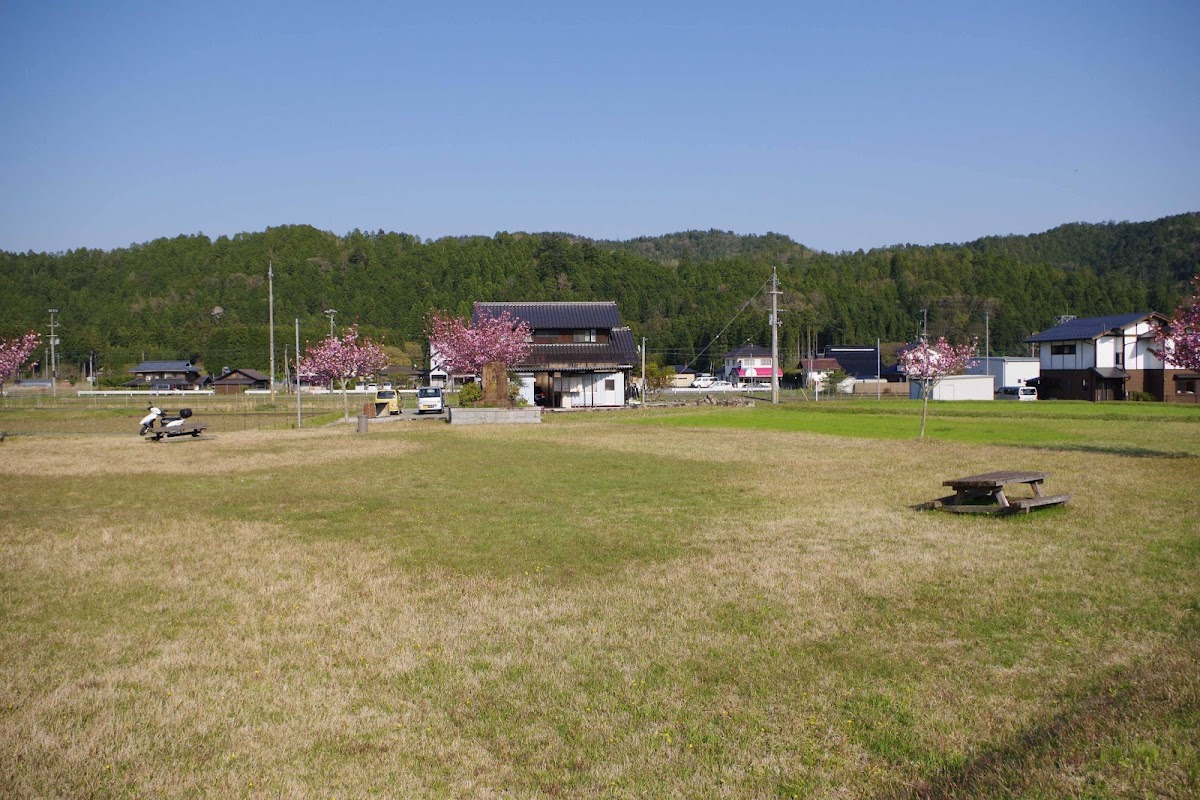
The main enclosure of the Mozume Castle ruins is currently privately owned farmland, and access is restricted. To protect the ruins and respect private property, unauthorized entry into the main enclosure is prohibited. Please be sure to abide by this rule.
However, it is possible to view the remains of the northern earthworks and eastern moat from the outside. The northern earthworks, believed to be the site of a watchtower, are an important point of interest for understanding the defensive system of Mozume Castle.
Information Gathering at Mozume Community Center
When visiting Mozume Castle, we recommend stopping by the Mozume Community Center first. The community center displays a model of Mozume Castle, allowing you to understand the castle’s overall structure in three dimensions.
In addition, brochures are available, providing detailed information about the history and highlights of Mozume Castle. The community center plays an important role as a base for learning about local history.
Access Information
By Train:
- Approximately 15-20 minutes on foot from Hankyu Kyoto Line “Higashi-Muko Station” or “Rakusaiguchi Station”
- Approximately 20-25 minutes on foot from JR Kyoto Line “Mukomachi Station”
By Car:
- Approximately 10 minutes from Kyoto Jukan Expressway “Nagaokakyo IC”
- Parking is available at the Mozume Community Center (limited spaces available)
Nearby Tourist Attractions
When visiting the Mozume Castle Ruins, we recommend also visiting the surrounding historical sites.
Shoryuji Castle Ruins: This castle was the base of Hosokawa Fujitaka and is deeply connected to the history of Mozume Castle. It has been developed as Shoryuji Castle Park and is easily accessible.
Muko Shrine: A shrine that has long been revered as the guardian shrine of Muko City. It is believed that the Mozume clan also had a connection to this shrine.
Nagaoka-kyo Ruins: The ruins of Nagaoka-kyo, the capital before Heian-kyo, are scattered throughout the area. You can feel the flow of history from ancient to medieval times.
Notes for Visitors
- The main enclosure is private property and entry is prohibited.
- Please be considerate and do not interfere with agricultural work.
- Please be careful not to damage the ruins.
- Please take all your trash with you.
- Please be considerate of the privacy of local residents when taking photographs.
Historical Context of Mozume Castle
Sengoku Period History of the Nishioka Region
The Nishioka region refers to the area encompassing Otokuni and Kadono districts on the right bank of the Katsura River. This region was a crucial transportation hub connecting Kyoto and the Kinai region, and many forces vied for supremacy during the Sengoku period.
Besides the Mozume clan, several other local lords, such as the Kanzaki and Kawashima clans, held sway in this region. These local lords maintained regional order, sometimes cooperating and sometimes clashing.
After Oda Nobunaga’s arrival in Kyoto, Hosokawa Fujitaka established his base at Shoryuji Castle and ruled the region, causing the existing autonomous order of the local lords to collapse. The downfall of the Mozume clan was a symbolic event of this collapse.
The Role of Hosokawa Fujitaka (Yusai)
Hosokawa Fujitaka (1534-1610) was a Sengoku period warlord who served three generations of powerful figures in Japan: Oda Nobunaga, Toyotomi Hideyoshi, and Tokugawa Ieyasu. He later adopted the name Hosokawa Yusai and was known as a cultured man and poet who received the Kokin Denju (secret teachings of classical poetry).
When Fujitaka was entrusted with the control of the Nishioka region by Nobunaga, he played a role in bringing the existing local lords under the control of the Oda regime. The assassination of Mozume Tadashige occurred during this process.
Fujitaka’s son, Hosokawa Tadaoki, later became the lord of the Kumamoto domain, and the Hosokawa family continued as a daimyo family throughout the Edo period. Meanwhile, the Mozume clan disappeared from the forefront of history. This contrast symbolizes the stark contrast between the victors and losers of the Sengoku period.
From Medieval Castles to Early Modern Castles
Many castles of medieval local lords, like Mozume Castle, were abandoned with the end of the Sengoku period. During the process of unifying Japan by Oda Nobunaga and Toyotomi Hideyoshi, smaller castles were consolidated and reorganized into early modern castles.
The abandonment of Mozume Castle (1575) was part of this major historical shift. The ruins of Mozume Castle hold significant importance as a concrete example of the transition from a decentralized medieval order to a centralized early modern order.
About the Place Name Mozume
Origin of the Place Name
There are several theories regarding the origin of the unique place name “Mozume.” One theory suggests a connection to the ancient Mononobe clan, and that it comes from the meaning of “women of the Mononobe clan gathered together.”
Furthermore, since the Hata clan excelled in sericulture and weaving, there is a theory that the name referred to a group of women engaged in textile production, meaning “women who gather things (textiles).”
Changes in Pronunciation
While it is now generally pronounced “Mozume,” historically, it was also pronounced “Modume.” It is one of the place names whose pronunciation has changed over time.
This place name still exists today as Mozume-cho, and together with the Mozume Castle ruins, it is an important element in forming the historical identity of this region.
Preservation and Utilization of Mozume Castle Ruins
Muko City’s Initiatives
Muko City is actively working on the preservation and utilization of the Mozume Castle ruins. Following its designation as a national historical site, it is expected that plans for the development and public opening of the ruins will proceed.
The Muko City History and Culture website provides detailed information about the Mozume Castle ruins, offering resources for citizens and tourists to learn about history.
As a Regional Historical Heritage Site
The Mozume Castle Ruins are an important historical heritage site in Mukō City, contributing to the formation of the region’s identity. Local elementary and junior high schools utilize them as teaching materials for local history studies, ensuring the transmission of history to future generations.
Exhibitions at the Mozume Community Center and information dissemination by the Mukō City Tourism Association are among the ongoing efforts to share the value of the Mozume Castle Ruins throughout the community and to preserve and utilize them.
Future Prospects
With its designation as a National Historic Site, the Mozume Castle Ruins have entered a new phase. The following initiatives are expected in the future:
- Continued detailed academic research of the ruins
- Development and implementation of a preservation and management plan
- Development of facilities for visitors
- Enhancement of explanatory signs and guidance facilities
- Utilization as a regional historical tourism resource
- Development of educational programs
It is hoped that the Mozume Castle Ruins will be preserved and utilized for future generations as a valuable place to learn about the history of the Sengoku period and as a source of regional pride.
Summary
Muzume Castle (Mukō City, Kyoto Prefecture) is an important historical site symbolizing the history of the Nishioka region, serving as the residence of the Muzume clan, a local lord during the Sengoku period. Its historical value was officially recognized with its designation as a National Historic Site in 2024.
It is a flatland castle centered around a main enclosure approximately 70 meters square, and remnants such as the northern earthworks and eastern moat remain well-preserved today. The Muzume clan had a long history dating back to ancient times, as a branch of the Hata clan, and became a powerful local figure in the Middle Ages, serving as the deputy of Muzume Manor.
However, in 1575 (Tenshō 3), the head of the clan, Muzume Tadashige, was assassinated by Hosokawa Fujitaka, acting on orders from Oda Nobunaga, leading to the downfall of the Muzume clan. This incident is a symbolic event of the wave of centralization during the Sengoku period, which swallowed up the autonomy of local lords.
While access to the main enclosure of the Mozume Castle ruins is currently restricted as it is privately owned, visitors can view the remains from the outside. The Mozume Community Center offers castle models and brochures, making it an ideal place to gather information before your visit.
As a valuable historical site offering insights into the lives of local lords during the Sengoku period, and as an important relic illustrating the process of the Oda regime’s control over the Kinai region, the Mozume Castle ruins will continue to be preserved and utilized. When visiting Mukō City, be sure to visit this historical site and experience the spirit of the Sengoku period.