Akai Castle (Kamimashiki District, Kumamoto Prefecture) Complete Guide | History, Remains, Access, and Highlights Explained in Detail
What is Akai Castle?
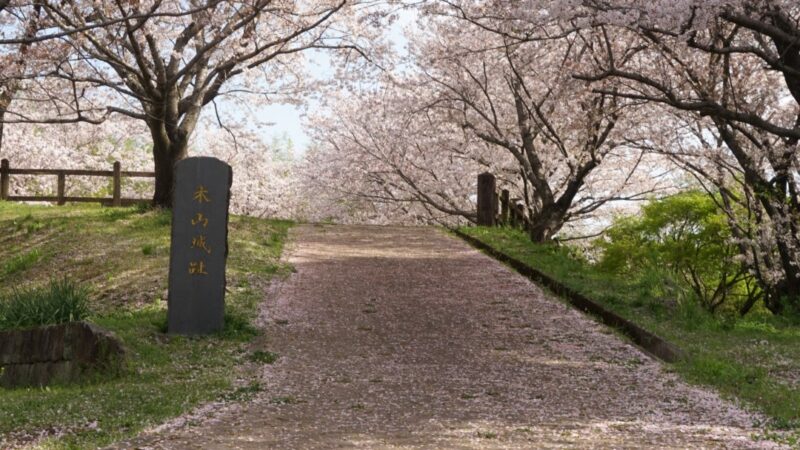
Akai Castle (Akai-jo) was a medieval hilltop castle located in Honmaru, Akai, Mashiki-machi, Kamimashiki-gun, Kumamoto Prefecture. The site, now home to Hie Shrine, was once the location of a castle built by Kiyama Korehisa, the lord of Kiyama Castle, as his retirement residence.
From its construction in 1547 (Tenbun 16) until its fall to the Shimazu clan in 1585 (Tensho 13), it played a crucial role in the history of this region, despite its short 38-year existence.
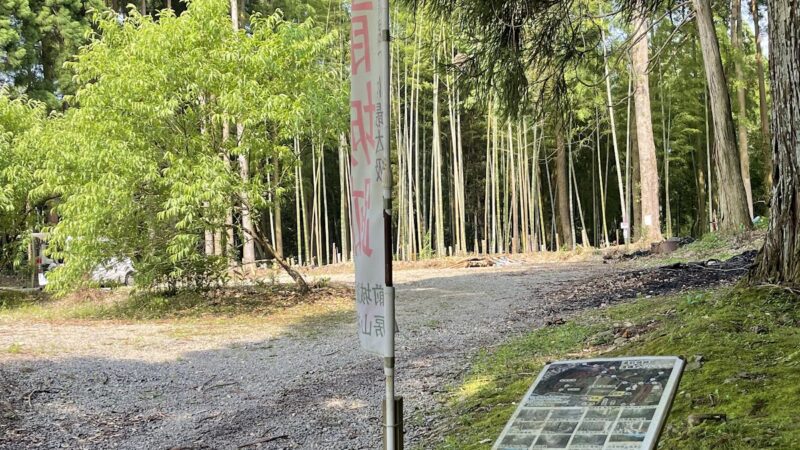
Currently, Hie Shrine stands near the site of the former Honmaru, and remnants of the original stonework remain near the information board. It is a historical site indispensable to understanding the history of Mashiki-machi and is protected by the local people.
History of Akai Castle
Construction History and Kiyama Korehisa
Akai Castle was built in 1547 (Tenbun 16) by Kiyama Korehisa, the lord of Kiyama Castle, as his retirement residence. Kiyama Korehisa was a powerful local lord who ruled this region at the time. He built a new castle in Akai, a short distance from his main castle, Kiyama Castle, as his retirement home.
The Kiyama clan, as a local lord of Higo Province, maintained their power by maintaining relationships with powerful regional daimyo such as the Aso and Kikuchi clans. The construction of Akai Castle can be seen as symbolic of a period when the Kiyama clan’s power was stable.
Akai Castle in the Sengoku Period
For approximately 40 years after its construction, Akai Castle enjoyed a relatively peaceful period under the rule of the Kiyama clan. However, in the Tensho era, the entire Kyushu region became embroiled in warfare.
Especially when the Shimazu clan of Satsuma began their northward advance with the aim of unifying Kyushu, Higo Province was also exposed to the ravages of war. The Kiyama clan had fortified their defenses in preparation for the Shimazu invasion, but they were forced into a difficult struggle against the overwhelming military force.
The Fall of Akai Castle in 1585
The fate of Akai Castle was decided in 1585. On the day of the annual festival of Kiyama Shrine that year, the Shimazu clan seized the opportunity when the castle’s defenses were weakened due to the festival and launched an attack.
Caught off guard, Akai Castle was unable to adequately defend itself and fell along with Kiyama Castle. This fall significantly weakened the Kiyama clan’s power, and Akai Castle lost its function as a fortress.
Although it lasted only 38 years since its construction, Akai Castle became a symbol of the rise and fall of regional power in Higo Province during the Sengoku period.
Akai Castle After its Fall
After its fall, the Akai Castle ruins became a living space for the local people over many years. During the Edo period, Hie Shrine was built near the main keep site, taking on a new role as a center of local faith.
Even after the Meiji Restoration, the Akai Castle ruins were recognized as a local historical heritage site and are now protected as a cultural property of Mashiki Town.
Structure and Layout of Akai Castle
Characteristics as a Hilltop Castle
Akai Castle is classified as a hilltop castle. A hilltop castle is a castle built on a small hill or plateau in a flat area, offering a balance between defensiveness and convenience.
The location where Akai Castle was built was slightly higher than the surrounding plains, providing good views and suitable for defense. Given its nature as a retirement castle, it is believed that the design prioritized habitability over large-scale defensive facilities.
Main Keep and Major Facilities
The site where Hie Shrine currently stands is estimated to be the site of the main keep. The Honmaru (main enclosure) was the central part of the castle, where the lord’s residence and important facilities were located.
Given its nature as a retirement castle, it is believed that a building serving as the retirement residence of Kiyama Korehisa was constructed in the Honmaru of Akai Castle. Since it was not primarily a castle built for warfare, it is possible that it also featured luxurious architecture and gardens.
Current Status of Remains
Currently, the only remains of Akai Castle that can be confirmed are mainly parts of the stonework. These stonework pieces remaining near the information board are valuable remnants that convey the appearance of the castle at that time.
More than 400 years have passed since the castle’s fall, and further development since modern times, as well as the effects of the 2016 Kumamoto earthquake, have caused much of the remains to be lost. However, the remaining stonework and topography allow us to estimate the size and structure of the castle to some extent.
While the remains remaining on the surface are limited, there remains a possibility that buried remains could be discovered if archaeological excavations are conducted.
Highlights of Akai Castle
Hie Shrine
Hie Shrine is a major landmark when visiting the Akai Castle ruins. Built on the site of the main keep, this shrine is a place of worship for the local people and also an important point that tells the history of Akai Castle.
From the shrine grounds, you can overlook the surrounding scenery and imagine the view from the castle in its heyday. It’s a great spot to enjoy exploring the castle ruins while also paying your respects at the shrine.
Stone Masonry Remains
The stone masonry remaining near the information board is one of the few surviving remains of Akai Castle. These masonry structures, which demonstrate medieval castle construction techniques, are valuable resources for understanding the stonemasonry techniques and castle structure of the time.
By observing the way the stones are stacked and the types of stones used, you can understand the level of technology at the time of construction and the characteristics of the region. This is a must-see point for castle enthusiasts.
Information Boards and Historical Explanations
Information boards are installed at the Akai Castle ruins, providing detailed explanations about the castle’s history and structure. Even first-time visitors can understand the overview of Akai Castle by reading this information board.
The information board clearly explains the history from the castle’s construction to its fall, information about Kiyama Korehisa, and the castle’s structure.
Understanding the Castle from the Topography
Although the remains of Akai Castle are limited, by carefully observing the local topography, it is possible to imagine the castle’s appearance at the time. Many pieces of information can be gleaned from the topography, such as the elevated position of the main keep, the defensive lines utilizing the natural terrain, and the location of the water source.
Those interested in castle research or historical walks will gain a deeper understanding of Akai Castle by bringing a topographic map with them.
Access Information
Location
Address: Honmaru, Akai, Mashiki-machi, Kamimashiki-gun, Kumamoto Prefecture
Akai Castle ruins are located in the Akai district of Mashiki-machi. You can find it by using Hie Shrine as a landmark.
Access by Car
Using the Kyushu Expressway:
- Approximately 10 minutes from Mashiki Kumamoto Airport IC
- Approximately 15 minutes from Kumamoto IC
Mashiki Town is close to Kumamoto Airport and has convenient transportation. Access by car is the most convenient, and there is parking available nearby.
From Kumamoto City Center:
- Approximately 30 minutes via National Route 57 or National Route 443
Access by Public Transportation
Using the Bus:
- Take a Sanko Bus from JR Kumamoto Station or Kumamoto City Center towards Mashiki Town
- Accessible on foot from the nearest bus stop
If using public transportation, it is recommended to check the bus timetable in advance. Bus services may be limited.
Points to Note When Visiting
- Since it is located within the grounds of Hie Shrine, please observe proper etiquette when visiting.
- Please be careful not to damage the signposts or historical remains.
- Some areas have uneven ground, so we recommend wearing comfortable shoes.
- Due to the effects of the 2016 Kumamoto Earthquake, there may be some restrictions on entry, so we recommend checking with the Mashiki Town Hall in advance.
Nearby Tourist Spots
Kiyama Castle Ruins
The ruins of Kiyama Castle, which has a deep connection with Akai Castle, are also located within Mashiki Town. Kiyama Castle, the main castle of Kiyama Korehisa, fell to the Shimazu clan in 1585, just like Akai Castle.
Visiting both castles together will allow you to gain a deeper understanding of the Kiyama clan’s sphere of influence and strategies.
Memorial Hall for the Four Wise Women
In Akai, Mashiki Town, there is a memorial hall honoring the “Four Wise Women” (Junko Takezaki, Hisako Tokutomi, Tsuseko Yokoi, and Kajiko Yajima), who dedicated themselves to women’s education and the advancement of women’s status in modern Japan.
By visiting both the medieval castle ruins and modern historical sites, you can experience the diverse history of Mashiki Town.
Kumamoto Airport
Mashiki Town has Kumamoto Airport, making it easily accessible from within and outside the prefecture. There are commercial facilities and observation decks around the airport where you can watch planes take off and land.
Around Mashiki Town General Gymnasium
In the town center, there are facilities such as a general gymnasium and parks, which serve as places of relaxation for local residents. You can stop by before or after visiting the Akai Castle ruins.
About Mashiki Town and the Akai District
Overview of Mashiki Town
Mashiki Town is a town belonging to Kamimashiki District, Kumamoto Prefecture, and is adjacent to the east side of Kumamoto City. Due to the presence of Kumamoto Airport and the Mashiki-Kumamoto Airport Interchange on the Kyushu Expressway, it plays an important role as a transportation hub in Kumamoto Prefecture.
With a population of approximately 30,000 (before the 2016 earthquake), it has developed as a commuter town for Kumamoto City. Agriculture is also thriving, and it is particularly famous for its watermelon and melon cultivation.
History of the Akai District
The Akai district belongs to the Iino district of Mashiki Town. When the town and village system was implemented in 1889 (Meiji 22), four villages—Akai Village, Togawa Village, Koike Village, and Shimada Village—merged to form Iino Village.
There are various theories about the origin of the place name Akai, but it is a traditional place name that has been used in this region since ancient times. It is understood that this area existed as a settlement with a certain population and culture from the medieval period when Akai Castle was built.
Kumamoto Earthquake and Reconstruction
In the Kumamoto earthquake that occurred in April 2016, Mashiki Town was hit by two magnitude 7 tremors, suffering extensive damage. The Akai district was no exception, with many homes damaged.
Akai Castle ruins and Hie Shrine may also have been affected by the earthquake, and it is recommended to check the recovery status before visiting. Currently, reconstruction is underway throughout Mashiki Town, and a new town is being built.
Akai Castle and Higo Province in the Sengoku Period
The Sengoku Situation in Higo Province
During the Sengoku period, Higo Province (present-day Kumamoto Prefecture) was a state of conflict among regional powers such as the Aso, Kikuchi, and Sagara clans. The Kiyama clan was one of these local lords, striving to survive within the regional power balance.
In the mid-16th century, Higo Province came under the influence of major Kyushu powers such as the Otomo clan (Bungo) and the Shimazu clan (Satsuma). The Kiyama clan, while sometimes subservient to the Otomo clan and sometimes to the Shimazu clan, attempted to protect their own territory.
The Shimazu Clan’s Invasion of Higo
Entering the Tensho era, the Shimazu clan rapidly expanded their power with the aim of unifying Kyushu. Beginning with the invasion of Hyuga in 1577, the Shimazu clan successively subdued surrounding forces.
In 1585, the Shimazu clan finally launched a full-scale invasion of Higo Province. At this time, Akai Castle and Kiyama Castle became targets, and both castles fell in a surprise attack that took advantage of the unguarded timing of the Kiyama Shrine’s annual festival.
This fall was a symbolic event demonstrating the expansion of the Shimazu clan’s control over Higo Province.
The Subsequent History of Higo Province
The Shimazu clan’s rule over Higo did not last long. In 1587, during Toyotomi Hideyoshi’s Kyushu campaign, the Shimazu clan surrendered, and the rulers of Higo Province changed hands from Sasa Narimasa to Kato Kiyomasa and then Konishi Yukinaga.
During the Edo period, the Hosokawa clan became the lords of Kumamoto Domain, establishing a stable system of rule that lasted until the Meiji Restoration.
Significance of Visiting Akai Castle
Learning Local History
Visiting the ruins of Akai Castle is an excellent opportunity to learn about the history of Mashiki Town and Kamimashiki District. While not a nationally famous castle, it is an important historical site for understanding local history and culture.
By experiencing local history, you can gain a more comprehensive understanding of Japanese history. Learning how local people lived and what choices they made within the larger flow of history is one of the greatest joys of history study.
Understanding the Characteristics of Medieval Castles
Akai Castle is a typical medieval regional castle. Unlike large-scale early modern castles, it is a practical castle built by a powerful local figure, clearly demonstrating the characteristics of a medieval castle. The fact that it was a retirement castle is particularly unusual, making it an interesting example of castle architecture that prioritized habitability over combat.
A Sense of Historical Romance
Although Akai Castle only functioned as a fortress for a short period of 38 years, its brevity makes it a symbol of the turbulent Sengoku period.
The history of this peaceful castle, built by Kiyama Korehisa as a retirement residence, falling to war just a few decades later, speaks to the transience of the Sengoku period. Standing on the site and reflecting on the castle and the lives of the people who once lived here will be a valuable experience that evokes a sense of historical romance.
Summary
Akai Castle is the site of a medieval flatland castle located in Mashiki-machi, Kamimashiki-gun, Kumamoto Prefecture. It was built in 1547 by Kiyama Korehisa, the lord of Kiyama Castle, as a retirement castle. For 38 years, until its fall in 1585 to an attack by the Shimazu clan, it played an important role in the history of this region. Currently, Hie Shrine stands on the site of the former main keep, and only a few stone structures remain. However, the explanatory signs and the surrounding topography allow us to imagine its former appearance. Located near Kumamoto Airport, it’s easily accessible and a valuable historical site for learning about the history of Mashiki Town.
Nearby, there are other tourist attractions such as the Kiyama Castle Ruins and the Four Wise Women Memorial Museum, allowing visitors to experience the diverse history of Mashiki Town from the medieval to modern periods. As Mashiki Town continues to recover from the 2016 Kumamoto earthquake, the Akai Castle Ruins will undoubtedly continue to be preserved as an important heritage site that conveys the region’s history and culture.
If you are interested in the history of Higo Province during the Sengoku period, medieval castles, or have the opportunity to visit Mashiki Town, please do visit the Akai Castle Ruins. Although large-scale remains are not present, it is a significant historical site where you can feel the history of the region and the spirit of the Sengoku period.