Yunomae Castle (Kuma District, Kumamoto Prefecture) Complete Guide | History, Highlights, and Access Explained in Detail
Located in Yunomae Town, Kuma District, Kumamoto Prefecture, Yunomae Castle is a medieval mountain castle built on a plateau between the Kuma River and the Miyako River. As one of the two major branch castles of the Sagara clan, whose base was Hitoyoshi Castle, it played a crucial role in the control of the Kuma region. Currently, it is the grounds of the Ichifusayama Jingu Satomiya Shrine, and the remains that retain traces of its former glory fascinate visitors.
Overview and Location of Yunomae Castle
Geographical Characteristics
Yunomae Castle is built on the western edge of a plateau between the Kuma River and the Miyako River. It is a flatland castle with an elevation of approximately 200 meters and a relative height of approximately 30 meters, and the steep cliffs of the plateau serve as a natural defensive wall. This topographical advantage made it a strategically important location where effective defense was possible even with a small force.
Present-day Yunomae Town, Kuma District, Kumamoto Prefecture, is located in southern Kumamoto Prefecture, slightly east of the center of the Hitoyoshi-Kuma region. This location served as a frontline base for the Sagara clan’s territorial management, protecting against threats from the east.
Castle Classification
Yunomae Castle is classified as a flatland castle, but given the comprehensiveness of its defensive facilities, it essentially functions as a strong hill castle. Protected by rivers to the north and south, with a double moat to the west and terraced baileys to the east, its layout strongly reflects the defensive philosophy of medieval castles.
History of Yunomae Castle
Construction and Early History
The exact construction date of Yunomae Castle is uncertain, but it is believed to have been developed as part of a network of branch castles during the medieval period when the Sagara clan began governing the Kuma region. The Sagara clan, whose main castle was Hitoyoshi Castle, established branch castles throughout their territory for administrative purposes, and Yunomae Castle held a particularly important position among them.
Higashi Naomasa and the Fall of Yunomae Castle in 1559
The most important event in the history of Yunomae Castle was the Battle of Osonohara in 1559. At that time, Higashi Naomasa, the lord of Yunomae Castle, sided with the Marume faction in an internal conflict within the Sagara clan’s retainers.
This battle erupted as a result of the escalating internal conflict within the Sagara clan. Higashi Naomasa fought on the Marume side but was defeated and killed. As a result, Yunomae Castle fell, marking a major turning point in the castle’s history.
The Era of Higashi Noto
After the Battle of Osonohara, Higashi Noto became the lord of Yunomae Castle. Although detailed records of the Higashi Noto era are scarce, it is known that it continued to function as a branch castle of the Sagara clan. During this period, Yunomae Castle was incorporated into the Sagara clan’s territorial control system as an eastern defensive base in the Kuma region.
From the Sengoku Period to the Early Modern Period
Throughout the Sengoku period, Yumae Castle continued to function as an important branch castle of the Sagara clan. Along with Hitoyoshi Castle, it was one of the two major strongholds in the Kuma region, contributing to the stability of the domain. With the arrival of the Edo period, it is believed that its military function gradually declined, partly due to the influence of the “One Castle Per Province” decree.
Structure and Remains of Yumae Castle
Main Enclosure and Ichifusayama Jingu Satomiya Shrine
The Ichifusayama Jingu Satomiya Shrine is currently located in the main enclosure of Yumae Castle. This shrine was rebuilt in 1934 as a place of worship for Ichifusayama Shrine in Mizukami Village, and is revered locally as a deity of matchmaking.
The main enclosure is located at the highest point of the plateau, offering an excellent vantage point overlooking the surrounding area. Even now, as the shrine grounds, the topographical features of the castle can be seen throughout.
Double Moat
The most striking feature of Yumae Castle is the double moat located on its west side. This defensive structure, revealed through recent investigations, is a valuable historical relic that conveys the defensive philosophy of the time.
The double moat was constructed to prevent enemies attacking from the western edge of the plateau. The deep, two-tiered dry moat significantly slowed enemy advances and is a typical defensive feature of medieval mountain castles. The depth, width, and double-layered structure of the moat suggest the castle’s military importance.
Terraced Enclosure
On the east side of the castle, a long, narrow terraced enclosure (obi-kuruma) is constructed. This enclosure surrounds the main enclosure, providing multiple layers of defense and also serving as a troop garrison.
The arrangement of this terraced enclosure cleverly utilizes the terrain, demonstrating ingenuity in maximizing the use of the limited flat land. The undulations of the terrain can still be observed today, allowing us to imagine the castle’s layout in its heyday.
Earthworks and Cut Slopes
Traces of earthworks remain around the main enclosure, and in some places they are clearly visible. Furthermore, cut slopes (artificially carved steep slopes) were constructed along the edge of the plateau, forming a strong defensive line in combination with natural cliffs.
Fumonji Temple Ruins
As a facility related to the castle, the Fumonji Temple ruins are also important. Many medieval mountain castles had temples attached, and it is believed that Fumonji Temple functioned as part of the castle at Yunomae Castle. Although it no longer functions as a temple, its site is recognized as part of the castle remains.
Highlights and Points of Interest at Yunomae Castle
Castle Notes (Sightseeing Guide)
Double Moat
The double moat remaining on the west side is a must-see relic when visiting Yunomae Castle. Recent restoration work has revealed its full extent, making it a valuable spot to experience the defensive techniques of a medieval castle.
View from the Main Enclosure
From the main enclosure, where the Ichifusayama Jingu Satomiya Shrine stands, you can see the confluence of the Kuma River and the Miyako River, giving you a real sense of the castle’s strategic location controlling a vital waterway.
Topography of the Outer Enclosure
The eastern outer enclosure still remains as a stepped terrain, allowing you to experience the medieval layout while walking.
Light Cruiser Kuma Memorial Museum
The Light Cruiser Kuma Memorial Museum, an affiliated facility of the Ichifusayama Jingu Satomiya Shrine, offers free maps of Yunomae Castle. Obtaining information here before your visit will allow you to understand the castle more deeply.
Photo Gallery Points
Here are some recommended points for photographing Yunomae Castle.
- Double Moat: Photographing from an angle that shows the depth of the moat conveys its impressive defensive capabilities.
- Ichifusayama Jingu Satomiya Shrine: The shrine building on the main enclosure creates a unique landscape where the castle ruins and shrine blend together.
- View from the Plateau: The angle overlooking the Kuma River and Miyako River speaks to the importance of this castle’s location.
- Terraced Terraces: Photographing the terraced terrain from the side clearly shows the structure of the enclosures.
Access and Visiting Guide
Location
〒868-0600 Yunomae-machi, Kuma-gun, Kumamoto Prefecture
Ichifusayama Jingu Satomiya Shrine Grounds
Transportation Access
Access by Car
- Approximately 30 minutes from Hitoyoshi IC on the Kyushu Expressway via National Route 219
- Approximately 5 minutes by car from the center of Yunomae-machi
- You can search for “Ichifusayama Jingu Satomiya Shrine” on your car navigation system.
Public Transportation – Approximately 15 minutes on foot from Kumagawa Railway Yunomae Station
- Yunomae Station is approximately 30 minutes from Hitoyoshi Station
Parking Information
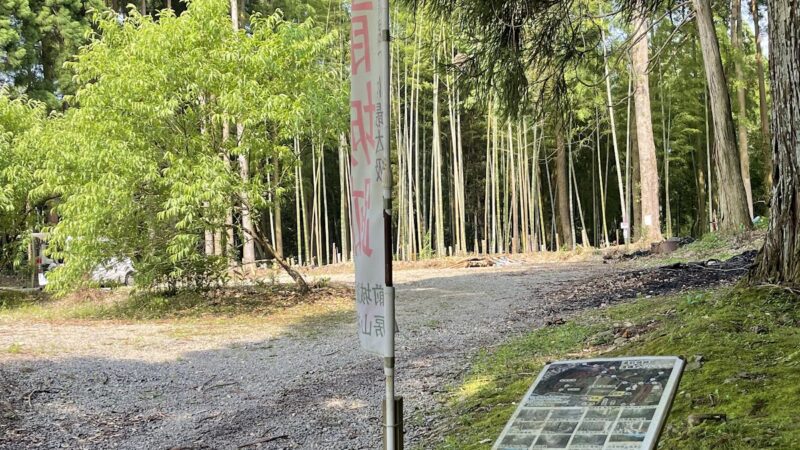
You can use the parking lot for visitors to Ichifusayama Jingu Satomiya Shrine. It is free of charge, but space is limited, so please be aware of potential congestion.
Visiting Hours and Fees
- Free Visit: As it is within the shrine grounds, you can generally visit freely.
- Fee: Free
- Restrooms: Restrooms at Ichifusayama Jingu Satomiya Shrine are available.
- Guidance Map: Free map available at the Light Cruiser Kuma Memorial Museum.
Notes for Visitors
- Consideration for the Shrine: The main enclosure is within the shrine grounds, so consideration for worshippers is necessary.
- Safety on Foot: There are some uneven areas, such as double moats, so comfortable shoes are recommended.
- Summer Precautions: The sun is strong in summer, so bringing a hat and drinking water is recommended.
- Rainy Weather: Moats and other areas can become slippery in rainy weather, so caution is advised.
Nearby Tourist Attractions
Yu-topia (Yunomae Town Tourism and Products Association)
This is a tourist information hub for Yunomae Town, and also houses a local products shop. This shop carries local specialties from Yunomae Town and products from surrounding towns and villages, making it a convenient base for sightseeing.
Jōsenji Temple
This historic temple in Yunomae Town preserves local cultural assets. Visiting it along with Yunomae Castle will give you a deeper understanding of Yunomae’s history.
Ichifusayama Shrine (Main Shrine)
The main shrine of Ichifusayama Shrine, located in Mizukami Village, is an ancient shrine situated near the summit of Mount Ichifusa. Many people visit it along with the lower shrine of Yunomae Castle, and it is known for its blessings for matchmaking.
Hitoyoshi Castle Ruins
Hitoyoshi Castle, the main castle of the Sagara clan, is about a 30-minute drive from Yunomae Castle. It is a modern castle built along the Kuma River, and the remains of stone walls and turrets are well preserved. Visiting it along with Yunomae Castle will allow you to experience the Sagara clan’s castle network.
Kuma River Boat Trip
The Kuma River boat trip, a specialty of the Hitoyoshi-Kuma region, offers the experience of boating down the Kuma River, viewed from Yunomae Castle. It provides a different perspective from the castle’s viewpoint, allowing for a deeper understanding of the region’s topography.
Yunomae Castle’s Castle Stamp and Collection
About the Castle Stamp
The Yunomae Castle stamp is a popular item among castle enthusiasts. Particularly noteworthy is its design; when placed side-by-side with the Hitoyoshi Castle stamp, they form a single design.
The initial print run was limited to 100 stamps, visually representing the relationship between Yunomae Castle and Hitoyoshi Castle, two major branch castles of the Sagara clan. This stamp is a valuable collector’s item symbolizing the history of the Sagara clan’s rule over the territory.
How to Obtain
Information on how to obtain the castle stamp can be found at the Yunomae Town Tourism and Products Association “Yu-topia” or the Light Cruiser Kuma Memorial Museum. The limited edition may already be sold out, so we recommend checking in advance.
Yumae Castle and the Sagara Clan’s Castle Network
The Sagara Clan’s Territorial Control
The Sagara clan was a rare daimyo family that ruled the Kuma region for approximately 700 years, from the Kamakura period to the Meiji Restoration. One of the factors that enabled their long-term rule was the establishment of an effective network of branch castles.
With Hitoyoshi Castle as their main castle, they efficiently governed their entire territory by strategically placing branch castles, including Yumae Castle, throughout the region. Yumae Castle played a crucial role as a defensive base to the east and as a key point controlling the water transport on the Kuma River.
Positioning as One of the Two Major Branch Castles
Yumae Castle is considered one of the Sagara clan’s “two major branch castles.” Together with the other major branch castle, it formed a triangular defensive line centered around Hitoyoshi Castle. This arrangement allowed them to respond to invasions from any direction.
Yunomae Castle and the Light Cruiser Kuma
Relationship with the Kuma Memorial Museum
The Light Cruiser Kuma Memorial Museum is located as an annex to the Ichifusayama Jingu Satomiya Shrine. This museum commemorates the former Imperial Japanese Navy light cruiser “Kuma” and tells the history of the warship named after the Kuma region.
A guide map of Yunomae Castle is also distributed here, making it an interesting spot where the history of the castle and modern times intersect.
The Layered Nature of Local History
The structure of a shrine built on the site of a medieval mountain castle, and the adjacent modern naval memorial museum, symbolizes the layered nature of the history of the Yunomae region. The ability to experience the history of multiple eras in one place is one of the charms of Yunomae Castle.
Connection with the Yunomae Army Positions
Remains from World War II
On the cliff north of the plateau where the Yunomae Castle ruins are located, the remains of army positions constructed at the end of World War II can be found. This was constructed by the 16th Army of the Imperial Japanese Army in preparation for a decisive battle on the Japanese mainland, and a group of underground bunkers used for storing supplies still remain today.
Continuity of History
The fact that the site of a medieval mountain castle was recognized as a strategically important military location in modern times, and that defensive facilities were rebuilt, speaks to the geographical advantages of this area. Yunomae, chosen as a military base across the medieval and modern eras, is a valuable place where one can experience the continuity of history.
Current Status and Future of Yunomae Castle Research
Excavation and Restoration
In recent years, investigations and restoration of the double moats at Yunomae Castle have progressed, revealing their true nature. This allows for a more detailed understanding of the castle’s defensive facilities.
Continued investigations are expected to lead to the discovery of further remains and clarification of the castle’s historical changes.
Preservation and Utilization
Yunomae Castle is currently preserved as part of the grounds of the Ichifusayama Jingu Satomiya Shrine and as a local historical heritage site. The site requires appropriate preservation and utilization, balancing its function as a place of worship as a shrine with its value as a historical heritage site.
It is also attracting attention as a regional tourist resource, and efforts are underway to attract more visitors as part of a historical sightseeing route in the Hitoyoshi-Kuma region.
Summary
Yunomae Castle is a medieval mountain castle located in Yunomae-cho, Kuma-gun, Kumamoto Prefecture. As an important branch castle of the Sagara clan, it played a crucial role in the history of the Kuma region. Built on a natural stronghold between the Kuma River and the Miyako River, it boasted well-developed defensive structures such as double moats and terraced baileys.
The death of Higashi Naomasa and the fall of the castle during the Battle of Otanohara in 1559 (Eiroku 2) is the most significant event in the castle’s history. Currently, it is the grounds of the Ichifusayama Jingu Satomiya Shrine, and while retaining its original remains, it also functions as a place of worship for the region.
The remains, including the double moats, are well-preserved, conveying the appearance of a medieval castle to the present day. Understanding its connection to Hitoyoshi Castle and the design of its castle stamp, as part of the Sagara clan’s castle network, allows for a deeper appreciation of its value.
When visiting southern Kumamoto Prefecture, be sure to visit Yunomae Castle and experience the history of the Kuma region and the charm of a medieval mountain castle.