Toyofuku Castle (Uki City, Kumamoto Prefecture) Complete Guide: History, Highlights, and Access Information
Located in Matsubashi-cho, Uki City, Kumamoto Prefecture, Toyofuku Castle is a valuable historical site that tells the story of the medieval history of Higo Province. It is known as a particularly important site among the many medieval castle ruins in Kumamoto Prefecture, as it has largely preserved the topography from the time of its construction. This article provides a detailed introduction to Toyofuku Castle, including its history, structure, highlights, and practical information for visitors.
What is Toyofuku Castle?
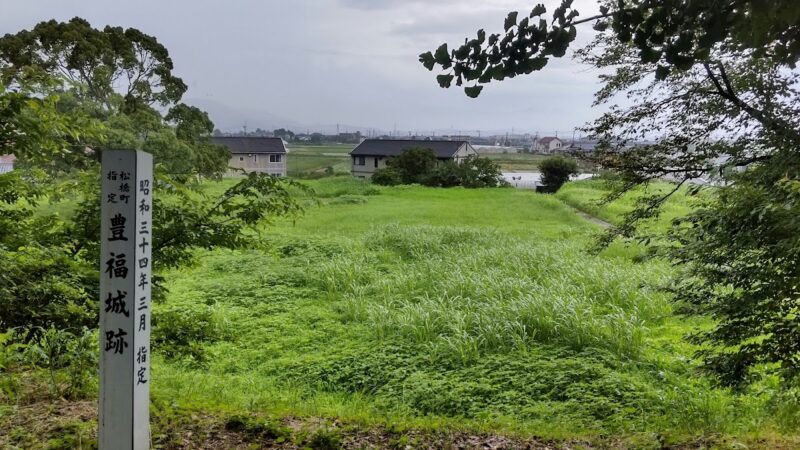
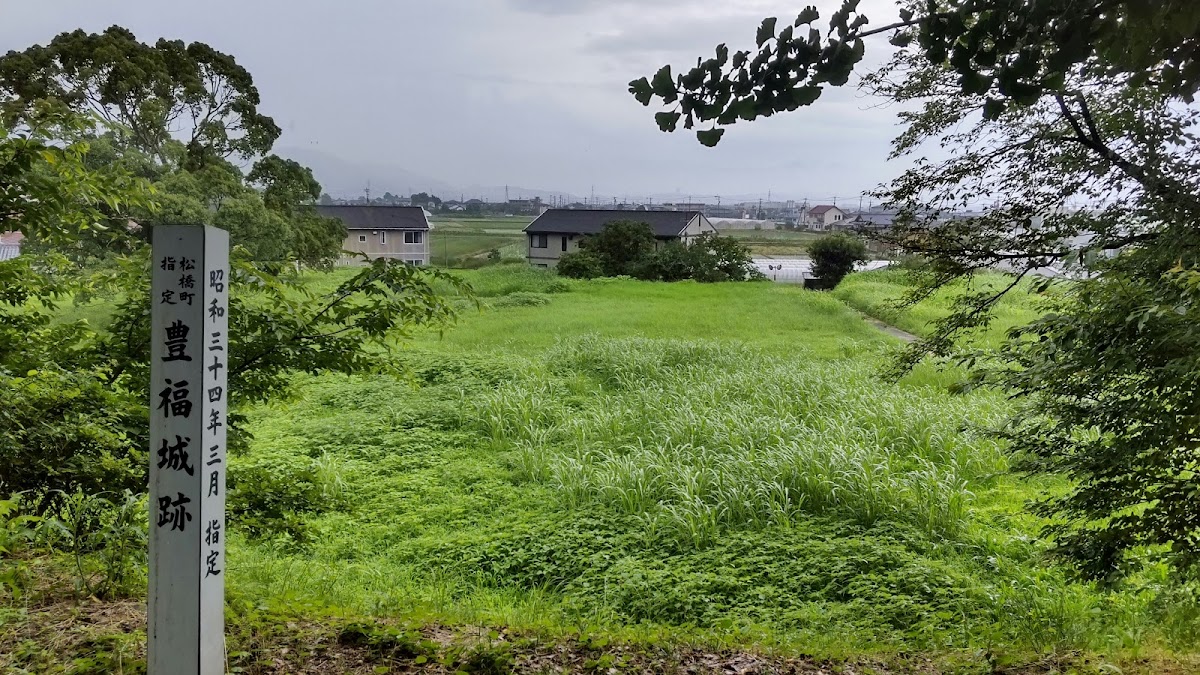
Toyofuku Castle is a medieval flatland castle located in Toyofuku, Matsubashi-cho, Uki City, Kumamoto Prefecture. Currently, it remains as a slightly elevated area visible amidst rice paddies east of the Toyofuku bus stop on National Route 3, and its unique location attracts the attention of visitors.
The castle ruins are located on an oval-shaped, isolated hill approximately 265 meters east-west and 285 meters north-south, covering a total area of approximately 59,000 square meters. This scale is considerable for a medieval regional castle, reflecting the strategic importance of this region at the time.
Characteristics of Toyofuku Castle
The most striking feature of Toyofuku Castle is that it has been preserved to this day with almost no damage to its original form. While many medieval castles have been lost due to development and agricultural improvements, Toyofuku Castle is an extremely valuable resource for the study of medieval history in Higo Province.
Built on an isolated hill, this castle sits slightly higher than the surrounding rice paddies, making it a strategically important location offering panoramic views of the area. Even today, standing on the castle ruins, one can imagine the landscape of Higo that the castle’s lords must have seen.
History of Toyofuku Castle
The history of Toyofuku Castle is deeply intertwined with the rise and fall of medieval samurai groups in Higo Province. Let’s examine the details of its history from construction to abandonment.
Construction and the Nawa Clan
Toyofuku Castle is believed to have been built by the Nawa clan. The Nawa clan was a samurai family that was active during the Nanboku-cho period (Northern and Southern Courts period), and is believed to be related to the family of Nawa Nagatoshi, who is known for supporting Emperor Go-Daigo. The fact that the Nawa clan, who held power in Higo Province, built a castle in this area indicates that Toyofuku was an important transportation hub.
While there are various theories regarding the exact date of construction, it is generally believed to have been built sometime between the Nanboku-cho period and the early Muromachi period. The Nawa clan used this castle as a base to maintain and expand their power in Higo Province.
Struggle for Control in the Sengoku Period
During the Sengoku period (Warring States period), Toyofuku Castle became a crucial strategic base in Higo Province and was the target of fierce competition among multiple forces.
In particular, the castle was the site of intense battles between powerful daimyo of Higo Province: the Nawa, Aso, and Sagara clans. The Aso clan was a powerful local lord based in the Aso region, while the Sagara clan was a Sengoku daimyo based in Hitoyoshi. The fact that these forces vied for control of Toyofuku Castle speaks to its high strategic value.
The castle’s rulers changed over time, and it is believed that the castle’s defensive facilities and structure were modified accordingly. Having been the stage for numerous battles, Toyofuku Castle played a crucial role in the Sengoku period history of Higo Province.
Shimazu Clan Rule and Abandonment
Towards the end of the Sengoku period, the Shimazu clan, known as the strongest daimyo in Kyushu, extended their influence to Higo Province. Toyofuku Castle became part of the Shimazu territory and a key base in their unification of Kyushu.
However, in 1587 (Tensho 15), the situation changed dramatically with Toyotomi Hideyoshi’s Kyushu Campaign. Faced with Hideyoshi’s overwhelming military power, the Shimazu clan surrendered, and Higo Province came under the rule of Sasa Narimasa, and later by Kato Kiyomasa and Konishi Yukinaga.
Following this Kyushu Campaign, Toyofuku Castle was abandoned. Under the unification policies of the Toyotomi regime, many medieval castles were abandoned, and Toyofuku Castle also ended its historical role. After its abandonment, the land was used for farming, which ultimately led to the preservation of the castle’s structure without significant alterations.
Structure and Layout of Toyofuku Castle
While Toyofuku Castle’s structure exhibits typical characteristics of a medieval hilltop castle, it also displays unique ingenuity.
Overall Structure
The castle is built on an isolated hill and has an oval-shaped layout. Its size, approximately 265 meters east-west and 285 meters north-south, is standard for a castle of a local lord.
The castle grounds are thought to have been divided into main enclosures (Honmaru), second enclosures (Ninmaru), and third enclosures (Sanmaru), but these divisions can now be inferred from the topography. The Honmaru is located at the highest point of the hill, and the structure gradually descends from there, demonstrating defensive rationality.
Defensive Facilities
Traces of earthworks and dry moats, characteristic of medieval castles, can still be seen in the topography today. Particularly along the edges of the hills, traces of defensive steps and cut slopes can be seen, providing valuable information for understanding the castle-building techniques of the time.
The location, surrounded by rice paddies, likely originated as a marshland or wetland, which probably served as a natural moat. This terrain, making enemy approach difficult, significantly enhanced the castle’s defensive capabilities.
Current Status of the Main Enclosure Site
Currently, part of the main enclosure site is used as a gateball field. While this is an interesting example from the perspective of utilizing castle ruins, it also presents challenges in terms of preserving the remains. Nevertheless, it can be said that the relatively well-preserved topography from the time of construction is a blessing, as it avoided large-scale development.
Highlights of Toyofuku Castle
Here are some highlights to note when visiting Toyofuku Castle.
Topography at the Time of Construction
The biggest highlight is undoubtedly the fact that the topography from the time of construction remains almost entirely intact. For modern castle enthusiasts, this is a valuable opportunity to see firsthand how a medieval castle was built utilizing the terrain. By observing the details of the hills, such as their undulations, elevation changes, and the arrangement of flat areas, we can understand the medieval castle-building techniques and strategic thinking. In particular, experiencing the difference in elevation between the castle and the surrounding rice paddies allows us to imagine its defensive capabilities at the time.
Location on an Isolated Hill
The location of the castle, an isolated hill seemingly floating amidst rice paddies, is visually striking. Viewing the castle ruins from National Route 3 and surrounding roads, the slight elevation rising from the flat rice field is clearly visible.
This location indicates that the castle was chosen for monitoring the surroundings and controlling transportation routes. Even today, the castle ruins offer panoramic views of the city of Uki and the surrounding rural landscape.
Historical Value
Toyofuku Castle holds significant historical value in the study of medieval Higo history. It is a valuable resource for researchers and history enthusiasts because it allows us to decipher the reality of medieval castles from the local topography, something that cannot be understood from written historical sources alone.
This castle ruin holds many stories, as it is a place where the histories of powerful samurai families of Higo and Kyushu, such as the Nawa, Aso, Sagara, and Shimazu clans, intersected.
The History of Uki City and Toyofuku Castle
Let’s deepen our understanding of the historical background of Uki City, where Toyofuku Castle is located.
The Establishment of Uki City
Uki City was formed on January 15, 2005 (Heisei 17), during the Heisei-era municipal mergers, through the merger of five towns: Misumi-cho and Shiranuhi-cho in Uto District, and Matsubashi-cho, Ogawa-cho, and Toyono-cho in Shimomashiki District. It is a city with a population of approximately 56,000, located in the central part of Kumamoto Prefecture.
Matsubashi-cho, where Toyofuku Castle is located, was a central town in the Uki region even before this merger. On December 1, 1954 (Showa 29), the former Matsubashi Town merged with four other villages: Tono Village in the east, Toyofuku Village in the southeast, and Toyokawa Village in the south, creating the new Matsubashi Town. The Toyofuku district, where Toyofuku Castle is located, became part of Matsubashi Town at this time.
Uki City as a Transportation Hub
Uki City is located in the center of Kyushu and is a transportation hub crisscrossed by national and prefectural roads and the JR railway line. This geographical characteristic is not unique to modern times; it was also true in the Middle Ages. Toyofuku Castle became a strategically important location and a target of conflict precisely because of its strategic location on transportation routes.
Located midway between Kumamoto City and Yatsushiro City, and with good access to the coast, Uki City has been a region with active human traffic since ancient times. Toyofuku Castle is thought to be one of the castles built to monitor and control these transportation routes.
Access Information
Detailed access information for visiting the Toyofuku Castle ruins is provided below.
Location
Address: Toyofuku, Matsubashi-cho, Uki City, Kumamoto Prefecture
The castle ruins are located on a slightly elevated area in the middle of rice paddies, east of the Toyofuku bus stop on National Route 3.
Access by Public Transportation
By JR:
- Get off at Matsubashi Station on the JR Kagoshima Main Line
- Approximately 10 minutes on foot or by taxi from the station
By Bus:
- Get off at the Toyofuku bus stop on the Sanko Bus
- A few minutes’ walk from the bus stop
Matsubashi Station is approximately 20 minutes from Kumamoto Station by rapid train and approximately 30 minutes by local train. A day trip from Kumamoto City is entirely possible.
Access by Car
If using the Kyushu Expressway:
- Approximately 10 minutes by car from “Matsubashi IC”
From Kumamoto City:
- Approximately 30 minutes south on National Route 3
Parking: We recommend checking with the Uki City Board of Education Cultural Affairs Division (Tel: 0964-32-1111) before your visit regarding the availability of dedicated parking.
Precautions for Visitors
- Parts of the castle ruins may be privately owned or used as a gateball field. When visiting, please respect the lives and use of the local residents and observe proper etiquette.
- Please be careful not to damage the earthworks or cliffs to protect the remains.
- As the site is located in a rice paddy area, the ground may be muddy during or after rain. Please wear appropriate footwear.
- In summer, there is little shade, so we recommend bringing a hat and drinking water.
Nearby Tourist Attractions
Here are some tourist attractions around Uki City that you can enjoy along with your visit to Toyofuku Castle.
Historical Sites and Cultural Properties in Uki City
Matsuhashi Repository: A facility that houses and displays historical and archaeological materials of Uki City. It may also contain materials related to Toyofuku Castle.
Shiranui Art Museum: An art museum located in Shiranui Town, where you can experience local art and culture.
Surrounding Castles
Uto Castle Ruins: The ruins of a castle from the medieval to early modern period located in Uto City. It was the residence of Konishi Yukinaga, known as a Christian daimyo.
Yatsushiro Castle Ruins: An early modern flatland castle located in Yatsushiro City. Built by Kato Kiyomasa, it later became a branch castle of the Hosokawa clan.
Natural Sites and Scenic Spots
Misumi West Port: A port built during the Meiji era, and one of the constituent assets of the World Cultural Heritage site “Sites of Japan’s Meiji Industrial Revolution.”
Shiranui Sea: The sea stretching west of Uki City, known for its beautiful sunsets and the Shiranui phenomenon. ## Designation of Toyofuku Castle as a Cultural Property
The Toyofuku Castle ruins are protected as a cultural property due to their recognized historical and academic value.
City-Designated Cultural Property
The Toyofuku Castle ruins are designated as a cultural property (historic site) by Uki City. This designation aims to preserve and utilize the castle ruins.
Preservation Status
The fact that the topography from the time of construction has been preserved almost entirely is highly valued, and it is positioned as a valuable resource for the study of medieval history in Higo Province. Appropriate preservation and management are expected in the future.
Current Status of Toyofuku Castle Research
Research on Toyofuku Castle is progressing from both archaeological and documentary historical research perspectives.
Archaeological Research
In the past, excavation and surveying surveys have been conducted, and the results have been published as excavation reports such as “Toyofuku Castle Ruins.” These surveys have deepened our understanding of the castle’s structure and changes over time.
Historical Documents
While historical documents concerning Toyofuku Castle are limited, they appear fragmentarily in historical records dealing with the Sengoku period history of Higo Province. Through meticulous research into historical materials of related samurai families such as the Nawa, Aso, Sagara, and Shimazu clans, the castle’s history is gradually being revealed.
Future Research Issues
Many research questions remain, including determining the construction date, identifying the castle lords at each stage, and thoroughly clarifying the structural changes of the castle. Further research and investigation are anticipated.
Significance of Visiting Toyofuku Castle
Visiting the Toyofuku Castle ruins has several important significances.
Understanding the Reality of Medieval Castles
Toyofuku Castle, with its well-preserved topography from the time of its construction, is an excellent resource for understanding how medieval castles were built and functioned. While it lacks flashy remains like stone walls or keeps, this is precisely why it allows us to learn the essence of medieval castles.
Experiencing Local History
The history of Toyofuku Castle is synonymous with the medieval history of Higo Province, and indeed, Kyushu as a whole. The struggles fought over this small castle illustrate the fluid and tense nature of regional society during the Sengoku period (Warring States period).
Reflecting on the Importance of Cultural Property Preservation
The Toyofuku Castle ruins, preserved without being exposed to the waves of development, serve as a reminder of the importance of cultural property preservation. Even inconspicuous historical sites possess unique value, and one can realize the significance of passing them on to future generations.
Summary
The Toyofuku Castle ruins in Matsubashi-cho, Uki City, Kumamoto Prefecture, while not flashy, are a valuable historical site that conveys the reality of a medieval castle. Built by the Nawa clan, it became the stage for struggles between powerful samurai families of Higo and Kyushu, such as the Aso, Sagara, and Shimazu clans, and was ultimately abandoned during Toyotomi Hideyoshi’s Kyushu campaign. This castle encapsulates the history of Higo Province during the Sengoku period.
Built on an oval-shaped, isolated hill approximately 265 meters east-west and 285 meters north-south, the castle ruins have been preserved to this day with almost no alteration to the original topography, making them extremely important for the study of medieval Higo history.
Its excellent accessibility, being about 30 minutes by car from Kumamoto City and within walking distance of JR Matsubashi Station, is also a major draw. When visiting Uki City, we highly recommend visiting these historic castle ruins and imagining the landscapes seen by the samurai of medieval Higo, while immersing yourself in a page of Japanese castle history.
Toyofuku Castle Ruins, which continues to quietly convey history while still being used by local people, is a place that also prompts reflection on the modern challenge of harmonizing cultural property preservation with community use. We recommend a visit not only to history enthusiasts but also to anyone interested in local history and cultural property preservation.