Complete Guide to Tsutsugatake Castle | History, Remains, and Access to the Mountain Castle in Arao City, Kumamoto Prefecture
What is Tsutsugatake Castle?
Tsutsugatake Castle is a medieval mountain castle located in Fumoto, Arao City, Kumamoto Prefecture. Built on the summit of Tsutsugatake (elevation 501.4m), the highest peak of Shodai-san, it is known as one of the largest mountain castles in Higo Province.
It is also known by other names such as Tsutsugatake Castle, Tsutsugatake Castle, Kodai Castle, Shodai Castle, and Kobukuro Castle, and functioned as the main castle of the Shodai clan, who ruled this region from the Kamakura period to the Sengoku period.
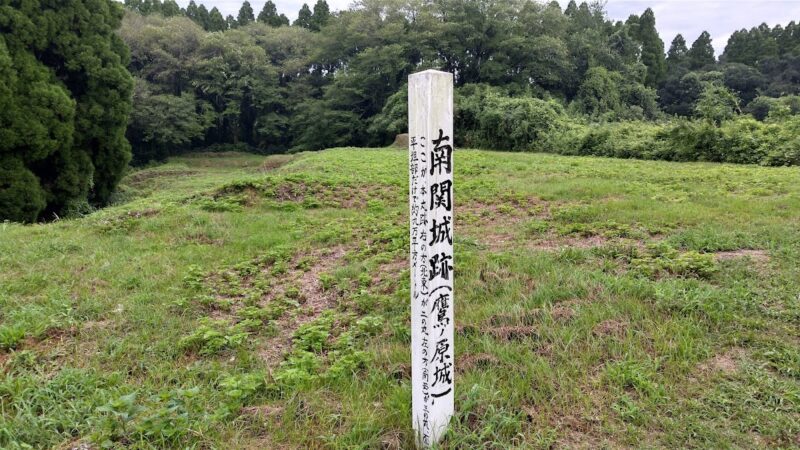
Even today, well-preserved remains such as moats, earthworks, and rough-hewn stone walls remain near the summit, making it a valuable historical site for understanding the structure of medieval mountain castles.
History of Tsutsugatake Castle
The Odai Clan’s Move to Higo Province and Castle Construction
The exact date of construction of Tsutsugatake Castle is unclear, but it is said to have been built by Odai Hachiro. The Odai clan were originally retainers belonging to the Kodama clan, one of the Seven Clans of Musashi Province, and were based in Musashi Province (present-day Saitama Prefecture).
In the Hoji War of 1247 (Hoji 1), the Odai clan sided with the Hojo clan and distinguished themselves. As a reward, Odai Shigetoshi was appointed as the jitō (land steward) of Nohara Manor in Higo Province, marking the beginning of their connection to this area.
In 1271 (Bun’ei 8), in preparation for the Mongol invasions, Odai Shigetoshi actually moved to Nohara Manor by order of the shogunate. It is believed that Tsutsugatake Castle was built during this period, and it is positioned as a mountain castle of the Kamakura period.
The Rule of the Odai Clan and the Development of the Castle
The Odai clan settled in this area and grew into a powerful local lord controlling the Odai Mountain region. The name of Mount Odai itself is said to derive from the name of the Odai clan, demonstrating how deeply rooted this family was in the region.
Tsutsugatake Castle functioned as the Odai clan’s main castle, while their peacetime residence, Honmura Residence, was located at the foot of the mountain. Tsutsugatake Castle played an important role as a fortified outpost in times of emergency and as a base for monitoring the territory.
To the west of the castle, in the Fumoto district, Umeo Castle is located, which is thought to be a secondary castle or outpost of Tsutsugatake Castle. Furthermore, Jōgyōji Temple houses the ancestral tombs of the Odai clan, designated as a Kumamoto Prefecture Important Cultural Property as the “Jōgyōji Ancient Pagoda Group.” This temple, as the Odai clan’s family temple, preserves the family’s history to this day.
The Sengoku Period and the End of the Castle
Records indicate that during the Sengoku period, Hirayama Korehisa, a vassal of the Odai clan, resided in the castle. However, in the latter half of the 16th century, Higo Province became a battleground for Kyushu’s Sengoku daimyo, such as the Shimazu, Ryuzoji, and Otomo clans.
After Toyotomi Hideyoshi’s conquest of Kyushu, Higo Province became the territory of Kato Kiyomasa, passing through Sasa Narimasa. During this process, medieval mountain castles were abandoned one after another, and it is believed that Tsutsugatake Castle also lost its function as a castle during this period.
Tsutsugatake Castle’s Layout and Remains
Castle’s Scale and Location
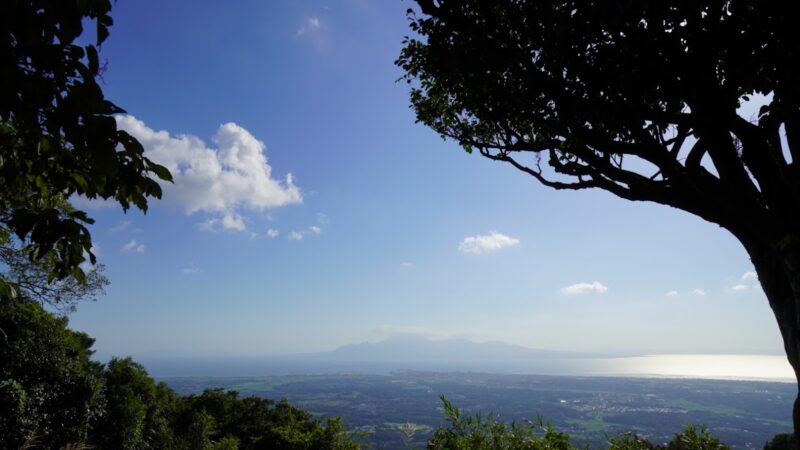
Tsutsugatake Castle was a mountain castle built around the summit of Mount Tsutsugatake (501.4m above sea level), and its layout boasts one of the largest scales in Higo Province. Located on the highest peak of Mt. Shodai, it offered panoramic views of the Ariake Sea, the Chikugo Plain, and even the distant Chikuhi Mountains, making it a strategically important location.
The point where the triangulation station is located at the summit is the main enclosure (honmaru), and several smaller enclosures (kuruwa) are arranged around it.
Major Remains
Moats and Earthworks
The most distinctive feature of Tsutsugatake Castle is the way the ridge is divided by multiple moats. Moats are defensive structures dug into the ridge to prevent enemy intrusion, and are a typical defensive structure for mountain castles.
Earthworks were built along the moats, and some remain in remarkably good condition. Earthworks are earthen walls built by piling up earth, serving to defend against enemy attacks and obstruct the view from within the castle.
Horizontal and Vertical Moats
Horizontal moats and vertical moats can also be seen on the slopes. Horizontal moats are dug along contour lines, effectively hindering enemy lateral movement. Vertical moats are dug vertically along slopes, serving as a defensive structure to make enemy ascent difficult.
The arrangement of these moats indicates that Tsutsugatake Castle was not merely a lookout post, but a full-fledged mountain castle designed for actual combat.
Stone Walls
Near the summit, rough-stone masonry remains. Rough-stone masonry is a stone-stacking technique using natural stones with minimal processing, a characteristic often seen in medieval mountain castles.
Although small in scale, the stone walls are noteworthy as valuable remains demonstrating castle-building techniques from the Kamakura to Sengoku periods.
Enclosures
Three flat areas have been identified around the main enclosure, and these are thought to have functioned as the main enclosures. Enclosures, also known as leveled areas, are flat spaces used for building structures or stationing soldiers.
The layout of the baileys, making maximum use of the limited space on the mountaintop, speaks to the high level of castle-building technology of the medieval period.
Related Castles in the Surrounding Area
Umeo Castle
West of Tsutsugatake Castle, in the Fumoto district, lies Umeo Castle. This castle is thought to have been a village castle or outpost of Tsutsugatake Castle, and may have functioned as a base for peacetime administration and daily life.
The straight-line distance between the two castles is relatively short, suggesting they cooperated to support the rule of the Odai clan.
Maedake Castle
Other mountain castles, such as Maedake Castle, are scattered throughout the Odai mountain range, and these are thought to have formed a castle network centered around Tsutsugatake Castle.
Honmura Residence
In the Honmura district at the foot of the mountain, there is believed to have been the Odai clan’s peacetime residence. While Tsutsugatake Castle, a mountain castle, served as a fortified stronghold in times of emergency, the Honmura Residence was a place for daily administration and life.
This combination of a “peacetime residence + fortified castle” is a typical pattern of medieval feudal rule.
Access and Climbing Information for Tsutsugatake Castle
Location
- Address: Kodai, Fumoto, Arao City, Kumamoto Prefecture
- Elevation: 501.4m (Tsutsugatake Mountain Summit)
Access Methods
Access by Car
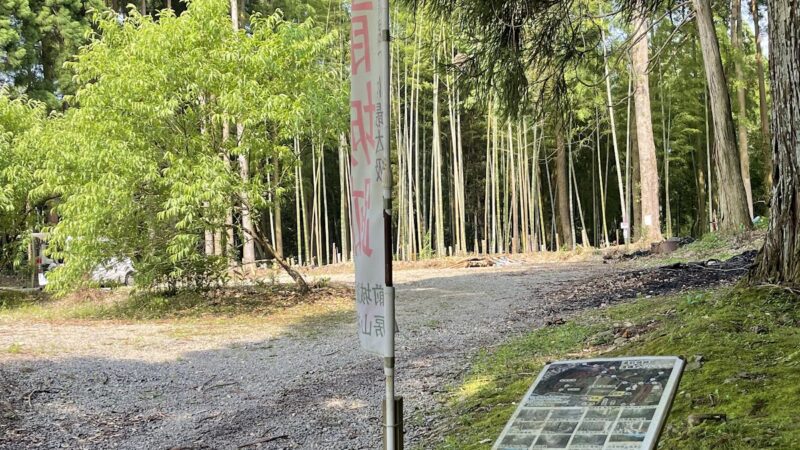
The most common access method is via the Mimi-nobori Trailhead. You can drive from Arao city center to the Mimi-nobori Trailhead via the prefectural road.
There is parking space near the trailhead, and from there you can use the hiking trail to reach the summit.
Public Transportation
The nearest station is Arao Station on the JR Kagoshima Main Line, but since it’s a distance from there to the trailhead, taking a taxi is more practical.
Precautions When Climbing
Tsutsugatake Castle is a full-fledged mountain castle, and climbing to the summit requires hiking. Please note the following:
- Hiking Equipment: Basic hiking equipment such as hiking boots, drinking water, and rain gear is necessary.
- Estimated Time: Allow approximately one hour one way from the trailhead to the summit.
- Season: Summer is extremely hot, so the cooler spring and autumn seasons are recommended.
- Protection of Historical Structures: Please be careful not to damage historical structures such as moats and earthworks.
Points to Note During Your Visit
The following historical structures can be observed near the summit:
- Main Enclosure (Location of the triangulation point)
- Moats and Earthworks (Multiple locations)
- Stone Walls (Rough-stone construction)
- Flat areas of Enclosures
- Horizontal Moats and Vertical Moats (Sloping areas)
Many of the historical structures are naturally buried, so it is recommended to check their locations using a site plan beforehand to better understand them.
Cultural Property Designation Status of Tsutsugatake Castle
While Tsutsugatake Castle itself is not currently designated as a national or prefectural cultural property, it is included in The Complete Guide to Japanese Castles, Vol. 18 and is recognized as an academically important castle.
As a historical site, it is registered in the Cultural Property Database as “Tsutsugatake Castle/Odai Castle/Odai Castle“, classified as a castle, and primarily dating to the Kamakura period.
As a related cultural property, the “Jogyoji Ancient Pagoda Group” at Jogyoji Temple, the family temple of the Odai clan, is a Kumamoto Prefecture Designated Important Cultural Property, preserving the tombs of successive generations of the Odai clan.
Relationship between Mt. Odai and Tsutsugatake Castle
Geography of Mt. Odai
Mt. Odai is a mountain range located in the eastern part of Arao City, with Tsutsugatake (501.4m) as its highest peak. The terrain features gently rolling hills extending from the foothills to the Ariake Sea, making it a strategically important transportation hub since ancient times.
Origin of the Mountain’s Name
The name “Odaiyama” is believed to originate from the name of the Odai clan, who ruled this area. In other words, the mountain’s name itself serves as historical evidence of the Odai clan’s rule.
The name Tsutsugatake is thought to have been derived from the shape of its summit, which resembles a cylinder, and the castle’s name also derives from this mountain name.
The Role of Tsutsugatake Castle in the History of Arao City
Arao City is located in the northwestern part of Kumamoto Prefecture, facing the Ariake Sea. It has been a strategically important maritime transportation hub since ancient times, and in the Middle Ages, local lords, including the Odai clan, held sway over the area.
Tsutsugatake Castle is a representative medieval castle of Arao City and an indispensable historical site for understanding the medieval history of this region. This is a valuable example illustrating the process by which samurai who descended from the Kanto region during the Kamakura period settled in Higo Province and built their own power base.
While present-day Arao City is famous for modern industrial heritage such as the “Manda Coal Mine,” a World Heritage Site, medieval historical heritage like Tsutsugatake Castle is also being re-evaluated as an important cultural resource of the region.
Research and Preservation of Tsutsugatake Castle
Academic Research
Regarding Tsutsugatake Castle, castle researchers have created layout maps and conducted on-site surveys, and the results are published in databases such as “Castle Wanderings.”
As one of the largest mountain castles in Higo Province, and for understanding the structure of mountain castles during the Kamakura period, it is considered a highly important castle from an academic perspective.
Preservation Status
The remains on the mountaintop are relatively well preserved, but full-scale restoration work has not been carried out. Although the hiking trails are being improved, information boards and explanatory signs regarding the castle remains are limited.
Efforts to preserve and utilize this site as a local historical resource are expected in the future.
Significance of Visiting Tsutsugatake Castle
Visiting Tsutsugatake Castle will deepen your understanding of the following historical aspects:
Understanding the Structure of Medieval Mountain Castles
By actually seeing the remains of moats, earthworks, stone walls, and baileys, you can experience firsthand how medieval mountain castles functioned defensively. This is a valuable opportunity to see the three-dimensional structure of a castle, which is difficult to understand from textbooks and documents alone, on-site.
The Migration of Samurai from Eastern to Western Japan
The history of the Odai clan is a good example of the process by which the Kamakura Shogunate’s retainers spread throughout the country. The process by which samurai groups from the Kanto region moved to Kyushu, took root in the region, and built their own power base is one of the important themes in Japanese medieval history.
Rediscovering Local History
While Arao City’s history often focuses on its modern coal mining, a visit to Tsutsugatake Castle allows you to truly appreciate the depth of the region’s history, which dates back to the Middle Ages.
Summary
Tsutsugatake Castle is one of the largest medieval mountain castles in Higo Province, built on the summit of Mt. Shodai in Arao City, Kumamoto Prefecture. Built by the Shodai clan, who migrated from Musashi Province during the Kamakura period, it served as a base for controlling the region.
At the summit, 501.4m above sea level, well-preserved remains such as moats, earthworks, stone walls, and baileys remain, making it a valuable historical site for understanding the structure of medieval mountain castles.
Even today, it is possible to reach the summit by hiking and see the remains firsthand. When visiting Arao City, why not visit this medieval mountain castle in addition to the modern industrial heritage? You’ll be able to experience the profoundness of history and the high level of castle-building technology of our ancestors.