Takanohara Castle (Nankan-cho, Tamana-gun) Complete Guide | The Phantom Early Modern Castle Built by Kato Kiyomasa
Located in Nankan-cho, Tamana-gun, Kumamoto Prefecture, Takanohara Castle is a castle built from the Sengoku period to the early Edo period. Also known as Nankan Castle, Seki-no-jo, Minami-no-seki Castle, and Nankan-shinjo, it is known as an important branch castle of Kumamoto Castle, whose layout was personally designed by the renowned Higo general, Kato Kiyomasa. Boasting a magnificent scale comparable to Uto Castle and Hizen Nagoya Castle, it was abandoned before completion due to the “One Castle Per Province” decree, making it a “phantom early modern castle” that attracts attention among castle enthusiasts.
History and Construction Background of Takanohara Castle
Construction Plan by Kato Kiyomasa
Construction of Takanohara Castle began around Keicho 5 (1600). Having sided with the Eastern Army in the Battle of Sekigahara and established himself as a powerful daimyo of Higo Province with a domain of 540,000 koku, Kato Kiyomasa proceeded with the construction of a defense network centered around Kumamoto Castle as part of his domain’s management. Takanohara Castle was planned as a key subsidiary castle within this network.
Kiyomasa’s reason for choosing Nankan as the construction site for Takanohara Castle lies in its strategic importance. Nankan is located on the border between Higo and Chikugo Provinces and was a crucial transportation hub through which the Buzen Highway passed. This location offered ideal conditions for defending against various daimyo in northern Kyushu, such as the Fukuoka Domain (Kuroda clan) and the Yanagawa Domain (Tachibana clan), and as a northern defense base for Kumamoto Castle.
Kiyomasa’s Personal Design of the Castle
The most distinctive feature of Takanohara Castle is that Kato Kiyomasa himself is said to have designed the castle’s layout. Kiyomasa was known as a master castle builder and was involved in the construction of many castles, including Kumamoto Castle. Takanohara Castle, directly designed by Kiyomasa, was planned as a modern castle reflecting the latest technology and strategic thinking of the time.
The castle’s scale was approximately 400 meters from east to west, comparable in size to Uto Castle. Multiple baileys were arranged around the main keep, and a robust structure utilizing numerous stone walls was planned. This scale alone demonstrates how highly Kiyomasa regarded this castle.
Castle Lord Kato Masatsugu and His Family
Kato Masatsugu, a senior retainer of Kiyomasa, was appointed as the lord of Takanohara Castle. Masatsugu was a warrior who achieved numerous military successes as a retainer of Kiyomasa and was highly trusted by him. After Masatsugu, his son, Kato Tanba-no-kami Masanaga, served as the castle lord.
Kato Masatsugu dedicated himself to managing his territory in the Nankan region, working on the development of the castle town and promoting industry. The fact that the remains of the Nankan Tea House are still standing at the southern foot of the castle indicates that this area was not merely a military base, but a center of politics and economy.
Abolition of the Castle Due to the One Castle Per Province Decree
The fate of Takanohara Castle was sealed by the One Castle Per Province Decree issued in 1615. After the fall of the Toyotomi clan in the Summer Siege of Osaka, the Tokugawa shogunate ordered that only one castle per province (one domain) be retained, with all other branch castles to be demolished, with the aim of reducing the military power of the various daimyo.
In the Kumamoto domain, only Kumamoto Castle remained, and Takanohara Castle, along with Yatsushiro Castle (Mugishima Castle), was abolished. Because it was demolished only 15-16 years after construction began, before completion, Takanohara Castle came to be known as the “phantom castle.” While some of the stone walls were built, it is believed that the main structures such as the keep and turrets were never completed.
Structure and Layout of Takanohara Castle
Castle Layout Utilizing the Topography
Takanohara Castle is built on a hill 104 meters above sea level and approximately 40 meters above ground level, located north of the Nankan Town Hall. This hill extends approximately 400 meters from east to west at roughly the same height, making it ideal for castle construction.
The main keep, the central part of the castle, was located at the highest point of the hill, surrounded by multiple baileys. This layout is a typical design of early modern castles, designed to gradually prevent enemy intrusion and demonstrating the high level of Kiyomasa’s castle-building skills.
Remains of Stone Walls
Even today, remains of stone walls can be found at the Takanohara Castle site. These stone walls partially exhibit the characteristics of the “Kiyomasa-style stone walls,” a style favored by Kato Kiyomasa, and serve as valuable historical materials that convey the castle-building techniques of the time.
The stone walls can be found mainly around the main keep, and show techniques from the transition period from rough-hewn stonework to fitted stonework. Although it was never completed, the piled-up stones suggest that a considerably large stone wall was planned if it had been finished.
Layout of Enclosures and Defensive System
The layout of the enclosures at Takanohara Castle was designed with multiple lines of defense to protect the central main enclosure (honmaru). The second and third enclosures (ninomaru and sannomaru) were located around the main enclosure, and it is believed that the outer perimeter was planned to house the residences of the retainers and the castle town.
Moats and earthworks were constructed between each enclosure, with mechanisms in place to hinder enemy advances. These defensive systems reflected the latest castle-building theories that Kiyomasa learned from his practical experience in battles such as the Korean campaigns.
Highlights and Current State of Takanohara Castle Ruins
Current State of the Main Enclosure Site
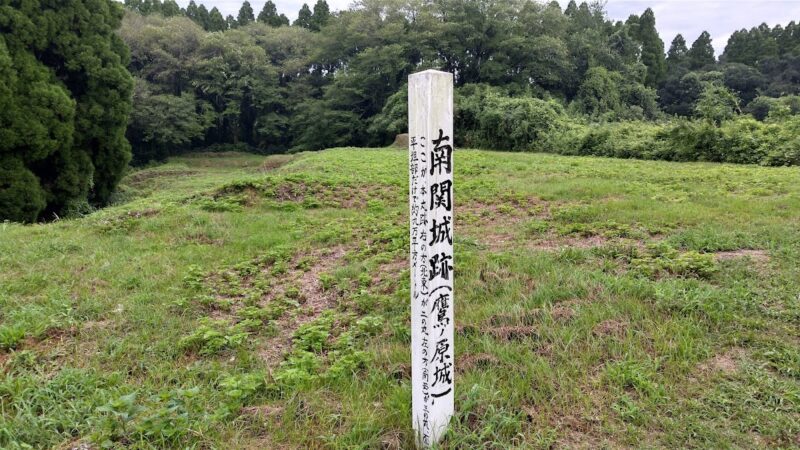
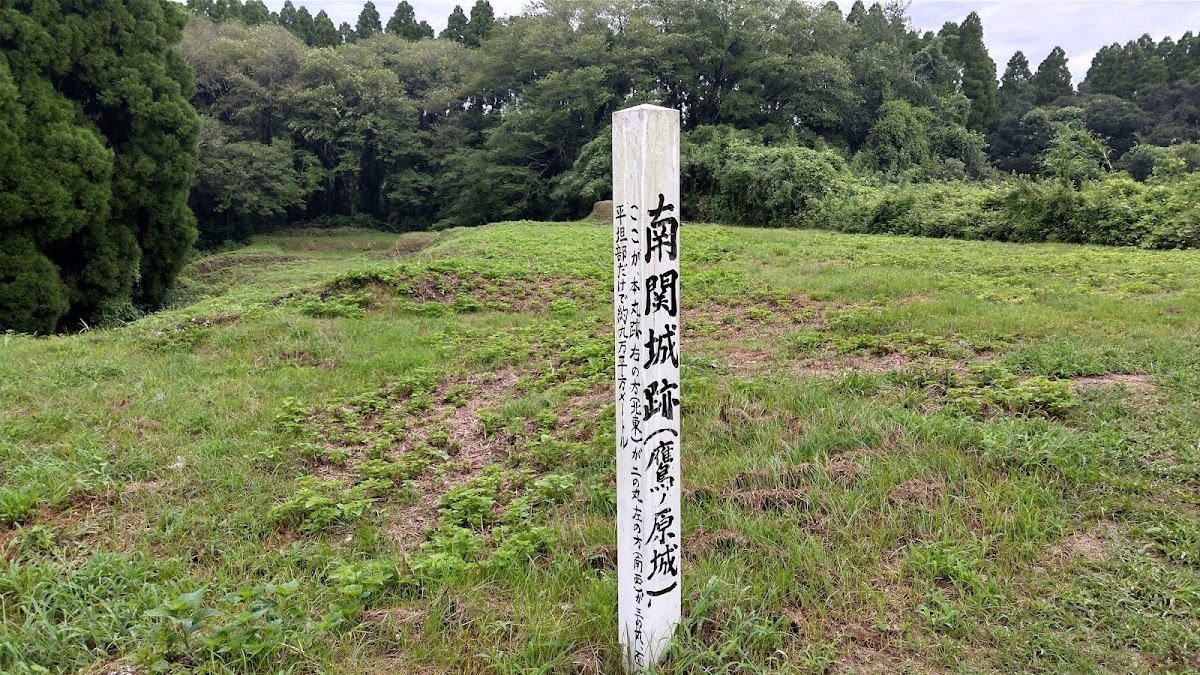
The current main enclosure site has undergone some maintenance as a historical site. The flat area of the main enclosure remains clearly visible, allowing us to imagine what the main buildings once looked like. From the main enclosure, you can enjoy a panoramic view of the town of Nankan, giving you a real sense of the castle’s strategic importance in monitoring the surrounding area.
Information boards are installed around the main enclosure, allowing you to learn about the castle’s history and structure. Furthermore, the size of the main enclosure suggests that, if completed, it would have been a considerably large keep or palace.
Remains of Stone Walls and Earthworks
The most impressive remains at Takanohara Castle are the stone walls. Parts of the stone walls remain around the main enclosure, allowing you to observe Kato Kiyomasa’s castle-building techniques up close. The way the stones are stacked and the selection of stones show characteristics of Kiyomasa’s style, making it a must-see for castle enthusiasts.
Earthworks also remain in various places, allowing you to see the boundaries of the enclosures and defensive lines. These earthworks remain clearly visible even after more than 400 years, demonstrating the high level of civil engineering technology of the time.
Exploring the Enclosure Ruins
It is also possible to explore the enclosure ruins other than the main enclosure. Multiple flat areas, presumably the second and third baileys, can be identified, giving a real sense of the castle’s vastness. Observing the elevation differences and layout between the baileys allows for an understanding of the ingenuity of Kiyomasa’s defensive system.
While some of the bailey remains are now covered in bamboo groves and mixed forests, the preservation of the remains is relatively good. Walking paths are also maintained, making it safe to visit.
Connection to the Nankan Tea House Ruins
At the southern foot of Takanohara Castle lies the Nankan Tea House Ruins, a nationally designated historical site. This tea house was a resting place for daimyo during their sankin-kotai (alternate attendance) journeys along the Buzen Highway and had a close relationship with Takanohara Castle. Visiting both the castle and the tea house together provides a deeper understanding of Nankan’s importance at the time.
Currently, the Nankan Tea House Ruins have had their gardens and parts of the buildings restored, allowing visitors to experience the atmosphere of an Edo-period tea house. A visit to both Takanohara Castle and the tea house is recommended.
Access and Visiting Information
Location and Basic Information
Location: Shironohara, Sekimachi, Nankan-machi, Tamana-gun, Kumamoto Prefecture
Castle Type: Early Modern Mountain Castle (Hilltop Castle)
Construction Period: Around 1600 (Keicho 5)
Builder: Kato Kiyomasa
Main Lords: Kato Masatsugu, Kato Masanaga
Year of Abandonment: 1615 (Genna 1)
Remains: Enclosures, stone walls, earthworks, moats
Designated Cultural Property: None (Town-designated Historic Site)
Access by Car
The castle is conveniently located about 5 minutes from the Nankan Interchange on the Kyushu Expressway. Head towards the Nankan Town Hall and follow the signs to the castle ruins located north of the town hall.
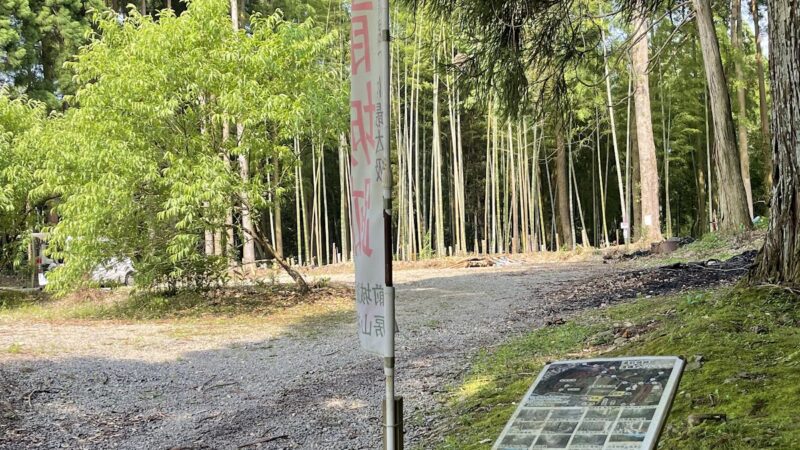
Parking is available at the Nankan Ochaya Ruins parking lot. From there, you can access the castle ruins on foot. It takes about 10-15 minutes to walk from the parking lot to the main keep site.
Access by Public Transportation
You can take a bus from either JR Kagoshima Main Line’s Omuta Station or Tamana Station. Get off at the “Nankan” bus stop on the Sanko Bus. From there, it’s about a 10-minute walk to the Nankan Tea House site, and you can then access the castle ruins.
However, since bus services are limited, it is recommended to check the timetable in advance.
Visiting Hours and Required Time
Takanohara Castle Ruins are freely accessible, and admission is free. There are no time restrictions for visiting, but it gets dark after sunset, so visiting during daylight hours is recommended.
If you want to thoroughly explore the entire castle ruins, it will take about 40-60 minutes. If you only want to see the main remains, focusing on the main keep site, it can be done in about 30 minutes. If you also visit the Nankan Tea House site, you should allow a total of 1 hour 30 minutes to 2 hours.
Points to Note When Visiting
Since the castle ruins are located in a forest, we recommend wearing comfortable clothing and walking shoes. Particular caution is needed after rain, as the ground can become slippery.
Bringing insect repellent during the summer months will make your visit more comfortable. We also recommend bringing drinking water.
While there are guide signs within the castle ruins, some areas can be difficult to navigate. Checking a map or guidebook beforehand will ensure a smoother visit.
Nearby Tourist Attractions
Nankan Ochaya Ruins
As mentioned above, this is a nationally designated historical site located at the southern foot of Takanohara Castle. It was a rest stop for daimyo during their journeys to and from Edo along the Buzen Highway, and parts of the garden and buildings have been restored. It is a valuable historical site where you can experience the culture of Edo-period daimyo.
Buzen Highway
The Buzen Highway, which passes through the town of Nankan, was an important highway connecting Higo and Buzen during the Edo period. Parts of the old townscape remain today, allowing visitors to enjoy a historical walk.
Tourist Facilities in Nankan Town
Nankan Town offers other attractions. There are facilities where you can observe the manufacturing process of Nankan somen noodles, and a roadside station where you can purchase local specialties. These can be visited in conjunction with a visit to the castle ruins.
Historical Sites in Tamana City
Tamana City has many tourist spots, including the Takaseura River stone bridges and Tamana Onsen (hot springs). These are about a 20-30 minute drive from Takanohara Castle, and visiting them together allows for a fulfilling historical sightseeing experience.
Historical Significance of Takanohara Castle
Kato Kiyomasa’s Domain Management and Defense Strategy
Takanohara Castle was planned as a castle that played an important role in Kato Kiyomasa’s domain management and defense strategy. The concept was to create a defense network for the entire Higo Province by arranging subsidiary castles such as Uto Castle, Yatsushiro Castle (Mugishima Castle), and Takanohara Castle, centered around Kumamoto Castle.
The position of Takanohara Castle as a northern defensive stronghold is particularly important. It was strategically indispensable as a defense against various daimyo in northern Kyushu, such as the Fukuoka and Yanagawa domains, and as a monitoring point along the Buzen Highway.
Remains illustrating the transition to early modern castles
Takanohara Castle occupies an important position in castle history as a castle built during the transition period from medieval mountain castles to early modern flatland castles. The structure of the stone walls and the arrangement of the baileys show a mixture of elements from Sengoku period mountain castles and Edo period early modern castles, making it a valuable resource for studying the evolution of castle construction techniques.
An example illustrating the impact of the “One Castle Per Province” decree
Takanohara Castle is a typical example of a castle abandoned due to the “One Castle Per Province” decree, making it an important historical site for understanding the Edo shogunate’s policy of controlling daimyo. As a castle demolished just before completion, it concretely illustrates the political situation and the position of the daimyo at the time.
Research and Preservation Activities of Takanohara Castle
Archaeological Surveys
Multiple archaeological surveys have been conducted at the Takanohara Castle site. These surveys have revealed the structure of the stone walls, the layout of the baileys, and the circumstances of artifact excavation. In particular, the stone wall surveys have specifically confirmed the characteristics of Kato Kiyomasa’s castle-building techniques.
Local Preservation Activities
In Nankan Town, efforts are being made to preserve the Takanohara Castle site as a valuable historical heritage. Regular mowing, maintenance of walking paths, and installation of explanatory signs are being carried out to maintain a safe environment for visitors.
Local history enthusiast groups also conduct guided tours, offering opportunities to hear detailed explanations about the castle’s history and highlights.
Future Challenges and Prospects
Future challenges for the Takanohara Castle site include clarifying the castle structure through more detailed archaeological surveys, improving the preservation and maintenance of the remains, and promoting its use as a tourist resource.
In particular, as a castle designed by Kato Kiyomasa himself, and as a phantom castle that was abandoned due to the “One Castle Per Province” decree, its historical value is expected to be more widely disseminated.
Significance of Visiting Takanohara Castle
Visiting the Takanohara Castle ruins is not simply about viewing the castle remains; it leads to a multifaceted understanding of history, including the history of Japanese castles, the Edo shogunate’s policies for controlling daimyo, and Kato Kiyomasa’s castle-building techniques.
Because it is a “phantom castle” that was abandoned before completion, one can imagine the political situation and the struggles of the daimyo at the time. From the remains of the stone walls and baileys, there is also the pleasure of imagining what a magnificent castle it would have been if it had been completed.
When visiting Nankan Town, Tamana District, Kumamoto Prefecture, be sure to visit the Takanohara Castle ruins and reflect on the phantom early modern castle that Kato Kiyomasa dreamed of. Visiting it in conjunction with the Nankan Tea House ruins and the Buzen Highway will allow you to gain a deeper understanding of the history and culture of Nankan in the early Edo period.
Summary
Takanohara Castle was an important subsidiary castle of Kumamoto Castle, built by Kato Kiyomasa himself, who personally designed the layout and constructed it on a scale comparable to Uto Castle. Strategically important as a northern defense base for Higo Province, it was abandoned before completion due to the “One Castle Per Province” decree.
The remaining stone walls and baileys are valuable historical sites that convey Kiyomasa’s castle-building techniques and the state of castle construction at the time. When visiting Nankan Town, Tamana District, Kumamoto Prefecture, be sure to experience the history and remains of this “phantom early modern castle.”