Kawachiura Castle (Amakusa City, Kumamoto Prefecture) Complete Guide | History and Highlights of the Castle of the Amakusa Clan, the Head of the Amakusa Five
Located in Kawachi-cho, Amakusa City, Kumamoto Prefecture, Kawachiura Castle is an important mountain castle that served as the political center of the Amakusa region from the medieval to the early modern period. It was the residence of the Amakusa clan, known as the head of the Amakusa Five. It possesses a unique castle structure integrated with Shimoda Castle on the opposite bank, and is now maintained as Kawachiura Castle Ruins Park, a valuable historical site that conveys the history of Amakusa to the present day.
History of Kawachiura Castle
The Amakusa Clan and the Amakusa Five
Indispensable to understanding the history of Kawachiura Castle is the Amakusa clan, who were the lords of this castle. The Amakusa clan was a powerful family that ruled the Amakusa region of Higo Province and is known as the head of the “Amakusa Five.” The “Five Lords of Amakusa” refers to five powerful clans: the Amakusa, Shiki, Oyano, Sumoto, and Kamitsura clans, who wielded significant influence in the Amakusa region during the medieval period.
The Amakusa clan, in particular, based themselves in Kawachiura and expanded their power by leveraging Amakusa’s geographical advantage as a key point for maritime traffic. Kawachiura Castle, the Amakusa clan’s stronghold, is believed to have served not only as a military base but also as the political, economic, and cultural center of the Amakusa region.
Integrated Structure with Shimoda Castle
The most distinctive feature of Kawachiura Castle is its integrated function with Shimoda Castle, built on the mountain opposite Kawachiura Bay. These two castles were positioned facing each other across the inlet of Kawachiura Bay, forming a defensive system through mutual cooperation.
While Kawachiura Castle functioned as a political and administrative center, Shimoda Castle is thought to have had a stronger character as a military defensive base. The cooperation between the two castles allowed them to simultaneously serve as a defense against sea invasions and a base for inland expansion. This unique castle structure is a characteristic unique to the Amakusa region, where maritime traffic was crucial.
Changes After the Battle of Sekigahara
The Battle of Sekigahara in 1600 marked a major turning point that drastically altered the fate of Kawachiura Castle. Because the Amakusa Five lords sided with the Western Army, their territories were confiscated after the war. Subsequently, the Amakusa region became the territory of the Terazawa clan, the lords of the Karatsu Domain, and Kawachiura Castle was positioned as a branch castle of the Terazawa clan.
During the Terazawa era, Namikawa Hyōemon Munemasa was appointed as the castle lord, and it continued to function as a governing center for the Amakusa region. However, with the “One Castle Per Province” decree of 1615, Kawachiura Castle was officially abandoned. This decree stipulated the abolition of castles other than the residences of each daimyo, and many castles throughout the country met a similar fate.
The Period as a County Magistrate’s Residence After the Castle’s Abandonment
Even after the castle was abandoned, the site of Kawachiura Castle was not completely left to decay. A county magistrate’s residence was established on the castle site, continuing its function as an administrative center for the Amakusa region. A county magistrate’s residence was an administrative body established by the shogunate or feudal domain to govern distant areas, responsible for collecting local taxes and maintaining public order.
During this period, Kawachiura maintained its importance in the Amakusa region, while changing its character from a military base to an administrative center.
Structure and Remains of Kawachiura Castle
Basic Structure of the Castle
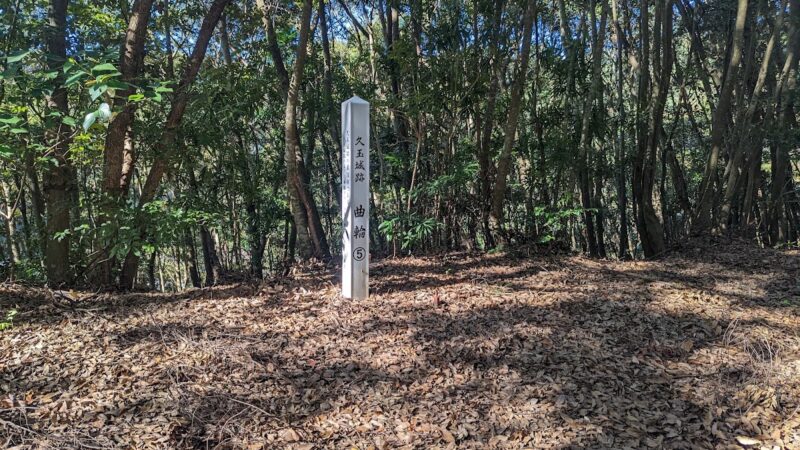
Kawachiura Castle has the structure of a typical medieval mountain castle, built on a hill approximately 80 meters above sea level. Within the area now developed as Kawachiura Castle Ruins Park, three main enclosures (kuruwa) can be identified.
A kuruwa is a flat area within the castle grounds, a space for constructing buildings and stationing soldiers. The baileys of Kawachiura Castle are arranged in stages, centered around the main bailey at the mountaintop, and the layout cleverly utilizes the terrain. Each bailey is demarcated by earthen ramparts, and various defensive measures are evident throughout.
Earthen Ramparts and Moats
The earthen ramparts and moats are particularly noteworthy defensive features of Kawachiura Castle. Earthen ramparts are earthen walls built by piling up earth, serving to prevent enemy intrusion and clearly defining the baileys. Traces of earthen ramparts can still be seen in various places within the park, allowing visitors to appreciate the scale of the castle at that time.
Moats are ditches dug to cut across ridges, and are important defensive structures that hindered enemy advances. Multiple moats have been identified at Kawachiura Castle, and the moat located at the approach to the main bailey was particularly crucial to the castle’s defense. These remains can be observed from the well-maintained walking paths.
Arrangement of Vertical Moats
Vertical moats have also been identified at Kawachiura Castle. A vertical moat is a moat dug vertically along a slope, serving to prevent enemies from climbing the slope. Vertical moats also functioned as rainwater drainage channels, and are thought to have played an important role in the maintenance of the castle.
Remains Revealed by Archaeological Excavations
Multiple archaeological excavations have been conducted at Kawachiura Castle, yielding many important discoveries. These investigations have identified multiple traces of post-and-beam buildings, revealing the layout of the castle.
Post-and-beam buildings are structures built with posts directly into the ground, a common architectural style in medieval castles. The building remains discovered at Kawachiura Castle indicate the existence of a large building in the main enclosure, which is highly likely to have been the residence of the Amakusa clan.
Furthermore, traces of fences have been discovered, indicating that the enclosures were surrounded by fences for enhanced defense. Even more noteworthy is the discovery of roof tiles. The existence of tiled-roof buildings at a medieval mountain castle indicates that Kawachiura Castle was not merely a military base, but a residence of a certain status.
Development Status of Kawachiura Castle Ruins Park
Park Development
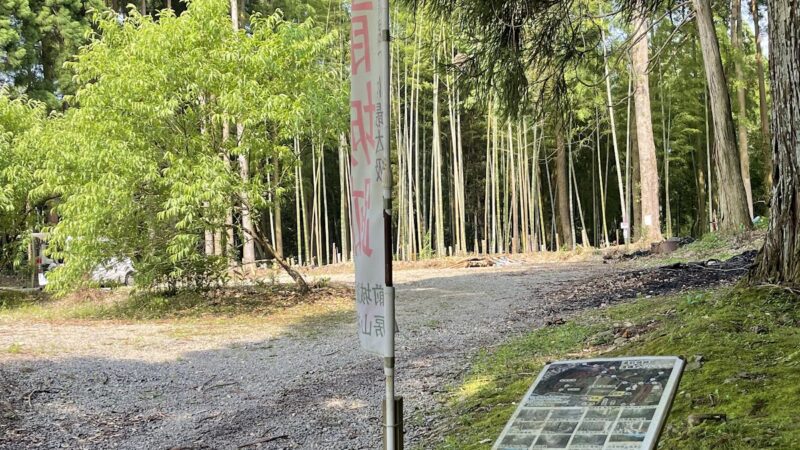
Currently, the Kawachiura Castle ruins have been developed into “Kawachiura Castle Ruins Park” and are open to the public. Walking paths are maintained within the park, allowing visitors to safely view the remains such as the various baileys, earthworks, and moats. Information boards are placed throughout the park, allowing visitors to learn about the castle’s structure and history while strolling.
The entrance to the castle is on the town side of Kawachi, and there is ample parking, making it easily accessible by car. The walking paths are relatively gentle, making it a tourist spot enjoyable not only for history enthusiasts but also for families.
Kawachiura Castle Ruins Museum
Near Kawachiura Castle Ruins Park is the “Kawachiura Castle Ruins Museum,” which displays artifacts excavated from the castle ruins and related materials. This exhibition hall displays artifacts discovered during archaeological excavations, materials related to the history of the Amakusa clan, and models illustrating the relationship between Kawachiura Castle and Shimoda Castle. Visiting before or after visiting the castle ruins will allow for a deeper understanding of Kawachiura Castle’s history.
The exhibits are regularly updated, making it a valuable resource for learning about Amakusa’s history and culture.
Collaboration with Surrounding Facilities
Near Kawachiura Castle Ruins Park is the “Aimuri” roadside station, where you can find Amakusa’s local products and tourist information. Also nearby is Soenji Temple, a temple associated with the Amakusa clan, and a historically significant temple serving as their family temple. Soenji Temple houses historical materials and burial sites related to the Amakusa clan, and visiting it in conjunction with Kawachiura Castle will provide a more comprehensive understanding of the Amakusa clan’s history.
Highlights of Kawachiura Castle
View from the Main Enclosure
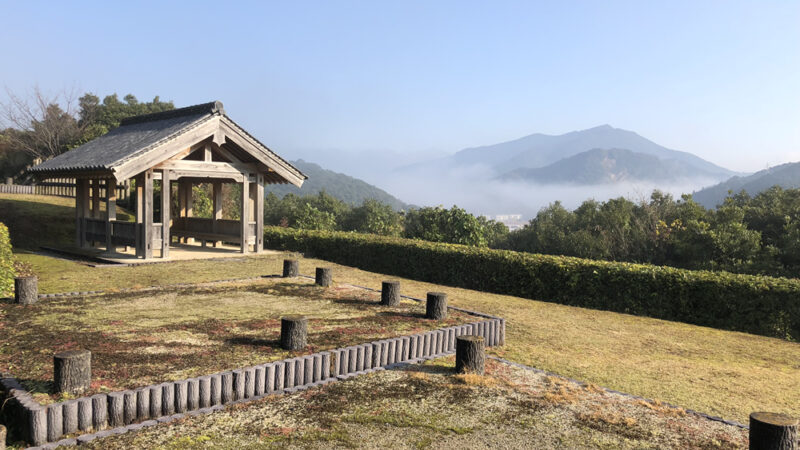
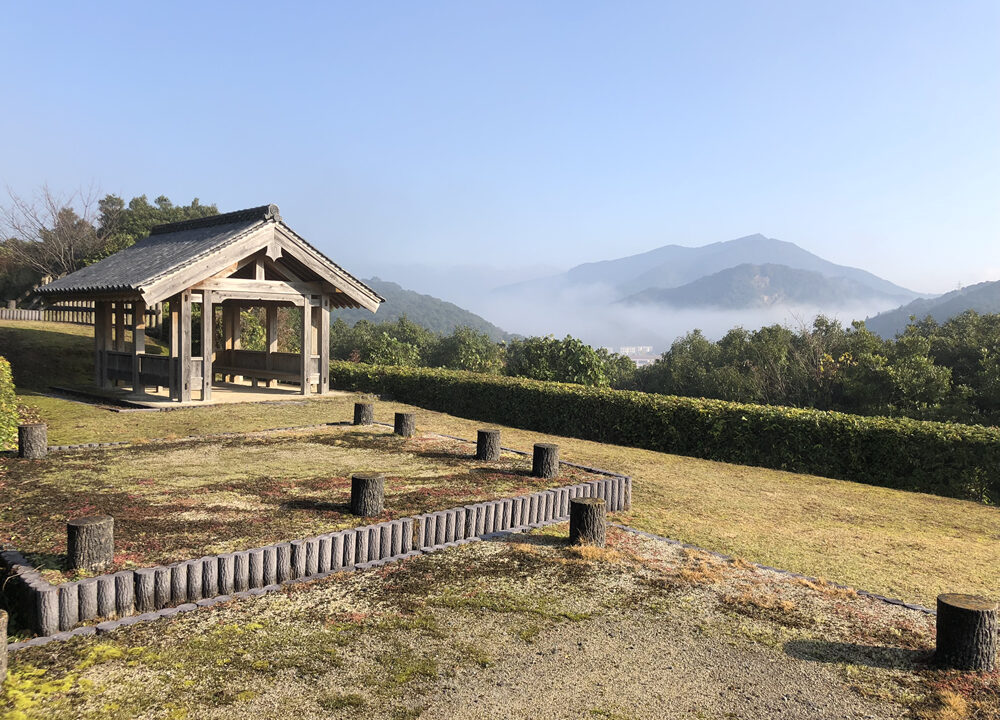
One of the greatest highlights of Kawachiura Castle is the view from the main enclosure. From the main enclosure, located at an altitude of approximately 80 meters, you can enjoy a panoramic view of the Kawachiura inlet and even see the ruins of Shimoda Castle on the opposite shore. This view allows you to truly appreciate why the castle was built in this location and how Kawachiura Castle and Shimoda Castle were connected.
On clear days, you can also enjoy the beautiful scenery of the Amakusa Islands and the sea, making it a spot where you can enjoy both historical exploration and nature appreciation.
Well-Preserved Earthworks
At Kawachiura Castle, you can observe relatively well-preserved earthworks. The earthworks around the main enclosure, in particular, retain their height, allowing you to appreciate the scale of the defensive facilities at the time. You can even walk along the top of the earthworks, offering a valuable opportunity to experience the castle from the perspective of the lord.
Impressive Moats
The moats at Kawachiura Castle are noteworthy for their scale and excellent state of preservation. The large moat that cuts across the ridge leading to the main enclosure is particularly deep and wide, demonstrating the high level of defensive technology of medieval mountain castles. Looking down at the bottom of the moat from the walking path, you can truly appreciate its impressive scale.
Arrangement and Layout of the Enclosures
The three enclosures of Kawachiura Castle are skillfully arranged, utilizing the terrain and serving as a valuable example for learning about medieval castle layout techniques. By observing the size and arrangement of each enclosure, and the design of the connecting passages, you can discover the ingenuity of the castle’s architecture.
Access Information
Access by Car
The most convenient way to access Kawachiura Castle Ruins Park is by car. It’s about 30 minutes by car from Amakusa Airport, and about 2 hours and 30 minutes from Kumamoto City via the Amakusa Five Bridges. Signposts are installed along National Route 389, and the road from the town of Kawachi to the castle ruins park is well-maintained and easy to follow.
Parking is available near the park entrance and is free of charge. There are approximately 20 parking spaces, and it is said to be relatively uncrowded even during peak tourist season.
Access by Public Transportation
If using public transportation, the nearest bus stop is Kawachi Bus Station on the Sanko Bus line. Kawachiura Castle Ruins Park is approximately a 15-minute walk from the bus stop. However, since bus service in the Amakusa area is limited, it is recommended to check the timetable in advance.
Buses also operate from Hondo Bus Center towards Kawachi, taking approximately 40 minutes.
Points to Note When Visiting
As Kawachiura Castle Ruins Park is a mountain castle, it is recommended to wear comfortable walking shoes. While the walking paths are well-maintained, there are some stairs and slopes. Bringing insect repellent spray during the summer months will make your visit more comfortable.
There are no toilets or vending machines within the park, so it is recommended to prepare in advance. The nearest toilet is at the roadside station “Aimuri”.
Nearby Tourist Attractions
Shimoda Castle Ruins
Shimoda Castle Ruins, which functioned in conjunction with Kawachiura Castle, is located on the opposite bank across Kawachiura Bay. While Shimoda Castle is not as well-maintained as Kawachiura Castle, its remains are relatively well-preserved, making it an interesting spot for castle enthusiasts. Even just viewing Shimoda Castle from Kawachiura Castle and observing their relative positions provides insight into the strategic placement of both castles.
Soenji Temple
Soenji Temple, the family temple of the Amakusa clan, is within walking distance of the Kawachiura Castle ruins. The temple grounds contain historical materials and burial sites related to the Amakusa clan, allowing visitors to gain a deeper understanding of their history. Furthermore, the temple architecture is of high value, and the quiet grounds offer a peaceful and calming atmosphere.
Roadside Station “Aimuri”
Located near Kawachiura Castle Ruins Park, the roadside station “Aimuri” offers Amakusa’s specialty products, as well as fresh local seafood and agricultural products. A restaurant is also attached, allowing visitors to enjoy the flavors of Amakusa. It’s an ideal place to stop before or after visiting Kawachiura Castle.
Kutama Castle Ruins
The ruins of Kutama Castle, the residence of the Sumoto clan, one of the Amakusa Five Lords, are located about 30 minutes by car from Kawachiura Castle. It’s recommended to visit it as part of a historical exploration route visiting the castle ruins of the Amakusa Five Lords.
History and Culture of Amakusa
Characteristics of the Amakusa Region
Amakusa City, Kumamoto Prefecture, is located in the southwestern part of Kumamoto Prefecture and is the central city of the Amakusa Islands, which consist of over 120 islands of varying sizes. The Amakusa region has flourished since ancient times as a key point for maritime traffic, fostering a unique history and culture.
Amakusa is a region particularly blessed with rich nature and historical heritage within the Kyushu and Okinawa area. In recent years, it has attracted attention for its Christian-related historical sites, such as the Sakitsu settlement, which was registered as a World Cultural Heritage site.
Amakusa and Christian Culture
After Kawachiura Castle was abandoned, the Amakusa region became the stage for the Shimabara Rebellion of 1637. This rebellion is known as a peasant uprising against the persecution of Christians, and was led by Amakusa Shiro.
Many traces of Christian culture from this period remain in the Amakusa region. Understanding the complex historical background of this region, along with the history of Kawachiura Castle, allows for a deeper historical exploration.
Amakusa’s Position in Higo Province
From the medieval to the early modern period, the Amakusa region was considered part of Higo Province (present-day Kumamoto Prefecture). However, due to its island geographical characteristics, it developed uniquely, different from mainland Higo. The presence of powerful local clans, such as the Amakusa Five, and their function as semi-independent forces, is also a characteristic of this region.
Kawachiura Castle can be considered one of the historical sites that symbolizes this uniqueness of the Amakusa region.
Significance of Visiting Kawachiura Castle
As a Place for Historical Learning
The Kawachiura Castle ruins are a valuable resource for learning about the history of Japanese castles during the transition from the medieval to the early modern period. Through this single castle site, one can understand the historical flow from the time of the Amakusa Five, through the changes in daimyo (feudal lord) allocations after the Battle of Sekigahara, and finally to the castle’s abandonment due to the “One Castle Per Province” decree.
Furthermore, the integrated structure of Kawachiura Castle and Shimoda Castle is a prime example of castle architecture characteristics from an era when maritime transportation was crucial, making it a noteworthy case in castle research.
As a Regional Cultural Heritage Site
The Kawachiura Castle ruins are an important cultural heritage site of Amakusa City, forming part of the region’s identity. Developed as a park, it functions as a place of relaxation for citizens while also being used as a site for historical education.
Local elementary and junior high schools sometimes use Kawachiura Castle as a subject for local history lessons, playing an important role as a base for passing on history to future generations.
Value as a Tourism Resource
The Amakusa region is a tourist destination known for its beautiful natural scenery and abundant seafood, but historical sites such as the Kawachiura Castle ruins also occupy an important position as a regional tourism resource. The number of tourists visiting Kawachiura Castle as part of historical sightseeing routes combined with the World Heritage site of Sakitsu Settlement and the Amakusa Christian Museum is increasing.
As a comprehensive tourist destination where visitors can enjoy history, nature, and food, it is one of the elements that enhances the appeal of Amakusa.
Future Prospects for Kawachiura Castle
Balancing Preservation and Utilization
Regarding the future of the Kawachiura Castle ruins, the challenge lies in how to balance the preservation of the remains with tourism utilization. Currently, it is moderately maintained as a park, but excessive development could damage the remains.
Amakusa City is working to formulate an appropriate preservation and management plan, incorporating the opinions of experts, to pass on this valuable cultural heritage to future generations.
Deepening Research
Many aspects of Kawachiura Castle remain unexplained. Further archaeological excavations and documentary research are expected to shed light on the actual state of the Amakusa clan, the detailed structure of Kawachiura Castle, and the specific methods of cooperation with Shimoda Castle.
In particular, detailed investigations of the area believed to be the site of the residence, and the clarification of the extent and structure of the castle town, are attracting attention as future research topics.
Contribution to Regional Development
The Kawachiura Castle ruins also contribute to the regional development of Kawachi-cho, Amakusa City. Efforts to create a community centered on historical heritage are underway, and the economic benefits are being generated as tourists visiting the Kawachiura Castle ruins utilize local shops and restaurants.
It is hoped that sustainable community development utilizing the Kawachiura Castle ruins will continue, with cooperation between local residents, the government, and researchers.
Summary
Kawachiura Castle is a valuable medieval mountain castle ruin remaining in Amakusa City, Kumamoto Prefecture. As the residence of the Amakusa clan, the leading family of the Amakusa Five, it played an important role in the history of the Amakusa region. Kawachiura Castle Ruins is a historical site with multifaceted appeal, possessing a unique castle structure integrated with Shimoda Castle, archaeologically revealed remains, and its current state as a park.
Visiting the Kawachiura Castle Ruins offers more than just a chance to see ruins; it’s a valuable opportunity to understand Amakusa’s history and culture, and the transition period from the medieval to the early modern era in Japan. A stroll through Amakusa’s beautiful natural landscape, while contemplating history, will leave a profound impression on visitors.
When you visit Amakusa, be sure to visit Kawachiura Castle Ruins and experience the landscape as seen by the Amakusa clan.