Complete Guide to Wada Castle (Tosa District) | A Thorough Explanation of the History and Remains of this Mountain Castle in Tosa Town, Kochi Prefecture
Wada Castle, located in Wada, Tosa Town, Tosa District, Kochi Prefecture, is a historic mountain castle built in the early Kamakura period. Also known as “Wada Honjo” and “Wada Higashi Kojo,” it is a full-fledged medieval mountain castle built on a mountaintop at an altitude of 695m. Even today, the remains of earthworks, baileys, and moats are well-preserved. This article thoroughly explains the history of Wada Castle, its builder, details of the remains, and access methods, providing useful information for castle enthusiasts and history fans.
Basic Information on Wada Castle
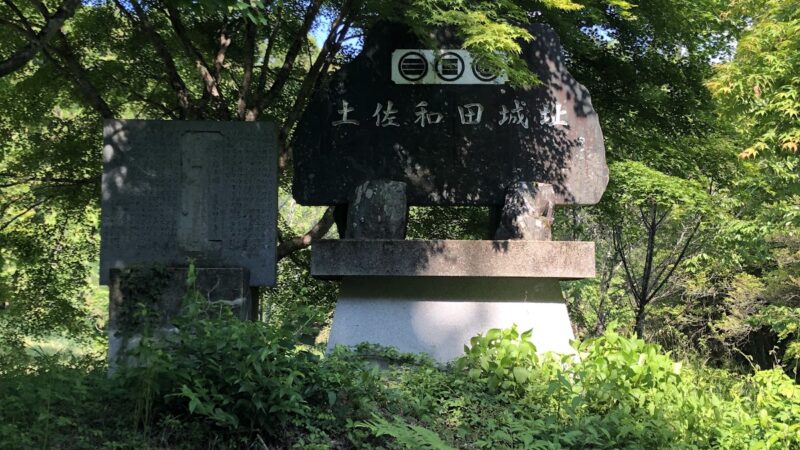
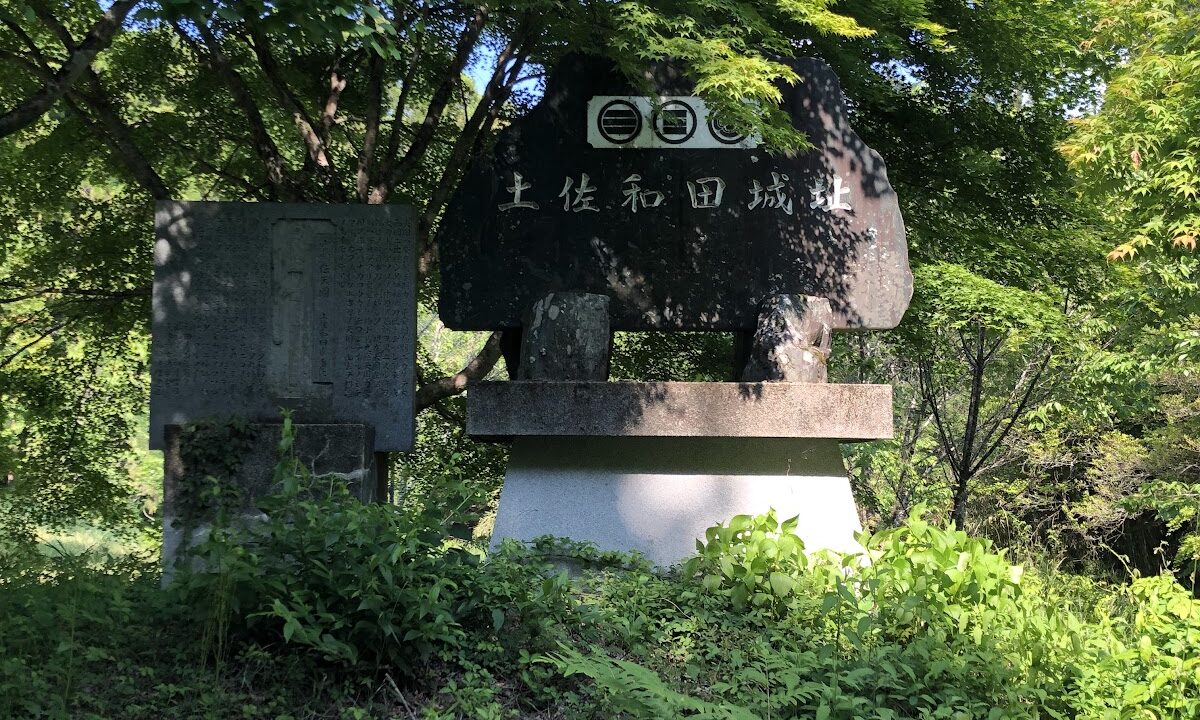
Wada Castle is a mountain castle located in Higashi Kojo, Wada, Tosa Town, Tosa District, Kochi Prefecture, in the mountainous area around the Sameura Dam. Currently, it is maintained as a park with ample parking, making it a relatively easily accessible castle site.
Basic Data:
- Location: Higashikojō, Wada, Tosa-cho, Tosa-gun, Kochi Prefecture
- Alternate Names: Wada Honjō, Wada Higashikojō, Tosa-Wada Honjō
- Elevation: 695m
- Year of Construction: November, Jōō 2 (1223)
- Builder: Wada Yoshinao
- Castle Type: Mountain Castle
- Main Remains: Earthworks, baileys, moats, flat areas
- Designated Cultural Property: None (Not designated)
History of Wada Castle and its Builder
Construction by Wada Yoshinao
Wada Castle was built in November, Jōō 2 (1223), by Wada Yoshinao. Wada Yoshinao was a member of the Wada clan, a powerful vassal family of the Kamakura Shogunate, and is believed to have entered Tosa Province during the turbulent period following the Jokyu War (1221). At that time, Tosa Province was a region where the central government’s influence was weak, and local lords had established their own independent powers.
It is presumed that Wada Yoshinao built this castle in the mountainous region of Tosa County with a strategic intention: to control the water transport on the Yoshino River (around the present-day Sameura Dam) and establish control over the surrounding area. By constructing the main castle at an altitude of 695m, it functioned as a stronghold overlooking the entire surrounding area.
Wada Clan’s Rule and Changes in Castle Lords
After its construction, Wada Castle functioned as the residence of successive generations of the Wada clan. In particular, records show that Saburoemon Taka (Wakasa-no-kami), the third son of Wada Yoshinao, served as the castle lord. The Wada clan maintained their power as local lords in the mountainous region of northern Tosa County.
Before the rise of the Chōsokabe clan, medieval Tosa Province was a region where many small lords vied for power. The Wada clan is believed to have been one of these local powers, managing their territory from Wada Castle.
From the Sengoku Period to the Early Modern Period
With the arrival of the Sengoku period, Tosa Province became the stage for the Chōsokabe clan’s unification efforts. It is presumed that the Wada clan also came under the influence of the Chōsokabe clan as Chōsokabe Motochika successively subjugated various forces within Tosa, but detailed records do not remain.
In the latter half of the 16th century, Wada Castle is thought to have lost its function as a military base and been abandoned. Archaeological excavations have unearthed artifacts from the 15th and 16th centuries, confirming that the castle was in use until this period.
Layout and Remains of Wada Castle
Structure of the Main Enclosure
The main enclosure of Wada Castle is located on the mountaintop at an altitude of 695m, where the Higashi Hachiman Shrine is enshrined. The main enclosure has a relatively large, flat area and is surrounded by an earthen rampart. This rampart is still clearly visible today, with approximately 1-2m in height remaining.
From the main enclosure, one can enjoy a panoramic view of the surrounding mountains and the Yoshino River basin, clearly demonstrating its strategic advantage as a military observation post. Currently, it is maintained as a park with benches and other amenities, making it an easily accessible environment for visitors.
Arrangement and Composition of the Enclosures
Wada Castle has a layout in which multiple enclosures are arranged in a stepped pattern around the main enclosure. Flat areas, believed to be the second and third enclosures, can be seen around the main enclosure, each demarcated by earthen ramparts and steep slopes.
These enclosures are thought to have served not only as defensive structures but also as the residence of the castle lord, the homes of retainers, and warehouses. Excavations have uncovered the remains of post-hole buildings, pits, and structures related to a small blacksmith’s workshop, revealing that daily life and production activities took place within the castle grounds.
Moats and Defensive Structures
A notable defensive feature of Wada Castle is the moats that cut off the ridgeline. Multiple moats were constructed along the ridgeline extending from the main enclosure, serving as a crucial defensive line to prevent enemy intrusion.
The moats are approximately 3-5 meters deep, and some continue down the slope as vertical moats. Such sophisticated defensive structures are a common characteristic of mountain castles from the Sengoku period, indicating that Wada Castle was not merely a residence for peacetime, but a military base designed for actual combat.
Earthworks and Stone Masonry
The earthworks of Wada Castle are constructed from piled-up clayey soil and remain in good condition around the main enclosure. Traces of stone masonry using river stones are also found in some of the earthworks, indicating that stone materials were used for the foundations and reinforcement of the earthworks.
While the use of stonework in medieval mountain castles was relatively limited, stone materials were sometimes used around important defensive lines and entrances (koguchi), and it is believed that Wada Castle also employed this technique.
Excavation and Excavated Artifacts
Investigation by the Kochi Prefectural Board of Education
The Kochi Prefectural Board of Education conducted an excavation at Wada Castle, and the results provide valuable archaeological information. The investigation uncovered remains of post-hole buildings, pits, and small blacksmith-related structures, revealing aspects of daily life in a medieval mountain castle.
Excavated Artifacts
The following artifacts were unearthed during the excavation:
- Haji-type pottery: Numerous Haji-type pottery pieces from the 15th-16th centuries were excavated, with fragments of the rim, body, and base confirmed. Traces of a rotating thread cutter were found on the base, indicating the use of a potter’s wheel-throwing technique.
- Tile-like Pottery: Fragments of tile-like pottery have also been unearthed, indicating that higher-quality vessels were used within the castle.
- Imported Ceramics: Small fragments of imported ceramics from China and the Korean Peninsula have also been unearthed, suggesting that the Wada clan possessed a certain level of economic power and access to trade networks.
- Iron Products and Slag: Fragments of iron tools and weapons, slag (iron residue) associated with iron smelting and blacksmithing, and bellows nozzles have been unearthed, confirming that small-scale blacksmithing was conducted within the castle.
These artifacts indicate that Wada Castle was not merely a military facility, but also a place of residence and a center of handicraft production.
Wada Castle and Surrounding Castles
Relationship with Wada Nishi Castle
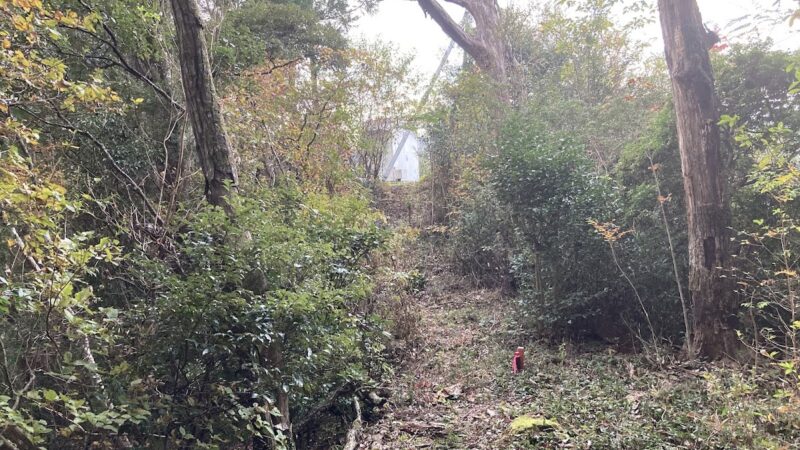
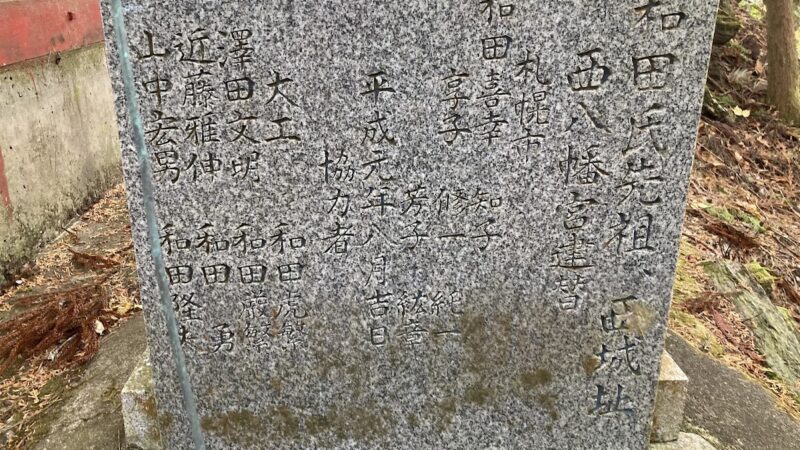
To the west of Wada Castle (Wada Honjo/Wada Higashi Kojo) lies Wada Nishi Castle (Wada Nishi Kojo). Wada Nishi Castle is a mountain castle built on a mountaintop at an altitude of 732m, where the Nishi Hachimangu Shrine is located.
Like Wada Honjo Castle, Wada Nishi Castle also possesses remains such as earthworks, baileys, and moats, and is thought to have been part of the Wada clan’s castle network. The two castles are approximately 1km apart in a straight line, suggesting they may have coordinated their defenses of the surrounding area.
Currently, Wada Nishi Castle can be accessed via a hiking trail from a signpost near the former Wada Elementary School. Visiting both Wada Honjo Castle and Wada Nishi Castle together will provide a deeper understanding of the Wada clan’s castle system.
Connection to Okotoyo Castle
When discussing medieval mountain castles in Kochi Prefecture, Okotoyo Castle (Nankoku City), the base of the Chosokabe clan, is indispensable. Okotoyo Castle was a base for the unification of Tosa Province, and is larger in scale and has a more complex layout than Wada Castle.
While Wada Castle and Okotoyo Castle were not directly subordinate to each other, they share common construction techniques and defensive philosophies as medieval mountain castles in Tosa Province. Comparing the two castles allows us to understand the regional characteristics of mountain castle construction in Tosa Province.
Access to Wada Castle
Access by Car
The most convenient way to access Wada Castle is by car. From the prefectural road south of Sameura Dam, proceed through the Suyama settlement to Wada settlement.
Access Route:
- Head north on National Route 32 from Kochi City.
- Head towards Sameura Dam.
- From the road south of the dam, proceed to Wada settlement via Suyama.
- Check the signpost at the fork above the former Wada Elementary School.
- Proceed east to the Wada Honjo Park parking lot.
The parking lot is located within the park and has space for several cars. The main enclosure is a few minutes’ walk from the parking lot.
Access by Public Transportation
Access by public transportation is difficult, and bus services are limited. We recommend taking a taxi from the Tosa Town Hall area or renting a car.
Precautions When Visiting the Castle
- Clothing: As it is a mountain castle, comfortable walking shoes and clothing are necessary.
- Season: Spring to autumn is the best time to visit, but don’t forget insect repellent in the summer.
- Weather: Be careful as the ground can be slippery in rainy weather.
- Equipment: Bring drinking water, a hat, and a towel.
- Time: Allow about an hour for your visit.
Highlights and Photo Opportunities of Wada Castle
View from the Main Enclosure
The biggest highlight of Wada Castle is the view from the main enclosure. The view of the Yoshino River basin and surrounding mountains from an altitude of 695m is breathtaking, and on a clear day, you can even see the mountain range of Shikoku in the distance.
Morning light is ideal for photography, as it beautifully illuminates the surrounding mountains. Especially during the seasons of fresh greenery in spring and autumn foliage, you can enjoy a magnificent landscape where nature and the ruins harmonize.
Earthworks and Enclosure Remains
The earthworks around the main enclosure are well-preserved and are an important point for experiencing the defensive structures of a medieval mountain castle. By observing the height and width of the earthworks and their relationship to the enclosures, you can understand the defensive thinking of the castle’s builder.
For photography, angles that emphasize the lines of the earthworks and compositions that show the elevation changes of the enclosures are effective.
The Impressive Moat
The moat, built along the ridge, is particularly impressive among the defensive structures of Wada Castle. Seeing the deeply excavated moat allows you to appreciate the high level of castle construction technology of the time and the castle design that anticipated actual combat.
When photographing the moat, it’s effective to choose an angle that conveys its depth.
Model Course for Visiting Wada Castle
Here’s a model course for efficiently visiting Wada Castle.
Estimated Time: Approximately 1 hour to 1 hour 30 minutes
- Arrive at Parking Lot (0 min) – Preparation and surrounding area check
- Begin Ascent (5 min) – Head from the parking lot to the main enclosure
- Visit the Main Enclosure (15 min) – Enjoy Higashi Hachimangu Shrine, earthworks, and views
- Visit the Second and Third Enclosures (20 min) – Observe the terraced enclosures
- Visit the Moat (15 min) – Check the defensive structures
- Photography and Break (20 min) – Take a break while enjoying the scenery
- Depart from Castle (10 min) – Return to the parking lot
If you have extra time, we recommend also visiting Wada Nishi Castle. Visiting both castles will give you a deeper understanding of the Wada clan’s castle system.
Wada Castle Evaluation and Siege Records
On the castle enthusiast community site “Kojodan,” the average rating for Wada Castle (Tosa District) is ★★★☆☆ (3.00), and the estimated visiting time is about 1 hour. With only 3 visitors, it can be considered a relatively unknown, hidden gem of a castle.
This is likely due to Wada Castle’s location in a mountainous area with somewhat inconvenient transportation access, and the lack of large-scale, flashy remains such as stone walls. However, the well-preserved earthworks and moats, and the magnificent views, make it well worth a visit.
Wada Castle and the Medieval History of Tosa
Characteristics of Medieval Mountain Castles in Tosa Province
Tosa Province (present-day Kochi Prefecture) has a mountainous terrain, and numerous mountain castles were built there during the medieval period. Wada Castle is one such example, possessing the following characteristics common to mountain castles in Tosa Province:
- High-altitude location: The main enclosure is situated on a mountaintop at a high elevation, offering panoramic views of the surrounding area.
- Earthwork-centered defense: Defensive structures primarily utilize earthworks rather than stone walls.
- Extensive use of moats: Moats are effectively placed to cut off the ridgeline.
- Terraced enclosure layout: Terraced enclosures are arranged to take advantage of the mountain’s topography.
Castle Management by Local Lords
Wada Castle was built by the local lord, the Wada clan, and is a prime example of how powerful local figures maintained their influence in Tosa Province, where direct control by the central government was difficult.
The Wada clan established control of the surrounding area by controlling the strategically important Yoshino River basin, and maintained the castle based on revenues from agricultural production and trade. It is believed that small-scale blacksmithing and handicraft production within the castle also constituted part of this economic base.
Tourist Information Around Wada Castle
Sameura Dam
Sameura Dam, located near Wada Castle, is one of the largest dams in Shikoku and is known as “Shikoku’s water reservoir.” The area around the dam lake boasts beautiful scenery and is a popular driving route. It’s an ideal spot to visit in conjunction with a visit to Wada Castle.
History and Culture of Tosa Town
Besides Wada Castle, Tosa Town offers many other historical sights. Visiting the old townscape, shrines and temples, and museums that convey the region’s history will allow you to gain a deeper understanding of Tosa’s history and culture.
Local Cuisine
Around Tosa Town, you can enjoy dishes made with fresh Tosa ingredients. In particular, the river fish raised in the clear waters of the Yoshino River and local dishes using mountain produce are exquisite. After visiting the castle, enjoy the flavors of Tosa at a local restaurant.
Summary: The Historical Value and Charm of Wada Castle
Wada Castle (Tosa District) is a historic mountain castle built in 1223 (Jōō 2) during the early Kamakura period by Wada Yoshinao. Built on a mountaintop at an altitude of 695m, the castle retains well-preserved remains such as earthworks, baileys, and moats, making it a valuable historical site that conveys the appearance of a medieval mountain castle to the present day.
Archaeological excavations have unearthed artifacts such as earthenware, clay pottery, imported ceramics, and iron products, which tell the story of daily life and production activities within the castle, demonstrating the economic power and cultural level of the Wada clan. Furthermore, remains related to blacksmithing reveal that the castle was not merely a military facility, but a center for comprehensive regional control.
Currently, Wada Castle is maintained as a park with ample parking, making it relatively easy to access. The view from the main bailey is magnificent, offering a panoramic view of the Yoshino River basin and the surrounding mountains. With relatively few visitors, it is a hidden gem of a castle where you can quietly experience history. For anyone interested in the medieval history of Tosa Province, castle enthusiasts, or history buffs, Wada Castle is an important historical site well worth visiting. Combine your visit with sightseeing around the Sameura Dam area, and be sure to check it out. This medieval mountain castle, built by the Wada clan, will quietly tell you about the history and culture of that time, transcending over 700 years.