Ogurayama Castle (Motoyama-cho, Nagaoka-gun, Kochi Prefecture): History and Remains – A Thorough Explanation of Mountain Castles in Tosa Province
Overview of Ogurayama Castle
Ogurayama Castle is a medieval mountain castle located in Yoshino, Motoyama-cho, Nagaoka-gun, Kochi Prefecture. Built on a mountaintop at an altitude of 310m and a relative height of approximately 60m, this castle was located within the sphere of influence of the Motoyama clan during the Sengoku period in Tosa Province and played an important role as a subsidiary castle of Motoyama Castle.
Even today, remains such as baileys and moats remain, making it a valuable historical site that conveys the typical structure of medieval mountain castles in Tosa Province. Located approximately 2.4km southwest of Motoyama Castle, and built on a strategic point overlooking the Yoshino River basin, it is an important historical site that tells the story of the sphere of influence of the Motoyama clan, one of the seven powerful clans of Tosa Province.
Location and Former Province
Location: Yoshino, Motoyama-cho, Nagaoka-gun, Kochi Prefecture
Former Province: Tosa Province
Castle Classification: Mountain Castle
Elevation: 310m
Relative Height: Approximately 60m
Ogurayama Castle is located in the Yoshino district of Motoyama-cho, Nagaoka-gun, in the north-central part of Kochi Prefecture. Motoyama-cho is located in the upper reaches of the Yoshino River and has flourished since ancient times as a transportation hub connecting Tosa Province and Iyo Province. Ogurayama Castle is thought to have functioned as a base for the defense and traffic monitoring of this region.
History and Background of Ogurayama Castle
Construction Period and Builder
While there are no clear records of the construction period of Ogurayama Castle, it is estimated to have been built by the Motoyama clan sometime between the late 15th and early 16th centuries during the Sengoku period. The Motoyama clan is believed to have been descended from the Taira clan and was a powerful local lord that controlled the Reihoku region in northern Tosa Province.
Centered around Motoyama Castle, the Motoyama clan’s base, several subsidiary castles were built in the surrounding area. Ogurayama Castle was one of them and is thought to have functioned as an important base protecting the southwestern part of the Motoyama clan’s sphere of influence.
The Motoyama Clan and the Seven Great Lords of Tosa
The Motoyama clan was a powerful daimyo in Tosa Province during the Sengoku period, counted as one of the “Seven Great Lords of Tosa.” The Seven Great Lords of Tosa refer to the seven forces of the Chosokabe, Motoyama, Aki, Tsuno, Ohira, Ichijo, and Kira clans.
The Motoyama clan’s peak was during the time of Motoyama Shigemune (Baikei), and by the mid-16th century, they had expanded their power to the central part of Tosa Province, boasting such power that they built Asakura Castle (present-day Asakura, Kochi City) and temporarily moved their residence there. During this period, the Motoyama clan’s territory extended from the Reihoku region to parts of the Kochi Plain, and Ogurayama Castle functioned as one of the fortresses supporting the Motoyama clan’s vast sphere of influence.
Conflict with the Chosokabe Clan
From the Eiroku era (1558-1570) onward, as Chosokabe Motochika’s offensive to unify Tosa Province intensified, the Motoyama clan gradually found themselves at a disadvantage. During the time of Motoyama Shigetatsu, the eldest son of Motoyama Shigemune, they were forced to abandon Asakura Castle and retreat to Motoyama Castle.
Ogurayama Castle is also thought to have played a role as a subsidiary castle protecting Motoyama Castle during the conflict between the Motoyama and Chosokabe clans. However, in the face of Chosokabe Motochika’s skillful strategies and overwhelming military power, the Motoyama clan’s power was gradually diminished.
The Surrender of the Motoyama Clan and the Fate of the Castle
In 1575 (Tensho 3), Motoyama Shigetatsu finally surrendered to Chosokabe Motochika, and the Motoyama clan came under the control of the Chosokabe clan. This surrender meant that Motoyama Castle and other castles of the Motoyama clan came under the control of the Chosokabe clan.
It is presumed that Ogurayama Castle was abandoned around this time, or that it was temporarily used as a branch castle of the Chosokabe clan before being abandoned. Subsequently, it lost its function as a castle throughout the Edo period, and to this day, only remains in the forest.
The Layout and Remains of Ogurayama Castle
Characteristics of the Castle Structure
Ogurayama Castle has the typical structure of a medieval mountain castle in Tosa Province. It features a main enclosure located on the mountaintop, with multiple enclosures arranged in a stepped pattern along the ridge, creating a distinctive layout. By utilizing the mountaintop at an altitude of 310m, the castle was built taking advantage of its location, which offers a wide view of the surrounding area.
The castle is relatively small in scale, which is thought to reflect its character as a subsidiary castle. As part of a castle network centered around Motoyama Castle, it possesses a structure equipped with necessary and sufficient defensive functions.
Main Remains
Enclosures (Kuruwa)
Multiple enclosures have been identified at Ogurayama Castle. The main enclosure is located on the mountaintop, and a relatively flat, leveled area remains. Flat areas, thought to be the second and third enclosures, are arranged around the main enclosure, revealing a stepped arrangement of enclosures. These enclosures are demarcated by earthworks and steep slopes, exhibiting a typical structure of a medieval mountain castle.
Moats
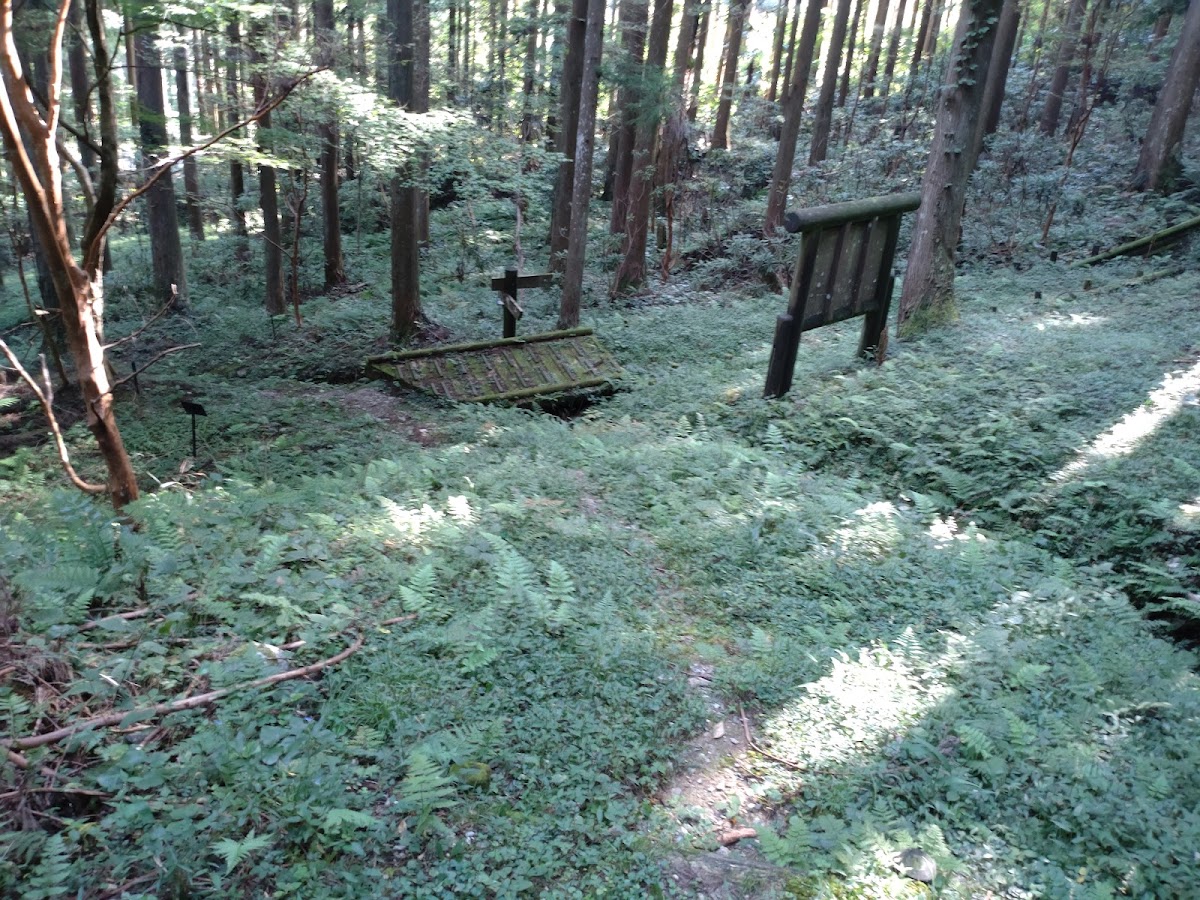
Multiple moats blocking the ridgeline have been identified. Moats were important defensive structures to prevent enemy intrusion, and they formed a major defensive line at Ogurayama Castle. The size and arrangement of the moats provide insight into the castle’s defensive plan.
Cut Slopes
The edges of the enclosures feature cut slopes (artificial steep slopes), a design intended to make ascent difficult for enemies. In mountain castles of Tosa Province, stone walls were rarely used; earthen cut slopes were the primary means of defense. This characteristic is particularly evident at Ogurayama Castle.
Presence or Absence of Stone Walls
At Ogurayama Castle, no remains of stone walls like those found at Motoyama Castle have been confirmed. This indicates that Ogurayama Castle was a subsidiary castle and that its construction predates the introduction of full-scale stone wall technology. While stone walls were introduced to some major castles in Tosa Province by the Chosokabe clan from the late 16th century onward, smaller subsidiary castles continued to utilize traditional earthen construction techniques.
Relationship with Surrounding Castles
Location Relationship with Motoyama Castle
Ogurayama Castle is located approximately 2.4 km southwest of Motoyama Castle, the base of the Motoyama clan. Motoyama Castle is located in Motoyama, Motoyama-cho, Nagaoka-gun, Kochi Prefecture. It is a full-fledged mountain castle with an elevation of 372m and a relative height of approximately 120m. Currently designated as a historical site by Motoyama-cho, its remains, including stone walls, baileys, and moats, are well-preserved.
Ogurayama Castle is thought to have served as a subsidiary castle protecting the southwestern side of Motoyama Castle, responsible for monitoring and defending the Yoshino River basin. Motoyama Castle was the central point, surrounded by several subsidiary castles, and Ogurayama Castle played a part in this castle network.
Surrounding Castles
Many medieval castles are distributed around Motoyama-cho. The main castles include the following:
Oishi Castle
A mountain castle located approximately 1.3km from Motoyama Castle, it was one of the important subsidiary castles of the Motoyama clan.
Jike Castle
A castle located approximately 1.7km from Motoyama Castle, it is thought to have been the residence of the Motoyama clan’s retainers.
Ikubo Castle
Located approximately 1.7 km from Motoyama Castle, it is presumed to have been responsible for the defense of the north bank of the Yoshino River.
Furuta Castle
Located approximately 3.1 km from Motoyama Castle, this mountain castle served as a fortress protecting the outer edge of the Motoyama clan’s sphere of influence.
Tai-Ko Castle
Located approximately 3.3 km from Motoyama Castle, it formed part of the Motoyama clan’s castle network.
These castles were organically arranged around Motoyama Castle, functioning as a base for the Motoyama clan’s territorial control. Ogurayama Castle was also an important component of this castle network, and it is believed that they worked together to form a defensive system.
Access and Visiting Information for Ogurayama Castle
Access Method
Public Transportation
From JR Dosan Line Osugi Station, take a bus towards Motoyama Town and get off at the Yoshino bus stop. From there, it’s about a 15-minute walk to the castle entrance, and about a 30-minute walk from the entrance to the summit. However, since the number of buses is limited, we recommend checking the timetable in advance.
By Car
Approximately 20 minutes from the Otoyama IC on the Kochi Expressway via National Route 439. Use the Motoyama Town Hall as a landmark and head towards the Yoshino area. Parking space near the castle entrance is limited, so please be careful not to park on the road.
Precautions When Visiting the Castle
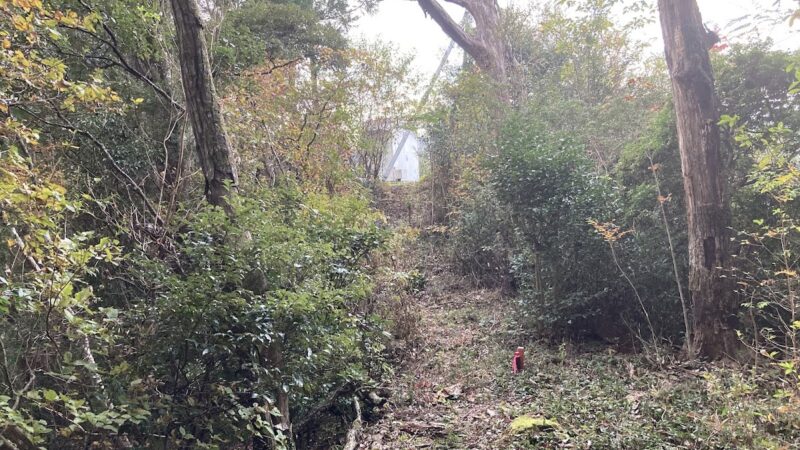
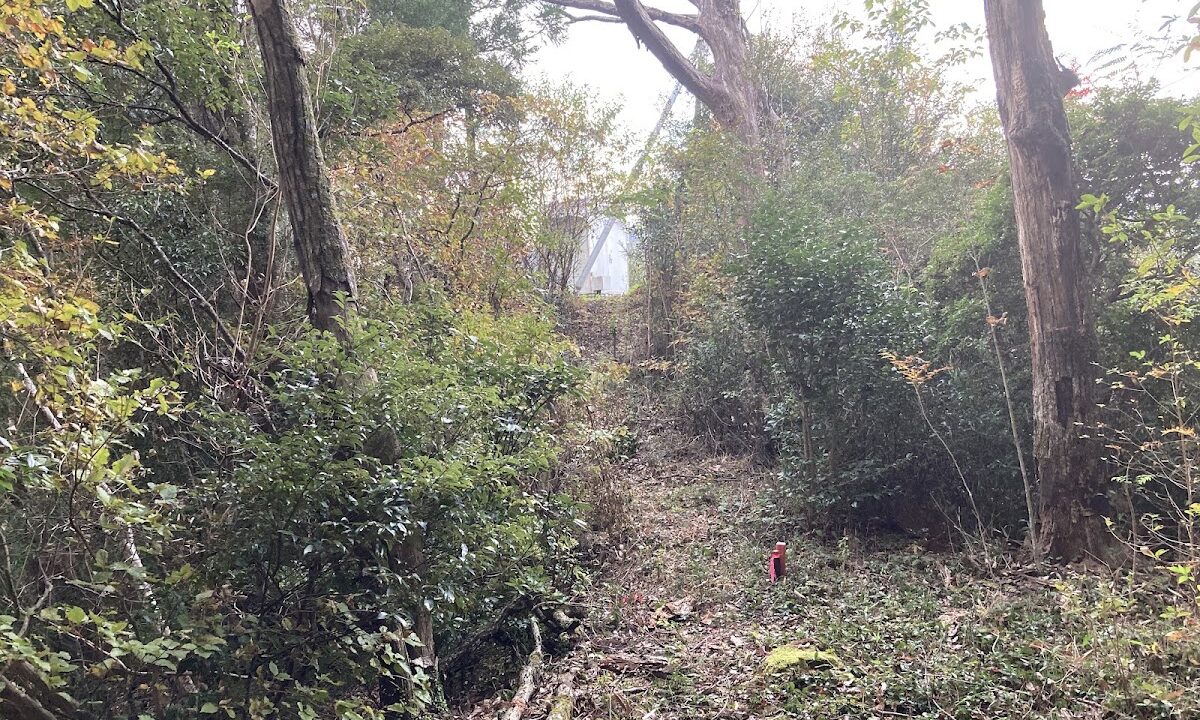
Ogurayama Castle is not a well-maintained tourist facility; it is a ruin remaining in a mountain forest. Please pay attention to the following points when visiting the castle:
- Clothing and Equipment: Wear clothing and shoes suitable for mountain climbing. Insect repellent is also necessary during the summer months.
- Safety Precautions: Many parts of the mountain trail are unmaintained and slippery. It is recommended to avoid visiting alone and to go in groups.
- Weather: It is safer to refrain from visiting the castle during rainy weather or immediately after rain, as the ground will be slippery.
- Items to Carry: Please carry drinking water, a map, a compass, and a mobile phone.
- Permission: Since you may need to pass through private property, please be considerate of local residents.
Points to Note During Your Visit
When visiting Ogurayama Castle, paying attention to the following points will help you understand the castle’s history and structure more deeply.
Layout of Enclosures
Observe the enclosures in order from the main enclosure downwards to appreciate the interconnected layout. Paying attention to the leveling of each enclosure and the height of the cliffs between them will reveal characteristics of the castle’s construction techniques.
Observation of Moats
Moats built along the ridge are important remains that indicate the castle’s defensive line. Observing the depth, width, and placement of the moats will help you understand the castle’s defensive plan.
View
From the mountaintop, you can enjoy a wide view of the Yoshino River basin. This view is one of the reasons why Ogurayama Castle was built in this location. By examining the direction of Motoyama Castle and the surrounding terrain, try to imagine the overall picture of the castle network.
History and Cultural Properties of Motoyama Town
Overview of Motoyama Town
Motoyama Town is located in the north-central part of Kochi Prefecture and belongs to Nagaoka District. Situated in the upper reaches of the Yoshino River, it is a naturally rich area surrounded by mountains. The population is approximately 3,000 (as of 2024), with forestry and agriculture being the main industries.
From ancient times, it flourished as a transportation hub connecting Tosa Province and Iyo Province, and during the Sengoku period, it was the base of the Motoyama clan and the political and economic center of northern Tosa Province. Even today, many historical sites remain, including the ruins of Motoyama Castle, and it is known as a town steeped in history and culture.
Main Cultural Properties of Motoyama Town
Motoyama Castle Ruins (Town-Designated Historic Site)
This was the residence of the Motoyama clan, and the remains such as stone walls, baileys, and moats are well-preserved. As a representative historical site of Motoyama Town, it attracts many castle enthusiasts. Nagahara Issho and his wife’s grave (Town-designated important cultural property)
This is the grave of Nagahara Issho (Yamauchi Gyobu-no-shosuke), an ancestor of Itagaki Taisuke, and his wife. It is an important historical site that tells the history of the Tosa Domain during the Edo period.
Kami-no-bo
Known as the place where Nonaka Kenzan, a chief retainer of the Tosa Domain, invited the Confucian scholar Yamazaki Ansai to study Tosa Southern Studies. It is an important historical site that tells the history of scholarship in Tosa.
Motoyama Town Tourist Spots
When visiting Ogurayama Castle, we recommend also visiting other tourist spots in Motoyama Town.
Asemigawa River
Known as a clear stream, the Asemigawa River offers outdoor activities such as ayu fishing and canoeing. In the summer, it is bustling with families enjoying river activities.
Motoyama Town Platinum Center
This facility sells Motoyama Town’s specialty products and local agricultural products. You can purchase products unique to Motoyama Town, such as Tosa Akaushi beef and Motoyama tea.
Kizenzan Park
This park, located on a hill overlooking the town of Motoyama, is known as a famous cherry blossom viewing spot. It is bustling with many visitors during the spring.
Characteristics of Mountain Castles in Tosa Province
History of Castles in Tosa Province
Tosa Province (present-day Kochi Prefecture) is a region where many mountain castles were built due to its geographical features. The rugged mountains of the Shikoku Mountains and the coastline facing the Pacific Ocean fostered a unique castle culture.
During the Sengoku period, Tosa Province was divided among seven forces known as the Seven Warlords of Tosa, who engaged in fierce conflicts. Each force constructed a castle network, centering on a main castle and surrounding it with numerous subsidiary castles. Ogurayama Castle also functioned as part of this castle network.
Structural Characteristics of Mountain Castles in Tosa Province
Mountain castles in Tosa Province share the following common characteristics:
Utilization of Steep Terrain The rugged terrain of the Shikoku Mountains was utilized to its fullest extent, incorporating natural fortifications into the castle construction. Ogurayama Castle, for example, enhanced its defensive capabilities by utilizing the 310m-high mountaintop.
Construction using Earth Before the widespread introduction of stone wall technology, earthen ramparts and embankments were the primary defensive structures in castles. Ogurayama Castle exhibits this characteristic.
Continuous Enclosure Layout A continuous enclosure layout, where enclosures are arranged along the ridgeline, is common. This was a construction method well-suited to the mountainous terrain of Tosa Province.
Extensive Use of Moats The frequent use of moats to cut off the ridgeline limited enemy incursion routes, making defense easier.
Changes After the Unification by the Chosokabe Clan
After Chosokabe Motochika unified Tosa Province, stone walls began to be introduced to major castles. Castles such as Okotoyo Castle and Urado Castle show signs of the transition to early modern castles. However, smaller branch castles like Ogurayama Castle were abandoned after the Chosokabe clan’s unification, thus preserving their medieval mountain castle form.
These abandoned medieval mountain castles occupy an important position in castle research as valuable historical sites that convey the castle-building techniques and strategic thinking of the time.
Research and Preservation of Ogurayama Castle
Position in Castle Research
Ogurayama Castle is an important historical site for studying the castle network of the Motoyama clan. Understanding how the main castle, Motoyama Castle, and multiple branch castles, including Ogurayama Castle, cooperated to govern the territory is essential for understanding the realities of regional power during the Sengoku period.
Ogurayama Castle is featured as one of the castles in Tosa Province in fundamental castle research texts, including the “Comprehensive Survey of Japanese Castles.” Further detailed surveys and archaeological excavations are expected to shed more light on the historical significance of Ogurayama Castle.
Current Status and Challenges of Preservation
Ogurayama Castle is not currently designated as a special cultural property, but its remains are relatively well-preserved within the forest. However, maintenance and management are insufficient, and the following challenges exist:
Preservation of Remains The remains are at risk of damage due to tree growth and natural disasters. Regular inspections and necessary preservation measures are required.
Improvement of Access The lack of a well-maintained access route makes it difficult for the general public to visit safely. Minimum improvements to the access route are desirable.
Information Dissemination There is insufficient information dissemination regarding the historical value and highlights of Ogurayama Castle. The installation of information boards and its utilization as a tourist resource for Motoyama Town are expected.
Future Prospects
In Motoyama Town, the development of the Motoyama Castle ruins is progressing and is being utilized as an important tourist resource for the town. It is expected that efforts to preserve and utilize Ogurayama Castle will also progress, as it will be considered an integral part of the castle network heritage, along with Motoyama Castle.
Among castle enthusiasts and history buffs, “mountain castle tours,” visiting lesser-known mountain castles, are gaining popularity. It is hoped that increased attention to lesser-known castles like Ogurayama Castle will boost momentum for their preservation.
Summary
Ogurayama Castle is a medieval mountain castle located in Yoshino, Motoyama Town, Nagaoka District, Kochi Prefecture. It played an important role as a branch castle of the Motoyama clan, one of the seven powerful clans of Tosa Province. Built on a mountaintop at an altitude of 310m and a relative height of approximately 60m, remnants such as baileys and moats still remain today.
Located approximately 2.4km southwest of Motoyama Castle, it was built at a strategic point responsible for monitoring and defending the Yoshino River basin. During the Sengoku period, Ogurayama Castle played a key role in the Motoyama clan’s castle network amidst their conflict. It is believed to have been abandoned after the Motoyama clan’s surrender in 1575.
Ogurayama Castle possesses the typical structure of a medieval mountain castle in Tosa Province, and its earthen construction techniques and multi-bailey layout make it a valuable historical site that preserves the castle-building technology of the time. When visiting Motoyama Town, why not also visit Ogurayama Castle along with Motoyama Castle and reflect on the history of Tosa Province during the Sengoku period?
From both the perspective of castle research and regional history research, Ogurayama Castle is a historical site of significant value. We hope that appropriate preservation and utilization will progress in the future, leading to greater recognition of Ogurayama Castle’s historical value among more people.