Fujime Castle (Kanonji City, Kagawa Prefecture) Complete Guide | History, Remains, and Access Information
Fujime Castle (Fujime-jō) is a medieval mountain castle located in Takenari, Awai-chō, Kanonji City, Kagawa Prefecture. Also known as Fujinome Castle, it was built on the summit and eastern ridge of Mount Fujime (elevation 136m), which stretches from the Asan Mountains to the Mitoyo Plain. As a castle that played an important role in western Sanuki Province during the Sengoku period, it remains a historical site visited by many castle enthusiasts and history buffs.
Fujime Castle (Fujime-jō) is a medieval mountain castle located in Takenari, Awai-chō, Kanonji City, Kagawa Prefecture. ## Basic Information on Fujime Castle
Location and Former Province
Location: Takenari, Awai-cho, Kanonji City, Kagawa Prefecture
Former Province: Sanuki Province
Common Name/Alternate Name: Fujinome Castle
Elevation: 136m (Fujimeyama mountain summit)
Classification and Structure
Classification: Mountain Castle
Builder: Saito Morisato
Year of Construction: Before the Tensho era (details unknown)
Main Lord: Saito clan
Year of Abandonment: Unknown (after the fall of Tensho 6)
Remains
Currently, the following remains are preserved at the Fujime Castle site:
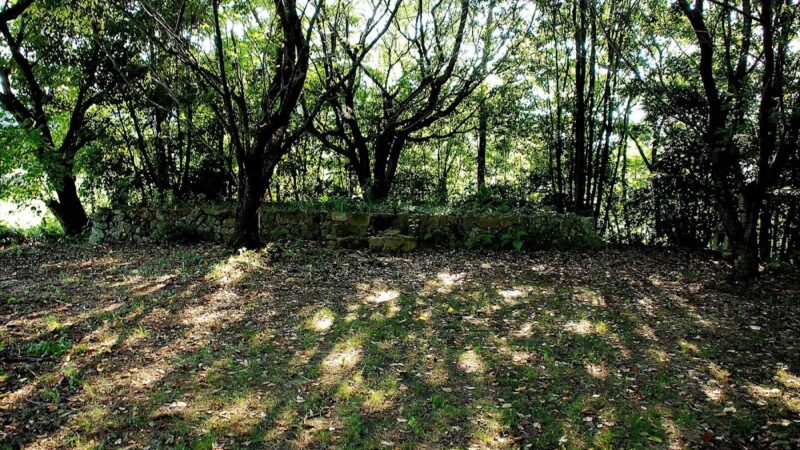
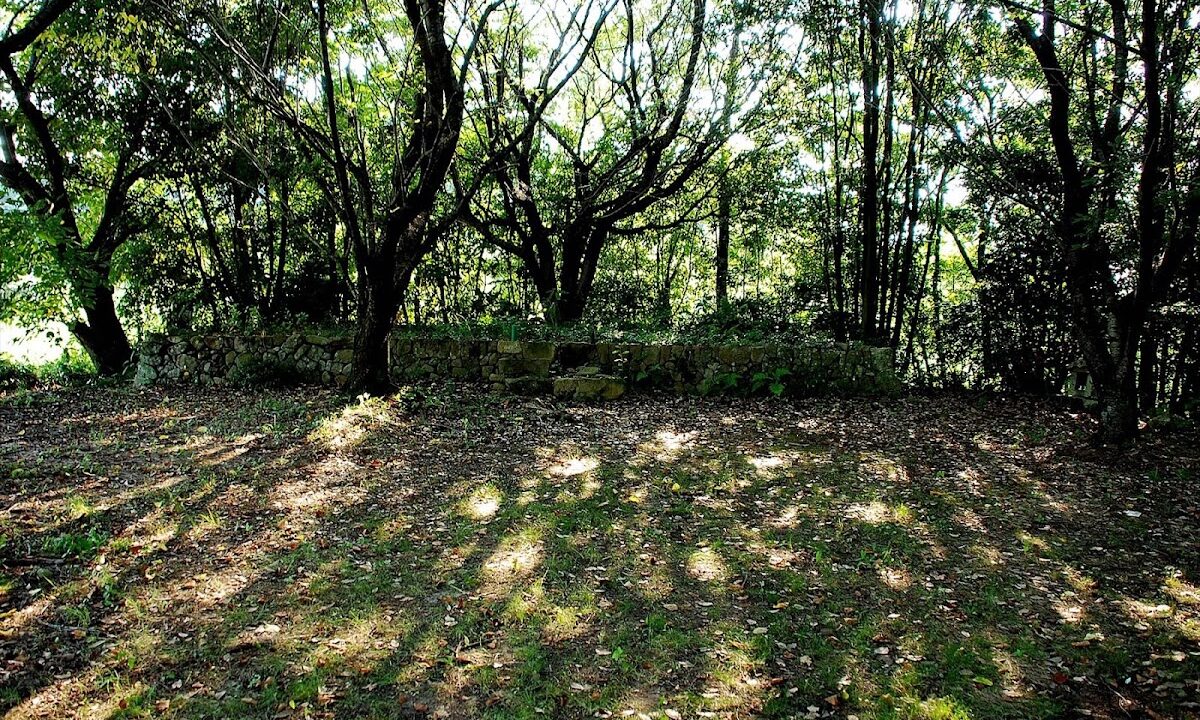
- Kuruwa (Enclosure): Multiple terraced flat areas
- Earthwork: Earthen embankments for defense
- Horikiri: Dry moats blocking the ridge
- Yokobori: Defensive moat along the slope
- Dry moat: A moat that does not hold water
Reconstructed Structures
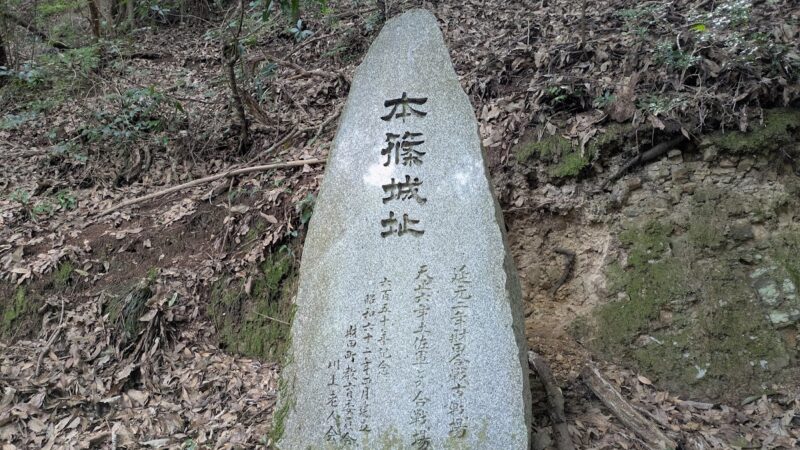
- Stone monument
- Information board
- Miniature Shikoku 88 Temple Pilgrimage Site (Mountaintop)
History of Fujime Castle
Construction and the Saito Clan’s Rule
Fujime Castle is a mountain castle built by the Saito clan, who ruled the western part of Sanuki Province (Western Sanuki). While the prevailing theory attributes its construction to Saito Morisato, the exact construction date is unclear. It is believed to have existed before the Tensho era.
The Saito clan, as a powerful local family in western Sanuki, played a central role in the region’s politics and military affairs. Fujime Castle was built as their base, strategically located overlooking the Mitoyo Plain. Its location at the southern end of the Asan Mountains gave it a geographical advantage, allowing it to monitor both the Seto Inland Sea to the north and the mountainous areas to the south.
Relationship with Branch Castles such as Fujimi Castle
The Saito clan had several branch castles around Fujime Castle. Fujimi Castle, in particular, was an important branch castle of Fujime Castle, and it is said that its lord was Onishi Kakueimon Hidezane, a vassal of the Saito clan.
Through this network of branch castles, the Saito clan effectively controlled the western Sanuki region and established a strong defensive system.
Chosokabe Motochika’s Invasion of Sanuki
The most important event in the history of Fujime Castle is the invasion of Sanuki by Chosokabe Motochika, a Sengoku daimyo of Tosa.
In Tensho 4 (1576), Chosokabe Motochika, aiming to unify Shikoku, began his advance into Sanuki. During this period, the Saito clan is said to have accepted the Chosokabe clan’s invitation and formed a cooperative relationship. However, Nara Katsumasa, who led the various powerful clans of western Sanuki, opposed this and attacked Fujime Castle. Records indicate that at this time, generals from both the Saito and Chosokabe clans were holed up in Fujime Castle.
In 1578 (Tensho 6), Chosokabe Motochika began his full-scale invasion of Sanuki Province. Motochika’s army successively captured Honshino Castle and Fujime Castle, solidifying their control over western Sanuki. Fujime Castle fell that year, marking the end of Saito rule.
The following year, 1579 (Tensho 7), the nearby Eboyama Castle (Tsukumoyama Castle) was also captured by the Chosokabe army, bringing the entire western Sanuki region under Chosokabe control.
Fujime Castle After its Fall
There are no clear records of how Fujime Castle was used after its fall in 1578. The year of its abandonment is also unknown. After the Chosokabe clan’s continued rule of Sanuki, and as time progressed through Toyotomi Hideyoshi’s conquest of Shikoku and into the Edo period, Fujime Castle is thought to have disappeared from the stage of history.
Fujime Castle’s Layout and Structure
Location and Topography
Fujime Castle is a typical mountain castle built on the summit (136m above sea level) and eastern ridge of Mount Fujime, at the tip of the Asan Mountains reaching the Mitoyo Plain. This location had the following strategic advantages:
- Secure Visibility: The Mitoyo Plain could be seen in its entirety, allowing for early detection of enemy movements.
- Defensive Advantage: The steep slopes acted as a natural barrier.
- Safety of the Rear: The Asan Mountains provided a safe retreat route.
Main Enclosure (Honmaru) and Enclosure Arrangement
The main enclosure (Honmaru) was located on the mountaintop. Currently, a miniature version of the Shikoku 88 Temple Pilgrimage is located in the main enclosure, and it is also used as a religious site.
It is believed that multiple enclosures were arranged in a stepped fashion along the eastern ridge, centered around the main enclosure. These enclosures served the following functions:
- Soldier garrisons
- Storage areas for supplies
- Defensive strongholds
Defensive Facilities
The following defensive facilities have been confirmed at Fujime Castle:
Moat: A dry moat dug to cut across the ridge, serving as an important defensive line to prevent enemy intrusion. It is presumed that multiple moats were constructed along the ridge at Fujime Castle.
Earthwork: An earthen embankment built along the edge of the enclosure, which protected against arrows and stones, and also functioned as a foothold for attacking the enemy.
Horizontal Moat/Dry Moat: A moat dug along the slope, which made lateral movement of the enemy difficult and enhanced defensive capabilities.
These remains still partially exist, but due to years of weathering and overgrown vegetation, only a limited number of areas are clearly identifiable.
Related Facilities Around Fujime Castle
Fujime Inari Shrine
Fujime Inari Shrine is located on the mountainside of Mount Fujime. This shrine is a center of local faith and is situated along the hiking trail to the castle ruins. During the Sengoku period (Warring States period), it likely served as the guardian shrine of the castle, attracting the faith of the lord and soldiers.
Fujime Fudoin Temple
Fujime Fudoin Temple is located near the second bailey of Fujime Castle, east of the main bailey. Currently, a road leads to the temple, making it one of the access points to the castle ruins. It enshrines Fudo Myoo (Acala) as its principal deity and is a center of faith for the local people.
Tsurugisan Haiden (Shrine of Kenzan)
Tsurugisan Haiden (Shrine of Kenzan) also exists near the castle ruins, suggesting a connection to Shugendo (mountain asceticism). The Fujimeyama area has been a place of worship since the Middle Ages, suggesting the coexistence of castles and religious facilities.
Awai Shrine
Awai Shrine is the starting point of the main access route to Fujime Castle. A sign at the shrine entrance provides information on nearby attractions, clearly indicating Fujime Castle. The hiking trail to the castle ruins begins here, making it an important base for historical exploration.
Access to Fujime Castle
Access by Car
Nearest Interchange: Approximately 10km (15 minutes by car) from the Ohnohara IC on the Takamatsu Expressway.
A road leads from the entrance of Awai Shrine to the Ninomaru (second bailey) and Fujime Fudoin Temple (east of the main bailey), making it accessible by car. However, caution is advised as some sections of the road are narrow.
Access by Public Transportation
Nearest Station: JR Yosan Line, Kannonji Station
Approximately 15 minutes by taxi from the station, or by taking a local bus followed by a walk.
Ascent Route
- Awai Shrine Route: A route using the mountain trail from Awai Shrine (approximately 20-30 minutes on foot)
- Road Route: Access by car to Fujime Fudoin Temple, then proceed to the summit (approximately 10-15 minutes on foot)
While the mountain trail is well-maintained, there are steep slopes characteristic of mountain castles, so comfortable shoes and clothing are recommended.
Highlights of Fujime Castle
Observation of the Remains
For castle enthusiasts, the greatest attraction is the opportunity to actually see the remains of a medieval mountain castle. Defensive structures such as baileys, earthworks, and moats provide valuable insights into the castle-building techniques and strategies of the time.
In particular, the moats, which completely cut off the ridge, demonstrate the ingenuity used to prevent enemy incursions. Furthermore, the layout of the baileys reveals a design philosophy that maximized the limited mountaintop area.
Views
From the mountaintop, you can enjoy a panoramic view of the Mitoyo Plain. The view overlooking the Seto Inland Sea and the surrounding mountains makes you understand why the castle lords of the Sengoku period valued this area. On a clear day, you can even see Sanuki Fuji (Mt. Iino) and the islands of the Seto Inland Sea.
Miniature Shikoku 88 Temple Pilgrimage Site
The miniature Shikoku 88 Temple Pilgrimage site located at the mountaintop demonstrates that the castle ruins were also used as a place of worship for the local community. The rows of stone Buddha statues create a unique landscape that blends Sengoku history with folk beliefs.
Connections to Surrounding Castles
Tsukumoyama Castle (Eboyama Castle)
Tsukumoyama Castle, located near Fujime Castle, was captured by Chosokabe Motochika in 1579, the year after Fujime Castle fell. Both castles formed a defensive line in western Sanuki and have a history of being successively captured during the Chosokabe clan’s invasion of Sanuki.
Honshino Castle
Honshino Castle, along with Fujime Castle, was a fortress that fell to Chosokabe Motochika in 1578 (Tensho 6). The successive fall of these castles indicates that the Chosokabe clan’s invasion of Sanuki was planned and organized.
Fujimi Castle
As mentioned above, Fujimi Castle functioned as a subsidiary castle of Fujime Castle. The castle lord, Onishi Kakueimon Hidezane, was a vassal of the Saito clan and played a part in the network of subsidiary castles centered around Fujime Castle.
Fujime Castle and the Sengoku Period History of Western Sanuki
Political Situation in Sanuki Province
During the Sengoku period, Sanuki Province was divided among multiple regional powers. Eastern Sanuki was dominated by the Miyoshi and Yasutomi clans, while western Sanuki was dominated by the Saito and Kagawa clans, who repeatedly clashed with each other.
Chosokabe Motochika’s Strategy for Unifying Shikoku
Having unified Tosa Province, Chosokabe Motochika began invading neighboring provinces with the aim of unifying the entire Shikoku region. The invasion of Sanuki Province was a crucial part of this strategy.
Motochika skillfully combined diplomatic negotiations with local powerful families with military force, gradually bringing Sanuki under his control. The capture of Fujime Castle was a vital step in the conquest of western Sanuki.
The Stage of a Fierce Battle
In 1576 (Tensho 4), a fierce battle took place at Fujime Castle between the forces of the western Sanuki powerful families led by Nara Katsumasa and the combined forces of the Saito and Chosokabe clans. This battle marked a significant turning point in the struggle for control of western Sanuki.
Ultimately, the castle fell to the Chosokabe army in 1578 (Tensho 6), drastically altering the political landscape of western Sanuki.
Current Status and Preservation of Fujime Castle
Preservation Status of Remains
Due to years of weathering and overgrown vegetation, some of the remains of Fujime Castle are unclear. However, the main baileys, earthworks, and moats can still be seen, making it a valuable historical site for understanding the structure of a medieval mountain castle.
Maintenance Status
Access to the castle ruins is well-maintained, with hiking trails from Awai Shrine and a road leading to Fujime Fudoin Temple available. Information boards and stone monuments are installed at the summit, conveying the castle’s history to visitors.
However, large-scale archaeological excavations and restoration work have not been carried out, maintaining the atmosphere of a historical site quietly nestled in nature.
Connection with the Local Community
Fujime Castle ruins are closely intertwined with the lives of local people, including the establishment of a miniature Shikoku 88 Temple Pilgrimage site and its use as a place of worship integrated with surrounding shrines and temples. It is cherished by the community not only as a historical heritage site but also as a place of worship and relaxation.
Precautions for Visiting
Clothing and Equipment
- Comfortable walking shoes (trekking shoes recommended)
- Long-sleeved shirt and long pants (for protection against plants and insects)
- Hat and sunscreen (summer)
- Drinking water
- Rain gear (in case of unstable weather)
Safety Precautions
- Mountain trails can be slippery, so please walk carefully.
- Avoid visiting alone; group visits are recommended.
- Check cell phone signal strength in advance.
- Be aware of venomous snakes such as pit vipers during the summer.
Manners
- Please respect the historical site and do not damage the remains.
- Always take your trash with you.
- Please visit shrines and temples quietly and respectfully.
- Please avoid trespassing on private property.
Current Status and Challenges of Fujime Castle Research
Limitations of Historical Materials
Detailed historical materials concerning Fujime Castle are limited, leaving many points unclear, such as the construction date, detailed layout, and changes in castle lords. Further historical excavations and research are anticipated.
The Need for Archaeological Excavation
Full-scale archaeological excavation could provide a clearer picture of the castle’s structure, the period of its use, and the lifestyle of its inhabitants. Excavated artifacts would also shed light on the culture and trade practices of the time.
Its Place in Local History
Fujime Castle played a crucial role in the Sengoku period history of western Sanuki, but further research is needed to understand its detailed historical position. Research from multiple perspectives, including its relationship with surrounding castles and its connection to the local community, is required.
Summary
Fujime Castle, located in Takenari, Awai-cho, Kanonji City, Kagawa Prefecture, is a medieval mountain castle that played a significant role in western Sanuki during the Sengoku period. Built as the residence of the Saito clan, it was the site of fierce battles during Chosokabe Motochika’s invasion of Sanuki and fell in 1578.
Even today, remnants such as baileys, earthworks, and moats remain, making it a valuable historical site for learning about the structure of medieval mountain castles. The view from the mountaintop is magnificent, offering a panoramic view of the Mitoyo Plain. It is also a beloved local place of worship, alongside the miniature Shikoku 88 Temple Pilgrimage sites and surrounding shrines and temples.
Access is relatively easy, via a hiking trail from Awai Shrine or a road to Fujime Fudoin Temple. It’s a recommended spot not only for history buffs and castle enthusiasts, but also for those who enjoy hiking and scenic views.
Please visit Fujime Castle Ruins and experience the history of Sanuki during the Sengoku period firsthand.