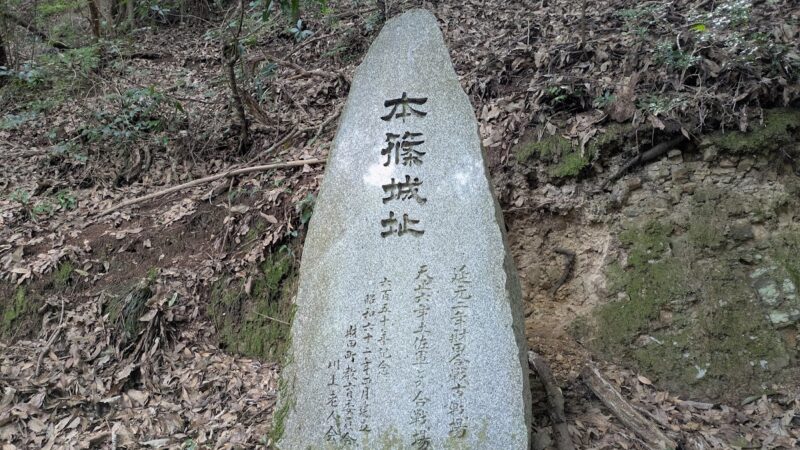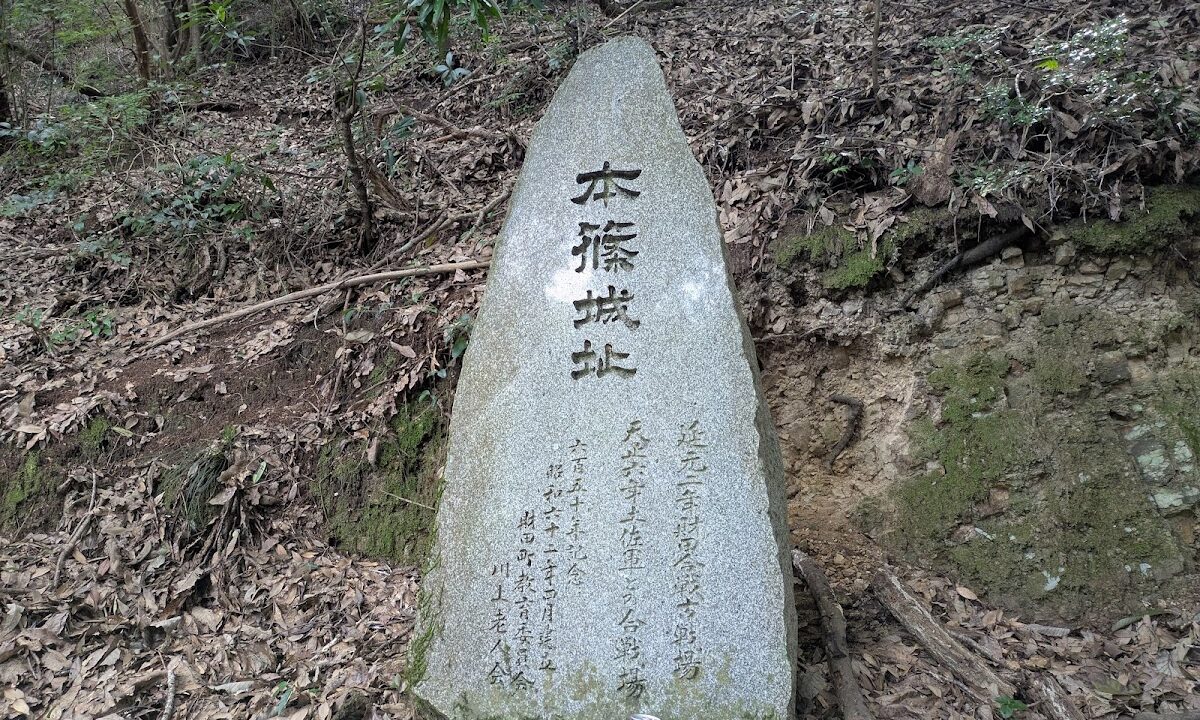
Motoshino Castle Complete Guide | Mountain Castle Ruins and History in Takada-cho, Mitoyo City, Kagawa Prefecture
What is Motoshino Castle?
Motoshino Castle is a medieval mountain castle located in Takada-naka, Takada-cho, Mitoyo City, Kagawa Prefecture. Also known as Takada Castle or Okuno Castle, it functioned as an important base in western Sanuki Province. Built on a mountaintop approximately 200 meters above sea level, the castle’s main enclosure was situated at a relative height of approximately 80 meters. Even today, the remains of earthworks, enclosures, and moats remain in excellent condition.
Designated as a city historical site in Mitoyo City, it is one of the best-preserved mountain castles in Kagawa Prefecture and a valuable site for learning about the structure of medieval castles. As an important historical heritage site that tells the story of the Sengoku period in Sanuki, it attracts attention from castle enthusiasts and history buffs.
History and Background of Honshino Castle
Construction History and Historical Context
Honshino Castle is believed to have been built during a period of complex regional governance in Sanuki Province during the Sengoku period (Warring States period). The Saida region was located in the western part of Sanuki Province, near the border with Awa Province (present-day Tokushima Prefecture), making it a strategically important location.
During the Sengoku period, Sanuki Province was a region where multiple powers, including the Hosokawa, Miyoshi, and Chosokabe clans of Tosa, vied for supremacy. It is presumed that Honshino Castle was built or renovated by a local lord amidst these power struggles.
Castle Lord and Governing System
While details about the specific lord of Honshino Castle are unclear due to limited historical records, it is believed to have been the residence of a local lord who ruled the Saida region. Connections to local powerful families such as the Saida and Okuno clans have been suggested, and the alternative names “Saida Castle” and “Okuno Castle” indicate a relationship with these clans.
During the late Sengoku period, the entire Sanuki Province came under the control of Chōsokabe Motochika, and later, with Toyotomi Hideyoshi’s conquest of Shikoku, the Ikoma clan became the lords of Sanuki. It is presumed that Honshino Castle was abandoned during this process.
Changes After Abandonment
From the Edo period onward, Honshino Castle lost its function as a military facility and was left as a forest. However, this neglect ultimately led to the preservation of the remains, and clear castle ruins can still be seen today. In recent years, it has been re-evaluated as a regional historical heritage site and designated as a historical site of Mitoyo City.
Structure and Layout of Honshino Castle
Overall Arrangement and Location
Honshino Castle has the typical form of a mountain castle, with the main enclosure located on the mountaintop at an altitude of approximately 200 meters. The relative height from the foot of the mountain is approximately 80 meters, and it has a highly defensible structure that takes advantage of the steep terrain.
The castle area extends in a long, narrow shape from north to south, with multiple enclosures (kuruma) arranged in a stepped pattern around the main enclosure. This layout exhibits the typical characteristics of a multi-bailey mountain castle utilizing the ridgeline.
Structure of the Main Enclosure (Honmaru)
The main enclosure is located in the center of the castle and built on the highest elevation. It measures approximately 30 meters east-west and 20 meters north-south, and is surrounded by a clear earthen rampart. This rampart is about 1-2 meters high and remains well-preserved, providing insight into the defensive structures of the time.
The interior of the main enclosure is relatively flat, providing sufficient space for building structures. Although no archaeological excavations have been conducted, it is highly likely that foundation stone buildings or post-and-beam buildings existed here.
Second and Third Enclosures
Several secondary enclosures are arranged around the main enclosure. Enclosures are spread out in a stepped manner to the north and south of the main enclosure, and each enclosure is clearly demarcated by a cliff face.
The second enclosure is located one level below the main enclosure and served to defend it. The third enclosure and subsequent enclosures are presumed to have been used as garrisons for soldiers and storage areas for supplies.
Moats and Cut Slopes
Important defensive features of Honshino Castle are the moats and cut slopes. A moat is located behind the main enclosure (continuing along the ridge), serving as a crucial defensive line to prevent enemy intrusion. This moat is approximately 5 meters wide and 3 meters deep, and is still clearly visible today.
Cut slopes are constructed between each enclosure, creating artificially constructed steep slopes 3 to 5 meters high. This restricted movement between enclosures and enhanced defensive capabilities.
Vertical Moats and Ridge-Shaped Vertical Moats
A distinctive feature of Honshino Castle is the vertical moats located on the slopes. These vertical moats are trench-like structures dug vertically into the slopes, hindering lateral movement of the enemy and limiting attack routes.
In some areas, the existence of ridge-shaped vertical moats, where multiple vertical moats are arranged in parallel, has also been pointed out. These ridge-shaped vertical moats are characteristic of castle construction techniques from the late Sengoku period, indicating that Honshino Castle was built with a certain level of technical skill.
Highlights of Honshino Castle (Castle Notes)
Well-Preserved Earthworks
The most noteworthy feature when visiting Honshino Castle is the earthworks surrounding the main enclosure. Despite being over 400 years old, they retain their clear shape, allowing visitors to directly experience the castle construction techniques of the time. Walking along the earthworks allows you to truly appreciate the castle’s defensive lines.
Clear Moat
The moat behind the main enclosure is one of the best-preserved remains of Honshino Castle. The deeply V-shaped moat completely blocked enemy incursions from the ridge. Standing at the bottom of the moat, you can truly appreciate its depth and defensive strength.
Terraced Enclosures
The terraced enclosures, arranged downwards from the main enclosure, create a beautiful landscape characteristic of mountain castles. The clear cliffs between each enclosure allow for a three-dimensional understanding of the medieval castle structure.
Views and Strategic Location
From the main enclosure, one can enjoy a panoramic view of the plains of Takada Town and a broad view of the surrounding terrain. This view reveals the strategic importance of Honshino Castle’s location. On clear days, it’s even possible to see the Sanuki Mountains and the Seto Inland Sea.
Remains Integrated with Nature
The current Honshino Castle is located within a forest, and its remains are integrated with nature. The earthworks and moats emerging from between the trees create an atmosphere as if time has stood still, evoking a sense of historical romance.
How to Access Honshino Castle
Location
Address: Takada-cho, Mitoyo City, Kagawa Prefecture
Honshino Castle is located in the Takada-cho area of Mitoyo City, slightly inland from the city center.
Access by Car
If using the Takamatsu Expressway:
- Approximately 15 minutes from Sanuki Toyonaka IC
- Approximately 20 minutes from Mitoyo Torisaka IC
If using general roads**:
- From National Route 32 towards Takada-cho
- Via prefectural road to the castle entrance
Regarding parking, there is some space at the foot of the castle, but it is not a properly maintained parking lot, so you will need to find a safe place to park on the shoulder of the road. Please be considerate of local residents when visiting.
Access by Public Transportation
JR Dosan Line:
- Get off at Takada Station, approximately 40 minutes on foot (to the castle entrance)
- Approximately 10 minutes by taxi
Public transportation access is somewhat inconvenient, so we recommend visiting by car.
Castle Ascent Route
From the castle entrance to the main enclosure, it takes approximately 20-30 minutes on foot along a mountain path. Since some parts of the path are not well-maintained, the following equipment is recommended:
- Trekking shoes or hiking boots
- Long-sleeved shirt and long pants (for protection against vegetation and insects)
- Drinking water
- Map or GPS device
- Insect repellent spray (in summer)
Since some parts of the ascent route are unclear, we recommend checking a topographic map or layout map beforehand.
Notes for Visitors
Estimated Visiting Time
For a visit to Honshino Castle, including the ascent and descent, you should allow approximately 45 minutes to 1 hour. If you want to carefully observe the ruins, we recommend allowing about 1 hour and 30 minutes.
Safety Precautions
- As it is a mountain castle, there are areas with unstable footing.
- It is slippery during and after rain, so please refrain from visiting or exercise extreme caution.
- Visiting with multiple people is safer than visiting alone.
- Cell phone reception is poor in some areas, so please inform family or friends of your destination in advance.
Seasonal Precautions
Spring/Autumn: This is the most suitable season for visiting. The weather is mild, and it is easy to observe the ruins.
Summer: There are many insects, and the ruins may be difficult to see due to the dense vegetation. Don’t forget insect repellent and hydration.
Winter: The ruins become easier to see due to the falling leaves, but sunset is early, so we recommend visiting earlier in the day.
Manners and Rules
- Please respect the historical site and avoid damaging the remains.
- Always take your trash with you.
- When passing through private property, please be considerate of the landowner.
- The use of fire is strictly prohibited.
Tourist Information Around Honshino Castle
Other Castle Ruins in Mitoyo City
In addition to Honshino Castle, several other castle ruins remain in Mitoyo City, Kagawa Prefecture. If you enjoy visiting castle ruins, why not also visit the following?
Amagiri Castle: A mountain castle located in Takase-cho, Mitoyo City, known as the residence of the Kagawa clan. It is one of the powerful castles of Sanuki.
Muneyoshi Tile Kiln Site: Although not a castle site, it is designated as a national historical site as an ancient tile production site.
Attractions Around Takada-cho
Nature of Takada-cho: Takada-cho is a naturally rich area, suitable for hiking and nature walks.
Hot Spring Facilities: There are also day-trip hot spring facilities nearby where you can relax after visiting the castle.
Mitoyo City Tourist Attractions
Chichibugahama Beach: A scenic spot known as “Japan’s Uyuni Salt Flats.” At low tide, the water surface becomes like a mirror, making for beautiful photographs.
Shiunideyama Mountain: An observation spot offering panoramic views of the Seto Inland Sea. Cherry blossoms are beautiful in spring, and hydrangeas in early summer.
Awashima Island: A small island floating in the Seto Inland Sea, where you can enjoy tranquil island scenery.
Mitoyo City Cuisine
As part of Kagawa Prefecture, Mitoyo City offers not only Sanuki udon noodles but also fresh seafood from the Seto Inland Sea. Many restaurants serve dishes using local ingredients, making it a popular tourist destination.
Honshino Castle Photo Gallery
Visiting Honshino Castle allows you to photograph the ruins from various angles. The following types of photos are particularly popular:
- Main Enclosure Earthwork: A full view of the clearly remaining earthwork
- Moat: A side view of the deep, V-shaped moat
- Panoramic View of the Enclosures: A distant view of the terraced enclosures
- Panoramic View: A view of Takada Town from the main enclosure
- Vertical Moat: A view of the vertical moat running along the slope
Among visitors are many photography enthusiasts who photograph Honshino Castle in all four seasons, and particularly beautiful photos can be taken during the seasons of fresh greenery and autumn leaves.
Cultural Property Designation and Preservation Activities of Honshino Castle
City Historic Site Designation
Honshino Castle is designated as a historic site of Mitoyo City and is protected as an important cultural property of the region. This designation restricts the destruction or alteration of the remains and ensures their preservation for future generations.
Future Preservation and Utilization
Currently, Honshino Castle is preserved in its natural state. However, future plans may include developing viewing paths and installing explanatory signs, while balancing the preservation and utilization of the remains.
It is also expected to be used as a site for local history education, and guided tours are conducted by local schools and history enthusiast groups.
Castle Culture of Kagawa Prefecture and Honshino Castle
Characteristics of Mountain Castles in Sanuki
Numerous mountain castles remain in Kagawa Prefecture (formerly Sanuki Province). While Sanuki has many plains, it also has mountainous areas such as the Sanuki Mountains, making it a suitable terrain for building mountain castles.
Sanuki mountain castles, although relatively small in scale, are characterized by their efficient structure with compactly arranged defensive facilities such as earthworks and moats. Honshino Castle is a typical example of this.
Comparison with Castles in Takamatsu City and Other Regions
Takamatsu City, the capital of Kagawa Prefecture, is home to Takamatsu Castle (Tamamo Castle), a famous coastal castle. Takamatsu Castle is a modern castle, a flatland castle with stone walls and a keep, and differs significantly in character from Honshino Castle, a mountain castle.
On the other hand, Marugame Castle in Marugame City is also known as a famous castle with an existing keep. Compared to these modern castles, medieval mountain castles like Honshino Castle are valuable legacies that demonstrate castle construction techniques from an older era.
The Position of Honshino Castle in Castle Research
Honshino Castle is one of the best-preserved medieval mountain castles in Kagawa Prefecture, making it important as a resource for castle research. In particular, the clarity of its earthworks and moats provides valuable information for understanding Sanuki’s castle construction techniques.
While it is a relatively small mountain castle on a national scale, it is undeniably valued as a historical site in regional history research and medieval castle research.
For Castle Enthusiasts Visiting Honshino Castle
How to Enjoy a Castle Siege
Honshino Castle is ideal for those who enjoy the so-called “siege” experience. The naturally preserved remains, not overly manicured, offer an experience akin to stepping back in time to the Sengoku period.
Walking around with a castle layout map in hand, comparing it to the actual terrain, allows you to understand the intentions of the castle builder and the defensive mechanisms. There’s a fascinating aspect to deciphering the castle’s design philosophy—where to lure the enemy and where to ambush them.
Utilizing Castle Layout Maps
When visiting Honshino Castle, we strongly recommend obtaining a castle layout map beforehand. A map makes it easier to understand the relative positions of the remains on-site, preventing you from overlooking anything.
You can find Honshino Castle layout maps online or in castle-related books. Some castle enthusiasts even create their own layout maps, and referring to such information is also a good idea.
Recording and Sharing
When visiting Honshino Castle, taking photos and recording your experience and sharing them on social media or blogs will foster interaction with other castle enthusiasts. Registering your visit on castle information websites such as Kojodan is also recommended.
Your visit record will serve as a reference for future visitors to Honshino Castle and help increase interest in this valuable historical site.
Summary
Honshino Castle is a medieval mountain castle located in Takada-cho, Mitoyo City, Kagawa Prefecture. It is a valuable historical site with well-preserved remains such as earthworks, baileys, and moats. Built in a strategically important location in western Sanuki Province, this castle conveys the state of regional control during the Sengoku period.
Built on a mountaintop approximately 200 meters above sea level, Honshino Castle has its main bailey at a relative height of approximately 80 meters. It exhibits typical medieval castle structures, including terraced baileys, clearly defined moats, and surrounding earthworks. It is designated as a historical site by Mitoyo City and protected as an important cultural property of the region.
While access is somewhat inconvenient, the sense of accomplishment upon visiting is exceptional. Honshino Castle, where you can experience the history of Sanuki and feel the spirit of the Sengoku period, is a place well worth visiting for castle enthusiasts.
When you visit Kagawa Prefecture, be sure to visit Honshino Castle and experience the charm of a Sanuki mountain castle. The historically romantic Honshino Castle is sure to captivate you.