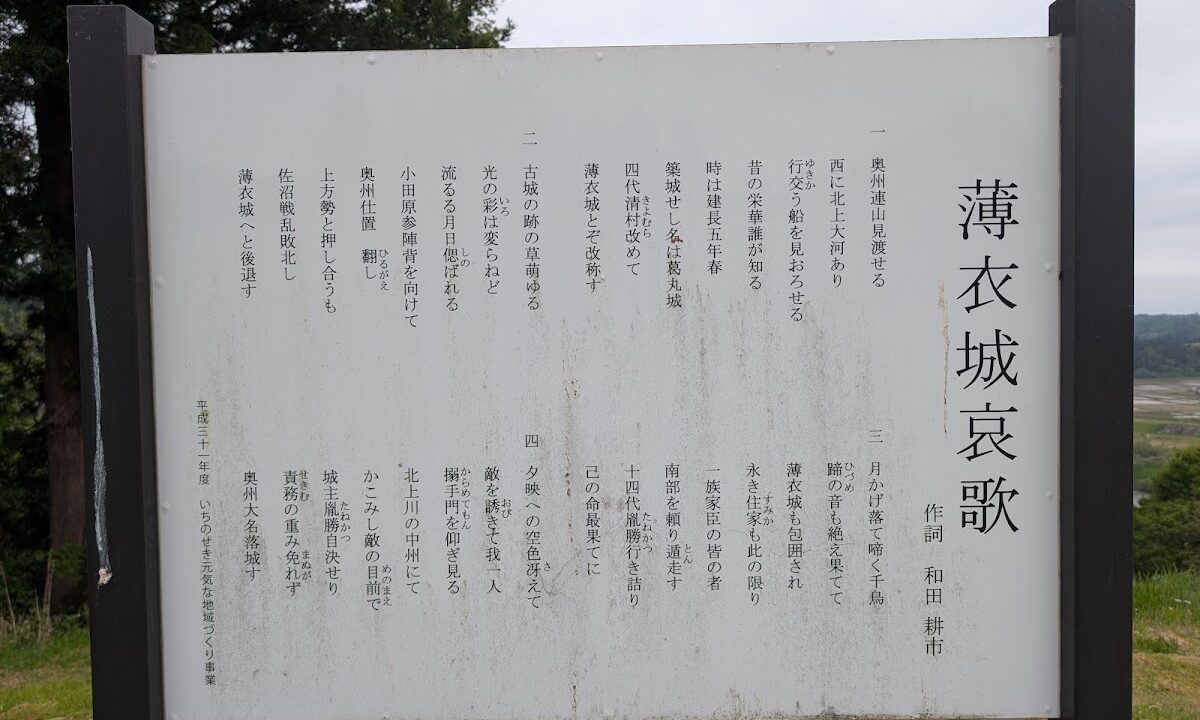
Usuginu Castle (Iwate Prefecture): A Complete Guide to its History and Highlights | A Thorough Explanation of the Remains of a Medieval Mountain Castle
What is Usuginu Castle?
Usuginu Castle (Usuginu-jo) is a medieval Japanese castle located in Usuginu, Kawasaki-cho, Ichinoseki City, Iwate Prefecture. Also known as Kuzumaru Castle, it is currently protected as a designated historical site by Ichinoseki City. Built on a hill 78 meters above sea level overlooking the left bank of the Kitakami River, the castle boasts a relative height of approximately 60 meters. The remains, including baileys and dry moats, are well-preserved, making it a valuable historical site that conveys the typical structure of a medieval castle.
Located in Usuginu-sho, Iwai-gun, Mutsu Province, this castle utilized the natural fortifications of the Kitakami River and held a strategic location controlling a key transportation hub. Even today, the majestic flow of the Kitakami River can be seen from the castle ruins, giving a sense of how important this location was to the castle’s lord at the time.
History of Usugoromo Castle
Construction History and the Chiba Clan
Usugoromo Castle is believed to have been built in Kenchō 4 (1252) or Kenchō 5 (1253). The builder was Chiba Yashirozaemon-no-jō Tanekata, a member of the Chiba clan who had moved from Shimōsa Province (present-day Chiba Prefecture) to Mutsu Province.
The background to Chiba Tanekata building a castle in this area was the strengthening of the Kamakura Shogunate’s control over the Tohoku region. The Chiba clan, a powerful samurai family in the Kanto region, played an important role in establishing the shogunate’s control over the Tohoku region after the fall of the Ōshū Fujiwara clan. Tanekata built a castle in Usugoromo and adopted the name Usugoromo.
Relationship with the Kasai Clan
The Usugoromo Chiba clan belonged to the Kasai clan, a powerful samurai family in Mutsu Province. The Kasai clan held significant power in the Tohoku region as the chief magistrate of Oshu, and the Usugoromo clan was a key part of their vassal group. Usugoromo Castle functioned as one of the Kasai clan’s important bases in governing their territory, and is believed to have been responsible for the defense and administration of the southern part of Iwai County.
Usugoromo Castle, controlling the Kitakami River—a crucial waterway—possessed high strategic value, making it an indispensable subsidiary castle for the Kasai clan. The Usugoromo Chiba clan used this castle as their residence for generations, continuing to rule the region from the Kamakura period through the Sengoku period.
The Sengoku Period and the End of the Castle
With the arrival of the Sengoku period, the Tohoku region entered a turbulent era. The Usugoromo Chiba clan continued to serve the Kasai clan, surviving amidst conflicts with surrounding forces such as the Date clan. However, with Toyotomi Hideyoshi’s pacification of Oshu in 1590, the Kasai clan was dispossessed and destroyed.
With the downfall of their lord, the Kasai clan, the Usugoromo Chiba clan also disappeared from the historical stage. Usugoromo Castle was abandoned, bringing to an end its approximately 340-year history. Afterward, the area became part of the Sendai Domain, and the castle ruins gradually returned to nature over time.
Layout and Structure of Usugoromo Castle
Characteristics of a Concentric Mountain Castle
Usugoromo Castle was built as a concentric mountain castle. A concentric castle is a layout where the main baileys (kuruwa) are arranged in a line, a typical structure of medieval castles that effectively utilizes the topography of mountain ridges and plateaus.
The castle is located on the tip of a hill near the confluence of the Satetsu River and the Kitakami River, with steep cliffs on the north and west sides. Taking advantage of this natural stronghold, the castle’s design cleverly utilizes the terrain, incorporating a moat along the southern ridge to further enhance defense.
Arrangement of the Main Baileys
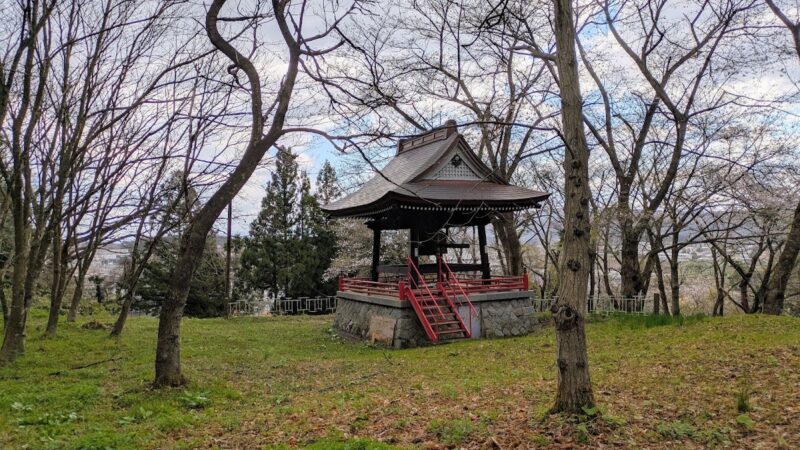
The main bailey (Ichino-kuruwa) is located at the very tip of the castle, overlooking the Satetsu River. The main enclosure (Honmaru) is the central part of the castle and is presumed to have been the residence of the castle lord. Even today, the flat terrain remains, allowing us to imagine the layout of the former buildings.
To the south of the Honmaru, separated by a moat, lies the Ninomaru (second enclosure), followed further south by the San-no-kuruwa (third enclosure) and Yon-no-kuruwa (fourth enclosure). The Honmaru and Ninomaru are now maintained as a park, making them easily accessible for visitors, but parts of the San-no-kuruwa and Yon-no-kuruwa are overgrown with bushes.
There are clear elevation differences between each enclosure, which enhanced defensive capabilities and clearly defined the castle’s boundaries.
Remains of Moats and Dry Moats
A notable defensive feature of Usugoromo Castle is the well-preserved moats and dry moats. Moats, dug to cut across ridges, were important defensive structures that prevented enemy incursions. At Usugoromo Castle, moats separating the main enclosures from the ridge behind them can be observed.
The yokobori (horizontal moat) was a dry moat dug around the perimeter of the bailey, serving to make access to the bailey difficult. These remains are still clearly visible today, providing valuable historical evidence of medieval castle construction techniques.
The depth and width of the moat indicate that it was constructed with considerable effort, suggesting that the Usugoromo Chiba clan considered this castle important.
Rear Gate and Ascent Route
The rear gate (karamete-mon) is known as the main access route to the castle. The rear gate is the entrance to the castle, positioned as a rear gate in contrast to the main gate (ote-mon). Currently, there is an entrance marked “Karamete-mon” along the prefectural road, from which you can access the castle ruins.
From the entrance, a well-maintained mountain path leads to the second bailey in about 5 minutes. Because you can access the main area in a relatively short time, you can easily experience the atmosphere of a medieval castle.
Highlights of Usugoromo Castle
View from the Main Enclosure
The greatest highlight of Usugoromo Castle is the view from the main enclosure. Standing on a hill 78 meters above sea level, you can see the Kitakami River flowing majestically below, stretching all the way to the plains on the opposite bank. This view truly conveys the castle’s strategic location, controlling a vital transportation hub.
Especially on clear days, you can see the distant mountains, allowing you to imagine the medieval castle lords surveying their territories from this spot. The scenery is beautiful throughout the seasons, with the fresh greenery of spring and the vibrant autumn foliage offering different views each time.
Well-Maintained Enclosure Sites
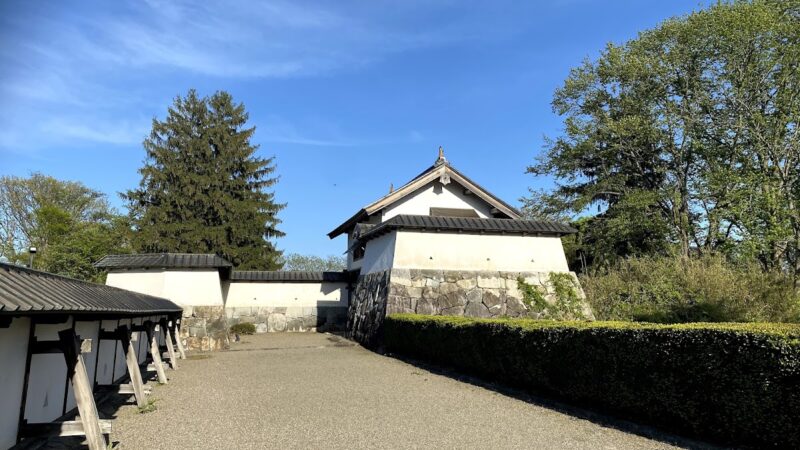
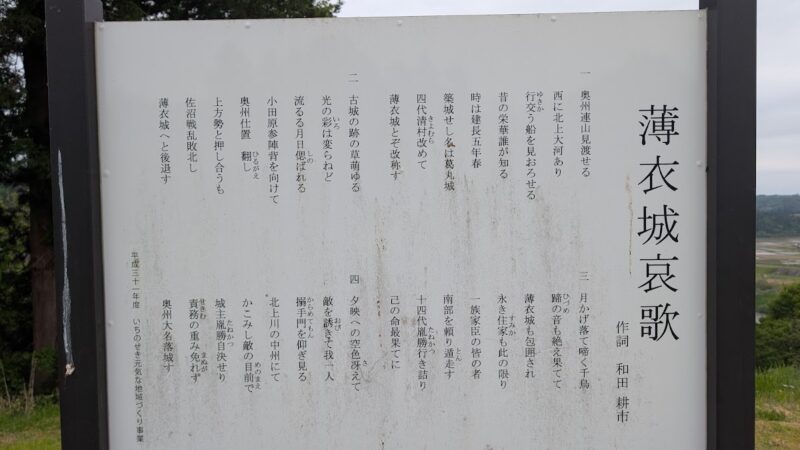
The main enclosure and the second enclosure have been developed into a park, complete with markers and explanatory signs. These signs contain detailed information about the castle’s history and structure, making them easy to understand even for those unfamiliar with castles.
The flat areas of the baileys are maintained through grass cutting and other maintenance, making it easy to understand the scale and layout of the former castle. Benches are also provided, allowing visitors to leisurely stroll through the castle ruins and reflect on medieval history.
Observation Points of the Remains
For castle enthusiasts and history buffs, the remains such as moats and earthworks are of great interest. The moat separating the main bailey and the second bailey is particularly deep and clearly visible. Descending to the bottom of the moat allows for a deeper appreciation of its scale and the techniques used in its construction.
Traces of earthworks remain along the edges of the baileys, allowing for the understanding of the defensive structures’ layout. Furthermore, the elevation differences between baileys and the cut slopes (artificially carved steep slopes) can be observed, making it an excellent learning resource for studying medieval castle construction techniques.
Access to Usugoromo Castle and Surrounding Information
Location and Basic Information
Location: Hatanosawa, Usugoromo, Kawasaki-cho, Ichinoseki City, Iwate Prefecture
Castle Structure: Mountain Castle
Elevation: 78 meters
Relative Height: 60 meters
Builder: Chiba Tanekata
Year of Construction: Kenchō 4 (1252) or Kenchō 5 (1253)
Year of Abandonment: Tenshō 18 (1590)
Designated Cultural Property: Ichinoseki City Designated Historic Site
Alternate Name: Kuzumaru Castle
Transportation Access
Access by Car: Approximately 20 minutes from the Ichinoseki Interchange on the Tohoku Expressway. The entrance to the castle is along Prefectural Road 19. Parking space is limited, so please park carefully on the shoulder of the road.
Access by Public Transportation: Approximately 30 minutes by bus from Ichinoseki Station on the JR Tohoku Main Line, followed by a 10-minute walk from the nearest bus stop. However, bus service is infrequent, so it is recommended to check the timetable in advance.
Points to Note During Your Visit
Estimated Time Required: Approximately 30 to 45 minutes if focusing on the main keep and second bailey. Allow about an hour if you wish to observe the remains in detail.
Clothing and Equipment: As it is a mountain castle, comfortable walking shoes and clothing are essential. Long-sleeved shirts and long pants are especially recommended if exploring the third and fourth baileys, as you may encounter undergrowth. In the summer, bring insect repellent.
Best Season: Spring to autumn is the best time to visit. The fresh greenery from May to June and the autumn foliage from October to November are particularly beautiful and highly recommended. In winter, be aware that snow can make the ground difficult to navigate.
Nearby Tourist Attractions
Ichinoseki City Museum: A facility where you can learn about the history and culture of Ichinoseki City, including exhibits on the medieval history of the region, including Usugoromo Castle. Visiting before visiting the castle ruins will provide a deeper understanding.
Kotsudera Village Manor Ruins: A valuable historical site that preserves the landscape of a medieval manor, offering insights into the rural life of the same era as Usugoromo Castle.
Genbi Gorge: A representative scenic spot of Ichinoseki City, located about 30 minutes by car from Usugoromo Castle. Ideal for visiting in conjunction with a castle ruins tour.
Historical Value of Usugoromo Castle
Significance in Medieval Castle Research
Usugoromo Castle is an important historical site that demonstrates the development process of medieval castles in the Tohoku region. As a castle used continuously for approximately 340 years, from its construction in the Kamakura period to the end of the Sengoku period, it allows us to discern traces of construction techniques and renovations from each era.
In particular, the remains of the castle, such as the multi-bailey layout, moats, and lateral moats, are valuable historical materials that tell the story of the evolution of castle construction technology from the 13th to the 16th centuries. Although archaeological excavations have been limited, much information can be obtained from the remains that remain on the surface, making it a highly valuable historical site for researchers and castle enthusiasts.
Position in Local History
Usugoromo Castle is an indispensable presence when considering the medieval history of Iwai County. As a castle that played a part in the Kasai clan’s rule, it is key to understanding the region’s political and military structure. Furthermore, as an example of the Chiba clan, a powerful samurai family from the Kanto region, expanding into Tohoku, it is a historical site that concretely illustrates the Kamakura Shogunate’s policy of governing Tohoku.
The place name Usugoromo itself originates from this castle and the Usugoromo Chiba clan, and remains part of the region’s identity to this day. Local preservation efforts are underway at the castle site, and it is cherished as a regional historical heritage.
Protection as an Ichinoseki City Designated Historic Site
Usugoromo Castle is legally protected as an Ichinoseki City designated historic site. This system ensures that the destruction or alteration of the remains is regulated, guaranteeing their transmission to future generations. The city manages the site with a balanced approach to utilization and preservation, including the installation of explanatory signs and maintenance of the access routes.
Further research is expected to reveal more about the castle’s detailed structure and historical background. As a regional cultural asset and a valuable historical site conveying Japanese medieval history, the value of Usugoromo Castle will continue to increase.
How to Enjoy Visiting Usugoromo Castle
Beginner-Friendly Tour Course
For those new to castles, the basic course from the rear gate entrance to the second bailey and then to the main bailey is recommended. The round trip takes about 30 minutes, and the well-maintained paths ensure a safe visit.
Ideally, you should first grasp the castle’s overview from the explanatory sign at the entrance, appreciate its scale in the second bailey, and enjoy the view from the main bailey. Reading the explanatory signs along the way will naturally deepen your understanding of the castle’s history and structure.
Advanced Exploration Tips
Those familiar with castles or wishing to observe the remains in greater depth should try exploring the third and fourth baileys. While some areas are overgrown, this offers a valuable opportunity to observe the undeveloped remains in their natural state.
Furthermore, descending to the bottom of the moats to accurately grasp their scale and observing the angles of the cliffs will deepen your understanding of castle construction techniques. Bringing a castle layout map and comparing it to the actual terrain will provide a clearer overall picture of the castle.
Photography Tips
Usuginu Castle is also a suitable castle site for photography. The view of the Kitakami River from the main keep is particularly beautiful in the morning light, making it a great subject for landscape photography. You can also capture photographs that highlight the features of the remains, such as the moats and the elevation changes of the baileys.
The combination of the castle ruins and the changing seasons is also appealing; you can capture different expressions in photographs with the cherry blossoms in spring, the greenery of summer, the autumn leaves, and the snowscapes of winter.
Usugoromo Castle and Other Castles in Iwate Prefecture
Medieval Castles in Iwate Prefecture
Besides Usugoromo Castle, many other medieval castles remain in Iwate Prefecture. Even within Ichinoseki City alone, there are several castle ruins, including Ichinoseki Castle and Matsukawauchi-kan, forming a group of historical sites that tell the story of the medieval history of Iwai District.
In other parts of the prefecture, there are larger castle ruins, such as Morioka Castle (Furaigata Castle) in Morioka City and Kunohe Castle in Ninohe City. Compared to these castles, Usugoromo Castle is positioned as a medium-sized mountain castle, but its well-preserved remains are second to none.
Castles Related to the Kasai Clan
Usugoromo Castle was incorporated into the Kasai clan’s system of rule, but the Kasai clan’s base was Teraiike Castle in Tome City, Miyagi Prefecture. Many branch castles were built within the Kasai clan’s territory, each functioning as a base for regional control.
Castles Related to the Kasai Clan
Usugoromo Castle was incorporated into the Kasai clan’s system of rule, but the Kasai clan’s headquarters were Teraiike Castle in Tome City, Miyagi Prefecture. After visiting Usugoromo Castle, exploring other castle ruins related to the Kasai clan will provide a deeper understanding of the realities of territorial rule in the Tohoku region during the medieval period.
Castles of the Chiba Clan
The Chiba clan was a powerful samurai family based in Shimosa Province, and their branches spread throughout Japan. Several branches of the Chiba clan also advanced into the Tohoku region, building castles in their respective territories.
The Usugoromo Chiba clan is one such example, an important case illustrating the Chiba clan’s expansion into Tohoku. Comparative research into the Chiba clan’s roots and other Chiba-related castles will be an interesting topic for history enthusiasts.
Summary
Usugoromo Castle, a medieval mountain castle remaining in Ichinoseki City, Iwate Prefecture, is a historical site of high historical and surviving value. With a history of approximately 340 years, from its construction during the Kenchō era to its abandonment during the pacification of Oshu, it demonstrates its connection to the Chiba and Kasai clans, important forces in medieval Tohoku.
Usugoromo Castle is one such example, an important historical site illustrating the Chiba clan’s and Kasai clan’s influence. Built on a hill overlooking the Kitakami River, the castle’s multi-bailey layout is a prime example of a medieval castle that skillfully utilizes the terrain, and remnants such as moats and lateral trenches are well-preserved. Protected as a designated historical site by Ichinoseki City, the main bailey and second bailey have been developed into a park, allowing visitors to easily experience the atmosphere of a medieval castle.
The main area is accessible in about 5 minutes from the rear gate entrance along the prefectural road, and from the main bailey, you can enjoy a magnificent view of the Kitakami River. The visit takes approximately 30 minutes to an hour, making it suitable for visitors of all skill levels, from beginners to advanced.
By visiting Usugoromo Castle, you can experience the history of medieval Tohoku, the techniques of castle construction, and the value of regional cultural heritage. When visiting Iwate Prefecture, be sure to visit this historic mountain castle.