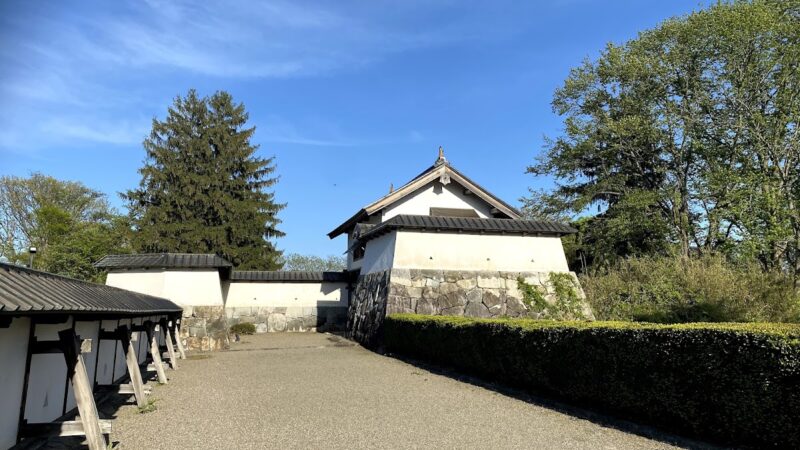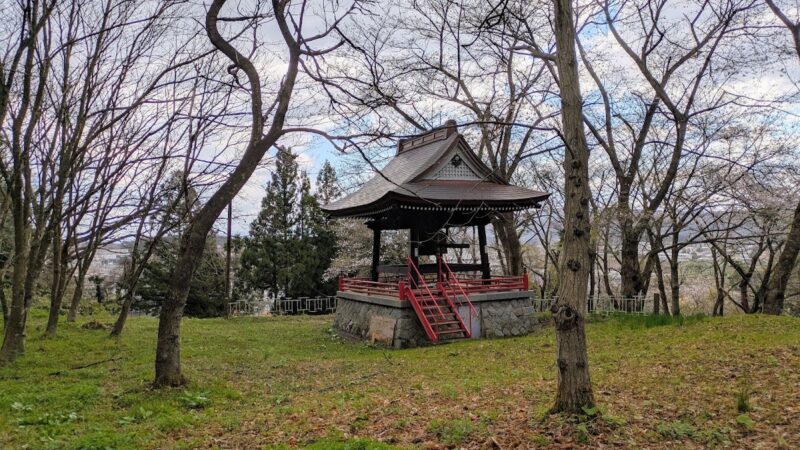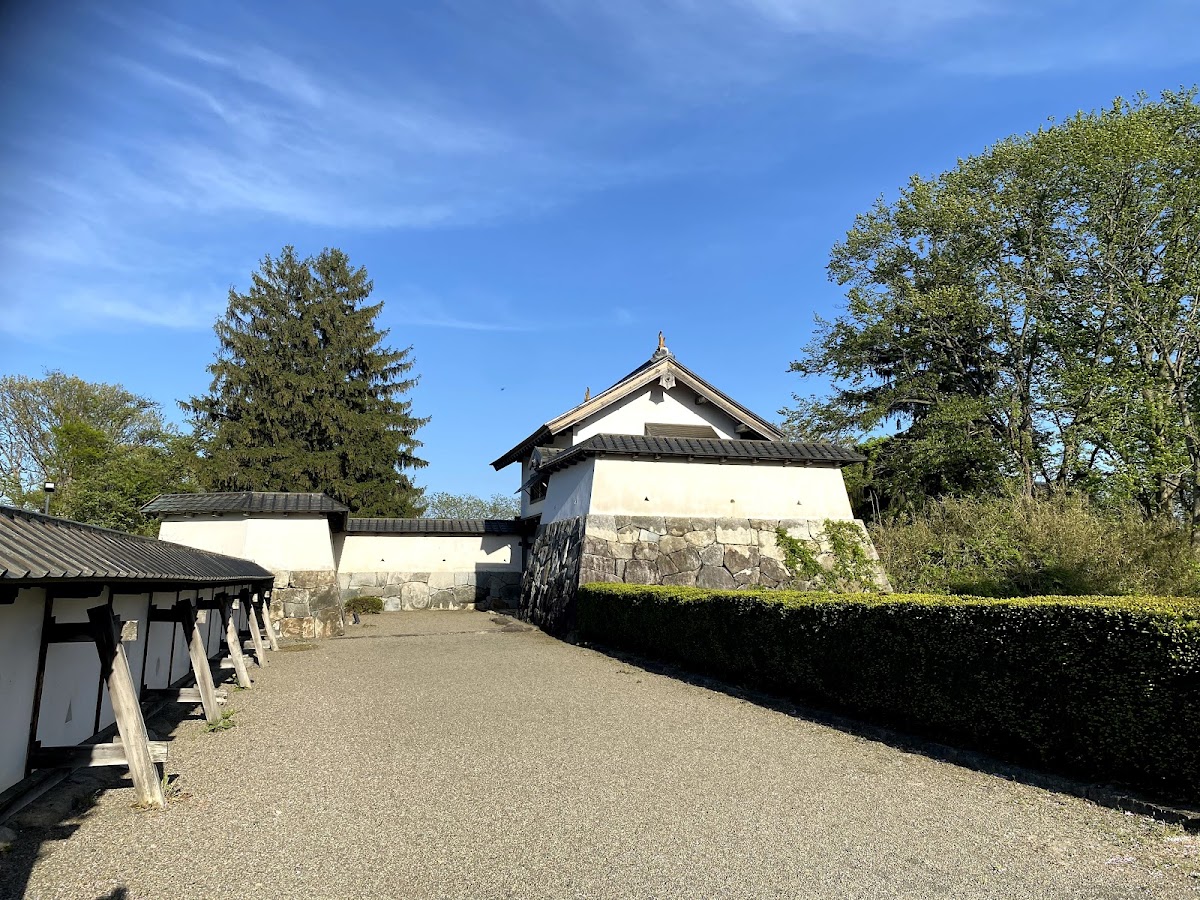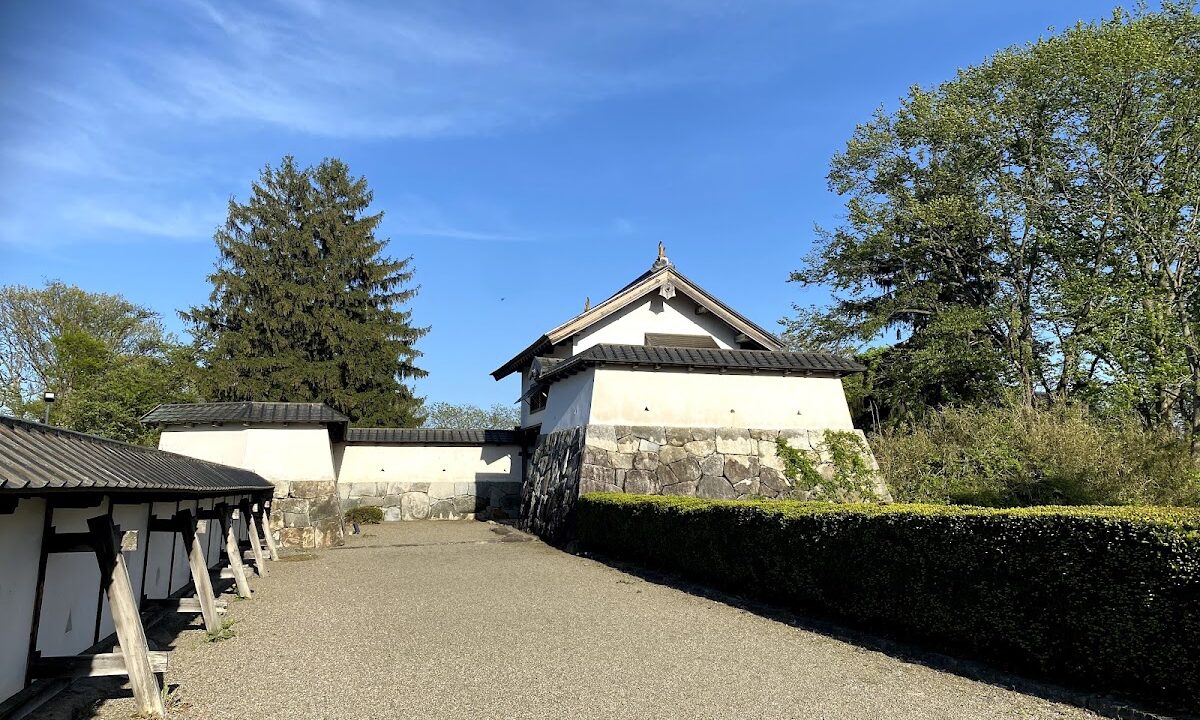
Jūhachijō (Iwate Prefecture): A medieval castle in Hanamaki that flourished as the base of the Hienuki clan
What is Jūhachijō?
Jūhachijō (Sakarigajō) was a medieval Japanese castle located in Honkan, Miyanome, Hanamaki City, Iwate Prefecture. Also known as “Honkan,” it played an important role as the base of the Hienuki clan, who ruled Hienuki County during the Sengoku period.
Although most of the remains have been lost, it is a valuable historical site for understanding the evolution of medieval castles in Iwate Prefecture and is attracting attention in regional history research.
Overview
Basic Information
Jūhachijō was located on a plateau on the right bank of the Segawa River, approximately 2 kilometers north of the Hanamaki city center. Its structure is classified as a mountain castle, and it was a typical medieval form without a keep.
Castle Data:
- Alternate Name: Honkan
- Castle Structure: Mountain Castle
- Keep Structure: None
- Builder: Hienuki Clan
- Year of Construction: Unknown (Estimated to be around the 15th century)
- Main Lords: Hienuki Clan
- Year of Abandonment: Unknown (Estimated to be the first half of the 16th century)
- Remains: Part of the moat
- Designated Cultural Property: Not designated as a historical site
- Location: Honkan, Miyanome, Hanamaki City, Iwate Prefecture (Former Higashi-Miyanome 13th District)
Location and Geographical Characteristics
The location of Juhachigajo Castle is approximately 39 degrees 24 minutes north latitude and 141 degrees 07 minutes east longitude. Its location, utilizing the natural fortifications of a plateau on the right bank of the Segawa River, provided excellent defensive conditions for a medieval castle.
The plateau terrain offered a dual advantage: it made it easy to spot enemy advances and difficult to attack. The Segawa River also served as a natural moat, further enhancing the castle’s defenses.
History of Juhachigajo Castle
As the Base of the Hienuki Clan
Juhachigajo Castle was an important base for the Hienuki clan, who ruled Hienuki County. The Hienuki clan, as local lords subordinate to the Nanbu clan, maintained their power in this region.
Initially, the Hienuki clan used Osegawa Castle as their base, but later moved to Juhachigajo Castle as their main castle. The exact timing of this move is unclear, but it is estimated to have occurred between the late 15th and early 16th centuries.
Move to Toriyagasaki Castle
During the Kyoroku era (1528-1532), the Hienuki clan moved their base from Juhachigajo Castle to Toriyagasaki Castle (later Hanamaki Castle). This relocation is believed to have been for political and military reasons.
Toriyagasaki Castle was located closer to the current city of Hanamaki, suggesting a strategic intention to control a key transportation hub. The relocation from Juhachijo Castle to Toriyagasaki Castle is thought to have marked the end of Juhachijo Castle’s role as the main castle.
Post-Abandonment History
Detailed records of Juhachijo Castle’s fate after losing its function as the main castle are scarce. It is highly likely that it was abandoned by the first half of the 16th century.
Castle Structure and Characteristics
Layout and Defensive Facilities
Due to the limited number of surviving remains, a complete reconstruction of Juhachijo Castle’s layout (the castle’s blueprint) is difficult. However, it is presumed to have had a typical structure for a medieval mountain castle.
It is thought to have made maximum use of the plateau terrain, forming defensive lines with moats and earthworks. As its alternative name, “Honkan” (main residence), suggests, it is highly likely that the structure centered around the lord’s residence.
Moat Structure
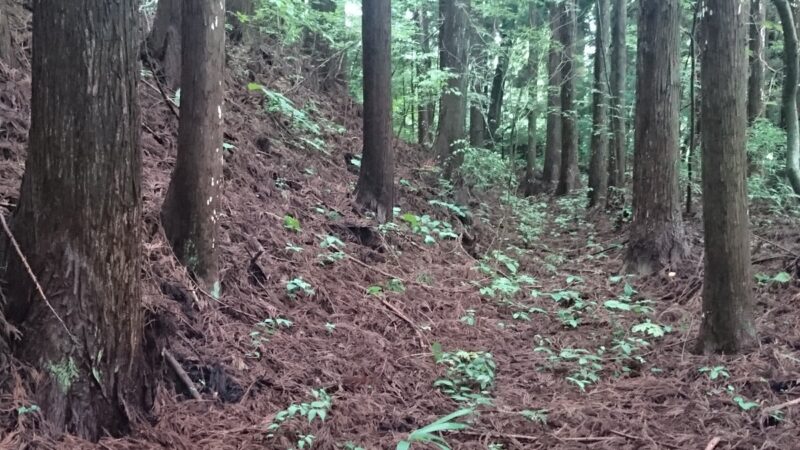
One of the few remaining structures that can be confirmed today is a section of the moat. This moat played a crucial role in the defense of the castle.
In medieval castles, moats not only physically prevented enemy intrusion but also ensured visibility from within the castle and extended the effective range of fire. It is presumed that the moats of the Eighteen Castles also possessed these multiple defensive functions.
Current Situation and Remains
Loss of Remains Due to Development
The remains of the Eighteen Castles have been largely lost due to development since the modern era. The eastern side has been developed into residential areas, and it is estimated that the moats on the western side were filled in due to the development of rice paddies.
This development is thought to have progressed mainly during the period of rapid economic growth, reflecting a historical context where the expansion of living space took precedence over the preservation of historical remains.
Remaining Remains
Currently, only a portion of the moat remains, and its original scale and detailed structure are unknown. The remaining moats do not perfectly preserve their original form, showing the effects of aging and human intervention.
Nevertheless, the few remaining structures serve as valuable evidence that a castle once existed in this area, playing a vital role in conveying the region’s history.
Status of Historic Site Designation
The Eighteen Castles are not designated as a historic site at any national, prefectural, or municipal level. The limited state of remaining structures is considered the main reason for this lack of designation.
However, even without historic site designation, it remains an important site for understanding the region’s history, and future preservation and research methods remain a challenge.
The Hienuki Clan and the Eighteen Castles
Historical Background of the Hienuki Clan
The Hienuki clan were local lords in the medieval period, based in Hienuki County in central Iwate Prefecture. While under the influence of the Nanbu clan, they maintained a certain degree of independence and governed the region independently.
There are various theories regarding the origins of the Hienuki clan, but it is believed that they were one of the samurai groups that settled in this region from the late Heian period to the Kamakura period. From the Muromachi period to the Sengoku period, they expanded their power as a powerful lord in Hienuki County.
Changes in Castles and Power
The Hienuki clan’s base of operations changed over time. The process of relocating from Osegawa Castle to Juhachigajo Castle, and then to Toriyagasaki Castle (Hanamaki Castle), indicates the Hienuki clan’s expansion of power and changes in their governing strategy.
The period when Juhachigajo Castle was their main castle is presumed to be a time of stability for the Hienuki clan. The subsequent relocation to Toriyagasaki Castle signifies a move to a more strategic location, reflecting the Hienuki clan’s ambitious stance.
The End of the Hienuki Clan
The Hienuki clan survived until the end of the Sengoku period, but was ultimately destroyed by the Nanbu clan. During Toyotomi Hideyoshi’s pacification of Oshu in 1590, the Hienuki clan was dispossessed of their territory, and their lands were given to the Nanbu clan.
This historical shift brought the castles built by the Hienuki clan under the control of the Nanbu clan, and they were eventually reorganized within a new castle system.
Medieval Castles in the Hanamaki Region
Relationship with Surrounding Castles
The Eighteen Castles were part of a medieval castle network in the Hanamaki region. Several other castles related to the Hienuki clan existed in the surrounding area, including Toriyagasaki Castle (Hanamaki Castle) and Osegawa Castle.
These castles did not exist in isolation but rather formed a system of regional control through mutual cooperation. The Eighteen Castles are thought to have played an important role as a core part of this network.
Position in the History of Castles in Iwate Prefecture
Iwate Prefecture has castles from various periods, such as Morioka Castle, Kunohe Castle, and Hanamaki Castle. Among these, the Eighteen Castles are a typical example of medieval castles and are important for understanding the history of castles in Iwate Prefecture.
In particular, research on medieval castles like the Eighteen Castles is indispensable when considering the transition from earthen medieval castles to early modern castles using stone walls.
About the Name of the Eighteen Castles
The Pronunciation: “Sakarigajō”
The Eighteen Castles are pronounced “Sakarigajō,” not “Jūhachigajō.” There are several theories about the origin of this unusual pronunciation.
One theory suggests that it is a corruption of “Mori,” indicating that the castle flourished (was prosperous). It has also been suggested that it may originate from a place name or personal name, but no definitive explanation has been found.
Another Name: “Honkan”
The alternative name for the Eighteen Castles, “Honkan,” clearly indicates that this castle was the main base (main castle) of the Hienuki clan. In the Middle Ages, “Tate” was a common term referring to the residence or castle of a feudal lord.
The name “Honkan” (本館) remains as a place name, and traces of it can be seen in the current address “Miyanome-aza Honkan.”
Current Status of Research and Investigation
Status of Documentary Sources
Documentary sources concerning the Eighteen Castles are limited. As is common with local castles of the Middle Ages, detailed records are rare, and we are forced to infer the overall picture from fragmentary information.
Major sources include the “Hienuki Family Documents,” documents related to the Nanbu clan, and Edo period geographical records, but there are not many descriptions that directly mention the Eighteen Castles.
Archaeological Investigations
To date, almost no full-scale archaeological excavations have been conducted at the Eighteen Castles. Given that most of the remains have been lost, the area that can be investigated is limited.
However, there remains the possibility of obtaining new insights through trial excavations of the remaining moats and surrounding areas. Further preliminary surveys related to development plans may lead to significant discoveries.
Future Research Issues
The following issues remain in the study of the Eighteen Castles:
- Identification of Construction Date: To more precisely determine the construction date, which is currently considered “unknown.”
- Restoration of Castle Structure: To create the most accurate possible layout map from limited information.
- Relationship with the Hienuki Clan: To clarify the relationship between the castle’s changes and the Hienuki clan’s political activities.
- Comparative Study with Surrounding Castles: To clarify regional characteristics through comparison with other medieval castles in the Hanamaki region and Iwate Prefecture.
Access and Visiting the Eighteen Castles
Location and Transportation
The site of the Eighteen Castles is located in Honkan, Miyanome, Hanamaki City, Iwate Prefecture (near 112, 13th Ward, Higashi-Miyanome). It is approximately 2 kilometers north of Hanamaki city center.
Public transportation access is limited, making a visit by private car the most practical option. However, since most of the remains have been lost, there is no clearly defined “castle ruins” viewing spot.
Points to Note When Visiting
The current site of the Juhachijo Castles is mainly residential and agricultural land. When visiting, please note the following:
- Do not trespass on private property.
- Do not damage remaining remains such as moats.
- Respect the living environment of local residents.
Since there is no historical site maintenance or information boards, it is recommended to research the location and history beforehand.
Significance of Juhachijo Castles in the Region
Importance in Local History
Juhachijo Castles is an important historical site for understanding the medieval history of Hanamaki City and Iwate Prefecture. It is indispensable in local history research as a clue to the activities of the local lord, the Hienuki clan, and as an example of the reality of medieval castles.
Use in History Education
Although the remaining structures are limited, the history of the Eighteen Castles is a valuable resource for local history education. It provides an opportunity to learn about the characteristics of the Hanamaki region during the medieval period, serving as a subject for local history and regional studies.
Preservation as Cultural Heritage
While the Eighteen Castles are not currently designated as a historical site, they are worth considering for some form of preservation in the future. Protecting the few remaining structures, such as moats, and passing them on to future generations is crucial for preserving the region’s cultural heritage.
Summary
The Eighteen Castles (Sakarigajo) were the base of the Hienuki clan in Hanamaki City, Iwate Prefecture, and are an important castle ruin that demonstrates the realities of regional rule during the medieval period. Although most of the remains have been lost, their historical significance remains undiminished.
The shifts in the Hienuki clan’s base from Osegawa Castle to the Eighteen Castles, and then to Toriyagasaki Castle (Hanamaki Castle), illustrate the dynamics of regional power during the transition from the medieval to the early modern period. The study of the 18 castles will continue to be an important task for understanding the medieval history, castle history, and the formation process of local communities in Iwate Prefecture.
Imagining their former appearance from limited remains and historical materials, and reflecting on the history of the region, is an essential activity in our engagement with history. The 18 castles will continue to live on in the memory of the region as a valuable legacy that stimulates such historical imagination.
References
A deeper understanding of the Eighteen Castles can be gained by referring to the following literature:
- *Medieval Castles and Residences of Iwate Prefecture* (Iwate Prefectural Board of Education)
- *History of Hanamaki City* (Hanamaki City History Compilation Committee)
- *Studies on the Hienuki Clan* (Various collections of papers)
- *Comprehensive Survey of Japanese Castles*, Volume 2: Aomori, Iwate, and Akita (Shin Jinbutsu Oraisha)
- *Castles and Residences of Iwate* (Various regional history research publications)
These documents are useful not only for studying the Eighteen Castles but also for learning about the medieval history and castle history of Iwate Prefecture in general.
Related Topics
To deepen your understanding of the Eighteen Castles, it is beneficial to have knowledge of the following related topics:
- Hienuki Clan: A medieval local lord whose base was the Eighteen Castles
- Hanamaki Castle (Toriyagasaki Castle): The Hienuki clan’s base after relocating from the Eighteen Castles
- Osegawa Castle: A castle where the Hienuki clan had their base before the Eighteen Castles
- Nanbu Clan: The head of the Hienuki clan and the daimyo who ultimately destroyed them
- Morioka Castle: The Nanbu clan’s base and a representative early modern castle of Iwate Prefecture
- Kunohe Castle: An important medieval castle in northern Iwate Prefecture
- Medieval Castles of Iwate Prefecture: A group of castles from the same period as the Eighteen Castles
- Medieval Castle Structure: Classification and characteristics of mountain castles, flatland castles, etc.
- Tohoku Region in the Sengoku Period: Regional conditions during the time when the Eighteen Castles existed
External Links
Information about the Eighteen Castles can also be found on the following websites:
- Hanamaki City Official Website (Hanamaki City History and Cultural Property Information)
- Iwate Prefectural Museum (Iwate Prefecture History and Archaeological Materials)
- Castle-Related Database (Nationwide Castle Information)
- Regional History Research Site (Iwate Prefecture Medieval History Research)
These sites provide basic information about the Eighteen Castles and related historical background. However, for specialized research, we recommend referring to academic papers and specialized books.
—
Although the remains of the Eighteen Castles are limited, they are important historical heritage sites that tell the story of Iwate Prefecture’s medieval history. We hope this article will help deepen your understanding of the Eighteen Castles and their historical background.