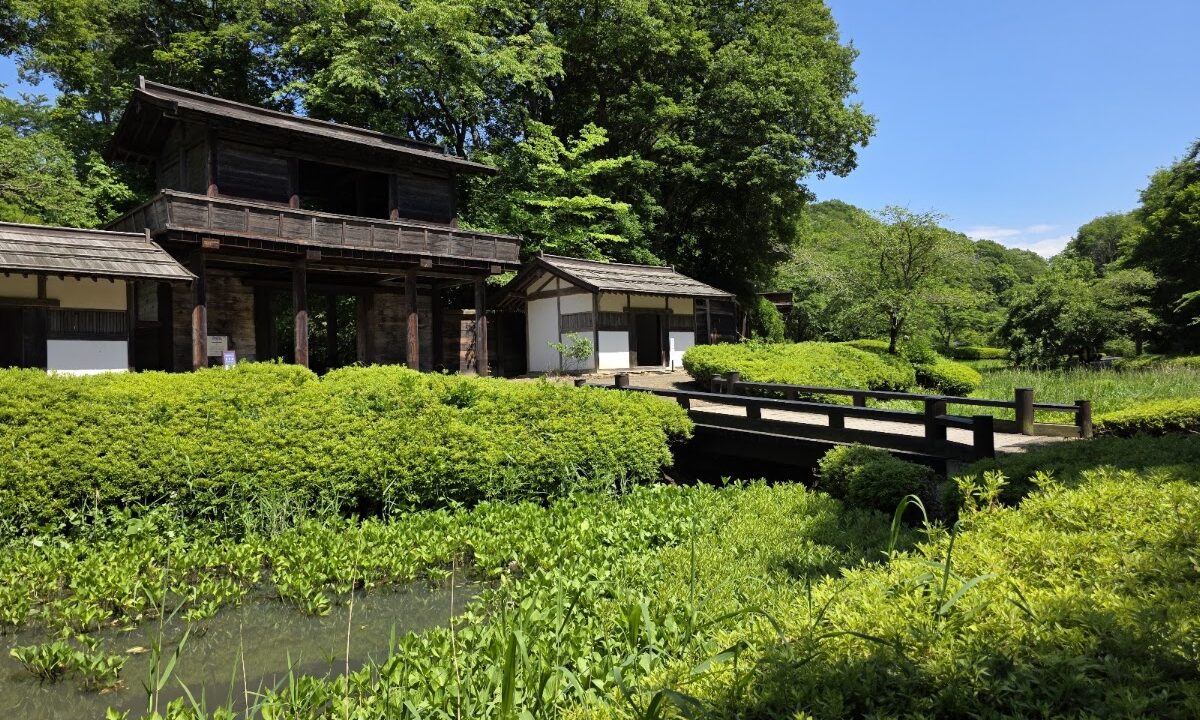
Kakubetsu Castle (Ichinoseki City, Iwate Prefecture) | The Northernmost Fortress of Ancient Mutsu Province and the Site of the Former Nine Years’ War
Kakubetsu Castle is an ancient fortress located in Kadosaki, Kawasaki-cho, Ichinoseki City, Iwate Prefecture. It is believed to be the northernmost fortress of Mutsu Province, with construction beginning in 780 (Hoki 11). It is also the proposed site of “Kawasaki-no-saku,” a battlefield from the Former Nine Years’ War (1051-1062), and is an important historical site that conveys the history of the Tohoku region from ancient to medieval times.
Historical Background of Kakubetsu Castle
Northern Frontier Defense Base of Ancient Mutsu Province
The construction of Kakubetsu Castle is recorded in the “Shoku Nihongi” (Continued Chronicles of Japan), with construction beginning in 780 (Hoki 11) as a fortress to protect the northernmost point of Mutsu Province. The imperial court at the time was gradually expanding its territory by building fortifications in stages to advance northward along the border with the Emishi people. Kakutō Castle is believed to have served as a frontline base, playing a crucial role both militarily and administratively.
Ancient fortifications were not merely military facilities; they also functioned as centers for governing and trading in the surrounding areas. Given its location at a key transportation hub in the Kitakami River basin, Kakutō Castle is also presumed to have served as a center for the collection of goods and information transmission.
The Former Nine Years’ War and Kawasaki Fort
The site where the remains of Kakutō Castle are located is also known as the likely site of Kawasaki Fort, an important battlefield during the Former Nine Years’ War. The Former Nine Years’ War, fought from 1051 to 1062, was the largest civil war in the Tohoku region, fought between the Abe clan, a powerful family in Mutsu Province, and Minamoto no Yoriyoshi and his son Yoshiie, representing the imperial court.
Kawasaki Fort was one of the Abe clan’s defensive strongholds, and its name is recorded in historical documents such as the *Mutsu Waki*. The Abe clan maintained their power by building multiple forts along the Kitakami River basin, but were gradually cornered by the Minamoto clan’s offensive. The battle at Kawasaki Fort is considered a crucial phase in this process.
Recent archaeological excavations have confirmed the existence of a defensive structure with a double moat at this site, providing important evidence supporting the existence of Kawasaki Fort. Even more interestingly, numerous remains and artifacts from an earlier period than Kawasaki Fort have been discovered, increasing the likelihood that these are the remains of Kakuto Castle, mentioned in the *Shoku Nihongi*.
Structure and Characteristics of Kakuto Castle
Double Moat Defensive System
The most noteworthy finding from the excavations was the presence of a double moat. This defensive system, consisting of an inner and outer moat, demonstrates the high level of castle construction technology of the time. The width, depth, and arrangement of the moats suggest that it was a considerably large defensive structure.
The double moat structure was designed to gradually prevent enemy incursions, with the outer moat forming the first line of defense and the inner moat providing even stronger protection. This type of defensive structure is standard for ancient castles and fortifications, indicating that Kakutō Castle was a planned and fully-fledged military facility.
The Castle’s Reality as Seen from Excavated Artifacts
Excavations have unearthed pottery, iron artifacts, and wooden artifacts dating from the late 8th to 9th centuries. These artifacts provide important evidence that Kakutō Castle coincides with the construction period recorded in the *Shoku Nihongi* (Continued Chronicles of Japan).
Of particular note are the ink-inscribed pottery, believed to have been used in government offices, and fragments of weapons. These suggest that Kakutō Castle was not merely a military base but a comprehensive facility incorporating administrative functions. Furthermore, artifacts from the 11th century have been discovered, supporting the possibility that this site was reused as the Kawazaki Fort during the Former Nine Years’ War.
Location and Topographical Characteristics
Kakutō Castle is located on a hill along the Satetsu River, a tributary of the Kitakami River. This location was suitable for monitoring and controlling river traffic, and also advantageous for defense, taking advantage of the hilly terrain.
The surrounding area is relatively flat, and it is thought that the castle offered a wide-ranging view. Such good visibility was important for early detection of approaching enemies and enhanced its function as a military base.
Relationship between Kakutō Castle and Surrounding Castles
Mutsu Province’s Castle Network
Kakutō Castle was located at the northernmost point of a series of castles built in ancient Mutsu Province. To the south were castles such as Izawa Castle (present-day Ōshū City) and Shiwa Castle (present-day Morioka City), and these castles cooperated with each other to defend and govern the northern border.
The imperial court gradually advanced its castle network northward, pushing the border with the Emishi people upward. The construction of Kakutō Castle was part of this policy and is thought to have been positioned as a foothold for further northward expansion. However, due to subsequent changes in the political situation, the importance of Kakutō Castle declined, and it seems to have eventually been abandoned.
Abe Clan’s Fortifications during the Former Nine Years’ War
During the Former Nine Years’ War, the Abe clan had established a sphere of influence by building multiple fortifications in the Kitakami River basin. Besides the Kawasaki Fortification, there were also the Kurikawa Fortification (Morioka City) and the Toriumi Fortification (Kanegasaki Town), which formed a coordinated defense network.
The Kakutō Castle ruins, which were reused as the Kawasaki Fortification, are thought to have functioned as part of this network. By utilizing the remains of ancient castles and fortifications, the Abe clan was able to efficiently develop their defensive bases.
Results and Academic Significance of the Excavation
Investigation History and Major Discoveries
The full-scale excavation of the Kakutō Castle ruins was conducted with the aim of identifying the location of the Kawasaki Fortification. The investigation yielded discoveries beyond expectations. Not only were 11th-century remains related to the Former Nine Years’ War unearthed, but numerous remains and artifacts from the much older late 8th century were also discovered.
This discovery has led to this site being strongly regarded as the likely location of Kakutō Castle, as described in the *Shoku Nihongi* (Continued Chronicles of Japan). The convergence of historical documents and archaeological evidence is invaluable and holds significant importance in the study of ancient Tohoku history.
Contribution to the Study of Ancient Castles and Fortifications
The results of the Kakutō Castle investigation have brought new insights to the study of ancient castles and fortifications in Mutsu Province. In particular, the acquisition of empirical data regarding the specific structure, scale, and construction techniques of the fortifications is a major achievement.
Furthermore, it is noteworthy as an example of ancient castles and fortifications being reused in the medieval period. The utilization of the Kakutō Castle site as the Kawazaki Fort demonstrates its topographical advantages and the value of existing facilities, offering insights into the study of medieval castles.
Current Status and Preservation of Kakutō Castle
Status of Historical Site Development
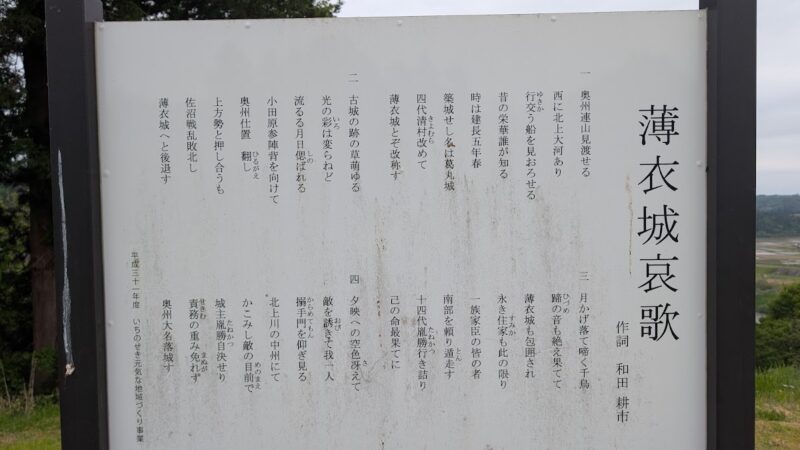
Currently, the Kakutō Castle ruins are preserved as a historical site by Ichinoseki City. However, large-scale development has not been carried out, and the site is mainly used for farmland and forest. After the excavation, the site was backfilled, making it difficult to confirm any remains from the surface.
However, an explanatory sign has been installed at the site, allowing visitors to learn about the history of Kakutō Castle and the Kawasaki Fort. Furthermore, the surrounding topography allows for the imagination of the former castle’s location.
Future Challenges and Prospects
Further investigation and development of the Kakutō Castle ruins are important future challenges. Excavation has been limited, and the overall picture of the castle fort has not yet been revealed. Additional investigations are expected to clarify the extent of the castle grounds, building layout, and functions in more detail.
Furthermore, utilizing the site as a historical site is also a challenge. For people interested in ancient Tohoku history and the Former Nine Years’ War, the Kakutō Castle ruins could be an important learning site. Proper maintenance and information dissemination are necessary to widely convey the value of this site as a historical heritage.
Access and Visiting Information
Location
Kakutō Castle Ruins are located in Kawasaki, Kadosaki, Kawasaki-cho, Ichinoseki City, Iwate Prefecture. They are situated in a hilly area along the Satetsu River, a tributary of the Kitakami River, and are surrounded by rural landscapes.
Transportation Access
Using Public Transportation
The nearest station is Ichinoseki Station on the JR Tohoku Main Line and Rikuu East Line. From the station, you will need to take a local bus or taxi. The distance from Ichinoseki Station to the site is approximately 15 kilometers.
Using a Car
It takes about 20 minutes from the Ichinoseki Interchange on the Tohoku Expressway via National Route 284. There is no dedicated parking lot, so please be considerate of local residents when visiting.
Notes for Visitors
Although Kakutō Castle Ruins are designated as a historical site, they are not maintained like typical tourist attractions. Since the site may include private property, please observe the following points when visiting:
- Be considerate and avoid interfering with agricultural work.
- Always take your trash with you.
- Damaging the historical remains is strictly prohibited.
- It is recommended to contact the Ichinoseki City Board of Education or other relevant authorities in advance.
Related Historical Sites in the Surrounding Area
Castles and Historical Sites in Ichinoseki City
Kotsudera Village Manor Site
This is the site of a medieval manor located in the Kurikawa district of Ichinoseki City, and is a candidate for inclusion in the World Heritage site “Hiraizumi.” The medieval landscape is well-preserved, allowing visitors to learn about history slightly later than the time of Kakutō Castle.
Kurikawa Castle Ruins
This is the site of the final battle of the Former Nine Years’ War, located in Morioka City. It is believed to be the location of Kurikawa Fort, the base of the Abe clan, and, along with Kakutō Castle (Kawasaki Fort), is an important historical site for understanding the Former Nine Years’ War.
Major Castles in Iwate Prefecture
Morioka Castle Ruins (Iwate Park)
One of Japan’s Top 100 Castles, this early modern castle was built as the residence of the Nanbu clan. The stone walls are well-preserved, making it a representative historical castle site of Iwate Prefecture. It’s easily accessible, within walking distance of Morioka Station.
Kunohe Castle Ruins
Selected as one of Japan’s Continued Top 100 Castles, this castle ruin from the Sengoku period was the site of the final battle during Toyotomi Hideyoshi’s pacification of Oshu. The earthworks and moats are well-preserved, making it a valuable historical site for understanding castles in the Tohoku region during the Sengoku period.
Shiwa Castle Ruins
An ancient fortified castle located in Morioka City, built in 803. As a fortified castle from the same period as Kakutō Castle, it is important for understanding the management of the northern borders of ancient Mutsu Province. It has been developed as a historical park, and reconstructed buildings can be visited.
Learning about Ancient Tohoku History from Kakutō Castle
The Relationship Between the Emishi and the Imperial Court
The history of Kakutō Castle tells the story of the complex relationship between the Emishi and the Imperial Court in ancient times. The Imperial Court attempted to expand its control over the northern borders using military power and administrative institutions, but this was not necessarily a one-sided conquest.
Fortresses served not only as military bases but also as places of trade and cultural exchange. Some Emishi people submitted to the Imperial Court and obtained official positions, resulting in a complex relationship between the two, a mixture of conflict and cooperation. Kakutō Castle was one of the stages in this history.
The Historical Significance of the Former Nine Years’ War
The Former Nine Years’ War was a landmark event in the medieval history of the Tohoku region. The downfall of the Abe clan drastically changed the power structure in the Kitakami River basin, leading to the subsequent rise of the Ōshū Fujiwara clan.
The Kakutō Castle ruins, which were used as the Kawazaki Fort, are a valuable historical site that conveys this turning point. The fact that an ancient fort was reused during the wars of the medieval period simultaneously demonstrates both the continuity and change of history.
Cutting Edge of Kakutō Castle Research
Comparison with Historical Documents
In Kakutō Castle research, the comparison of historical documents such as the *Shoku Nihongi* with archaeological evidence is crucial. While the documents mention the construction of Kakutō Castle, they do not specify its exact location or structure. By comparing the physical evidence obtained from excavations with historical records, a more accurate historical picture can be constructed.
Comparative Research with Other Forts
Several ancient fort sites have been identified in the Tohoku region, including Izawa Castle, Shiwa Castle, and Tokutan Castle. Comparative research with these sites clarifies the characteristics and positioning of Kakutō Castle. By comparing the scale, structure, and excavated artifacts of the forts, our understanding of the entire fort system in Mutsu Province is deepening.
Future Research Topics
Many aspects of Kakutō Castle remain unexplained. Further research is needed on numerous topics, including the precise boundaries of the castle grounds, the layout of the buildings, the timing and reasons for its abandonment, and the details of its reuse as the Kawazaki Fort.
Furthermore, investigations of the surrounding area are crucial. Clarifying the settlements, production facilities, and transportation routes associated with the castle fort will reveal the true nature of the community centered around Kakutō Castle.
Summary
Kakutō Castle, built in 780, was the northernmost castle fort in ancient Mutsu Province and an important historical site, also considered a possible location for the Kawazaki Fort during the Former Nine Years’ War. Archaeological excavations have uncovered a double moat and artifacts from the late 8th century, archaeologically confirming the existence of Kakutō Castle as described in historical documents.
From ancient to medieval times, this area played a vital role in the history of the Tohoku region. The ruins of Kakutō Castle hold a multifaceted history, encompassing the imperial court’s management of the northern borders, relations with the Emishi people, and the historical event of the Former Nine Years’ War.
Although currently not significantly maintained, it is preserved as a valuable historical site in Ichinoseki City, Iwate Prefecture. Further research, appropriate preservation, and utilization are expected to lead to a wider recognition of Kakutō Castle’s historical value.
For those interested in ancient Tohoku history or the Former Nine Years’ War, the ruins of Kakutō Castle are a historical site well worth visiting. Standing amidst the quiet rural landscape of this ancient castle, you can reflect on history spanning over a thousand years.