Complete Guide to Ohasama Castle (Hanamaki City, Iwate Prefecture) | Thorough Explanation of History, Remains, and Access
Overview of Ohasama Castle
Ohasama Castle was a Japanese castle located in 48th Ward, Uchikawame, Ohasama-cho, Hanamaki City, Iwate Prefecture. It functioned as the base of the Ohasama clan, who ruled this region from the Muromachi period to the Sengoku period.
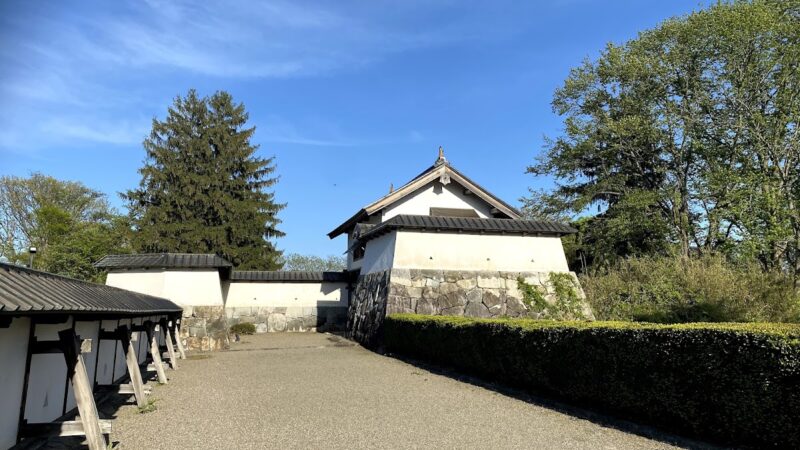
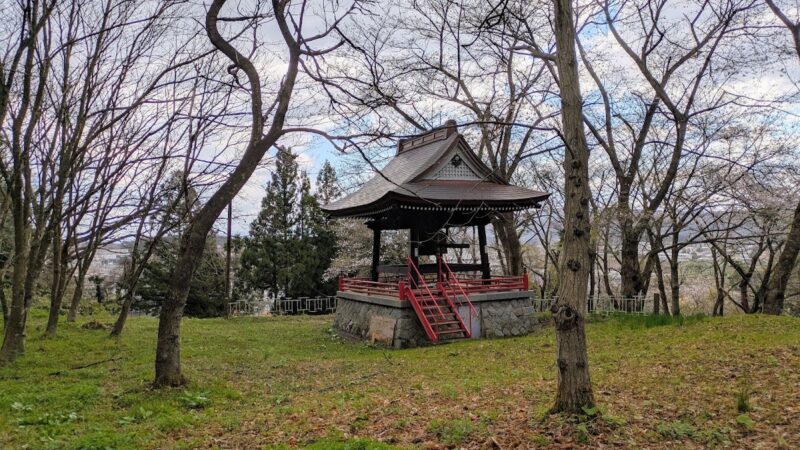
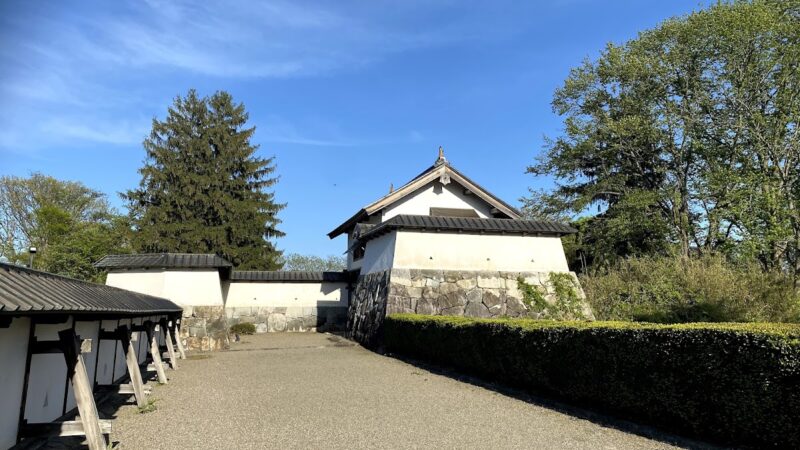
Although no buildings remain today, the remains such as baileys, earthworks, dry moats, and vertical moats are well-preserved, conveying the appearance of the mountain castle of that time. Among the many medieval castles remaining in Iwate Prefecture, it is positioned as an important historical site for understanding the history of the Hienuki region.
Common Names and Alternate Names
Ohasama Castle has several common names and alternative names. The main ones are listed below.
- Furudate
- Ukondate
- Keirinjidate
- Keirinkan
- Takayashiki no Otate
These alternative names arose from the castle’s location, the lord’s official rank, and its connection to nearby temples. The name “Keirinjidate” in particular indicates its geographical relationship to Keirinji Temple, located south of the castle.
Basic Information on Osako Castle
Location
Location: 48th Ward, Uchikawame, Osako-cho, Hanamaki City, Iwate Prefecture
Former Province: Mutsu Province
Postal Code: 〒028-3203 surrounding area
Osako-cho merged with Hanamaki City on January 1, 2006 (Heisei 18), and is now part of Hanamaki City. This area was formerly part of Hienuki District and was known as the “Village of Kagura and Wine.”
Classification and Structure
Castle Classification: Mountain Castle
Elevation: Approximately 288m (Relative Height Approximately 110m)
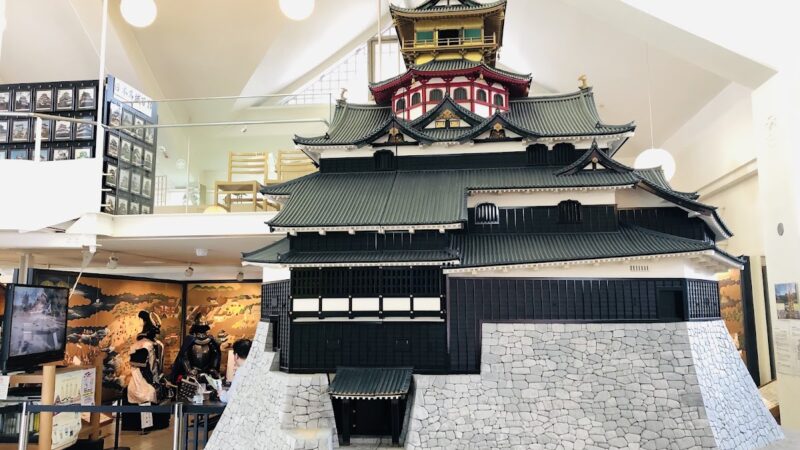
Keep Structure: None (As it is a medieval mountain castle, there is no keep)
Builder: Osako Clan
Construction Period: Details Unknown (Estimated to be the Muromachi period)
Main Lords: Successive generations of the Osako clan
Year of Abandonment: Abandoned during the Tensho era (1573-1592) due to Toyotomi Hideyoshi’s pacification of Oshu
Osako Castle is a typical medieval mountain castle, possessing a defensive structure that skillfully utilizes the natural terrain. Built on a hill with a relative height of approximately 110m from the plains, it was situated in a strategic location overlooking the surrounding area.
Details of Remains
The main remains that can be confirmed today are as follows:
Kuruwa (Enclosures): Multiple flat areas are arranged in stages, forming a structure where secondary enclosures surround the main enclosure. These enclosures were used as living spaces and defensive strongholds.
Dorui (Earthworks): Remaining earthen defensive structures are found along the edges of the enclosures. They served to prevent enemy intrusion and acted as barriers against arrows and stones.
Yokobori (Dry Moat): These moats, dug across ridges, were important defensive structures that hindered enemy advances. They are dry moats without water and can be found in multiple locations.
Tatebori (Vertical Moat): These moats, dug vertically along slopes, served to prevent enemies from climbing the slopes.
These remains represent a typical structure of a mountain castle from the Sengoku period and are valuable resources for understanding the castle-building techniques and defensive philosophies of the time.
History and Genealogy of the Osako Clan
Origins of the Osako Clan
The Osako clan is considered a branch of the Hienuki clan. According to tradition, Osako Shigemasa, son of Hienuki Hiroshige (the founder of the Hienuki clan), became the ancestor of the Osako clan. The Hienuki clan was one of the samurai groups that served the Oshu Fujiwara clan, and they established their power in this region from the late Heian period to the Kamakura period.
The Osako clan, as a powerful local lord in the Hienuki region, maintained their power from the Muromachi period to the Sengoku period, with Osako Castle as their base. This region is located in a tributary of the Kitakami River and was a strategically important location due to its key transportation hub connecting the inland and coastal areas.
Territory of the Osako Clan
The area ruled by the Osako clan was part of the Hienuki region, centered around present-day Osako-cho, Hanamaki City. This region had the following geographical characteristics:
- North: Morioka City and Shimohei District
- East: Tono City
- South: Waga District
- West: Ishidoriya Town and Shiwa District
Located surrounded on all sides by other territories, the Osako clan needed to maintain diplomatic relations with surrounding local lords while protecting their own territory.
Trends in the Sengoku Period
With the arrival of the Sengoku period, warfare continued throughout the Tohoku region. The Osako clan, in their relationship with the Hienuki clan and surrounding local lords, were forced to make political choices for their survival.
Especially in the latter half of the 16th century, the expansion of the Nanbu clan and the northward advance of the Date clan, among other major powers, intensified, making it a difficult time for smaller local lords. It is believed that the Osako clan sometimes formed alliances and sometimes resisted in an attempt to protect their territory.
Toyotomi Hideyoshi’s Pacification of Oshu and the Fall of Osako Castle
Background of the Pacification of Oshu
In 1590, after completing the Siege of Odawara, Toyotomi Hideyoshi embarked on unifying the Tohoku region. This series of policies is known as the “Pacification of Oshu.” Hideyoshi demanded that the various daimyo of Tohoku submit to the Toyotomi regime, and applied military pressure to those who refused.
Unrest in the Hienuki Region
In the Hienuki region, the Hienuki clan is said to have taken the lead in resisting. However, faced with the overwhelming military power of the Toyotomi army, the local lords were forced to surrender one after another.
Osako Castle is also believed to have fallen during the process of the Pacification of Oshu. Although there are no specific records of the battle, it is certain that the castle was abandoned around this time. Detailed records of the fate of the Osako clan, the lords of the castle, are scarce. Like many other local lords, it is presumed that they either fell into decline or served a new ruler.
Osako Castle After its Abandonment
After the pacification of Oshu, this region came under the control of the Nanbu clan. Osako Castle ceased to function as a military base and was abandoned. Throughout the Edo period, the castle site was used for farmland and forest, gradually returning to nature.
However, the basic structures such as the baileys and moats remain as part of the topography, conveying its original appearance to the present day. Although the buildings themselves are gone, the earthen structures such as the earthworks and moats have been preserved relatively well even after several hundred years.
Location and Geographical Importance of Osako Castle
Osako as a Key Location
The Osako area has long been known as a vital transportation hub. Located on a route connecting the inland and coastal areas, it played a crucial role in the distribution of goods and information.
This location held significant strategic value, particularly as a relay point on the route from Tono to the Kitakami River basin. It is believed that Osako Castle functioned as a base for monitoring and controlling these transportation routes.
Surrounding Topography and Defense
Osako Castle was built on a hill overlooking the surrounding plains. Its height of approximately 110 meters made it a challenging climb for attackers and a favorable location for defenders, allowing for easy monitoring of the surrounding area.
To the south of the castle was Keirinji Temple, which is also thought to have had a deep connection with the Osako clan. In medieval castles, temples often functioned as part of the castle’s structure, suggesting that Keirinji Temple may have been incorporated into Osako Castle’s defense system in some way.
Relationship with the Kitakami River System
The Osako region is located in a tributary of the Kitakami River and is closely connected to river transportation. In the medieval period, rivers were crucial transportation routes and major arteries for the transport of goods. It is possible that the Osako clan gained economic benefits by controlling river transportation. ## Current State of Osako Castle Ruins
Preservation Status
The current state of Osako Castle Ruins consists largely of private land and forest, and is not developed as a typical tourist destination. However, the basic structure of the castle remains is well-preserved, making it a valuable historical site for castle researchers and history enthusiasts.
While the ruins are often rated as moderate (C rank), this is due to the lack of remaining buildings and the insufficient development, and does not negate the value of the ruins themselves.
Points to Note When Visiting
When visiting Osako Castle Ruins, please note the following:
- Consideration for Private Land: Part of the castle ruins is private land, so permission from the landowner may be required for entry.
- Safety of Footing: As it is a mountain castle, there are areas with uneven footing. Please wear appropriate clothing and shoes.
- Lack of Signage: Because it is not developed as a tourist destination, there may be few signs. It is recommended to check the location in advance using maps and other materials. 4. Seasonal Considerations: Observing the ruins may be easier in winter or early spring than in summer when vegetation is lush.
History and Culture of Osako Town
“The Village of Kagura and Wine”
Osako Town was known by the catchphrase “The Village of Kagura and Wine.” Hayachine Kagura is designated as a National Important Intangible Folk Cultural Property and is carefully preserved as a regional traditional culture.
Furthermore, the cultivation of wine grapes, taking advantage of the cool climate, is thriving, and local wines, including “Edel Wine,” are highly regarded nationwide. When visiting the castle ruins, you can also experience this regional culture.
The Osako Area After Merger
On January 1, 2006 (Heisei 18), Osako Town merged with Hanamaki City, Ishidoriya Town, and Towa Town to form the new Hanamaki City. Currently, as a region of Hanamaki City, it continues to develop while inheriting its history and culture.
Nearby Attractions
Keirinji Temple
Located south of Osako Castle, Keirinji Temple is the origin of the castle’s alternative name. It is said to have had close ties to the Osako clan and is well worth visiting along with the castle ruins.
Hayachineyama Mountain
To the northeast of Osako Town stands Hayachineyama Mountain (1,917m above sea level), the highest peak in the Kitakami Mountains. Known as a treasure trove of alpine plants, it is a popular spot for mountain climbing and hiking.
Edel Wine Factory
This wine factory produces wine in Osako Town. Tours and tastings are available (advance confirmation required). You can enjoy local specialties.
Hayachine Kagura Transmission Hall
This facility allows you to learn about Hayachine Kagura, a nationally designated Important Intangible Folk Cultural Property. You can experience the charm of this traditional performing art.
Access Information
Public Transportation
Train: The nearest major station is JR Tohoku Main Line “Hanamaki Station”.
Bus: From Hanamaki Station, take the Iwate Kotsu Bus “Osako Line” for approximately 50 minutes and get off at the “Osako” bus stop.
The castle ruins are a short walk from the Osako bus stop, but it is recommended to check the detailed route with a local tourist information center beforehand.
Car
Tohoku Expressway: Exit at Hanamaki IC and take National Route 283 for approximately 30km (approximately 40 minutes).
Parking: There is no dedicated parking lot for the castle ruins. Please use nearby public facilities or roadside rest areas.
Current Status and Challenges of Osako Castle Research
Limitations of Documentary Sources
Documentary sources concerning Osako Castle are limited, and many points remain unclear, such as the construction date, detailed genealogy of the castle lords, and specific battle records. This is a common challenge for small to medium-sized castles in rural areas.
The Need for Archaeological Investigation
If a full-scale excavation were conducted, it would be possible to obtain more detailed information about the castle’s usage period, lifestyle, and the time of its abandonment from the unearthed artifacts. However, currently, such investigations have not been carried out.
Position in Regional History Research
Osako Castle is an important historical site for understanding the medieval history of the Hienuki region. It is related to various historical themes, such as the activities of the Hienuki clan, their relationships with surrounding local lords, and the reality of the Tohoku region’s control under the Oshu Settlement. Further research is expected.
Summary
Osako Castle (Hanamaki City, Iwate Prefecture) is a mountain castle that functioned as the base of the Osako clan from the Muromachi period to the Sengoku period. Although it was abandoned due to Toyotomi Hideyoshi’s Oshu Settlement, remains such as baileys, earthworks, horizontal moats, and vertical moats still exist, conveying the appearance of the mountain castle at that time.
Also known as Furudate, Ukonkan, and Keirinjikan, it is located at 48th Ward, Uchikawame, Ohasama-cho, Hanamaki City, Iwate Prefecture. The castle was built by the Ohasama clan, a branch of the Hienuki clan. While the exact construction date is unknown, it is estimated to be from the Muromachi period.
Although not currently developed as a tourist attraction, it remains a valuable historical site for castle researchers and history enthusiasts, offering insights into the structure of a medieval mountain castle. Ohasama-cho is also known as the “Village of Kagura and Wine,” allowing visitors to enjoy local culture and specialty products along with their castle visit.
While numerous medieval castles remain in Iwate Prefecture, Ohasama Castle holds a particularly important position in understanding the history of the Hienuki region. Further research and preservation efforts are expected to reveal even more.
Reference Materials
Information regarding Ohasama Castle can be obtained from the following sources:
- Various castle databases (websites aggregating castle information from across Japan)
- Local history materials of Iwate Prefecture and Hanamaki City
- Castle research books such as “The Complete Guide to Japanese Castles”
- Survey reports by local history research groups
- Archaeological academic papers
For those who want to learn more, we recommend visiting the Hanamaki City Library or Local History Museum. You may make new discoveries from local traditions and ancient documents.