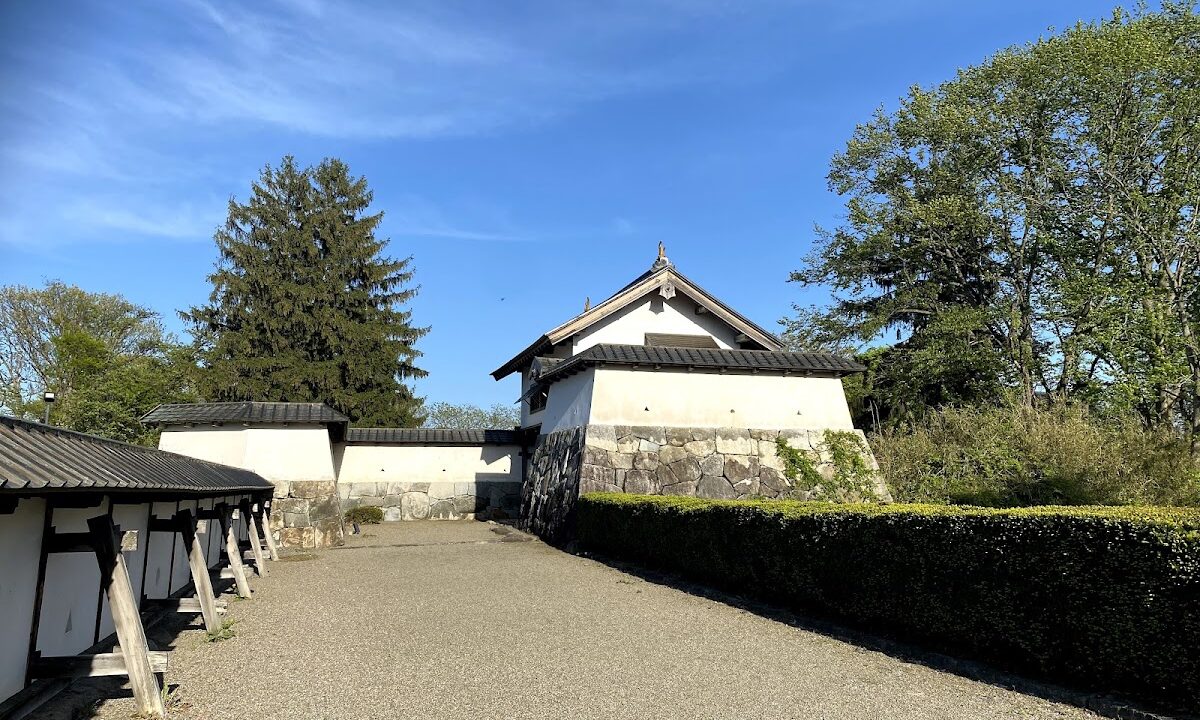
Kamegamori Castle (Hanamaki City, Iwate Prefecture) Complete Guide | Thorough Explanation of History, Remains, and Access
What is Kamegamori Castle?
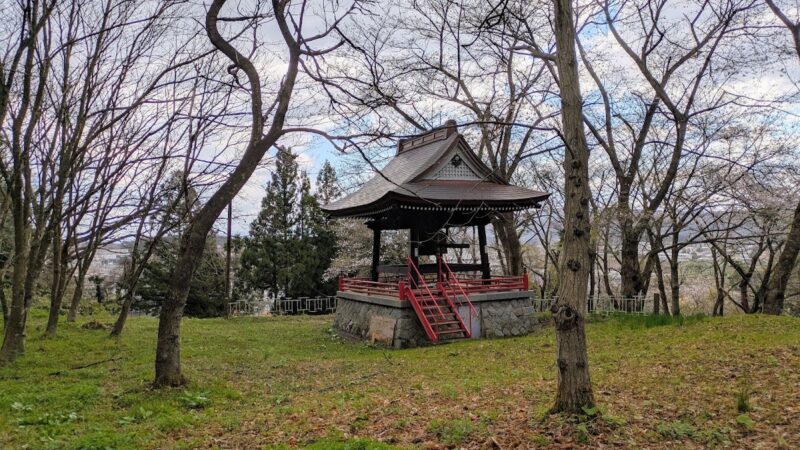
Kamegamori Castle is a medieval mountain castle located in Kamegamori, Ohasama-cho, Hanamaki City, Iwate Prefecture. Also known as “Hachiman-kan,” it was built on a mountain approximately 180 meters above sea level and 60 meters above ground level. Currently, remains of the castle exist on the mountain behind Chuko-ji Temple, and the Hachiman Shrine is enshrined in the second enclosure.
This castle, built by the Yagisawa clan, vassals of the Hienuki clan, and later ruled by the Kamegamori clan, retains many characteristics of medieval castles in the Tohoku region, making it a valuable historical site for castle enthusiasts and history buffs.
History of Kamegamori Castle
Construction and the Yagisawa Clan Era
The construction of Kamegamori Castle is believed to have taken place in Bunki 3 (1503). The history of this castle began when Yagisawa Geki, a vassal of the Hienuki clan, built a castle here and moved his residence. The Yagisawa clan was a powerful family serving the Hienuki clan and was entrusted with governing this region.
The Yagisawa clan used this castle as their residence for approximately 40 years, but they fell in Tenbun 9 (1540). While historical records are limited regarding the detailed circumstances, it is believed they lost power during the power struggles of the Sengoku period.
The Kamegamori Clan Era
After the fall of the Yagisawa clan, Kamegamori Zushomitsuhiro became the lord of the castle. The Kamegamori clan ruled this area, and the castle’s name became established as Kamegamori Castle. During the Kamegamori clan’s rule, the castle’s defensive capabilities were strengthened, with multiple layers of defenses—dry moats and wooden fences—on the east and south sides.
Of particular note is the moat surrounding the ravine on the east side of the castle. Even today, traces of artificial widening of the ravine can be seen, demonstrating the advanced castle-making technology of the time. The north and west sides employed defensive methods utilizing the natural steep slopes, resulting in a layout that skillfully made use of the natural terrain.
The Road to Abandonment
Kamegamori Castle disappeared from the historical stage in Keicho 6 (1601). The castle’s lord at the time, Kamegamori Genba, committed the mistake of letting the Shiba clan escape. He was held responsible and sentenced to confiscation of his territory, leading to the castle’s abandonment.
This event illustrates one aspect of the political turmoil in the Tohoku region after the Battle of Sekigahara. As the Nanbu clan’s rule strengthened, the traditional local lords were placed in a difficult position, and even a minor mistake could lead to the loss of their territory.
Structure and Layout of Kamegamori Castle
Basic Structure of the Castle
Kamegamori Castle is a mountain castle with a structure centered around the main enclosure (honmaru) and the second enclosure (ninokuruwa). The main enclosure, located at the highest point, is situated west of the mountain where the Hachiman Shrine is located. The entire mountain behind Chukoji Temple constitutes the castle grounds, and from an elevation of 180 meters, it was possible to overlook the surrounding area.
Currently, the Hachiman Shrine is enshrined in the second enclosure, and the foot of the mountain is the grounds of Chukoji Temple. This arrangement is a typical example of a castle being repurposed as a religious facility after its abandonment, and has played a certain role in the preservation of the castle ruins.
Characteristics of Defensive Facilities
Kamegamori Castle’s defensive system was a clever one that made maximum use of the terrain.
Eastern and Southern Defenses: A multi-layered defensive structure was employed, consisting of multiple layers of dry moats and wooden fences. This was designed to prepare for attacks from relatively gentle slopes and to gradually prevent enemy incursions.
North and West Defenses: The defenses utilize the natural steep slopes as they are. This is a rational design that minimizes artificial construction and leverages the ruggedness of the natural terrain for defensive purposes.
Presence of a Moat: A moat once surrounded the ravine on the east side of the castle. Even today, there are clear traces of artificial widening of the ravine, demonstrating the advanced civil engineering techniques of the time. A moat is a rare defensive feature for a mountain castle, highlighting the importance of Kamegamori Castle.
Existing Remains
The following remains still exist at Kamegamori Castle:
- Kuruwa (enclosures): Multiple flat areas can be seen, centered around the main enclosure and the second enclosure.
- Tatebori (vertical moats): Defensive moats dug vertically into the slope.
- Yokobori (horizontal moats): Moats dug along contour lines.
- Dorui (earthen ramparts): Defensive walls made of piled-up earth.
- Karabori (dry moats): Moats that do not hold water.
These remains encompass typical defensive facilities of medieval mountain castles and are valuable resources for castle research.
Highlights of Kamegamori Castle
Hachiman Shrine and the History of Faith
The Hachiman Shrine, located in the second enclosure, is deeply intertwined with the castle’s history. Hachiman worship was widely practiced as the guardian deity of samurai families, and it was common for Hachiman to be enshrined as the guardian deity of castles. The reason Kamegamori Castle was also called “Hachiman-kan” (Hachiman Manor) is largely due to the presence of this Hachiman Shrine.
The Hachiman Shrine, which still attracts local worshippers today, is an important landmark when visiting the castle ruins. From the area around the shrine, it’s easy to understand the castle’s structure and appreciate the layout of the baileys.
Relationship between Chuko-ji Temple and the Castle Ruins
Chuko-ji Temple, located at the foot of the castle, tells the story of how the castle ruins were used after their abandonment. Like many castle ruins that were repurposed as temple grounds, Kamegamori Castle also took on a new role as a religious facility. You can access the castle ruins from the grounds of Chuko-ji Temple, allowing you to feel the historical connection between the castle and the temple.
Observation Points for Defensive Remains
For castle enthusiasts, the biggest highlight is the well-preserved defensive remains. In particular, the dry moats and vertical moats are clearly visible, allowing for direct observation of medieval castle construction techniques. The remains of the water moat in the eastern ravine still show traces of artificial expansion, giving a glimpse into the scale of the civil engineering work at the time.
The earthworks remain in good condition in some parts, allowing visitors to experience the castle’s defensive system while walking along the edge of the enclosure. The moderate height of 60 meters makes the climb less strenuous, allowing even beginners to enjoy the charm of a mountain castle.
Access to Kamegamori Castle
Location
Address: Hachimankan, Kamegamori, Ohasama-cho, Hanamaki City, Iwate Prefecture
The castle ruins are located behind Chukoji Temple, around Hachiman Shrine.
Access by Car
- From Tohoku Expressway Hanamaki IC: Approximately 40 minutes
- From Kamaishi Expressway Towa IC: Approximately 30 minutes
Take National Route 396 towards Ohasama-cho. Using Chukoji Temple as a landmark will make it easier to find. It is recommended to check parking availability in advance.
Access by Public Transportation
- From JR Kamaishi Line Hanamaki Station: Take a bus towards Osako (approximately 40 minutes).
- Access is possible on foot from the nearest bus stop, but since the number of buses is limited, it is necessary to check the timetable in advance.
Precautions for Visiting
- As it is a mountain castle, comfortable shoes and clothing are essential.
- Insect repellent is recommended during the summer.
- Be careful as the ground can be slippery during rainy weather and winter.
- As it is adjacent to private property and religious facilities, please be mindful of proper etiquette during your visit.
- The average visit time is about 15 minutes, but if you want to carefully observe the remains, it is recommended to allow 30 minutes or more.
Nearby Tourist Attractions
Highlights of Osako-cho, Hanamaki City
Osako-cho, Hanamaki City, where Kamegamori Castle is located, is also known as a wine-producing area. Kamegamori Winery produces high-quality wines on a small scale, and is worth visiting in conjunction with a visit to the castle ruins.
Osako Town has many other historical sites, allowing you to learn about the local history from the medieval to early modern periods. A journey to discover traces of history amidst the tranquil rural landscape is well worth taking the time to enjoy.
Other Castle Ruins in Hanamaki City
Hanamaki City has several medieval castles. Visiting castle ruins with historical connections to Kamegamori Castle, such as Toriyagasaki Castle and the castle ruins that were the base of the Hienuki clan, will allow you to gain a deeper understanding of the Sengoku period history of this region.
Kamegamori Castle Ratings and Reviews
According to ratings from castle enthusiasts, it has an average rating of 3.00 out of 5. Although not large in scale, the remains are well-preserved, making it a suitable castle ruin for learning the basic structure of a medieval mountain castle.
Visitors have given positive feedback such as “The elevation difference is manageable and easy to climb” and “The remains are clear and easy to understand.” On the other hand, there have been criticisms such as “Some areas are not well-maintained” and “There are few information boards,” so further improvements are hoped for.
Historical Significance of Kamegamori Castle
Castle Network under the Hienuki Clan’s Rule
Kamegamori Castle was one of the important branch castles within the Hienuki clan’s territory. The Hienuki clan was a regional lord sandwiched between powerful forces such as the Nanbu and Date clans, and they governed their territory by building a network of castles through their retainers.
The fact that local lords like the Yagisawa and Kamegamori clans built castles and played a role in regional stability is a good example of the realities of regional governance during the Sengoku period. It is thought that by placing the castle in the strategically important inland location of Osako Town, they were able to efficiently monitor transportation routes and govern the region.
Submission to the Nanbu Clan and Abandonment
The abandonment of the castle in 1601 (Keicho 6) occurred during the process of the Nanbu clan’s strengthening of their rule. After the Battle of Sekigahara, power reorganization progressed in the Tohoku region, and the Nanbu clan solidified their control over their territory.
The failure of Kamegamori Genba to capture the Shiba clan symbolizes the fate of local lords who failed to adapt to the new system of rule. Although Kamegamori Castle disappeared from the historical stage after this incident, its remains continue to convey its original form to the present day.
The Significance of Visiting Kamegamori Castle
Kamegamori Castle is a valuable resource for understanding medieval mountain castles in the Tohoku region. Because it hasn’t been heavily commercialized for tourism, you can quietly contemplate history.
Walking through the baileys, observing the moats, and touching the earthworks, you can truly grasp how people 500 years ago built and defended the castle. The relationship with Hachiman Shrine and Chuko-ji Temple tells the story of how the castle ruins continued to exist within the region, changing their role even after its abandonment.
From castle beginners to experts, Kamegamori Castle offers something for everyone. It’s a hidden historical spot in Iwate Prefecture, well worth a visit. Why not embark on a journey to feel the spirit of the Middle Ages amidst the rich natural beauty of Ohasama-cho, Hanamaki City?
Summary
Kamegamori Castle was built in 1503 by Yagisawa Geki, later ruled by the Kamegamori clan, and abandoned in 1601. Built on a mountaintop 180 meters above sea level, it retains well-preserved remains such as baileys, vertical moats, horizontal moats, earthworks, and dry moats.
Also known as Hachiman-kan, the Hachiman Shrine is still enshrined in the second bailey, and Chuko-ji Temple is located at the foot of the mountain. As a castle of a local lord under the control of the Hienuki clan, it is an important historical site for understanding the history of medieval castles in the Tohoku region.
Access is approximately 40 minutes by car from the center of Hanamaki City. The elevation difference is 60 meters, making it easy to climb, and the average visit time is about 15 minutes. There are also tourist attractions nearby, such as the Kamegamori Brewery, allowing for a trip that combines historical exploration with local sightseeing.