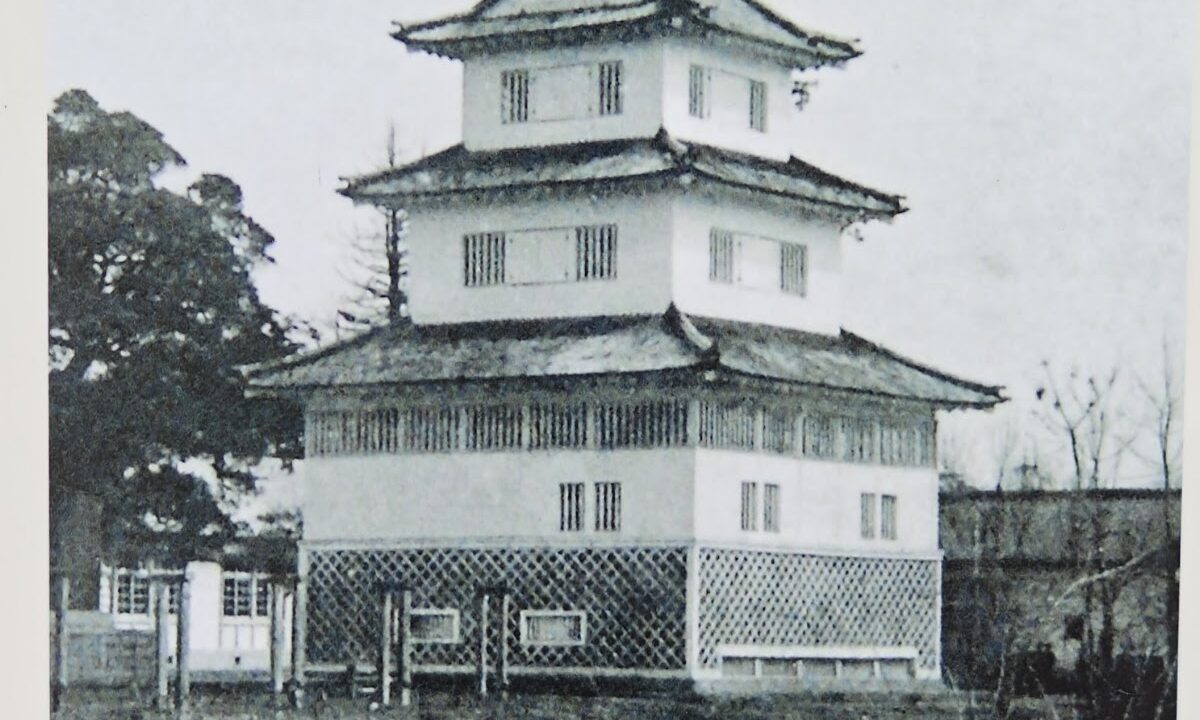
Mizuumi Castle (Ibaraki Prefecture): A Complete Overview of a Medieval Flatland Castle that Flourished as the Base of the Yanada Clan
What is Mizuumi Castle?
Mizuumi Castle (also known as Mizuumi-jo or Mizumi-jo) was a medieval Japanese castle located in Mizuumi, Koga City, Ibaraki Prefecture (formerly Katsushika District, Shimosa Province). It was one of the residences of the Yanada clan, who served as important retainers of the Koga Shogunate, and played a crucial role as the Yanada clan’s ancestral home.
Constructed as a complete flatland castle, it utilized the terrain surrounded by major rivers such as the Tone River and Hitachi River (present-day Watarase River), as well as lakes such as Nagaido Marsh and Mizuumi Marsh. It functioned as a key point for water transport and military operations in the medieval Kanto region.
Overview of Mizuumi Castle
It is known that two castle complexes existed at Mizuumi Castle: “Old Mizuumi Castle (Southern Mizuumi)” and “New Mizuumi Castle (Inner Mizuumi).” This indicates that the castle complex was relocated and expanded in response to the expansion of the Yanada clan’s power and the changing times.
Basic Information
- Location: Mizuumi, Koga City, Ibaraki Prefecture (Mizumi, Katsushika District, Shimosa Province)
- Castle Type: Flatland Castle
- Construction Period: Late Nanboku-cho period (late 14th century)
- Builder: Yanada clan
- Main Lord: Yanada clan
- Abandonment Period: Tensho 18 (1590)
- Remains: Part of an earthen rampart, traces of a moat
The Yanada Clan and Mizuumi
The Origins of the Yanada Clan and Their Entry into Mizuumi
The Yanada clan was one of the powerful vassal groups that served the Kamakura Shogunate and later the Koga Shogunate. It is believed that during the late Nanboku-cho period, the Yanada clan, who were active as vassals of the Kamakura Shogunate, entered the Mizuumi area and established their castle.
The Yanada clan was originally a samurai group based in Shimōsa Province. The Mizuumi area, a strategically important transportation hub where the Tone River and Hitachi River systems meet, held significant military and economic importance. By establishing their base here, the Yanada clan solidified their position as powerful vassals supporting the Koga Shogunate.
Expansion of the Yanada Clan’s Power
Throughout the Muromachi period, the Yanada clan expanded their power as important retainers of the Koga Shogunate. While maintaining their base at Mizuumi Castle, they extended their influence to surrounding areas, eventually relocating to Sekiyado Castle (Noda City, Chiba Prefecture) as their new base.
The heads of the Yanada clan were consistently involved in the political and military affairs of the Koga Shogunate, playing crucial roles in diplomatic and military activities with the Kantō Kanrei Uesugi clan and the Later Hōjō clan. Mizuumi was the starting point of the Yanada clan’s activities and continued to hold special significance as the clan’s ancestral home.
Old Mizuumi Castle (Southern Mizuumi)
History of Construction
Old Mizuumi Castle is believed to be the first castle built by the Yanada clan in the Mizuumi area. It is thought to have been located in the southern part of present-day Mizuumi, Koga City, near Kichijoji, and was used from the late Nanboku-cho period to the mid-Muromachi period.
Structure and Features
Old Mizuumi Castle was a typical flatland castle surrounded by rivers and swamps, with a defensive structure that made maximum use of the natural terrain. It is presumed to have been a residence-style castle partitioned by earthworks and moats.
Currently, no clear remains of Old Mizuumi Castle exist, but the extent of the former castle can be estimated from the topography around Kichijoji and the microtopography around Koga Municipal Mizuumi Elementary School.
New Mizuumi Castle (Inner Mizuumi)
Construction Date and Background
New Mizuumi Castle is believed to have been built in 1574 (Tensho 2). This period corresponds to the late Sengoku period, a time when stronger castles were needed to cope with the expansion of the Later Hojo clan’s power and changes in the political situation in the Kanto region.
The new castle was built in an area called Uchimizuumi, and it is believed that a defensive system that made even greater use of water resources was established compared to the old castle.
Castle Structure
The new Mizumizuumi Castle was also a completely flatland castle, utilizing the terrain surrounded by rivers and marshes. Like castles of the Sengoku period, it is likely that it had a more complex arrangement of moats and earthworks.
As a whole, Mizumizuumi Castle was located in a position to control the water transport of major rivers such as the Tone River and the Hitachi River, and it is presumed to have functioned not only as a military base but also as a center for the collection of goods and a commercial center.
Geographical Characteristics of Mizumizuumi Castle
Connection of Two Major River Systems
The most significant geographical characteristic of Mizumizuumi Castle was its location at the confluence of two major river systems: the Tone River system and the Hitachi River (Watarase River) system. This location brought the following strategic value:
- Control of Water Transport: By controlling river traffic, the distribution of goods could be managed.
- Military Mobility: Rapid troop movement using ships was possible.
- Defensive Advantage: Rivers and swamps functioned as natural moats.
- Information Gathering: As a transportation hub, it was an environment where information from various regions could easily be gathered.
Lakes and Wetlands
As the place name Mizuumi suggests, this region was dotted with lakes such as Mizuumi Marsh and Nagaido Marsh, and covered with wetlands. Although most of it has now been converted into land through land reclamation and flood control projects, in the Middle Ages these bodies of water greatly contributed to the defense of the castle.
Even in surveys conducted during the Heisei era, traces of old river channels and old swamps remain in the topography around Mizuumi, evoking the former waterside landscape.
The Mizuumi Region in the Middle Ages
Political Positioning
Medieval Mizuumi belonged to Katsushika District in Shimosa Province and was within the sphere of influence of the Kamakura Shogunate and the Koga Shogunate. As the base of the Yanada clan, it was an important region supporting the political system of the Koga Shogunate.
Koga (the current city center of Koga) was the base of the Koga Shogunate, and Mizuumi, located in the surrounding area, served as a base for powerful vassals, playing a role in supporting the Koga Shogunate system.
Economic and Social Characteristics
The Mizuumi region also saw thriving commercial activity, taking advantage of its water transport. It is believed that goods such as rice, salt, and fish were traded there, serving as a center for the collection and distribution of goods via river transport.
Furthermore, as a castle town of the Yanada clan, it is possible that artisans and merchants gathered there, giving it a certain degree of urban function. Temples such as Kichijoji also functioned as religious facilities within the castle town.
History and Background
From the Nanboku-cho Period to the Muromachi Period
It is believed that the Yanada clan entered Mizuumi and built the former Mizuumi Castle at the end of the Nanboku-cho period (late 14th century). During this period, the conflict between the Kamakura Shogun and the Kanto Kanrei Uesugi clan intensified in the Kanto region, and the Yanada clan acted as a general on the side of the Kamakura Shogun.
After turmoil such as the Eikyo Rebellion (1438-1439) and the Yuki War (1440-1441), the Koga Shogunate was established, and the Yanada clan solidified their position as important retainers. Mizuumi Castle became one of the important bases under the Koga Shogunate system.
Sengoku Period
With the arrival of the Sengoku period, the political situation in the Kanto region became even more complex. The Yanada clan, facing the rise of the Later Hojo clan, Uesugi Kenshin’s invasion of the Kanto region, and the movements of various forces in Hitachi and Shimotsuke provinces such as the Satake and Utsunomiya clans, sought to survive by adjusting their relationships with various powers.
In 1574, the new Mizuumi Castle was built, strengthening their defenses. During this period, the Yanada clan had established Sekiyado Castle as their new base, but Mizuumi remained an important strategic location.
The Siege of Odawara and the Abandonment of the Castle
In 1590, during Toyotomi Hideyoshi’s Siege of Odawara, the Mizuumi Yanada clan, having sided with the Later Hojo clan, became a target of Hideyoshi’s attack.
When the Toyotomi army, led by Asano Nagamasa, approached Mizuumi Castle, the Yanada clan surrendered without resistance. As a result, the Mizuumi Yanada clan declined, and Mizuumi Castle was abandoned.
While some members of the Yanada clan continued to serve Tokugawa Ieyasu, the Mizuumi area ceased to function as the Yanada clan’s base and subsequently developed into an agricultural region.
Current Status of Mizuumi Castle Ruins
Status of Remains
Currently, very few clear remains of Mizuumi Castle exist. Due to years of agricultural development and residential construction, most traces of the castle have been lost.
However, with careful observation, the following traces can be found:
- Slightly elevated area around Kichijoji (estimated to be part of the castle)
- Unnatural topographical divisions (possibly the remains of a moat)
- Topography around Koga Municipal Mizuumi Elementary School (estimated castle site)
- Surrounding waterways and irrigation channels (remnants of old riverbeds and moats)
Access and Visiting
The Mizuumi Castle Ruins can be accessed in the following ways:
Public Transportation:
- Approximately 15 minutes by car from JR Utsunomiya Line “Koga Station”
- Take the Ibaraki Express Bus or similar towards Mizuumi.
Private Car:
- Approximately 30 minutes from Tohoku Expressway “Kuki IC”
- Approximately 20 minutes from Ken-O Expressway “Sakai-Koga IC”
The castle ruins are not clearly developed as a historical park, so please be considerate of local residents when visiting. The estimated location of the castle ruins is around Kichijoji Temple and Koga Municipal Mizuumi Elementary School.
Historical Significance of Mizuumi Castle
Role in the Koga Kubo System
Mizumi Castle, as the ancestral home of the Yanada clan, a key retainer supporting the Koga Kubo, played a crucial role in the political history of the Kanto region from the Muromachi period to the Sengoku period. The Koga Kubo system was the cornerstone of the Muromachi Shogunate’s control over Kanto, and Mizuumi Castle, the base of the Yanada clan who supported that system, can be said to have indirectly contributed to the Shogunate’s control over Kanto.
Water Transport and Castles
Mizumi Castle is noteworthy in medieval castle research as a typical example of a flatland castle utilizing rivers and lakes. In the Kanto region, where mountain castles and hilltop castles are common, its defensive system, which maximized the use of water resources as a completely flatland castle, represents a unique developmental form reflecting the region’s geographical characteristics.
Position in Local History
Mizumi has been the core of the region’s identity as the ancestral home of the Yanada clan. Even today, legends related to the Yanada clan and Mizumi Castle remain in the Mizumi area, forming an important element in shaping the region’s historical memory.
Related Castles and Historical Sites
Sekiyado Castle
Sekiyado Castle (Noda City, Chiba Prefecture) is a castle where the Yanada clan later relocated their base. Located at the confluence of the Tone River and Edo River, it, like Mizumi Castle, controlled a crucial point for river transportation. The Yanada clan’s relocation of their base from Mizuumi to Sekiyado is thought to have been a strategic decision aimed at achieving broader control of water transport.
Koga Castle
Koga Castle (Koga City, Ibaraki Prefecture) was the base of the Koga Shogunate and had a lord-vassal relationship with Mizuumi Castle. Built on a flatland along the Watarase River, it functioned as the political center of the Koga Shogunate. Given their position supporting the Koga Shogunate, it is presumed that the Yanada clan maintained close cooperation between Koga Castle and Mizuumi Castle.
Historical Sites Related to the Yanada Clan in the Surrounding Area
Several historical sites related to the Yanada clan remain in the Mizuumi area.
- Kichijoji: A temple located near Mizuumi Castle, with a known connection to the Yanada clan.
- Yanada Clan Burial Grounds: Burial grounds of the Yanada clan are scattered throughout the surrounding area.
- Koga Municipal Mizuumi Elementary School: The school grounds are estimated to correspond to part of the former castle grounds.
Geography
Location
Mizumi Castle was located approximately 36 degrees 9 minutes north latitude and 139 degrees 45 minutes east longitude. This corresponds to the present-day Mizuumi district of Koga City, Ibaraki Prefecture.
It was located approximately 5 kilometers southeast of the center of Koga City, situated in a low-lying area between the Tone River and the Watarase River.
Topography and Water System
The area around Mizuumi is a low-lying plain that forms part of the Kanto Plain, with an elevation of around 10 meters. The main stream of the Tone River once flowed through this area, making it a flood-prone region that was extensively inundated during floods.
Due to the Tone River diversion project during the Edo period and modern flood control projects, the current river system differs significantly from that of the medieval period. However, traces of the old riverbed and marshland remain in the topography.
References
Research on Mizuumi Castle and the Yanada clan has been conducted using the following documents:
- *Koga City History* (Koga City History Compilation Committee)
- *Ibaraki Prefecture History: Medieval Period* (Ibaraki Prefecture)
- *Comprehensive Survey of Japanese Castles*, Volume 4 (Shin Jinbutsu Oraisha)
- *Research on the Yanada Clan* (Local History Research Council)
- Various Archaeological Survey Reports (Koga City Board of Education)
These documents are important resources for understanding the historical positioning of Mizuumi Castle, the activities of the Yanada clan, and the political history of the Kanto region in the medieval period.
Footnotes
Historical materials concerning Mizuumi Castle are limited, and there are various theories regarding its construction date and detailed structure. This paper is based on generally accepted theories, but future archaeological investigations and the discovery of historical materials may yield new insights.
In particular, there are differing opinions among researchers regarding the relative locations and construction dates of the old and new Mizuumi Castles. It is important to note that primary source evidence for the construction of the new castle in 1574 (Tensho 2) is not entirely sufficient, and some aspects are based on tradition.
Related Items
- Yanada Clan – The family that ruled Mizuumi Castle
- Koga Kubo – The Kanto Shogun served by the Yanada clan
- Sekiyado Castle – The castle that the Yanada clan later established as their base
- Koga Castle – The base of the Koga Kubo
- Shimosa Province – The province where Mizuumi Castle was located
- Tone River – The major river flowing around Mizuumi Castle
- Siege of Odawara – The battle that led to the abandonment of Mizuumi Castle
- Hirajiro – The castle style of Mizuumi Castle
- Koga City – The current location of the Mizuumi Castle ruins
- List of Castles in Ibaraki Prefecture – Comparison with other castles in the prefecture
Although very few remains of Mizuumi Castle exist, it is an undeniable presence in the history of medieval Kanto, as the ancestral home of the Yanada clan and an important base that supported the Koga Kubo system. As a flatland castle that takes advantage of its unique location surrounded by rivers and lakes, it offers an interesting example in the history of Japanese castles. Further research is expected to reveal the true nature of Mizuumi Castle.