Complete Guide to the History and Highlights of Ishige Castle (Joso City, Ibaraki Prefecture) | Visiting the Remains of a Branch Castle of Toyoda Castle
Ishige Castle, located in Hon-Ishige, Joso City, Ibaraki Prefecture, is a flatland castle built during the Sengoku period as a branch castle of Toyoda Castle. Although it is now the grounds of Hachiman Shrine, remains such as earthworks and moat traces remain, conveying the atmosphere of the time. This article provides a detailed explanation of Ishige Castle, from its historical background to the remains that can be seen on site and how to access it.
What is Ishige Castle? | Basic Information and Overview
Ishige Castle, also known as “Hon-Ishige Castle” or “Ishige Castle,” is a flatland castle located around Hachiman Shrine at 99 Hon-Ishige, Joso City, Ibaraki Prefecture. Built on a plain between the Kinugawa and Kokaigawa rivers, this castle functioned as an important branch castle protecting the south of Toyoda Castle.
Basic Data of the Castle
- Location: 99 Honishige, Joso City, Ibaraki Prefecture (around Hachiman Shrine)
- Type of Castle: Flatland Castle
- Construction Period: Tenbun 1 (1532)
- Builders: Toyoda Shiro Masachika, Ishige Jiro Masashige
- Main Lords: Ishige Clan, Tagaya Clan
- Abandonment Period: Around Tensho 13 (1585)
- Current Status: Hachiman Shrine grounds, residential area
- Remains: Earthworks, part of the moat
History of Ishige Castle | From Construction to Fall
Background of Construction and the Toyoda Clan
Ishige Castle was built in Tenbun 1 (1532) by Toyoda Shiro Masachika, the lord of Toyoda Castle. During this period, tensions were rising in Shimosa Province (present-day southwestern Ibaraki Prefecture) between the Toyoda clan, who had long ruled the area, and the emerging Tagaya clan.
The Toyoda clan was a prestigious family that had existed since the late Heian period, and is said to be descended from Taira no Masakado. They controlled the area west of the Kinugawa River, with Toyoda Castle as their base, but felt threatened by the southward expansion policy of the Tagaya clan, who were based at Shimotsuma Castle.
Appointment of Ishige Jiro Masashige
To prepare for an invasion by the Tagaya clan, Toyoda Shiro Masachika built Ishige Castle as a key point for the southern defense of Toyoda Castle. He appointed his second son, Jiro, as the castle lord, and had him take the name Ishige Jiro Masashige. This arrangement was a strategic decision to create a coordinated defense system between Toyoda Castle and Ishige Castle.
Ishige Masashige settled in this area and governed the region as the Ishige clan. Ishige Castle is believed to have functioned not only as a military base but also as the administrative and economic center of the surrounding region.
Conflict with the Tagaya Clan
In the mid-16th century, the Tagaya clan expanded their power from Shimotsuma Castle and intensified their invasion of the Toyoda clan’s territory. Although a branch of the Yuki clan, the Tagaya clan was an ambitious family that built its own independent sphere of influence.
The conflict between the Toyoda and Tagaya clans intensified, and Ishige Castle was also caught in the crossfire. Toyoda Haruchika (successor to Masachika), the lord of Toyoda Castle, who was attacked by the Tagaya clan, suddenly died during the Tensho era. The truth of his death remains uncertain, with accounts suggesting either a stroke or poisoning by a Tagaya retainer.
The Downfall of the Toyoda Clan and the Fate of Ishige Castle
After Toyoda Haruchika’s sudden death, the remaining Toyoda retainers continued their resistance, but they were gradually overwhelmed by the Tagaya clan’s superior military power. Ultimately, Toyoda Castle surrendered, marking the end of the Toyoda clan’s rule.
Ishige Castle also came under the control of the Tagaya clan following the fall of its main castle, Toyoda Castle. It is believed that the Tagaya clan subsequently used Ishige Castle as a subsidiary castle, but detailed records are lacking. It is thought to have been abandoned around 1585.
Structure and Layout of Ishige Castle
Characteristics as a Flatland Castle
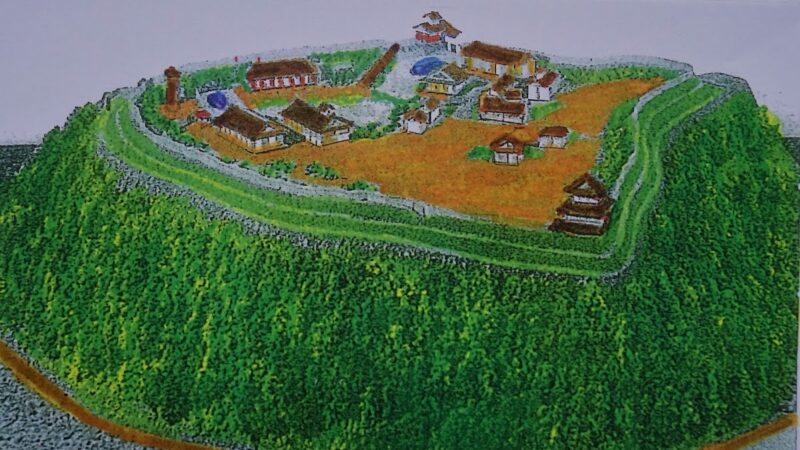
Ishige Castle is a typical flatland castle built on an alluvial plain between the Kinugawa and Kokaigawa rivers. While it lacked the natural fortifications of a mountain castle, it utilized the surrounding rivers and wetlands as natural moats.
Flatland castles are often located at strategic transportation hubs, and Ishige Castle is presumed to have been built along an ancient highway. Its flat terrain allowed for a large castle area, offering the advantage of efficiently arranging living spaces and defensive facilities.
Arrangement of Earthworks and Moats
Currently, the most clearly surviving remains of Ishige Castle are the earthworks. Within the grounds of Hachiman Shrine and its surroundings, earthworks approximately 2-3 meters high still partially exist. These earthworks are thought to have formed the outer perimeter of the castle.
Regarding the moats, much of the area has now been filled in and developed into residential land. However, by observing the subtle undulations of the terrain and comparing it with old maps, the former locations can be estimated. Careful observation of the terrain around Hachiman Shrine reveals traces of the moats as slight depressions and elevation changes.
Scope of the Castle Area
While the exact scope of Ishige Castle remains unclear due to insufficient archaeological excavations, it is estimated to have encompassed an area of approximately 200 meters east-west and 150 meters north-south, centered around Hachiman Shrine.
It is uncertain whether there were clearly defined sections such as the main keep and second bailey, but it is highly probable that it had a simple structure with a residence in the center surrounded by earthworks and moats. Given its nature as a subsidiary castle of Toyoda Castle, it is thought to have been a relatively compact defensive base rather than a large-scale fortress.
Highlights of Ishige Castle | Remains Visible on-site
Relationship between Hachiman Shrine and Castle Ruins
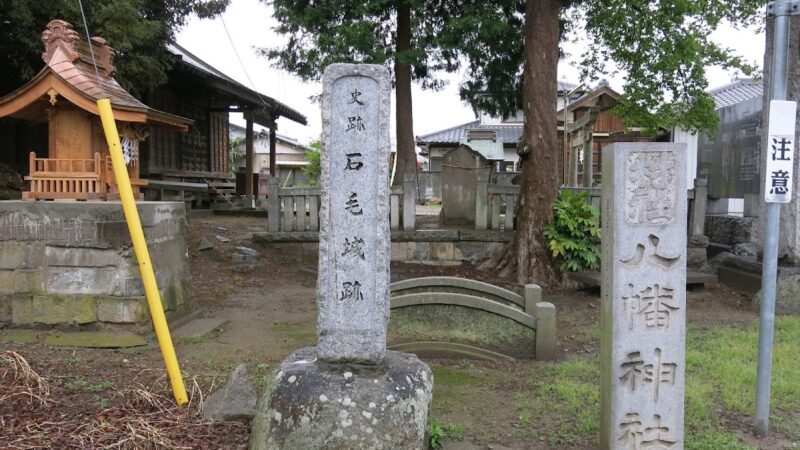
Currently, Hachiman Shrine stands in the center of the Ishige Castle ruins. While the exact date of its founding is unclear, it is believed that the site was developed as a sacred area after the castle’s abandonment.
Hachiman Shrine enshrines Hachiman-Okami, known as a god of war, and has strong ties to samurai families. It may have been revered as the tutelary deity of the lords of Ishige Castle and the Toyoda clan. Although the current shrine building is relatively new, the atmosphere of the grounds is tranquil, making it an ideal central point for exploring the castle ruins.
Remaining Earthworks
Partial remains of the earthworks from the Ishige Castle era remain within and around the Hachiman Shrine grounds. Clear earthworks can be seen particularly on the north and west sides of the shrine.
These earthen ramparts, though likely lower than their original height due to years of wind and rain, still maintain a size of approximately 2-3 meters in height and 4-5 meters in width at the base. It’s possible to walk on the ramparts, allowing visitors to experience the atmosphere of the castle as it once was.
While the surface of the ramparts is overgrown with vegetation, a cross-section reveals that they were constructed using a technique called rammed earth (hanchiku), a common method of compacting soil. This was a standard construction method for castles during the Sengoku period (Warring States period).
Traces of the Moat
Although most of the moat has been filled in, traces remain as small depressions along the property boundaries of private houses east and south of the Hachiman Shrine.
Careful observation reveals scattered areas of land 1-2 meters lower than the surrounding area, and poorly drained, marshy areas, which are presumed to indicate the former moat locations.
When visiting the site, paying attention to the topography around the shrine will allow for a more three-dimensional understanding of the castle’s outline.
Stone Monument and Information Board at Ishige Castle Ruins
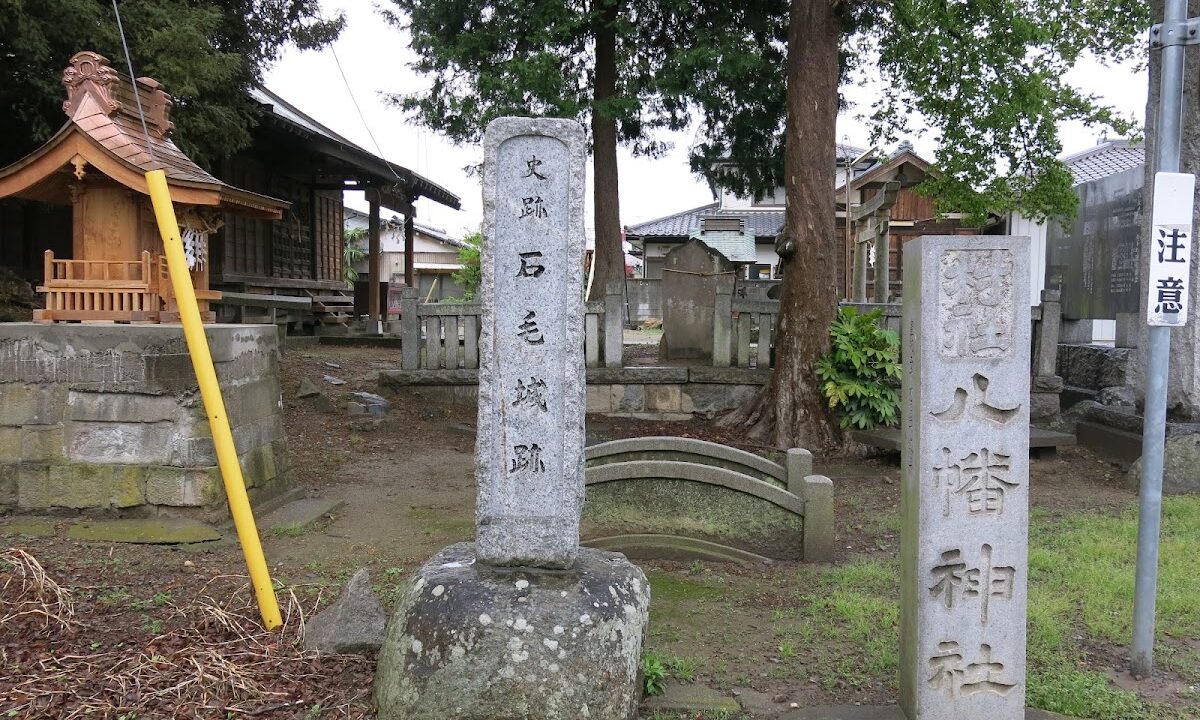
Within the grounds of Hachiman Shrine stands a stone monument inscribed with “Ishige Castle Ruins.” This monument, erected by local historians and history enthusiasts, serves as an important marker indicating that this is a historical castle site.
An information board explaining the castle’s history and structure is also installed. The board details the castle’s construction, the changes in its lords, and the location of the remains, allowing even first-time visitors to understand the overview of Ishige Castle.
The content of the information board is supervised by the local education committee and cultural property preservation organizations, making it a reliable source of information.
Related Historical Sites in the Surrounding Area
Toyoda Castle Ruins
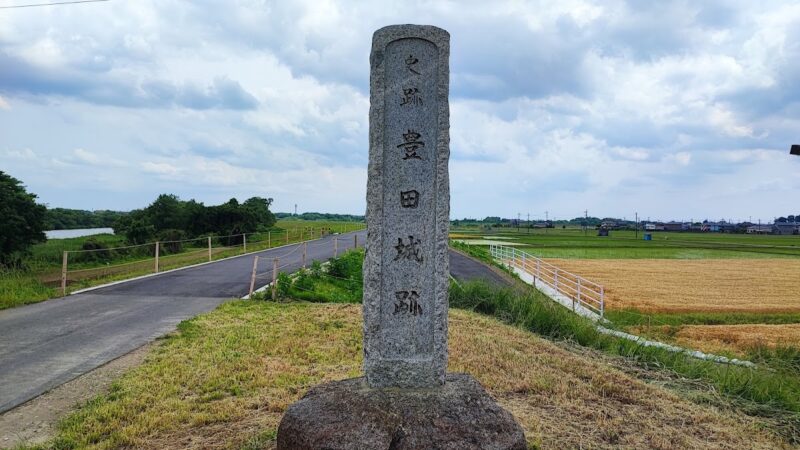
Located approximately 3 kilometers north of Ishige Castle are the ruins of Toyoda Castle, the main castle. Currently, a castle-like building called the “Regional Exchange Center” stands on the Toyoda Castle site, housing a local history museum.
Toyoda Castle was larger in scale and had a more complex layout than Ishige Castle. When visiting Ishige Castle, we highly recommend also visiting the Toyoda Castle ruins to experience the relationship between the main castle and its subsidiary castles.
At the Toyoda Castle museum, you can learn in detail about the history of the Toyoda clan, their conflicts with the Tagaya clan, and the surrounding castle complex. There are also exhibits related to Ishige Castle, allowing for a deeper understanding.
Mukouishige Castle Ruins (Site of Taira no Masakado’s Toyoda Residence)
Located approximately 1.5 kilometers east of Ishige Castle are the ruins of Mukouishige Castle. This castle is also known as the “Site of Taira no Masakado’s Toyoda Residence,” and is traditionally believed to be the birthplace of Taira no Masakado, a powerful local lord of the Heian period.
Mukouishige Castle is an older residence site than Ishige Castle and is an important historical site related to the ancestors of the Toyoda clan. Currently, the “Kokuo Shrine” stands there, enshrining Taira no Masakado as its deity.
The massive earthworks and moat remains are remarkably well-preserved, and visiting both Ishige Castle and Mukaiishige Castle allows you to understand the layered history of this region. It’s possible to walk from Ishige Castle to Mukaiishige Castle in about 30 minutes.
Sakasai Castle Ruins
It’s also recommended to extend your trip a little further and visit Sakasai Castle Ruins in Bando City, Ibaraki Prefecture. Sakasai Castle was built by the Tagaya clan and was one of their strongholds after they conquered Ishige Castle.
Sakasai Castle Ruins have been developed into a castle park, with reconstructed turrets and watchtowers. Understanding the characteristics of the Tagaya clan’s castle architecture allows you to view history from the perspective of those who conquered Ishige Castle.
Access Information | How to Get to Ishige Castle
Access by Public Transportation
Using the Kanto Railway Joso Line
- Get off at Ishige Station on the Kanto Railway Joso Line, approximately 15 minutes on foot.
- From Ishige Station to Hachiman Shrine (Ishige Castle Ruins) is approximately 1.2 kilometers.
- From the station, head south along Prefectural Road 357 and proceed into the Hon-Ishige settlement.
Ishige Station is an unmanned station, but it is accessible from Toride Station in approximately 40 minutes. Since there are few signs around the station, it is recommended to check the route in advance using a smartphone map app.
Access by Car
Using the Joban Expressway
- Approximately 20 minutes (approx. 12 kilometers) from the Joban Expressway “Yawara IC”
- Take National Route 294 to Prefectural Road 357
Using the Ken-O Expressway
- Approximately 15 minutes (approx. 8 kilometers) from the Ken-O Expressway “Joso IC”
- Head north on Prefectural Road 357
Parking Information
While Hachiman Shrine does not have its own dedicated parking lot, there are a few parking spaces on the shrine grounds for visitors. However, consideration is needed to avoid obstructing the worship of local residents.
Since the surrounding area is residential, please avoid street parking and use nearby paid parking lots or public transportation.
Points to Note and Manners When Visiting
Considerations on Shrine Grounds
Since the Ishige Castle Ruins are within the grounds of Hachiman Shrine, it is important to observe proper shrine worship etiquette when visiting.
- Bow when passing through the torii gate.
- Behave quietly within the shrine grounds.
- Visit the main shrine before viewing the ruins.
- Photography is permitted, but please be considerate if a religious ceremony is taking place.
Cooperation in the Preservation of Ruins
The ruins, such as the earthworks, are valuable cultural assets. Please observe the following points:
- Do not cut away the earthworks or collect plants.
- Always take your trash with you.
- Do not enter areas other than designated paths.
- Do not enter private property without permission.
Best Time to Visit
Ishige Castle Ruins are open year-round, but the following times are especially recommended:
- Spring (March-May): The weather is mild and ideal for strolling. The shrine is also beautiful during cherry blossom season.
- Autumn (October-November): Beautiful autumn foliage and pleasant weather.
- Winter (December-February): The vegetation withers, making it easier to observe the shape of the ruins.
In summer (June-September), the vegetation is dense, making the ruins difficult to see, and there are many insects such as mosquitoes, so insect repellent is necessary.
Historical Significance of Ishige Castle
A Castle that Tells the Story of Regional Conflicts in the Sengoku Period
Ishige Castle is an important historical site that tells the story of the rise and fall of regional powers in the Sengoku period. The conflict between the Toyoda clan, who had ruled this area since ancient times, and the Tagaya clan, who rose to prominence as a new power, can be said to be a microcosm of the typical power struggles in the Kanto region at that time.
From the medieval period to the Sengoku period, the authority of the Koga Kubo and the Kanto Kanrei Uesugi clan declined in the Kanto region, and various small and medium-sized lords tried to build their own spheres of influence. The history of Ishige Castle illustrates how local samurai groups fought for survival within the currents of that era.
Research Material for the Branch Castle Network
Ishige Castle played a key role in the branch castle network centered around Toyoda Castle. In the study of castles during the Sengoku period, the relationship between main castles and branch castles, and the strategic placement of branch castles, are important themes.
Ishige Castle’s location is based on a clear strategic intention: the southern defense of Toyoda Castle. By studying such branch castle placement patterns, we can understand the military strategies and methods of territorial control at the time.
Importance of Local History Research
Small and medium-sized local castles like Ishige Castle receive less attention compared to large castles or those of famous Sengoku daimyo, but they are extremely important for understanding local history.
Diverse historical information can be gleaned from local castles, including the lives of samurai groups rooted in the region, their relationships with the local population, economic activities, and the spread of culture. Research on Ishige Castle is an indispensable element in unraveling the medieval history of the Joso region.
How to Enjoy Visiting Ishige Castle
Historical Walking Courses
We introduce historical walking courses centered around Ishige Castle.
Half-Day Course (Primarily Walking)
- Arrive at Ishige Station on the Kanto Railway Joso Line (approx. 10:00)
- Visit Ishige Castle Ruins (Hachiman Shrine) (approx. 1 hour)
- Walk to and visit Mukaiishige Castle Ruins (Kokuo Shrine) (approx. 1.5 hours)
- Lunch near Ishige Station
- Depart from Ishige Station (approx. 14:00)
Full-Day Course (By Car)
- Visit Ishige Castle Ruins (Hachiman Shrine) (approx. 1 hour)
- Visit Mukaiishige Castle Ruins (Kokuo Shrine) (approx. 1 hour)
- Visit Toyoda Castle Ruins and Community Exchange Center (approx. 1.5 hours)
- Lunch in the surrounding area
- Visit Sakasai Castle Ruins (Bando City) (approx. 1.5 hours)
By visiting these courses, you can gain a comprehensive understanding of the stage of the conflict between the Toyoda and Tagaya clans.
Photography Tips
Here are some tips for taking impressive photos at Ishige Castle Ruins.
- Full View of the Earthworks: Photographing the earthworks diagonally from the north side of the shrine emphasizes their height and length.
- Stone Monument and Shrine: An angle combining the castle ruins stone monument and the Hachiman Shrine building.
- From the Top of the Earthworks: Looking down from the top of the earthworks allows you to experience the view from the former watchtower.
- Early Morning/Evening Light: Photographing in soft light beautifully captures the texture of the earthworks.
Recording Your Castle Ruins Visit
For those who enjoy visiting castle ruins, we recommend keeping a record of your visits.
- Castle Stamp (Gojoin): While Ishige Castle doesn’t have an official castle stamp, related merchandise can be obtained at the Toyoda Castle Museum.
- Visit Logbook: Record the date of visit, weather, visited ruins, and impressions.
- Photo Album: Organize your visit memories, both digitally and on paper.
- SNS Post: Share information using hashtags such as “#IshigeCastle” and “#IbarakiCastles”.
Summary | The Charm and Value of Ishige Castle
Ishige Castle, though not flashy, is a valuable historical site that tells the story of regional conflicts during the Sengoku period. Built as a branch castle of Toyoda Castle, and the stage for battles with the Tagaya clan, this castle conveys the way of life of the samurai of that time.
The earthworks and moat remains that remain on site are important relics that demonstrate the castle construction techniques of the time, and you can reflect on history in the quiet grounds of the Hachiman Shrine. Visiting the nearby Toyoda Castle ruins and Mukaiishige Castle ruins together will allow you to understand the history of this region more deeply. Ishige Castle Ruins are a worthwhile place to visit for historical exploration, castle tours, or simply a quiet stroll in southern Ibaraki Prefecture. Its easy accessibility—being within walking distance from a small station on the Kanto Railway Joso Line—is another attractive feature.
Immerse yourself in the atmosphere of the Sengoku period while visiting Ishige Castle Ruins. Standing atop the earthen ramparts and surveying the surroundings, you might even imagine the warriors who once defended this land.