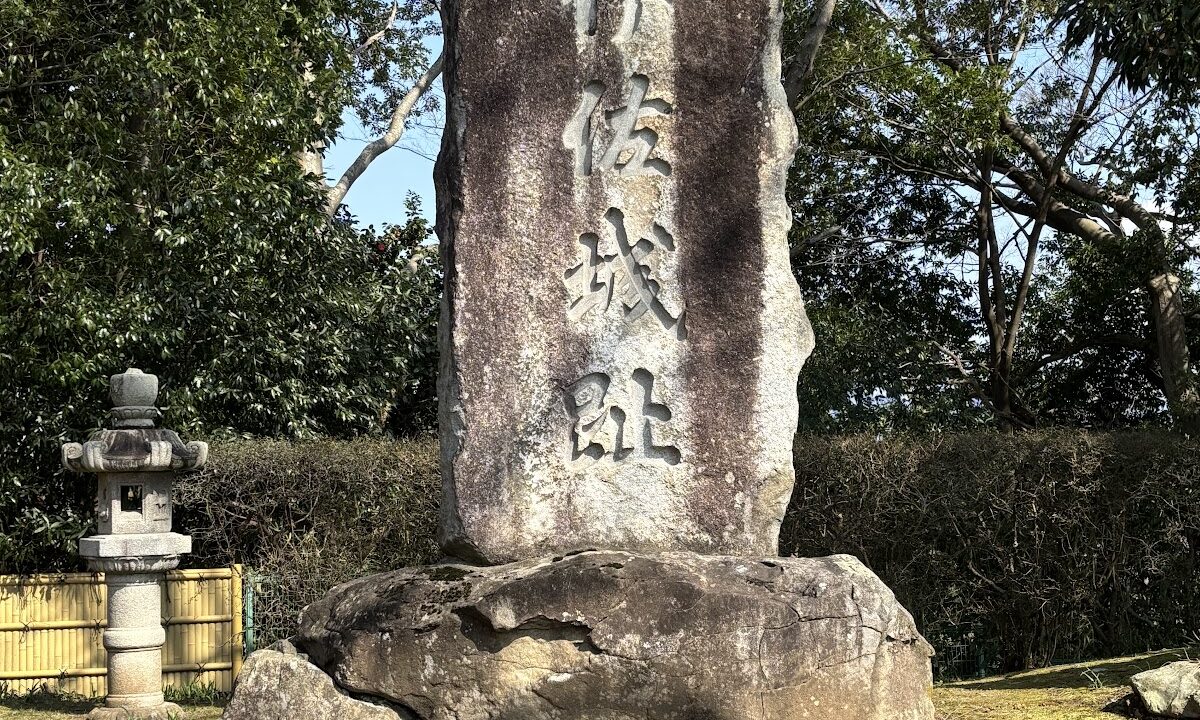
Complete Guide to Isa Castle (Ibaraki Prefecture): A Thorough Explanation of the Birthplace of the Date Clan and the Historical Site of the Taira no Masakado Legend
Located in Chikusei City, Ibaraki Prefecture, Isa Castle is a historically significant castle site that served as the residence of the Isa clan, ancestors of the prestigious Date clan of Oshu. From the legend of Fujiwara no Hidesato’s involvement in the Taira no Masakado Rebellion to its role as an important base for the Southern Court during the Nanboku-cho period, this castle, which appears at key points in Japanese history, will be explained in detail along with information on the remaining ruins.
Historical Background and Origins of Isa Castle
The Legend of the Three Castles of Taira no Masakado and Fujiwara no Hidesato
The origins of Isa Castle can be traced back to the mid-Heian period, specifically the third year of Tenkei (940 AD). When Taira no Masakado’s rebellion broke out, Fujiwara no Hidesato (Tawara no Tōta), who was dispatched by the imperial court as a punitive expeditionary force, is said to have built three forts—Kamikan (Motokan), Nakakan, and Shimodate—as military bases for suppressing Masakado. Nakakan is believed to be the predecessor of Isa Castle.
These three forts were strategically located around present-day Chikusei City (formerly Shimodate City) in Ibaraki Prefecture and functioned as operational bases for suppressing Taira no Masakado. Nakakan, in particular, was built in a location that allowed it to utilize the Gongyōgawa River as a natural moat, giving it excellent defensive advantages.
Relationship between the Isa Clan and the Ōshū Date Clan
The reason Isa Castle is considered particularly important in history is that it is considered the birthplace of the Ōshū Date Clan. From the late Heian period to the early Kamakura period, the Isa clan, based in Isa County, Hitachi Province, distinguished themselves in Minamoto no Yoritomo’s conquest of Ōshū.
Date Tomomune (Isa Tomomune), a member of the Isa clan, was granted Date County in Mutsu Province (present-day Fukushima Prefecture) for his achievements in the Oshu War of 1189. It is believed that he adopted the name “Date” from the place name. This Tomomune is the ancestor of the Date clan, who later reigned as a powerful daimyo in the Tohoku region during the Sengoku period, and Isa Castle was their starting point.
Even today, historical materials and legends indicating the connection between the Date and Isa clans remain around the Isa Castle ruins, making it an indispensable place for exploring the roots of the Date clan.
Isa Castle and the Six Castles of Kanto during the Nanboku-cho Period
Role as an Important Base for the Southern Court
In the Muromachi period, Isa Castle played a crucial role in the Nanboku-cho conflict. Date Yukitomo (Isa Yukitomo), the head of the Isa clan, fought on the Southern Court’s side against the Northern Court.
Around 1340 (Kōkoku 1st year/Engen 5th year), Isa Castle was counted as one of the Six Castles of Kanto. The Six Castles of Kanto were a group of major castles that the Southern Court used as bases in the Kanto region, and included, in addition to Isa Castle, Seki Castle, Daihō Castle, Oda Castle, Ishihama Castle, and Momoi Castle. These castles worked in coordination with each other to resist the forces of the Northern Court.
Battle with Kō no Morofuyu and the Fall of the Castle
In 1343 (Kōkoku 4th year/Kōei 2nd year), a large army led by Kō no Morofuyu, a general of the Northern Court, attacked Southern Court bases in Kanto. Isa Castle also came under fierce attack, and although Date Yukitomo fought bravely, it was ultimately forced to fall.
It is said that Date Yukitomo was killed in this battle, or that he fled to Ōshū, and the details are uncertain. However, it is believed that with this fall, Isa Castle lost its function as a Southern Court base and subsequently became a abandoned castle. The Battle of Isa Castle during the Nanboku-chō period (Northern and Southern Courts period) holds a significant place in Japanese history research as a symbolic event representing the rise and fall of the Southern Court’s power in the medieval Kanto region.
Structure and Layout of Isa Castle
Location and Topographical Characteristics
Isa Castle was built on a low plateau west of the Ginkō River in the Nakadate district of Chikusei City, Ibaraki Prefecture. The eastern side was a cliff facing the Ginkō River, forming a natural defensive line. The western side was a plain with rice paddies, offering an open view that allowed for early detection of approaching enemies.
The castle’s location is a typical hilltop castle, clearly demonstrating the characteristics of medieval castles utilizing rivers and plateaus. Although the elevation is not particularly high, the difference in elevation with the surrounding lowlands provided sufficient defensive effectiveness.
Castle Grounds and Enclosure Layout
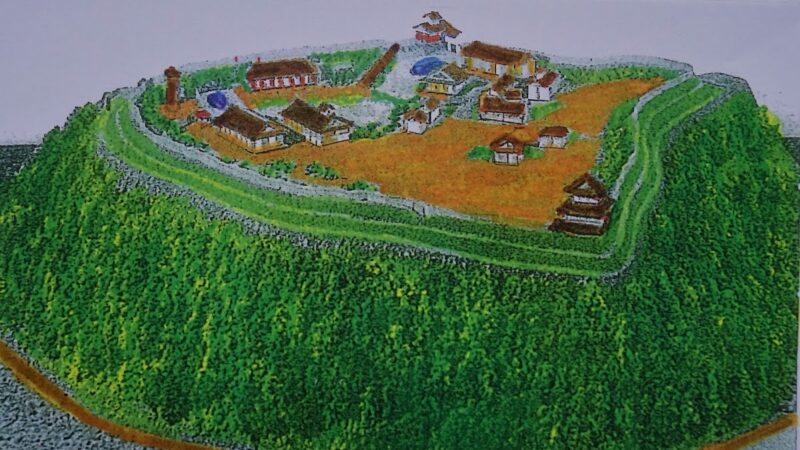
The castle grounds of Isa Castle extend to the grounds and surrounding area of the current Semuizan Enmeiin Kannonji (Nakadate Kannonji) temple. The main enclosure configuration is as follows:
- Honmaru: Estimated to be the area around the main hall of Kannonji Temple.
- Ninokuruwa: The southern part of the Kannonji temple grounds, where a relatively large flat area remains today.
- Gaikan: It is believed that the grounds of the surrounding Nakadate Nursery School and Nakadate Kindergarten were also included in the castle grounds.
The castle’s size is standard for a medieval local lord’s residence, and it is presumed to have had a structure with multiple enclosures arranged in a linear fashion.
Defensive Structures and Remains
Currently, the main remains at the Isa Castle site are limited, but careful observation reveals traces of the medieval castle:
- Earthworks: Slight traces of earthworks can be seen in a part of the Kannonji Temple grounds.
- Moat: Partial remains of a moat dividing the plateau are still present.
- Cliff: The cliff facing the Gongyo River may be an artificially carved cliff.
- Flat Area of the Enclosure: The flat areas within the Kannonji Temple grounds and surrounding areas are thought to be remnants of former enclosures.
In particular, the Gongyo River Cliff section best preserves the appearance of the castle site, allowing us to imagine its defensive structure in its heyday. The cliff is approximately 10 meters high, indicating that it served as a strong defensive line against attacks from the east.
Current Status and Highlights of Isa Castle Ruins
Preservation Status of Nakadate Kannon-ji Temple and Castle Ruins
The current Isa Castle ruins are used as the grounds of Semui-zan Enmei-in Kannon-ji Temple (commonly known as Nakadate Kannon-ji Temple). Kannon-ji Temple still functions as a center of local faith, and the main hall and grounds are carefully maintained.
While much of the castle’s remains have been lost due to the passage of time and changes in land use, paying attention to the topography and layout of the grounds allows one to discern the structure of the former baileys. In particular, the elevated area where the main hall is located is presumed to be the site of the main bailey, offering panoramic views of the surrounding area.
Value as an Ibaraki Prefecture Designated Historic Site
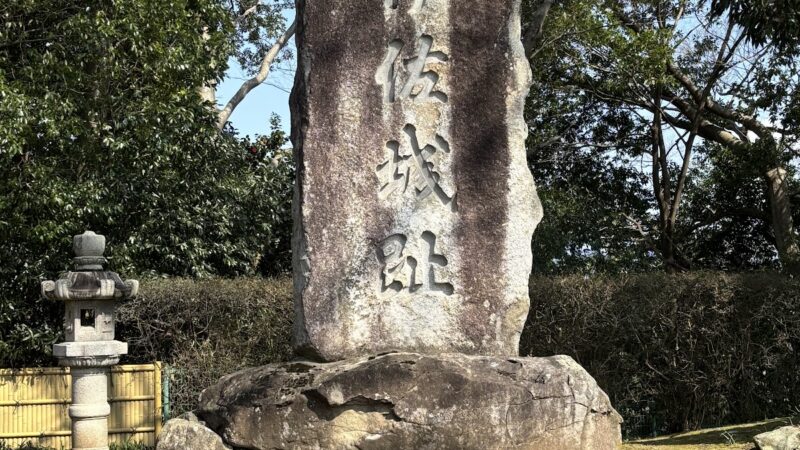
The Isa Castle Ruins are designated as an Ibaraki Prefecture Historic Site under the name “Isa Castle Ruins“, officially recognizing their historical value. The reasons for the designation are as follows:
- Historical importance as the birthplace of the Oshu Date clan
- Legendary site of Fujiwara no Hidesato related to the Taira no Masakado Rebellion
- Role as a base for the Southern Court during the Nanboku-cho period
- Remains showing the form of a castle residence of a local powerful family in the medieval Kanto region
The designation as a historical site ensures the preservation and utilization of the castle ruins, and it is also used for local history education and as a tourist resource.
Points to Note When Exploring the Castle Ruins
Here are some points of interest and highlights when visiting the Isa Castle Ruins:
Around the Kannonji Temple Main Hall: This is the area presumed to be the site of the main keep, and you can imagine the structure of the time from the layout of the temple grounds and the topography. Although the main hall is an Edo period building, you can reflect on history in a tranquil atmosphere.
Kongyogawa Cliff: This is the place where the remnants of the castle ruins are best preserved. Looking up from the bottom of the cliff, you can clearly see the topography as a natural stronghold. Also, from the top of the cliff, you can enjoy a panoramic view of the surrounding countryside and experience the scenery that the former lord of the castle saw.
Flat Area within the Temple Grounds: This area is believed to be the site of the second bailey, and the wide, flat surface indicates that it was once a castle enclosure. In this tranquil environment, you can feel the atmosphere of a medieval castle.
Surrounding Topography: Walking around outside Kannonji Temple, you can gain a good understanding of the castle’s location, including the boundary between the plateau and lowlands, and its relationship to the rice paddies.
Access and Visiting Information for Isa Castle
Location and Basic Information
- Location: Nakadate, Chikusei City, Ibaraki Prefecture
- Castle Type: Hilltop Castle
- Construction Period: Around 940 (tradition), or early Kamakura period
- Builder: Fujiwara no Hidesato (tradition), or Date Tomomune
- Main Lords: Isa clan, Date Yukitomo
- Year of Abandonment: Around 1343 (Kōkoku 4 / Kōei 2)
- Designated Cultural Property: Ibaraki Prefecture Designated Historic Site
- Current Status: Temple grounds (Nakadate Kannon-ji Temple)
Transportation Access
By Train:
- Approximately 2km north from JR Mito Line “Shimodate Station”
- Approximately 5 minutes by taxi from the station
- Approximately 25-30 minutes on foot
By Car:
- Approximately 15 minutes from the Sakuragawa-Chikusei Interchange on the Kita-Kanto Expressway
- Approximately 40 minutes from the Tsuchiura-Kita Interchange on the Joban Expressway
- Parking: There is parking space for visitors at Kannonji Temple (a few cars).
Manners and Precautions for Visitors
The Isa Castle ruins are currently located within the grounds of Kannonji Temple, a religious facility. Please observe the following points when visiting:
- Please be quiet on the temple grounds and be considerate of other visitors.
- Avoid entering buildings such as the main hall without permission.
- Please take all your trash with you.
- To protect the remains, please be careful not to damage the earthworks, etc.
- Photography is permitted, but please be considerate of other visitors and monks.
The estimated visit time is 30 minutes to 1 hour. Carefully observing the remains and exploring the surrounding terrain will allow you to understand the castle’s structure more deeply.
Related Historical Sites and Tourist Attractions in the Surrounding Area
Three Castles Associated with Fujiwara no Hidesato
By visiting the three castles believed to have been built by Fujiwara no Hidesato, along with Isa Castle (Nakadate), you can gain a deeper understanding of the history of the pursuit of Taira no Masakado:
Kamidate (Motodate): Identified as being in a different location within Chikusei City, it is believed to have been the northernmost of the three castles. While very few remains exist today, the name “Motodate” remains as a place name.
Shimodate: The site is believed to be around the current center of Chikusei City, near Shimodate Station. During the Edo period, the Shimodate Domain’s headquarters were located there, and it developed as a castle town. Some remains of Shimodate Castle still exist.
Other Castle Ruins of the Six Kanto Castles
By visiting the six Kanto castles, which, along with Isa Castle, served as bases for the Southern Court during the Nanboku-cho period, you can gain a more comprehensive understanding of the history of medieval Kanto:
Seki Castle: A castle located in Sekimoto, Chikusei City, approximately 8 km southwest of Isa Castle. This castle was where Seki Muneyuki and his son Seki Munemasa played an active role on the Southern Court side. Currently, it is maintained as Seki Castle Ruins Park, and the remains such as earthworks and dry moats are well preserved.
Daiho Castle: This castle was located in Daiho, Shimotsuma City, and was the residence of the Shimotsuma clan. Located approximately 15km south of Isa Castle, it also functioned as a base for the Southern Court. Currently, it is the grounds of Daiho Hachimangu Shrine, and some remains still exist.
Other Historical Sites in Chikusei City
Shimodate Castle Ruins: This is the site of the Shimodate Domain’s residence during the Edo period, with some of the water moats and earthworks remaining. Located approximately 2km south of Isa Castle, it is convenient to visit both together.
Itaya Hazan Memorial Museum: The birthplace of Itaya Hazan, a master of modern ceramics, is open to the public as a memorial museum. You can experience the culture of Chikusei City in between visiting castle ruins.
Akeno Agri Shop: A direct sales store where you can purchase fresh local produce and specialty products. It’s recommended to stop by after visiting the castle ruins and enjoy the local flavors.
Historical Connections between Isa Castle and the Date Clan
Date Tomomune’s Migration to Oshu
The circumstances surrounding the birth of the Oshu Date clan from Isa Castle are a significant event in the history of Japanese samurai. Date Tomomune (Isa Tomomune) participated in Minamoto no Yoritomo’s conquest of Oshu and distinguished himself in the Oshu War of 1189.
As a reward, Tomomune was granted Date County in Mutsu Province (present-day Date City and Koori Town, Fukushima Prefecture), and he moved to this area. He began using the name “Date” from the name of his new territory, and this marks the beginning of the history of the Oshu Date clan.
Tomomune built Takako-oka Castle (later the headquarters of the Date clan) in Date County, laying the foundation for expanding his power in the Tohoku region. Their descendants expanded their power primarily in Date County, and during the Sengoku period, Date Masamune emerged, growing into the largest daimyo in the Tohoku region.
The Date Clan’s Lineage and Isa Castle
The Date clan always traced their roots back to the Isa clan, considering Isa Castle their “place of origin.” The Date family’s genealogies and family records detail their lineage from the Isa clan, emphasizing their connection to Isa County in Hitachi Province.
Even after the Edo period, when the Date clan became a powerful daimyo with a 620,000 koku domain in Sendai, this historical connection to Isa Castle remained important. Date family records sometimes mention Isa, their ancestral homeland, and some retainers claimed to be descendants of the Isa clan.
Even today, Isa Castle remains an important subject of research in Date clan studies and Tohoku history studies. The significance of this small castle ruin in Chikusei City, Ibaraki Prefecture, is considerable in exploring the roots of the Date clan.
Excavation and Research Status of Isa Castle
Past Research Results
Multiple excavation and surveying surveys have been conducted at the Isa Castle site. The following results have been obtained from these surveys:
- The discovery of medieval pottery and ceramic fragments confirmed the castle’s use from the Kamakura period to the Nanboku-cho period.
- Topographic surveys have clarified the layout of the baileys and the locations of the moats.
- Surveys of surrounding place names have allowed for a more accurate estimation of the castle’s boundaries.
However, large-scale excavation is difficult because the site is currently occupied by temple grounds and residential areas. Therefore, research combining historical documents and topographical observations is the mainstream approach.
Historical Evaluation and Future Challenges
Isa Castle is historically highly valued for the following reasons:
- Value as the birthplace of the Date clan: The only castle site showing the roots of the Date clan, who played an important role in the history of the Tohoku region.
- Importance of Nanboku-cho history research: A valuable historical site for understanding the reality of the Southern Court’s influence in the Kanto region.
- Research on medieval local powerful families: Clues to clarifying the reality of medieval samurai groups in Hitachi Province.
Future challenges include:
- Clarification of the castle structure through more detailed layout surveys.
- Further excavation and analysis of historical documents.
- Empirical research on the relationship with the Date clan.
- Formulation and implementation of a preservation and maintenance plan.
- Examination of methods for utilizing it as a tourist resource.
How to Enjoy a Visit to Isa Castle and Model Courses
Half-Day Course: Touring Historical Sites Around Isa Castle
Morning
- 9:00 Arrive at JR Shimodate Station
- 9:30 Visit Isa Castle Ruins (Nakadate Kannonji Temple) (1 hour)
- 10:30 Visit Seki Castle Ruins (30 minutes)
- 11:30 Visit Shimodate Castle Ruins (30 minutes)
Afternoon
- 12:00 Lunch in Shimodate town
- 13:00 Visit Itaya Hazan Memorial Museum (1 hour)
- 14:00 Shopping at Akeno Agri Shop
- 15:00 Depart from Shimodate Station
1-Day Course: Touring Historical Sites of Fujiwara Hidesato and the Southern Court
Morning
- 9:00 Arrive at Shimodate Station
- 9:30 Visit Isa Castle Ruins (1 hour)
- 10:30 Stroll around Motodate area (30 minutes)
- 11:00 Visit Shimodate Castle Ruins (30 minutes)
Afternoon
- 12:00 Lunch
- 13:00 Visit to Seki Castle Ruins (1 hour)
- 14:00 Visit to Daiho Castle Ruins and Daiho Hachimangu Shrine (1 hour)
- 15:00 Rest stop at Michi-no-Eki Grand Terrace Chikusei
- 16:00 Departure
Recommended Photo Spots
- Kannonji Temple Main Hall: A historically significant building at the heart of the main keep ruins.
- View from the Gongyogawa Cliff: A spectacular viewpoint that clearly shows the castle’s defensive structure.
- View of the Surrounding Rural Landscape from the Temple Grounds: Allows you to imagine the scenery seen by the medieval castle lord.
- Remaining Earthworks: A valuable historical record.
Summary: The Historical Significance of Isa Castle
Isa Castle may appear small and unremarkable at first glance. However, unraveling its historical background reveals it to be a valuable historical site related to an important turning point in Japanese history.
From the Taira no Masakado Rebellion, a major event at the end of ancient Japan, to Minamoto no Yoritomo’s conquest of Oshu, marking the establishment of the medieval samurai government, and the turbulent Muromachi period of the Nanboku-cho War, Isa Castle played a crucial role in all these eras.
In particular, as the birthplace of the Date clan, a leading samurai family in the Tohoku region, the significance of this castle is immeasurable. The glorious history of the Date clan, exemplified by Date Masamune, began on this small plateau in Chikusei City, Ibaraki Prefecture.
Although the current Isa Castle site is a quiet temple ground, standing there, you can feel the presence of samurai from hundreds of years ago. When you visit Ibaraki Prefecture, be sure to visit this castle site steeped in historical romance.
Isa Castle is an indispensable historical site for understanding Japanese medieval history, and a place worth visiting not only for castle enthusiasts but for all history lovers.