Ushiku Jinya Ruins (Ibaraki Prefecture) Complete Guide: A Thorough Explanation of History, Remains, and Access
The Ushiku Jinya Ruins, located in Ushiku City, Ibaraki Prefecture, are the remains of a jinya (fortified residence) that functioned as the administrative center of the Ushiku Domain during the Edo period. Built on a plateau overlooking Lake Ushiku, this jinya served as the center of the Ushiku Domain, ruled by the Yamaguchi clan for generations, and existed for approximately 200 years until the Meiji Restoration. This article provides a detailed explanation of the Ushiku Jinya Ruins, from its historical background to the existing remains and surrounding attractions.
What are the Ushiku Jinya Ruins?
The Ushiku Jinya Ruins are the remains of the domain office of the Ushiku Domain, located in Ushiku, Hitachi Province (present-day Ibaraki Prefecture). A jinya refers to a small-scale residence and administrative center of a daimyo (feudal lord) without a castle, and the Ushiku Jinya was the central facility of the Ushiku Domain, a small domain with a stipend of approximately 10,000 to 15,000 koku (a unit of rice production).
Located in present-day Jōchū-machi, Ushiku City, it was built on the eastern edge of a plateau approximately 20 meters above sea level, facing Lake Ushiku. Situated within the outer fortifications of the medieval Ushiku Castle, the site of the jinya (fortified residence) is located north of the Ogawa Usen Memorial Museum (Ungyotei).
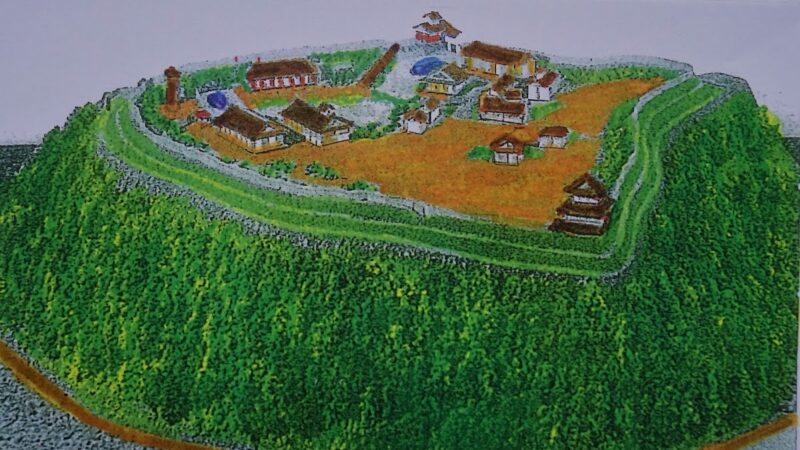
The site covered approximately 3,700 tsubo (about 12,500 square meters), with a building area of over 570 tsubo (about 1,850 square meters). Buildings such as the inner palace, west palace, long chamber, upper and lower kitchens, long barracks, armory, and rice storehouse were arranged, providing sufficient facilities for conducting domain administration despite being a small domain.
History of Ushiku Jinya
Yamaguchi Shigemasa and the Establishment of the Ushiku Domain
To understand the history of Ushiku Jinya, it is necessary to first understand the process of the establishment of the Ushiku Domain. In the Battle of Sekigahara in 1600, Yamaguchi Shigemasa served under Tokugawa Hidetada and became the lord of Ushiku Castle for his achievements in the siege of Ueda Castle in Shinano Province. However, in 1613 (Keicho 18), he was dispossessed of his domain due to his involvement in the downfall of Okubo Tadachika. Later, in 1628 (Kanei 5), Yamaguchi Shigemasa was again granted a fief of 10,000 koku in Ushiku, officially establishing the Ushiku Domain. At this point, it is believed that they were still using Ushiku Castle, which had existed since the Middle Ages.
Construction of the Jinya (Fortified Residence)
The current Ushiku Jinya was built during the time of the second lord, Yamaguchi Hirotaka. In 1669 (Kanbun 9), a new Jinya was constructed on the western edge of the outer perimeter of the former Ushiku Castle, on the edge of a plateau bordering Ushiku Marsh. This location, with Ushiku Marsh as a natural stronghold and utilizing the elevation difference of the plateau, was ideal for defense.
With the construction of the Jinya, the political and administrative center of the Ushiku Domain was clearly established, and it continued to function as the Yamaguchi clan’s residence until the Meiji Restoration. The Yamaguchi clan ruled Ushiku as an outside daimyo until the end of the Edo period, contributing to the region’s development.
From the End of the Edo Period to the Meiji Restoration
Throughout the Edo period, the Ushiku Domain remained relatively peaceful with few major upheavals. Its rice yield fluctuated between 10,000 and 15,000 koku, maintaining a stable domain administration despite its small size.
After the Meiji Restoration, the Ushiku Domain was abolished due to the abolition of the feudal domains and the establishment of prefectures, and its function as a jinya (fortified residence) was lost. Many of the buildings were demolished or relocated, and only a portion of the remains remain today.
Existing Remains and Points of Interest
Earthworks and Dry Moats
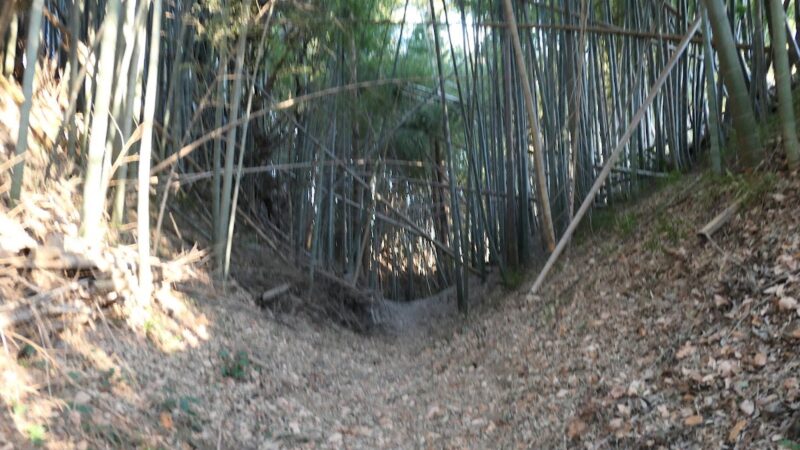
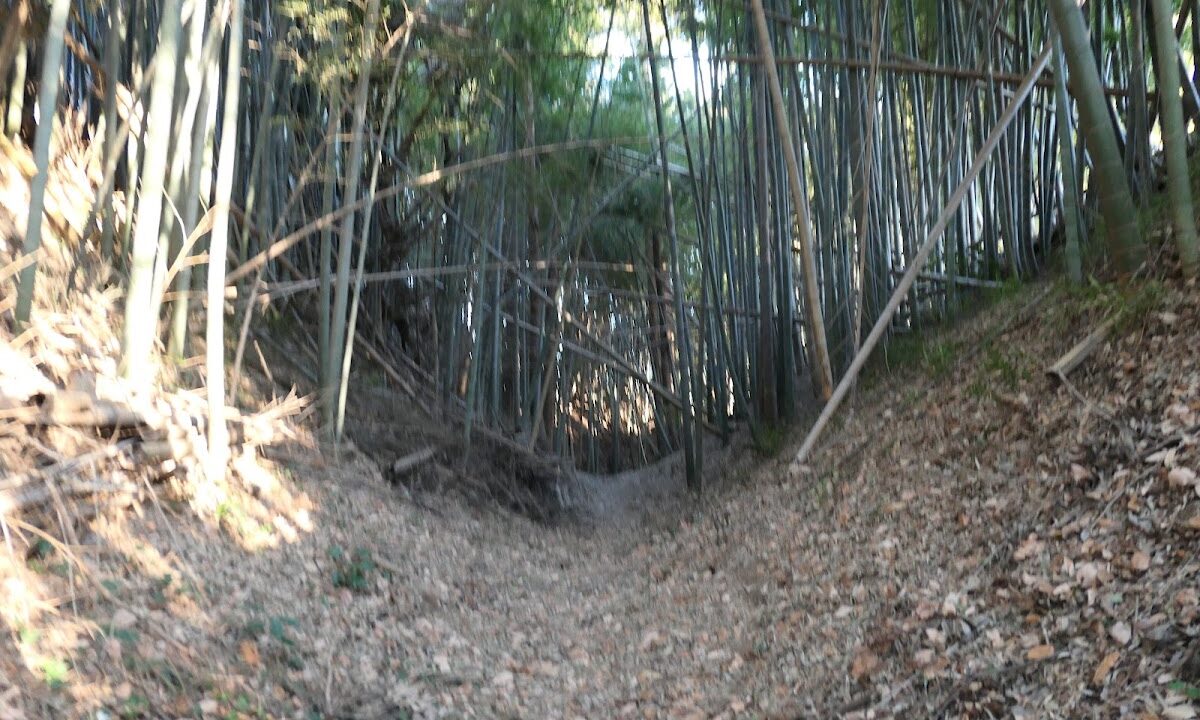
The most clearly identifiable remains at the Ushiku Jinya site are the earthworks and dry moats. Parts of the jinya’s earthworks and moats remain in good condition in the woods north of the park surrounding the Kappa Monument.
The earthworks were built as defensive structures for the jinya, and the shape of the earthen mounds can still be seen, albeit partially. The dry moat remains, providing clues to imagining the scale and structure of the encampment in its heyday. However, much of the surrounding area has been developed into residential land or open fields, making it difficult to grasp the overall state of the remains.
Kappa Monument
The “Kappa Monument” is an important landmark when visiting the Ushiku Encampment Site. This monument stands on the earthen rampart of the encampment and is located near the Ogawa Usen Memorial Museum.
Next to the Kappa Monument is an information board explaining the history and structure of the encampment. For visitors, this information board is a valuable source of information for understanding the encampment site. A parking lot is also available near the Kappa Monument, making it a convenient starting point for your visit.
Relocated Structures
While the main buildings of the encampment no longer exist, it is said that some gates have been relocated to private homes and still exist. These relocated gates are valuable relics that convey the architectural style of the encampment era. However, since they are private property, consideration is required when viewing them.
Around the Ogawa Usen Memorial Museum (Ungyotei)
In a corner of the former Jinya (fortified residence) site is Ungyotei, a memorial museum dedicated to the Japanese painter Ogawa Usen. Ogawa Usen is known for his paintings of kappa (water imps), and he loved the area around Ushiku Marsh, where he created his works. Visiting this museum in conjunction with the Jinya site will allow you to gain a deeper understanding of Ushiku’s history and culture.
Structure and Scale of the Ushiku Jinya
Layout of the Jinya
The Ushiku Jinya occupied a site of approximately 3,700 tsubo (approximately 12,200 square meters) with a building area of over 570 tsubo (approximately 1,880 square meters). The main buildings included the following facilities:
- Okugoten: Living quarters for the feudal lord and his family
- Nishigoten: Space used for administrative affairs and entertaining guests
- Nagatsubone: Living quarters for the maids
- Kamikaze Okudaidokoro: Cooking facilities
- Nagaya: Living quarters for retainers
- Armor: Storage facility for weapons and armor
- Komezo: Storage facility for tax rice and other supplies
These buildings, despite being for a small domain, possessed the necessary functions for conducting domain administration, making it a relatively well-organized jinya (fortified residence).
Location and Utilization of Topography
The jinya was built on the eastern edge of a plateau facing Ushiku Marsh, a strategically advantageous location for defense. The plateau had an elevation difference of approximately 15 meters, and the layout took advantage of this natural fortification. It prevented intrusion from the Ushiku Marsh side and offered a strategic position overlooking the surrounding area from the plateau.
Its location within the outer fortifications of Ushiku Castle, a medieval castle, also provided a defensive advantage. Earthworks and moats, remnants of Ushiku Castle, remain in the surrounding area, suggesting that they formed an integrated defensive system with the encampment.
Relationship with Ushiku Castle
Understanding the Ushiku encampment is crucial to understanding its relationship with Ushiku Castle, a medieval castle. Ushiku Castle was a flatland castle built by the Okami clan in the late Tenbun period (around 1550), also known as Okami Castle.
The Ushiku encampment site is approximately a 15-minute walk from Ushiku Castle, indicating a close relationship between the two. The Ushiku encampment was built within a corner of the outer enclosure of Ushiku Castle, utilizing the remains of the medieval castle while being developed as a modern encampment.
Currently, the remains of earthworks and dry moats at the Ushiku Castle site are well-preserved and are valued as an important medieval castle site in Ibaraki Prefecture. When visiting the Ushiku encampment site, visiting the Ushiku Castle site as well will provide a more comprehensive understanding of the castle history of this region.
Access and Visit Information
Location
- Address: Jōchū-machi, Ushiku City, Ibaraki Prefecture
- Major Landmarks: Kappa Monument, Ogawa Uzen Memorial Museum (Ungyotei)
Transportation Access
Access by Train
- Approximately 10 minutes by car from JR Jōban Line “Ushiku Station”
- If using a bus from Ushiku Station, take the Kanto Railway bus and get off at “Ushiku Castle Ruins Entrance,” then walk for approximately 5 minutes.
Access by Car
- Approximately 15 minutes from Jōban Expressway “Ushiku Ami IC”
- Approximately 15 minutes from Ken-Ō Expressway “Ushiku Ami IC”
Parking
A parking lot is available near the Kappa Monument. Alternatively, using the tourist parking lot near the Genkikan nursing home will allow you to reach both Ushiku Castle and Ushiku Jinya in about 5 minutes.
Points to Note During Your Visit
- Many parts of the remains have been developed into residential areas or open fields, making it difficult to grasp the overall picture.
- The information board next to the Kappa Monument is an important source of information for understanding the history of the Jinya (fortified residence).
- Parts of the earthworks and moats remain in the woods north of the park, so be sure to check those out as well.
- Visiting the Ogawa Usen Memorial Museum in conjunction with this will allow you to learn about the cultural history of Ushiku.
Precautions During Your Visit
- Some areas are private residences or private property, so caution is required when entering.
- The relocated gate still exists at a private residence, but please be considerate when visiting as it is private property.
- Many of the remains are located in the woods, so they may be difficult to view depending on the season.
Nearby Attractions
Ushiku Castle Ruins
This medieval castle is located about a 15-minute walk from the Ushiku Jinya Ruins. The remains, such as earthworks and dry moats, are well-preserved, and it is designated as a historical site by Ushiku City. You can see remains such as baileys, earthworks, and dry moats, and learn about the structure of a medieval castle. ### Ogawa Usen Memorial Museum (Ungyotei)
This museum, adjacent to the Jinya (feudal lord’s residence) ruins, is a memorial to the Japanese painter Ogawa Usen. It displays works and materials related to Usen, known for his kappa (water imp) paintings, and allows visitors to learn about the connection between Ushiku Marsh and the kappa legend.
Ushiku Marsh
Ushiku Marsh, stretching out below the Jinya ruins, is a naturally rich marsh covering approximately 6.5 square kilometers. Visitors can enjoy fishing and strolling along the water’s edge, experiencing the scenery that Ogawa Usen loved.
Ushiku Daibutsu (Great Buddha of Ushiku)
A representative tourist spot in Ushiku City, it is one of the world’s largest bronze statues. Located about 15 minutes by car from the Jinya ruins, it’s well worth visiting when sightseeing in Ushiku.
Historical Value of the Ushiku Jinya Ruins
The Ushiku Jinya ruins are a valuable historical site that conveys the reality of a small feudal domain’s residence during the Edo period. Even nationwide, there are not many examples of Jinya ruins that are so well preserved. In particular, in the Kanto region, many jinya (fortified residence) sites have been lost due to urbanization, and in that sense, the preservation value of the Ushiku Jinya site is high.
Importance in Local History
The Ushiku Jinya is an important historical site for understanding the local history of southern Ibaraki Prefecture. As the political, economic, and cultural center of the Ushiku Domain, ruled by the Yamaguchi clan for approximately 200 years, it played a significant role in the development of the region.
The structure of the castle town formed around the jinya forms the basis of the current Ushiku city center and is important from the perspective of urban development history. Furthermore, water management and agricultural development around Ushiku Marsh were also closely related to the domain’s administration.
Position in Castle History
The Ushiku Jinya is a good example of the transition from medieval castles to early modern jinya. The fact that an early modern jinya was built within the outer fortifications of the medieval Ushiku Castle illustrates the process by which the function and form of castles changed over time.
The transition from a defensive castle of the Sengoku period to a government office (jinya) of the peaceful Edo period represents a major turning point in the history of Japanese castles, and the Ushiku Jinya site is a valuable study example of this transition.
Current Status of Preservation and Utilization
Currently, part of the Ushiku Jinya site has been developed into a park, but overall, it is difficult to say that it has been adequately preserved and utilized. Residential development and wilderness are progressing, making it difficult to grasp the full extent of the remains.
However, earthworks and dry moats remain around the Kappa monument and in the woods north of the park. By properly preserving and developing these remains, the history of the jinya can be conveyed to more people.
Future challenges include the installation of information boards, improved explanations, preservation and development of the remains, and improvement of the surrounding environment. Furthermore, the development of a comprehensive historical tourism route in conjunction with the Ushiku Castle site and the Ogawa Usen Memorial Museum is also anticipated.
Summary
The Ushiku Jinya site is a valuable historical site that conveys the appearance of a small Edo period domain. Built in 1669, the Ushiku Jinya (fortified residence) served as the center of the Ushiku Domain for approximately 200 years until the Meiji Restoration. While only partial remains such as earthworks and dry moats exist today, the Kappa (water imp) monument and information boards allow visitors to imagine the former appearance of the fortified residence.
The Ushiku Jinya site possesses multifaceted appeal, including its location on a plateau overlooking Lake Ushiku, its relationship to the medieval Ushiku Castle, and its connection to the cultural figure Ogawa Usen. It is a historical site well worth visiting not only for those interested in Ibaraki Prefecture’s history and castles, but also for anyone wanting to learn about the region’s history and culture.
When visiting Ushiku City, be sure to stop by the Ushiku Jinya site and reflect on the local history of the Edo period. Visiting it along with the Ushiku Castle ruins and the Ogawa Usen Memorial Museum will provide an even deeper historical experience.