Complete Guide to the History and Highlights of Koibuchi Castle (Mito City) | A Thorough Explanation of Medieval Castles in Ibaraki Prefecture
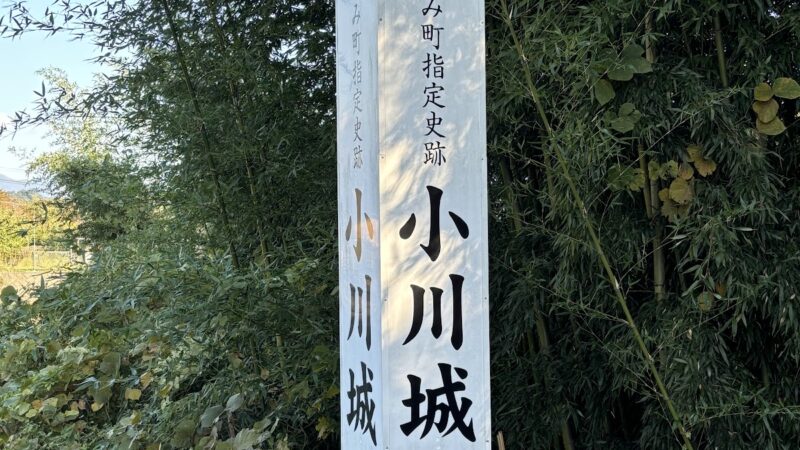
Located in Koibuchi-cho, Mito City, Ibaraki Prefecture, Koibuchi Castle is a castle built in the medieval period by the Edo clan. Currently, the remains are located behind the Nakazaki family residence, a nationally designated Important Cultural Property, making it a valuable historical site that conveys the history of the region. This article provides a detailed explanation of Koibuchi Castle, from its historical background and the characteristics of its remains to points of interest for visitors and access methods.
History and Construction Background of Koibuchi Castle
The Edo Clan and the Establishment of Koibuchi Castle
Koibuchi Castle was built by a family of the Edo clan, a samurai group based in Hitachi Province. The Edo clan held power in Hitachi Province from the late Heian period to the Kamakura period, controlling a vast territory centered around Mito.
The builder of Koibuchi Castle is believed to be Edo Hikojiro Michishige, the second son of Edo Michitaka. After establishing a castle in the Koibuchi area, Tsuneshige adopted the name Koibuchi. This is a typical example of the “surname-based surname” custom among medieval samurai, where the name of the territory was adopted as the family name.
Role as a Medieval Castle
Koibuchi Castle is thought to have been built during the early medieval period, when samurai groups were strengthening their regional control. This castle functioned not only as a military base but also as the residence of the Koibuchi clan and as a center of regional governance.
The area around Mito City in Ibaraki Prefecture is dotted with castles belonging to powerful samurai groups such as the Edo and Satake clans, and Koibuchi Castle is thought to have played a part in this regional castle network. Its location in the southwest of Mito City also made it a key transportation hub connecting the center of Mito with the surrounding areas.
The Later Life of the Koibuchi Clan
The Koibuchi clan, as a branch of the Edo clan, ruled the Koibuchi area throughout the medieval period. However, the situation in Hitachi Province changed dramatically during the Sengoku period (Warring States period). The Satake clan seized power in Hitachi Province, and many local samurai groups, including the Edo clan, were incorporated under their control.
In the Edo period, the Tokugawa clan established the Mito Domain, and this region became part of the Mito Domain. It is believed that Koibuchi Castle ceased to function as a medieval castle and was abandoned.
Structure and Layout of Koibuchi Castle
Castle Location and Topographical Utilization
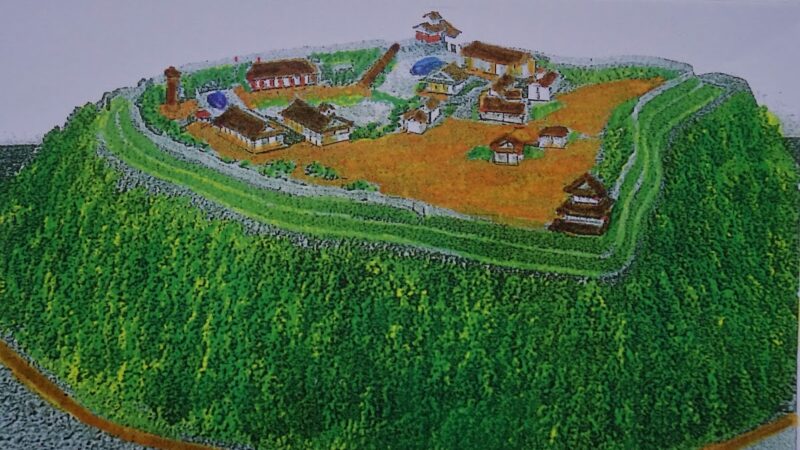
Koibuchi Castle was built on a plateau in Koibuchi-cho, Mito City, Ibaraki Prefecture. This area has developed river terraces formed by tributaries of the Naka River system, and the castle was built skillfully utilizing this natural topography.
By utilizing the edge of the plateau, the natural elevation difference functioned as a defensive structure. This is a common castle-building technique in medieval castles, a method of increasing defensive capabilities while minimizing civil engineering work.
Characteristics of the Remains
Currently, the remains of Koibuchi Castle are located behind the Nakazaki family residence, which is designated as a National Important Cultural Property. You can see traces of typical medieval castle structural elements such as kuruwa (enclosures), earthworks, and moats, as well as remnants of defensive structures.
Medieval castles generally did not use stone walls, but rather constructed defensive lines using earthworks and moats. Koibuchi Castle also adopted this style, making it a valuable historical site for understanding the castle-building techniques of the time.
Character as a Residence
Koibuchi Castle is thought to have functioned more as a “residence castle,” functioning as the lord’s residence during peacetime, rather than a fortress solely for combat. Within the castle were living spaces and facilities for conducting administrative affairs, where the lord, his family, and retainers carried out their daily lives.
Regional Characteristics and History of Koibuchi Town
Overview of Koibuchi Town, Mito City
Koibuchi Town, Mito City, Ibaraki Prefecture, is located in the southwestern part of Mito City. Its postal code is 319-0323, and it is known as a lush, green area with a thriving agricultural sector within Mito City.
The Koibuchi district has adopted the slogan “Creating a livable and desirable town,” and is promoting community development that leverages the characteristics of a rural area. It has become an attractive area where historical heritage and modern life are in harmony.
Historical Background of Koibuchi Town
The name Koibuchi is thought to originate from local legends about carp and the area’s abundant water resources. In the Middle Ages, it was the territory of the Koibuchi clan, and in the Edo period, it developed as a rural area of the Mito Domain.
Within Mito City, Ibaraki Prefecture, Koibuchi Town is an area that has relatively well preserved its historical landscape. Historical buildings such as the Nakazaki family residence and historical sites such as the Koibuchi Castle ruins are scattered throughout the area.
Relationship with Koibuchi Agricultural College
Koibuchi Town is home to the Ibaraki Prefectural Koibuchi Gakuen Agricultural and Nutritional College (formerly Koibuchi Agricultural College), which serves as a base for agricultural education. Established in 1947, this school has contributed to the training of agricultural technicians for many years.
Taking advantage of the characteristics of the Koibuchi district, where agriculture is thriving, practical agricultural education is provided. This region is unique in that its history and modern agriculture are intertwined.
Relationship between the Nakazaki Residence and Koibuchi Castle
Nakazaki Residence: A National Important Cultural Property
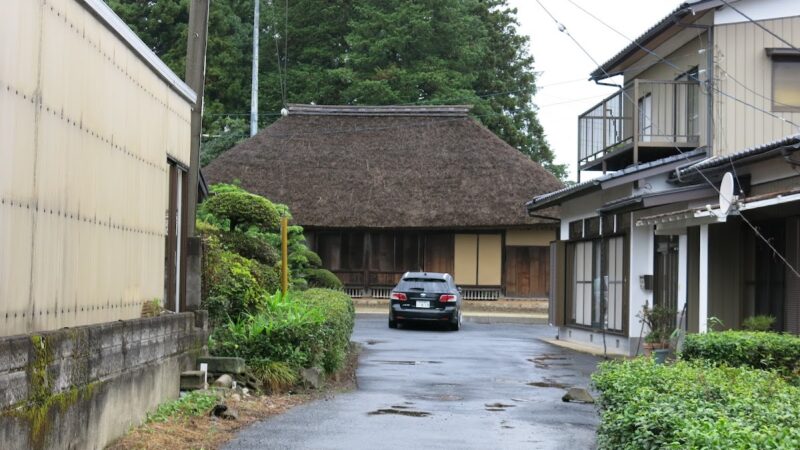
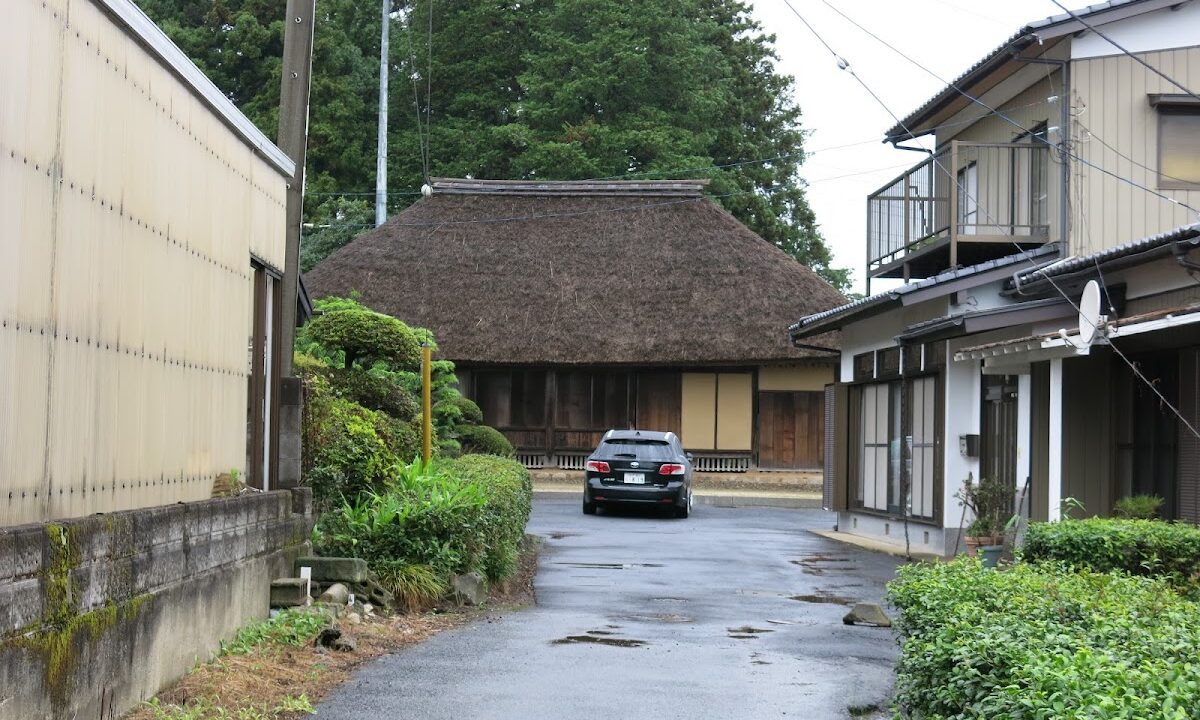
Located in front of the Koibuchi Castle ruins, the Nakazaki Residence is a valuable historical building designated as a National Important Cultural Property. Built in the mid-Edo period, this residence is highly regarded as a typical example of folk architecture in Ibaraki Prefecture.
The Nakazaki family was known as a prominent farming family in this region for generations, possessing a vast estate, a magnificent main house, and outbuildings. The structure and layout of the buildings are valuable historical documents that convey the lifestyle of upper-class farmers at that time.
Location of the Castle Ruins and the Residence
The location of the Nakazaki Residence, with the remains of Koibuchi Castle behind it, is an interesting example illustrating the history of medieval castles and settlement formation from the early modern period onward. It reveals a historical flow where, after the castle was abandoned, a rural settlement formed around it, and prominent farmers established their homes near the castle ruins.
When visiting the Nakazaki family residence, visiting the castle ruins behind it will allow you to truly appreciate the layered history of this region.
Highlights and Points of Viewing at Koibuchi Castle
Points for Observing the Remains
When visiting Koibuchi Castle, paying attention to the following points will help you gain a deeper understanding of the structure of the medieval castle.
Observation of Topography: Observe the shape of the plateau on which the castle was built and the difference in elevation from the surrounding area. This will help you understand how the natural terrain was utilized.
Traces of Earthworks: Look for traces of earthworks, defensive structures made by piling up earth. Although weathered now, they can sometimes be seen as slight elevations.
Layout of Enclosures: By imagining the layout of the main enclosure (the central part of the castle) and the surrounding enclosures, you can see the overall picture of the castle.
Photo Spots
For history enthusiasts and castle fans visiting the Koibuchi Castle ruins, photographing the remains is an important record. The following angles are recommended.
- An angle looking towards the castle ruins from the Nakazaki family residence (expressing the layered nature of history)
- An angle overlooking the surrounding landscape from the edge of the plateau (understanding the importance of the castle’s location)
- Close-up of remains such as earthworks and moats (recording the details of defensive facilities)
Precautions when visiting
The Koibuchi Castle ruins may be adjacent to private land and residential areas. Please note the following points when visiting:
- Do not enter restricted areas
- Obtain permission if passing through private land
- Do not damage the remains or leave litter
- Act quietly in residential areas and do not disturb the lives of residents
Please be mindful of proper etiquette during your visit.
Medieval Castles in Ibaraki Prefecture and Koibuchi Castle
Distribution of Castles in Hitachi Province
Numerous medieval castles exist in Ibaraki Prefecture (formerly Hitachi Province). In particular, the castles and residences of powerful samurai clans such as the Satake and Edo clans are densely concentrated from the northern to central parts of the prefecture.
Even in the vicinity of Mito City alone, several castles have been identified, including Mito Castle, Kasahara Castle, and Kawada Castle. These castles cooperated with each other, forming a regional defense network.
Characteristics of Edo Clan Castles
Koibuchi Castle was built by the Edo clan. Castles built by the Edo clan share common characteristics:
- Location utilizing the edge of a plateau or hill
- Construction of defensive lines using earthworks and moats
- Layout emphasizing the function of a residence
- Relatively small in scale, functioning as a base for the clan’s territorial control
Koibuchi Castle possesses these characteristics and can be positioned as a typical example of an Edo clan castle.
Value in Medieval Castle Research
Koibuchi Castle occupies an important position in the study of medieval castles in Ibaraki Prefecture. Research is possible from both documentary sources and archaeological remains, contributing to the elucidation of the realities of medieval samurai groups.
In particular, it is a valuable case study for considering the Edo clan’s territorial management and the transformation of regional societies from the medieval to the early modern period. ## Access and Surrounding Information
Access to Koibuchi Castle
Location: Koibuchi-cho, Mito City, Ibaraki Prefecture (Postal Code 319-0323)
Access by Public Transportation:
- Approximately 20 minutes by car from Mito Station on the JR Joban Line
- Take an Ibaraki Kotsu bus from Mito Station towards Koibuchi
Access by Car:
- Approximately 15 minutes from Mito IC on the Joban Expressway
- Approximately 10 minutes from Mito Minami IC on the Kita-Kanto Expressway
- Approximately 30 minutes from the center of Mito City via national highways
Regarding parking, parking spaces for visitors to the Nakazaki family residence may be available, but it is recommended to check in advance.
Nearby Attractions
When visiting Koibuchi Castle, exploring the surrounding historical sites will make your historical exploration more fulfilling.
Mito Castle Ruins: The residence of the Mito Tokugawa family. Numerous sights to see, including the Kodokan and Yakuimon gate.
Kairakuen: One of Japan’s three most famous gardens. Famous for its plum blossoms.
Ibaraki Prefectural Museum of History: A facility where you can comprehensively learn about the history of Ibaraki Prefecture.
Kasahara Waterworks: An Edo period waterworks facility. Valuable as a civil engineering heritage site.
Estimated Visit Time
Allow 30 minutes to an hour to visit the Koibuchi Castle ruins. If you also plan to visit the Nakazaki Residence, it is recommended to allocate an additional hour.
The Charm of the Koibuchi Area and Community Development
A Region Where Agriculture and History Harmonize
The Koibuchi area is located in the southwestern part of Mito City and is a lush, green region with thriving agriculture. Vast farmlands stretch out, allowing you to enjoy beautiful rural scenery in every season.
In this region, under the slogan of “Creating a livable and desirable town,” efforts are being made to revitalize the area by utilizing historical resources. Efforts continue to preserve and utilize historical sites such as the Koibuchi Castle ruins and the Nakazaki family residence, while harmonizing them with modern life.
Local Events and Activities
In the Koibuchi district, various activities are undertaken to pass on the region’s history and culture to future generations. Local residents regularly hold activities such as historical site preservation, history study sessions, and walking events.
These activities play an important role in maintaining the region’s historical identity and fostering pride among residents.
Historical Tourism in Mito City, Ibaraki Prefecture
Mito City flourished as a castle town of the Mito Domain, one of the three Tokugawa branches, and possesses abundant historical resources. Historical sites from the Edo period, such as the Mito Castle ruins and the Kodokan, remain in the city center, while medieval castle ruins like Koibuchi Castle are scattered throughout the suburbs.
When visiting Mito City, exploring not only Edo period historical sites but also medieval ruins like Koibuchi Castle will allow for a more multifaceted understanding of its history.
Current Status and Challenges of Koibuchi Castle Research
Documentary Sources and Archaeological Surveys
Research on Koibuchi Castle is progressing through both the analysis of documentary sources and field surveys. The historical background of the castle has been revealed through medieval documents concerning the Edo clan and local histories of the Mito Domain.
On the other hand, archaeological excavations have been limited, and many aspects of the castle’s detailed structure and transformations remain unclear. Further systematic academic research could potentially yield more information.
Efforts for Preservation and Utilization
The preservation of the Koibuchi Castle ruins is being advanced through the cooperation of local residents, the government, and researchers. The challenge lies in balancing the maintenance of the remains with providing information to visitors.
In the future, it is hoped that more effective utilization methods, such as the installation of explanatory signs and the use of digital technology for information dissemination, will be considered.
Contribution to Local History Research
Research on Koibuchi Castle not only clarifies the history of a single castle, but also contributes to the study of medieval history in Ibaraki Prefecture, and even to the study of medieval samurai groups in Japan.
This site provides information related to diverse research topics, including the realities of the powerful Edo clan, the structure of regional governance in the Middle Ages, and the development of castle construction techniques.
Visitor Guide for Castle Enthusiasts
For First-Time Visitors
Koibuchi Castle is a medieval castle with remnants of earthworks and baileys, rather than large stone walls or a main keep. Therefore, having some basic knowledge of castles will enhance your experience.
We recommend learning about the basic structure of medieval castles (baileys, earthworks, moats, etc.) before your visit. Furthermore, studying the history of the Edo clan and the medieval history of Hitachi Province beforehand will deepen your understanding at the site.
Photography Tips
Medieval castle remains can sometimes appear as mere topographical undulations to modern eyes. The following techniques will help you capture the unique features of the remains when taking photographs.
- Utilize the oblique light of early morning or evening to emphasize the topography’s undulations.
- Photograph from multiple angles to express a sense of depth.
- Photograph the surrounding landscape to record the castle’s location and environment.
- Photograph utilizing seasonal changes (fresh greenery, autumn leaves, snowscapes).
Comparative Visit with Other Castles
When visiting Koibuchi Castle, visiting other castles in Mito City and the surrounding area allows for comparative research.
Visiting castles such as Mito Castle (early modern castle), Kasahara Castle (medieval castle), and Nukata Castle (Satake clan castle) allows you to experience the differences between castles based on era and builder.
Summary: The Historical Value of Koibuchi Castle
Koibuchi Castle, located in Koibuchi-cho, Mito City, Ibaraki Prefecture, is a medieval castle built by the Koibuchi clan, a branch of the Edo clan. Although no large-scale remains are left, it holds significant historical value as a valuable historical site that demonstrates the reality of regional control by medieval samurai groups.
Located behind the Nakazaki Family Residence, a nationally designated Important Cultural Property, the castle ruins demonstrate the continuity of the region’s history from the medieval period through the early modern period to the present day. Visiting the castle ruins allows you to not only learn about the castle’s history but also experience the transformation of Japanese regional communities.
The Koibuchi district, aiming to create a livable and desirable town, carefully preserves and utilizes its historical heritage within a lush, agricultural environment. Visiting this area will provide an opportunity to rediscover the historical and cultural richness of Japanese rural areas.
When visiting Mito City in Ibaraki Prefecture, be sure to visit not only the famous Mito Castle and Kairakuen Garden, but also locally rooted historical sites like Koibuchi Castle. There, you’ll find a history that isn’t found in textbooks, but has been carefully preserved by the local people.