Tokuyama Castle (Hokkaido) Complete Guide: A Thorough Explanation of the History and Highlights of Matsumae-Odachi
Located in Matsumae-cho, Matsumae-gun, Hokkaido, Tokuyama Castle is an important historical site that tells the story of the Japanese expansion into Ezo (present-day Hokkaido). Also known as “Matsumae-Odachi” or simply “Odachi,” this castle played a central role in the control of Ezo from the Muromachi period to the Sengoku period. This article provides a detailed explanation of Tokuyama Castle’s history, structure, highlights, and access methods.
What is Tokuyama Castle?: Basic Information and Overview
Tokuyama Castle is a medieval castle site located in Shinmei, Matsumae-cho, Matsumae-gun, Hokkaido. Built on a tongue-shaped plateau at an altitude of 45-55 meters, it is a natural stronghold and designated as a national historical site.
Basic Data
- Name: Tokuyama-yakata
- Other Names: Matsumae-Odachi, Odachi, Odachi
- Classification: Hilltop Castle
- Year of Construction: Muromachi period (Kakitsu era), renovated 1514 (Eisho 11)
- Builder: Ando Sadaki (initial), Kakizaki Mitsuhiro (renovation)
- Main Lords: Ando clan, Shimokuni clan, Aihara clan, Kakizaki clan
- Location: 66 Shinmei, Matsumae-cho, Matsumae-gun, Hokkaido
- Cultural Property Designation: National Historic Site
- Elevation: Approximately 13-55 meters
Tokuyama-yakata is located about 1 kilometer northeast of Matsumae Castle (Fukuyama Castle), and was built utilizing the topography where the foot of Shogunzan Mountain juts out into the town. To the east lies Bakkozawa, to the west Kodatezawa, and with the Omatsumae River flowing in front, it is a naturally fortified location.
History of Tokuyama Castle: From the Muromachi Period to the Edo Period
Muromachi Period: Construction by the Ando Clan
The history of Tokuyama Castle dates back to the Kakitsu era (1441-1444) of the Muromachi period. It is believed to have begun when the Ando clan, defeated in battle against the Nanbu clan and retreating to Ezo (Hokkaido), established their residence here.
At that time, the Ando clan held the position of “Ezo Kanrei” (Ezo Governor), responsible for governing the Japanese in Ezo. The castle built by Ando Sadaaki was initially called “Matsumae Odachi” and became an important base for Japanese forces in Ezo.
The Battle of Koshamain and the Fall of the Castle (1457)
In 1457 (Choroku 1), the most important event in the history of Tokuyama Castle occurred. This was a large-scale uprising led by the Ainu chieftain Koshamain.
This battle, known as the “Battle of Koshamain,” was the first large-scale conflict between the Japanese and the Ainu people. The Ainu forces launched a fierce attack, and Matsumae Odachi Castle temporarily fell. However, thanks to the efforts of Takeda Nobuhiro (later the ancestor of the Kakizaki clan), the Japanese side achieved victory and recaptured the castle.
The Battle of Eisho and the Second Fall of the Castle (1513)
In 1513 (Eisho 10), another large-scale battle with the Ainu people occurred. Matsumae Odachi Castle fell again in this “Battle of Eisho,” but Kakizaki Mitsuhiro, the second head of the Kakizaki clan, moved from Katsuyama Castle the following year (1514, Eisho 11), renovated and expanded the residence, and renamed it “Tokuyama Castle.”
This renovation strengthened Tokuyama Castle’s function as the Kakizaki clan’s base and made it the center of their control over Ezo (Hokkaido).
Sengoku Period: The Kakizaki Clan’s Base
Throughout the 16th century, Tokuyama Castle served as the base of the Kakizaki clan (later the Matsumae clan). The Kakizaki clan gradually expanded their power, establishing Japanese rule over Ezo (Hokkaido).
The Kakizaki clan gradually gained independence from the Ando clan, solidifying their economic base by monopolizing trade with the Ainu people. During this period, Tokuyama Castle played a crucial role as a political, military, and economic center.
Edo Period: Relocation to Fukuyama Castle and Abandonment
Around 1600 (Keicho 5), the Kakizaki clan moved their base from Tokuyama Castle to Fukuyama, southwest of the current location, building a new residence (Fukuyama Castle, later Matsumae Castle). This resulted in the abandonment of Tokuyama Castle.
In 1599 (Keicho 4), the Kakizaki clan received the surname “Matsumae” from Toyotomi Hideyoshi and began calling themselves the Matsumae clan. Then, in 1606 (Keicho 11), Tokugawa Ieyasu granted the Matsumae Domain a monopoly on trade in Ezo (Hokkaido), officially establishing its status as a daimyo (feudal lord).
Tokuyama Castle remained in the memory of the local people even after its abandonment, and is now preserved as a national historical site.
Structure and Layout of Tokuyama Castle
Overall Structure: Two Enclosures, the Large Enclosure and the Small Enclosure
Tokuyama Castle is broadly composed of two enclosures: the “Large Enclosure” and the “Small Enclosure.”
Odate
- Width: Approximately 200 meters
- Length: Approximately 300 meters
- Functioned as the main enclosure
- Housed living spaces and administrative functions
Kodate
- Width: Approximately 30 meters
- Length: Approximately 100 meters
- Secondary enclosure complementing the defenses of Odate
- Functioned as a lookout post and forward base
Defensive System Utilizing the Terrain
The most distinctive feature of Tokuyama Castle is its defensive system that skillfully utilizes the natural terrain.
Natural Moats
- East side: Bakko-zawa (deep valley)
- West side: Kodate-zawa (deep valley)
- Front: Omatsumae River
These natural terrain features protected the castle on three sides by natural moats. The remaining side (rear) also consisted of steep cliffs, making it an extremely difficult formidable fortress to attack.
Utilization of the Tongue-Shaped Plateau
Built on a tongue-shaped plateau protruding from the foot of Shogunzan Mountain, it offered excellent visibility of the surrounding area and the advantage of being able to detect approaching attackers early. Despite its relatively low elevation of 45-55 meters, the difference in elevation with the surrounding terrain ensured sufficient defensive capabilities.
Layout of Facilities within the Castle
Based on archaeological excavations and historical records, the following facilities are estimated to have existed within Tokuyama Castle:
- Residence: The lord’s residence and administrative office
- Warehouses: Storage facilities for trade goods and weapons
- Barracks: Stationing facilities for guards
- Well: Securing water for daily life
- Watchtower: Facility for monitoring the surrounding area
During the time of the Kakizaki clan, it also functioned as a trading post with the Ainu people, and it is believed that warehouses for storing trade goods and facilities for conducting trade also existed.
Highlights of Tokuyama Castle: Remains Visible on-site
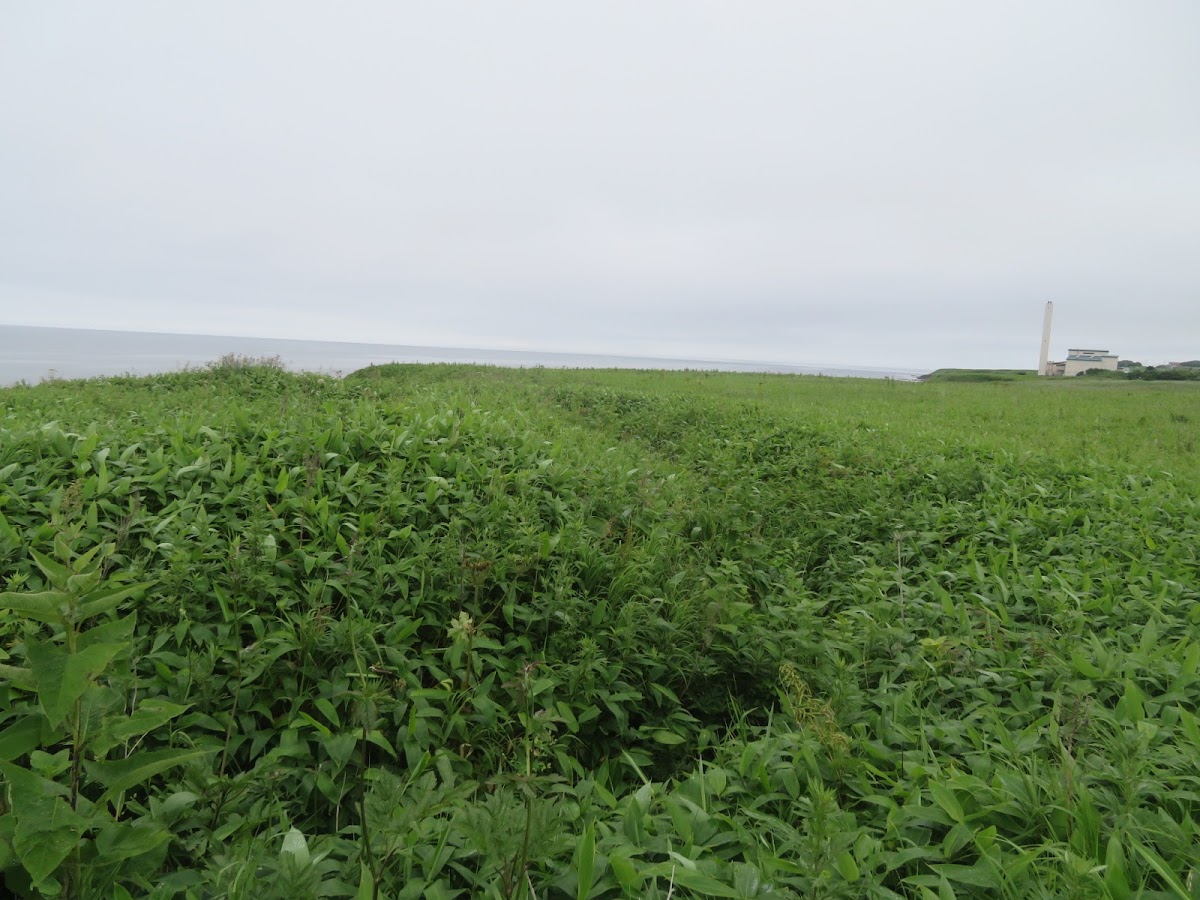
Current State of Tokuyama Grand Shrine and Castle Site
Currently, Tokuyama Grand Shrine stands on part of the Tokuyama Castle site, and the area has been developed as a shrine precinct. This is a common pattern at Japanese castle sites, where the land has been preserved by building shrines after the castle was abandoned.
Walking through the shrine grounds, you can feel the remnants of the former castle. The undulations of the terrain and the surrounding cliffs are particularly important clues to understanding the defensive system of the time.
Tongue-Shaped Plateau Topography
The greatest highlight of Tokuyama Castle is its topography itself. The shape of the tongue-shaped plateau protruding from Shogunzan Mountain is still clearly visible today.
Looking around from the shrine grounds, you can see how the deep valleys to the east and west (Bakkozawa and Kodatezawa) functioned as natural moats. The positional relationship with the Omatsumae River in front is also important for understanding the defensive system of the time.
Value as a National Historic Site
The Tokuyama Castle Ruins are designated as a national historic site and are an extremely important archaeological site for understanding the process of Japanese expansion into Ezo (Hokkaido). As one of the so-called “Twelve Castles of Southern Hokkaido,” it is an indispensable site for studying the medieval history of Hokkaido.
What are the Twelve Castles of Southern Hokkaido?
These are a collective term for Japanese castles built in the southern part of the Oshima Peninsula (Southern Hokkaido region) from the Muromachi period to the Sengoku period. Tokuyama Castle (Ōdachi) is one of the most important castles among them, and holds a special position as the base of the Kakizaki clan.
Landscape Around the Historic Site
From the Tokuyama Castle Ruins, you can see the city of Matsumae and the Tsugaru Strait. On a clear day, you can even see Aomori Prefecture on the opposite shore, giving you a real sense of the relationship with Honshu across the Tsugaru Strait.
At that time, the Kakizaki clan built their economic base through trade across the Tsugaru Strait, and this view allows us to imagine their trade network.
Stone Monuments and Information Boards
Information boards and stone monuments explaining the historical site are installed at the location. By reading these, you can learn more about the history and structure of Tokuyama Castle.
Relationship between Tokuyama Castle and Matsumae Castle
Relocation of the Base: From Tokuyama Castle to Fukuyama Castle
Tokuyama Castle and Matsumae Castle (Fukuyama Castle) have an important relationship that shows the changes in the base of the Kakizaki clan (Matsumae clan).
Around 1600, the Kakizaki clan built a new residence in Fukuyama, about 1 kilometer southwest of Tokuyama Castle. This was Fukuyama Castle, which later developed into Matsumae Castle.
Reasons for Relocation
- Emphasis on Port Function: Fukuyama was close to a port and was an excellent trading hub.
- Political Stability: Relations with the Ainu people stabilized, allowing for a transition from a defensive mountain castle to a residence on the plains.
- Appearance as a Modern Daimyo: The need to construct a castle befitting a daimyo of the Edo period.
Development of Matsumae Castle (Fukuyama Castle)
After the establishment of the Matsumae Domain in 1606, Fukuyama Castle was gradually developed into a castle. Then, in 1854 (Ansei 1), as part of strengthening coastal defenses at the end of the Edo period, Matsumae Castle, a full-fledged modern castle, was completed.
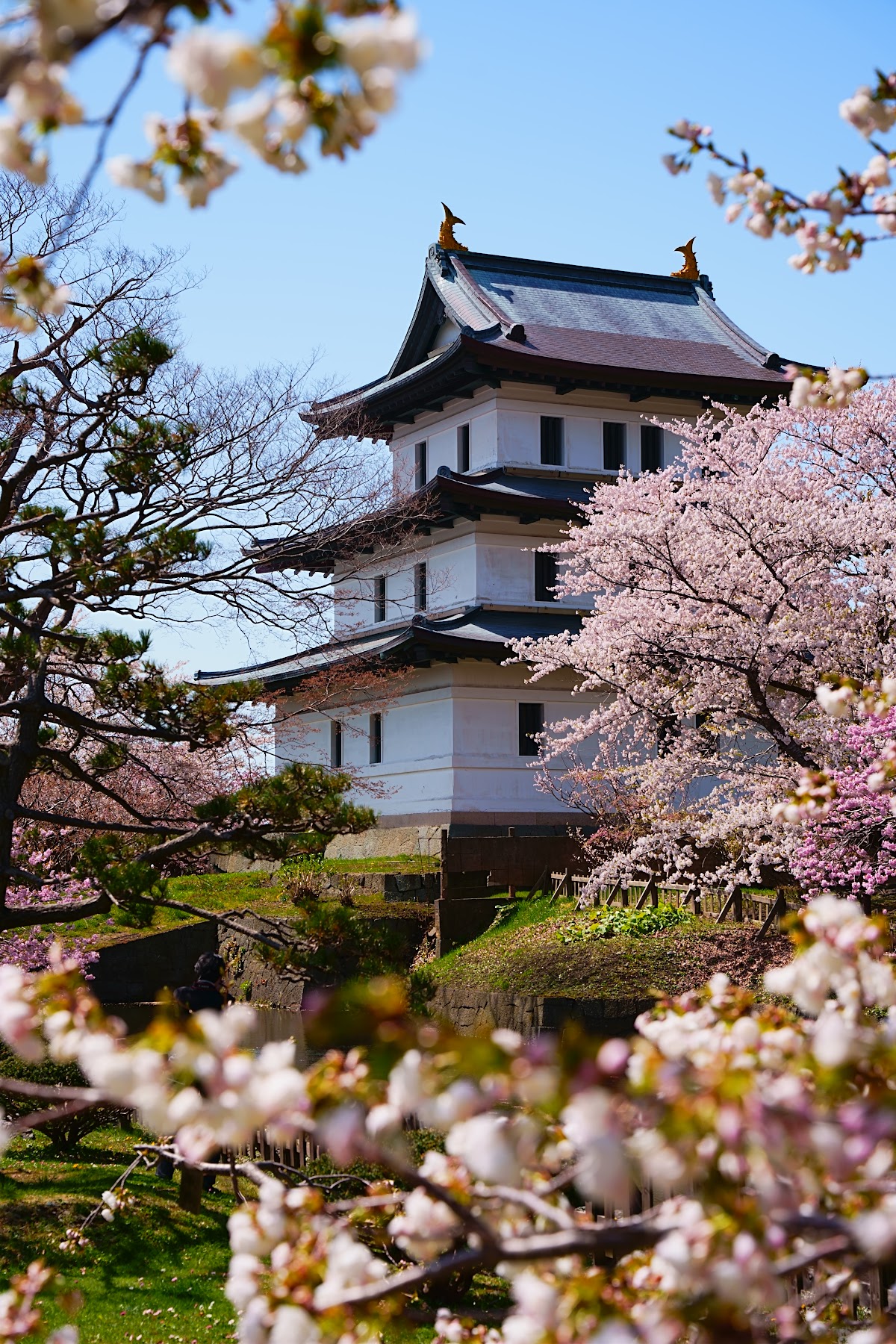
Matsumae Castle is known as the last Japanese-style castle and is currently designated as a National Important Cultural Property. When visiting Fukuyama Castle, we highly recommend also visiting Matsumae Castle. Comparing the two will allow you to experience the transformation of castles from the medieval to the early modern period.
Access and Tourist Information for Tokuyama-kan
Access Methods
Access by Car
- From Hakodate City: Approximately 2 hours via National Route 228
- From Matsumae Castle: Approximately 5 minutes by car, approximately 15 minutes on foot
- Parking: Limited space available around Tokuyama Grand Shrine
Public Transportation
- Hakodate Bus: Get off at Matsumae Terminal, approximately 15 minutes on foot
- JR: The nearest station is Kikonai Station, approximately 1 hour 30 minutes by bus from there
Visiting Information
- Visiting Hours: Free (as it is within the shrine grounds)
- Admission Fee: Free
- Duration: Approximately 30 minutes to 1 hour
- Best Season: Spring to Autumn (Caution: Snow may be present in winter)
Nearby Tourist Spots
Matsumae Castle (Fukuyama Castle)
- Approximately 15 minutes on foot
- Japan’s last Japanese-style castle
- The castle tower’s interior is open to the public as a museum.
Matsumae Clan Residence
- Near Matsumae Castle
- A theme park recreating the townscape of the Edo period
Matsumae Park
- One of Japan’s Top 100 Cherry Blossom Viewing Spots
- Approximately 10,000 cherry trees of about 250 varieties
Katsuyama Castle Ruins
- Approximately 30 minutes by car
- One of the twelve castles of Southern Hokkaido
- The base of the Kakizaki clan before they moved to Tokuyama Castle
Points to Note When Visiting
- Safety on Your Feet: There are steps in the shrine grounds, so please wear comfortable shoes.
- Respect for Private Property: There are private residences in the surrounding area, so please observe proper etiquette while visiting.
- Checking the Information Boards: Reading the information boards carefully will deepen your understanding.
- Photography: Please take photographs at the shrine within reasonable limits.
Historical Significance of Tokuyama Castle
As a Base for the Control of Ezo (Hokkaido)
Tokuyama Castle is an important historical site symbolizing the history of Japanese rule over Ezo. From the Muromachi period to the Sengoku period, this area was a contact zone between the Japanese and the Ainu people, and their relationship was sometimes cooperative, sometimes confrontational.
Tokuyama Castle served as a frontline base, a trading hub, and a military fortress. Despite experiencing large-scale conflicts such as the Battle of Koshamain and the Battle of Eisho, it ultimately became established as a base for Japanese forces.
The Path to the Establishment of the Matsumae Domain
Tokuyama Castle was a crucial step towards the later establishment of the Matsumae Domain. The Kakizaki clan expanded their power from this base, establishing an economic foundation by monopolizing trade with the Ainu people.
The experience of governing at Tokuyama Castle can be said to have formed the foundation of the later Matsumae Domain’s administration. The know-how for governing in the unique environment of Ezo was cultivated here.
Archaeological Value
The Tokuyama Castle site is a valuable archaeological site for understanding the structure of castles in medieval Ezo (Hokkaido). Excavations have revealed the lifestyle, trade practices, and relationships between the Japanese and Ainu people of the time.
Excavated artifacts confirm active trade with Honshu and contact with Ainu culture, making it an important site in the study of medieval Hokkaido history.
The Twelve Castles of Southern Hokkaido and the Tokuyama Castle
Overview of the Twelve Castles of Southern Hokkaido
The Twelve Castles of Southern Hokkaido are a collective term for Japanese castles built in the southern part of the Oshima Peninsula from the Muromachi period to the Sengoku period. The main castles are as follows:
- Tokuyama Castle (Ōdachi/Matsumae Ōdachi)
- Katsuyama Castle
- Mobetsu Castle
- Haraguchi Castle
- Anama Castle
- Shinori Castle
- Usugishi Castle
- Nebota Castle
- Hanazawa Castle
- Wakimoto Castle
- Hishi Castle
- Kobayashi Castle
The Positioning of Tokuyama Castle
Among the twelve castles of southern Hokkaido, Tokuyama Castle is one of the most important. Especially after becoming the base of the Kakizaki clan, it served as a central hub overseeing the other castles.
The shifts in the base of operations from Katsuyama Castle to Tokuyama Castle, and then to Fukuyama Castle (Matsumae Castle), illustrate the expansion of the Kakizaki clan’s power and the establishment of their control over Ezo (Hokkaido).
Model Itinerary for Visiting Tokuyama-kan
Matsumae Historical Exploration Course (1-Day Plan)
Morning
- Visit Matsumae Castle (1-2 hours)
- Visit Matsumae Clan Residence (1 hour)
- Lunch (Matsumae Seafood Cuisine)
Afternoon
- Visit Tokuyama-kan Ruins (1 hour)
- Stroll through Matsumae Park (1 hour)
- Purchase souvenirs at Michi-no-Eki Kitamaebune Matsumae
Southern Hokkaido Medieval Castle and Residence Tour Course (2-Day Plan)
Day 1
- Travel from Hakodate to Matsumae
- Visit Matsumae Castle and Tokuyama-kan
- Overnight stay in Matsumae
Day 2
- Visit Katsuyama-kan Ruins
- Visit Shinori-kan Ruins
- Return to Hakodate
Summary: The Charm and Value of Tokuyama-kan
Tokuyama-kan (Matsumae Odachi) is an important historical site indispensable for understanding the medieval history of Hokkaido. From its construction by the Ando clan during the Muromachi period, through the Battle of Koshamain, its development as the base of the Kakizaki clan, and the path to the establishment of the Matsumae Domain, the history of Japanese rule in Ezo (Hokkaido) is condensed here.
Currently preserved as a national historical site, it is a beloved local landmark within the grounds of Tokuyama Grand Shrine. Its defensive system, skillfully utilizing the natural terrain, and its distinctive tongue-shaped plateau location convey the appearance of a medieval mountain castle.
Visiting it in conjunction with Matsumae Castle allows you to experience the transformation of castles from the medieval to the early modern period, gaining a deeper understanding of Hokkaido’s history. When visiting Matsumae Town, be sure to also visit the Tokuyama Castle ruins. There, the footprints of people who survived turbulent times remain quietly preserved.