Matsumae Castle Complete Guide | History, Highlights, and Access Information for Japan’s Northernmost Castle
What is Matsumae Castle? – Japan’s Northernmost and Last Traditional Japanese Castle
Matsumae Castle, located in Matsumae-cho, Matsumae-gun, Hokkaido, is Japan’s northernmost traditional Japanese castle. Also known as “Fukuyama Castle” or “Matsumae Fukuyama Castle,” it holds historical value as the last traditional castle building constructed in Japan, completed in 1854 (Ansei 1) at the end of the Edo period.
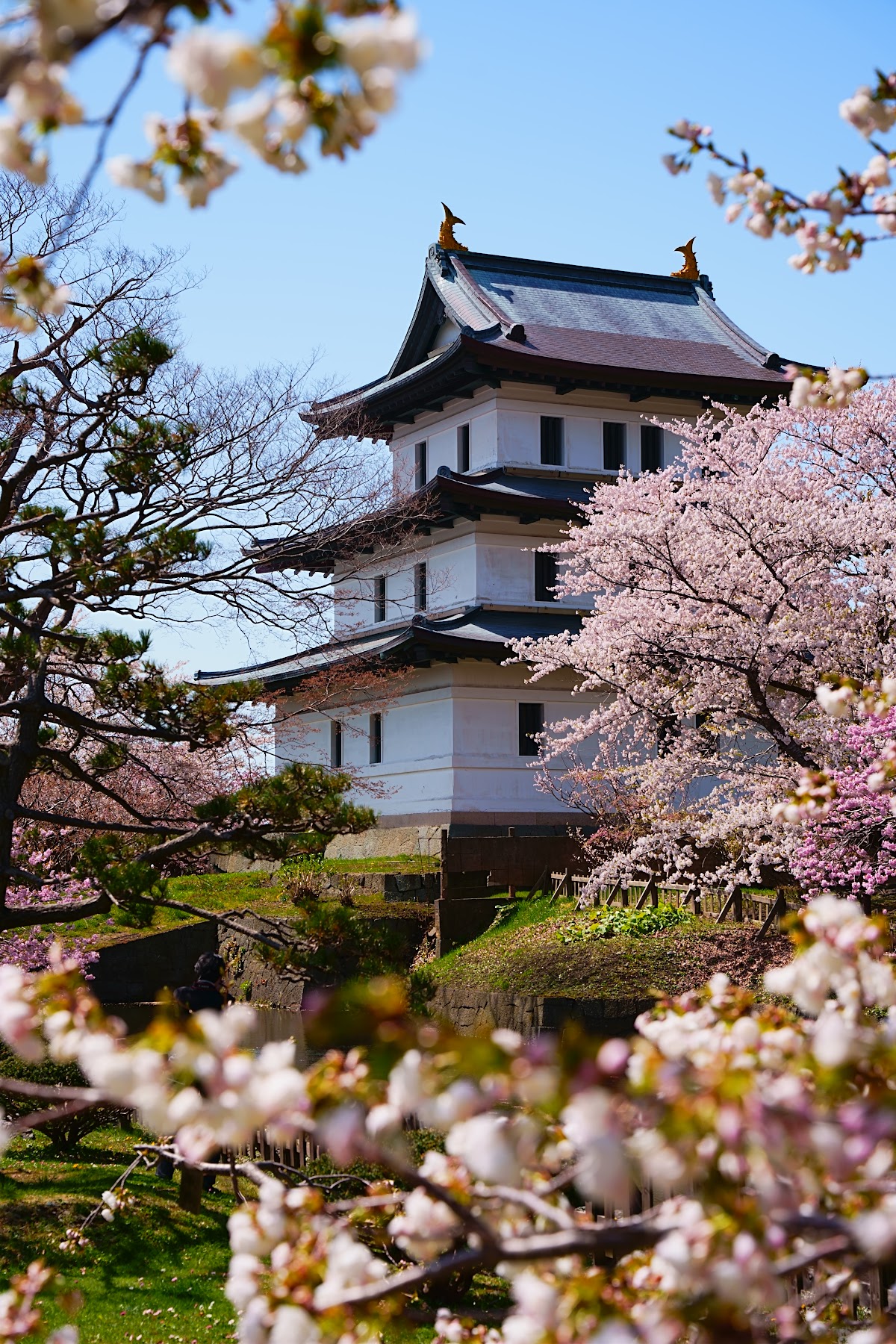
Standing on a hill overlooking the Tsugaru Strait, this castle was built by order of the shogunate as a coastal defense fortress against the appearance of foreign ships. Currently, it is selected as one of “Japan’s Top 100 Castles” and is also known as one of Hokkaido’s leading cherry blossom viewing spots, with approximately 10,000 cherry trees of about 250 varieties blooming in spring.
The most distinctive feature of Matsumae Castle lies in its unique structure, which reflects the historical context of the late Edo period. While a traditional Japanese-style castle, it incorporates Western military technology into its defensive design, such as the placement of seven cannon batteries in the third bailey. This blend of Japanese and Western architectural philosophy is a valuable legacy that conveys the state of Japan during the turbulent Bakumatsu period.
History of Matsumae Castle – From Fukuyama-kan to a Modern Castle
The Kakizaki Clan and the Establishment of Fukuyama-kan
The history of Matsumae Castle dates back to the late 15th century. Originally, the Kakizaki clan, a branch of the Akita Ando clan, settled in this area and built a residence called “Tate.” The Kakizaki clan expanded their power through trade with the Ainu people, the indigenous people of Hokkaido.
Construction by Matsumae Yoshihiro (Keicho Era)
In 1606 (Keicho 11), Matsumae Yoshihiro, the first lord of the Matsumae Domain, who changed his surname from Kakizaki to Matsumae, constructed Fukuyama-kan in this area. Yoshihiro was granted a monopoly on trade with the Ainu by Tokugawa Ieyasu, and the Matsumae Domain was officially established. At this time, Fukuyama Castle was more of a fortified residence surrounded by a moat and earthen ramparts, rather than a full-fledged castle.
Fukuyama Castle continued to function as the Matsumae family’s residence for approximately 240 years, undergoing fires and repairs along the way.
Castle Construction Order and Promotion to Castle Lord Daimyo at the End of the Edo Period
On July 10, 1849 (Kaei 2), Matsumae Takahiro, the 17th lord of the Matsumae Domain, received an important order from the Edo Shogunate. It was for the construction of a full-fledged castle to strengthen security in the Tsugaru Strait as a defense against foreign ships that were frequently appearing in Japanese waters.
At this time, the Edo Shogunate had largely prohibited new castle construction under the “One Castle Per Province” decree, but the construction of Matsumae Castle was granted exceptional permission. At the same time, Matsumae Takahiro was elevated to the rank of castle lord and daimyo, and the status of the Matsumae domain also improved. This decision was made against the backdrop of the tense international situation on the eve of Commodore Perry’s arrival.
Completion of Matsumae Fukuyama Castle (Ansei 1)
Construction of the castle proceeded under the supervision of Ichikawa Ichigaku and was completed in September 1854 (Ansei 1). The completed Matsumae Fukuyama Castle consisted of the main keep, second bailey, and third bailey, and was a modern defensive facility equipped with six watchtowers, sixteen castle gates, and seven gun emplacements in the third bailey facing the sea.
Notably, Matsumae Fukuyama Castle was the last castle built in the old style in Japan. Just a few years after its completion, Japan underwent the Meiji Restoration, marking the end of the era of castles.
The Boshin War and the Battle of Hakodate
In 1868 (Meiji 1), during the Battle of Hakodate, the final stage of the Boshin War, Matsumae Castle was attacked by forces led by Enomoto Takeaki of the former shogunate army. In this battle, in which Hijikata Toshizo and others participated, Matsumae Castle was temporarily occupied, but the castle itself escaped major damage.
Changes After the Meiji Restoration and National Treasure Designation
After the Meiji Restoration, many buildings within the castle were demolished by the Hokkaido Development Commission, but the keep and the main gate remained. In 1941 (Showa 16), the wooden keep was designated a National Treasure and protected as a valuable cultural asset.
However, in the early morning of June 5, 1949 (Showa 24), a fire that started at the Matsumae Town Hall spread, and the wooden keep, then a National Treasure, was tragically destroyed by fire. This destruction had a profound impact on the region.
Reconstruction of the Castle Tower and its Present State
After the castle tower burned down, a reconstruction movement was launched throughout Hokkaido. A castle tower reconstruction committee was organized, and under the design of Professor Minoru Ooka of the Yokohama National University Faculty of Engineering, the current reconstructed castle tower was completed in 1960 (Showa 35).
The reconstructed castle tower is made of reinforced concrete, but its exterior faithfully reproduces its appearance before the fire. Currently, the interior is open to the public as the Matsumae Castle Museum, showcasing exhibits that convey the history and culture of the Matsumae Domain.
In 2006, it was selected as one of “Japan’s Top 100 Castles” (No. 3), and it welcomes many tourists as a representative historical tourist spot of Hokkaido.
Structure and Characteristics of Matsumae Castle
Location as a Hilltop Castle
Matsumae Castle is classified as a hilltop castle. Built on a hill approximately 30 meters above sea level overlooking the Tsugaru Strait, it boasts an excellent location with great views of the sea. This location clearly reflects the castle’s purpose of monitoring foreign ships.
Layout of the Main Bailey, Second Bailey, and Third Bailey
The castle’s layout centers around the main bailey (Honmaru), with the second and third baileys (Ninmaru and Sannomaru) arranged around it. Most notably, seven gun emplacements were located in the third bailey, facing the sea. This is a military consideration unique to the late Edo period and not seen in traditional Japanese castles.
A keep (Tenshukaku) was built in the main bailey, serving as the castle’s symbol. The keep had a three-story, three-tiered structure; while its exterior maintained the style of traditional Japanese architecture, its interior incorporated modern defensive features.
Layout of Castle Gates and Turrets
At its completion, Matsumae Fukuyama Castle had 16 gates. The Honmaru Gate (a nationally designated important cultural property), which still remains today, is a valuable relic that escaped destruction by fire. Furthermore, gates such as the Tenjinzaka Gate and the Karamete Ninomon Gate have been restored, evoking the castle’s former appearance.
Six turrets (Toroyagura) were also positioned, strengthening the overall defense system of the castle. These structures represent the pinnacle of castle construction technology from the late Edo period.
Battery Placement and Coastal Defense Function
The most distinctive feature of Matsumae Castle is the seven battery positions located in the third bailey. These were primarily intended to defend against foreign ships navigating the Tsugaru Strait, and were equipped with the latest Western-style cannons of the time.
This battery placement embodies the unique castle construction philosophy of the late Edo period, blending traditional Japanese castle architecture with Western military technology. In fact, when foreign ships, such as Perry’s fleet, passed through the Tsugaru Strait, they were monitored from Matsumae Castle.
Matsumae Castle as a Cultural Property
Nationally Designated Important Cultural Property – Honmaru Gate
The Honmaru Gate is the only structure at Matsumae Castle that remains from the Edo period. It miraculously survived the 1949 fire that destroyed the castle keep, and is now designated as a National Important Cultural Property.
The main gate of the castle, with its robust hip-and-gable roof, retains many characteristics of castle architecture from the late Edo period. The gate’s intricate woodworking techniques are evident in its details, reflecting the wealth and technical prowess of the Matsumae domain. Visitors can actually pass through this gate, directly experiencing the atmosphere of the Edo period.
Reconstructed Castle Tower and Matsumae Castle Museum
The castle tower, reconstructed in 1960, is a reinforced concrete structure with three exterior floors and three interior floors. It faithfully reproduces the appearance of the national treasure castle tower before its destruction by fire, and from a distance, it is so well-finished that it could easily be mistaken for a wooden structure.
The interior of the castle tower is open to the public as the Matsumae Castle Museum, displaying valuable materials related to the history of the Matsumae domain, trade with the Ainu people, coastal defense during the late Edo period, and the Hakodate War. Exhibits include armor, swords, ancient documents, and drawings of the Matsumae domain lords, making it an important facility for learning about the history of Hokkaido.
From the top floor, you can enjoy a panoramic view of the Tsugaru Strait, and on a clear day, you can even see Aomori Prefecture on the opposite shore. This view will give you a real sense of why a castle was built in this location.
Other Remains and Restored Structures
Besides the main gate, Matsumae Castle has other notable remains.
Tenjinzaka Gate is one of the castle’s important entrances and has been restored. Its structure, combined with the stone walls, is valuable for understanding the technical aspects of castle architecture.
Karamete Ninomon Gate has also been restored, showing the defensive structure of the castle’s rear (karate) side.
Furthermore, the stone walls remaining throughout the castle are important remains that convey the stone-laying techniques of the late Edo period. The stone walls of Matsumae Castle exhibit characteristics of a transitional period, incorporating new technologies while following the traditions of Japanese castle architecture up to that point.
Remains of moats and parts of earthworks can also be confirmed, providing clues to understanding the overall defense system of the castle. ### Value as one of Japan’s Top 100 Castles
In the “Top 100 Castles of Japan” selected in 2006, Matsumae Castle was ranked 3rd. The reasons for its selection are as follows:
- Geographical importance as the northernmost Japanese-style castle
- Historical value as the last traditional castle built in Japan
- Military historical significance demonstrating the coastal defense system of the late Edo period
- Cultural value of the existing Honmaru Gate
- Central role in Hokkaido’s early modern history
The Top 100 Castles stamp can be obtained at the Matsumae Castle Museum.
Matsumae Castle and Cherry Blossoms – One of Hokkaido’s premier cherry blossom viewing spots
Approximately 250 varieties and 10,000 cherry trees
Matsumae Castle is also nationally known as the “Castle of Cherry Blossoms.” Approximately 250 varieties and 10,000 cherry trees are planted within and around the castle grounds, making it one of the most diverse cherry blossom viewing spots in Japan.
Because a variety of cherry blossoms, from early-blooming to late-blooming varieties, including Somei Yoshino, are planted, you can enjoy the cherry blossoms for about a month each year, from late April to late May. This is a remarkably long period compared to famous cherry blossom viewing spots on Honshu.
Matsumae’s Endemic Cherry Blossoms
What is particularly noteworthy about the cherry blossoms at Matsumae Castle is the presence of endemic varieties found only in Matsumae. Many cherry blossom varieties, such as “Naden,” “Itokukuri,” and “Matsumae Hayazaki,” which were developed through selective breeding in Matsumae, are planted here.
These varieties are the result of Matsumae’s cherry blossom culture, which has continued since the Edo period, and demonstrate the high cultural level of the Matsumae domain.
Matsumae Cherry Blossom Festival
The “Matsumae Cherry Blossom Festival” is held every year from late April to mid-May. During the festival, the trees are illuminated at night, allowing visitors to enjoy the magical sight of cherry blossoms after dark.
During the festival period, traditional events such as samurai processions and stalls selling local specialties line the streets, attracting many tourists. The combination of cherry blossoms and the castle is a landscape symbolizing traditional Japanese beauty, making it a popular spot for photography enthusiasts.
Best Cherry Blossom Viewing Spots
The following are recommended spots to enjoy cherry blossoms within the castle grounds:
- View from the Main Keep: A beautiful collaboration of the castle tower and cherry blossoms
- Cherry Blossom Sample Garden: A place to admire many varieties of cherry blossoms at once
- Kōzenji Temple’s Bloodline Cherry Tree: An ancient tree over 300 years old
- Tenjin Slope: Forms a tunnel of cherry blossoms
Highlights of Matsumae Castle Town
Matsumae Clan Residence
Located within walking distance of Matsumae Castle, the “Matsumae Clan Residence” is a theme park recreating the castle town of Matsumae during the Edo period. Fourteen buildings, including samurai residences, merchant houses, and guardhouses, have been restored, allowing visitors to experience the lifestyle of the time.
Within the former feudal lord’s residence, visitors can experience traditional craftsmanship demonstrations by artisans and try on period costumes, making it a facility where history can be felt firsthand. It’s a particularly popular spot for families with children.
Temple District and Temples
Matsumae Town has an area called “Temple District,” where many temples are concentrated. These temples also functioned as defensive strongholds for the castle town during the Matsumae domain era.
Ryūun-in, Hōgen-ji, Hōdō-ji, and others each have their own history, and temples with connections to the Matsumae feudal lords and their retainers are scattered throughout the area. A stroll through Temple District allows you to understand the overall picture of Matsumae as a castle town.
Matsumae Shrine
Matsumae Shrine, adjacent to the site of the Matsumae Castle’s main keep, is a shrine dedicated to Takeda Nobuhiro, the founder of the Matsumae domain. From the shrine grounds, you can see the Tsugaru Strait, and worship in a tranquil atmosphere.
The Prosperity of Matsumae and the Kitamae Ships
During the Edo period, Matsumae flourished as a port of call for Kitamae ships. Seafood (kelp, salmon, herring, etc.) obtained through trade with the Ainu people was transported to Osaka and Kyoto by Kitamae ships, bringing immense wealth.
There is also an exhibition facility related to Kitamae ships in Matsumae town, where you can learn about the history of Matsumae’s prosperity through maritime transport and trade.
Access to Matsumae Castle
Access by Public Transportation
From Hakodate
- Take the Hakodate Bus bound for “Matsumae Branch Office” from Hakodate Station (approx. 3 hours)
- Get off at the “Matsumae” bus stop and walk for about 10 minutes.
If using the Shinkansen
- Get off at “Kikonai Station” on the Hokkaido Shinkansen
- Take the Hakodate Bus bound for “Matsumae Branch Office” from Kikonai Station (approx. 1 hour 30 minutes)
Since the number of buses is limited, it is recommended to check the timetable in advance. Please note that the number of buses is limited, especially outside of the peak tourist season.
Access by Car
From Hakodate
- Approximately 2 hours via National Route 228
- Approximately 1 hour 30 minutes from Hokuto-Mobechi IC if using the Hakodate-Esashi Expressway
Parking
- Free parking available around Matsumae Castle (may be charged during the cherry blossom festival)
- Capacity: Approximately 200 cars
Convenient Sightseeing Bus
During the cherry blossom festival, a sightseeing bus may operate, visiting major tourist spots in Matsumae Town. This allows for efficient visits to Matsumae Castle, Matsumae Clan Residence, Temple Town, and other locations.
Matsumae Castle Visitor Information
Opening Hours and Closing Days
Matsumae Castle Museum (Keep)
- Opening Period: April 10th – December 10th
- Opening Hours: 9:00 – 17:00 (Last entry at 16:30)
- Closing Days: December 11th – April 9th (Winter Closure)
The museum is closed during the winter due to snow, but access to the castle grounds is still possible. However, caution is advised as the ground can be slippery in winter.
Admission Fees
Matsumae Castle Museum
- General Admission: 360 yen
- Elementary and Junior High School Students: 240 yen
- Group discounts available (10 or more people)
Combined Ticket
A combined ticket for the Matsumae Castle Museum and the Matsumae Clan Residence is also available.
- General Admission: 720 yen
- Elementary and Junior High School Students: 480 yen
Estimated Time Required
- Matsumae Castle Museum Only: Approximately 40 minutes to 1 hour
- Including a stroll through the castle ruins park: Approximately 1 hour 30 minutes to 2 hours
- Including the Matsumae Clan Residence and Temple Town: Approximately 3 to 4 hours
- Enjoying the cherry blossoms at your leisure: Half a day to a full day
Gourmet Food and Local Products Around Matsumae Castle
Seafood from Matsumae
Matsumae Town, facing the Tsugaru Strait, is a treasure trove of fresh seafood. The following ingredients are particularly famous:
Bluefin Tuna: Bluefin tuna caught off the coast of Matsumae is exceptionally fatty and firm.
Sea Urchin: Matsumae sea urchin, in season in early summer, is characterized by its rich sweetness.
Abalone: Abalone raised in the waters of Matsumae is thick and has a good texture.
These seafood products can be enjoyed at restaurants around Matsumae Castle.
Matsumae-zuke
Matsumae-zuke is a representative local specialty of Matsumae. It’s a local dish made by finely chopping squid and kelp and pickling them in a soy sauce-based sauce. It’s perfect as a side dish with rice or as a snack with sake.
The origins of Matsumae-zuke date back to the Edo period, and it developed as a preserved food. Currently, a deluxe version with herring roe is also popular. It can be purchased at souvenir shops in Matsumae town.
Matsumae Soba
Matsumae has a unique soba noodle culture. This simple soba features thin noodles topped with a broth made from kelp and bonito flakes, but the “seafood soba” with seafood toppings is also popular.
Points to Note and Advice When Visiting Matsumae Castle
Clothing and Items to Bring
Matsumae Town is located at the southern tip of Hokkaido, but strong winds from the Tsugaru Strait can make the perceived temperature lower. Especially in spring and autumn, it is recommended to bring an extra layer of clothing compared to what you would wear on Honshu.
Even during cherry blossom season (late April to mid-May), it can get chilly in the mornings and evenings, so warm clothing is essential.
The castle park has many slopes and stairs, so comfortable walking shoes are recommended.
Photography Tips
Best Photography Spots at Matsumae Castle:
- Two-Shot of the Main Gate and the Castle Tower: A classic composition capturing both the important cultural property and the reconstructed castle tower in one shot.
- Cherry Blossoms and the Castle Tower: A breathtaking view only available during cherry blossom season. The early morning light is especially beautiful.
- Tsugaru Strait from the Top Floor of the Castle Tower: The blue of the sea and sky is impressive.
- Cherry Blossom Tunnel on Tenjin-zaka Slope: A popular spot during cherry blossom season.
Crowded and Hidden Gems
Most Crowded Period: During the Matsumae Cherry Blossom Festival (late April to mid-May), especially Golden Week.
Relatively Less Crowded Period:
- Weekdays from June to September
- Autumn Foliage Season from October to November (not as beautiful as the cherry blossoms, but still lovely)
While the museum is closed during winter, the snow-covered castle grounds have a charming atmosphere, and you can enjoy a quieter, less crowded experience.
Nearby Accommodations
There are guesthouses and hot spring inns in Matsumae Town. Early reservations are necessary during the cherry blossom festival. Many tourists stay in Hakodate City and visit Matsumae Castle on a day trip.
The Future and Preservation Activities of Matsumae Castle
Cultural Property Protection Efforts
Matsumae Town is focusing on the preservation of valuable cultural properties, including the main gate of the castle. Regular restoration work and stone wall preservation work are carried out, and efforts continue to pass on the historical heritage to future generations.
Digital Archiving
In recent years, the digital archiving of historical materials related to Matsumae Castle has been progressing. Ancient documents, drawings, and photographs are being digitized, making them accessible not only to researchers but also to the general public.
Materials related to Matsumae Castle are also available on platforms such as the Hokkaido Digital Museum, which can be used for preparation before visiting or review after visiting.
Tourism Promotion and Regional Revitalization
Matsumae Town is working on tourism promotion centered around Matsumae Castle. Efforts are being made to strengthen the system for receiving tourists from both Japan and abroad, including improving the landscape of the castle town, developing experiential tourism programs, and installing multilingual signage.
In particular, in recent years, information has been expanded not only in Japanese but also in English, Chinese, and Korean, creating an environment that is easy for foreign tourists to understand.
Summary – The Charm of Matsumae Castle
Matsumae Castle holds a special place in the history of Japanese castles as the northernmost and last Japanese-style castle in Japan. Built during the turbulent Bakumatsu period as a defense against foreign ships, this castle symbolically represents the intersection of tradition and innovation in Japan.
Despite the tragedy of the castle tower, a national treasure, being destroyed by fire, it was rebuilt through the efforts of the local people and is now a popular historical tourist spot representing Hokkaido.
Matsumae Castle displays different expressions in each of the four seasons: cherry blossoms in spring, fresh greenery in summer, autumn leaves in fall, and snowscapes in winter. Beyond its architectural value as a castle, Matsumae Castle offers a multifaceted history, encompassing the history of the Matsumae Domain, trade with the Ainu, prosperity brought about by Kitamae ships, and coastal defense during the late Edo period.
When visiting Hokkaido, be sure to extend your trip to Matsumae Castle and experience the history told by Japan’s northernmost castle and the magnificent view overlooking the Tsugaru Strait. A visit during cherry blossom season, in particular, will create a lifelong memory of its breathtaking beauty.
As a castle standing at a crossroads of history, connecting the past and present, Honshu and Hokkaido, and Japan and the world, Matsumae Castle will continue to provide inspiration and learning opportunities to many people for years to come.