Complete Guide to Shiraoi Chashi | A Thorough Explanation of the History of Jinya-cho, Shiraoi Town, Hokkaido, and its Relationship with the Sendai Domain’s Jinya
What is Shiraoi Chashi?
Shiraoi Chashi is the site of an Ainu fort (chashi) that existed in Jinya-cho, Shiraoi Town, Shiraoi District, Hokkaido. It is an important historical site, marking the starting point of the current Shiraoi town area, and is known as the site where the former Shiraoi Jinya of the Sendai Domain was built during the late Edo period. While many aspects of the detailed structure and scale of the chashi remain unknown, it is a valuable historical relic indicating that this area was an important base for the Ainu people from ancient times.
The name Shiraoi itself is said to originate from the Ainu word “shirauoi” (place with many flies), indicating that this entire region was one of the centers of Ainu culture. Although the remains of the chashi cannot be confirmed today, the Shiogama Shrine (Shiogama Jinja), built on the site, still stands quietly as a witness to history.
Historical Background of Shiraoi Chashi
Chashi in the Ainu Era
Chashi is a general term for facilities built by the Ainu people that served functions such as forts, ceremonial sites, and watchtowers. Over 500 chashi sites have been identified throughout Hokkaido, and Shiraoi Chashi is believed to have functioned as one of them. The Shiraoi region faced the Pacific Ocean and was a strategically important transportation hub to the inland areas.
Details regarding the specific construction period and scale of Shiraoi Chashi are unclear due to a lack of documentary evidence. However, it is clear from artifacts and place names unearthed in the surrounding area that this region was an important living area for the Ainu people. Chashi were usually built on hills or river terraces, and it is presumed that Shiraoi Chashi was also positioned to take advantage of its advantageous topography.
Situation in Ezo (Hokkaido) during the Late Edo Period
In the mid-19th century, the Russian Empire’s southward expansion policy made the defense of Ezo (Hokkaido) an urgent necessity. Following the signing of the Treaty of Friendship between Japan and Russia in 1854 (Ansei 1), the shogunate was compelled to strengthen its defenses in Ezo (present-day Hokkaido). This change in the international situation brought about a major turning point for Shiraoi.
At that time, Ezo was under the control of the Matsumae Domain, but this was insufficient to counter the Russian threat. The shogunate ordered powerful daimyo in the Tohoku region to share the defense of Ezo, and the Sendai Domain was assigned the defense of the Pacific coast east of Shiraoi. This decision was the direct impetus for the construction of the Sendai Domain’s encampment at the site of Shiraoi Chashi.
Construction of the Sendai Domain’s Shiraoi Encampment
In 1856 (Ansei 3), the Sendai Domain, under orders from the shogunate, constructed an encampment in Shiraoi. This year is considered the beginning of the full-scale development of Shiraoi Town. The Sendai Domain dispatched approximately 800 samurai and their families to Shiraoi to develop the encampment as a defensive base.
The jinya (fortified residence) was built on the site of the former Shiraoi Chashi (Ainu fortified residence), and the Ainu Chashi site was altered during the construction of the jinya. The Sendai Domain erected Shiogama Shrine (Shiogama Jinja) within the jinya grounds and enshrined a分霊 (bunrei, a divided spirit) of Shiogama Shrine, the principal guardian shrine of Sendai. This served as a spiritual pillar for the Sendai samurai and as a prayer for the development and protection of the land.
The former Shiraoi Jinya of the Sendai Domain was a typical jinya structure, surrounded by a square earthen rampart and moat. Inside, there were offices, barracks, and warehouses. Currently, the site of this jinya is designated a national historic site, and parts of the earthen rampart and moat are well preserved. The place name Shiraoi Jinya-machi (Shiraoi Town Jinya District) also originates from this history.
Structure and Characteristics of Shiraoi Chashi
Structure as a Chashi
The specific structure of Shiraoi Chashi is unknown because the remains were lost due to the construction of the Sendai Domain jinya. Based on the general structure of a chashi, it is thought to have had the following characteristics:
Chashi are typically spaces demarcated by moats, earthworks, and fences. Their size varies from tens of meters square to hundreds of meters square, and their form differs depending on their function. Shiraoi Chashi is presumed to have been located on flat land near the coastline, and it may have served functions such as lookout, assembly, and religious ceremonies.
Ainu chashi include types such as “fort chashi” (defensive structures), “sacred chashi” (religious sites), and “observation chashi” (watchtowers). It is unknown which type Shiraoi Chashi was, but given its location at a key transportation hub, it is highly likely that it had multiple functions.
Current Situation
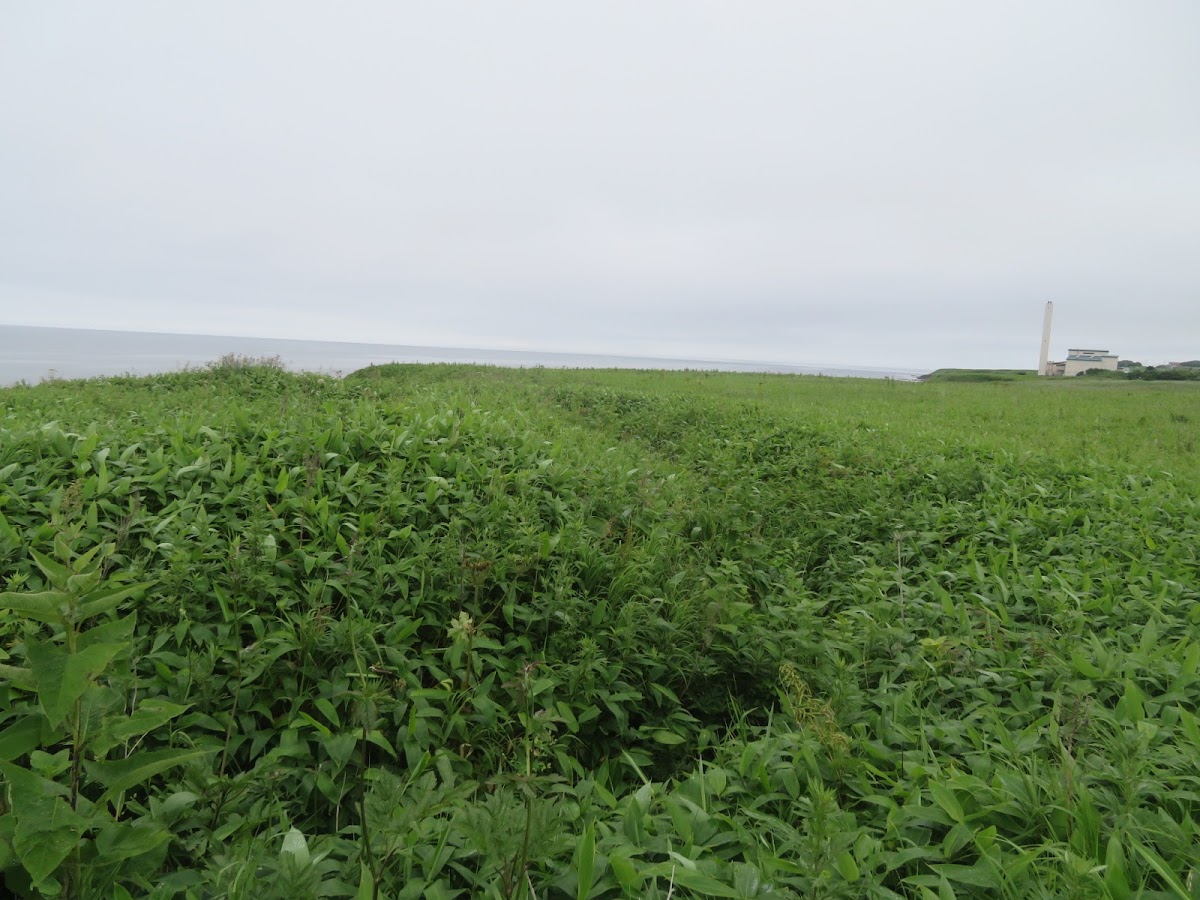
Currently, no remains of Shiraoi Chashi can be confirmed. The topography was significantly altered during the construction of the Sendai Domain’s encampment, and all traces of the chashi were lost. However, the Shiogama Shrine, built on this site, is the only clue indicating the former existence of a chashi here.
Shiogama Shrine still stands in Jinya-machi, Shiraoi Town, and is revered as the guardian deity of the region. From the shrine grounds, one can overlook the former encampment site and the town of Shiraoi, giving a real sense of the strategic importance of this location.
The former Shiraoi encampment site of the Sendai Domain is preserved as a national historical site, located approximately 500 meters from Shiraoi Chashi. The earthworks and moats remain well-preserved at the encampment site, conveying the history of the defense of Ezo (Hokkaido) during the late Edo period. The adjacent Shiraoi Encampment Museum provides detailed exhibits on the history of the encampment, life at the time, and its relationship with the Ainu people.
Relationship between Shiraoi Chashi and Shiogama Shrine
Establishment of Shiogama Shrine
In 1856 (Ansei 3), when the Sendai Domain built an encampment in Shiraoi, Shiogama Shrine was erected on the site of Shiraoi Chashi. This shrine was established by inviting a divided spirit from Shiogama Shrine (Shiogama Jinja), the general guardian shrine of Sendai, and became a spiritual center for the Sendai samurai.
The construction of Shiogama Shrine held several important significances. Firstly, it served as a spiritual pillar for the samurai who had left their distant homeland to serve in Ezo (Hokkaido). Secondly, it was a place to pray for the development and safety of the region. Thirdly, it symbolically represented the rule of the Sendai Domain. The construction of the shrine was not merely the establishment of a religious facility, but also a political act establishing the Sendai Domain’s rule in this area.
The Layers of History Revealed by the Shrine
The existence of Shiogama Shrine symbolizes the layered history of the Shiraoi region. The fact that a Japanese shrine was built on the site of an Ainu chashi (fortified site) speaks to the cultural intersection and transformation in Ezo.
However, the Sendai Domain did not exclude the Ainu people. Trade and exchange with the Ainu took place at the domain’s headquarters. Some Sendai samurai even learned the Ainu language and documented Ainu culture. It is possible that considerations were taken in selecting the site for Shiogama Shrine, such as avoiding Ainu sacred sites. The current Shiogama Shrine is an indispensable part of Shiraoi’s history. Visiting the shrine allows you to experience the flow of Shiraoi’s history from the Ainu era to the end of the Edo period and into the present day.
Access to Shiraoi Chashi
Access by Public Transportation
The nearest station to Shiraoi Chashi Ruins (Shiogama Shrine) is Shiraoi Station on the JR Muroran Main Line. Shiraoi Station is approximately 1 hour from Sapporo Station by express train and approximately 40 minutes from New Chitose Airport Station, making it relatively easy to access.
From Shiraoi Station to Shiogama Shrine is approximately a 15-minute walk. From the station, head east along National Route 36 towards Jinyacho. The path is flat and easy to walk, and you can enjoy the scenery of Shiraoi’s town along the way. If you take a taxi, it takes about 5 minutes from Shiraoi Station and costs around 1,000 yen.
The area around Shiraoi Station is home to many of Shiraoi’s major tourist attractions, including Upopoy (National Ainu Museum and Park), the Shiraoi Former Garrison Museum of the Sendai Domain, and Lake Poroto. Visiting these in combination allows for a comprehensive understanding of Shiraoi’s history and culture.
Access by Car
By car, it’s approximately 10 minutes from the Shiraoi Interchange on the Hokkaido Expressway. It’s about an hour from Sapporo and about 30 minutes from New Chitose Airport. There are signs along National Route 36, so you won’t get lost.
While Shiogama Shrine doesn’t have its own parking lot, there are public parking lots nearby. You can also use the free parking lot at the Shiraoi Former Garrison Museum of the Sendai Domain and walk from there. It’s about a 10-minute walk from the museum to Shiogama Shrine.
If you’re renting a car, there are rental car companies at Shiraoi Station and New Chitose Airport. Since tourist attractions within Shiraoi are scattered, traveling by car is the most efficient way to get around.
Best Time and Season for Visiting
Shiogama Shrine is an outdoor facility, so it can be visited year-round. However, during Hokkaido’s winter months (December to March), there is snow, making the ground slippery, so caution is advised. The best time to visit is May to June, when the new greenery is beautiful, or October, when the autumn leaves are at their peak.
The shrine is always open, but a visit in the morning for a quieter experience is recommended. Visiting during the opening hours of the Sendai Clan Shiraoi Former Garrison Museum (9:30 AM to 5:00 PM, closed Mondays) will allow you to gain a deeper understanding of Shiraoi’s history.
Tourist Attractions Around Shiraoi Chashi
Sendai Clan Shiraoi Former Garrison Museum
If you visit Shiraoi Chashi, the Sendai Clan Shiraoi Former Garrison Museum is a must-see. Opened in 1984, this museum provides detailed exhibits on the history of the Sendai Clan Garrison, life at the time, and its relationship with the Ainu people.
The museum’s exhibits are extensive, displaying a reconstructed model of the jinya (fortified residence), weapons and daily necessities from the period, and letters and diaries of Sendai domain samurai. Of particular note are the materials illustrating the interaction between the Ainu people and the Sendai domain samurai. Cultural exchange and economic activities between the two groups are presented with concrete historical documents.
Next to the museum is the former Shiraoi Jinya site of the Sendai domain, a nationally designated historical site. The earthworks and moats are well-preserved, allowing visitors to experience the scale and structure of a jinya from the late Edo period. From spring to autumn, the lush greenery of the jinya site makes it ideal for a stroll.
Upopoy (National Ainu Museum and Park)
Opened in July 2020, Upopoy is a hub for the revival and development of Ainu culture. Located about a 10-minute walk from Shiraoi Station on the shores of Lake Poroto, it comprises the National Ainu Museum, the National Ainu Park, and a memorial facility.
At Upopoy, visitors can experience traditional Ainu lifestyles, crafts, music, and dance. Considering that Shiraoi Chashi was a base for the Ainu people, a visit to Upopoy is essential for deepening your understanding of Shiraoi’s history. Through the exhibits and hands-on programs, you can experience the richness and depth of Ainu culture.
The National Ainu Museum features comprehensive exhibits on Ainu history, culture, and language. The exhibits, utilizing the latest technology, are impressive and well worth spending several hours exploring.
Lake Poroto and Forest of Poroto
Lake Poroto, adjacent to Upopoy, is a beautiful lake with a circumference of approximately 4 kilometers. As its name, Poroto, means “large swamp” in the Ainu language, suggests, it possesses a quiet and mystical atmosphere. A walking path is maintained along the lakeshore, allowing visitors to enjoy the changing seasons while strolling.
Forest of Poroto is a lush forest area surrounding Lake Poroto. Many plants traditionally used by the Ainu people can be found here, making it ideal for nature observation and forest bathing. Information boards explaining traditional Ainu knowledge are also installed throughout the forest.
Lake Kutara
Located about 30 minutes by car from the northern part of Shiraoi Town, Lake Kutara is a caldera lake boasting one of the highest levels of transparency in Japan. With a maximum depth of 148 meters and a transparency of over 20 meters, its beauty has earned it a place among Hokkaido’s “Three Great Hidden Lakes.”
Lake Kutara is part of Shikotsu-Toya National Park, maintaining a tranquil environment surrounded by primeval forest. An observation deck on the lakeshore offers panoramic views of the emerald-green lake surface. Combined with a visit to Shiraoi Chashi, it’s a spot where you can experience the richness of Shiraoi’s nature.
History and Culture of Shiraoi
Shiraoi as a Center of Ainu Culture
Shiraoi has long been an important base for the Ainu people. Its warm climate facing the Pacific Ocean, abundant seafood, and geographical location as a transportation route to the inland areas supported the lives of the Ainu people. Salmon fishing took place in rivers such as the Shiraoi River and Shikio River, and marine products such as kelp and sea urchins were harvested along the coast.
The Ainu people have cultivated their own unique culture in this land. A rich cultural heritage has been passed down, including crafts such as wood carving and embroidery, oral literature known as Yukar, and traditional dances and music. Shiraoi Chashi must also be understood within this context of Ainu culture.
Currently, Shiraoi Town plays an important role as a center for disseminating Ainu culture. With the opening of Upopoy (Ainu National Park), many people from both Japan and abroad visit Shiraoi to learn about Ainu culture. The existence of Shiraoi Chashi is valuable evidence that this area has been the living area of the Ainu people since ancient times.
Ezochi and Shiraoi in the Late Edo Period
During the late Edo period, Ezochi became the front line of international politics. Amid external pressures such as Russia’s southward expansion and the approach of Western powers, the shogunate strengthened its defense system for Ezochi. The dispatch of the Sendai Domain to Shiraoi was part of the response to this national crisis.
The Sendai Domain samurai engaged in security and development in the harsh natural environment. At the encampment, not only military training but also the promotion of agriculture and fishing, and road construction were carried out. They also contributed to the economic activity of Ezo (Hokkaido) through trade with the Ainu people.
The Sendai Domain’s rule over Shiraoi continued until 1868 (Meiji 1). After the Meiji Restoration, the encampment was abolished, but some of the Sendai Domain samurai remained in Shiraoi and continued development. Their efforts laid the foundation for present-day Shiraoi Town.
Shiraoi in the Modern Era
From the Meiji era onward, Shiraoi developed as one of the bases for the development of Hokkaido. In 1892 (Meiji 25), the Muroran Main Line opened, improving transportation. Fishing, forestry, and agriculture developed as major industries, and the population increased.
In the Showa era, it also grew as an industrial city with the attraction of paper mills. Simultaneously, tourism utilizing the hot spring resources developed, and Shiraoi Onsen became known as one of Hokkaido’s leading hot spring resorts. Shiraoi Town boasts four different types of hot springs and an abundant supply of water.
In 1984 (Showa 59), the Ainu Museum (closed in 2018, succeeded by Upopoy) and the Sendai Domain Shiraoi Former Garrison Museum opened, establishing a base for disseminating Shiraoi’s history and culture. With the opening of Upopoy in 2020, Shiraoi has once again attracted national attention.
Points to Note When Visiting Shiraoi Chashi
Mindset During Visit
Shiogama Shrine, built on the site of Shiraoi Chashi, still functions as a place of worship. When visiting, please observe proper shrine etiquette and observe quietly. Photography is permitted, but consideration should be given to avoid disturbing worshippers.
Although no remains of the Chashi itself remain, it is important to remember that this area was an important base for the Ainu people when visiting. Respect for Ainu culture and an understanding of the complexities of its history are required.
Clothing and Belongings
Shiogama Shrine is located in the city center, so no special equipment is needed. However, since the shrine grounds are gravel paths, comfortable walking shoes are recommended. In summer, the sun is strong, so a hat and sunscreen are useful. In winter, be sure to dress warmly.
If you also plan to visit the former Shiraoi encampment site of the Sendai Domain, it is an outdoor historical site, so appropriate clothing for the weather is necessary. Be careful as the ground can be slippery in rainy weather.
Information on Nearby Facilities
The Sendai Domain Shiraoi Encampment Museum is open from 9:30 to 17:00 (last entry at 16:30), and is closed on Mondays (or the following day if Monday is a public holiday) and during the New Year holidays. Admission is reasonably priced at 300 yen for adults and 150 yen for elementary and junior high school students. The museum offers detailed explanations about the history of Shiraoi.
Upopoy’s opening hours vary depending on the season (weekdays 9:00-18:00, weekends and holidays 9:00-20:00, shorter hours in winter). Closed on Mondays (or the following day if Monday is a holiday) and during the New Year holidays. Admission is 1,200 yen for adults, 600 yen for high school students, and free for junior high school students and younger. It is recommended to check the latest information on the website beforehand.
Around Shiraoi Station, there are numerous restaurants and souvenir shops. You can enjoy local specialties such as Shiraoi beef, Kojohama cod roe, and seafood from Shiraoi. A day trip to Shiraoi Onsen (hot springs) is also a perfect way to conclude your visit.
Summary
Shiraoi Chashi is the site of an Ainu fort (charcoal grove) located in Jinyacho, Shiraoi Town, Hokkaido. Later, the Shiraoi Former Jinya (fortified residence) of the Sendai Domain was built there, making it a historically significant location. While no remains of the fort itself exist, the Shiogama Shrine, built on the site, conveys the layered history of this area.
The history of Shiraoi Chashi symbolizes three eras: Ainu culture, the defense of Ezo (Hokkaido) during the late Edo period, and the development of Hokkaido. The depth of history etched into this small place can be said to encapsulate the history of Hokkaido itself.
When visiting Shiraoi, combining a visit to the Shiogama Shrine (located at the site of Shiraoi Chashi), the Shiraoi Former Encampment Museum of the Sendai Domain, and Upopoy (National Ainu Museum and Park) will allow you to comprehensively understand Shiraoi’s history and culture. Shiraoi, where you can experience the richness of Ainu culture, the tension of the late Edo period, and modern efforts toward multicultural coexistence all in one town, is a hidden gem for Hokkaido tourism.
While the name Shiraoi Chashi is not widely known today, the historical significance of this place is immense. Experience firsthand the history of Shiraoi, which has transformed from an Ainu stronghold to a Sendai Domain encampment, and now to a symbol of modern multicultural coexistence.