
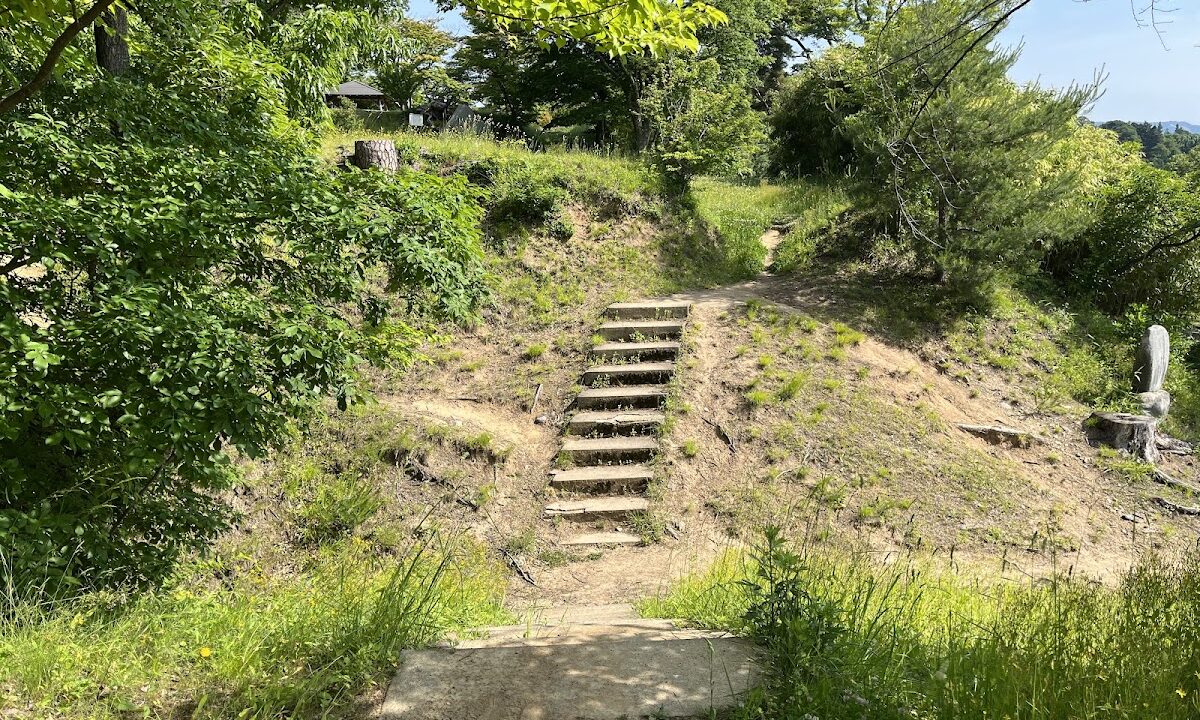
Inunakiyama Castle (Gujō City, Gifu Prefecture) Complete Guide: A Thorough Explanation of the History and Highlights of Akataniyama Ancient Castle
Located in Gujō City, Gifu Prefecture, Inunakiyama Castle is a mountain castle built by the Tō clan during the Sengoku period, and is also known as “Akataniyama Ancient Castle.” This name is sometimes used to avoid confusion with Akataniyama Castle, which was built in a later period on the same mountain range. This article thoroughly explains the charm of this little-known mountain castle, from its historical background to its castle structure, highlights, and access information.
Historical Background of Inunakiyama Castle
The Tō Clan and Their Rule of the Gujō Region
Inunakiyama Castle is said to have been built by Tō Masuyuki, the son of Tō Moriuji. The Tō clan was a powerful local lord that ruled Gujō County in Mino Province, and played an important role as a political and military base in the region.
Higashi Masayuki’s base was Shinowaki Castle, but to adapt to the changing political situation at the time, he needed to build several subsidiary castles. Inunakiyama Castle was built strategically as one of these subsidiary castles.
Conflict with Toki Yorimasu and the Purpose of Construction
The construction of Inunakiyama Castle was rooted in the tense relationship with Toki Yorimasu. The Toki clan, as the powerful shugo daimyo of Mino Province, constantly posed a threat to the Higashi clan, who controlled the Gujo region.
Higashi Masayuki felt the need to strengthen the defenses of Shinowaki Castle in preparation for attacks from Toki Yorimasu. Inunakiyama Castle is believed to have functioned as a forward base to monitor attack routes to Shinowaki Castle and detect enemy invasions early. This strategic placement allowed the Higashi clan to effectively defend a wide area with limited forces.
Relationship with Akataniyama Castle
The reason Inunakiyama Castle is called “Akataniyama Old Castle” is because Akataniyama Castle was built later by Higashi Tsuneyoshi on Akataniyama, in the same Inunakiyama mountain range. Although these two castles are from different eras, they are sometimes confused because they are located in the same mountain range.
Akataniyama Castle is a newer fortress built during the Sengoku period (Warring States period), and is thought to have had stronger defensive capabilities than Inunakiyama Castle. Understanding the relationship between the two castles is important information for understanding the development process of castles in this region.
Structure and Characteristics of Inunakiyama Castle
Location as a Mountain Castle
Inunakiyama Castle is a typical mountain castle built on the summit of the Inunakiyama mountain range. Its elevation is approximately 400 meters, giving it an excellent vantage point overlooking the surrounding plains. This location is militarily very advantageous; not only can enemy movements be observed from afar, but the rugged terrain also provides a natural defensive wall in case of attack.
While mountain castles are less convenient for daily life compared to castles on flat ground, their defensive capabilities in wartime are significantly higher. It is presumed that Inunakiyama Castle functioned as a “final stronghold,” with a small number of soldiers stationed there during peacetime, and used in full force only during times of conflict.
Arrangement of Enclosures
Regarding the structure of Inunakiyama Castle, some information has been obtained from on-site surveys and historical documents. It is believed that multiple enclosures were arranged around the main enclosure (honmaru), with a layout that skillfully utilized the mountain’s terrain.
The main enclosure was located at the highest elevation and was where the castle lord and important commanders were stationed. Secondary defensive positions, such as the second and third enclosures, were arranged in a stepped pattern around it, creating a structure that gradually prevented enemy incursions.
Characteristics of Defensive Facilities
Inunakiyama Castle was equipped with defensive facilities typical of medieval mountain castles. A horikiri (moat) is a ditch dug to cut across a ridge, serving as an important defensive line to hinder enemy advances. Earthen ramparts (dorui) are earthen walls built by piling up soil, which defended against arrows and stones, and also obscured the view of the castle from the outside.
Vertical moats (tatebori) have also been identified; these are trenches dug vertically along slopes, designed to make it difficult for enemies to climb the incline. These defensive structures are important remains that demonstrate the level of castle construction technology at the time.
Stone Walls and Civil Engineering Technology
The era in which Inunakiyama Castle was built was before the development of sophisticated stone wall technology. Therefore, the castle’s defense relied primarily on earthen ramparts and moats constructed through civil engineering. However, it is possible that some parts were constructed using simpler stonework with natural stones.
Advanced stonework techniques such as cut-stone masonry and fitted-stone masonry, seen in later castles, were not yet employed. The dominant method was the rough-hewn stone masonry known as “nozurazumi,” where natural stones were simply piled up.
Highlights of Inunakiyama Castle
Main Enclosure (Honmaru) Site
The biggest highlight of Inunakiyama Castle is undoubtedly the main enclosure site. Even today, a flat terrain remains, allowing one to imagine the buildings that once stood here. From the main enclosure, one can overlook the surrounding mountains and valleys, appreciating the castle’s strategic value.
The main enclosure is relatively compact, indicating that only a small number of soldiers were stationed there during peacetime. In times of conflict, it is thought that the castle, including the surrounding enclosures, could accommodate several dozen to a hundred soldiers.
Remains of Moats and Earthworks
One of the best-preserved remains at Inunakiyama Castle is the moat. The moat located behind the main enclosure (on the mountain side) is particularly noteworthy, as its depth and width are relatively well-preserved, making it a valuable resource for understanding the defensive system of the time.
Earthworks were built on both sides of the moat, and this combination formed a strong defensive line. Observing these remains in person reveals the ingenuity of medieval castle construction techniques.
Arrangement of the Enclosures
Several enclosures are arranged in a stepped pattern around the main enclosure. By visiting these enclosures in order, one can understand the overall layout of the castle. Observing the size, shape, and arrangement of each enclosure is one of the joys of castle research.
Particularly noteworthy is the clever use of the terrain’s undulations in the arrangement of the enclosures. It is clear that by making maximum use of the natural topography, an effective defensive system was constructed while minimizing the labor required for civil engineering work.
Views and Scenery
The views from Inunakiyama Castle are also a point not to be missed. On a clear day, you can see the mountains and valleys of the Gujo region, and even distant mountain ranges. This view is one of the reasons this location was chosen as a castle site.
Especially during the autumn foliage season and the fresh green season, the surrounding mountains are beautifully colored, making it an attractive spot not only for its historical value but also for enjoying the natural scenery.
Atmosphere of the Ascent Route
The ascent route to Inunakiyama Castle is itself a highlight. As you climb the mountain path, you can imagine how the soldiers of that time reached this castle. The steep slopes and winding paths functioned as part of the defenses themselves.
Along the ascent route, you can see remnants such as vertical moats and cut slopes (artificially carved steep slopes), demonstrating that the entire approach to the castle was designed as a defensive system.
Access Information
Location and Basic Information
Location: Gujo City, Gifu Prefecture
Inunakiyama Castle is located in a mountainous area within Gujo City, making it difficult to access by public transportation. Visiting the castle ruins requires the use of a private car or rental car.
Access by Car
Main Route:
- Approximately 30 minutes by car from the Gujo Hachiman Interchange on the Tokai-Hokuriku Expressway
- Follow the signs along National Route 156.
Regarding parking, there is no dedicated parking lot for the castle ruins, but there may be a few parking spaces near the trailhead. However, this may change depending on the situation, so it is recommended to check with the Gujo City Tourist Information Center or local information beforehand.
Access by Public Transportation
If using public transportation, the nearest station is Gujo Hachiman Station on the Nagaragawa Railway, but the castle ruins are quite a distance from the station. Taking a taxi from the station or renting a car are the most practical options.
Precautions for Visiting the Castle
Inunakiyama Castle is a full-fledged mountain castle, and the following preparations and precautions are necessary for visiting:
- Clothing: Comfortable clothing and hiking boots or athletic shoes are essential.
- Estimated Time: Allow approximately 30-45 minutes one way from the entrance to the main enclosure.
- Physical Fitness: Moderate physical fitness is required. There are steep slopes, so plan your visit carefully.
- Season: Due to the possibility of snow and ice in winter, visits from spring to autumn are recommended.
- Equipment: Drinking water, a towel, insect repellent (in summer), and a map or GPS device are recommended.
- Weather Check: Check the weather forecast in advance, and it is wise to avoid visiting in rainy weather.
Information on Surrounding Facilities
Facilities such as tourist information centers and restrooms are limited around Inunakiyama Castle. It is recommended to make necessary preparations in Gujo Hachiman city before visiting. It’s also a good idea to keep the phone numbers of the Gujo City Hall and the nearest police station handy for emergencies.
Nearby Tourist Attractions
Shinowaki Castle Ruins
Shinowaki Castle, the base of Higashi Masuyuki who built Inunakiyama Castle, is another interesting spot for history buffs. Visiting it along with Inunakiyama Castle will give you a deeper understanding of the Higashi clan’s castle network.
Gujo Hachiman Castle
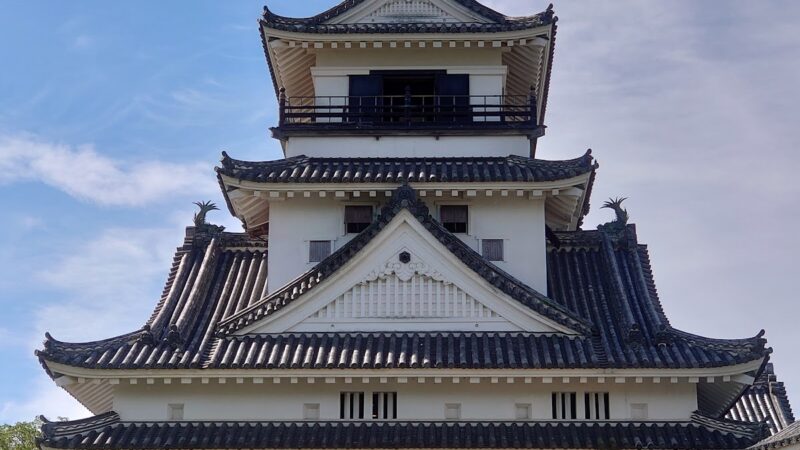
Gujo Hachiman Castle, a representative tourist attraction of Gujo City, is a beautiful castle with a reconstructed keep. In contrast to medieval mountain castles like Inunakiyama Castle, visiting this castle, which has the style of a modern castle, allows you to learn about the historical changes in castle architecture.
Gujo Hachiman Castle is also known as the “Castle in the Sky,” and its appearance floating above the sea of clouds in the early morning is fantastic. It’s relatively easy to access, and facilities such as tourist information and restrooms are available.
The Old Townscape of Gujo Hachiman
The town of Gujo Hachiman preserves the atmosphere of the Edo period. Strolling through the streets lined with traditional buildings and enjoying the beautiful scenery of flowing waterways allows you to experience the history and culture of this region firsthand.
This town, famous for the “Gujo Odori” dance, is bustling with tourists in the summer. It is also known as a production center for food samples, with related experience facilities and shops scattered throughout the area.
The Nagara River and Natural Scenery
The Gujo region is located in the upper reaches of the clear Nagara River and is blessed with beautiful natural scenery. You can enjoy strolling along the river and, depending on the season, ayu (sweetfish) fishing. Combining a visit to Inunakiyama Castle with enjoying the rich nature of this region is highly recommended.
Points to Note When Visiting Inunakiyama Castle
Best Time to Visit
The best seasons to visit Inunakiyama Castle are spring (April-May) and autumn (October-November). This time of year offers mild weather and allows you to enjoy the natural beauty of fresh greenery and autumn leaves. In summer, be aware of the heat and insects, and in winter, there is a risk of snow and ice.
Estimated Time Required
For a visit to Inunakiyama Castle, it’s recommended to allow 2-3 hours, including the ascent and descent. If you plan to carefully observe the remains or enjoy taking photographs, it’s advisable to allow even more time.
Photography Tips
When photographing the castle ruins, focus on the following points to take good pictures:
- Capture the three-dimensionality of remains such as moats and earthworks
- Shoot the view from the main enclosure with a wide-angle lens
- Capture distant views visible through the trees with a telephoto lens
- Combine seasonal plants with the remains
Utilizing Guided Tours
The Gujo City Tourism Association and local NPOs sometimes offer guided tours of the castle ruins depending on the season. By visiting the site while listening to expert explanations, you can gain a deeper understanding of the history and structure of Inunakiyama Castle. We recommend checking the information beforehand.
Historical Value and Preservation Activities of Inunakiyama Castle
Significance in Medieval Mountain Castle Research
Inunakiyama Castle holds significant academic value as a regional power fortress in medieval Mino Province. Unlike large-scale early modern castles, it is a valuable example showing how local lords defended their territories.
In particular, by positioning it as part of the castle network of the specific Higashi clan, it provides clues to understanding the realities of regional rule before the Sengoku period.
Preservation Status of the Remains
Fortunately, the remains of Inunakiyama Castle escaped large-scale development in later periods, so the medieval layout is relatively well preserved. However, due to natural weathering and the proliferation of vegetation, some parts of the remains are gradually becoming unclear.
Local history enthusiasts and researchers continue their research and documentation activities, and these efforts are ensuring that the value of the castle ruins is passed down to future generations.
Future Challenges and Prospects
Local medieval mountain castles like Inunakiyama Castle have low recognition and face challenges in terms of preservation and utilization. A crucial issue is how to balance development as a tourist resource with preservation as a historical heritage site.
In the future, if appropriate signage is installed, the access routes are improved, and maintenance such as regular grass cutting is carried out, more people will be able to access this valuable historical heritage.
Inunakiyama Castle and the Higashi Clan’s Castle Network
Understanding the Branch Castle System
In medieval regional rule, not only individual castles but also a “branch castle system” linking multiple castles played a crucial role. The Higashi clan, centered around Shinowaki Castle, strategically placed multiple branch castles, including Inunakiyama Castle, to efficiently defend a wide area.
In this system, each castle communicated visually with the others and transmitted information using smoke signals. If one castle was attacked, it was possible to send reinforcements from other castles.
The Position of the Higashi Clan in Local History
The Higashi clan, as local lords who ruled the Gujo region for a long time, are an important presence in the region’s history. They strived to maintain their independence amidst relations with powerful forces such as the Toki clan, the governors of Mino Province, and later the Saito clan.
The construction of Inunakiyama Castle was part of a defensive strengthening measure carried out amidst such political tensions, and is a historical event reflecting the regional situation at the time.
Summary: The Charm of Inunakiyama Castle
Unlike famous, tourist-oriented castles, Inunakiyama Castle (Akataniyama Old Castle) is a medieval mountain castle quietly nestled in the mountains. However, its historical value and the state of preservation of its remains are extremely attractive to castle enthusiasts and history researchers.
The defensive strategy of the Higashi clan, a regional power, medieval castle-building techniques, and beautiful natural scenery—all of these elements come together to form the unique charm of Inunakiyama Castle. While thorough preparation is necessary before visiting, the discoveries and emotions that await you will be well worth the effort.
If you have the opportunity to visit Gujo City in Gifu Prefecture, be sure to also visit Inunakiyama Castle. Local history not found in textbooks quietly awaits you in the mountains. Please check the information beforehand, take safety precautions, and enjoy your encounter with this precious historical heritage.
--765x450.png)