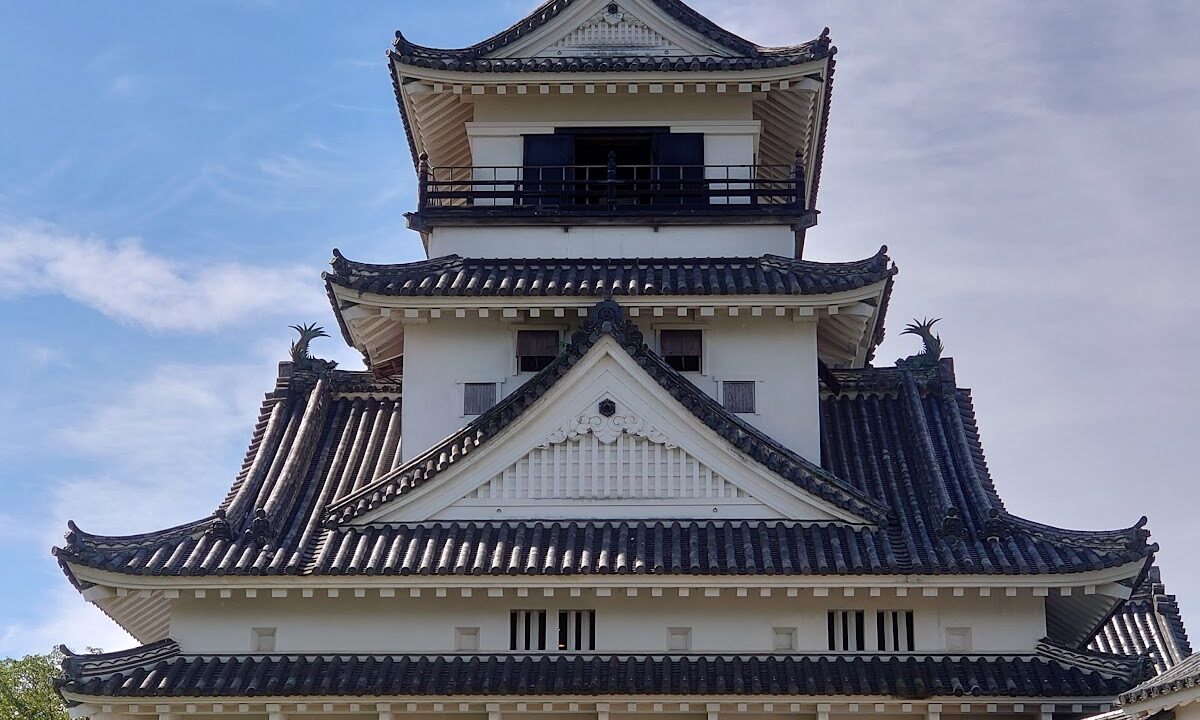
History and Highlights of Setozaki Castle (Nakatsugawa City, Gifu Prefecture) | A Thorough Explanation of the Sengoku Period Historical Site of the Toyama Eighteen Branch Castles
What is Setozaki Castle?
Setozaki Castle is a Sengoku period mountain castle located in Seto, Nakatsugawa City, Gifu Prefecture. This castle is counted as one of the “Toyama Eighteen Branch Castles” controlled by the Toyama clan, and was an important historical base that served as the stage for the power struggle between the Takeda and Oda clans in the Tono region.
Currently, no clear remains of the castle exist, but the Iimori Shrine is enshrined on the site of the main keep at the mountaintop, and it is known as a valuable historical site that conveys the history of the region to the present day. While there are many famous castles in Gifu Prefecture, such as Gifu Castle and Naegi Castle, smaller branch castles like Setozaki Castle are also indispensable for understanding the regional power structure of the Sengoku period.
Basic Information about the Castle
- Location: Seto, Nakatsugawa City, Gifu Prefecture
- Other Names: None in particular
- Castle Structure: Mountain castle
- Construction Period: Sengoku period (details unknown)
- Builder: Estimated to be related to the Toyama clan
- Main Lords: Samurai under the Toyama clan
- Year of Abandonment: Around Tensho 2 (1574)
- Remains: Almost completely gone (only traces remain in the terrain)
- Designated Cultural Property: None
History of Setozaki Castle
The Toyama Clan and the Establishment of the Eighteen Branch Castles
To understand Setozaki Castle, it is necessary to first understand the sphere of influence of the Toyama clan and the system of the eighteen branch castles. The Toyama clan was a local lord that held power mainly in the eastern part of Mino Province (Tono region), and had Iwamura Castle as its main castle, with numerous branch castles located around it.
The “Eighteen Branch Castles of the Toyama Clan” is a collective term for the group of branch castles built by the Toyama clan to solidify their control over the Tono region. These branch castles cooperated with each other, forming a defensive network centered around the main castle, Iwamura Castle. Setozaki Castle is also believed to have been an important base playing a part in this defensive system.
The eighteen branch castles are believed to have included the following castles:
- Naegi Castle
- Akechi Castle
- Agi Castle
- Iihama Castle
- Kushihara Castle
- Setozaki Castle
- Other Branch Castles
These castles are distributed over a wide area from around Nakatsugawa City to Ena City, demonstrating the Toyama clan’s strong control over the Tono region.
Takeda Katsuyori’s Invasion of Tono and the Fall of Setozaki Castle
The most important event in the history of Setozaki Castle is Takeda Katsuyori’s invasion of Tono in 1574. This invasion is meticulously documented in the *Koyo Gunkan* and determined the fate of Setozaki Castle.
Background of the Invasion of Tono
After the death of Takeda Shingen, Takeda Katsuyori, who inherited the family headship, strengthened his confrontational stance against Oda Nobunaga, carrying on his father’s will. The Tono region, located at the eastern edge of Mino Province, was a strategically important point bordering Shinano Province (present-day Nagano Prefecture). Controlling this region was crucial for securing an invasion route into Oda territory.
In 1574 (Tensho 2), Takeda Katsuyori led a large army into the Tono region. At this time, the Toyama clan was under the control of Oda Nobunaga, and therefore became a target of the Takeda army’s attack.
Capture of the Eighteen Branch Castles
According to the *Koyo Gunkan*, Takeda Katsuyori successively captured the eighteen branch castles of the Toyama clan during his invasion of Tono. It is said that Setozaki Castle also fell at this time. The Takeda army’s conquest was systematic and efficient. By successively capturing the major branch castles, they dismantled the Toyama clan’s defense network, ultimately isolating Iwamura Castle, the main castle. Setozaki Castle, though small in scale, was considered a crucial target for severing the alliance with surrounding castles.
Setozaki Castle After its Fall
While detailed records of what happened after the fall of Setozaki Castle are scarce, it is believed to have come under Takeda control. However, the Takeda’s rule over Tono did not last long. After the Takeda army’s crushing defeat at the Battle of Nagashino in 1575, the Tono region returned to the Oda clan’s sphere of influence.
It is unclear whether Setozaki Castle functioned as a military base again afterward, but it is presumed to have been abandoned with the end of the Sengoku period. With the arrival of the Edo period and the advent of a peaceful era, Setozaki Castle, having ceased its role as a mountain castle, is thought to have gradually been forgotten.
Structure and Characteristics of Setozaki Castle
Location and Topography
Setozaki Castle was built on a mountaintop in the Seto district of Nakatsugawa City. This location exhibits typical characteristics of a mountain castle from the Sengoku period.
Mountain castles had the following advantages compared to castles on flat land:
- Improved Defense: Being located on high ground made it difficult to attack and easier to defend.
- Improved Visibility: The ability to see the surrounding area allowed for early detection of enemy movements.
- Natural Fortress: The steep terrain acted as a natural barrier.
- Establishment of a Communication Network: Visual communication with other branch castles was possible.
Setozaki Castle was also positioned to take advantage of the surrounding terrain, and was built in a location that allowed for mutual cooperation with other branch castles in the Tono region.
Estimation of Castle Structure
Currently, there are no clear remains of Setozaki Castle, making it difficult to know the exact structure of the castle. However, some estimations are possible based on the structure of other castles in the Toyama Eighteen Branch Castles of the same period, and the general structure of mountain castles in the Tono region.
Main Enclosure (Honmaru)
It is believed that the main enclosure (Honmaru) was located at the mountaintop. The current site of the Iimori Shrine is thought to be the former site of the Honmaru. The Honmaru was the central area where the castle lord and key generals were stationed, and it was the most heavily fortified location.
Arrangement of Enclosures
It is believed that multiple enclosures (kuruwa: flat sections) were arranged around the Honmaru. These enclosures functioned as defensive positions, and soldiers were stationed there. Because it was a small branch castle, the number of enclosures is thought to have been limited.
Defensive Structures
During the Sengoku period (Warring States period), mountain castles generally featured the following defensive structures:
- Horikiri: A ditch dug to cut across a ridge
- Dorui: A defensive wall made of piled-up earth
- Tatebori: A ditch dug along a slope
- Koguchi: An entrance to the castle (a fortified gate)
It is possible that these structures also existed at Setozaki Castle, but due to years of weathering and development, they are now almost impossible to confirm.
Relationship with Iimori Shrine
Currently, Iimori Shrine is enshrined on the site of the main keep of Setozaki Castle. This is not uncommon at castle historical sites. Examples of shrines and temples being built on castle sites after their abandonment can be seen throughout Japan.
While the exact date and circumstances of Iimori Shrine’s establishment are unclear, it serves as a center of local faith and plays a role in preserving the castle site for future generations. The existence of the shrine helps to pinpoint the location of the castle site and preserve the region’s historical memory.
Highlights and Current Status of Setozaki Castle
Current Situation
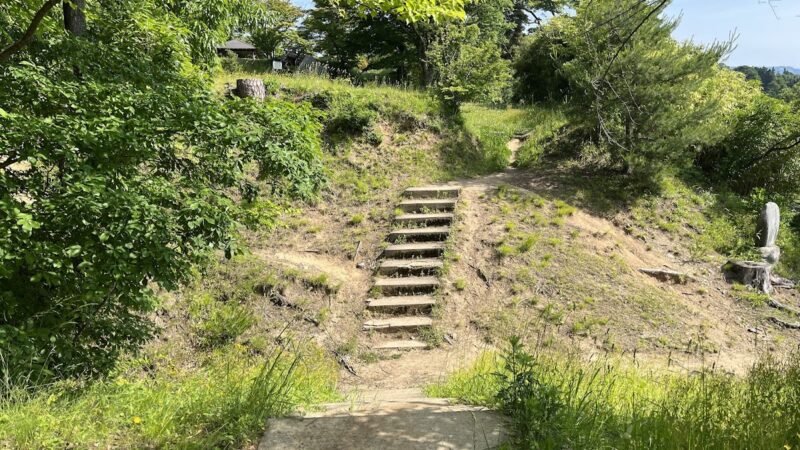
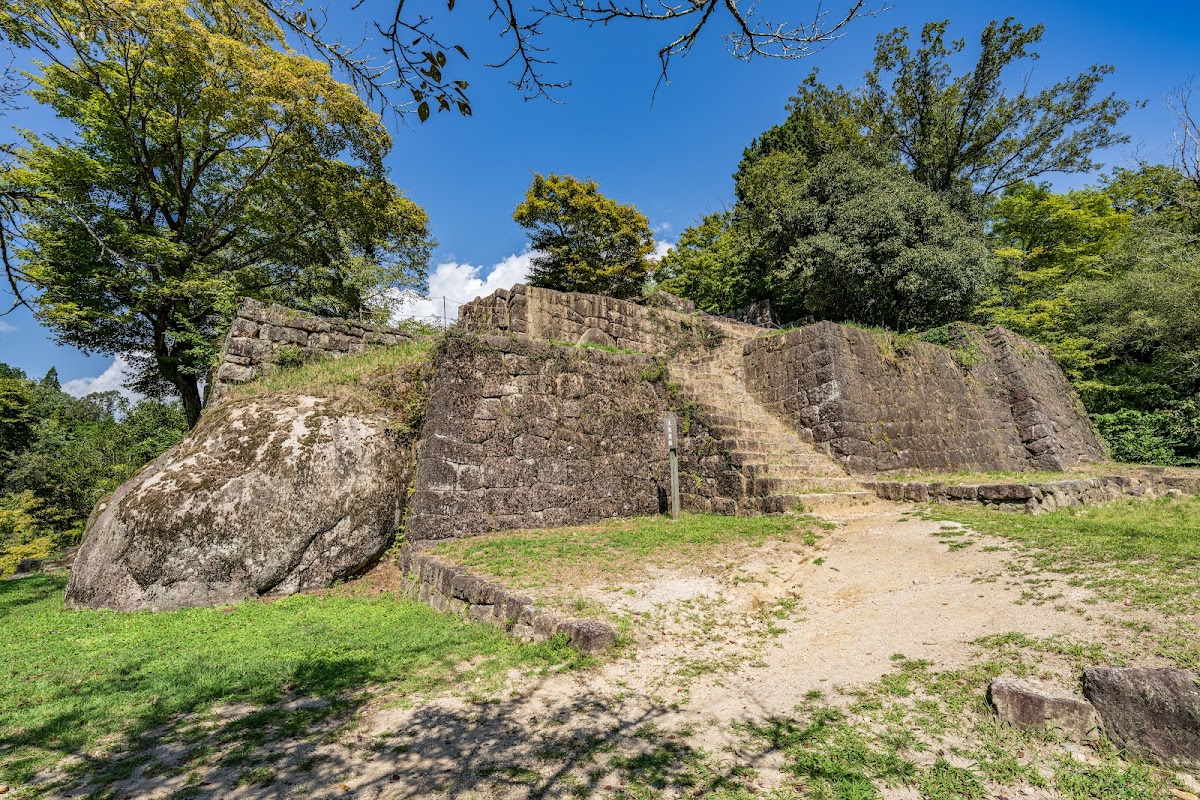
When visiting the Setozaki Castle ruins, it is difficult to clearly identify any castle remains. Due to years of weathering and changes in the terrain, defensive structures such as moats and earthworks have almost completely disappeared. However, subtle undulations remain on the mountaintop, allowing one to sense the traces of where the baileys were once located.
Iimori Shrine
The greatest highlight of the castle ruins is the Iimori Shrine, built on the site of the main bailey. This shrine is revered by local residents and is regularly maintained. From the shrine grounds, one can overlook the surrounding landscape, allowing one to imagine the view from the castle in its heyday.
The path leading to the shrine may be a remnant of the former castle approach. One can imagine the scene of samurai and soldiers ascending this path during the Sengoku period.
Recognizing Castle Traces from Topography
Even if castle remains aren’t clearly visible, careful observation of the topography can reveal traces of a castle:
- Flat areas on mountaintops: Likely locations of the main keep or baileys.
- Slope elevation changes: Possible remnants of leveled baileys.
- Ridge shapes: Possible topography modified for defense.
Observing such topography is a fascinating experience for castle enthusiasts.
Historical Value
Although Setozaki Castle has few remaining structures, it holds significant historical importance:
- Evidence of the Toyama Clan’s Rule: As one of the eighteen branch castles, it demonstrates the reality of regional control.
- The Reality of the Takeda Clan’s Invasion of Tono: A historical site that corroborates the description in the “Koyo Gunkan” (a historical chronicle).
- Regional History of the Sengoku Period: Essential for understanding the Sengoku period history of Nakatsugawa City.
Access and Visiting Information for Setozaki Castle
Access Methods
Access by Car
Access to Setozaki Castle Ruins is convenient by car:
- Chuo Expressway: Approximately 15 minutes by car from Nakatsugawa IC
- National Route 19: From Nakatsugawa city center towards Seto
- Parking: Some space available near Iimori Shrine (for worshippers)
Access by Public Transportation
- JR Chuo Main Line: Get off at Nakatsugawa Station
- Bus: Take the Kita-Ena Kotsu bus from Nakatsugawa Station towards Seto (limited number of buses).
- Walking: Approximately 20-30 minutes on foot from the bus stop to the summit.
Public transportation is limited, so we recommend checking the timetable before your visit.
Points to Note When Visiting
- Preparation for Hiking: Since you will be walking on a mountain trail to the summit, comfortable shoes and clothing are necessary.
- Season and Weather: Be careful as the ground can be slippery in rainy weather.
- Insect Repellent: There are many insects in the summer, so bring insect repellent spray.
- Hydration: Bring plenty of water, especially in the summer.
- Avoid Solo Visits: It is preferable to visit with multiple people if possible.
Estimated Visiting Time
- From Ascent to Descent: Approximately 1-1.5 hours
- Shrine Visit Only: Approximately 30 minutes
- In-Depth Topographical Observation: Approximately 2 hours
Related Historical Sites in the Surrounding Area
When visiting Setozaki Castle, visiting the surrounding Toyama Juhachishi Castles and related historical sites will allow you to understand the history more deeply:
Naegi Castle Ruins (Approximately 20 minutes by car)
A representative mountain castle of Nakatsugawa City, and a popular historical site known as the “Castle in the Sky.” The stone walls and baileys are well-preserved, and the view from the observation deck is spectacular. It is designated a national historic site, and the remains are remarkably well-preserved. Like Setozaki Castle, it is considered one of the eighteen branch castles of the Toyama clan, and a larger-scale castle structure can be observed.
Iwamura Castle Ruins (approx. 40 minutes by car)
This was the main castle of the Toyama clan and is considered one of Japan’s three greatest mountain castles. Built on a mountaintop at an altitude of 717 meters, magnificent stone walls remain. The complex layout, including the main bailey, second bailey, and third bailey, can be observed, allowing one to understand how branch castles like Setozaki Castle supported the main castle.
Nakatsugawa City Nakasendo Historical Museum (approx. 10 minutes by car)
This facility allows you to learn about the history of Nakatsugawa City, and exhibits materials related to the Toyama clan and Setozaki Castle. Visiting before visiting the castle ruins will provide a deeper understanding.
Setozaki Castle and the Sengoku Period History of the Tono Region
Strategic Importance of the Tono Region
The Tono region, located on the border between Mino and Shinano provinces, held an extremely important strategic position during the Sengoku period. Controlling this region had the following implications:
- Transportation Hub: The Nakasendo highway passed through, a crucial route connecting Kyoto and Edo.
- Border Defense: A bulwark against invasions from Shinano Province.
- Mining Resources: Abundant mineral resources, including silver mines, in the surrounding area.
- Agricultural Production: Fertile land in the Kiso River basin.
Oda Nobunaga and Tono
After pacifying Mino Province, Oda Nobunaga recognized the importance of the Tono region. By incorporating the Toyama clan under his control, he established a defensive line against the Takeda clan. Branch castles like Setozaki Castle functioned as part of this defensive system.
It is well known that Nobunaga established Gifu Castle as his base while proclaiming his goal of “unifying the country by military force,” but behind this lay the crucial strategy of stabilizing the Tono region.
The Conflict Between the Takeda and Oda Clans
Takeda Katsuyori’s invasion of Tono in 1574 was part of a long-running conflict between the Takeda and Oda clans. The fall of Setozaki Castle is positioned as one event within this larger historical context.
While the Takeda army’s invasion of Tono was initially successful, their defeat at the Battle of Nagashino the following year led to a rapid decline in the Takeda clan’s power. At this turning point in history, Setozaki Castle, though small, played a vital role.
Research on Setozaki Castle and Future Challenges
Limitations of Historical Sources
Historical sources concerning Setozaki Castle are extremely limited. The main source is the description in the *Koyo Gunkan*, but the reliability of this military chronicle is debated among researchers. The discovery of more reliable historical sources is awaited.
The Need for Archaeological Investigation
To date, no comprehensive archaeological investigation has been conducted at the Setozaki Castle ruins. Excavation could potentially yield the following information:
- The precise structure and size of the castle
- Identification of the castle’s construction date
- Weapons and daily life tools used
- The time and circumstances of the castle’s abandonment
However, due to the presence of a shrine and budgetary constraints, conducting such an investigation is not easy.
Preservation and Utilization
Regarding the preservation and utilization of the Setozaki Castle ruins, the following challenges exist:
- Protection of Remains: Preservation of the few remaining topographical features
- Installation of Information Boards: Enhancing information provided to visitors
- Improvement of Access Routes: Ensuring a safe viewing environment
- Collaboration with the Community: Preservation activities in cooperation with local residents
The Significance of Visiting Setozaki Castle
Experiencing History
Compared to famous castles like Gifu Castle and Naegi Castle, Setozaki Castle may seem unremarkable with fewer remains. However, that is precisely why it is worth visiting.
While large-scale castle complexes are certainly magnificent, it is smaller branch castles like Setozaki Castle that reveal the reality of regional control during the Sengoku period. Standing on the site where nameless warriors defended and fought allows one to feel the layered nature of history.
Understanding Local History
Setozaki Castle is an indispensable element in understanding the history of Nakatsugawa City. Regional history is shaped not only by major events, but also by the accumulation of these small historical sites.
Deepening Castle Research
For castle enthusiasts and researchers, castles like Setozaki Castle, with its many unexplained aspects, are fascinating subjects for study. The process of imagining its former appearance from meager traces and verifying them against historical records is a true pleasure of historical research.
Summary
Setozaki Castle, located in Nakatsugawa City, Gifu Prefecture, was a mountain castle from the Sengoku period, playing an important role as one of the eighteen branch castles of the Toyama region. It is said to have fallen during Takeda Katsuyori’s invasion of Tono in 1574, and its name is recorded in the “Koyo Gunkan.”
Currently, no clear remains of the castle exist, but the Iimori Shrine, built on the site of the main keep at the mountaintop, conveys a glimpse of its former glory. While it’s true that there are few remaining structures, Setozaki Castle still holds the following value:
- Historical evidence of the Toyama clan’s rule
- A historical site that tells the story of the conflict between the Takeda and Oda clans
- A valuable example showing the reality of regional rule during the Sengoku period
- An important element for understanding the history of Nakatsugawa City
Visiting Setozaki Castle offers a valuable opportunity to experience a different aspect of regional history during the Sengoku period, distinct from the glamorous castles of daimyo. Visiting it along with nearby Naegi Castle and Iwamura Castle will provide a deeper understanding of the defensive system of the Toyama’s eighteen branch castles and the battles in the Tono region during the Sengoku period.
Gifu Prefecture boasts many famous castles, including Gifu Castle, but paying attention to smaller branch castles like Setozaki Castle provides a more three-dimensional view of Sengoku history. Rather than lamenting the scarcity of remains, the real pleasure of visiting Setozaki Castle lies in finding enjoyment in deciphering history from the few remaining traces.