Nagayama Castle (Gifu Prefecture) Complete Guide: A Mountain Castle in Mino Province Marked by the Tragedy of the Toki Clan
Located in Nagayama, Gifu City, Gifu Prefecture, Nagayama Castle is a mountain castle that served as the stage for a succession dispute within the Toki clan in Mino Province during the late Muromachi period. Currently, the Yoshino Shrine is enshrined on the site of the main keep, and remains such as moats, earthworks, and well ruins remain. This article provides a detailed explanation of Nagayama Castle’s history, highlights of its remains, access methods, and surrounding tourist attractions.
History of Nagayama Castle: The Toki Clan’s Succession Dispute and the Battle of Funada
Toki Motoyori and the Construction of Nagayama Castle
Nagayama Castle is known as the residence of Toki Motoyori (Nagayama Shiro), the youngest son of Toki Nariyori, the governor of Mino Province. The Toki clan was a powerful daimyo family that ruled Mino Province, and their influence was strong throughout the Muromachi period.
Toki Motoyori was particularly favored by his father, Toki Nariyori, and was expected to succeed him, even over the eldest son, Toki Masafusa. This favoritism would later trigger a major conflict that divided Mino Province in two.
The Battle of Funada: A Succession Dispute that Divided Mino
After the death of Toki Nariyori, Mino Province was divided into two camps over the succession. Saito Myojun, the deputy governor who supported the eldest son, Toki Masafusa, and Ishimaru Toshimitsu, the minor deputy governor who supported the youngest son, Motoyori, clashed, resulting in a fierce battle that lasted for about a year. This was the “Battle of Funada.”
This battle was not merely a succession dispute; it became a large-scale civil war that involved the very power structure of Mino Province, specifically the relationship between the deputy governor and the minor deputy governor. Local lords also divided into their respective camps, and the entire Mino Province was engulfed in conflict.
The Battle of Shirotadera Castle and the End of Toki Motoyori
In 1496 (Meio 5), a decisive battle took place at Shirotadera Castle. When Ishimaru Toshimitsu was defeated in this battle, Motoyori’s fate was sealed. Having lost his patron, Toki Motoyori is said to have committed suicide at Nagayama Castle.
This tragic ending led to Toki Masafusa officially inheriting the family headship, and Saito Myojun seizing power as deputy governor. However, this civil war significantly weakened the Toki clan’s power, paving the way for Saito Dosan’s later takeover of Mino Province.
Nagayama Castle After its Abandonment
After Toki Motoyori’s death, Nagayama Castle is believed to have been abandoned. While detailed records of its subsequent history are scarce, the castle ruins were preserved by local residents, and Yoshino Shrine was built on the site of the main keep. Today, it is a historical site of Gifu City, an important historical landmark that conveys the history of the region.
Structure and Layout of Nagayama Castle
Location and Topographical Features
Nagayama Castle is a mountain castle built on a hill approximately 200 meters above sea level, north of Gifu City. This location offers a view of the Nobi Plain in Mino Province, making it a strategically important military stronghold.
Although relatively low in elevation for a mountain castle, it possesses a defensive structure that skillfully utilizes the surrounding terrain. The layout, which takes advantage of the steep slopes and natural topography, demonstrates the level of castle-building technology at the time.
Main Enclosure Site and Yoshino Shrine
The main enclosure site of Nagayama Castle is now home to the Yoshino Shrine. The shrine grounds roughly coincide with the area of the main enclosure, allowing us to estimate the scale of the castle in its heyday.
The main enclosure has a relatively flat terrain, suggesting that the lord’s residence and other important buildings were located there. Even today, the undulations of the terrain allow us to imagine the layout and structure of the buildings.
Remains of the Moat
One of the most prominent remains of Nagayama Castle is the moat. A moat is a defensive structure created by artificially cutting through a ridge, playing a crucial role in preventing enemy intrusion.
The moats of Nagayama Castle can still be clearly seen today, and their depth and width demonstrate the high level of defense they possessed at the time. The presence of multiple moats indicates a multi-layered defensive structure.
Earthworks and Enclosures
Traces of earthworks remain within the castle grounds. These earthworks, constructed by piling up earth, served to defend against enemy attacks and also divided the castle into sections.
Multiple enclosures (flat areas) are arranged, each presumably assigned a different function. It’s possible that the main enclosure (Honmaru) was at the center, with the second and third enclosures arranged in a stepped pattern.
Well Remains
Well remains have also been confirmed within the castle grounds. Securing a water source was extremely important for a mountain castle, indicating that the design anticipated siege warfare.
The location and depth of the well allow us to infer the castle’s water supply system and the layout of its living spaces. This well was actually used by Toki Motoyori and his retainers, making it a historically valuable relic.
Highlights of Nagayama Castle (Castle Notes)
View from Yoshino Shrine
From Yoshino Shrine, built on the site of the main keep, you can enjoy a panoramic view of Gifu city and the Nobi Plain. On a clear day, you can even see the mountains of Mino in the distance, giving you a real sense of the castle’s strategic value.
Especially in spring, the cherry blossoms are in full bloom, making it a scenic spot where you can enjoy both historical exploration and nature appreciation.
Clearly Remaining Moat
The greatest highlight of Nagayama Castle is the well-preserved moat. This relic, which has remained intact despite the passage of time, is a valuable teaching tool for learning about the defensive techniques of medieval mountain castles.
By descending to the bottom of the moat and observing it, you can experience its depth and scale, and be amazed by the high level of castle construction technology of the time.
Arrangement of Earthworks and Enclosures
Walking through the castle grounds, you can see traces of earthworks and elevation changes of enclosures in various places. These remains allow us to imagine the castle’s defensive lines and movement routes.
The earthworks around the main enclosure, in particular, are relatively well-preserved, allowing us to imagine the castle’s appearance in its heyday.
Atmosphere of the Ascent Route
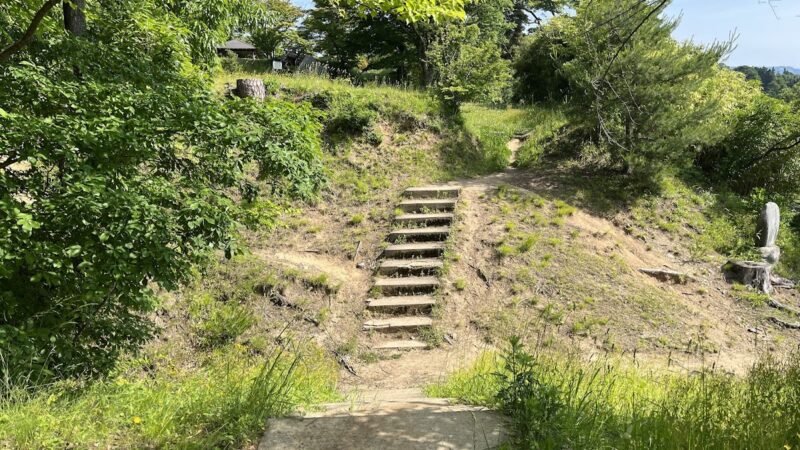
The ascent route to Nagayama Castle is a mountain path that evokes the remnants of the main and rear entrance routes of the time. Climbing on foot offers a valuable opportunity to relive the path taken by samurai during the Sengoku period.
The hiking trail is well-maintained and relatively easy to walk. The climb from the foot of the mountain takes approximately 20-30 minutes, making it accessible even for beginners.
Historical Information Boards and Stone Monuments
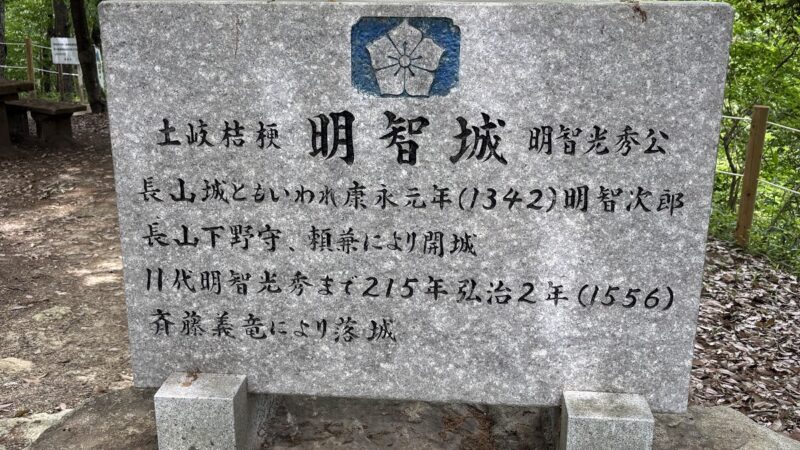
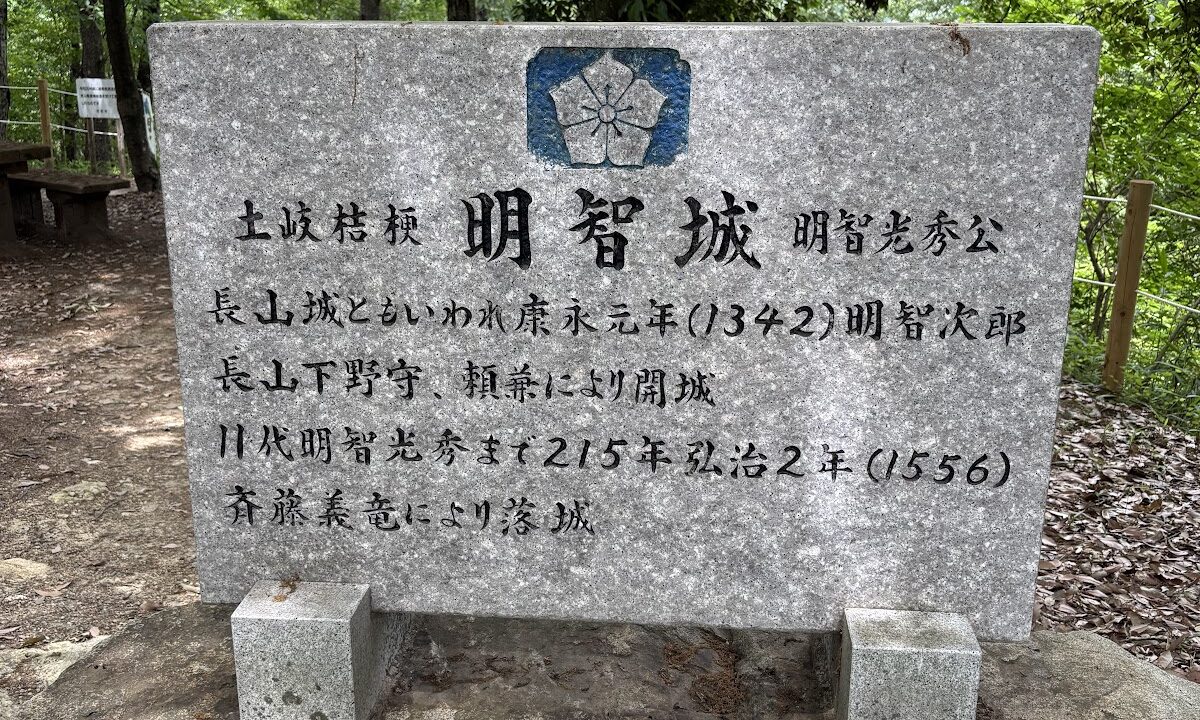
Historical information boards are installed at the castle ruins, providing detailed information about Toki Motoyori and the Battle of Funada. Stone monuments have also been erected, commemorating the historical events that took place here for future generations.
By using these information boards as a guide while exploring, you can gain a deeper understanding of the history of Nagayama Castle.
Access Information and Visitor Guide
Access by Public Transportation
Using Trains and Buses
- Take a Gifu Bus from JR Gifu Station or Meitetsu Gifu Station.
- Get off at the “Nagayama” bus stop and walk approximately 15 minutes to the castle entrance.
- Since bus services are limited, it is recommended to check the timetable in advance.
Nagayama Castle is relatively easy to access from the center of Gifu City, making it possible to combine a visit with other tourist spots such as Gifu Castle.
Access by Car
Using a Car
- Approximately 20 minutes from the Tokai-Hokuriku Expressway “Gifu-Kakamigahara IC”
- There are several parking spaces around Yoshino Shrine.
- The roads are narrow in some places, so caution is required when driving.
The parking is not a dedicated facility; you will be using the space provided for shrine visitors. Since the number of spaces is limited, please consider using nearby public parking lots during busy times.
Precautions When Visiting the Castle
Clothing and Equipment
- Comfortable walking shoes (trekking shoes recommended)
- Appropriate clothing for the season (insect repellent in summer, warm clothing in winter)
- Carry drinking water
- Be especially careful when it rains, as the ground can become slippery.
Visiting Hours
- Visiting during daylight hours is recommended (it gets dark after sunset)
- Estimated time: Approximately 1 to 1.5 hours from ascent to descent
- Allow about 2 hours if you plan to take photos and explore thoroughly.
Other Precautions
- Please pray quietly within the shrine grounds.
- To protect the remains, please be careful not to damage the earthworks or moats.
- Please take all your trash with you.
- Be aware of dangerous creatures such as wasps during the summer.
Admission Fee and Opening Hours
Nagayama Castle Ruins are always open, and admission is free. However, please be mindful of the visiting hours of Yoshino Shrine.
Nearby Tourist Attractions and Castle Visits
Gifu Castle (Kinka Mountain)
If you visit Nagayama Castle, be sure to also visit Gifu Castle, a symbol of Gifu City. This famous castle was the base for Oda Nobunaga’s “unification of Japan” campaign, and the view from the summit of Kinka Mountain is spectacular.
Gifu Castle is about a 20-minute drive from Nagayama Castle, making it ideal to combine with a tour of Mino’s mountain castles. Gifu Castle is accessible by ropeway, and the keep offers panoramic views of the Nobi Plain.
Kano Castle Ruins
Kano Castle, located in Gifu City, is a flatland castle built by Tokugawa Ieyasu after the Battle of Sekigahara. It is now maintained as Kano Park, and parts of the stone walls and moats remain.
Although from a different era than Nagayama Castle, it is an interesting historical site for learning about the changes in castle architecture in Mino Province.
Akechi Nagayama Castle (Kani City)
In Kani City, Gifu Prefecture, lies Akechi Nagayama Castle, associated with Akechi Mitsuhide. Although it shares the same name, “Nagayama Castle,” it is a different castle from the Nagayama Castle in Gifu City.
This castle site, said to be the birthplace of Akechi Mitsuhide, is an important spot for exploring the history of Mino Province. Visiting both Nagayama Castles and comparing their differences would be an interesting experience.
Gifu City History Museum
This museum allows you to learn about the history and culture of Gifu City. It includes exhibits on the Toki clan, the Saito clan, and Oda Nobunaga, allowing for a deeper understanding of the historical background of Nagayama Castle.
Visiting before or after your visit to Nagayama Castle will enhance your historical learning experience.
Nagara River and Cormorant Fishing
Cormorant fishing on the Nagara River, a representative tourist attraction of Gifu City, is held from May to October. Combining a visit to Nagayama Castle with a cormorant fishing experience allows you to enjoy Gifu’s traditional culture.
Nagayama Castle and the Sengoku History of Mino
The Rise and Fall of the Toki Clan
The Toki clan maintained their power as the shugo (military governor) of Mino Province throughout the Muromachi period, but gradually declined due to internal conflicts, symbolized by the tragedy at Nagayama Castle.
Internal conflicts within the Toki clan continued even after the Battle of Funada, which allowed the rise of the shugodai (deputy governor) Saito clan. Ultimately, the Toki clan was expelled from Mino by Saito Dosan, and the rule of Mino Province shifted to the Saito clan.
The Rise of the Saito Clan and the Transformation of Mino Province
From the descendants of Saito Myojun, who won the Battle of Funada, came Saito Dosan, later known as the “Viper of Mino.” Dosan expelled his lord, the Toki clan, and became the de facto ruler of Mino Province.
Saito Dosan eventually entrusted Mino Province to his son-in-law, Oda Nobunaga, and Mino became an important base for the unification of Japan. The tragedy at Nagayama Castle marked the beginning of a major turning point in the history of Mino Province.
Mino’s Mountain Castle Culture
Nagayama Castle is one of many mountain castles in the Mino region. Mino was a crucial point for east-west transportation and also a route to Kyoto, leading to the construction of numerous mountain castles.
Hundreds of castle ruins have been identified in Gifu Prefecture, each possessing its own unique history and characteristics. Among them, Nagayama Castle is positioned as an important historical site linked to a clear historical event.
Preservation and Maintenance of Nagayama Castle
Current Preservation Status
While the Nagayama Castle ruins are recognized as a historical site by Gifu City, they are not designated as a national or prefectural cultural property. However, their value is recognized by local residents and castle researchers, and preservation efforts continue.
The remains are in relatively good condition, with the moats and earthworks being particularly clearly visible. Regular maintenance, such as grass cutting, is carried out, maintaining an environment that is easy to visit.
Future Challenges and Prospects
To further enhance the value of Nagayama Castle, the following challenges exist:
- Confirmation of remains through detailed archaeological excavations
- Improvement of explanatory signs and directional markers
- Improvement of access roads
- Increased awareness among local residents and tourists
- Strengthening cooperation with other historical sites in Gifu City
By addressing these challenges, Nagayama Castle will become an important tourist resource that conveys the history of Mino Province and will be enjoyed by even more people.
Best Season to Visit Nagayama Castle
Spring (March-May)
Spring is the best season to visit Nagayama Castle. Cherry blossoms bloom around Yoshino Shrine, allowing you to enjoy historical walks and cherry blossom viewing at the same time. The weather is mild, making the climb to the castle comfortable.
However, those with hay fever should take precautions. Also, the parking lot may be crowded during the spring holiday season.
Summer (June-August)
Summer offers beautiful fresh greenery and allows you to fully enjoy the atmosphere of a mountain castle. However, temperatures are high and there are many insects, so sufficient preparation is necessary.
Visiting during the cooler hours of early morning or evening is recommended. Please ensure adequate hydration to prevent heatstroke.
Autumn (September-November)
Autumn is the most comfortable season for strolling, with its beautiful autumn foliage. The weather is stable, making it ideal for photography.
Especially from late October to early November, the autumn leaves are at their peak, allowing you to enjoy both history and nature.
Winter (December-February)
In winter, the air is clear, offering excellent views and panoramic vistas. However, cold weather precautions are necessary, and climbing the castle may be difficult during snowfall.
Strolling through the winter landscape while imagining the harshness of the Sengoku period offers a different kind of charm.
Summary: The Charm and Historical Value of Nagayama Castle
Nagayama Castle is a valuable medieval mountain castle site remaining in Gifu City, Gifu Prefecture. This castle, the site of Toki Motoyori’s tragic end, is an important historical site symbolizing the turning point in Mino Province’s Sengoku period (Warring States period).
Even today, remnants such as moats, earthworks, and well remains are well-preserved, making it a valuable resource for learning about the structure of medieval mountain castles. From the Yoshino Shrine, located on the site of the main keep, you can enjoy a panoramic view of the Nobi Plain, truly appreciating its strategic value in its heyday.
It’s relatively easy to access from central Gifu City, making it ideal for combining with other historical attractions such as Gifu Castle. For those interested in Mino’s history or mountain castle enthusiasts, this hidden gem is a must-visit.
Through a stroll through Nagayama Castle, you can feel the rise and fall of the Toki clan and the turbulent times of Mino Province. Standing on this historical stage, you can experience living history that you can’t learn from textbooks.